A 5,000-Year-Old Persian Civilization and a 250-Year-Old American Superpower Stand at the Edge of History
The Middle East in May 2026 speaks outwardly of cease-fires and endgame negotiations. Yet beneath the language of diplomacy, the region still stands atop an enormous powder keg.
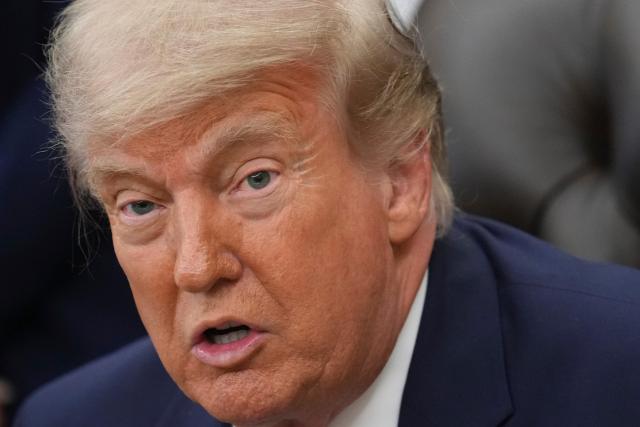
President Donald Trump repeatedly declares that “the war will end very soon.” But beneath the negotiating table, the most dangerous fault lines are becoming sharper, not weaker.
At the center of the confrontation lies a single issue: Iran’s stockpile of highly enriched uranium.
At the White House on May 21, Trump stated bluntly, “We will take it.” He reaffirmed Washington’s position that the United States must secure and ultimately destroy Iran’s estimated 440 kilograms of uranium enriched to 60 percent purity.
This is no mere technical dispute over nuclear verification procedures.
It is the symbolic heart of the war itself — and, politically, the visible victory Trump believes he must bring home.
For Trump, this conflict has been framed as a war to halt Iran at the threshold of nuclear weapons capability. The image of American authorities physically removing Iran’s highly enriched uranium and destroying it would represent a historic spectacle of strategic triumph. In Trump’s eyes, it would surpass the 2015 Iran nuclear agreement reached under President Barack Obama and become the defining diplomatic achievement of his presidency.
Yet that very demand has become Iran’s absolute red line.
Iran’s leadership has reportedly hardened its position against any overseas transfer of enriched uranium. From Washington’s perspective, the issue concerns nuclear nonproliferation and regional security. From Tehran’s perspective, it concerns national dignity, regime survival, and civilizational pride.
Inside Iran, moreover, a dangerous new psychology has begun to emerge after the war.
“North Korea possessed nuclear weapons and was not attacked. Iran did not possess them — and was.”
That perception is rapidly hardening attitudes inside the Revolutionary Guard and among Iran’s hard-line factions. Increasingly, the argument is not necessarily that Iran must immediately build a bomb, but that it must preserve the capacity to do so.
Thus, the gap between Washington’s demand for total removal and Tehran’s insistence on domestic retention or dilution remains immense.
Trump, meanwhile, is eager to conclude the conflict quickly.
The reasons are not merely diplomatic. They are deeply economic and political.
The American economy continues to struggle under the weight of inflation and elevated interest rates. Prolonged instability in the Middle East threatens oil prices, shipping costs, and ultimately gasoline prices for American consumers. That is why Trump repeatedly emphasizes that “gas prices will fall when the war ends.”
Ahead of November’s midterm elections, inflation represents a potentially lethal political vulnerability. American voters often react more immediately to fuel prices and household costs than to geopolitical abstractions. Trump understands this instinctively.
Yet the war has already evolved beyond a simple bilateral confrontation between the United States and Iran.
The Strait of Hormuz now stands at the center of the crisis.
Iran has begun openly signaling the possibility of imposing transit fees or other restrictions in Hormuz — the narrow maritime artery through which roughly one-fifth of the world’s oil and LNG supplies pass each day.
Should Tehran move from rhetoric to action, the consequences for the global economy could be immediate and severe.
Secretary of State Marco Rubio responded with an unusually direct warning, declaring that any attempt by Iran to impose transit charges would render diplomatic agreement “impossible.” Washington is already considering bringing the matter before the United Nations Security Council.
But Hormuz is not merely a shipping dispute.
It is a question of world order itself.
For thousands of years, the Persian Empire stood astride the trade and civilizational routes linking Mesopotamia, Central Asia, India, and the Mediterranean. Iran’s leadership remains deeply conscious of that geopolitical inheritance. The United States, by contrast, views freedom of navigation as a foundational principle of the postwar international system.
Thus both sides confront the same waters while carrying entirely different historical memories.
More troubling still is the growing strain upon America’s military resources.
According to reports in The Washington Post, the United States has expended more than 200 THAAD interceptor missiles during the conflict — nearly half its stockpile. American naval forces in the eastern Mediterranean have also launched large numbers of SM-3 and SM-6 interceptors.
The problem is increasingly clear: Production cannot keep pace with consumption.
America’s missile defense architecture was originally designed primarily for deterrence in the Indo-Pacific, especially against China and North Korea. Yet the Middle East war is rapidly consuming those strategic reserves.
Naturally, this has unsettled both South Korea and Japan. Discussions regarding the possible redeployment or depletion of THAAD systems have already begun to raise concerns across Northeast Asia.
Ironically, Trump’s “America First” doctrine is now confronting its own contradiction.
The United States is expending enormous strategic assets to defend Israel, while growing voices inside America question why U.S. military stockpiles should be depleted in Middle Eastern conflicts. Even American think tanks have begun warning that the Middle East is undermining Washington’s Indo-Pacific strategy.
This helps explain Trump’s oscillation between escalation and conciliation.
His rhetoric swings almost daily between threats and diplomacy because the strategic contradictions are becoming increasingly difficult to manage.
Another major variable is Russia.
President Vladimir Putin has revived the idea of transferring Iran’s enriched uranium to Russia — echoing arrangements proposed during the 2015 nuclear negotiations.
On the surface, it appears to be a mediation effort.
In reality, it is also a geopolitical maneuver.
Putin understands that involvement in resolving the Iran crisis could provide Moscow with leverage in broader negotiations with Washington, particularly over Ukraine and sanctions policy.
Trump’s dismissive response — effectively telling Putin to focus on Ukraine instead — reflected precisely that suspicion.
The Middle East today is therefore no longer a regional war alone.
It is a condensed battlefield of 21st-century geopolitics, where the interests of the United States, Iran, Israel, Russia, Europe, and China intersect simultaneously.
Negotiations continue outwardly.
Yet the negotiations remain extraordinarily fragile.
Trump needs a victory.
Iran cannot afford the image of surrender.
Israel seeks the complete dismantling of Iran’s nuclear potential.
Russia hopes to expand its diplomatic influence through mediation.
And the global economy trembles at every shift in the winds of Hormuz.
The war may pause temporarily.
But the geopolitics of the Middle East are far from over.
And here the world confronts a deeper truth.
This conflict is not merely a dispute over uranium enrichment.
It is a collision between two historical consciousnesses — and between two civilizations.
On one side stands the United States, a 250-year-old superpower that shaped the modern global order through military strength, financial dominance, technological innovation, and the architecture of globalization itself.
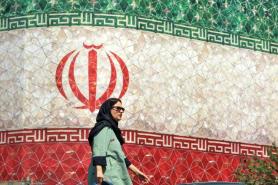
On the other stands Iran, heir to a Persian civilization stretching back more than 5,000 years.
Modern Iran is not simply another Middle Eastern state.
Behind it stand the memories of Cyrus the Great, Darius, and the Achaemenid Empire — a civilization that once connected Mesopotamia, Central Asia, India, and the Mediterranean into one vast imperial network.
The West often views Iran merely as a “problem state.”
But within the Iranian historical imagination, they are not a minor power. They see themselves as descendants of an ancient civilization.
That difference in historical consciousness shapes everything.
Washington approaches the nuclear issue as a matter of international security and nonproliferation. Tehran approaches it as a matter of national survival and civilizational dignity.
For that very reason, brute force alone cannot resolve this crisis.
What is needed instead is a new civilizational imagination.
Perhaps what the Middle East now requires is something resembling a “Noah Accord.”
The region has already witnessed one historic breakthrough in the form of the Abraham Accords between Israel and several Arab states. Those agreements drew symbolic power from the shared Abrahamic heritage of Judaism, Christianity, and Islam.
But perhaps the next step requires an even broader vision.
Before Abraham came Noah — the ancestral figure of humanity itself in the traditions of Judaism, Christianity, and Islam alike. Noah represents survival, reconciliation, and the rebirth of civilization after catastrophe.
The Middle East today needs more than another technical nuclear agreement.
It needs a renewed framework for coexistence.
Neither America nor Iran can fully destroy the other’s historical identity.
The United States may pressure the Iranian regime, but it cannot erase Persian civilization. Iran, meanwhile, cannot overturn the American-led international order through direct confrontation.
Eventually, both sides will have to compromise.
And that compromise must become more than a transactional bargain.
It must allow both civilizations to preserve dignity while stepping back from catastrophe.
East Asia has long carried philosophical traditions emphasizing coexistence rather than annihilation. Confucianism, Buddhism, and Taoism all contain variations of the idea that absolute victory achieved through destruction rarely endures.
Korea, in particular, understands this deeply.
For centuries, Korea survived between great powers — China, Japan, Russia, and later the United States. Korean historical consciousness therefore places enormous value not only on balances of power, but on balances of relationship.
That perspective may hold an important lesson for Washington and Tehran alike.
The United States must leave space for Iran’s dignity.
Iran, in turn, must move beyond a posture of total rejection toward the international system.
Creative compromise remains possible.
Highly enriched uranium could be placed under multinational management involving neutral states, Russia, or the International Atomic Energy Agency rather than becoming a direct symbol of Iranian surrender to Washington.
Ultimately, the central question is not who wins.
It is whether humanity can step back from the edge of another prolonged civilizational conflict.
Because the global economy is already approaching dangerous limits.
Hormuz is one of the central arteries of the world economy.
If it is destabilized, oil prices, shipping, insurance, financial markets, and supply chains will all experience shockwaves.
For South Korea, the implications are especially serious.
South Korea depends heavily upon imported energy from the Middle East. The industrial foundations of companies such as Samsung and SKhynix, as well as the manufacturing systems of Hyundai Motor, ultimately rely upon stable flows of oil and LNG.
A prolonged Hormuz crisis could simultaneously weaken the Korean won, intensify inflationary pressures, and destabilize maritime logistics.
The security implications may be even greater.
America’s depletion of missile defense inventories during the war has already exposed the limitations of U.S. strategic capacity. Washington cannot indefinitely sustain simultaneous pressures in the Middle East, Ukraine, the Taiwan Strait, and the Korean Peninsula without difficult trade-offs.
For Seoul, this reality demands increasingly sophisticated strategic thinking.
The U.S.–Korea alliance remains indispensable.
But South Korea must also preserve diplomatic flexibility with the Middle East, China, and even Russia where necessary.
Energy security, supply-chain resilience, semiconductors, AI infrastructure, and strategic autonomy are no longer merely economic concerns. They are becoming matters of national survival.
The world speaks constantly of the AI revolution.
Yet humanity finds itself once again confronting its oldest questions.
How can civilizations coexist?
How far should great powers exercise force?
Can humanity move beyond cycles of war?
A 5,000-year-old Persian civilization and a 250-year-old American superpower now stand before those questions together.
And the world waits for their answer.

Copyright ⓒ Aju Press All rights reserved.