

Journalist

Jack L. Rozdilsky
-
 The heat is on Seoul as Tokyo gets a head start on U.S. investment SEOUL, February 20 (AJP) - Japan has moved swiftly to translate its pledged $550 billion investment commitment to the United States into concrete projects, unveiling an initial $36 billion package centered on energy, infrastructure and critical materials — areas closely aligned with Washington’s strategic priorities — while Seoul remains mired in legislative gridlock. President Donald Trump welcomed the announcement, publicly praising Tokyo’s commitment and reiterating his March 19 invitation to the Japanese leader, whose political authority was recently reaffirmed through a high-stakes snap election. The rollout marks the first major tranche under Prime Minister Sanae Takaichi’s U.S.-focused investment strategy, which links capital deployment directly to diplomatic and trade objectives. Infrastructure-focused investment package At the core of the package is a $33 billion natural gas power plant in Portsmouth, Ohio, led by SB Energy, a subsidiary of SoftBank Group. The 9.2-gigawatt facility is expected to become the largest of its kind in U.S. history and is designed to address surging electricity demand from AI data centers. Additional projects include a $2.1 billion investment in the GulfLink deepwater oil export terminal off Texas, aimed at expanding U.S. crude exports to Asia, and a $600 million synthetic diamond facility in Georgia by De Beers’ Element Six, intended to strengthen U.S. production of industrial materials now dominated by China. Japan’s Economy and Industry Minister Ryosei Akazawa described the selections as “win-win,” noting that more than 16 Japanese companies, including Toshiba, Hitachi and Mitsubishi Electric, are preparing to participate as suppliers and partners. He also pledged close coordination with Washington on a second tranche during Takaichi’s planned visit to the United States in March. The structure of the package reflects Washington’s priorities. As AI expansion strains power grids and geopolitical tensions reshape supply chains, energy infrastructure and critical materials have become central to U.S. economic security. Rather than broad pledges, Tokyo presented projects that directly address these bottlenecks, reinforcing its position as a strategic partner. Korea left behind The fast and systematic move by Tokyo has placed Korea in a laggard position. Seoul has announced plans for large-scale U.S. investments in nuclear power, shipbuilding, energy and advanced manufacturing. However, progress has been slowed by legislative delays and the absence of a comprehensive institutional framework. The National Assembly’s special committee on U.S. investment has yet to complete key groundwork, including passage of a special law to support overseas investment programs. Instead of forging consensus around a national strategy, political wrangling and blame-shifting have continued. Opposition People Power Party lawmaker Kang Seung-kyu criticized the government and ruling party for what he called their unilateral approach. “They cannot blame the People Power Party for the delay of the Special Act on Investment in the United States while they are pushing through other bills on their own,” he said. The ruling party, meanwhile, has repeated that the deal could undermine Korea’s competitiveness, without presenting a concrete strategy for securing favorable terms. “Automobile tariffs directly affect a large number of jobs in Korea,” Lee Un-ju, a Supreme Council member of the Democratic Party of Korea, said. “If Korea faces higher U.S. tariffs than Japan, Korean automobiles will lose competitiveness in the American market.” She added that as many as 1.5 million people depend directly or indirectly on the auto industry, stressing that “further parliamentary deadlock cannot be tolerated.” Washington’s expectations Yet the auto sector is not at the center of the investment framework Washington expects from Seoul. In the investment list posted on the White House website, Korea’s commitments are categorized mainly under energy and environment. Individual companies such as Hyundai Motor Group and Hanwha Ocean are expected to pursue separate manufacturing investments. From Washington’s perspective, credibility increasingly depends on institutional certainty — clear legal frameworks, budget commitments and bipartisan backing — rather than headline figures alone. Japan’s package combines infrastructure development, corporate participation and diplomatic engagement into a single framework. Energy projects resolve immediate bottlenecks, Japanese firms secure long-term roles, and political ties are reinforced. By contrast, Korea’s approach remains fragmented. While Seoul has outlined cooperation in energy, semiconductors and AI, it has yet to consolidate these initiatives into a unified package backed by legislation and long-term financing. U.S. officials have repeatedly emphasized that energy security, export capacity and supply-chain diversification are central to future cooperation. Countries that can deliver these elements in integrated form are better positioned in trade and tariff negotiations. Structure over scale The government has moved to accelerate talks, dispatching a working-level delegation to Washington this week to explore projects in nuclear power, shipbuilding and advanced industries. Ruling party leaders are also seeking ways to pass investment-related legislation despite opposition resistance. However, experts note that without a stable legal and fiscal framework, such efforts may appear provisional. Japan’s advantage lies not only in speed but in structure. Its investment package links public financing, private-sector participation and diplomatic coordination into a single system. For Korea, the challenge is to move beyond ad hoc negotiations and build similar institutional foundations — integrating power infrastructure with AI and semiconductor projects, energy investment with shipbuilding orders, and mineral supply with downstream processing. Stressing the urgency, Lee said, “Since the Special Act on Investment in the United States concerns the national interest, further parliamentary deadlock cannot be tolerated,” warning that “if the People Power Party keeps blocking this bill to the very end and fails to pass it, causing fatal damage to our economy, the party will face harsh judgment from the people in the upcoming local elections.” The legislative impasse, she admitted, is not the sole obstacle. “The Ministry of Land, Infrastructure and Transport and the Ministry of Trade, Industry and Resources are engaged in turf wars and passing the buck, which has stalled progress,” she said. For now, Seoul faces a growing list of homework, while Tokyo continues to earn points — and advance its national interests — in Washington. 2026-02-20 10:19:51
 -
 EXCLUSIVE: Brazil looks beyond 'traditional trade' from K-beauty to AI in state visit SEOUL, February 20 (AJP) - Brazil is looking beyond "traditional trade" through the Feb. 22–24 visit to South Korea, tapping fields from K-beauty to biosimilars, artificial intelligence and space cooperation in pursuit of "productive integration," its ambassador to Seoul said. "The main issue is reinvigorating a relationship that has evolved on just 'okay' in the past several years and is in need of a big jump," Ambassador Marcia Donner Abreu told AJP in an exclusive interview Thursday, ahead of President Luiz Inácio Lula da Silva's first state visit to Korea in 21 years. Mononymously known as Lula, the 80-year-old statesman returned to office in 2023 for a third, nonconsecutive term after governing Brazil from 2003 to 2010. His last exclusive bilateral visit to Seoul was in 2005 at the invitation of the late President Roh Moo-hyun. South Korean President Lee Jae Myung and Lula met for the first time on Jun. 17 last year, in Kananaskis, Canada, on the sidelines of the Group of Seven (G7) summit. What could have been a routine diplomatic meeting created an instant rapport between the two men who had walked strikingly similar paths as underage factory boys with permanent work injuries, and as politicians who were continuously put under a barrage of investigations and legal battles, according to the envoy in Seoul. "Chemistry exists; it is excellent," she said. "Both come from very poor families. Both had work-related injuries that marked them. President Lee as a lawyer, President Lula as a union leader — both are presidents." Such shared experiences, she emphasized, are expected to help turn political dialogue into tangible outcomes in the upcoming visit. "The personal relationship always helps. It helps the dialogue evolve into positive terrain." From trade to "productive integration" For Abreu, the upcoming visit marks an attempt to move bilateral ties beyond transactions toward joint value creation. "My president has just been in India, and we see significant potential in Asia," she said. "The same applies to Korea. There is strong potential to increase trade — but not only trade. Trade and productive integration. This includes value chains, investments, a number of things." While automobiles and electronics remain the backbone of bilateral commerce, a new three-year plan of action focuses on complex, high-growth industries. Roughly 15 agreements are expected in biopharmaceuticals, centering on biosimilars and industrial engagement. In defense and aviation, Brazil hopes to build on the C-390 transport aircraft deal through structured partnerships for sourcing components and establishing joint production lines. "In space, we have a very good chance to make something between your space agenda and the Brazilian aerospace agency," Abreu said. Digital industries and artificial intelligence will also feature prominently, with plans for a structured bilateral dialogue. K-beauty and the Amazon connection Cosmetics is emerging as one of the most dynamic areas of cooperation. According to the Korea International Trade Association, Korean cosmetics exports to Latin America expanded from about $100 million in 2020 to roughly $400 million in 2024, growing more than 40 percent annually. Brazil, the region's largest cosmetics market, has become a major battleground for global brands, with Korean exports there more than doubling in the past three years. Demand has surged for skincare and haircare products, while Korean brands have expanded their presence in pharmacy-based derma-cosmetic channels. "The extraordinary success of Korean cosmetics is based on a formula that combines high technology," Abreu said. "But we also have this treasury of Amazonia with many ingredients. Using natural ingredients from different parts of the world could be very valuable." She sees scope for joint development linking Korean formulation expertise with Brazil's biodiversity. Beyond a resource supplier Brazil is also seeking to reposition itself in global supply chains, particularly in critical minerals. Rather than remaining a provider of lithium, niobium and other raw materials, Brasília wants to cooperate with Korean firms on downstream processing and manufacturing. "We don't want to just buy things and sell them," Abreu said. "We want local processing and refining, leveraging Korean competitiveness and technology." She described advanced materials and "creative minerals" as key to future cooperation in batteries, semiconductors and renewable energy. No FTA, but a flexible framework Despite deepening ties, Brazil is not pursuing a conventional bilateral free trade agreement with Korea, citing institutional constraints within Mercosur. "The FTA is not a bilateral negotiation — it's a Mercosur negotiation," she said. "It's not something Brazilian authorities can simply decide." Instead, both sides are working on a "trade and productive integration arrangement," designed to enable faster industrial cooperation without lengthy ratification procedures. "We believe this arrangement can pave the way for further integration, including future regional negotiations," she said. A turning point after two decades Lula's return to Seoul after more than two decades reflects Brazil's broader push to strengthen ties with Asian partners and diversify its economic diplomacy. During the Feb. 22–24 visit, the two leaders are expected to discuss trade and investment, supply chains, energy, technology, space cooperation, and cultural exchange. For Brasília, the objective is to transform a largely transactional relationship into a long-term strategic partnership based on joint production and innovation. "This is about building something together," Abreu said. "Not just exchanging goods, but creating value." 2026-02-20 10:16:05
 -
 North Korea kicks off key party congress SEOUL, February 20 (AJP) - North Korea has kicked off its massive party gathering, state media reported on Friday. According to the state-run Korean Central News Agency, the ninth congress of the Workers' Party "opened with splendour" in Pyongyang the previous day. In his opening address, its leader Kim Jong-un said he is "full of optimism and confidence about the future," comparing this year's gathering with the previous one five years ago, which convened "with the faith, will and resolution to tide over the worst situation facing the revolution by our own efforts and open a new era of progress and development without fail." North Korea "has also irreversibly solidified the country's status externally, bringing about a massive change in the global political order and relations affecting our country," Kim was quoted as saying, apparently referring to the country's pursuit of status as a nuclear-armed state. But Kim devoted most of his speech to highlighting economic issues and outlining tasks to improve "the people's living standards" through mid- and long-term plans aimed at achieving a "rural revolution." The rare gathering, which typically runs several days, brought together about 5,000 party members and other representatives from across the country this year, who will review the past five years and set the direction for domestic and foreign policy over the next five years. 2026-02-20 09:38:22
 -
 POSCO Holdings to Nominate Directors, Cancel 2% of Treasury Shares POSCO Holdings decided at a regular board meeting at the POSCO Center to put director nominations and the cancellation of treasury shares on the agenda for its annual shareholders meeting. According to the industry on Thursday, the board’s director nomination committee recommended Joo-yeon Kim, a former vice chair for P&G Japan and Korea, as a new outside director. It also re-nominated outside director Jun-gi Kim, whose term is ending, as a candidate for the audit committee. Joo-yeon Kim previously served as vice chair of Korea P&G, CEO and president of P&G Korea, and global chief marketing officer for P&G Grooming. She currently serves as an outside director at SK Innovation. For inside directors, the company recommended Seok-mo Jeong, head of the Business Synergy Division. It also recommended Hee-geun Lee, CEO and president of POSCO, as a non-executive director. In addition, it re-nominated Ju-tae Lee, head of the Future Strategy Division, and Ki-su Kim, head of the Future Technology Research Institute and the group’s chief technology officer, as inside directors. Jeong joined POSCO in 1991 and has served as CEO and president of ENtoB, head of POSCO’s secondary battery materials business office, and head of the industrial gas business division, with experience spanning steel, secondary battery materials and industrial gas. The nominees are expected to be formally appointed after approval at the annual shareholders meeting on March 24. After the appointments, POSCO Holdings’ board will have 12 members: seven outside directors, four inside directors and one non-executive director. The board also approved the cancellation of 2% of its treasury shares, valued at 635.1 billion won. The move is part of a plan announced in July 2024 to strengthen shareholder returns and boost corporate value by canceling a total of 6% of treasury shares over three years, or 2% a year. The company said it plans to carry out the remaining cancellation target this year to complete the three-year shareholder-return policy. The board also decided to submit other items to shareholders, including approval of the 2025 financial statements, partial amendments to the articles of incorporation, and approval of the cap on directors’ compensation. POSCO Holdings said it will maintain its dividend policy of a basic dividend of 10,000 won per share despite a global economic slowdown and a tougher protectionist trade environment.* This article has been translated by AI. 2026-02-20 09:27:49
 -
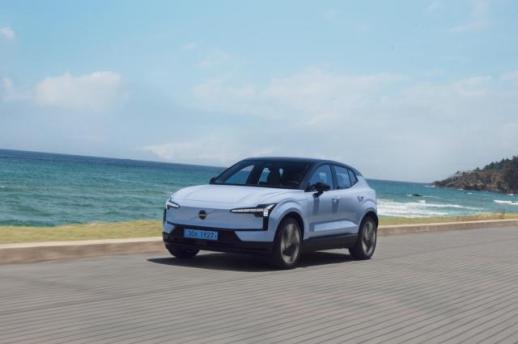 Volvo Korea Cuts EX30, EX30 Cross Country Prices by Up to 7.61 Million Won Volvo Car Korea said Feb. 20 it will cut the list prices of its premium all-electric SUVs, the EX30 and the EX30 Cross Country (EX30CC), effective March 1. The company said the decision followed close talks with its headquarters and is aimed at broadening the EV market and giving more customers access to Volvo’s sustainable mobility. With the change, the entry-level EX30 Core will be priced in the 30 million won range, lowering the barrier to the premium imported EV segment, the company said. The EX30 Core will drop by 7.61 million won, from 47.52 million won to 39.91 million won. The EX30 Ultra and EX30CC Ultra will each be cut by 7 million won, to 44.79 million won and 48.12 million won, respectively. Government EV subsidies can further reduce purchase prices. Using Seoul’s subsidy as an example, the EX30 Core and Ultra would each receive 3.21 million won, bringing their prices to 36.70 million won and 41.58 million won. The EX30CC Ultra would receive 2.88 million won, for an effective price of 45.24 million won. Volvo Car Korea said the move is not a temporary discount tied to option changes, but a reduction in official list prices while keeping the highest-level options intact. Lee Yoon-mo, CEO of Volvo Car Korea, said the company decided on the cuts after “intense discussions” with headquarters that reflected the importance of the Korean market. He said Volvo aims to lead the mainstreaming of premium EVs through the EX30 and EX30CC and help customers experience Volvo’s value “without 부담,” or undue burden. The EX30 and EX30CC are all-electric SUVs that Volvo says offer flagship-level safety technology and convenience features despite their compact size. The EX30 uses a 66kWh NCM battery and a rear-wheel-based single-motor extended powertrain, producing 272 horsepower and 35.0 kg.m of maximum torque. It accelerates from 0 to 100 kph in 5.3 seconds and has a combined driving range of 351 km per charge. The EX30CC uses a 66kWh NCM battery and an all-wheel-drive twin-motor performance powertrain, producing 428 horsepower and 55.4 kg.m of maximum torque. It goes from 0 to 100 kph in 3.7 seconds and has a combined driving range of 329 km per charge. Volvo Car Korea said it will continue to offer what it called industry-leading coverage: a free warranty and consumables replacement service for five years or 100,000 km, and a high-voltage battery warranty for eight years or 160,000 km. It also includes 15 years of free over-the-air (OTA) updates and a free 5G digital package for five years. * This article has been translated by AI. 2026-02-20 09:27:00
 -
 Report Revives Health Rumors About Actor Choi Bul-am After TV Exit Actor Choi Bul-am has become the subject of renewed rumors about his health. On the 19th, MBN’s current-affairs and documentary program “Special Scoop World” aired a look at actor Im Hyun-sik’s daily life. In the episode, Im met with actor Park Eun-su, who played Il-yong in the MBC drama “Country Diaries,” and the two talked. Park expressed concern about Im’s condition, saying, “If you live alone, you at least have to be healthy.” He added, “The few senior people we have left, it feels like they’re all about to pass away,” and said, “Right now, senior Choi Bul-am isn’t doing well, and the seniors’ health isn’t good.” Park’s specific mention of Choi drew attention. Choi stepped down last year from KBS 1TV’s current-affairs and documentary program “Korean Table,” which he had hosted for 14 years. At the time, KBS said it was “not due to (Choi’s) health,” but Park’s remarks have brought the rumors back. Choi was born in 1940 and is 85 this year. 2026-02-20 09:01:41
 -
 Korea flags alleged wasteful spending at music performers group, including contracts tied to executive’s relatives The Korea Music Performers Association, known as KOSCAP, is facing scrutiny after allegations that it spent its budget loosely, including signing private contracts centered on companies run by relatives of an executive. South Korea’s Ministry of Culture, Sports and Tourism said on the 20th that a 2025 inspection of KOSCAP and the Korea Society of Copyrights for Literary Works and Art found numerous shortcomings in compensation distribution and organizational operations. The ministry said it selected three organizations through a public call to serve as copyright compensation recipients: the literary and arts copyright society, KOSCAP and the Korea Music Content Association. After reviewing their operations, it found multiple issues requiring correction, imposed corrective conditions and ordered the groups to undergo another review through a new call for applications in two years. At KOSCAP, the ministry said it found many cases of improper spending and weak governance. Executive A, it said, recommended a company led by a sixth-degree relative for 2025 holiday gift purchases, and KOSCAP then signed a 22.77 million won private contract with that firm. The amount exceeded KOSCAP’s internal limit for private contracts by 770,000 won. KOSCAP also signed an 11.3 million won contract with a travel agency where the same relative of Executive A worked while planning a 2025 staff workshop, the ministry said. The ministry said KOSCAP spent 329 million won on vacation pay in 2025, averaging about 10 million won per person. KOSCAP’s vacation-pay rate has steadily increased, rising from 120% of base salary in 2013 to 210% in 2024. It also created four new allowances in 2025 without reporting them to the general assembly or board, including children’s tuition (2 million to 3 million won a year), meal allowance (100,000 won a month), communications allowance (50,000 won a month) and a youth housing stability allowance (100,000 won a month). About 96.25 million won was paid to executives and staff under those categories over the past year. The ministry also said that while rules limit individual corporate cards to executives, KOSCAP appointed non-standing adviser B in October and signed a contract providing a monthly adviser fee of 5.7 million won, a corporate card with a 1 million won monthly cap for business expenses, and coverage under the four major social insurance programs. B charged 1,041,400 won in October alone, exceeding the limit, and the ministry cited cases of split transactions at the same location late at night. Other findings included an unauthorized expansion of a prefabricated panel space on a KOSCAP-owned building and a renovation contract signed for about 25 million won more than the publicly announced amount, the ministry said. At the literary and arts copyright society, the ministry said it found cases of overcollection involving works whose protection period had expired (five cases, including authors Sim Hun and Kim Yeongrang, totaling 630,000 won) and cases in which authors were misclassified and did not receive compensation for 10 years despite being members (two cases, totaling 240,000 won). The ministry said it issued corrective orders to KOSCAP and the literary and arts copyright society, including demands for disciplinary action against responsible officials, corrections to improper spending and steps to prevent recurrence. As conditions for designation as compensation recipient organizations, it also required measures to curb wasteful management, establish conflict-of-interest prevention plans, lower management fee rates and reduce undistributed compensation funds. 2026-02-20 08:57:23
 -
 Trot Singer Yoon Tae-hwa Reveals Divorce on TV Chosun’s “Miss Trot 4” Trot singer Yoon Tae-hwa has revealed that she divorced. Yoon appeared on the Feb. 19 afternoon broadcast of TV Chosun’s trot survival show “Miss Trot 4,” competing in the second round of the “Legend Mission” solo stage. She chose Choi Jin-hee’s “Repentance,” a song about deep regret after a breakup. Asked by Choi why she picked the song, Yoon said, “After finishing ‘Miss Trot 2,’ I got married, but after living together for a year, I came back.” She previously married a non-celebrity man eight years older than her on March 8, 2022. Yoon added that when “Miss Trot 2” began, her mother collapsed and it was a difficult time. She said that even after marrying her then-boyfriend, she remained the family breadwinner. “I had to take care of my mother, so I couldn’t fully play the role of a wife, and after talking things through, we decided to live our own lives,” she said. She added that the song resonated with her, leading her to choose it. After the performance, Yoon made the “Miss Trot 4” top 10.* This article has been translated by AI. 2026-02-20 08:42:06
 -
 KB Kookmin Bank Union Faces Impeachment Bid Against Chair After Labor Deal KB Kookmin Bank’s labor union has finalized its 2025 wage and collective bargaining agreement, but an unprecedented move to impeach the union chair is now being raised. The push comes after a majority of members voted against the tentative deal, yet the chair moved ahead with it under his authority. The union says it is prepared to take the dispute to court over issues including bonuses that have already been paid, signaling the conflict could drag on. According to the financial industry on Thursday, the union has formed an emergency committee and will begin voting Feb. 23 on whether to file an impeachment motion against union chair Kim Jeong. If at least one-third of members agree, the motion can be formally submitted. After a motion is filed, the chair must convene the impeachment decision-making body within two weeks. If at least two-thirds of members vote in favor, the chair must step down. Members’ anger centers on Kim’s decision to implement compensation based on the tentative agreement despite its rejection. In a second vote held Feb. 11, 5,443 of 9,369 members voted against the deal, defeating it. The tentative agreement included a 3.1% wage increase (3.3% for contract workers), a profit-sharing bonus (P/S) of 300%, a special incentive payment of 7 million won, elimination of the P/S cap and a plan to rebuild the profit-sharing system within three quarters, and a 4.9-day workweek that includes leaving work one hour early on Fridays. Internal dissatisfaction remained over the raise and the compensation structure. Kim, who won reelection last month, had made “up to 600% in bonuses” a key campaign pledge, which the union said helped drive the majority “no” vote. Even so, Kim pushed the agreement through, citing the approaching Feb. 13 deadline for paying bonuses to employees taking voluntary retirement, despite the deal being rejected twice. The union said, “Even after an overwhelming majority opposition was confirmed twice in a membership vote, Kim trampled members’ will with a single statement and forced the agreement through,” calling it “a serious matter that undermines the foundation of democratic legitimacy.” In a statement issued Wednesday, Kim said, “As the payment deadline for our retired seniors drew closer, my heart burned, and I ultimately made a lonely and heavy decision with the resolve to bear all criticism alone.” He added, “As chair, I cannot wash away with any excuse that I did not fully follow members’ wishes, and I will not avoid responsibility but face it head-on.” The infighting could also spill into legal action. With the profit-sharing bonus already paid after Kim moved ahead, some observers say a court is less likely to grant an injunction to invalidate the agreement. The union, however, believes it could still prevail in a lawsuit on the merits. 2026-02-20 08:30:00
 -
 K-Pop Boosts Hanbok’s Global Profile, but Experts Say Daily Wear Is the Next Test As K-pop artists including BTS raise the hanbok’s profile on the global stage, calls are growing to find ways to root the traditional Korean outfit in everyday life. Industry officials said Feb. 20 that with BTS’ full-group return nearing, attention is on whether K-pop’s global reach can translate into new momentum for the hanbok industry. BTS has frequently used hanbok-inspired looks onstage, helping recast the garment as a modern, trend-forward style. The group drew worldwide attention on NBC’s “The Tonight Show Starring Jimmy Fallon,” performing with Gyeongbokgung Palace and Geunjeongjeon Hall as a backdrop while wearing stage outfits that reinterpreted hanbok elements. For “IDOL,” BTS wore costumes based on hanbok, updated with modern takes on traditional patterns and colors. Member Suga also sparked buzz by wearing a gonryongpo in the music video for his solo track “Daechwita.” BTS has also introduced hanbok as “Korean culture” in interviews with major overseas media outlets. Hanbok is also taking on a role as a symbol of K-culture in diplomacy. Ahead of Brazilian President Luiz Inacio Lula da Silva’s visit to South Korea, first lady Rosangela da Silva posted photos on social media wearing a hanbok gifted by the local Korean community. “At this moment, ahead of an official visit to South Korea, I had the honor of receiving a hanbok as a gift,” she wrote, describing it as “a traditional Korean outfit mainly worn for festivals, weddings, holidays and cultural events.” Kim Hye-kyung, recently named an “honorary hanbok ambassador,” has worn hanbok while accompanying President Lee Jae-myung on overseas trips, officials said. At a recent hanbok New Year gathering, she said, “Hanbok is a precious cultural heritage that represents Korea and a core asset of K-culture,” adding, “I will devote myself even more to promoting the beauty of hanbok.” Experts say the next step is making hanbok part of daily life, moving beyond the idea that it is only formal wear. Many argue it should be used across a wider range of content, including K-pop, games and virtual reality. Kim So-hyun, a professor in the Department of Hanbok Culture Contents at Baewha Women’s University, said content is needed so people can experience hanbok in virtual spaces as well. She pointed to examples of companies such as Louis Vuitton offering brand experiences to younger users in virtual platforms like Zepeto and generating revenue through item sales. “Hanbok is changing into cultural content people enjoy as play by combining it with films, dramas, webtoons and games,” she said. “The space for hanbok in everyday life is expanding into virtual worlds such as the metaverse.” Kwon Hye-jin, CEO of hanbok studio Hyeon and an adjunct professor at Ewha Womans University, said idol stars bowing to fans around the world are helping spread awareness of hanbok. She called for strategies to increase hanbok exposure through K-content, including collaborations with Korean Wave stars. She also proposed hanbok festivals that friends, couples and families can enjoy together, similar to Brazil’s Carnival or Japan’s matsuri. 2026-02-20 08:03:00