

Journalist

Jack L. Rozdilsky
-
 Dong-A Socio Holdings 2025 Operating Profit Rises 19.1% to 97.8 Billion Won Dong-A Socio Holdings said it posted solid results last year on broad-based growth across major subsidiaries. The company said Monday that its consolidated operating profit rose 19.1% from a year earlier to 97.8 billion won. Revenue increased 7.2% to 1.4298 trillion won. In the fourth quarter, revenue rose 14.7% to 371.9 billion won, while operating profit fell 26.4% to 16.0 billion won from the same period in 2024. Healthcare subsidiary Dong-A Pharmaceutical reported revenue of 726.3 billion won, up 7%, as all business segments grew. Operating profit rose 2% to 86.9 billion won. Over-the-counter drug sales climbed 26.4% to 223.9 billion won, and the Bacchus fatigue drink business rose 2.1% to 270.0 billion won. The consumer health business fell 5.7% to 196.1 billion won. Biopharmaceutical contract manufacturer STGen Bio posted revenue of 103.7 billion won, up 76.2%, driven by overseas commercialization of a Stelara biosimilar and expanded new orders. Operating profit jumped 323.4% to 7.1 billion won. Logistics unit Yongma Logistics reported revenue of 423.8 billion won, up 5.8%, and operating profit of 21.0 billion won, up 10.6%. Affiliate Dong-A ST, in which Dong-A Socio Holdings is the largest shareholder, said on a separate basis that operating profit fell 16.1% to 27.2 billion won last year, while revenue rose 16.3% to 745.1 billion won. Fourth-quarter revenue increased 22.6% to a quarterly record 200.4 billion won, but operating profit swung to a loss. Prescription drug revenue rose 19% to 527.8 billion won on higher sales of key products including growth hormone Grottropin and indigestion treatment Motilitone. Overseas business revenue increased 12.8% to 170.4 billion won, supported by biosimilar growth. In R&D, Dong-A ST said it completed a Phase 2a trial of DA-1241, a treatment candidate for metabolic dysfunction-associated steatohepatitis and Type 2 diabetes being developed through its U.S. affiliate Metavia. It said a Phase 1a trial of obesity candidate DA-1726 is ongoing. The company also said it will run a Phase 1 trial in the first half for antibody-drug conjugate candidates targeting gastric and pancreatic cancers after acquiring ADC specialist AbTis. It said Phase 1 trials in South Korea are also underway for a dementia treatment and an immuno-oncology drug. Another affiliate, CDMO company ST Pharm, reported operating profit of 55.1 billion won last year, up 98.9%, and revenue of 331.6 billion won, up 21.1%. In the fourth quarter, ST Pharm posted revenue of 129.0 billion won and operating profit of 26.4 billion won, up 11.4% and 15.9%, respectively, from the same period a year earlier. ST Pharm said results improved on growth in its oligonucleotide drug CDMO business. Annual oligonucleotide revenue rose 35% to 237.6 billion won, and its order backlog stood at 204.0 billion won at the end of last year. In January, it won a new single supply contract worth 83.0 billion won.* This article has been translated by AI. 2026-02-09 17:15:00
 -
 BTS Comeback D-40: More than a pretty face — Jin *Editor’s Note — As BTS prepares to return as a full seven-member act with a new album set for March 20 and an open-stage performance at Gwanghwamun on March 21, following a near four-year hiatus for rotational military service, AJP revisits the group’s 13-year trajectory. This series reexamines BTS’s history, music, performance identity and enduring appeal. The second installment traces the BTS member Jin's roots and growth. SEOUL, February 09 (AJP) - With 40 days to go until BTS’s March 21 comeback show, fan attention is once again sharpening around individual members. Among them, Jin, the group’s eldest, is making clear he is not content with symbolic seniority. He topped the January Idol Ranking conducted by global fandom platform Star Planet, collecting 155,385 votes in a poll held from Jan. 1 to 25. The result earned him a week-long advertising feature at Digital Media City Station in Seoul — a familiar but still telling marker of sustained fan engagement. The numbers reflect more than online enthusiasm. Jin’s recent musical and performance results point to a solo career that has moved beyond experimentation. His title track “Don’t Say You Love Me” from the 2025 mini album Echo has surpassed 800 million cumulative streams on Spotify. His Blu-ray release #RUNSEOKJIN_EP.TOUR in JAPAN, documenting the final stop of his first solo tour, topped Oricon’s Weekly Video Ranking in early February, leading both the combined DVD/Blu-ray and Blu-ray-only charts. First-week sales exceeded 14,000 copies. These milestones are the product of gradual accumulation rather than sudden reinvention. Born on Dec. 4, 1992, Kim Seok-jin debuted with BTS in 2013 as a vocalist in a group initially driven by performance and rap-centered structures. As BTS’s albums grew more narrative and musically layered, his role expanded accordingly. His solo development began within group releases. “Awake” on WINGS (2016) introduced a restrained, introspective tone. “Epiphany” on LOVE YOURSELF 結 Answer (2018) became a thematic anchor in concerts. “Moon,” included on MAP OF THE SOUL: PERSONA (2019), broadened his appeal with a more accessible sound. That progression culminated in “The Astronaut” (2022), produced with Coldplay and released shortly before his military enlistment. The single charted globally and marked his transition toward independent visibility. Jin enlisted in December 2022 and served 18 months as an assistant drill instructor in Yeoncheon, becoming both the first BTS member to enter and complete mandatory service. He was discharged in June 2024. Since then, his solo work has shifted into album-centered form. HAPPY (2024) debuted at No. 4 on the Billboard 200, while Echo (2025) entered at No. 3, confirming steady upward momentum. The results suggest a developing catalogue rather than a series of isolated releases. Beyond music, Jin has maintained a consistent media presence through Run Seokjin and Netflix’s Kian’s Bizarre B&B, earning major variety and popularity awards in 2025. His commercial profile remains strong, with endorsement deals spanning fashion, beauty, food and technology — from Gucci and Fred to Laneige and Ottogi — reinforcing his reputation as a reliable sales driver. Across recording, touring, broadcasting and branding, Jin has quietly built one of the most structurally balanced solo portfolios within BTS. As the group moves toward its long-awaited full reunion, his trajectory stands out not for spectacle, but for continuity. Having navigated enlistment, reentry and reinvention ahead of his peers, Jin now returns to the group not simply as its eldest member, but as one of its most methodically prepared. The next installment will track SUGA. 2026-02-09 17:12:49
 -
 Korea Sports Council to Run Official Website for 2026 Milan-Cortina Winter Olympics The Korea Sports Council said Monday it will operate an official website during the 2026 Milan-Cortina d’Ampezzo Winter Olympics to provide information on South Korea’s athletes and the competition. The special site will feature official athlete profiles, event schedules, real-time results and past Olympic records. Schedules and results will be delivered quickly and accurately through an information link with the International Olympic Committee. Athlete interviews, on-site Team Korea updates, and Olympics-related event information from the council and sponsors will be shared through social media and the website. The site will also list South Korea’s past Olympic results and profiles of previous medalists, including their honors. A national team archive will provide details on the current delegation’s activities, national team history and results from previous competitions. Yoo Seung Min, president of the Korea Sports Council, said the website will provide real-time information such as schedules and results to boost public interest in the Olympics and build support for the team.* This article has been translated by AI. 2026-02-09 17:12:00
 -
 Hyundai Motor Group Falls to No. 4 Outside China as BYD Overtakes in EV Sales Hyundai Motor Group was overtaken by China’s BYD in electric vehicle sales last year in the global market excluding China. According to market research firm SNE Research on Sunday, BYD sold 627,000 EVs outside China last year, up 141.8% from a year earlier. That put BYD in third place by automaker, ahead of Hyundai Motor Group’s 609,000. Volkswagen ranked No. 1, delivering 1.266 million vehicles, up 60.0%. Tesla was No. 2 with 1.01 million, down 10.7%. It was the first time Hyundai Motor Group posted lower annual EV sales than BYD in the market excluding China. SNE Research said BYD’s push into overseas markets, backed by price competitiveness and in-house battery technology, became clear in last year’s rankings. BYD has expanded and built plants in Europe (Hungary and Turkey) and Southeast Asia (Thailand, Indonesia and Cambodia). It also diversified its portfolio to match regional demand, focusing on commercial vehicles and small cars. Hyundai Motor Group, despite relatively steady growth, ceded third place as BYD’s sales surged. SNE Research said the Ioniq 5 and EV3 led results, but sales of key models such as Kia’s EV6 and EV9 and Hyundai’s Kona Electric slowed, limiting momentum. Hyundai Motor Group delivered about 166,000 vehicles in North America last year. SNE Research noted concerns that price competitiveness could be hurt if the United States raises tariffs on South Korean-made cars back to 25%. “Hyundai Motor Group has room to partially cushion tariff risk by expanding local production, including at Hyundai Motor Group Metaplant America (HMGMA) in Georgia,” SNE Research said. But it warned that if tariffs expand to parts, even U.S.-assembled vehicles could face cost pressure, making lineup mix, pricing strategy and the pace of supply-chain localization key variables. EV registrations outside China, including plug-in hybrids, totaled 7.662 million last year, up 26.6%. SNE Research said that compared with 2024, when growth slowed to 6.0% amid a temporary demand slump, the market appears to be entering a recovery phase. The compound annual growth rate from 2017 to 2025 was 37.7%. By region, Europe rose 34.9% to 4.257 million vehicles, accounting for 55.6% of the market excluding China. North America fell 5.0% to 1.736 million after clean-vehicle tax credits under the Inflation Reduction Act ended in September last year. Asia excluding China totaled 1.233 million, up 58.5%. SNE Research said growth held in 2025, but the market’s focus shifted from policy-driven expansion to profitability, supply chains and price competitiveness. It said moderate growth is likely to continue in 2026, but regional volatility could increase as tariffs, regulations and incentives change.* This article has been translated by AI. 2026-02-09 17:06:00
 -
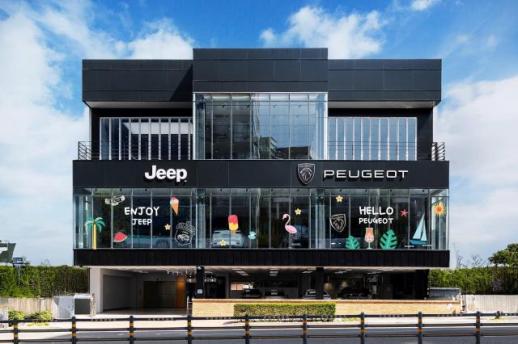 Stellantis Korea to Offer Voluntary Buyouts for First Time in Three Years Stellantis Korea will offer voluntary buyouts for the first time in three years as weak domestic demand persists and its parent company’s performance worsens. According to the auto industry on Monday, Stellantis Korea has recently begun accepting applications from employees. The program covers about 70 workers in the national sales division, which handles sales and marketing for brands including Peugeot and Jeep. There are no age or tenure limits. The company said the process is based entirely on voluntary departures and will follow relevant laws and procedures. Stellantis last carried out restructuring in South Korea in 2023, about three years ago. The latest restructuring is being implemented across all global regions where Stellantis operates, including South Korea. Stellantis has said it would absorb losses of 22.2 billion euros (about 38.4 trillion won) incurred while reshaping its business amid slowing demand for electric vehicles. The move follows prolonged weakness in the EV market, including after the U.S. government tightened requirements for Inflation Reduction Act EV tax credits in October last year. Stellantis is a global automaker formed through the merger of Fiat Chrysler (FCA) and PSA Group. It has 14 brands, including Jeep and Peugeot. Its South Korean results have also remained weak. Jeep sales in South Korea totaled 2,072 units last year, down 21% from 2,628 a year earlier. Peugeot sold 979 units, up 3% from 947. A Stellantis Korea official said the step is part of a global efficiency strategy and a restructuring program being pursued simultaneously in key regions, including South Korea. The official said the company’s domestic business operations will not be affected.* This article has been translated by AI. 2026-02-09 17:03:00
 -
 Agriculture minister dismisses further tariff-related pressure from US SEOUL, February 9 (AJP) - South Korea is unlikely to be pressed to open its agricultural market further beyond the scope of last fall's broader tariff-related deal with the U.S. Dismissing doubts, Agriculture Minister Song Mi-ryeong made the remarks during a press briefing at the government complex in Sejong on Monday, when reporters asked whether South Korea's move to expand imports of American potatoes was made at Washington's request. She clarified that the imports from about a dozen U.S. states were part of an extension of quarantine procedures that began in 2019 and brushed off farmers' concerns, saying the impact would be minimal. Song argued that domestically grown potatoes are more competitive in both quality and price than American ones, citing that previous imports from 22 U.S. states did not affect the domestic market. On the controversial plan to relocate the Korea Racing Authority, the country's equestrian agency, for housing development, which has sparked violent protests from locals in Gwacheon, Gyeonggi Province, she said the government will work with relevant ministries, including Land, Infrastructure and Transport, to find a solution. Addressing concerns over rising rice prices, she pledged that the government would intervene promptly should prices surge including the immediate release of stockpiles to stabilize the market. Regarding the government's proposed tax on sugar, Song said the government is still reviewing various scenarios, adding that if the levy only targets sweetened beverages, the impact on inflation would likely be limited. 2026-02-09 16:57:26
 -
 MrBeast Posts Super Bowl Photos With Rosé, IShowSpeed and Kim Kardashian YouTuber MrBeast, who has the most subscribers worldwide, shared a photo with singer Rosé at the NFL Super Bowl. On Sunday, MrBeast posted the picture on social media with the caption, “I like football.” In the photo, MrBeast and Rosé look into the camera, smiling. MrBeast also posted photos with YouTuber IShowSpeed and U.S. model Kim Kardashian. In the Super Bowl on Sunday, the Seattle Seahawks beat the New England Patriots 29-13, earning payback after 11 years and winning the franchise’s second Super Bowl title. 2026-02-09 16:51:00
 -
 Korea joins global AI bet, tripling spending in 2026 SEOUL, February 09 (AJP) - The bill for artificial intelligence is stretching at a staggering pace, and South Korea is joining the race by tripling government spending on AI to 10.1 trillion won ($6.9 billion) this year. Even so, Seoul's commitment is a small splash in a rapidly deepening global pool. Big Tech alone is poised to pour roughly $650 billion into AI-related capital expenditure in 2026. Amazon, Alphabet, Meta and Microsoft plan between $635 billion and $665 billion in spending on data centers and AI chips this year — about 67 percent more than their combined outlay in 2025. In a November report, JPMorgan Chase warned that the industry would need to generate roughly $650 billion in annual revenue through 2030 to secure a 10 percent return on projected investment. Against this backdrop, South Korea — home to memory chip leaders Samsung Electronics and SK hynix — is waging its own costly campaign to build sovereign AI capabilities. "It's about locking in users early," said Park Han-woo, a professor at Yeungnam University. "Companies are investing aggressively despite limited short-term returns." President Lee Jae Myung has made AI the centerpiece of his economic agenda, calling the 2026 budget "Korea's first AI-era budget." Of the 10.1 trillion won allocated — up from 3.3 trillion won in 2025 — about 7.5 trillion won will go toward infrastructure and talent development, including the addition of 15,000 GPUs to bring the government's total to 35,000. Another 2.6 trillion won will fund AI adoption across industries and public services. "In the AI age, being a day late means falling a generation behind," Lee told parliament. The "Sovereign AI Foundation Model" Push At the core of Seoul's strategy is the government-backed "sovereign AI foundation model" competition, aimed at developing homegrown large language models that can rival ChatGPT and Gemini. The Ministry of Science and ICT selected five consortia in August 2025 — led by LG AI Research, SK Telecom, Naver Cloud, NC AI and Upstage — each receiving substantial computing resources and official "K-AI" developer status. The first evaluation round in January delivered a surprise: Naver Cloud, widely seen as a front-runner, was eliminated after evaluators found it had relied on fine-tuning a model developed by Alibaba rather than training a fully original system. NC AI, a unit of NCSoft, was also cut. LG AI Research, SK Telecom and Upstage advanced, with LG ranking first across all criteria. The government plans to narrow the field to two finalists by the end of 2026. Previously eliminated companies, including Kakao and KT, will be eligible to re-enter, though none have signaled interest. Korea's private sector is also ramping up. Naver and Kakao roughly doubled facility investment in the third quarter of 2025 year-on-year. Naver's capital expenditure on data centers and servers climbed to 389.5 billion won, with server spending alone jumping from 146.5 billion won to 350 billion won. The company has pledged over 1 trillion won in GPU investments in 2026. Kakao, which partnered with OpenAI to develop AI agents for its messaging platform, is investing 600 billion won through 2029 to build a dedicated AI data center in Namyangju, while trimming affiliates to redirect capital toward AI. SK Telecom appears to be making the boldest bet. The carrier reported a 73 percent drop in net income for fiscal 2025 as it funneled capital into AI data centers, yet its shares traded near a 52-week high following its Feb. 5 earnings release. The company is building a 1-gigawatt AI data center in Ulsan with Amazon Web Services and plans to expand across Southeast Asia, starting with Vietnam. "SK Telecom is positioned for profit recovery in 2026," said Kim Hong-sik, analyst at Hana Securities, citing a low base and potential inflows if selected as a national AI project operator. Still, the biggest question looms: profitability. While Amazon generates more than $700 billion in annual operating cash flow, Naver's total revenue for 2025 was about 12 trillion won and Kakao's roughly 8.9 trillion won — figures that pale beside the hundreds of billions being committed to AI infrastructure worldwide. Experts say the cost burden may ease only when the industry shifts from GPUs — essential for training and running large models — to less power-hungry NPUs capable of deploying lighter models at lower cost. "GPUs, especially Nvidia's, are advancing faster than the models themselves," said Kong Duk-jo, professor of AI policy and strategy at the Gwangju Institute of Science and Technology. "If fabless NPU firms can build competitive chips, it could open new markets across hardware and software." He added that on-device AI, already demonstrated by Samsung, shows potential for broad commercial applications. 2026-02-09 16:26:34
 -
 South Korea Auto Industry Urges Fast Passage of U.S. Investment Special Act Amid Export Uncertainty The South Korean auto industry urged lawmakers to quickly pass the proposed “Special Act on Strategic Investment Management Between South Korea and the United States.” The Korea Automobile & Mobility Association (KAIA) said in a statement Monday that the industry is increasingly uneasy after reports that the U.S. government is considering raising tariffs on major items, including automobiles, from 15% back to 25%. KAIA said the move is being discussed because of delays in passing the special act and other factors, despite a bilateral agreement reached in November last year. KAIA said the possibility of higher tariffs is “amplifying uncertainty” across the auto industry’s investment and export environment, and it expressed “serious concern.” As the shift to future mobility accelerates, KAIA said, companies need a predictable and stable business environment to support large-scale investment aimed at securing global leadership. It warned that prolonged uncertainty over potential tariff hikes would weaken companies’ willingness to invest and could erode competitiveness across the broader industrial ecosystem. KAIA called for swift passage of the special act so companies can reduce external risks and continue investment and exports in a stable environment.* This article has been translated by AI. 2026-02-09 16:24:00
 -
 BTS Comeback D-40: Police to deploy task force as Seoul concert expected to draw 260,000 SEOUL, February 09 (AJP) - Seoul police are bracing for a massive influx of up to 260,000 people next month as K-pop band BTS returns to the stage for a high-profile comeback performance in the heart of the capital. Park Jeong-bo, commissioner of the Seoul Metropolitan Police Agency, announced Monday that a dedicated task force led by the deputy commissioner for public safety has been established to manage the event. During a regular press briefing, the commissioner said every department within the force is currently focused on securing the venue. The concert, "BTS Comeback Live: ARIRANG," is set for March 21 at 8 p.m. (1100 GMT) at Gwanghwamun Square. The event marks the first time the full group will perform together in nearly four years since completing their mandatory military service. Gwanghwamun Square serves as the historical and political center of South Korea. Situated at the northern end of Sejong-ro, the site is home to the statues of King Sejong the Great and Admiral Yi Sun-sin and serves as the gateway to Gyeongbokgung Palace. The square has long been a focal point for South Korean public life, hosting everything from the 2002 World Cup street cheering to the 2016 candlelight vigils. Police estimate that 230,000 people could pack the area between the main stage and Daehanmun, the main gate of Deoksugung Palace located about 700 meters (0.5 miles) south of the square. If crowds spill over toward Sungnyemun, South Korea's "Great South Gate" and National Treasure No. 1, situated another 600 meters further south, the total could climb to 260,000, based on a density of two people per square meter. While the square has a formal capacity of about 34,000 for seated events, its open layout and connection to major boulevards allow for significantly higher numbers. To maintain order, authorities will divide the area into four major zones and 15 sub-sections, each overseen by a police superintendent. Security efforts will extend beyond crowd control to include 13 violent crime teams from nine local stations and specialized anti-terrorism units tasked with conducting explosives sweeps. "We are preparing with all-out measures so that citizens can watch the performance safely," Park said. The agency's cyber unit is also tracking online threats and illegal activities, including the use of macro programs to manipulate ticket sales and scams involving fraudulent accommodation bookings. While the event organizer, Hybe, has hired 3,500 private safety personnel, Park noted that police may request more staff depending on the turnout. The concert follows the March 20 release of the group's new album, also titled "ARIRANG," and will be streamed globally on Netflix. 2026-02-09 16:20:20