

Journalist

Jack L. Rozdilsky
-
 AI servers shift toward memory as Samsung moves first with HBM4 rollout SEOUL, January 26 (AJP) - Samsung Electronics has bolted out in the high-bandwidth memory (HBM) race as it readies to roll out sixth-generation high-bandwidth memory, HBM4, next month bound for U.S.-based fabless chip leaders Nvidia and AMD. The Korean tech giant has completed final qualification processes with major AI accelerator customers, clearing the transition from sampling to mass production ahead of next-generation chip launches expected later this year. Industry sources said all major memory makers, including SK hynix and Micron, recently resubmitted HBM4 samples in response to Nvidia’s tightened specifications for its upcoming Rubin platform. Samsung is understood to be the first supplier approved for an HBM4 prototype fabricated using its 1c-nanometer DRAM process. An official familiar with the matter said the current stage has moved beyond initial sampling, noting that sample shipments had already been provided to customers toward the end of last year. “Because this involves customer-specific products, it is difficult to confirm detailed internal processes,” the official said. “However, it is accurate to view the current phase as the step following sample shipments.” The official added that mass supply timing is closely linked to customers’ product readiness and launch schedules, and said shipments would proceed in line with those timelines. According to TrendForce, HBM4 is expected to cost at least 30 percent more than current HBM3E products due to the complexity of its new architecture and packaging requirements. Despite the higher price, demand is accelerating. The global HBM market is estimated at around $35 billion in 2025 and is projected to expand to between $52 billion and $61 billion in 2026. Some industry forecasts point to annual sales exceeding $85 billion by 2027 as AI workloads scale rapidly across data centers. The expansion is being driven by surging memory demand from advanced AI accelerators. Nvidia’s Rubin platform is expected to integrate eight stacks of HBM4, delivering total memory capacity of about 288 gigabytes — more than triple that of earlier-generation products. AMD’s next-generation Instinct MI450 accelerator is also expected to adopt HBM4, with memory capacity projected to reach up to 432 gigabytes. Analysts expect the trend to accelerate further, with higher-end Rubin variants likely to adopt 16-high stacking, pushing total memory capacity per processor toward the one-terabyte range. The technological leap from HBM3E to HBM4 represents more than incremental performance gains. HBM4 doubles the input-output interface from 1,024 bits to 2,048 bits, significantly widening the data pathway between processors and memory and addressing what the industry describes as the “memory wall.” While GPU compute performance has continued to scale rapidly, memory bandwidth constraints have increasingly reduced effective utilization rates, particularly during large-scale AI training and inference tasks. Kim Deok-gi, a professor of electronic engineering at Sejong University, said this bottleneck has become more pronounced as AI models require the handling of increasingly large and diverse data sets. “Even though GPU and CPU performance has improved significantly, the time required to move data back and forth has emerged as a limiting factor,” Kim said. “High-bandwidth memory effectively widens the data highway, allowing large volumes of information to be transferred simultaneously.” As AI applications expand toward agent-based systems and physical AI such as autonomous driving, the role of memory has become more central, he added. “In AI systems, computation remains important, but data must first be stored, retrieved and delivered at high speed,” Kim said. “That is why HBM has become a critical component in modern AI servers.” HBM4 also introduces architectural changes at the base-die level. Unlike earlier generations produced largely with memory processes, the logic die at the bottom of HBM stacks is increasingly manufactured using advanced foundry nodes, enabling improved power management, error correction and internal data handling. Industry observers say the shift reinforces a broader transition toward memory-centric AI systems, in which data movement between GPUs and high-bandwidth memory plays a more decisive role than traditional server CPUs. Samsung’s early HBM4 rollout is underpinned by its vertically integrated manufacturing structure as an integrated device manufacturer (IDM). The company controls DRAM production, logic-die manufacturing through its foundry operations, and advanced packaging technologies within a single supply chain. Such integration allows tighter performance optimization and shorter development cycles, particularly as AI chipmakers increasingly request customized memory specifications aligned with their accelerator roadmaps. Competition in the HBM market is expected to intensify as rivals prepare their own next-generation products. SK hynix said it is already operating HBM4 production in line with customer schedules. “With regard to HBM4, you may consider that we are already in mass production,” the company said, adding that specific shipment timing ultimately depends on customer roadmaps. Industry officials note that early commercial availability is becoming a critical differentiator as AI accelerator launch schedules grow more tightly synchronized with memory supply. The HBM4 timeline is expected to be closely watched during earnings conference calls by Samsung Electronics and SK hynix, scheduled an hour apart Thursday following their fourth-quarter and full-year 2025 results. 2026-01-26 15:59:44
 -
 Jeju beckons spring with Ipchun festival SEOUL, January 26 (AJP) -Ipchun — the first of the 24 solar terms and the quiet and unseeming threshold of spring — is nearing. Before buds appear or fields turn green, the change arrives as ritual, rhythm and light. From Feb. 2 through Ipchun Day on Feb. 4, Jeju will host the Tamna Kingdom Ipchun Gut, a ceremonial opening of spring rooted in the island’s ancient agricultural memory. The event will unfold at Gwandukjeong Pavilion and the Jeju Mok Government Office site, spaces long entwined with Jeju’s civic and spiritual life. Organized by the Jeju Federation of Arts and Culture, the festival revives communal rites that trace back to the era of the Tamna Kingdom, when the arrival of spring was not a date on a calendar but a matter of survival and shared hope. Through chants, movement and offerings, the gut marks the land’s awakening — and the people’s. This year’s theme, “Nal Berong Ttang Umjjak, Spring Stirs,” is expressed in the Jeju dialect, evoking the moment when warmth begins to seep into the soil and the earth itself seems to stretch after winter. Across four categories, 21 programs reinterpret those ancestral gestures, blending shamanistic ritual, agricultural tradition and communal celebration. The island has already begun to signal what is coming. On Jan. 25, ipchun chundeung lanterns were lit around the Jeju Mok Government Office site — quiet beacons announcing that spring is on its way. Hanging against the winter sky, they do not rush the season. They wait, as Jeju always has, for the land to answer. 2026-01-26 15:58:34
 -
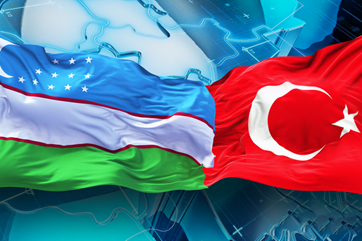 Uzbekistan president to visit Türkiye for strategic council meeting and earthquake housing ceremony SEOUL, January 26 (AJP) - Uzbek President Shavkat Mirziyoyev will travel to Türkiye on January 29 for an official visit centered on deepening bilateral strategic ties and inaugurating housing projects for earthquake survivors, the Embassy of Uzbekistan in the Republic of Korea said Monday. The visit includes the fourth meeting of the Supreme Council for Strategic Cooperation, an institutional platform designed to coordinate high-level policy between the two nations. During his stay, President Shavkat Mirziyoyev is scheduled to participate in an online ceremony to open residential complexes in the Arsuz district of Hatay Province. These facilities were constructed by Uzbekistan to support communities displaced by the powerful earthquakes that struck southeastern Türkiye in February 2023. The Arsuz and Gaziantep regions were among the most severely impacted areas, suffering widespread destruction of social and industrial infrastructure. The residential project in Arsuz was funded by the Uzbek government and provided to Turkish citizens free of charge. This follows immediate relief efforts in 2023, during which specialized units from the Ministry of Emergency Situations of Uzbekistan and medical brigades were deployed to assist in search-and-rescue operations. Political and economic relations between the two countries have expanded since the establishment of a strategic partnership in 2017. The Supreme Council for Strategic Cooperation, established in 2018 and co-chaired by the presidents of both nations, serves as the primary mechanism for bilateral dialogue. Previous sessions were held in Ankara in 2020 and 2024, and in Tashkent in 2022. Economic data indicates steady growth in trade, which reached approximately 3 billion USD by the end of 2025. This growth has been supported by a Preferential Trade Agreement signed in 2023. Beyond trade, the two nations maintain significant connectivity, with nearly 100 flights operating between them each week. The partnership also extends to cultural and multilateral cooperation through the Organization of Turkic States. Recent cultural initiatives include the installation of a monument to Alisher Navoi in Ankara and academic conferences honoring historical figures such as Abu Rayhan Beruni. The upcoming summit in Ankara is expected to focus on further integrating trade, energy, and transport corridors, including the development of regional connectivity between Central Asia and international markets through Türkiye. 2026-01-26 15:54:53
 -
 For K-pop fans, star pets — and even plants — draw equal attention SEOUL, January 26 (AJP) - As the countdown begins for the long-awaited comeback of South Korean superstar BTS, every small detail surrounding the seven-member group captures fans’ attention — even the fate of a struggling houseplant. V, known in Korean as Kim Tae-hyung, has long been open about the quieter attachments in his life. His black-and-tan Pomeranian, Yeontan, first appeared in 2017 via BTS’s official X account and later alongside V during a VLIVE broadcast in December 2018. Over time, Yeontan surfaced regularly in social media posts, livestreams and even photo content for V’s solo album Layover. No explanation was ever needed. His presence simply became part of V’s offstage world. Lately, that world has included something more fragile: a pot of leaves that refuses to thrive. In short captions and fleeting posts, V shared the small frustrations of plant care — wilting leaves, uncertain watering, modest hopes. He referred to himself as a “shik-rinni,” a Korean portmanteau combining sikmul (plant) and eorini (child), commonly used to describe a plant-care beginner. Instead of performance updates or studio hints, fans were given imperfect moments of daily effort. They did not overanalyze. They recognized a shift in rhythm. On Instagram Stories and Weverse, fans offered gentle encouragement. V replied with equally simple honesty: “I brought it home three days ago,” and later, “I’ll do my best as a beginner.” There was no dramatic conclusion — only a quiet exchange that revealed care without certainty, effort without polish. This attention to the small and personal is hardly new in K-pop fandoms, where companion animals often achieve celebrity status of their own. Rosé’s dog Hank, for instance, maintains a social media presence followed by roughly 4.5 million users. Though the account is run independently, a single image is enough for fans to identify whose dog it is. In August 2025, Hank appeared in Vogue’s pet-focused digital special edition DOGUE, introduced as a rescue dog turned global favorite. The recognition did not arrive suddenly; it accumulated over years of casual photos, short videos and consistent visibility. Other examples are familiar through television. SHINee member Key’s dogs, Comme des and Garçons, became recognizable through repeated appearances on the variety show I Live Alone and YouTube’s Kang Hyung-wook’s Bodeum TV. Scenes of daily life — meals, walks, birthdays — unfolded without fanfare. Over time, the dogs were no longer guests but fixtures. Jennie’s dog Kuma followed a similar path. Introduced through a Vogue Korea YouTube feature and the 2020 photo spread “Jennie and Kuma,” Kuma now needs no introduction within the fandom. The name alone evokes an image — quietly settled beside Jennie’s own. What links these cases is not spectacle, but continuity. Being there. Being seen often enough that explanation becomes unnecessary. Pets — and now even plants — do not serve as narrative devices, but as background details that show how a star’s life keeps moving forward. V’s plant now occupies that same space. It has no name. It does not flourish easily. Its care remains tentative and openly imperfect. Still, the process is shared. Life continues — and for K-pop stars, it continues in public, one small, ordinary detail at a time. 2026-01-26 15:48:30
 -
 Korean travel firm ties up with Son Heung-min's LAFC on fan tours SEOUL, January 26 (AJP) - South Korean tourism platform MyRealTrip has signed an official partnership with Los Angeles FC (LAFC) of Major League Soccer to offer South Korean fans safer and more differentiated sports travel products. The deal came as interest in MLS has surged following the transfer of South Korea national team captain Son Heung-min to LAFC. Under the agreement, MyRealTrip was named LAFC’s official Korea partner and will offer exclusive ticket sales and match-attendance travel packages developed in collaboration with the club. The first product will be an “LAFC Fan Tour,” a match package built around LAFC’s season opener on Feb. 21. The match is expected to feature LAFC against Inter Miami, which counts Lionel Messi, Luis Suarez and Rodrigo De Paul among its players. MyRealTrip described the fixture as one of the marquee matchups of the 2026 MLS season. The package combines tickets to the LAFC–Inter Miami match with a Los Angeles itinerary, offered as a three-night, four-day trip and limited to the first 200 buyers. “LAFC is honored to collaborate with MyRealTrip as we expand the club’s global reach and connect with fans around the world,” LAFC co-chair Larry Freedman said in a press release. He added that the partnership is expected to make it easier for South Korean fans to visit BMO Stadium, experience Los Angeles and engage more deeply with the club both inside and outside the venue. * This article, published by Aju Business Daily, was translated by AI and edited by AJP. 2026-01-26 15:47:04
 -
 S. Korea's KAIST researchers develop AI that fixes messy lab data to build better batteries SEOUL, January 26 (AJP) - South Korean researchers have built an AI system that predicts how to make better batteries, even when the data from previous lab tests is messy or incomplete. This new tool helps scientists skip the long, expensive process of trial and error by figuring out the best recipe for battery materials before they ever step into the lab. The Korea Advanced Institute of Science and Technology (KAIST) announced on January 26 that a team led by Professor Hong Seung-bum and Professor Jo Eun-ae developed this machine learning framework. It focuses on the cathode, the part of the battery that acts like a tank for storing energy. In most electric vehicles today, this tank is made of a mix of nickel, cobalt, and manganese, commonly called NCM. The secret to a long-lasting battery often lies in the size of the tiny particles that make up the cathode. If these particles are too big, the battery struggles to charge and discharge efficiently. If they are too small, the battery can become unstable. Finding the right size is essential for making electric cars go further and smartphones last longer. Until now, scientists had to spend months baking materials at different temperatures and for different amounts of time to see what size particles they would get. To make matters worse, lab records are rarely perfect. Sometimes a researcher forgets to record a temperature, or a measurement is missed, leaving gaps in the data that make it hard for traditional computers to learn the pattern. The South Korean team solved this by creating a two-part AI system. The first part, called MatImpute, acts like a smart autofill. It uses the laws of chemistry to guess what the missing lab data should have been. The second part, a model called NGBoost, then predicts the final particle size. What makes this AI different is that it does not just give a single answer; it also tells researchers how sure it is. For example, it might say, "I am 95 percent certain the particles will be this size." This helps scientists decide which experiments are actually worth their time. When the researchers tested the AI, it was right about 86.6 percent of the time. They even tried it on four brand-new recipes that the AI had never seen before. The AI predicted the particle sizes with an error of less than 0.13 micrometers, a distance much thinner than a human hair. The study showed that the way a material is cooked, including the temperature and time, actually matters more than the specific chemical ingredients when it comes to particle size. This insight will allow researchers to develop next-generation batteries, like all-solid-state versions, much faster than before. The research was led by Benediktus Madika, a doctoral student at the Korea Advanced Institute of Science and Technology, and was published in the journal Advanced Science on October 8, 2025. The project was supported by the Ministry of Science and ICT. (Paper information) Journal: Advanced Science Title: Uncertainty-Quantified Primary Particle Size Prediction in Li-Rich NCM Materials via Machine Learning and Chemistry-Aware Imputation DOI: https://doi.org/10.1002/advs.202515694 2026-01-26 15:46:57
 -
 South Korea sees sharp rise in FX deposits on equity, trade flows SEOUL, January 26 (AJP) - Foreign-currency deposits by residents in South Korea surged by nearly $16 billion in December, marking the largest monthly increase on record, driven by inflows linked to foreigners’ equity purchases, trade-related payments and rising client deposits at securities firms amid robust overseas investment. Data released by the Bank of Korea on Monday showed resident foreign-currency deposits at domestic banks totaled $119.43 billion at the end of December, up $15.88 billion from the end of November. The increase followed a $1.72 billion rise in November and was the biggest monthly gain since the data series began in June 2012. Resident foreign-currency deposits include accounts held in South Korea by citizens, local companies, foreigners who have lived in the country for at least six months, and foreign companies operating domestically. By holder, corporate deposits climbed $14.07 billion to $102.5 billion, while individual deposits rose $1.82 billion to $16.93 billion, the central bank said. By currency, U.S. dollar-denominated deposits increased $8.34 billion to $95.93 billion. Euro deposits rose $6.35 billion to $11.75 billion, while yen deposits gained $870 million to reach $9 billion. By bank type, deposits at domestic banks rose $12.76 billion to $101.6 billion, and deposits at branches of foreign banks increased $3.13 billion to $17.83 billion. The BOK said the rise in dollar deposits reflected funds placed for foreigners’ purchases of stakes in South Korean companies, estimated at about $2 billion, as well as trade-related payments by exporters and importers and higher client deposits at securities firms. * This article, published by Aju Business Daily, was translated by AI and edited by AJP. 2026-01-26 15:37:07
 -
 Korea's ex-PM Lee Hae-chan to be honored with five-day public funeral SEOUL, January 26 (AJP) - The funeral of former Prime Minister Lee Hae-chan, who died during a business trip to Vietnam, will be held over five days this week in the format of a public funeral in recognition of his contributions to South Korean society, officials said Monday. Lee, the vice chair of the Peaceful Unification Advisory Council (PUAC) that directly reports to the president, died Sunday at a hospital in Ho Chi Minh City after suffering cardiac arrest. He was 73. The funeral, jointly hosted by PUAC and the ruling Democratic Party, will run from Jan. 27 to 31, according to PUAC officials. Lee’s body is expected to arrive at Incheon International Airport early Tuesday before being transferred to the funeral venue. The service will be conducted as a “social funeral,” a form of public memorial reserved for figures deemed to have made significant contributions to society. The five-day period is longer than the customary three-day funeral in South Korea. Lee arrived in Ho Chi Minh City on Thursday but collapsed the following day while preparing to return to Korea after flu-like symptoms worsened. He was rushed to a nearby hospital and underwent an emergency stent insertion procedure but later died. A seven-term lawmaker, Lee was dubbed as a kingmaker on the liberal camp. He commanded key posts in all liberal governments - education minister under President Kim Dae-jung, prime minister under President Roh Moo-hyun, chairman of the Democratic Party during the Moon Jae-in administration, and senior vice chair of PUAC under President Lee Jae Myung. Lee’s political career was rooted in South Korea’s democracy movement. During the Yushin era, he was imprisoned for his involvement in pro-democracy activism, including the National Federation of Democratic Youth and Students case and the fabricated Kim Dae-jung insurrection plot case. He later entered formal politics under the post-1987 democratic system, experiencing firsthand both military rule and democratic transition. “South Korea today has lost a great teacher in the history of its democracy.," mourned President Lee on Facebook. He added that Lee “devoted his entire life to protecting and expanding democratic values amid the turbulence of modern Korean history.” 2026-01-26 15:02:07
 -
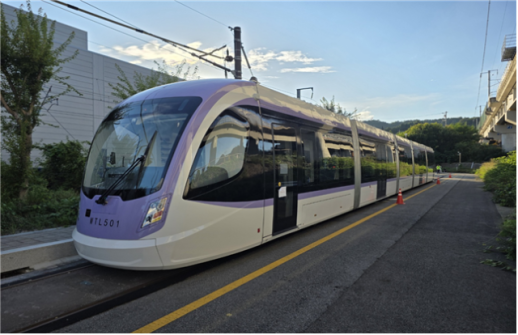 Trams to return to Seoul after 58 years, powered by batteries not overhead wires SEOUL, January 26 (AJP)-Trams are set to return to Seoul for the first time in nearly six decades, but in a distinctly modern form: battery-powered, sensor-equipped and free of overhead wires. The Seoul Metropolitan Government (SMG) said Monday it has completed installation of key infrastructure for the Wirye Line tram, including tracks and a depot, and will begin large-scale test operations next month. The city plans to move the first trainset into the depot early Tuesday, with the transfer taking place overnight between 11 p.m. Monday and 5 a.m. Tuesday to minimize traffic disruption. SMG said it coordinated traffic controls and safety staffing with Songpa Police Station. From February, the city will carry out final checks ahead of opening. Through August, it will conduct mainline trial runs to verify 16 items, including running safety and coordination with ground equipment. From April through December, integrated railway test operations will assess the stability and interoperability of all systems and complete remaining procedures required for commercial service. Because the tram operates on public roads, the city said it will strengthen safety measures by deploying safety personnel at 13 intersections and 35 crosswalks along the route, as well as running a dedicated situation team to respond to accidents. “These trial runs are a critical step to comprehensively verify safety and system integration between vehicles, facilities and operating systems,” said Im Chun-geun, head of the Urban Infrastructure Headquarters. “We will conduct thorough testing so residents can use the line safely and conveniently.” The Wirye Line is Korea’s first catenary-free tram, operating without overhead power lines. Instead, it draws power from a large-capacity battery mounted on the roof, reducing visual clutter in urban areas while lowering construction costs. The 5.4-kilometer line will connect Macheon Station on Subway Line 5 with Bokjeong Station on Line 8 and the Suin–Bundang Line, as well as Namwirye Station on Line 8. Ten trainsets are planned to serve 12 stations and one depot, easing traffic congestion in Wirye New Town. The tram features a low-floor design to improve accessibility for seniors, wheelchair users and other mobility-impaired passengers. It is also equipped with a forward collision warning system that combines radar and camera sensors. When an obstacle is detected, the system alerts the driver and automatically activates emergency braking if there is no response. The exterior design reflects citizen preferences collected through on-site feedback and Seoul’s M-Voting platform. The tram is finished in purple, inspired by King Onjo of Baekje, who established Wirye as his first capital, with a design meant to convey elegance and dignity. Trams were first introduced in Seoul in 1899 and operated for nearly 70 years before being phased out in 1968. The opening of the Wirye Line marks their return to the city after 58 years — this time as a high-tech, battery-powered mode of urban transport. 2026-01-26 14:38:49
 -
 South Korea to deploy AI-based military command platform by 2029 SEOUL, January 26 (AJP) - South Korea has launched development of its first artificial intelligence-based command-and-control system as it prepares for the transfer of wartime operational control, defense authorities and industry officials said on Monday. The Defense Acquisition Program Administration (DAPA) and Hanwha Systems held a kickoff meeting on Jan. 23 in Seoul for the Allied Command and Control System (AKJCCS) performance upgrade project. Hanwha Systems won the DAPA-led contract for the project in December. The project calls for a full redevelopment of AKJCCS, a core system used to command and control South Korea-U.S. combined military operations on the Korean Peninsula. The upgraded system will be the first domestically developed command-and-control platform to incorporate AI-based situational analysis and automated decision-support functions, along with a cloud-based server architecture and virtual desktop infrastructure. The enhancements are intended to improve information sharing in an evolving combined-operations environment, enabling commanders and staff to make more accurate and timely assessments and responses, according to Hanwha Systems. South Korea’s military plans to deploy the upgraded AKJCCS by 2029. Hanwha Systems said it aims to play a central role in building a future combined-operations command system led by South Korea, leveraging its experience in command-and-control systems and defense information and communications technology. The kickoff meeting brought together officials from DAPA and Hanwha Systems, as well as representatives from the Joint Chiefs of Staff, the U.S.-South Korea Combined Forces Command and the Republic of Korea Army Command, Control, Communications and Computer Command. * This article, published by Aju Business Daily, was translated by AI and edited by AJP. 2026-01-26 14:09:59