

Journalist

Jack L. Rozdilsky
-
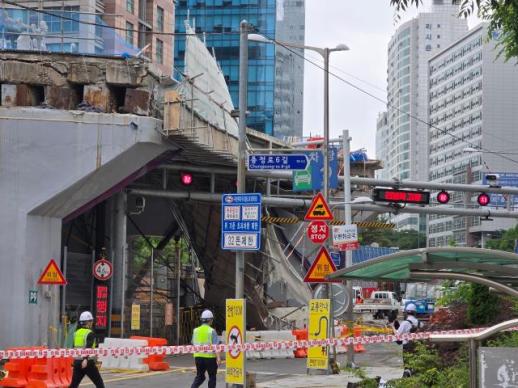 Labor Department Launches Investigation into Collapse at Seosomun Overpass Construction Site Authorities have launched a forced investigation into the collapse at the Seosomun overpass construction site in Seodaemun-gu, Seoul. The Ministry of Employment and Labor's Southern Seoul Office announced on May 29 that it is conducting a joint search with the Seoul Metropolitan Police Agency at the headquarters of the construction company, Heung-Hwa Construction, related to the incident. About 40 personnel, including labor inspectors and police, are involved in the search. Investigators aim to secure relevant documents, such as structural design plans and safety management plans, to determine whether the demolition work adhered to design standards and if appropriate safety measures were implemented to mitigate collapse risks. On May 26, a structure collapsed at the Seosomun overpass demolition site, resulting in the deaths of three men: one in his sixties and two in their fifties. Three others were injured in the incident. The Ministry plans to investigate the entire safety management system on-site, including the process of issuing work orders and the actual work methods employed. It will focus on identifying the causes of the fatalities. Following the accident, the Ministry established a dedicated investigation team of 15 members, primarily consisting of labor inspectors, to begin the inquiry. If the investigation reveals violations of the Industrial Safety and Health Act or the Serious Accident Punishment Act, the Ministry intends to hold responsible parties legally accountable. A Ministry official stated, "Based on the materials secured through the search, we will closely examine the circumstances of the accident and the implementation of safety measures. We plan to actively utilize forced investigations, including searches and arrests, in cases where there are significant casualties or where basic safety protocols were not followed."* This article has been translated by AI. 2026-05-29 09:26:00
 -
 SK Telecom to Launch Integrated 4G and 5G Plans in July SK Telecom (SKT) is set to launch a new pricing plan that integrates its 5G and LTE services, completely overhauling its pricing structure to ensure basic communication even after data is depleted. Starting in July, SKT will implement a phased update to its pricing system, which includes the launch of a 5G and LTE integrated plan, automatic application of age-based benefits, and free data assurance for all citizens, the company announced on May 29. The new plan, named 'Best Light,' will be available on July 2 and is designed to eliminate distinctions between network generations. It will consist of five unlimited data options ('Best') priced between 89,000 and 129,000 won per month, and 11 tiered data options ('Light') offering between 6GB and 250GB, priced from 39,000 to 79,000 won per month. Users of existing 5G devices will no longer be restricted to LTE networks when using LTE plans; they will have the flexibility to utilize both 5G and LTE networks as long as their devices support them. The existing ten pricing plans will also be consolidated into the new integrated plan, starting from the 20,000 won range. The method of applying benefits will also be simplified. Previously, customers had to enroll in separate age-specific plans to receive additional benefits, but now, customers who sign up for 'Best Light' will automatically receive age-based perks. For instance, upon reaching the age of 65, customers will receive an automatic 1.5GB data boost, and youth and student customers will get 50% discount coupons for coffee, movies, and roaming services. Additionally, subscribers to 'Best Pro' and higher plans will gain access to generative AI subscription benefits. Beginning July 1, SKT will also offer a 'Data Assurance Option (QoS)' for 107 LTE plans at no extra charge. This service allows customers to continue using communication services at speeds of up to 400kbps even after their basic data has been exhausted. Customers can opt out of this service through T World, authorized dealers, or by calling 114 if they prefer not to use it. The bundled plans will also be revamped starting July 1. The 'Recent Family Bundle' will remove the requirement for one line each of mobile and internet services, allowing customers to join by bundling only mobile lines, thereby lowering the entry barrier. Enrollment will also be available through non-face-to-face methods. Yoon Jae-woong, head of SKT's Product and Brand Division, stated, "We hope this pricing system overhaul will allow customers to use communication services more easily and comfortably. We will continue to enhance and improve our service system for customer convenience in the future." Meanwhile, LG Uplus announced on May 28 that it will launch its own integrated 5G and LTE pricing plan starting July 1, simplifying its pricing structure from 53 plans down to 18.* This article has been translated by AI. 2026-05-29 09:24:00
 -
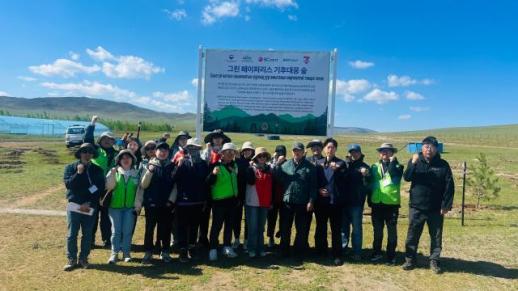 BC Card Expands Afforestation Project in Mongolia to Combat Desertification BC Card is expanding its afforestation efforts in Mongolia to combat desertification. The company announced on May 29 that it will utilize its 'Paperless' environmental fund and 'Green Card' fund to plant an additional 10 hectares of forest annually in the Bayanchandmani area of Mongolia through 2028. The Paperless environmental fund was established in 2012 through a partnership between BC Card and the Korea Environmental Industry and Technology Institute. It operates a system that eliminates the printing of card receipts. Currently, when participating merchants, such as BGF Retail and 7-Eleven, skip printing receipts, the savings from reduced value-added network (VAN) fees and receipt issuance costs are accumulated by BC Card to support the environmental fund. From 2019 to last year, BC Card and the Korea Environmental Industry and Technology Institute used the Paperless environmental fund to plant over 60,000 trees in the Ugiin Urt area of Mongolia, creating a cumulative forest area of 60 hectares. They also supported the installation of irrigation facilities essential for the continued growth of the trees. In addition, programs to assist local residents in achieving economic independence are being implemented. BC Card plans to continue providing agricultural training to local herders and support the expansion of local crop sales and job creation through a cooperative established in 2020 to help develop markets for local produce. Kim Hee-jung, head of BC Card's Communication Division, stated, "The small efforts of our customers to refrain from printing receipts in their daily lives are blossoming into a vast eco-friendly forest that is preventing desertification in Mongolia and transforming the air quality in Northeast Asia. We will continue to engage in diverse ESG management activities utilizing the Paperless environmental fund to lead the protection of the global environmental ecosystem." Meanwhile, the Mongolian government has been promoting a 'Billion Trees Campaign' since 2021 to combat desertification, and BC Card is supporting this initiative alongside NGOs and local governments.* This article has been translated by AI. 2026-05-29 09:22:00
 -
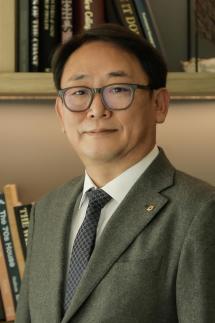 DaeShin Securities CEO Jin Seung-wook Focuses on Stability and Growth Jin Seung-wook's leadership at DaeShin Securities emphasizes 'stability after expansion.' Recently, the firm surpassed 4 trillion won in equity, meeting the criteria for entering the large investment banking sector. The focus now shifts from mere growth to whether this can be translated into a sustainable growth structure. Jin, a 'one-club man' with over 30 years at DaeShin and its affiliates, faces the challenge of transforming a retail-focused brokerage into a corporate finance and asset management platform based on investment notes. A Strategic Leader Driving Change at DaeShin SecuritiesJin Seung-wook is a representative strategic CEO who has grown within DaeShin Securities. He joined the company in 1993 through a public recruitment process and has since gained experience across various sectors, including global business, strategic support, management planning, DaeShin F&I, and DaeShin Asset Management. His unique background combines sales, finance, strategy, and affiliate operations.His leadership aligns with DaeShin Securities' current situation. The firm has rapidly expanded its capital in recent years, achieving significant growth. By the end of 2025, its standalone equity reached 4.1316 trillion won, and it was designated as a comprehensive financial investment business operator. The remaining tasks include obtaining large investment bank approval and entering the investment note business.The challenge begins here. Becoming a large investment bank requires more than just capital size; a stable revenue structure, internal controls, and risk management capabilities are essential. Financial authorities have recently emphasized internal controls and financial soundness as key factors in the approval process for large investment banks. This is why under Jin's leadership, there is a focus on both 'growth' and 'substance.'Upon taking office, he identified 'establishing a stable revenue base,' 'customer-centric management,' and 'strengthening risk management' as core tasks. This is not merely a declaration of conservative management; it signifies a shift towards substantial improvement following expansion.Ultimately, the crux of Jin Seung-wook's leadership is whether DaeShin Securities can evolve from a mid-sized brokerage into a stable capital market platform. Simultaneously Enhancing Wealth Management Stability and Investment Banking ProfitabilityDaeShin Securities is traditionally recognized for its strong retail and wealth management (WM) capabilities. As of the fourth quarter of last year, total WM assets reached 108 trillion won, a 38% increase from the previous year. The number of clients with assets exceeding 100 million won also rose significantly to 74,400.This is a vital asset for DaeShin Securities. A stable customer base and competitive asset management become strengths amid increasing market volatility. Jin aims to maintain this foundation while simultaneously expanding corporate finance and investment banking capabilities.Recently, DaeShin Securities has restructured its investment banking organization. The previous system has been changed to a '1 general manager, 3 divisions, 3 responsibilities' structure, focusing on enhancing corporate lending, refinancing, and IPO capabilities. Preparations for the investment note business are also part of this trend.Jin opts for balance here. Rather than pursuing aggressive global expansion like Mirae Asset Securities, he aims to strengthen both WM stability and IB profitability. This approach aligns with DaeShin's pragmatic strategy.The company's performance is also showing improvement. Last year, DaeShin Securities reported a consolidated operating profit of 301.4 billion won and a net profit of 186.7 billion won, with increases in brokerage, interest income, and trading profits. However, the decline in IB commission income indicates that strengthening IB capabilities remains a key challenge.Ultimately, Jin's strategy is clear: to build IB competitiveness on a stable WM foundation and transition into a large investment bank. The Key to Becoming a Large Investment Bank: Risk ManagementThe most significant test for Jin Seung-wook's leadership will be risk management. DaeShin Securities is considered a brokerage with a relatively high exposure to real estate finance and overseas real estate investments. As of the end of last year, the balance of securitized debt guarantees was approximately 4.3 trillion won, exceeding its equity.This is a critical variable in the process of obtaining large investment bank approval. Financial authorities consider not only capital size but also sustainable revenue structures and internal control systems. Recent cases of some brokerages facing difficulties in obtaining investment note approvals due to internal control issues have been interpreted as a warning to the market.DaeShin Securities has also faced internal control issues in the past due to allegations involving some employees in stock price manipulation. In response, the company implemented stringent measures, including the dismissal of related employees and restrictions on stock trading.Jin views this aspect as a top priority. He emphasizes strengthening risk management systems and compliance over aggressive growth. In fact, the market tends to evaluate his leadership more as a 'stability-focused strategist' rather than an 'expansion-oriented CEO.'Ultimately, Jin Seung-wook's entrepreneurial spirit in finance is not merely about aggressive management. He aims to connect DaeShin Securities to a long-term growth structure through the establishment of a 'stable system' necessary after capital expansion. Becoming a large investment bank is just a goal; the real challenge lies in ensuring sustainability thereafter.: SWOT Analysis :StrengthJin Seung-wook's leadership strength lies in his balanced experience in strategy, finance, and affiliate operations. He possesses a high understanding of the internal dynamics needed to lead both WM stability and large investment bank initiatives.WeaknessThere are evaluations that DaeShin's IB competitiveness is still limited compared to larger brokerages. The burden of real estate finance exposure is also seen as a weakness.OpportunityObtaining large investment bank approval and entering the investment note business present new growth opportunities. Expanding WM assets can also serve as a stable revenue base.ThreatThe real estate market downturn, interest rate volatility, and increased financial regulations pose key risks. The potential for recurring internal control issues may also impact market trust.* This article has been translated by AI. 2026-05-29 09:20:00
 -
 Korea's April industrial activity and spending retreat on Gulf energy shocks SEOUL, May 29 (AJP) - The energy shocks from months-long disruption of the Strait of Hormuz from the Middle East conflicts arrived on South Korean shores, battering industrial activity, corporate and consumer spending in April, data showed Friday. Factory output fell 0.7 percent from the previous month in April, the first contraction since January, as the refining sector was hit hard by the suspension of shipments from the Gulf, according to the Ministry of Statistics and Data. Industry-wide output stood at 117.8 in April, down 0.6 percent from the previous month in the first decline since January. Refining production collapsed 19.4 percent, marking its sharpest decline in roughly 38 years since 1988 in the aftermath of the Asian financial crisis and nationwide industrial restructuring, underscoring the depth of the Hormuz shock. 2026-05-29 09:19:21
 -
 Samsung Elec joins Anthropic funding round, fueling expectations of foundry order SEOUL, May 29 (AJP) - Samsung Electronics has taken a stake in Anthropic, the U.S. artificial-intelligence company behind the Claude model, in a deal that has raised expectations the South Korean firm will manufacture AI chips for Anthropic through its loss-making foundry business. Anthropic said on Thursday in the United States that it had raised $65 billion in a Series H funding round that valued the company at $965 billion, or about 1,440 trillion won — figures that rank among the largest private fundraisings and highest private valuations on record. The world's three memory-chip makers — Samsung Electronics, SK hynix and Micron Technology — joined the round as "strategic infrastructure partners." Anthropic said the trio's technology plays a core role in the global supply of memory, storage and logic chips, and that the partnerships would help it expand its computing capacity to meet customer demand. Neither Anthropic nor Samsung has confirmed a specific foundry order. The reference to logic chips is the basis for the foundry speculation. Logic chips are produced through foundry processes, and of the three memory companies in the round, only Samsung Electronics operates a foundry — neither SK hynix nor Micron has a foundry division. The industry has therefore read Anthropic's statement as a signal that the partnership extends beyond memory into contract manufacturing, with Samsung positioned to produce the AI chips that power Claude. Anthropic, regarded alongside OpenAI as one of the world's leading AI-model developers, would become a major addition to a Samsung foundry customer list that has been rebuilding in recent months. Samsung has already secured orders for Tesla's next-generation AI5 and AI6 chips, and produces the upgraded version of the AI4. It manufactures the Groq 3 Language Processing Unit, an inference chip originally designed by Groq and now produced for Nvidia following Nvidia's $20 billion licensing acquisition of Groq's core technology in late 2025. Samsung is also set to supply image sensors for Apple's new iPhone next year. That matters because the foundry has been a drag on Samsung's earnings for several years. As of 2025, the company held second place in the global foundry market with a 7.2 percent share, but TSMC of Taiwan led at 69.9 percent — a gap of 62.7 percentage points. The recent run of customer wins is not expected to close that share gap meaningfully in the near term, but it has revived hopes the foundry unit itself could return to profit next year, an aim more modest than catching the market leader. The Anthropic investment is being read in the industry as a step beyond a financial stake. Samsung has positioned itself as a "one-stop solution" provider combining high-bandwidth memory, advanced foundry processes and advanced packaging, an offering it is now extending into AI-infrastructure partnerships. As the AI market evolves from a memory-supply contest into a broader ecosystem spanning chip design, production, packaging and system optimization, the company appears to be using its full semiconductor portfolio to deepen relationships with the AI sector's most important players. "Samsung's investment is not a simple equity stake in an AI company but a signal that Samsung is broadening strategic relationships with the core players of the AI era," a person in the semiconductor industry said. "Expectations are growing that Samsung's foundry business may seize another opportunity as the AI market expands." 2026-05-29 09:19:11
 -
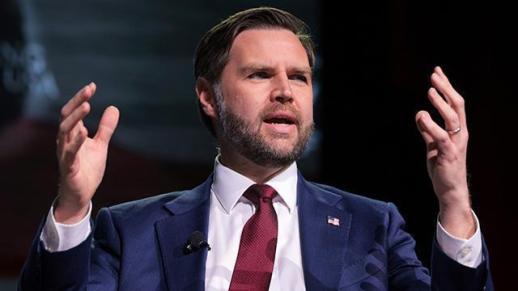 U.S. Vice President Vance: Agreement with Iran is Closer JD Vance, the U.S. Vice President, stated that while an agreement with Iran has not yet been reached, the two sides are getting closer. The U.S. and Iran have approached a preliminary agreement that includes extending a ceasefire and resuming navigation in the Strait of Hormuz, but a final deal has not been finalized. Key issues remaining include nuclear matters and the wording of a memorandum of understanding. According to Reuters on the 28th, Vice President Vance explained that "both sides are discussing the wording of the memorandum, and Iran's stockpile of enriched uranium and further enrichment activities are core issues." The U.S. is focused on preventing Iran from acquiring nuclear weapons. The proposed agreement reportedly includes a 60-day extension of the ceasefire and the initiation of negotiations regarding Iran's nuclear program. However, final approval from President Donald Trump and official confirmation from Iran are still pending. Control over the Strait of Hormuz is also a variable. The preliminary agreement is said to include plans to resume commercial shipping and return the use of the strait to pre-war levels. However, Iran is leveraging its navigation management authority as a bargaining chip, leaving it as a variable in the final agreement.* This article has been translated by AI. 2026-05-29 09:10:00
 -
 U.S. and South Korea to Launch Working Group on Nuclear Submarine Discussions South Korea and the United States will establish a working group on June 2 to discuss follow-up measures regarding nuclear-powered submarines, as outlined in the joint fact sheet from their recent summit.The Ministry of Foreign Affairs announced on May 29 that the inaugural meeting for the working group will take place in Seoul from June 2 to 3 to address security-related follow-up actions from the joint fact sheet.The South Korean delegation will include Deputy Foreign Minister Park Yoon-joo and representatives from various government agencies, including the National Security Office, Ministry of Foreign Affairs, Ministry of National Defense, Ministry of Climate and Energy, Ministry of Science and ICT, Ministry of Trade, Industry and Energy, and the Nuclear Safety and Security Commission.The U.S. delegation will be led by Assistant Secretary of State for Political-Military Affairs, Alison Hooker, and will include representatives from the National Security Council, Department of State, Department of Energy, and Department of Defense.* This article has been translated by AI. 2026-05-29 09:06:00
 -
 LG Uplus and Samsung Electronics Collaborate on 6G and ISAC Technology Research LG Uplus and Samsung Electronics are embarking on joint research focused on communication and sensing convergence technologies aimed at the 6G era. The primary goal is to validate research-stage technologies in real communication network environments to establish a foundation for commercialization. On May 29, LG Uplus announced that it signed a memorandum of understanding (MOU) with Samsung Electronics on May 27 to collaborate on the research and development of communication and sensing convergence technologies. The joint research will focus on communication and sensing convergence technology (base station-based sensing) and AI-6G integration technology, with plans to cooperate on future 6G technology standardization and the exploration of new services. Communication and sensing convergence (ISAC) utilizes existing communication infrastructure, such as base stations, as sensors to perceive the surrounding environment. LG Uplus identified ISAC as a core element of 6G in its 6G white paper published last year. The roles of each company are clearly defined. LG Uplus will leverage its accumulated network operation experience and validation environments as a telecommunications operator to verify the applicability of research outcomes in actual communication networks. Samsung Research, the advanced research organization within Samsung Electronics' DX division, will enhance the technology's completeness by incorporating the operational environment and requirements of telecommunications companies into the research. Previously, LG Uplus also signed a joint research agreement with LG Electronics on next-generation communication core technologies, including semantic communication and post-quantum cryptography (PQC). Following its partnership with Samsung Electronics, LG Uplus is accelerating its efforts to secure advanced technologies in the 6G research landscape. Lee Sang-yeop, CTO of LG Uplus, stated, "In the 6G era, the effectiveness of implementing research technologies in actual communication networks will be crucial. Through our collaboration with Samsung Research, we aim to validate and verify technologies from the perspective of telecommunications companies and steadily secure our competitive edge in future communication technologies."* This article has been translated by AI. 2026-05-29 09:04:00
 -
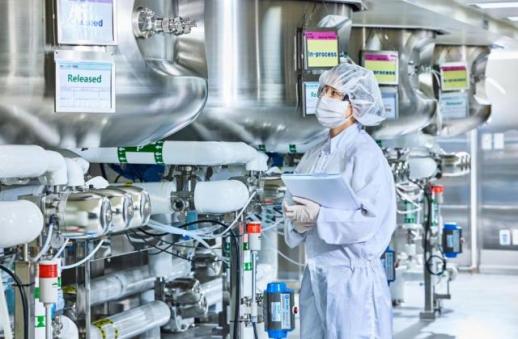 Celltrion Expects Growth Momentum Following Strong Q1 Performance Celltrion has reported its highest-ever quarterly performance in the first quarter of this year, raising expectations for continued growth in the second quarter. Although the biosimilar industry typically experiences a slowdown in the first quarter, Celltrion demonstrated improved performance driven by the rapid market acceptance of high-revenue new products and stable prescription growth for existing products. Analysts suggest that the strong performance in the first quarter could serve as a starting point for annual growth, considering that major European tenders are concentrated in the second and third quarters, with initial supply volumes expected to be reflected in the second half of the year. Additionally, the operational effects of the Branchburg plant in the U.S. are expected to further enhance growth prospects in the second quarter. ◆ Q1 Performance Driven by Existing and New Product Growth… European Market Prescription Expansion Continues In the first quarter, Celltrion recorded consolidated sales of 1.145 trillion won and an operating profit of 321.9 billion won, marking increases of 36% and 115.5%, respectively, compared to the same period last year. The operating profit margin improved to 28.1%. Excluding temporary impacts from regular maintenance of U.S. production facilities, the actual operating profit margin is expected to reach the 30% range. The growth in performance was driven by an expansion in prescriptions in the European market. Celltrion's flagship autoimmune disease treatment, the Remsima product line, achieved a combined market share of 70% in Europe as of the fourth quarter of 2025. Notably, Remsima SC has absorbed the demand for transitioning patients from intravenous (IV) prescriptions, continuing to expand prescriptions in major countries such as Germany (50%) and France (36%). New products have also established a foothold in the market. Omliclue, a treatment for chronic spontaneous urticaria and allergic asthma launched in Europe in September last year, secured significant market shares shortly after its release, achieving 98% in Denmark, 80% in Spain, and 70% in the Netherlands within four months. The autoimmune disease treatment Aptozma, which was sequentially launched in major European countries from late last year to January this year, has also seen an expansion in prescriptions within the European market. The introduction of subsequent biosimilar products has rapidly reshaped the product portfolio to focus on high-revenue items. Celltrion reported that five new biosimilars launched last year generated a combined revenue of 581.2 billion won in the first quarter, accounting for about 60% of total product sales. This product line's revenue increased by 67% compared to the same period last year, indicating a shift into a sales expansion phase. As initial supply volumes from European tenders will be reflected in the second half of the year, the trend of expanding sales for new products is expected to become more pronounced. ◆ Branchburg Plant Operations Enhance Production Capacity Celltrion is expanding its global production infrastructure and strengthening new business initiatives through its Branchburg plant in New Jersey. The facility, with a capacity of 66,000 liters, has resumed normal operations following regular maintenance, and contract manufacturing (CMO) and validation of its own products are expected to begin contributing to revenue in the second quarter. While the initial contribution to short-term profits from the Branchburg plant may be limited due to startup costs, it is viewed as a strategic base for enhancing supply responsiveness and mitigating tariff risks through local production. Celltrion plans to expand its production capacity from the current 316,000 liters to 571,000 liters through the expansion of its Songdo plants 4 and 5 and additional expansions at Branchburg. The CMO business is also a new growth pillar. Celltrion has surpassed 1 trillion won in cumulative orders based on contracts with global pharmaceutical companies. The Branchburg plant is expected to serve as a key infrastructure for expanding its own product production and contract development and manufacturing (CDMO) business. This aligns with the global sales expansion of high-revenue new products and is anticipated to support long-term cost competitiveness and profitability improvements. ◆ Analysts Predict Growth from New Products and Profitability Improvements Analysts are viewing Celltrion's performance trends positively. Major securities firms have assessed that the company's first-quarter results reflect a significant change in its performance structure, driven by revenue growth from high-revenue new products, synergies in European sales, and cost improvement effects. Daishin Securities noted that Celltrion has entered a phase of profitability improvement by eliminating one-time costs following its merger and leveraging its own production and direct sales systems. With improvements in the global biosimilar product mix and growth from new products, the EBITDA margin is expected to rise to the high 30% range, and the benefits of an expanded product portfolio will also begin to materialize. Currently, the biosimilar product portfolio consists of 11 items, with plans to expand to 18 by 2030 and 41 by 2038. As fixed cost leverage increases, profitability improvements are expected to continue alongside the growing share of new high-revenue products. Industry experts believe that the combination of stable market dominance from existing flagship products, growth from new products, and the effects of expanded production infrastructure will further strengthen Celltrion's leading position in the global biosimilar market. In particular, the operationalization of the Branchburg plant and the expansion of high-revenue product sales are expected to sustain growth momentum beyond the second quarter.* This article has been translated by AI. 2026-05-29 09:02:00