

Journalist

Jack L. Rozdilsky
-
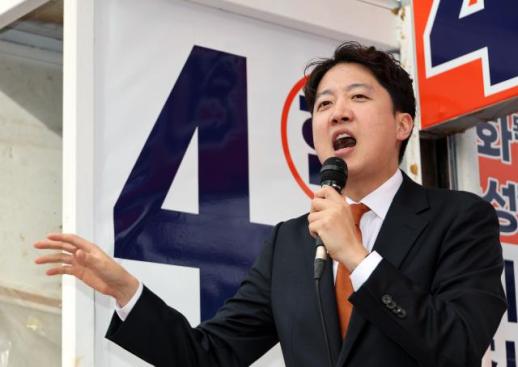 Lee Jun-seok Endorses Yoo Yi-dong in Pyeongtaek Election, Emphasizes Semiconductor Industry Lee Jun-seok, leader of the Reform Party, urged voters on May 28 to support Yoo Yi-dong, the People Power Party candidate running in the Pyeongtaek by-election, one day before early voting for the local elections and by-elections begins.In a Facebook post, Lee stated, "As the leader of the Reform Party, I ask you not just as a party leader but as a member of the National Assembly who must protect the semiconductor industry in southern Gyeonggi and the rights of engineers and researchers."He continued, "Yoo, who has shared the same concerns for over a decade with the development of the Godeok International New Town and Dongtan, deserves another opportunity to work in the National Assembly. He is someone I have trusted for a long time and whom I personally recruited as the chair of the policy committee. He has consistently spoken the truth without bearing any responsibility for the military regime or the failures of the Yoon Suk-yeol administration."Lee also targeted Kim Yong-nam, the Democratic Party candidate, and Cho Guk, the Justice Party candidate, saying, "There are individuals with allegations of operating illegal loan businesses and controversies surrounding their children attending foreign language high schools while being listed as authors on engineering papers. I hope those with such controversies are eliminated from consideration, as they tarnish the pride built on the hard work and research ethics of the engineering community in both cities."He emphasized the importance of the semiconductor belt in southern Gyeonggi, stating, "Geographically, with Dongtan at the center, the semiconductor belt includes Samsung Electronics' Hwaseong campus, Pyeongtaek campus, SK Hynix's Icheon and Cheongju campuses, and the soon-to-be-operational Yongin Nam-sa and Won-sam cluster. This semiconductor belt is the heart and future of South Korea's industry. Ensuring these massive production bases operate smoothly is essential for maintaining and enhancing Dongtan's value."Lee noted, "Recently, when meeting with Dongtan residents, I often hear their concerns. Some members of the Democratic Party have suggested relocating the semiconductor belt to Saemangeum or Jeollanam-do. However, the reality is that there are not enough colleagues in the National Assembly to counter such attempts in southern Gyeonggi."He concluded, "I hope that at least the National Assembly members representing Dongtan, which houses the Samsung Electronics Hwaseong campus, and Pyeongtaek, which houses the Pyeongtaek campus, can work together to protect this issue. If the residents of Dongtan persuade their colleagues in Pyeongtaek, and vice versa, we will have two National Assembly members who can solve the issues facing both Dongtan and Pyeongtaek together."* This article has been translated by AI. 2026-05-28 18:28:00
 -
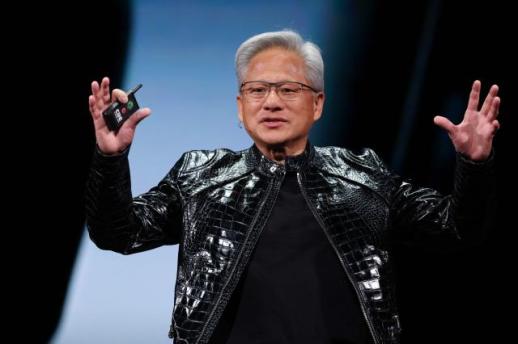 NVIDIA's Jensen Huang to Visit South Korea Next Week for Semiconductor and AI Collaboration NVIDIA founder and CEO Jensen Huang is expected to visit South Korea next week. This will be his first visit since attending the Asia-Pacific Economic Cooperation (APEC) CEO Summit in Gyeongju last October.According to industry sources on May 28, Huang will travel to South Korea after wrapping up his schedule at NVIDIA's annual AI conference, GTC Taipei 2026, and the Computex 2026 IT exhibition, both taking place in Taipei next week.GTC Taipei is scheduled for June 1-4, where Huang will deliver a keynote address on the company's next-generation AI semiconductors and infrastructure strategies.Industry insiders anticipate that Huang's visit will facilitate discussions on high-bandwidth memory (HBM), next-generation AI accelerators, and foundry collaborations with major South Korean semiconductor companies such as Samsung Electronics and SK Hynix.Additionally, discussions on AI collaboration across various sectors, including cloud computing with LG and Naver, are also expected during his visit.Previously, Huang visited South Korea in late October during the APEC summit, where he held a meeting with Samsung Electronics Chairman Lee Jae-Yong and Hyundai Motor Group Chairman Chung Eui-sun, referred to as a 'gangbu meeting.'* This article has been translated by AI. 2026-05-28 18:28:00
 -
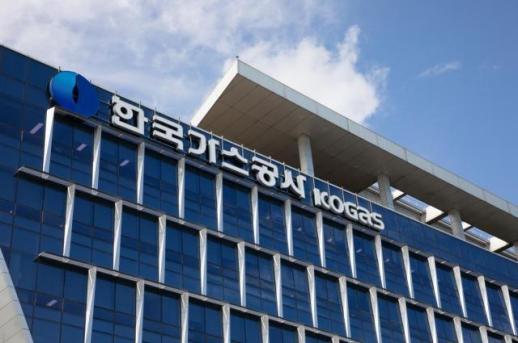 Korea Gas Corporation to Disclose Environmental Impact of Natural Gas As the importance of ESG (Environmental, Social, and Governance) management grows, there is an increasing demand for the disclosure of environmental product declarations related to energy sources like liquefied natural gas (LNG). The environmental impact from carbon emissions and the entire production-to-consumption process is directly linked to a company's ESG performance, prompting energy public enterprises to consider releasing environmental data at the product level. According to industry sources on May 27, an environmental product declaration quantifies and publicly discloses the environmental impacts occurring throughout the entire process of a product, from raw material extraction to production, transportation, distribution, usage, and disposal. There is a growing demand for energy companies, which inevitably produce carbon emissions, to disclose such environmental product declarations. In response, Korea Gas Corporation is pursuing certification for natural gas products, becoming the first in the country to do so. While the company has previously released environmental information at the corporate level through global evaluation agencies, it recognized the limitations in providing specific environmental data at the product level. Korea Gas Corporation has initially targeted certification for LNG truck supply products, as the boundaries of the process are clearer compared to pipeline supply, making data collection easier. However, due to the complex process from natural gas import to supply, a large-scale collaborative project involving 10 internal departments and 33 domestic and international suppliers has been launched. During this process, the company collected and standardized 16,752 data points across all stages, including raw material extraction, maritime transport, storage and distribution, and truck dispatch. As a result, it quantitatively assessed environmental impacts across seven categories, including carbon footprint, water footprint, and ozone layer impact. This effort has established a foundation for systematically managing environmental data across the entire supply chain, beyond just a simple certification process. Particularly, a comprehensive assessment of the production and transportation processes of LNG is deemed essential. Industry experts view Korea Gas Corporation's objective data acquisition as a means to not only sell energy but also provide carbon information and environmental data simultaneously. Given the need to manage carbon emissions during the production process, the provision of environmental data by energy suppliers is likely to become a significant purchasing criterion. Starting with this initiative, Korea Gas Corporation plans to gradually expand the scope of certification to include pipeline-supplied natural gas and hydrogen. This is because it can objectively demonstrate that LNG has lower carbon emissions compared to fossil fuels. The collected data will be provided to 119 truck supply demand points. Additionally, the general public will be able to intuitively perceive the eco-friendliness of natural gas through the environmental product declaration certification mark attached to truck vehicles they encounter in their daily lives. A representative from Korea Gas Corporation stated, "This certification initiative is the first step toward providing consumer-centered environmental information. Through transparent information disclosure and ongoing environmental improvement efforts, we aim to establish ourselves as a trusted eco-friendly energy company among the public."* This article has been translated by AI. 2026-05-28 18:28:00
 -
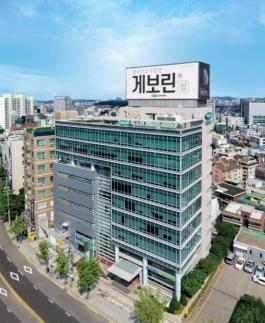 Samjin Pharmaceutical Expands CNS Business to Capture Aging Market Samjin Pharmaceutical is accelerating its expansion into the central nervous system (CNS) market, focusing on treatments for dementia and epilepsy. The company aims to develop this sector as a key growth area in response to the rapidly increasing demand driven by an aging population, building on its existing cardiovascular treatment business. According to market research firm IQVIA, the global CNS market is projected to grow from $154 billion in 2024 to $185 billion by 2029. The rise in the elderly population and the increasing number of patients with dementia and degenerative brain diseases are contributing to the rapid growth of related treatment markets. Samjin Pharmaceutical's business structure is heavily weighted towards prescription-based specialty drugs, with 77.2% of its total revenue of 309.1 billion won coming from this segment in the first quarter of this year. The core of its operations lies in the cardiovascular treatment sector. The company's flagship antithrombotic drug, Plavix, accounted for approximately 28% of total sales last year. Plavix is the first generic version of Sanofi's original cardiovascular drug, maintaining the top market share in the generic and improved drug categories. Leveraging its competitive edge in the cardiovascular market, Samjin Pharmaceutical is now focusing on expanding its CNS portfolio. While the cardiovascular market is based on chronic disease patients, dementia and epilepsy treatments tend to have a high rate of long-term use and strong prescription continuity. Establishing a stable supply chain and prescription reliability could lead to significant long-term revenue potential. The company's epilepsy treatment, Epilatam, consistently generates annual sales of around 4 to 5 billion won. Samjin has also successfully localized the active pharmaceutical ingredient (API) levetiracetam, which it previously imported entirely. A company representative stated, "The primary goal of localizing the raw materials is to ensure 'high quality' and to build a 'stable supply chain.' It is significant in establishing a foundation to supply pharmaceuticals without disruption from external factors through strict quality control and a reliable supply system." In February, the company launched the third-generation epilepsy treatment Brivaracetam, further expanding its CNS lineup. Brivaracetam is an improved formulation of Epilatam, and details regarding the localization of its raw materials are still being finalized as it is in the early stages of release. Samjin Pharmaceutical is also intensifying its efforts to penetrate the Alzheimer's market. The company recently introduced Nutoin Duo, a combination drug for Alzheimer's disease that combines donepezil and memantine. This product simplifies the treatment regimen for severe Alzheimer's patients, reducing the burden of taking two separate medications and enhancing adherence for long-term users. The company is also developing next-generation Alzheimer's treatments. In 2022, Samjin entered into a research and development agreement with biopharmaceutical company Aribio to collaborate on treatments for intractable and degenerative brain diseases. Samjin currently holds a 5.9% stake in Aribio, making it the second-largest shareholder. Aribio's oral Alzheimer's treatment, AR1001, targets multiple mechanisms, including inhibiting neuronal cell death, improving cerebral blood flow, and removing toxic proteins. It is currently in the final stages of global Phase 3 clinical trials, and Samjin has secured exclusive production and sales rights in South Korea. Aribio has also attracted attention by signing an exclusive licensing agreement with China's Puxing Pharmaceutical for a global development, approval, production, and commercialization deal worth approximately 7 trillion won. A Samjin representative noted, "The top-line results of the Phase 3 trial for AR1001 are expected to be announced around September to October. Since we have secured production and domestic sales rights, we plan to successfully launch in the domestic market through close cooperation with Aribio." The representative added, "We will work to strengthen our position in the market for treatments for degenerative brain diseases and dementia."* This article has been translated by AI. 2026-05-28 18:24:00
 -
 ABL Bio Begins Phase 1 Clinical Trials for Dual Antibody ADC in the U.S. ABL Bio announced on May 28 that Neok Bio has completed the first patient dosing in its Phase 1 clinical trials for the dual antibody drug conjugate (ADC) candidates ABL206 (NEOK001) and ABL209 (NEOK002) in the United States. Neok Bio is a U.S.-based biotechnology company established by ABL Bio, responsible for the global development and commercialization of these candidates. The dual antibody ADC technology targets two antigens simultaneously, delivering a chemical payload to cancer cells while minimizing damage to normal cells, thus enhancing therapeutic efficacy. ABL206 is a first-in-class dual antibody ADC that targets both B7-H3 and ROR1, utilizing a topoisomerase I inhibitor payload. It has demonstrated improved efficacy and safety compared to single antibody ADCs in preclinical studies, and favorable tolerability was confirmed in GLP toxicity tests on non-human primates. ABL209 targets both EGFR and MUC1 and is being developed with the same topoisomerase I inhibitor payload as ABL206. It is expected to reduce skin toxicity associated with EGFR-targeted therapies and address limitations related to MUC1. Neok Bio aims to evaluate the safety, tolerability, and efficacy of both candidates through this Phase 1 trial, with initial clinical data anticipated by 2027. According to global market research firm Grand View Research, the global ADC market is projected to grow from approximately $12 billion in 2024 to over $32 billion by 2033, with an annual growth rate exceeding 10%. In South Korea, the development of dual antibody ADC clinical data is just beginning. Lee Sang-hoon, CEO of ABL Bio, stated, "While the single antibody ADC market is becoming increasingly competitive, the dual antibody ADC field is still in its early stages and holds significant growth potential. Neok Bio will leverage its identity as a U.S. company and its rapid development pace to secure competitiveness."* This article has been translated by AI. 2026-05-28 18:24:00
 -
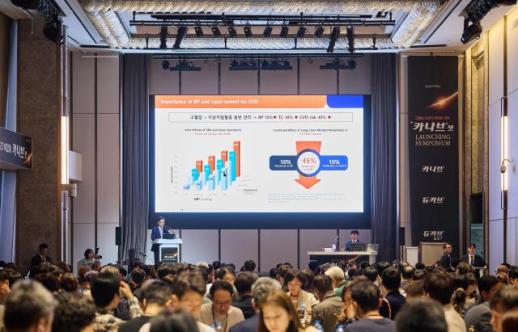 Boryung Expands Combination Drug Lineup with Launch of 'Canabjet' for Hypertension and Dyslipidemia Boryung announced it will launch 'Canabjet,' a treatment for hypertension and dyslipidemia, on June 1. Canabjet is a three-in-one combination drug that combines the angiotensin II receptor blocker (ARB) 'Canab' (active ingredient: Pimasartan) with the HMG-CoA reductase inhibitor 'Atorvastatin' and the cholesterol absorption inhibitor 'Ezetimibe.' It is intended for patients suffering from both hypertension and dyslipidemia, as well as high-risk patients who have not reached their LDL cholesterol targets with statin monotherapy. It is estimated that over 70% of hypertension patients in South Korea also have dyslipidemia. Recent treatment guidelines have emphasized the importance of combination therapy for managing both hypertension and dyslipidemia, highlighting the expected benefits of improved treatment convenience and medication adherence through combination drugs. The need for combination therapy was also discussed at a symposium held by Boryung on May 21 to celebrate the launch of Canabjet. The event featured domestic internists who shared the latest insights on treating hypertension and dyslipidemia, along with practical applications in prescribing. Lee Chan-joo, a professor of cardiology at Yonsei University College of Medicine, stated, "Pimasartan is a component that has been proven safe and effective across various patient groups. In the context of evolving treatment guidelines that recommend combination therapy, controlling blood pressure and LDL cholesterol through a three-in-one combination drug can help reduce the risk of cardiovascular disease." Canab is Boryung's 15th domestically developed new drug, launched in 2011. Since then, the company has continued to expand its treatment options with the 'Canab Family' of combination products. The launch of Canabjet marks an extension of its offerings from blood pressure management to high-intensity lipid management. This year, Boryung aims for sales of the Canab product line to reach 200 billion won. The company is also developing a four-in-one combination drug based on the Canab ingredient, as well as a combination drug for hypertension and diabetes, to build a comprehensive portfolio for chronic diseases. Sung Baek-min, Executive Director of Boryung's BD & Marketing Division, remarked, "Canabjet is a product developed based on the proven efficacy and safety of Canab. We will lead the market for hypertension and dyslipidemia treatments through data-driven sales and marketing activities."* This article has been translated by AI. 2026-05-28 18:22:00
 -
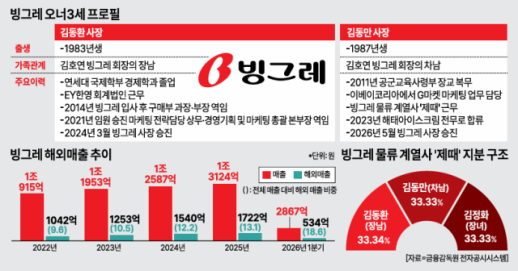 Binggrae's Third-Generation Owners Divide Roles Following Haitai Ice Cream Merger Binggrae is formalizing its third-generation ownership structure following the merger with Haitai Ice Cream. Dongman Kim, the second son of Chairman Ho-yeon Kim, has recently taken on the role of overseeing international operations, further clarifying the management roles between him and his older brother, Dong-hwan Kim. Industry experts are closely watching how the newly merged entity performs and whether it can expand its global business, as these factors may serve as key indicators for evaluating the third-generation leadership. According to industry sources, Binggrae appointed Dongman Kim as the executive in charge of international operations. This move follows the completion of the merger with Haitai Ice Cream last month and marks the first organizational restructuring since the merger. Since acquiring Haitai Ice Cream in 2020, Binggrae has been working on efficiency improvements, including joint marketing and logistics integration, and has now entered a full integration phase this year. Industry analysts interpret this appointment as more than just a routine assignment. Previously, Dong-hwan Kim was responsible for strategy and management planning at Binggrae's headquarters, while Dongman Kim gained operational experience at Haitai Ice Cream. With the merger, the two brothers are now clearly delineating their roles within a single corporate structure, indicating a more defined sibling management dynamic. Born in 1983, Dong-hwan Kim joined Binggrae in 2014 and has since overseen corporate strategy and management planning. Dongman Kim, born in 1987, studied in the United States, served as an Air Force officer, and gained management experience at eBay Korea and logistics subsidiary 'Jae-Ttae' before working at Haitai Ice Cream. Particularly noteworthy is Dongman Kim's focus on international operations. The domestic ice cream market faces growth limitations due to low birth rates, sluggish consumption, and seasonal constraints, while international business is becoming a core growth driver for Binggrae. Binggrae is accelerating its efforts to expand internationally, increasing sales of products like Melona, Bungeoppang, and Banana Flavored Milk in markets such as the United States, China, and Vietnam. The company also established a subsidiary in Australia last December. In the first quarter of this year, export sales reached 53.4 billion won, with frozen products accounting for 32.5 billion won, driving overseas growth. However, Binggrae's business structure still heavily relies on domestic sales. International revenue accounts for less than 20% of total sales, and exports are concentrated on a few flagship brands. Consequently, diversifying the product portfolio beyond Melona and Banana Flavored Milk and integrating Haitai Ice Cream's products, such as Burabocon and Babamba, into existing global distribution networks are seen as critical challenges. The new role distribution is also drawing attention for its potential implications for succession. Currently, Chairman Ho-yeon Kim holds a 37.89% stake in Binggrae, making him the largest shareholder, while the third-generation brothers do not own shares in the company. However, in the logistics subsidiary 'Jae-Ttae,' Dong-hwan Kim holds 33.34% of the shares, while Dongman Kim and their sister, Jeong-hwa Kim, each hold 33.33%. Analysts suggest that the performance of the merged entity and the expansion of international business could lead to shifts in influence within the group. This trend aligns with recent practices among major food companies like Nongshim, Ottogi, and Samyang Foods, which are evaluating the performance and global expansion capabilities of the next generation of management ahead of ownership succession. A Binggrae representative stated, "This appointment is aimed at strengthening our response to overseas markets and expanding our global business post-merger," adding that it is a business decision unrelated to succession.* This article has been translated by AI. 2026-05-28 18:18:00
 -
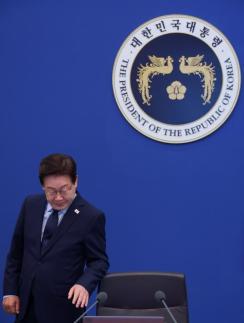 President Yoon Plans Aerospace Belt in Southern Regions President Yoon Suk Yeol announced plans on May 28 to develop the southern regions, including Gyeongnam and Jeonnam, into a comprehensive aerospace belt. Building on the successful launch of the Korean rocket Nuri, the initiative aims to elevate the nation's capabilities in launch vehicles, satellites, and ground equipment to world-class standards.During a senior advisor meeting at the Blue House, President Yoon stated, "Aerospace encompasses cutting-edge technologies such as artificial intelligence, semiconductors, communications, materials, and precision machinery, making it a key strategic industry with significant growth potential that is attracting global interest."He noted that major countries and private companies like SpaceX are fiercely competing for leadership in the aerospace sector, highlighting a shift in the industry toward a competition that includes both state and private entities.While acknowledging the achievements made since the successful launch of the Nuri rocket in November, he emphasized that there is still a long way to go. "We must solidify our path toward becoming a global aerospace powerhouse based on our current achievements," he said, calling for bold investments in research and development to quickly attain world-class technology in launch vehicles, satellites, and ground equipment.President Yoon also pointed out that the private sector and local governments play a crucial role in aerospace development. He urged for enhanced public-private cooperation to foster the emergence of a 'Korean SpaceX' and to develop the southern regions with essential infrastructure into a comprehensive aerospace belt.Additionally, he suggested accelerating the development of dual-use advanced engines based on technologies acquired during the KF-21 development process, and expressed commitment to actively support the aerospace sector as a new foundation for the economy and national security.In a closed meeting, he directed the swift and bold integration of military academies.After the meeting, Chief Spokesperson Kang Yu-jung reported that President Yoon emphasized the importance of actual execution over mere planning.He also stressed the necessity of re-educating military commanders on future warfare and advanced weapon systems, suggesting that educational content should evolve with changing times.Furthermore, President Yoon instructed to review the progress of advanced technology research, including small modular reactors (SMRs), and to prepare thoroughly for the transition of military combat systems, structural reforms, and re-education issues, according to Spokesperson Kang.Meanwhile, the Blue House's National Security Office reported on plans to enhance defense capabilities in response to the Middle East conflict, transition to unmanned combat systems, and innovate reserve forces in preparation for future battlefields.* This article has been translated by AI. 2026-05-28 18:14:00
 -
 Seoul Mayoral Candidates Jeong Won-o and Oh Se-hoon Face Off in Final Debate Jeong Won-o of the Democratic Party and Oh Se-hoon of the People Power Party will hold their first and final face-to-face debate on May 28, just seven hours before early voting begins. The candidates are expected to engage in heated discussions over issues such as safety and real estate in Seoul. According to the Seoul Election Broadcasting Debate Commission, the legal debate will take place at 11 p.m. at SBS in Sangam-dong, Seoul. The debate will feature four candidates, including Jeong and Oh, as well as Kim Jeong-cheol of the Reform Party and Kwon Yeong-guk of the Justice Party. The candidates will focus their discussions on four main topics: measures for economic recovery, housing stability policies, welfare policies for single-person households, and employment policies by age group. Safety will also be a key issue. Jeong has been attacking Oh over the missing rebar issue in the GTX-A line section at Samseong Station. In a press conference earlier that day, Jeong stated, "I will address this issue in the debate as I have been doing so far." Regarding the recent collapse of the Seosomun overpass on May 26, he remarked, "We should not politicize incidents that involve casualties, but it would be good to discuss how to improve safety and protect lives." In response, Oh plans to highlight his safety policies and achievements. At a press conference that afternoon, he emphasized, "I have repeatedly stated that safety is the top priority of my administration," and noted that this approach has led to the installation of 100% closed-circuit television (CCTV) at construction sites commissioned by the city and the complete installation of screen doors in subways. He particularly highlighted that the installation of screen doors has resulted in a significant reduction of over 1,000 subway fatalities. Debate over the real estate policies of the Lee Jae-myung administration is also anticipated. Oh stressed, "Citizens are suffering greatly from soaring housing prices, especially the rapid increase in rent," and stated, "I will emphasize real estate issues, as well as culture and welfare, throughout the election process." Meanwhile, a recent poll released on the same day showed both candidates with identical support rates. According to a survey conducted by the Cultural Daily, commissioned by Embrain Public, from May 26 to 27, both Jeong and Oh received a support rate of 39% among 805 Seoul voters. The survey was conducted via mobile phone interviews, with a response rate of 14.0% and a margin of error of ±3.5 percentage points at a 95% confidence level. For more details, please refer to the website of the National Election Survey Deliberation Commission. 2026-05-28 18:12:00
 -
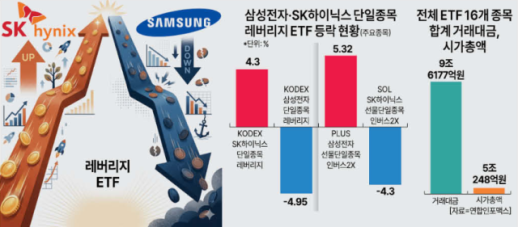 Samsung Electronics Falls While SK Hynix Rises as Leverage ETFs Attract $9.6 Billion After a strong debut, the single-stock leverage ETFs for Samsung Electronics and SK Hynix showed diverging trends. While the SK Hynix leverage ETF continued to gain, the Samsung Electronics leverage ETF experienced a decline. According to the Korea Exchange, Samsung Electronics closed at 299,500 won, down 7,500 won (2.44%) from the previous trading day, while SK Hynix rose by 46,000 won (2.05%) to finish at 2,289,000 won. Consequently, the performance of the leverage ETFs tracking these stocks varied significantly. As reported by Yonhap Infomax, the total trading volume for 16 domestic single-stock leverage and inverse ETFs reached 9.6177 trillion won. Although this was a slight decrease from the previous day's 10.4043 trillion won, trading remained robust for two consecutive days around the 10 trillion won mark, indicating signs of overheating. The overall market capitalization increased slightly to 5.0248 trillion won compared to the previous day. The most actively traded product was Samsung Asset Management's 'KODEX SK Hynix Single Stock Leverage ETF,' which recorded a trading volume of 3.7712 trillion won and a gain of 4.3%. Mirae Asset Management's 'TIGER SK Hynix Single Stock Leverage ETF' also saw a trading volume of 1.9065 trillion won with a rise of 4.39%. In contrast, the Samsung Electronics leverage ETF showed weakness. Samsung Asset Management's 'KODEX Samsung Electronics Single Stock Leverage ETF' recorded a trading volume of 1.4671 trillion won but ended with a return of -4.95%. Similarly, Mirae Asset Management's 'TIGER Samsung Electronics Single Stock Leverage ETF' closed down 5.19% with a trading volume of 988.9 billion won. Given that these ETFs are based on the same stocks, their performance was closely aligned. Inverse products betting against Samsung Electronics performed well. Hanwha Asset Management's 'PLUS Samsung Electronics Futures Single Stock Inverse 2X ETF' rose by 5.32%, with a trading volume of 107.8 billion won. Conversely, Shinhan Asset Management's 'SOL SK Hynix Futures Single Stock Inverse 2X ETF,' which had plummeted the previous day, fell by 4.3% due to the strong performance of SK Hynix shares. Market analysts suggest that single-stock leverage ETFs are rapidly absorbing short-term investment demand. As volatility in major semiconductor stocks, which are currently leading the domestic market, increases, funds with a high-risk, high-reward profile are also flowing into the ETF market, intensifying the concentration trend. Han Ji-young, a researcher at Kiwoom Securities, noted, "The market is currently experiencing short-term fatigue from the dominance of AI and semiconductor stocks, leading to a 'supply-demand black hole' phenomenon created by single-stock leverage. She added, "The previous day's domestic market saw an unprecedented level of return concentration, and it is necessary to prepare for the possibility that this concentration burden could lead to short-term profit-taking and increased volatility."* This article has been translated by AI. 2026-05-28 18:08:00