

Journalist

Jack L. Rozdilsky
-
 ANALYSIS: Korea inflation enters war-driven upcycle SEOUL, April 02 (AJP) - South Korea’s inflation is beginning to turn upward, but March’s data likely understates the scale of price pressure building beneath the surface as the Middle East war feeds through oil, exchange rates and expectations. Consumer prices rose 2.2 percent in March from a year earlier, accelerating from 2.0 percent in the previous two months, according to data released Thursday. On the surface, the increase appears modest — still within the Bank of Korea’s comfort range. But the composition tells a different story. Energy has re-emerged as the dominant driver, now compounded by a structurally weakening won, and the pressure is only just starting. The Korean currency has extended its slide from last year, losing an additional 6 percent amid capital outflows. The dollar is hovering above 1,520 won — its highest level since March 2009 during the global financial crisis — amplifying imported price pressures. Petroleum product prices surged 9.9 percent, contributing 0.39 percentage point to headline inflation. Diesel jumped 17 percent and gasoline 8 percent, marking the sharpest energy-driven impulse since the early phase of the Ukraine war. Without fuel price caps and tax measures, the headline figure would have printed significantly higher. March captures only the initial shock. The war entered its first full month, but the key macro channels — oil, the dollar and the exchange rate — have yet to fully transmit into domestic prices. That pass-through is now beginning. U.S. President Donald Trump’s prime-time address on Wednesday sharpened that trajectory. While projecting the war could end within “two to three weeks,” he simultaneously reframed the Strait of Hormuz as a responsibility for energy -dependent countries and openly promoted U.S. oil as the alternative. Markets read through the optimism. Oil prices firmed, the dollar strengthened and the won weakened — a combination that mechanically raises Korea’s import costs. For an economy that imports the bulk of its energy, this is the classic setup for imported inflation. President Lee Jae Myung on Thursday called for “emergency measures,” urging bipartisan support to fast-track a 26.2 trillion won supplementary budget framed as a wartime response. But fiscal expansion at a time of rising price pressure risks offsetting monetary tightening and entrenching inflation expectations. The bond market is already adjusting. The 10-year government bond yield, after briefly easing on expectations of index inflows tied to Korea’s inclusion in the World Government Bond Index (WGBI), has resumed its climb, reflecting rising inflation and supply concerns. The government’s supply-side response remains tactical. Officials say roughly 50 million barrels of alternative crude have been secured for April, compared with a typical monthly intake of 80 million barrels. The shortfall is being managed through demand restraint, lower refinery utilization and strategic stockpile swaps. This may stabilize flows. It does not stabilize prices. What matters for inflation is not physical availability, but the marginal cost of replacement supply — and that cost is rising structurally. Even in a best-case scenario, the Korea Institute for International Economic Policy estimates oil will settle around $90 per barrel, 43 percent above prewar levels, as damage to energy infrastructure delays normalization. A prolonged disruption of the Strait of Hormuz could push prices to $117 as global supply falls by around 10 percent. In a broader escalation, prices could reach $174 — a level consistent with a full-scale external shock. The transmission mechanism is already visible. Higher oil prices feed into producer prices, which pass through with a lag into transportation, food and services. Authorities have warned that restaurant and processed food prices will reflect the shock in the coming months, particularly as the weaker won amplifies import costs. History suggests the first-round impact is only the beginning. KIEP estimates supply-related oil shocks lift inflation by about 0.12 percentage point immediately, with larger cumulative effects as second-round pressures take hold. Policy buffers are limited. Administrative controls can delay adjustments but cannot suppress them indefinitely without distortion. Fiscal measures can cushion households but erode policy space. Monetary policy faces a dilemma: tightening into an external supply shock risks further weakening domestic demand. The Bank of Korea is widely expected to hold the base rate at 2.5 percent at its April 10 meeting — the final one under Governor Rhee Chang-yong — stretching a near year-long pause, with incoming governor Shin Hyun-song set to inherit dwindling policy firepower to rein in dollar demand and inflationary pressures. 2026-04-02 15:04:21
 -
 Han Kang’s ‘I Do Not Bid Farewell’ Draws New Attention After U.S. Critics Award Han Kang’s novel I Do Not Bid Farewell is drawing renewed attention after news it won the National Book Critics Circle Award. Kyobo Book Centre said Thursday that the title ranked No. 12 on its overall bestseller list for the fourth week of March. An analysis of buyers from March 27 to April 1, after the award news broke, showed the largest shares came from readers in their 40s (27.3%) and 50s (24.7%). Purchases by men in their 50s (10.7%) and 60s (10.4%) stood out. A Kyobo official said the award appears to have sparked interest among middle-aged male readers. Online bookseller Yes24 also reported a sharp rise. After the award announcement on March 27, the book climbed to No. 7 overall. Sales over the following five days (March 27-31) rose 284.6% from the previous five-day period, with buyers in their 50s making up the largest share at 35.6%. Overall No. 1 went to Project Hail Mary, which topped both Kyobo and Yes24 as its film release boosted demand. Sales have risen for two straight weeks since the movie opened on March 18. At Yes24, the same author’s space-themed novels Artemis and The Martian also gained, up 45.8% and 31.1% from the previous week, respectively. Yoo Si-min’s autobiography, I Live Because There Is Love, ranked No. 2 overall. * This article has been translated by AI. 2026-04-02 15:00:13
 -
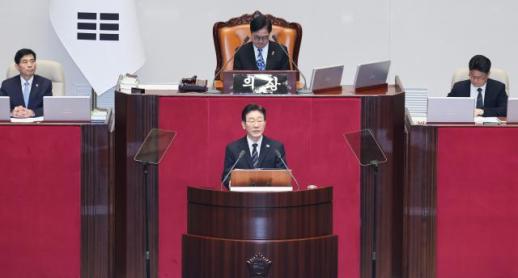 South Korea seeks emergency funds as war in Middle East threatens economy SEOUL, April 02 (AJP) - South Korea's President Lee Jae Myung called for the immediate passage of a massive supplementary budget on Thursday, characterizing the current economic climate as a wartime state. Addressing the National Assembly, the president argued that the 34-day conflict in the Middle East necessitated a total mobilization of government resources. During his speech at the National Assembly, Lee called for a 26.2 trillion-won ($17.2 billion) supplementary budget, warning that any delay in fiscal intervention would cause economic damage to grow exponentially. The president urged lawmakers not to miss the golden time for recovery, emphasizing that taxpayer money must be deployed at the most critical juncture to protect the people's livelihoods. The escalating war in Iran has cornered South Korea, forcing Seoul into a defensive crouch as global energy supply chains fracture. South Korea remains precariously dependent on the Middle East for more than 70 percent of its crude oil imports. This reliance makes the domestic industrial base uniquely vulnerable to disruptions in the Strait of Hormuz, which has now become a no-trespassing zone for cargo and oil carriers. According to data from the Korea Energy Economics Institute, any prolonged instability in the Persian Gulf creates a direct threat to the price of daily essentials. With the conflict showing no signs of abatement, the administration has moved to prioritize energy sovereignty over standard fiscal restraint. This crisis interrupts a period of record-breaking growth for the South Korean industry. The KOSPI index recently breached the 5,000-point threshold on the back of strong semiconductor and shipbuilding exports. However, a sudden lack of raw materials now threatens to stifle that momentum and extinguish the hard-won sparks of national growth. Shortages of naphtha and urea have already begun to impact the production of plastics and fertilizers. This creates a ripple effect touching everything from heavy manufacturing to local agriculture. The president noted that these shortages represent an unexpected, complex crisis that requires an immediate and coordinated response. Seoul has responded by transitioning the entire government apparatus into an emergency economic response system. This includes the implementation of a maximum oil price cap for the first time in 29 years. The move is designed to shield consumers from the surging costs of gasoline and diesel. To mitigate the loss of Iranian supply, the administration has secured 24 million barrels of crude oil through a strategic partnership with the United Arab Emirates. These multi-faceted policies, including financial support for affected businesses, are part of a proactive strategy to guard against the worst-case scenario. "In a state of emergency, literally extraordinary measures are needed," Lee said, adding: "Our government is putting all its effort into overcoming the current crisis with a solemn perception that the livelihood economy is in a wartime situation." The 26.2 trillion won budget is notable for being a debt-free proposal. The government plans to utilize 25.2 trillion won in excess tax revenue—largely generated by the recent boom in the stock and semiconductor markets—alongside 1 trillion won from existing funds. The National Assembly is scheduled to begin its review of the supplementary budget proposal immediately following the presidential address. 2026-04-02 14:38:45
 -
 Nam June Paik Retrospectives Spotlight Major Works in Seoul for 20th Anniversary of His Death Major works by Nam June Paik will be shown across Seoul this year to mark the 20th anniversary of his death. Gagosian said Wednesday it will present “Nam June Paik: Rewind / Repeat” from April 1 to May 16 at the APMA Cabinet on the first floor of Amorepacific’s headquarters in Seoul’s Yongsan district. Organized in collaboration with the Nam June Paik Estate, the exhibition will feature 11 works spanning Paik’s early experimental pieces through signature works from his later years. A highlight is “TV Bra for Living Sculpture,” which embeds two small black-and-white televisions, housed in a Plexiglas box, into transparent vinyl underwear. Paik made the piece for musician and performance artist Charlotte Moorman. She wore it while playing the cello at the opening performance of the 1969 exhibition “TV as a Creative Medium” at the Howard Wise Gallery in New York. Sounds produced during the performance altered the images on the TV screens, reflecting Paik’s idea of “humanizing” electronic devices. Also included is Paik’s iconic “Gold TV Buddha” (2005), showing a gilded, painted bronze Buddha meditating before a closed-circuit video camera and monitor. The work points to the intersection of ancient spirituality and modern media, and of Eastern and Western ways of thinking. Other works on view include “Orchestra” (1991) and “Media Sandwich” (1961–1964). At the Amorepacific Museum of Art, a special collection exhibition, “APMA, CHAPTER FIVE – FROM THE APMA COLLECTION,” runs from April 1 to Aug. 2 and includes works by Paik. The show features pieces by more than 40 artists from Korea and abroad, including Lee Bul, Yang Hye-gyu and Lee Ufan. It will also spotlight Paik’s large-scale installation “Kon-Tiki” and “Peak Flower Garden,” a major work being shown at the museum for the first time in more than 20 years. The Hoban Cultural Foundation is also holding a 20th-anniversary memorial exhibition, “Nam June Paik: STILL LIVE – Living Time,” at the Hoban Atrium in Gwacheon, south of Seoul. On view are key works including “TV Rodin,” “TV Candle” and “Sonatine for Goldfish,” as well as “Neon TV” and “Burma Chest.” The exhibition runs through May 31. More Paik-related programming is scheduled for May. White Cube Seoul will present a two-person show, “Duet: Takis and Nam June Paik,” from May 2 to June 5, pairing sculptures by Greek artist Takis with Paik’s multimedia works. The exhibition was planned in response to an experimental, multilayered musical collaboration the two artists presented together in 1979.* This article has been translated by AI. 2026-04-02 14:36:22
 -
 Lee Hyori’s Yoga Studio Bars Unwanted Physical Contact, Personal Requests Singer Lee Hyori’s yoga studio has announced it will prohibit indiscriminate physical contact and personal requests from visitors. In a post on social media on April 1, the studio said it has reached its eight-month mark and is issuing additional guidance “for smoother, cleaner operations,” beyond its initial notices. The studio said photos and video are not allowed during classes, adding that filming is permitted freely before and after sessions. It also said it will “politely decline” requests for personal photos with the studio director and for autographs. “Physical contact without consent (such as holding hands or touching someone’s body) is prohibited,” it said, asking people to observe basic courtesy. The studio also warned that parcels or gifts sent to its address without prior coordination may be discarded, and asked visitors not to send them. It said the rules are intended to help create an environment where people can focus on yoga practice. Lee married Lee Sang-soon in 2013 and lived on Jeju Island before moving to Seoul in 2024. She opened the studio in Seoul’s Seodaemun District in August last year and has been holding classes. * This article has been translated by AI. 2026-04-02 14:30:16
 -
 Tiffany Young Signs Exclusive Deal With Pacific Music Group Korea Singer Tiffany Young has signed an exclusive contract with Pacific Music Group Korea, marking a new start. Pacific Music Group Korea (PMG Korea) said on the 2nd that it has signed Tiffany Young as its first affiliated artist. PMG Korea said Tiffany Young has built her career as a solo artist on stages around the world and pledged full support across her activities so she can continue expanding her global work. Tiffany Young said PMG understands her path, from her work with Girls' Generation to her music as a solo artist and her acting and musical theater performances. She said the company respects and supports the range of her music and artistic world, sharing not only in results but also in the intent and meaning behind them. She added that as she enters the next stage of her career, she is focusing more than ever on intent, detail and building an authentic connection with people through her work. She said she is excited and honored to begin a new chapter with PMG as she prepares activities and an album marking the upcoming 10th anniversary of her solo debut. She also said she hopes to share the moment with fans who have been with her and wants to share what comes next. Tiffany Young debuted in 2007 as a member of Girls' Generation and gained global popularity. She later continued in music as a solo artist and broadened her stage work through the musical "Chicago," among others. Most recently, she has remained active as a judge on SBS' "Veiled Cup." With the PMG Korea deal, Tiffany Young plans to continue expanded music activities, including releasing new songs. PMG is an entertainment company founded by U.S. R&B singer Ne-Yo, Sonu Nigam and Jonathan Serbin. It recently established a Korea branch and appointed Samuel Ku, a domestic music industry expert, as CEO. PMG Korea said it plans to expand efforts to discover Korean artists and pursue global collaboration projects, starting with Tiffany Young. * This article has been translated by AI. 2026-04-02 14:15:56
 -
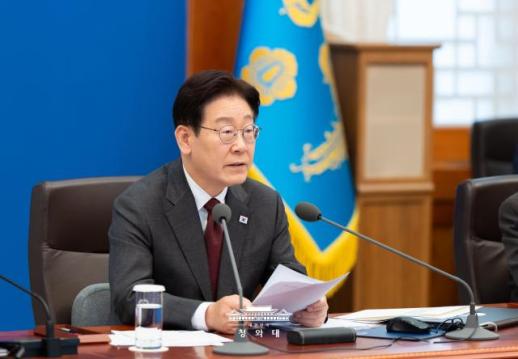 President Lee Jae Myung readies transit relief as Iranian conflict squeezes oil lanes SEOUL, April 02 (AJP) - In a bid to draft immediate measures to ease public transport crowding, South Korean President Lee Jae Myung has directed the Ministry of Land, Infrastructure and Transport on Thursday. The order follows an elevation of the national resource security alert to its second-highest level. Officials have already implemented a mandatory two-day vehicle rotation for public offices, which is expected to push a surge of commuters onto the transit grid. The war in Iran has left South Korea in a strategic bind. Seoul imports more than 70 percent of its crude oil from the Middle East, with the vast majority passing through the Strait of Hormuz. According to the Korea Energy Economics Institute, this heavy reliance makes the domestic economy uniquely vulnerable to supply shocks in the Persian Gulf. This dependency has cornered the administration into aggressive energy conservation, including the restriction of private vehicle use. According to the presidential office, expanding free transit benefits to include city buses for citizens aged 65 and older could be considered as part of Lee's initiative to ease crowding on public transport during commuting hours. While the subway system has long been free for this demographic, bus fares have remained a significant out-of-pocket expense for senior residents. By subsidizing bus travel, The president aims to provide a comprehensive safety net for the elderly while incentivizing a shift away from private vehicle use during the height of the fuel shortage. This directive ends a period of bureaucratic inertia where the transport, health, and environment ministries were engaged in a 'ping-pong' dispute over which department would oversee the new transit policy. By centralizing authority under the transport ministry, the president is framing the expansion of senior benefits as a logistical necessity of the energy crisis rather than a standard welfare debate. The move allows the government to manage the influx of passengers through a unified system that can adjust service frequency in real time. "The Ministry of Land, Infrastructure and Transport should take charge and prepare measures to alleviate public transport congestion during commuting hours," Lee said. The ministry is now working to define specific operational hours for the expanded bus benefits and identifying high-density routes that require immediate reinforcement. 2026-04-02 14:08:47
 -
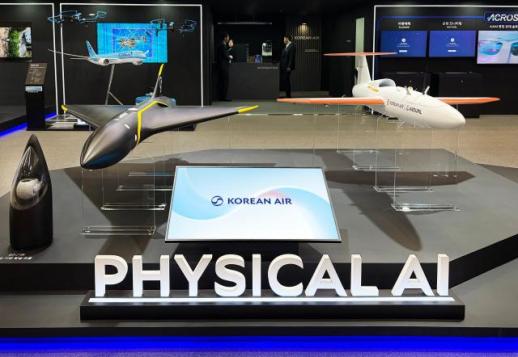 Korean Air accelerates AI-powered drone development with 2028 deployment target SEOUL, April 02 (AJP) - Korean Air is stepping up its push into unmanned aerial systems, advancing development of an artificial intelligence-powered high-speed target drone while investing $130 million in a new manufacturing facility in Busan to expand production capacity. The company said it recently completed a System Requirements Review (SRR) for its domestically developed high-speed target drone project at the Daejeon Convention Center, attended by officials from the Defense Acquisition Program Administration (DAPA), the Navy, the Air Force, and the Korea Research Institute for Defense Technology Planning and Advancement. The project, awarded by DAPA in November last year, aims to localize key components including the drone airframe, control systems, and launch equipment, replacing imported target drones currently used for training and testing. The high-speed target drone under development is designed to reach speeds of up to Mach 0.6, or about 735 kilometers per hour among the fastest in its class domestically. Korean Air plans to roll out a prototype and conduct its first flight in 2027, with deployment targeted for 2028. The drone will incorporate artificial intelligence technologies to enable swarm control and greater mission autonomy. Korean Air is also pursuing an open-architecture design that allows modular sensors and mission equipment to be installed, improving operational flexibility and cost efficiency. The company said the platform will serve as a stepping stone for South Korea’s future manned-unmanned teaming (MUM-T) systems and the Surrogate Unmanned Combat Aircraft (SUCA) program, which the military aims to deploy in the early 2030s. In parallel, Korean Air signed a memorandum of understanding with the Busan Metropolitan Government to invest 200 billion won ($130 million) in a new aerospace manufacturing facility at its Busan Tech Center in Gangseo District. The new plant, with a total floor area of about 16,000 pyeong, will produce next-generation drones, components for future commercial aircraft, and support military aircraft modification and performance upgrades. Busan officials described the investment as the largest aerospace-related project in the city, noting that demand for unmanned aerial systems is expected to grow across defense, logistics, disaster response, and other industries. "The integration of high-speed target drone design with artificial intelligence technology is a critical step for Korea’s defense industry to secure a competitive edge in the global market," a Korean Air official said. "We aim to accelerate the localization of the high-speed target drone system, a national strategic asset, to strengthen the military’s combat capabilities and enhance the global competitiveness of the K-defense industry." 2026-04-02 14:00:35
 -
 LG Chem Licenses Frontier Cancer Drug Candidate Targeting p53 Y220C Mutation LG Chem said April 2 it has signed a global exclusive license with U.S.-based Frontier Medicines to develop and commercialize the cancer drug candidate FMC-220, which is nearing entry into a Phase 1 clinical trial. Under the deal, LG Chem will lead development and commercialization worldwide excluding China. The company will pay Frontier an upfront payment, along with additional development and commercialization milestone payments and separate sales royalties. FMC-220 is a p53 Y220C activator designed to restore the normal function of p53, a tumor-suppressor protein, by acting on the Y220C mutation among multiple p53 mutations. The p53 Y220C mutation is found in about 1% to 3% of all cancer patients and is considered an important treatment target. However, it has been viewed as an “undruggable” target because of structural constraints that have made drug development difficult. LG Chem said FMC-220 is designed as a covalent drug, meaning it binds irreversibly to its target. The company said this could allow more stable binding than noncovalent approaches and help sustain the drug’s effect longer. Frontier said preclinical results showed strong anti-cancer efficacy and durable responses even at low doses, and that anti-tumor activity was maintained in tumor models with co-mutations in KRAS, suggesting broader potential use across patient groups. LG Chem said it will initially develop the drug for ovarian cancer, where the p53 Y220C mutation is relatively more common, and plans to expand development to other cancers with the mutation. The company plans to recruit patients with ovarian cancer and other solid tumors in the United States and South Korea and begin a Phase 1 trial within the year. “FMC-220 is an innovative approach in that it targets a genetic mutation for which treatment options are currently limited,” Son Ji-woong, head of LG Chem’s Life Sciences division, said. “We will work to verify the potential of a treatment option that can provide real help to many patients.”* This article has been translated by AI. 2026-04-02 13:00:00
 -
 Hyundai Motor bets on EV re-pivot after Gulf crisis SEOUL, April 02 (AJP) -South Korea's Hyundai Motor Group is stepping harder on the pedal in battery development and factory upgrades, after a period of stalled investment amid weak demand, as it bets on a structural shift toward non-fuel vehicles triggered by the global energy crisis. Its affiliate Kia said Wednesday that domestic sales of eco-friendly vehicles — including hybrids, electric vehicles and hydrogen-powered cars — jumped 51.9 percent on-year in March to 35,480 units. Electric vehicle sales alone surged 122.5 percent to 14,488 units, marking the first time Kia’s monthly domestic EV sales topped the 10,000 mark. Pricing has emerged as a key lever. With government subsidies, models such as the PV5 and EV3 are priced in the 20 million won ($13,216) range, allowing Kia to reach a broader pool of cost-conscious consumers. Hybrid demand also remained solid, with sales rising 14.5 percent to 19,293 units, underscoring a transitional shift as consumers hedge between fuel efficiency and full electrification. “Sales in the Middle East and sub-Saharan Africa dipped due to geopolitical risks, but robust eco-friendly vehicle demand elsewhere drove us to our best-ever first-quarter performance,” a Kia spokesperson said. “We will continue to build sales momentum by leading with EVs and hybrid SUVs.” The rally comes as soaring crude oil prices — triggered by the blockade of the Strait of Hormuz — have laid bare Asia's dependence on fossil fuels and sharpened the economic case for electrification. "The most viable escape from a world where geopolitical instability dictates energy prices is clean energy," said Kim Do-hyun, a senior analyst at Samsung Securities. Beyond sales, Hyundai Motor Group is deepening its push into battery technology. The group has begun developing ultra-high-nickel batteries — with nickel content exceeding 90 percent — in partnership with cathode material suppliers L&F, POSCO Future M and Ecopro. The next-generation cells are designed to deliver a range of 500 to 700 kilometers on a single charge, about 10 percent more than current high-nickel batteries. No battery maker or automaker has yet succeeded in mass-producing such cells, which demand advanced engineering to manage heightened fire risks and shorter lifespans tied to extreme energy density. Industry sources say the batteries are expected to be fitted in Hyundai's premium EV lineup, including its N performance series and the Genesis Magma brand. The group plans to continue development at its upcoming Future Mobility Battery Campus in Anseong, south of Seoul, scheduled for completion later this year. The facility will serve as a hub for battery research across EVs and robotics. Hyundai has also signaled that even as it builds in-house battery capabilities, it will not reduce procurement from external cell makers such as SK On. Its solid-state battery technology — widely considered the next frontier for safer, higher-density energy storage — is reportedly on par with that of South Korea's three major battery manufacturers. Meanwhile, the group is overhauling its flagship Ulsan complex — the world's largest single automotive plant, spanning 5 million square meters with an annual capacity of up to 1.52 million vehicles. Two aging production lines at Plant 1 and Plant 4, where Hyundai's first assembled car, the Cortina, rolled off the line in 1968 and its first indigenous model, the Pony, was built starting in 1975, are slated for reconstruction. Industry sources estimate Hyundai will invest about 4 trillion won to transform the two lines into advanced EV production facilities. A separate new EV plant within the Ulsan complex is set to begin operations in the second half of this year — the company's first new domestic assembly plant in 29 years, since the Asan facility opened in 1996. The green vehicle push coincides with the group's broader physical AI ambitions, which include deploying Boston Dynamics' Atlas humanoid robots at its U.S. plants by 2028 and mass-producing on-device AI chips for autonomous robotics. With electrification gaining ground at the showroom and intelligent automation reshaping the factory floor, Hyundai is betting both fronts will define its next chapter. 2026-04-02 11:41:27