

Journalist

Jack L. Rozdilsky
-
 Solus Advanced Materials Opens New OLED Plant in Iksan, Doubling Capacity Solus Advanced Materials has built a new production base for organic light-emitting diode, or OLED, materials in Iksan, North Jeolla Province, as it moves to strengthen its OLED business. The company said March 19 that it held a completion ceremony a day earlier in Hamyeol, Iksan, with CEO Kim Tae-hyung and other executives and employees, along with North Jeolla Vice Gov. for Economic Affairs Kim Jong-hoon and Iksan Mayor Jeong Heon-yul. The Hamyeol plant is a new production site created by relocating and expanding the company’s existing Iksan facility. It will serve as an integrated hub producing both OLED emissive materials (organic materials) and non-emissive materials (polymer materials). Built on a 19,969-square-meter (6,050-pyeong) site in the Hamyeol Agro-Industrial Complex, the facility includes utility, synthesis and purification buildings, as well as offices. The company completed construction last month and, after receiving required approvals, began full-scale production this month. Solus Advanced Materials said it plans to improve both efficiency and quality competitiveness by consolidating production of emissive and non-emissive materials at one site, aiming to create synergies between R&D and mass production and expand its presence in the global OLED materials market. With expanded capacity, the company expects to accelerate mass production of a wider range of OLED materials. It said “Green PH,” which it expects to be highly profitable, is slated to enter full-scale mass production in the second half of this year. The company also plans to begin mass-production supply next quarter of thin-film encapsulation, or TFE, a non-emissive material. The company said it will also step up development of new materials in line with global industry trends, including materials for artificial intelligence semiconductors and automotive batteries, to secure future growth engines and strengthen competitiveness in new markets. “Hamyeol’s integrated OLED production base is a key manufacturing hub that will take Solus Advanced Materials’ OLED materials competitiveness to the next level,” Kim said. “We will secure market leadership by expanding R&D and production capabilities for high value-added materials and further strengthen our competitiveness in the global OLED materials market.” 2026-03-19 09:30:21
 -
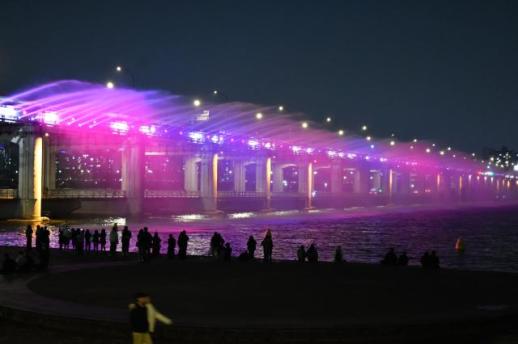 BTS Live D-2 : Latest from Gwanghwamun - beyond and across Seoul SEOUL, March 19 (AJP) - Seoul’s transformation ahead of BTS’s comeback is no longer confined to barricades and traffic controls. It is now unfolding as a citywide visual and behavioral shift one that is already drawing crowds into the experience before the performance begins. At Gwanghwamun Gate, visitors dressed in traditional hanbok gathered in large numbers, taking photos against the historic backdrop, an early sign that the area is already functioning as a cultural staging ground rather than a conventional tourist site. Along the Han River, bridges have been illuminated with sweeping arcs of purple and red water jets, turning ordinary infrastructure into a synchronized light and water display. Groups of people gathered along the riverbanks late into the evening, many pausing to watch and film the scene, suggesting that the buildup to the concert has effectively begun outside the main venue. Compared with just a few days ago, the pace of change has visibly accelerated across multiple parts of the city. The change is equally visible at street level. In central Seoul, storefronts are beginning to adopt BTS-themed visuals, with large purple banners reading “WELCOME BTS ♥ ARMY” stretching across building facades above convenience stores and cafes. The installations, while informal, signal how businesses are actively aligning themselves with the event, transforming everyday commercial spaces into extensions of the concert environment. In Namdaemun Market, large-scale banners congratulating BTS stretched across narrow commercial streets, demonstrating how even traditional marketplaces are actively incorporating the event into their daily operations This spread of visual identity marks a shift from earlier preparations, which focused heavily on security and crowd control. While police barriers and controlled pedestrian routes remain in place, they are now accompanied by a parallel layer of symbolic and commercial participation. Physical preparations are accelerating on site. Large-scale stage structures, lighting rigs and LED frames are now visibly assembled, with crews working throughout the day, indicating that the transformation is not only symbolic but structurally underway. At the same time, some concerns have emerged over the use of color in the broader promotional campaign. While purple remains the group’s signature color, red has also been used in certain visual elements a choice that has drawn cautious reactions in Korea, where red is strongly associated with conservative political parties. Some observers have warned that even unintended overlaps in visual symbolism could invite political interpretations in a highly polarized environment. Crowd behavior is also beginning to change. At public spaces near the venue, including stepped seating areas along the river, people were already gathering in clusters, sitting, waiting and checking their phones — a pattern more typical of pre-event staging than casual foot traffic. The scene suggests that the audience is starting to assemble well ahead of the scheduled performance. Fans have also begun to signal their presence visually. Some were already seen holding official light sticks near the venue, rehearsing the collective gestures that typically define BTS concerts. Together, these developments point to a broader transformation: the event is no longer anchored to a single stage at Gwanghwamun Square. Instead, it is expanding outward, absorbing surrounding districts into a loosely connected, city-scale experience. Lighting equipment and barricade systems have also been deployed around key heritage sites, reflecting the scale of technical integration required to turn the historic district into a live performance environment. The expansion is also becoming visible beyond Seoul itself, as surging arrivals at Incheon International Airport signal a sharp buildup of inbound visitors, with crowded terminals offering an early indication of the scale of movement toward the capital. With only two days remaining until the concert, Seoul is not just preparing for BTS, it is beginning to perform. 2026-03-19 09:21:21
 -
 Audi Group Operating Profit Falls 13.6% as U.S. Tariffs Weigh on Results 아우디 그룹은 전기차 판매 확대에도 불구하고 영업 이익이 13.6% 하락했다. 미국 관세가 실적에 반영된 영향이다. 19일 아우디코리아에 따르면 아우디그룹은 2025년 회계연도 매출이 655억 유로로, 전년 645억3200만 유로보다 1.5% 증가했다. 영업이익은 33억7100만 유로로 전년 39억300만 유로 대비 13.6% 감소했다. 아우디그룹은 미국 관세 등의 여파로 12억 유로 손실이 발생했다고 밝혔다. 영업이익률은 5.1%로 전년 6.0%보다 0.9%포인트 하락했다. 아우디는 지난해 총 162만3551대를 판매했으며, 순수 전기차 인도량은 22만3032대로 전년 대비 36% 증가해 역대 최대를 기록했다. Q6 e-트론(약 8만4000대)과 A6 e-트론(3만7000대)이 증가세를 이끌었다. 다만 아우디, 벤틀리, 람보르기니, 두카티로 구성된 그룹 전체 자동차 인도량은 164만4429대로 전년 169만2548대보다 2.8% 감소했다. 오토바이는 5만895대가 인도됐다. 게르놋 될너 아우디 AG CEO는 "지정학적 불확실성과 글로벌 경쟁 심화로 자동차 산업은 여전히 도전적인 환경에 놓여 있다"며 "아우디는 이러한 상황에 대응하기 위해 과감한 결정을 내리고 있으며, 2026년에는 핵심 신차 출시와 전략적 파트너십, F1 진출을 통해 경쟁력을 더욱 강화할 것"이라고 말했다. 아우디는 올해 주요 신차 출시를 이어갈 예정이다. 새로운 엔트리 전기차 패밀리인 '아우디 A2 e-트론'과 플래그십 SUV '아우디 Q9'을 선보이며, 글로벌 고객 수요에 맞춘 제품 전략을 강화한다. 또한 포뮬러 1(F1) 진출을 통해 브랜드 경쟁력을 강화할 계획이다.* This article has been translated by AI. 2026-03-19 09:18:18
 -
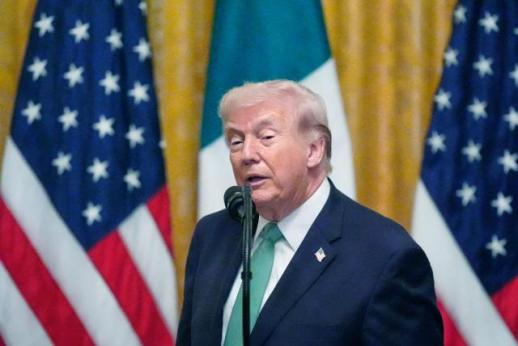 Trump ramps up pressure on 'non-responsive' allies to reopen Strait of Hormuz SEOUL, March 19 (AJP) - U.S. President Donald Trump on Wednesday proposed shifting responsibility for keeping the Strait of Hormuz open and safe to other countries, instead of relying on allies he described as "non-responsive." "I wonder what would happen if we 'finished off' what's left of the Iranian Terror State, and let the Countries that use it, we don't, be responsible for the so called 'Strait?'" Trump wrote on his own social media platform Truth Social. "That would get some of our non-responsive 'Allies' in gear, and fast!!!" The proposal came just a day after Trump said the U.S. no longer needs support from NATO member countries as well as Australia, Japan, and South Korea amid growing frustration with allies who have been slow to respond to his calls for help. It appears to be an apparent attempt to pressure allies, as many Asian and European countries including China, Japan, and South Korea heavily rely on oil passing through the strait, while the U.S. imports just a small fraction from the region. The critical chokepoint, which handles roughly one-fifth of the world's oil supply, has remained largely closed shortly after U.S.-led airstrikes on Iran late last month. 2026-03-19 09:13:05
 -
 Innocean Expands Digital Out-of-Home Ads Using Building Facades and Urban Spaces Innocean said Thursday it is expanding operations of an “integrated digital out-of-home advertising business” that uses building exteriors and urban spaces. The company’s DOOH business converts building facades and unused space into digital media platforms that carry advertising as well as cultural content and brand communications. The company said the approach is designed to create new revenue opportunities for building owners and real estate developers while offering city residents new things to see and do in public spaces. Innocean said it is pursuing tailored media strategies that go beyond operating ad inventory, factoring in location, foot traffic and the context of each site. It cited media projects at Shinsegae Square in Myeongdong, Shinsegae Central City in Banpo and the Gangnam Montessori Building as examples that helped raise awareness of the buildings themselves. “Timeless Moment,” shown at Shinsegae Square in Myeongdong, won a Red Dot main prize, the company said. “The world’s biggest lifeguard,” carried out with Shinsegae Property and the Grand Josun Busan media, received the top prize in the outdoor advertising category at the Korea Advertising Awards and an iF Design Award main prize, it said. Innocean said it plans to broaden its outdoor advertising business step by step, expanding from existing sites to include more unused building space. Kim Jae-pil, executive director and head of Innocean’s media division, said the company will continue to expand a DOOH ecosystem that increases the value of urban spaces through integrated solutions combining creative and media operations.* This article has been translated by AI. 2026-03-19 09:03:23
 -
 GS Caltex Launches CCU~S Carbon-Reduction Education Campaign, Unveils Hands-On Kit GS Caltex said on the 19th it is launching the “CCU~S (Kkuus) Campaign,” a carbon-reduction education initiative for future generations, and unveiling an educational creative teaching tool called the “Kkuus Kit (CCUS KIT).” The kit, the centerpiece of the campaign, is designed to make CCUS — carbon dioxide capture, utilization and storage — easier for children to understand by reinterpreting the concept at their level. The GS Caltex kit uses a playful, child-friendly theme, comparing “farts” to carbon in the air. It turns the process of capturing gas and using it as nutrients to grow plants into a game-like activity. The company said the kit is intended to help children naturally grasp the idea of a circular economy, in which carbon is collected and either reused as a useful material or stored safely. GS Caltex said it plans to link online and offline communications to broaden public engagement with the campaign. It will distribute the kit by lottery to applicants through the campaign page on its official blog, Media Hub, so members of the public can try it firsthand. The company also released a video made in collaboration with science creator “Gwedo,” explaining the scientific principles behind CCUS with humor. A GS Caltex official said the company will continue expanding low-carbon new businesses while creating social value through new forms of creative communication. The official added that GS Caltex will aim to become “a respected 100-year company” based on sustainable growth. * This article has been translated by AI. 2026-03-19 08:36:18
 -
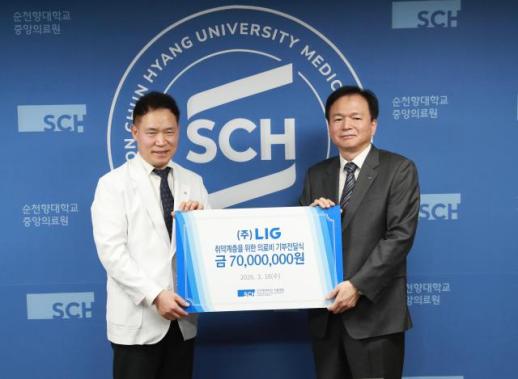 LIG Donates 70 Million Won to Soonchunhyang University Seoul Hospital LIG said it donated 70 million won to Soonchunhyang University Seoul Hospital on March 18 to support medically vulnerable people. The company has run the donation program since 2021, marking its sixth year, and has given a total of 330 million won. LIG said the latest donation will be used to help cover treatment costs for low-income patients who fall through gaps in support. Lee Seong-jin, head of Soonchunhyang University Seoul Hospital, said, "We are grateful for the warm interest and support for medically vulnerable people," adding, "We will do our best to ensure the donation reaches those who truly need it so they can regain their health." Choi Yong-jun, LIG CEO, said he hopes the donation will offer "a small hope" to neighbors suffering from illness, and pledged continued efforts to support medically vulnerable groups. LIG said it also carries out other social contribution activities, including support programs for low-income national merit recipients, sponsorship of the Korea Disabled Football Association, and assistance for young adults preparing for independent living. It said affiliates including LIG Nex1, Innowireless, LIG System and Huseco develop programs reflecting their business characteristics as part of ESG management.* This article has been translated by AI. 2026-03-19 08:30:18
 -
 South Korean Banks’ 2025 Net Profit Hits Record 24.1 Trillion Won; Interest Income Tops 60 Trillion South Korean banks posted a record annual net profit of more than 24 trillion won last year, with interest income topping 60 trillion won for the first time. According to the Financial Supervisory Service’s preliminary report on 2025 operating results released on the 19th, domestic banks’ net profit totaled 24.1 trillion won, up 1.8 trillion won, or 8.2%, from 22.2 trillion won a year earlier. Net profit at commercial banks came to 16.2 trillion won. City banks increased profit by 1.3 trillion won from a year earlier, and internet-only banks by 100 billion won, while regional banks fell by 30 billion won. Special-purpose banks posted 7.8 trillion won in net profit, up 400 billion won from 7.4 trillion won. Return on assets was 0.59%, little changed from 0.58% a year earlier. Return on equity rose 0.17 percentage points to 7.93%. Interest income rose 1.1 trillion won, or 1.8%, to 60.4 trillion won from 59.3 trillion won. The net interest margin narrowed by 0.06 percentage points, but interest-earning assets increased 4.6% to 3,442 trillion won. Non-interest income climbed 1.6 trillion won, or 26.9%, to 7.6 trillion won from 6.0 trillion won, as greater interest-rate and foreign-exchange volatility boosted gains tied to foreign-exchange and derivatives transactions used for hedging interest-rate and currency risks. Selling and administrative expenses rose 2.0 trillion won, or 7.2%, to 29.4 trillion won from 27.4 trillion won. Personnel costs increased 1.5 trillion won to 17.9 trillion won, and other expenses rose 500 billion won to 11.5 trillion won. Credit loss provisions fell 400 billion won, or 5.9%, to 6.5 trillion won from 7.0 trillion won. Financial authorities said the rise in net profit reflected a sharp increase in foreign-exchange and derivatives gains amid greater interest-rate and currency volatility, as well as higher interest income driven by growth in interest-earning assets despite a narrower net interest margin. They warned that uncertainty is increasing this year due to heightened geopolitical risks in the Middle East, U.S. tariff policy, and greater interest-rate and foreign-exchange volatility, while concerns about expanding credit losses persist. Authorities said they plan to keep encouraging banks to strengthen loss-absorbing capacity so they can continue performing their core financial intermediation role even if domestic and external economic conditions worsen. 2026-03-19 08:21:22
 -
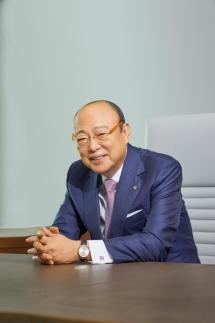 Defense-strong Hanwha head Kim Seung-youn most well-paid business owner in Korea SEOUL, March 19 (AJP) -Reflecting the rise of Korean defense power, Kim Seung-youn, the owner of defense-heavy Hanwha Group, ranked as the most well-paid conglomerate head in 2025 with his compensation package topping 20 billion won. According to Hanwha Corp.’s annual report filed on Wednesday, Kim received 5.04 billion won from Hanwha Corp. last year. He also received 5.04 billion won each from Hanwha Aerospace and Hanwha Systems, 5.041 billion won from Hanwha Solutions, and 4.68 billion won from Hanwha Vision. His total compensation from the five affiliates reached 24.841 billion won, up 77.7 percent from 13.98 billion won a year earlier. Hanwha Group said the compensation reflected Kim’s role in identifying future growth engines, advising on new businesses including mergers and acquisitions, and supporting operations through his global network. Kim’s eldest son, Hanwha Group Vice Chairman Kim Dong-kwan, received 8.096 billion won, down 12 percent from a year earlier. His pay included 2.69 billion won each from Hanwha Corp. and Hanwha Aerospace, and 2.716 billion won from Hanwha Solutions. CJ Group Chairman Lee Jae-hyun ranked second with about 17.7 billion won from CJ Corp. and CJ CheilJedang. Hyundai Motor Group Chairman Chung Eui-sun was third with 17.461 billion won, including 9.001 billion won from Hyundai Motor, 5.4 billion won from Kia, and 3.06 billion won from Hyundai Mobis. Chung’s total rose 51.6 percent from a year earlier as he began receiving compensation from Kia for the first time. Hyosung Group Chairman Cho Hyun-joon earned 15.7 billion won, while Lotte Group Chairman Shin Dong-bin received 14.9 billion won. Cho’s pay rose 64.8 percent from 9.183 billion won in 2024, while Shin’s total could increase to around 18 billion won once additional disclosures from Hotel Lotte and Lotte Property & Development are released. Hanjin Group Chairman Cho Won-tae received 14.578 billion won from affiliates including Korean Air, Hanjin KAL, Asiana Airlines and Jin Air. SK Group Chairman Chey Tae-won earned 8.25 billion won. LG Group Chairman Koo Kwang-mo received 7.127 billion won from LG Corp., including 4.793 billion won in salary and 2.334 billion won in bonuses. Samsung Electronics Chairman Lee Jae-yong has continued to work without pay since 2017. Shinsegae Group Chairman Chung Yong-jin received 5.85 billion won from E-Mart. When severance pay is included, Poongsan Group Chairman Ryu Jin ranked first with 46.645 billion won, including 38.8 billion won in severance following his resignation as CEO of Poongsan Holdings. 2026-03-19 07:45:18
 -
 BTS Comeback Show Nears as Fans Pack Seoul’s Gwanghwamun for Photos and Video “I took photos and videos to send to friends and family.” Fans crowded the Sejong-daero area near Seoul’s Gwanghwamun on March 17, gathering for souvenir photos ahead of BTS’ comeback performance. As ad videos promoting “BTS Comeback Live: Arirang (ARIRANG)” played on major building screens, fans kept stopping to film and pose. Across from the KT Gwanghwamun building’s display, small groups lined the boulevard recording the footage. Yang, a 32-year-old Chinese national, said street performances are banned in China, making a large-scale show in central Seoul “surprising and impressive.” He said friends in China were curious, so he was sending photos. He added he plans to return on the day of the performance with six friends and send proof photos to family in China. On social media, overseas fans have also been posting “Gwanghwamun proof shots,” sharing photos taken around Sejong-daero, including the Kyobo Life Insurance building’s exterior signboard and the outdoor steps of the Sejong Center. Hwang, a Vietnamese national, said he filmed the ad video and shared it with acquaintances, adding that friends and family in Vietnam are highly interested in the show. From Sejong-daero to Cheonggyecheon-ro, BTS visuals cover building walls Building facades around Gwanghwamun have been filled with videos promoting the comeback performance, scheduled to begin at 8 p.m. on March 21 (Korea time). Screens on major media buildings and at the Ilmin Museum of Art have been running the promotional clips on a loop. A building that houses the HiKR Ground Korea tourism promotion center has been showing purple-toned videos featuring ARMY fan messages, including: “Proud to be ARMY,” “We’ll always be behind you,” “Enjoy yourselves on stage,” “We’ll cheer for this comeback, too,” and “I’ve been waiting for this day. Fire!” The Kyobo Life Insurance building’s signboard has also become a popular stop for fans. Kyobo Life and Big Hit Music collaborated on a massive exterior wrap measuring 90 meters (295 feet) wide and 21 meters (69 feet) tall. It includes phrases such as “Until the story that began with me moves the whole world” and “Born in Korea, Play for the World.” Kyobo Life said the wrap is meant to convey hope that, like BTS writing its own story on the global stage, citizens will develop their potential through challenge and effort and move toward a bigger world. The design reflects the shapes of the four trigrams from the South Korean flag — geon, gon, gam and ri — and applies elements of BTS’ new album design to the typeface and colors. A Big Hit Music official said, “We hope the hopeful energy in this collaboration is also conveyed well to citizens.” Jongno-gu district officials have posted banners ahead of the performance to promote spectator safety. The banners include QR codes with traffic safety information and the message, “Welcome to Jongno, BTS and everyone.” Businesses in the area are also preparing for the influx. Some restaurants have hung welcome banners or planned group sing-along events featuring BTS songs. A Hollys store near Gwanghwamun said it will extend hours by two hours and stay open until 1 a.m., while Starbucks said it will flex staffing to keep operations running smoothly. Convenience stores said they are securing more than 100 times their usual stock of key items. Museums to close; officials urge “clean concert culture” On the day of the performance, museums around Gwanghwamun will close, and many buildings near the venue will be shut. The National Museum of Korean Contemporary History, the National Folk Museum of Korea and the National Palace Museum of Korea will temporarily close that day. Gyeongbokgung Palace will also close for the event, with its parking lot shut and access fully restricted. The Korea Heritage Service said it will place all staff on an emergency work system to prevent crowd accidents and damage to cultural heritage sites. Authorities have designated 31 buildings near the venue for intensive management. For six buildings adjacent to Gwanghwamun Square, the main entrances will be closed on the day of the performance, with only rear entrances open. The Sejong Center has also adjusted its schedule. No performances will be held, including the musical “Anna Karenina,” the play “Wasp,” and the dance program “Double Bill Bliss and Jackie.” At Sungnyemun, where a BTS media facade event is scheduled for March 20, organizers said they will manage capacity, separate pedestrian and viewer routes, and add safety staff to prevent crowding. After the event, structures will be removed and the site restored so normal viewing can resume the next day. In a previous news release, Korea Heritage Service Administrator Heo Min urged visitors to follow designated viewing areas to protect Gyeongbokgung’s palace platform and walls and to follow on-site staff guidance to prevent accidents. He also asked for cooperation in a “clean concert culture,” including taking home personal items after the performance. * This article has been translated by AI. 2026-03-19 06:13:09