

Journalist

Jack L. Rozdilsky
-
 Analysis: Iran war puts Korea and US allies to test as Trump asks for warship support SEOUL, March 15 (AJP) -As the war with Iran enters its third week, the conflict is no longer a distant geopolitical crisis for South Korea as it is rapidly becoming a test of alliance politics, energy security and the limits of Seoul’s willingness to project military power far beyond the Korean Peninsula. The shift came after Donald Trump on Saturday openly urged energy-dependent countries — including South Korea — to send naval forces to the Strait of Hormuz to secure global shipping lanes threatened by Iran. The remark signals a potential change in Washington’s wartime strategy. While the United States escalates air and missile strikes against Iranian military infrastructure, the responsibility for safeguarding maritime energy routes may increasingly fall on U.S. allies whose economies depend on those supply lines. In a social-media post Saturday, Trump named several countries he believes should contribute naval assets. “Many countries, especially those affected by Iran’s attempted closure of the Hormuz Strait, will be sending warships,” he wrote, citing China, France, Japan, South Korea and Britain. “The countries of the world that receive oil through the Hormuz Strait must take care of that passage, and we will help — a lot.” For Seoul, the message underscores how quickly a Middle East war could spill into the strategic calculations of U.S. allies in East Asia. Little sign of the war ending soon The conflict began when U.S. and Israeli forces launched coordinated strikes on Iranian nuclear and military facilities on Feb. 28. Since then, the confrontation has steadily escalated. U.S. forces have reportedly struck more than 90 Iranian military targets, including infrastructure on Kharg Island, the terminal responsible for roughly 90 percent of Iran’s crude exports. Iran has responded by tightening its grip on the Strait of Hormuz — the narrow waterway through which about one-fifth of global oil shipments normally pass. Shipping traffic has plunged to a fraction of normal levels as tankers avoid the area amid drone, missile and mine threats. Oil prices have already approached $100 per barrel, reviving fears of a new inflation shock across energy-importing economies. Washington appears reluctant to commit large ground forces. Instead, the emerging strategy emphasizes airpower and coalition maritime security. That framework inevitably places pressure on countries like South Korea. South Korea imports roughly 70 percent of its crude oil from the Middle East, much of it transported through the Strait of Hormuz. From Washington’s perspective, this creates a straightforward argument: the economies most dependent on Gulf energy should help secure the shipping routes that sustain them. But for Seoul, the question is far more complicated. Sending South Korean naval vessels into the Persian Gulf would represent not only a military decision but also a diplomatic and domestic political calculation — one shaped by history, law and geography. South Korea, having received international support during its own war, is no stranger to overseas military missions. The country’s largest foreign deployment occurred during the Vietnam War, when more than 300,000 South Korean troops served alongside U.S. forces between 1964 and 1973. Since democratization in the late 1980s, however, Seoul has adopted a more cautious approach. Overseas missions have generally been framed as peacekeeping, reconstruction or maritime security operations. South Korean forces have participated in operations in Iraq, Afghanistan and Lebanon, while the navy has maintained a permanent presence in the Gulf of Aden through the Cheonghae Unit since 2009. The Cheonghae Unit was originally deployed to combat piracy near Somalia, escorting commercial vessels through one of the world’s most dangerous shipping corridors. In 2020, during an earlier confrontation between Washington and Tehran, Seoul quietly expanded the unit’s operational zone to include waters near the Strait of Hormuz. Rather than joining the U.S.-led International Maritime Security Construct coalition directly, South Korea opted for an independent mission focused on protecting its own shipping. The arrangement allowed Seoul to support maritime security while avoiding the appearance of participating in a military coalition targeting Iran. Any new deployment would face domestic legal hurdles. Under South Korean law, overseas troop deployments typically require approval from the National Assembly unless they fall under narrowly defined missions such as peacekeeping or anti-piracy operations. Even when legally feasible, foreign deployments remain politically sensitive. Public opinion in South Korea has historically been cautious about involvement in distant conflicts — particularly wars perceived as being driven by the strategic priorities of larger powers. Sending naval escorts to protect shipping could potentially be framed as a defensive maritime security mission. Direct participation in combat operations against Iran, however, would almost certainly trigger a much deeper domestic debate. Perhaps the most significant strategic constraint lies much closer to home. South Korea remains technically at war with Kim Jong Un’s regime following the armistice that ended the Korean War in 1953. Maintaining deterrence against North Korea remains the central priority of the South Korean military. If U.S. forces are drawn deeper into a prolonged Middle East war, questions could emerge about the availability of American assets traditionally deployed on the Korean Peninsula — including missile defense systems and airpower. For that reason, analysts say Washington is unlikely to encourage large-scale participation by Northeast Asian allies in the Middle East theater. “The United States does not want to create vulnerabilities in East Asia while concentrating on Iran,” said Yasuyuki Matsunaga of Tokyo University of Foreign Studies. Still, even limited maritime missions could create political and strategic ripple effects. The situation highlights a classic challenge in alliance politics: the risk of entrapment as the country relies heavily on the U.S. security umbrella to deter North Korea. Yet policymakers have long worried that alliance obligations could eventually draw the country into conflicts far from the Korean Peninsula. The Hormuz crisis may represent precisely such a scenario. While the war itself is unfolding thousands of kilometers away, the globalized nature of energy markets and alliance networks means its consequences are already reaching East Asia. And for Seoul, the decision may ultimately hinge less on military necessity than on economic survival. If the Strait of Hormuz remains disrupted and energy markets tighten further, protecting oil supply routes could become a national security issue in its own right. 2026-03-15 07:28:15
 -
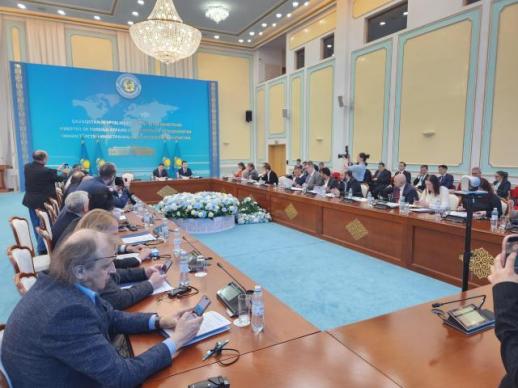 Kazakhstan prepares for national constitutional referendum ASTANA, March 14 (AJP) - Kazakhstan stands on the threshold of a truly historic stage in its development as citizens prepare to vote in a national referendum on a new draft of the Constitution. Deputy Foreign Minister Arman Issetov stated that the new draft serves as a foundation for the long-term stability of the state and a timely response to global challenges. The reform process involved a Constitutional Commission of 130 members that reviewed more than 12,000 proposals submitted by citizens through state digital platforms. Issetov emphasized that the amendments affected 84 percent of the text, creating a document that is new in terms of its substance and meaning. The strategic goal of the reform is to strengthen statehood and independence and to improve the well-being of citizens. Under the concept of a listening state, the new Constitution establishes that the state exists for the individual, not the individual for the state. New legal protections, including the Miranda rule and the guaranteed right to privacy and personal data protection, have been elevated to the constitutional level. Issetov noted that the section devoted to the protection of human rights and freedoms has become the most extensive, comprising almost one-third of the Constitution. Economic growth remains a pillar of the national strategy, with the GDP reaching 306 billion US dollars last year. This performance allowed the country to enter the list of the 50 largest economies in the world this year. To accelerate growth capabilities, the development of science, education, culture and innovation is defined as a constitutional principle of state activity for the first time. This ambition is reinforced by the transition toward comprehensive digitalization and the development of artificial intelligence, supported by specialized legislation enacted in January. Issetov stated that these measures will create a stable and predictable legal and investment environment in which citizens are protected. The international community has deployed 359 international observers and 206 foreign journalists to monitor the proceedings. Beyond the domestic borders, 71 election commissions have been established at Kazakhstan's diplomatic missions in 54 countries to facilitate the participation of citizens abroad. The deputy foreign minister expressed high confidence that the new Basic Law will become the principal document of a Just, Strong, Safe and Clean Kazakhstan. 2026-03-15 03:51:50
 -
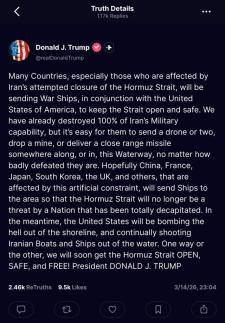 Trump calls on Korea, allies to send warship as Hormuz tensions rise SEOUL, March 15 (AJP) - United States President Donald Trump said Saturday (local time) that countries affected by Iran’s attempt to close the Strait of Hormuz should send warships alongside the United States to help keep the key oil shipping route open. Writing on Truth Social, the social media platform Donald Trump launched after leaving the Oval Office in 2021, nations affected by the attempted closure of the waterway would be "sending war ships" alongside the U.S. to keep the strait open and safe. Trump specifically named China, France, Japan, South Korea and Britain. "Hopefully China, France, Japan, South Korea, the UK and others that are affected by this artificial constraint will send ships to the area," Trump wrote. Trump also warned that despite heavy damage to Iran's military capability, the country could still threaten the waterway by launching drones, deploying mines or firing short-range missiles. "The United States will be bombing the hell out of the shoreline and continually shooting Iranian boats and ships out of the water," Trump wrote, adding that Washington would ensure the strait becomes "open, safe and free." The Strait of Hormuz, located between Iran and Oman, is one of the world’s most important energy chokepoints, carrying roughly one-fifth of global seaborne oil shipments. 2026-03-15 01:40:11
 -
 Actress Nahyun Says She Is Pregnant, Plans Wedding in About a Year Actress Nahyun, 30, said she is pregnant. On the 14th, Nahyun wrote on social media that “while we were preparing for marriage, a precious gift came to us first.” She said she had been “carefully” spending time and was now sharing the news because she had reached a stable stage. “The order changed a bit, but it feels like an even more special start for us,” she added. Nahyun said she plans to take more time to prepare the wedding and expects it will be held in about a year. “I would appreciate your warm blessings,” she said. The photos she posted included a baby ultrasound image and pictures of baby clothes. Nahyun debuted in 2013 through the music video for Secret’s “I Do I Do.” In 2015, she debuted in the group Sonamoo, performing as a lead dancer and vocalist.* This article has been translated by AI. 2026-03-14 20:27:13
 -
 Hyundai halts sales of some Palisade models after U.S. fatal accident, plans recall SEOUL, March 14 (AJP) - Hyundai Motor has suspended sales of certain versions of its large sport utility vehicle (SUV), the All-New Palisade, after identifying a potential safety issue. Hyundai said Saturday that the power-folding function of the second- and third-row seats may fail to detect contact with occupants or objects under certain conditions, prompting the company to temporarily halt sales of vehicles equipped with the feature. According to Reuters, a two-year-old girl died in Ohio on March 7 in an incident related to the Palisade’s power seat mechanism. Hyundai said it plans to resume sales after improving the vehicle’s anti-pinch safety function. For vehicles already sold, the automaker plans to carry out a voluntary recall and will report the measure next week to South Korea’s Ministry of Land, Infrastructure and Transport and the U.S. National Highway Traffic Safety Administration (NHTSA). The company said it will strengthen overall system safety by increasing the sensitivity of the occupant and object detection system and limiting the power-folding seat function to situations when the tailgate is open. The exact number of vehicles subject to recall is still being calculated, but the measure is expected to cover models produced through March 11 this year. The affected vehicles are estimated at 57,474 units in South Korea and 74,965 units in North America. The All-New Palisade exported about 100,000 units worldwide last year, while 59,506 units were sold in South Korea, according to the company. Hyundai apologized for the inconvenience caused to customers, saying it will continue to prioritize safety and thoroughly review all related issues to maintain customer trust. 2026-03-14 15:42:22
 -
 Ryu Hyun-jin retires from national team after WBC as Korea loses to Dominican Republic SEOUL, March 14 (AJP) - South Korean ace Ryu Hyun-jin will retire from international baseball after the 2026 World Baseball Classic (WBC), bringing an end to a national team career that spanned two decades. Ryu started for South Korea in the WBC quarterfinal against the Dominican Republic at loanDepot Park in Miami, Florida, on Friday, pitching 1⅔ innings. He threw 40 pitches and allowed three hits and two walks while striking out one batter and giving up three runs. South Korea was overpowered by the Dominican lineup and fell 10–0 in a seven-inning mercy-rule defeat. “It’s disappointing, very disappointing,” Ryu said after the game. “I should have given our fielders more time to settle in, but I couldn’t do that.” He added that the experience would still benefit younger players on the team. “It will be a valuable lesson for the younger players who had the chance to compete on a big stage,” he said. Born in 1987, Ryu treated the tournament as his final appearance for the national team. He was first selected for the national squad shortly after making his professional debut in 2006 and went on to become one of the central figures of South Korean baseball in international competitions. He represented South Korea in major tournaments including the 2006 Doha Asian Games, the 2008 Beijing Olympics and the 2009 WBC. At the Beijing Olympics, Ryu delivered a memorable performance by throwing a 126-pitch shutout against Canada, helping South Korea secure the gold medal. In the 2009 WBC, he contributed as both a starter and reliever as South Korea finished runner-up. After moving to Major League Baseball in 2013, injuries including elbow and shoulder surgeries limited his participation in international events. However, at the request of the national team, he returned to wear the Taegeuk mark again for the first time in 16 years and made his WBC comeback after 17 years. Ryu had prepared the game against the Dominican Republic as his final appearance for the national team. “I hope today becomes a starting point for younger players to step up and lead the team going forward,” he said. 2026-03-14 15:06:44
 -
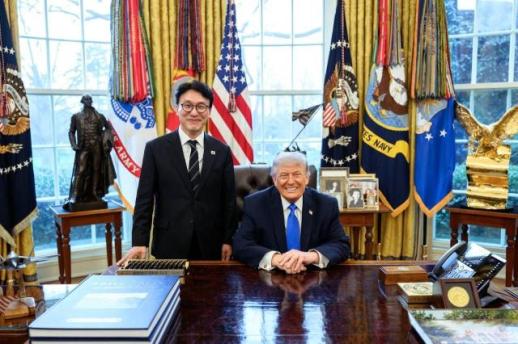 PM Kim says Trump asked if Kim Jong-un wants talks with U.S. SEOUL, March 14 (AJP) - South Korean Prime Minister Kim Min-seok said Saturday that U.S. President Donald Trump asked him whether North Korean leader Kim Jong-un is interested in resuming dialogue with the United States. Kim said he spoke with Trump for about 20 minutes on Friday about North Korea and other issues during a meeting at the White House. He added that much of the conversation involved Trump asking for his views on the North Korean issue. According to Kim, he told Trump that South Korean President Lee Jae Myung often describes Trump as “the only leader capable of resolving the Korean Peninsula issue.” Kim said Trump showed strong interest in North Korea during the conversation and even asked an aide to bring a photo taken with Kim Jong-un at Panmunjom while discussing the matter. “President Trump said he maintains a good relationship with Chairman Kim and asked whether Kim wants to engage in talks with the United States or with him personally,” Kim told reporters. Kim said he responded by noting that Trump is the only Western leader who has held direct talks with the North Korean leader and that he believes Trump has unique capabilities as a peacemaker on the Korean Peninsula. “He appeared to find the remarks meaningful and reacted with satisfaction,” Kim said, without disclosing further details about the advice he gave the U.S. president. Kim also said he asked Trump whether he could submit a more detailed written memo in English outlining his views before leaving the United States, adding that the U.S. president agreed. Kim said Trump indicated that a potential meeting with the North Korean leader could take place during or after his upcoming visit to China, though the timing was not the most important factor as long as dialogue and contact with Pyongyang resume. Trump is scheduled to visit China from March 31 to April 2 for talks with Chinese President Xi Jinping, raising speculation that the trip could open a path toward renewed U.S.-North Korea diplomacy. Earlier in the visit, Kim met U.S. Vice President JD Vance and U.S. Trade Representative Jamieson Greer to discuss bilateral issues, including the recently passed Special Act on Investment in the United States, which aims to support expanded South Korean investment in the U.S. and strengthen industrial cooperation between the two allies. 2026-03-14 14:30:16
 -
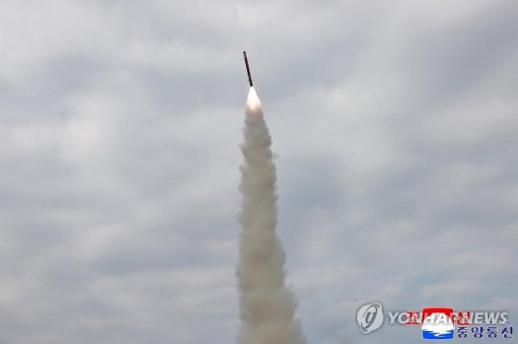 North Korea fires over 10 ballistic missiles despite Trump's outreach SEOUL, March 14 (AJP) - North Korea launched more than 10 ballistic missiles toward the East Sea on Saturday, South Korea’s military said. “Our military detected more than 10 unidentified ballistic missiles launched toward the East Sea from the Sunan area near Pyongyang today at around 1:20 p.m.,” the JCS said in a statement. The military added that it has strengthened surveillance and vigilance in preparation for additional launches while closely sharing related information with the United States and Japan. Pyongyang previously fired a ballistic missile toward the East Sea on Jan. 27. If the latest launch is confirmed to be a ballistic missile, it would mark the country’s first such launch in 47 days and its third this year. Launching more than 10 missiles at once is unusual and is widely seen as a show of force. The launch came a day after U.S. President Donald Trump signaled openness to dialogue with North Korean leader Kim Jong-un. During a meeting with South Korean Prime Minister Kim Min-seok at the White House on Friday, Trump reportedly said he maintains “a good relationship” with Kim and asked whether the North Korean leader still wants to engage in talks with the United States and with him personally. Since returning to the White House in January last year, Trump has repeatedly expressed willingness to resume dialogue with Pyongyang. However, North Korea appeared to respond to Trump’s overture with a show of force just a day later. The launch is also seen as a protest against the ongoing South Korea-U.S. joint military exercise Freedom Shield (FS), which began on March 9 and runs through March 19. The allies have reduced the number of field training exercises (FTX) to less than half compared with last year during this year’s FS drills, a theater-level combined exercise designed to prepare for potential contingencies on the Korean Peninsula. Despite the reduction, North Korea has continued to denounce the drills as a “rehearsal for invasion.” Kim Yo-jong, vice department director of the ruling Workers’ Party of Korea, issued a statement a day after the drills began, warning that the hostile forces’ military demonstrations near what she called the country’s sovereign security zone could lead to “horrific consequences.” 2026-03-14 14:16:47
 -
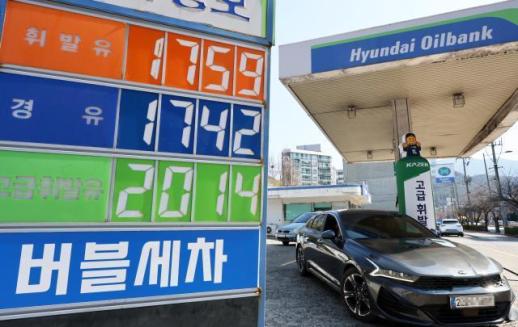 Fuel prices decline a day after government price cap begins SEOUL, March 14 (AJP) - Average fuel prices at gas stations across South Korea continued to fall on Saturday, a day after the government’s oil price cap took effect. According to the Korea National Oil Corp.’s price information system Opinet, the nationwide average price of gasoline stood at 1,851.9 won ($1.24) per liter as of 9 a.m., down 12.2 won from the previous day. Diesel prices fell more sharply to 1,856.1 won per liter, down 16.6 won. Diesel remained slightly more expensive than gasoline, though the price gap narrowed significantly. Domestic fuel prices have been declining since peaking on March 10 following the outbreak of the U.S.-Iran war, according to industry data. Dubai crude, the benchmark for imported oil in South Korea, rose by $34.6 from the previous week to $123.5 per barrel. International gasoline prices climbed $25.3 to $126.3, while international automotive diesel rose $37.5 to $176.5. An official from the refining industry said that changes in global oil prices typically take about two to three weeks to be reflected at domestic gas stations, but the recent introduction of the price cap has made it difficult to predict short-term price movements. Industry sources added that uncertainty among gas station operators is growing as most refiners have yet to announce whether settlement prices will be applied retroactively to Friday, the day the price cap took effect. 2026-03-14 14:10:08
 -
 Hyundai Halts Sales of Some Palisade Models, Plans Recall After U.S. Seat Incident Hyundai Motor Co. said it has identified a safety issue in its large SUV, the All New Palisade, and has temporarily stopped selling certain configurations. The automaker said it plans a voluntary recall for vehicles already sold and will file reports next week with South Korea’s Transport Ministry and the U.S. National Highway Traffic Safety Administration. Hyundai said Saturday that when the second- and third-row power-folding seats operate under certain conditions, the system may fail to detect contact with an occupant or an object. It said sales of vehicles with the affected specification will be suspended for now. Reuters reported that a 2-year-old girl died March 7 in Ohio in an incident involving a Palisade power seat. Hyundai said it will resume sales after improving the seat’s anti-pinch function. The company said it will increase the sensitivity for detecting occupants and objects and restrict the power-folding function to situations when the rear door is open, among other steps to strengthen overall system safety. The recall scope is still being tallied, Hyundai said, and will cover vehicles produced through March 11 this year. It estimated about 57,474 vehicles in South Korea and 74,965 in North America could be affected. The All New Palisade exported about 100,000 vehicles worldwide last year, and 59,506 were sold in South Korea, the company said. Hyundai apologized for the inconvenience and said it will continue to put customer safety first and thoroughly review all issues to improve trust and satisfaction.* This article has been translated by AI. 2026-03-14 11:33:16