

Journalist

Jack L. Rozdilsky
-
 Asian stocks fall as oil tops $100 on Hormuz tensions SEOUL, March 13 (AJP) — Asian stock markets opened lower Friday after oil prices surged above $100 a barrel amid escalating tensions around the Strait of Hormuz, raising concerns about prolonged disruptions to global energy supplies. Investor anxiety intensified after Iran’s Supreme Leader Mojtaba Khamenei vowed to maintain pressure on shipping through the strategic waterway and warned Tehran could open another front in the conflict, stoking fears that the war could drag on and threaten one of the world’s most critical energy routes. The comments sent oil prices sharply higher. U.S. benchmark West Texas Intermediate crude jumped 9.72 percent to $95.73 a barrel, while global benchmark Brent crude settled at $101.26, its highest close since July 2022. U.S. equities fell sharply overnight as energy-driven inflation fears rattled markets. The Dow Jones Industrial Average dropped 1.56 percent to its lowest level of the year, while the S&P 500 fell 1.52 percent and the Nasdaq Composite declined 1.68 percent. Technology shares led the selloff. The Philadelphia Semiconductor Index plunged 3.43 percent as investors priced in potential supply-chain risks linked to Gulf tensions. Major chipmakers also retreated, with Nvidia down 1.53 percent, while Intel and Taiwan Semiconductor Manufacturing Co. fell more than 5 percent and Micron Technology slid over 3 percent. The weakness spilled into Asian trading, including Seoul, where semiconductor heavyweights led early losses. Samsung Electronics fell 2.55 percent to 183,100 won and SK hynix declined 2.58 percent to 906,000 won. Most South Korean shares opened lower as the oil shock rattled investor sentiment. The benchmark KOSPI initially dropped about 3 percent before trimming losses. As of 10:56 a.m., the index was down 1.24 percent at 5,513.87, while the tech-heavy KOSDAQ recovered from early losses to rise 0.62 percent to 1,155.51. Foreign and institutional investors were net sellers, offloading 644.4 billion won ($483 million) and 331.3 billion won worth of shares respectively, while retail investors bought a net 971.1 billion won. Among major stocks, LG Energy Solution slid 4.17 percent to 368,000 won, Hyundai Motor declined 1.73 percent to 512,000 won and Kia lost 2.93 percent to 162,100 won. Samsung Biologics fell 1.85 percent to 1,595,000 won, SK Square dropped 3.79 percent to 533,000 won and HD Hyundai Heavy Industries slipped 1.99 percent to 592,000 won. Naver edged up 0.45 percent to 223,000 won. Doosan Enerbility was the lone major gainer, rising 2.13 percent to 105,700 won. The Korean won weakened toward crisis-era levels, trading at 1,489.40 per dollar. The Bank of Korea warned that prolonged tensions in the Middle East could push up inflation and said it would maintain a cautious, neutral policy stance for now. While some investors speculate the central bank may eventually tighten policy to contain inflationary pressure, others say heightened geopolitical uncertainty makes a near-term rate hike unlikely. Elsewhere in Asia, Japan’s Nikkei 225 slipped 0.81 percent to 54,010.97. Hong Kong’s Hang Seng Index fell 0.48 percent to 25,592.49, while China’s Shanghai Composite Index declined 0.33 percent to 4,115.48. Taiwan’s TAIEX also dropped 0.58 percent to 33,386.04. 2026-03-13 11:15:05
 -
 Woori Bank to Launch Prepaid Card for Foreign Visitors in April Woori Bank said Friday it signed a business partnership agreement, or MOU, with NOL Universe and Kona I to provide financial services built around a prepaid card designed for foreign customers. The partnership aims to improve payment convenience and access to financial services for overseas tourists visiting South Korea. The three companies plan to jointly roll out the prepaid card service, targeting an April launch, and will work on system integration and building the partnership infrastructure. The service will be offered through NOL Universe’s travel, ticket and experience platform, NOL World, in two formats: products bundled with high-demand items such as K-performance tickets and tourism packages, and a standard option that allows customers to purchase the card on its own. Through Kona I Co., which operates domestic card payment infrastructure, the card will support transit payments as well as purchases at online and offline merchants. The companies also plan to offer special benefits at major merchants frequently used by foreign tourists. Woori Bank said it will distribute the prepaid cards at currency exchange counters at Incheon International Airport so visitors can use them immediately upon arrival. It also plans to provide what it called industry-leading exchange-rate discounts for domestic use and to support exchange and top-up services through the bank’s unmanned exchange machines and ATMs. “As demand from foreign tourists continues to rise, we have prepared a differentiated ‘Tourist Finance’ service that can be used conveniently anytime and anywhere,” said Kim Go-woon, deputy head of Woori Bank’s foreign exchange business division. “We will continue to expand financial services for global customers based on this partnership.”* This article has been translated by AI. 2026-03-13 11:04:46
 -
 Film ‘The Man Who Lives With the King’ Drives Renewed Sales of 1928 Novel on King Danjong The popularity of the film ‘The Man Who Lives With the King’ is spilling beyond theaters into publishing and other off-screen consumption. The 1928 novel has been reissued and entered bestseller rankings, while sales of children’s history books tied to King Danjong have surged, showing how the box-office hit is driving demand for related historical content. According to Kyobo Book Centre’s bestseller list for the first week of March released Friday, Saeum’s reissued edition of , published last month, ranked No. 17 in the Korean fiction category. is a work by Yi Gwang-su (1892-1950) with Danjong as its central figure. It was serialized in the Dong-A Ilbo in 1928-1929. The novel depicts political confrontation between forces backing Danjong, portrayed as embodying dynastic legitimacy, and a faction seeking to enthrone Prince Suyang, including Han Myeong-hoe and Jeong In-ji, framed through the opposing figures of Danjong and Suyang. With copyright expiring 70 years after the author’s death, multiple publishers, including Saeum, have been freely releasing editions following the film’s success. Publishers have also rolled out varied formats to attract readers, including an “original edition” that restores the cover design of the first edition published by Bakmun Publishing in 1954. Library borrowing has also climbed. Statistics from the National Library of Korea’s “Library Information Naru” big-data platform show the book was borrowed about 10 to 20 times a month last year, but recorded a total of 148 loans last month. The film’s success has broadened interest beyond a single historical figure to the era Danjong lived in and its historical backdrop, the report said, lifting attention to history more broadly. YES24 said that in the month after the film opened Feb. 4, sales of books tagged with the keyword “Danjong” jumped 2,565% from the same period a year earlier. Sales of rose about 800%, while , which examines Danjong’s tragic fate alongside royal politics after the Sejong era, climbed about 2,700%. The children’s history book surged 4,614% from a year earlier. “Cultural content such as films and dramas is sparking interest in specific historical figures or events,” said Jo Seon-young, head of YES24’s book business division. “A steady reading trend is emerging in which people then seek out and read related books.” With the film drawing more than 12 million cumulative viewers and becoming a nationwide hit, related spending is expected to spread in more ways, the report said. Yeongwol, where Danjong was exiled, has seen a sharp rise in tourism demand, with what the report described as a “Danjong fandom” phenomenon. At Cheongnyeongpo Ferry, a major filming backdrop, about 11,000 people visited during last month’s Lunar New Year holiday period, and about 14,800 visited during the March 1 holiday period, emerging as a popular destination. The film’s impact has also played out online. On map apps, the review section for Yeongwol’s Jangneung has drawn more than 600 comments mourning and commemorating Danjong. Meanwhile, malicious comments appeared on listings for Han Myeong-hoe’s grave in Cheonan and for Gwangneung, the royal tomb of King Sejo, prompting Kakao Map to close the review sections for those sites, the report said. * This article has been translated by AI. 2026-03-13 10:55:03
 -
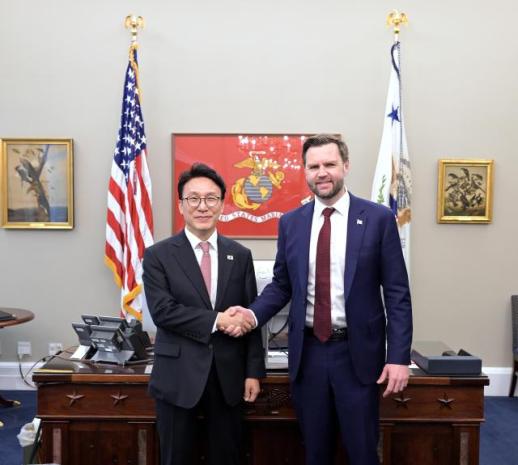 South Korea PM meets US vice amid war and tariff tensions SEOUL, March 13 (AJP) - South Korean Prime Minister Kim Min-seok met U.S. Vice President JD Vance at the White House on Wednesday, using the talks to underscore Seoul’s passage of a new law to support Korean investment in the United States and to press for faster implementation of broader bilateral security and industrial agreements. The meeting came as the alliance faces renewed strain from a U.S. tariff offensive and deepening energy insecurity caused by the Iran war and disruptions around the Strait of Hormuz. According to the prime minister’s office, Kim told Vance that South Korea’s National Assembly had passed special legislation designed to provide the legal framework for Seoul’s investment commitments in the United States, calling it proof of Korea’s determination to follow through on bilateral agreements. Reuters and AP reported that the new law is tied to Seoul’s pledged $350 billion investment package in strategic U.S. industries and shipbuilding, part of a broader deal reached with Washington last year. Kim said he hoped the legislation would help Korean companies contribute to the revival of U.S. manufacturing and job creation while opening the way for broader advances in bilateral ties. He also said the law would add momentum to implementing the joint fact sheet released after the recent summit between the two countries’ leaders. In the security sector, Kim called for swift execution of pending agreements involving nuclear-powered submarines, nuclear energy and shipbuilding cooperation. Korean media reports said the package also touches on Seoul’s long-running push to expand its nuclear and maritime strategic options as the allies deepen industrial-security coordination. Vance welcomed the establishment of the legal framework needed to carry out the investment deal and said the two sides should stay in close contact on implementation, according to the prime minister’s office. Kim also highlighted cooperation in critical minerals and briefed Vance on Seoul’s recent decision regarding a U.S. request linked to the export of mapping data by American companies. Vance expressed appreciation and said the allies should continue discussions on other non-tariff barriers as well, the office said. Kim additionally noted that issues Vance had raised in January — including matters involving Coupang and religious concerns — were now being managed in a stable way. Vance, in turn, thanked the Korean government for its efforts to remain in close communication while respecting South Korea’s legal framework. The meeting was the first between Kim and Vance in about six weeks since their previous talks on Jan. 23, and the prime minister’s office said it helped deepen personal trust and improve communication on pending alliance issues. The talks came at a delicate moment for Seoul. Just two days earlier, the Office of the U.S. Trade Representative launched a new Section 301 investigation into “structural excess capacity and production in manufacturing sectors,” targeting South Korea and 15 other economies as the Trump administration seeks to rebuild its tariff arsenal after a court setback. At the same time, the war involving Iran has amplified South Korea’s vulnerability to external energy shocks. The conflict has sharply disrupted flows through the Strait of Hormuz, helping send oil prices surging and adding pressure on Asian import-dependent economies such as South Korea, which relies heavily on Middle Eastern crude and petrochemical feedstocks. 2026-03-13 10:47:59
 -
 Krafton, Hanwha Aerospace forge physical AI alliance with joint venture plans SEOUL, March 13 (AJP) - South Korean gaming giant Krafton and defense heavyweight Hanwha Aerospace signed a memorandum of understanding to jointly develop physical AI technologies and pursue the establishment of a joint venture spanning defense and other industrial applications. The partnership announced Friday marries Krafton's AI research capabilities and simulation expertise — honed through operating large-scale virtual worlds such as PUBG: Battlegrounds — with Hanwha Group's sprawling defense and manufacturing infrastructure. The two companies said they would collaborate on core physical AI research and development, field testing and application scenarios, and the buildout of shared technical and operational frameworks. The companies said they plan to set up a joint venture to fast-track the commercialization of co-developed technologies and deepen their long-term cooperation. Krafton will also invest in a fund managed by Hanwha Asset Management that targets AI, robotics and defense sectors, with a fundraising goal of about $1 billion. The fund aims to identify high-potential partners across the physical AI value chain and funnel investments toward joint development and commercialization. "We will establish a joint venture with Hanwha and grow it into a global defense technology firm on par with Anduril," said Kim Chang-han, CEO of Krafton. Hanwha Aerospace CEO Son Jae-il said AI technology is rapidly evolving beyond conventional industry applications into physical AI for the defense domain. He added that the partnership with Krafton would set a new technological benchmark in the field. 2026-03-13 10:28:38
 -
 KGM Deepens Vietnam KD Partnership, Eyes Wider Southeast Asia Exports KG Mobility, or KGM, said Friday it met with Kim Long Motors, a unit of Vietnam’s FUTA Group and its KD partner, to inspect the production site and discuss detailed cooperation plans as it prepares to enter the Vietnamese market. The meeting was held March 11 (local time) at FUTA Group’s headquarters in Da Nang, in central Vietnam. Attendees included KGM Chairman Kwak Jae-sun; Kwon Kyo-won, head of KGM’s business division; FUTA Group Chairman Nguyen Huu Luan; Mai Tien Phat, president of FUTA Group’s vehicle dealership company; and Ho Cong Hai, head of KLMH, along with other officials. Ahead of the talks, Kwak on March 10 visited KLMH (Kim Long Motors Hue), a KGM-dedicated KD plant in the Hue Industrial Park that is in the final stage of construction, to check readiness by process and review support needs, KGM said. Kim Long Motors plans to begin full-scale KD production of key KGM models, including the Rexton and Musso, in the second half of this year after the plant is completed. “The Vietnam plant is expected to supply high-quality vehicles to the market by providing not only KD but also KGM’s full set of production equipment, reflecting KGM’s manufacturing know-how,” Kwak said. “The two companies will cooperate to produce vehicles of the highest quality.” Kwak said Vietnam is “a high-potential market” where vehicle purchases are expected to rise sharply and a strategic hub for expanding exports across Southeast Asia. He added that KGM will continue to increase global sales by developing new markets beyond existing ones such as Europe and by expanding overseas launches of new models, including the Musso. FUTA Group is a Vietnamese company that operates auto sales and passenger transportation businesses. Kim Long Motors is its automotive subsidiary. The two companies formed a partnership in 2023 by signing a licensing agreement for local assembly production in Vietnam. KGM said it is accelerating expansion of its KD business to increase export volumes. Outside Vietnam, it signed an HOA (heads of agreement) in May last year to supply KD kits to Indonesia, and plans to expand KD operations this year to Bangladesh and Sri Lanka as well. * This article has been translated by AI. 2026-03-13 10:18:23
 -
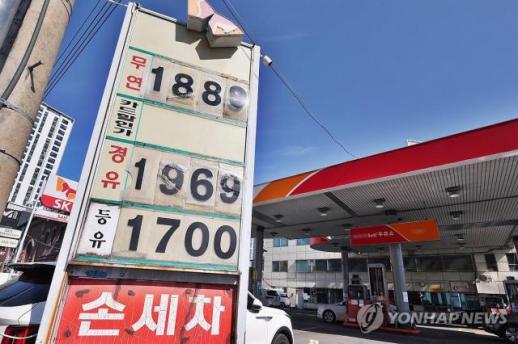 South Korea Fuel Prices Fall After Government Caps Refiners’ Supply Prices South Korea’s average gasoline and diesel prices fell for a third straight day after the government began enforcing a cap on refiners’ supply prices, according to industry data. Domestic pump prices have been easing since peaking on the 10th following the outbreak of war involving the United States and Israel and Iran. As of 9 a.m. on the 13th, the nationwide average gasoline price was 1,883.79 won per liter, down about 15 won from the previous day, the Korea National Oil Corp.’s Opinet price information system said. Diesel averaged 1,911.1 won per liter, down about 21 won. Diesel remained more expensive than gasoline. Prices in Seoul also declined. Average gasoline in the capital fell about 21 won to 1,906.40 won per liter, while diesel dropped about 30 won to 1,905.53 won. The government began the oil price cap system at midnight on the 13th, setting maximum supply prices from refiners at 1,724 won per liter for regular gasoline, 1,713 won for automotive diesel and 1,320 won for kerosene. Premium gasoline, which has a limited consumer base, was excluded. The government said it will reset the caps every two weeks after reviewing the Middle East war and oil price trends. To guard against possible supply shortages after the cap, the government said it will also issue a notice banning hoarding. It plans to step up nationwide monitoring of gas station prices and intensively inspect suspected market-disrupting practices. To compensate refiners for losses caused by the cap, the government said it has prepared a post-settlement system. If refiners incur losses under the cap, it plans to reimburse them quarterly through a “maximum price settlement committee” made up of oil experts, including accounting, legal and academic specialists. Loss estimates calculated by each refiner would be verified by an accounting firm and finalized by the committee. The government noted that when oil prices are falling, refiners could also see periods of profit because of the cap, and said it will conduct detailed post-settlement calculations of profits and losses. The government again stressed the cap is aimed at stabilizing the market rather than imposing artificial price controls. However, controversy has grown after one refiner announced it would apply a post-settlement method for gas stations by splitting calculations into periods before and after the 13th, instead of using a monthly average price. The gas station industry says stations that bought inventory at higher prices before the cap cannot sell it above the now-public supply prices, forcing them to absorb losses. International oil prices, meanwhile, climbed back above $100 a barrel after Ayatollah Seyyed Mojtaba Khamenei declared a hard-line response toward the United States and Israel, including a possible closure of the Strait of Hormuz. On March 12 local time, ICE Futures Europe settled May Brent crude at $100.46 a barrel, up 9.2% from the previous session. On the New York Mercantile Exchange, April WTI settled at $95.73 a barrel, up 9.7%. Analysts have warned that if the Middle East war drags on and high oil prices persist, the impact of the price cap could be reduced. 2026-03-13 10:12:22
 -
 Hyundai Sungwoo Group Expands Indigo Junior Program to Develop Young Racing Drivers Hyundai Sungwoo Group said it is continuing to back promising drivers through its Indigo Junior Program, an initiative aimed at expanding South Korea’s motorsports base and developing the next generation of racing talent. The group said it held a sponsorship signing ceremony March 9 at the Indigo Camp in Bundang, Gyeonggi Province, with drivers Kwon O-tak and Shin Ga-won. Under the agreement, the two will receive support from Hyundai Sungwoo Group and Solite Indigo Racing, including technical assistance, professional coaching and mentoring designed to help them keep improving as drivers. Launched in 2020, the Indigo Junior Program is a talent-development effort for young drivers with growth potential, intended to help them advance into competitive professional racing. Hyundai Sungwoo Group said the program is part of its broader push to energize the domestic motorsports industry while identifying and nurturing talent over the long term. The program is structured as a step-by-step development system rather than a simple sponsorship, the company said. It supports drivers from kart racing through higher-level touring car competition, including TCR, by providing staged opportunities to train and gain experience. Kwon, 16, and Shin, 18, were selected after strong results in domestic kart and racing events, the group said. Kwon finished first overall in the 2025 KIC Kart Racing Cup Senior season and also won the 2025 Motoarena Kart Racing Cup season overall. Shin, a female driver, finished first overall in the 2025 RMC Senior season and placed second in the 2025 Radical Cup Korea R4·R6 class. Solite Indigo Racing said it plans to provide sponsorship funding along with mentoring and training programs, drawing on its overseas race experience and team-management know-how to help the drivers build competitiveness at home and abroad. An official from Hyundai Sungwoo Group called the Indigo Junior Program “a long-term development project” designed to help promising domestic drivers grow systematically in a stable environment. The official said drivers such as Lee Chang-wook of Kumho SLM and Park Jun-ui of Solite Indigo Racing have advanced through the program and are now active on various stages in South Korea and overseas. The official added that the group will continue investing to broaden the base of South Korean motorsports and strengthen global competitiveness. Hyundai Sungwoo Group is an auto-parts-focused group centered on holding company Hyundai Sungwoo Holdings. Its affiliates include Hyundai Sungwoo Casting, which makes alloy wheels and cast products, and Hyundai Sungwoo Solite, which specializes in lead-acid batteries, including automotive batteries.* This article has been translated by AI. 2026-03-13 10:00:14
 -
 Mercedes-Benz Korea Launches Collaboration Program With Chef Sohn Jong-won Mercedes-Benz Korea said Friday it will work with fine-dining chef Sohn Jong-won on a brand collaboration program called “Mercedes-Benz Mate.” The company described “Mercedes-Benz Mate” as a project designed to present its brand values in a more approachable way through collaborations with people who show their own philosophy and lifestyle in their fields. Sohn oversees a French dining restaurant and a Korean restaurant, and both have earned one Michelin star. Mercedes-Benz Korea said Sohn will take part in a range of brand activities, including producing digital content and appearing at major events, where he is expected to meet customers. Lee Sang-kuk, executive vice president and head of digital, marketing and communications at Mercedes-Benz Korea, said the collaboration was planned because Sohn’s drive for perfection and his continued efforts to deliver the best customer experience align with the company’s brand philosophy. He said he hopes the partnership will help broaden Mercedes-Benz’s brand philosophy and create opportunities for mutual inspiration. * This article has been translated by AI. 2026-03-13 09:48:16
 -
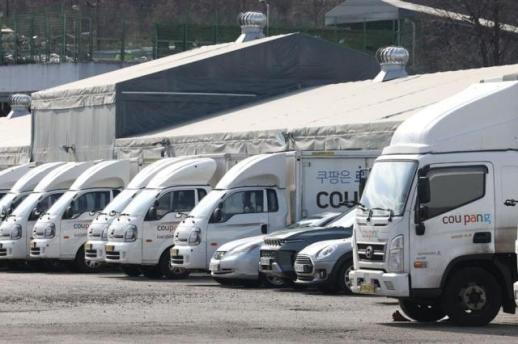 Proposal to expand overnight delivery draws resistance from mom-and-pop stores SEOUL, March 13 (AJP) - Seeing delivery boxes from Coupang or Kurly outside front doors on the way to work has become an everyday sight in South Korea. Ordering something at night and finding it on your doorstep the very next morning is now a common practice - it's simply how online shopping works here. Lawmakers now want to open overnight delivery to more players. Under a proposed revision led by the ruling Democratic Party (DP), large discount retailers would be allowed to offer the service, with supporters saying the move would help curb the dominance of online platform giant Coupang while also giving consumers more options and greater convenience. Under the law introduced in 2012, large discount stores have been barred from operating between midnight and 10 a.m. That restriction helped create conditions in which Coupang effectively dominates the overnight delivery market. The revision would exempt online deliveries from those restricted hours to prevent any one company from monopolizing the service. A related bill has been submitted to the National Assembly by DP lawmaker Kim Dong-ah. It would keep the current closure and operating-hour limits mandatory for large discount stores and supermarket chains but allow online deliveries without such restrictions. But small-business owners have strongly opposed the move, warning that it would deal a severe blow to them. They argue that it would hurt them both directly and indirectly and are calling for the proposal to be scrapped. Protesters even rallied outside his office, demanding that he withdraw the proposal. The Korea Federation of Micro Enterprise called it the removal of their last safety net. Having already lost ground to large online platforms, they argue that granting the same delivery rights to major retailers with deep pockets and extensive logistics networks would not create fair competition but would instead put even more pressure on small merchants. Small businesses and local stores have voiced particular concern, criticizing the easing of regulations intended to curb Coupang's market dominance as a case of "burning down the house to catch a flea," arguing that small and midsize merchants should not be sacrificed in a fight among retail giants. They also fear it could loosen the current restrictions on major retailers' business hours, which have been in place since the Constitutional Court upheld them in 2018 to promote coexistence. Changes in the retail industry are inevitable, and regulations can be adjusted to reflect the times. But if the burden falls primarily on the most vulnerable, that deserves a second look. South Korea's 7.9 million small-business owners are a cornerstone of the economy. * This article, published by Aju Business Daily, was translated by AI and edited by AJP. 2026-03-13 09:47:03