

Journalist

Jack L. Rozdilsky
-
 Naver Pay Partners With Retail & Insight to Roll Out Npay Connect at 4,000 Supermarkets Naver Pay said Wednesday it signed a business agreement with cloud-based retail tech company Retail & Insight to support digital innovation in South Korea’s retail distribution market. Under the agreement, the offline integrated payment terminal “Npay Connect” is set to be adopted as the standard device at about 4,000 small and midsize supermarkets nationwide that have merchant contracts with Retail & Insight. Retail & Insight provides integrated systems for neighborhood markets through its “Tomato Solution” platform, including cloud-based point-of-sale and enterprise resource planning tools, ordering and payment apps, smart flyers and kiosks. With Npay Connect, stores will be able to offer multiple payment options, including cash, cards, simple payments, NFC and Npay’s facial-recognition payment service, “Facesign.” Shoppers will be able to leave Naver reviews immediately after paying, and apply store discount coupons directly through Npay Connect. Starting this month, Npay Connect terminals will be installed in phases at neighborhood markets using Tomato Solution, and an on-site Npay payment promotion will be held at the same time. The two companies also said they will expand data-driven cooperation. Using Tomato Solution POS and ERP data along with Npay payment data, they plan to review financial support options aimed at helping neighborhood markets grow and explore benefits that use data analysis to improve customer experience. Lee Hyang-cheol, Npay’s Pay Service lead, said the agreement would help make Npay Connect “a turning point for innovating the payment ecosystem” in South Korea’s retail distribution market. He said the company will continue to strengthen digital competitiveness for small merchants and provide a more convenient experience for store visitors.* This article has been translated by AI. 2026-03-11 09:06:00
 -
 Innocean Breaks Into Ad Age’s 2026 A-List Top 10 in the U.S. Hyundai Motor Group’s advertising agency Innocean has been named one of the top 10 marketing companies in the United States, the first South Korean ad company to make the list. Innocean said Wednesday that it was selected for the top 10 of the “2026 A-List” released by marketing trade publication Ad Age. The company called it its biggest achievement since establishing its U.S. subsidiary 18 years ago. Ad Age compiles the annual list by evaluating agencies active in the U.S. market on creative performance, business results and industry influence. Innocean attributed the recognition to capabilities built steadily by its U.S. unit. Founded in 2008, Innocean USA expanded its presence with creative work and brand experiences, including producing a Super Bowl ad in 2010, a first for a South Korean advertising company. Jeon Il-soo, Innocean’s head of global business and vice president leading the Americas regional headquarters, said the company has “consistently worked to recruit talented people, strengthen teamwork and build capabilities.” He said management efforts to broaden its client base and lay a foundation for sustainable growth were recognized by the industry. Innocean, marking its 21st anniversary this year, has also built its profile globally. It ranked No. 1 in a 2016 Super Bowl ad preference survey with the Genesis campaign “First Date,” the first time a non-U.S. company topped the survey, and it won the Cannes Lions Grand Prix for two consecutive years in 2025 before being named to the 2026 A-List. The company also reported solid business growth. Innocean USA posted 2025 revenue of $460 million, up 7.7% from a year earlier, ranking second in Southern California. Its clients include Hyundai, Kia, Genesis, Hankook Tire, chicken fast-food chain El Pollo Loco, hot dog restaurant chain Wienerschnitzel and Jinro USA. CEO Kim Jeong-a said the result “goes beyond the success of a single campaign” and reflects combined strength in creativity, business and organizational competitiveness. She said Innocean will further strengthen its position as a global partner by delivering measurable business results for clients through differentiated ideas and integrated marketing capabilities.* This article has been translated by AI. 2026-03-11 09:03:56
 -
 ENHYPEN’s Heeseung to leave group, pursue solo career, agency says Heeseung of the K-pop group ENHYPEN is leaving the team to pursue a solo career. Belift Lab said on the fan platform Weverse on Monday that “Heeseung will become independent from ENHYPEN,” adding that the group will continue activities as six members starting with its upcoming official schedule. The agency said the members held in-depth talks about their individual futures and the group’s direction, and confirmed that Heeseung has a clear musical vision. “We decided to respect that,” it said, calling the move “a new opportunity” for both ENHYPEN and solo artist Heeseung. Heeseung also posted on Weverse, saying the past six years were “filled with moments so overwhelming and precious that I can’t put them into words.” “I had so much I wanted to show you, but I also didn’t want to put only my own desires first within the team,” he wrote. “I will prepare hard to meet you again as soon as possible.” ENHYPEN debuted through Mnet’s 2020 audition program “I-LAND” and released the mini-album “THE SIN : VANISH” in January. The group recently launched its “WALK THE LINE” world tour.* This article has been translated by AI. 2026-03-11 08:36:18
 -
 BLACKPINK’s ‘GO’ Enters Billboard Hot 100, Setting K-Pop Girl Group Record BLACKPINK is drawing attention for extending K-pop records on major U.S. and U.K. charts, including Billboard and the Official Charts. According to Billboard’s latest rankings released on March 9 (local time), “GO,” the title track from the group’s third mini album, “DEADLINE,” debuted at No. 63 on the Billboard Hot 100. It marked BLACKPINK’s 11th career Hot 100 entry, the most ever for a K-pop female artist. The group also placed No. 13 on Billboard Global (Excl. U.S.). “DEADLINE” previously became BLACKPINK’s fifth career entry on the Billboard 200, underscoring the group’s continued presence in the mainstream pop market. In the U.K., “GO” ranked No. 44 on the Official Singles Top 100, while “DEADLINE” reached No. 11 on the Official Albums Top 100. Those results gave BLACKPINK its 12th singles chart entry and fourth albums chart entry, setting new records for the most appearances by a K-pop female artist in both categories. Sales charts also showed strong momentum. “DEADLINE” topped Hanteo’s weekly and monthly charts with just two and a half days of tracking, and it earned a triple crown on Circle Chart. The album sold 1,774,577 copies in its first week, setting a new first-week record for a K-pop girl group. Released Feb. 27, “DEADLINE” has also drawn praise from major international outlets. Rolling Stone wrote, “BLACKPINK is back at its best,” and Billboard called “GO” “the best song on the album and a track that truly represents BLACKPINK.”* This article has been translated by AI. 2026-03-11 08:33:32
 -
 Samsung Biologics, Eli Lilly to open Lilly Gateway Labs hub in Songdo Samsung Biologics said it will partner with U.S. drugmaker Eli Lilly and Co. to establish a South Korea hub for Lilly Gateway Labs (LGL), an open-innovation program designed to select and nurture promising biotech startups. The company said Monday it signed an open-innovation partnership agreement with Lilly at its headquarters in Songdo, Incheon, aimed at supporting high-potential Korean biotechs. Under the agreement, a new LGL site will be created inside Samsung Biologics’ second Bio Campus. The company said it will be LGL’s second location outside the United States, following China. Lilly launched LGL in 2019 to identify and develop promising biotech companies. LGL provides more than office and lab space, offering R&D collaboration, expert mentoring, direct investment and support for attracting outside funding, Samsung Biologics said. Since LGL’s launch, companies in the program have raised more than $3 billion (about 4.4121 trillion won), and more than 50 drug-development programs have been accelerated, it said. Samsung Biologics said Lilly had been exploring an expansion into South Korea, citing the market’s growth potential, and decided to collaborate after assessing Samsung’s global-scale infrastructure and startup-support experience. The new LGL hub is expected to move into an open-innovation center called “C-Lab Outside,” which Samsung Biologics is building with a target completion date of July 2027. The five-story facility, with a total floor area of 12,000 square meters, is under construction at the second Bio Campus in Songdo. The two companies said they will jointly run the full process of selecting and supporting 30 promising biotechs that will be based there. Samsung Biologics CEO John Rim said the partnership will help bring a global drugmaker’s open-innovation capabilities to promising Korean biotechs. “We will expand an organic, win-win cooperation model and secure sustainable growth momentum for K-bio,” he said. * This article has been translated by AI. 2026-03-11 08:06:00
 -
 ‘The Man Who Lives With the King’ Tops 10 Million Viewers, Reviving Korea’s Theaters A straightforward, traditional historical drama has become Korea’s latest 10 million-admissions hit. Director Jang Hang-jun’s film “The Man Who Lives With the King” crossed the milestone, becoming the first Korean movie in about two years to do so and giving a lift to a theater industry that has struggled to regain momentum. According to the Korean Film Council’s integrated box office database on Monday, the film drew 203,027 viewers the previous day to remain No. 1. Its cumulative audience has topped 11,706,746. The film passed 10 million admissions at about 6:32 p.m. on March 6, its 31st day in release. It is the first 10 million-admissions film since the 2024 hit “The Roundup: Punishment,” and it is also the fourth historical drama to reach the mark, following “The King and the Clown,” “Masquerade” and “The Admiral: Roaring Currents.” Showbox, the film’s investor and distributor, said, “We sincerely thank all audiences who supported ‘The Man Who Lives With the King’ and joined us in theaters.” A company official added that, with people increasingly watching movies alone, “the steps of audiences who came to the theater feel even more meaningful,” and pledged to keep working to release strong films. A Lotte Cinema official said the film’s run shows that “if a movie is well made, audiences are always ready to breathe together in theaters,” adding that the cross-generational turnout could be “a decisive turning point” for a rebound in Korea’s film industry in 2026. The Lunar New Year holiday period proved pivotal. From Feb. 13 to 18, the film drew 2,675,454 viewers and held the top box office spot for seven straight days. On Feb. 17, the day after the holiday, it attracted 661,449 viewers, setting a post-pandemic record for the highest single-day audience during the Lunar New Year period since March 2020. A theater official said Korean films including “The Man Who Lives With the King” and “Humint” reclaimed the holiday box office lead after losing it to foreign titles last year, adding that the traditional historical drama drew family audiences across age groups. Industry watchers also pointed to an unusual mix behind the film’s staying power: broad family turnout during the holiday, followed by a surge driven by actor fandom and in-person stage greetings. The cast — including Park Ji-hoon, Yoo Hae-jin, Yoo Ji-tae and Jeon Mi-do, along with special appearance Lee Jun-hyuk — took part in events that drew strong reactions, which spread through online communities and social media and encouraged repeat viewings. A female moviegoer identified by her surname Kim said she became curious after seeing the actors’ active stage greetings and the online response, adding that their sincerity was “the decisive reason” she watched the film multiple times. The milestone also marked career firsts and records for key cast members, the article said. Yoo Hae-jin, who plays village chief Eom Heung-do, now has five 10 million-admissions films. Yoo Ji-tae, who plays Han Myeong-hoe, earned his first 10 million-admissions title. Park Ji-hoon, who plays the deposed young former king Lee Hong-wi, reached the mark with his first commercial film. Film critic Kim Heon-sik called it significant as “a 10 million-admissions film nobody predicted,” saying an original historical drama expanded its audience during the Lunar New Year holiday and then gained additional momentum from voluntary fandom support. He added that theaters still show their greatest strength with films that multiple generations can watch together. The film’s run is being read as a symbolic signal for the broader market, with theaters hoping the momentum will continue in the weeks ahead.* This article has been translated by AI. 2026-03-11 00:03:40
 -
 Samsung, SK to retire $14 bn worth shares to steady KOSPI after war shock SEOUL, March 10 (AJP) -South Korea’s two most influential corporate names unveiled more than 21 trillion won ($14.3 billion) worth of share retirements on Tuesday, a sweeping shareholder-return move that could help stabilize the country’s stock market after the Middle East war abruptly halted its record rally. Samsung Electronics said it will retire roughly 87 million treasury shares in the first half of this year, equivalent to about 16 trillion won based on Tuesday’s closing price. SK Inc., the holding company of SK Group, on the same day announced it will cancel about 14.69 million shares — roughly 5.16 trillion won worth — representing nearly 20 percent of its outstanding shares. Combined, the buyback retirements exceed 21 trillion won, marking one of the largest shareholder-return actions ever undertaken by Korean corporations. The move comes as Korean equities attempt to recover from a sharp selloff triggered by the outbreak of war involving Iran in late February, which sent oil prices soaring and rattled markets heavily exposed to Middle Eastern energy supply routes. Shares of Samsung Electronics, the world’s largest memory chipmaker, have fallen 13 percent to 187,900 won since Feb. 27, just before hostilities erupted. SK Corp. declined 12.5 percent over the same period to 351,000 won, while SK hynix — the world’s second-largest memory producer — slid 11.6 percent from 1,061,000 won. SK owns 32.14 percent of SK Square which is the single largest shareholder of the chipmaking unit. The declines helped drag the KOSPI lower after months of record gains as the economy relies largely on fuel imports from the Middle East. Analysts say the massive share retirements could provide a counterweight to the market turbulence by shrinking share supply and signaling stronger capital discipline among Korea’s largest companies. “Large-scale treasury share cancellations by flagship companies such as Samsung Electronics and SK could support valuations and help restore investor confidence,” a Seoul-based strategist said. The announcements also align with broader corporate governance reforms introduced under President Lee Jae Myung, whose administration has pushed policies aimed at boosting shareholder returns and narrowing Korea’s longstanding “valuation discount” relative to global peers. Under the latest revision of Korea’s Commercial Act that took effect last week, companies must cancel newly acquired treasury shares within one year and existing holdings within 18 months, except for limited purposes such as employee compensation. Market watchers expect the policy shift — combined with the actions of market bellwethers like Samsung and SK — to accelerate share retirements across corporate Korea. With the country’s two largest memory chip ecosystems taking the lead, the buyback wave could become an early test of whether shareholder-friendly reforms can help cushion Korean equities against global shocks. 2026-03-10 20:11:01
 -
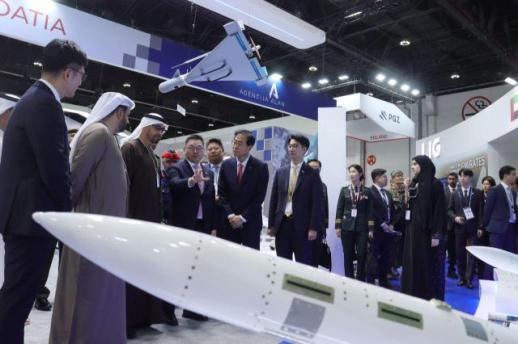 South Korea Moves L-SAM Into Mass Production as Middle East Air Defense Demand Rises Demand for air defense networks is rising in the Middle East following the war involving the United States and Israel and Iran. After the midrange Cheongung-II was deployed in combat, South Korea has moved its long-range surface-to-air missile system, L-SAM — often described domestically as a “Korean-style THAAD” — into mass production. The rollout of new Korean air defense systems is expected to speed efforts to target the Middle East arms market. According to the defense industry on Monday, L-SAM has entered the mass-production phase. Designed to intercept ballistic missiles in the upper atmosphere, L-SAM can engage targets at an interception altitude of 40 to 60 kilometers (25 to 37 miles), a capability that has led to comparisons with the U.S. THAAD system. Along with Cheongung-II, which covers altitudes of 30 to 40 kilometers (19 to 25 miles) and below, L-SAM is considered a core component of South Korea’s missile defense architecture. Deployment is approaching. The Defense Acquisition Program Administration last year reviewed and approved the final mass-production plan for L-SAM. The total project cost is about 1.7302 trillion won, with the goal of fielding the system with South Korean forces starting next year. LIG Nex1, Hanwha Aerospace and Hanwha Systems are participating in production. LIG Nex1 is responsible for overall system integration, Hanwha Aerospace for the launcher, and Hanwha Systems for the multifunction radar. Interest is also building overseas. With Cheongung-II deployed in the United Arab Emirates and credited with proving its performance, Middle Eastern countries have shown growing interest in L-SAM, the report said. In Europe, Switzerland has recently expressed interest. Swiss online outlet Watson reported Monday that South Korea’s L-SAM, under development, could play an important role in defending Swiss airspace. South Korea is also pursuing follow-on systems. Development is underway for L-SAM II, an upgraded version of the system now entering mass production. Work has also begun on Cheongung-III (M-SAM III), which aims to significantly improve interception altitude, detection range and simultaneous engagement capability compared with Cheongung-II. In the securities industry, analysts forecast LIG Nex1’s consensus operating profit this year at 435.2 billion won, up 34.8% from a year earlier. Operating profit is also expected to rise sharply at Hanwha Aerospace (43.1%) and Hanwha Systems (183.9%). Jang Won-jun a professor in the Department of Advanced Defense Industry Studies at Jeonbuk National University, said many countries built air defenses focused on mid- and low-altitude threats, making interest in an upper-tier interceptor like L-SAM likely to grow. "The Middle East and Europe are facing urgent conditions, so discussions on adoption could move faster there than in Korea," he said.* This article has been translated by AI. 2026-03-10 18:09:12
 -
 Naphtha Surge Triggers Negative Margins for South Korea Petrochemical Makers in Rare Price Inversion Rising naphtha prices driven by Middle East geopolitical risks have pushed South Korea’s petrochemical industry into a “negative margin shock,” with feedstock costs overtaking product prices and losses mounting the more companies produce. The price inversion — naphtha above ethylene — is the first since the oil shocks of the 1970s. Industry officials said naphtha has climbed sharply since the Iran situation. Based on Japan’s import price on a C&F basis, a key benchmark for domestic pricing, naphtha rose from about $557 per ton in January to $785 as of March 9, a jump of about 41% in a little over two months. Ethylene, meanwhile, fell to $663.75 per ton in March from about $800 in September last year, a decline attributed to weaker demand amid a global economic slowdown. Profitability in petrochemicals largely depends on the gap between naphtha and ethylene prices. Ethylene is a basic building block for widely used products such as plastics, fibers and film. Companies refine naphtha derived from crude oil into ethylene for sale, and the industry says an ethylene spread of at least $250 is generally needed to turn a profit. Recently, however, supply concerns tied to the Iran war have lifted feedstock costs above product prices, creating a negative-margin structure. Companies say they are struggling to raise prices for ethylene and other products because demand remains weak and supply is excessive, even as naphtha costs surge. The squeeze is also hitting operating rates. Major naphtha cracking centers (NCCs) including those run by LG Chem, Daehan Oil Chemical and GS Caltex are known to be cutting runs. Some companies’ average operating rates have fallen into the 50% range, down from 80% to 90% just a few years ago. Companies say it is difficult to halt NCC operations outright because the ethylene process also produces other chemicals such as butadiene and propylene. They say they must keep plants running at a minimum level, even at a loss, to supply certain products. Concerns are also growing that management burdens will rise further as the government pushes an NCC restructuring policy. The government said it is closely monitoring developments in the Middle East and will respond flexibly. The Ministry of Trade, Industry and Energy said it has no immediate plan to convene a meeting of petrochemical company CEOs, but is checking conditions through frequent communication with the industry. A ministry official said the government is in daily contact with petrochemical companies to assess on-the-ground conditions and is weighing response steps while watching Middle East developments and feedstock price swings. Trade, Industry and Energy Minister Kim Jeong-gwan told reporters on March 8 that petrochemical companies affiliated with refiners have relatively more room, but firms with petrochemicals-centered structures such as Yeochun NCC could face a bigger impact. He said the government would soon prepare and announce measures related to naphtha supply and demand. 2026-03-10 18:06:43
 -
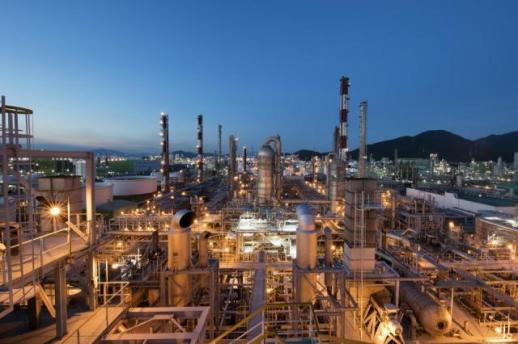 Government, Creditors Press Petrochemical Firms for Ethylene Cuts by Late March South Korea’s petrochemical makers are facing an unprecedented squeeze as instability in the Middle East disrupts supplies of raw materials, but the government and major creditors are holding firm on cutting domestic ethylene output. The Ministry of Trade, Industry and Energy and creditor institutions led by the Korea Development Bank are telling companies that if they want government support to weather the downturn, they must produce a voluntary plan by the end of March to reduce output at naphtha cracking centers, or NCCs. The main focus is the Yeosu industrial complex, where competing interests have slowed progress, unlike the Daesan complex, which has prepared merger and reduction plans, and the Ulsan complex, which has more financial room after earlier voluntary cuts. Industry officials said March 10 that Hanwha Solutions, DL Chemical and Lotte Chemical, along with GS Caltex and LG Chem, are in talks to meet the government-creditor demand. The companies have broadly agreed to set up a jointly funded subsidiary to operate NCCs together, but are reported to differ over how much capacity to cut. Government and creditors are watching Hanwha Solutions, DL Chemical and Lotte Chemical most closely, expecting the biggest potential reduction if the three reach a deal. Annual ethylene capacity at Yeocheon NCC’s No. 1 and No. 2 plants — a joint venture of Hanwha Solutions and DL Chemical — and at Lotte Chemical’s Yeosu NC plant totals about 3.05 million tons, about 25% of South Korea’s overall ethylene output. A senior creditor official visited Yeocheon NCC late last year to discuss reductions with company executives. The three companies favor a “merge first, cut later” approach: establishing the joint subsidiary within the year and then finalizing reductions based on changes in global market conditions. Government and creditors, however, are said to be pushing “cut first, merge later,” using the prospect of financial and tax support to press for a reduction plan by the end of March before creating the joint unit. A key obstacle is that all three run downstream petrochemical businesses that rely on basic feedstocks supplied by the NCC operations, making it difficult to agree quickly on cuts. Yeocheon NCC’s No. 1 plant is known to mainly produce feedstocks for DL Chemical, while No. 2 largely supplies Hanwha Solutions. Some creditors are seen as favoring shutting No. 2 and having the three companies jointly source feedstocks from Lotte Chemical’s Yeosu NC plant, but it is unclear whether companies that have had stable supplies will accept that plan. Tensions between Hanwha Group and DL Group, deepened by last year’s debt-default scare, are also cited as complicating a broader compromise. Even if the companies agree on additional cuts, they still face likely resistance from workers and unions. Industry officials say that for every 300,000 tons of NCC output reduced, about 100 workers are believed to lose their jobs. With the implementation of a revised Trade Union and Labor Relations Adjustment Act — known as the “Yellow Envelope Act” — expanding protections for strikes, the companies could face the risk of a general strike if they move unilaterally on reductions. Still, industry officials said it will be difficult for the companies to reject government and creditor demands as their finances have deteriorated after accumulated losses, including at Yeocheon NCC. They said the government and creditors are pressing their case with offers of new funding support and conversion to perpetual bonds. “Variables such as the Iran war and differences among companies make it hard to reach a voluntary reduction agreement,” a petrochemical industry official said. “This is a time when flexible policy management is needed, such as extending the deadline set by the government.”* This article has been translated by AI. 2026-03-10 18:05:02