

Journalist

Jack L. Rozdilsky
-
 Jo In-sung says he’s no action natural, credits director for 'Humint' fight scenes Jo In-sung has reunited with director Ryoo Seung-wan for a third time, following “Escape from Mogadishu” and “Smugglers,” returning in the film “Humint.” He plays “Manager Jo,” a South Korean National Intelligence Service agent who carries out missions with sharp instincts and judgment even in the middle of dangerous operations. After losing an informant for the first time, the character wavers between a cold-blooded assignment and a more human choice. Jo anchors the film with restrained emotion and a steady presence. “I’ve heard people say the action was shot elegantly, but the director and I are the type who get shy and don’t really talk like that,” Jo said. “Honestly, I don’t know much about action. I don’t really have a desire to become an action actor. If it felt (elegant), I think there must have been some kind of magic. If I used my body well, I’d probably dance well, too, but I don’t have that ability.” Because his character is an NIS agent, Jo said he visited and researched real locations as part of his preparation, describing the atmosphere on site and the impression it left. “You leave all your phones behind when you go (to the NIS),” he said. “They tell you not to post anything related, and there’s a tense mood. I got curious and asked (NIS agents) if they have black agents like Kim Doo-sik in ‘Moving,’ but they said it’s a state secret and they can’t talk about it. Ha ha.” To better understand the role, he said he relied on research, drawing on news and documentaries as well as popular TV programs. “By watching variety shows with North Korean defectors, like ‘Now On My Way to Meet You,’ I could look for information such as what kinds of conversations defectors had with the NIS,” he said. “I also used those conversations as reference.” ㅍ Jo said the details of the action were refined on set, and that the movements of a real instructor offered key clues in shaping the character. “The (NIS) instructor was really impressive,” he said. “There are parts I borrowed for the action. It’s feedback from a professional. In action scenes, you can get scolded for ‘trying too hard to look cool,’ but if it’s actually used in the field, then it’s accurate. I thought if we worked those practical elements into the action, audiences might enjoy it.” The opening action sequence also paired him with overseas actors. Jo said the unfamiliar rhythm heightened the tension. “I did action with overseas actors, and they were filming in an unfamiliar place in an unfamiliar way,” he said. “Of course they’d be tense. The action style was different. Even the martial arts director said, ‘So that’s how they react.’ Because it didn’t click perfectly, it made me nervous — like the action coming in deeper than expected. My eyes got wider and they captured that anxious look, and I think it came across as more realistic.” Jo described Manager Jo as a guide who brings viewers into the story, saying he tried not to push emotions too hard. “You identify through Manager Jo’s eyes, and you open and close the film through his daily life,” he said. “As a guide, I thought I shouldn’t make the acting too intense. I didn’t think it was good for my emotions to demand something from the audience. Still, I had to run the character, so I thought a lot about how. I felt the action scenes were important because they show his physical power, and they let me build him in a more three-dimensional way.” He also spoke about working with Park Jung-min, who plays Park Geon, a section chief in North Korea’s State Security Department, and Shin Se-kyung, who plays Chae Sun-hwa, a North Korean restaurant worker and human intelligence source. Though they did not share many scenes, he said their on-set chemistry stood out. “When you say someone has good acting intelligence, it’s sensory but also calculated,” Jo said. “You have to act within a set time, and I think it matters how well you understand what the director is saying. Even though I didn’t have many scenes with Jung-min and Se-kyung, that fit was really good. Everyone did their part, and we often got chances to save time and try what we wanted one more time.” Asked about change and growth after years of work, Jo said he thinks less in terms of being “new” and more in terms of becoming “solid.” “Being active for a long time also means you’re not new,” he said. “People have seen a lot of you. The 고민 about what to do differently is the same. Rather than showing something new, you can show that you’ve become more solid — though you can also change into new clothes. In acting, even staying still can be evolution. You ask whether it came across or not. In the end, I want to get to the point of not acting, but I wonder if that’s realistically possible. These days people talk a lot about naturalistic acting — capturing something truly natural. It’s about setting a goal more than personal development: This time, let’s stay still. Let’s see how I’m captured.” On overseas projects, he mixed in a candid joke, saying distribution has changed but he still sees himself as a “local” actor. “If something comes in, I’ll do it,” he said. “With OTT, our work can go overseas, and overseas expansion can happen. Distribution has improved. But since there are no offers yet, I think, ‘Ah, I’m local.’ Ha ha ha. So far, it doesn’t seem like there’s any reaction from overseas or people recognizing me. I don’t think I have the talent or qualities for overseas projects.” Jo’s next project is director Lee Chang-dong’s “Possible Love,” about two couples living opposite lives whose worlds become entangled, sending cracks through the daily lives of all four. Jo will play a married couple with Cho Yeo-jeong. The film, from the director of “Secret Sunshine” and “Poetry,” drew attention from the casting stage. “I’m curious about how I’ll look in director Lee Chang-dong’s film,” Jo said. “He’s an auteur director, and it’s grounded in reality. I acted in it, and I’m curious how it was captured.”* This article has been translated by AI. 2026-02-25 00:04:35
 -
 Milan-Cortina 2026 ends as first wide-spread Winter Olympics; 2030 Alps may stage events abroad The Milan-Cortina 2026 Winter Olympics, staged across northern Italy in a widely dispersed format, ended after 17 days of competition. The next Winter Games, the France Alps 2030 Olympics, are expected to go further, with some events likely held outside the host country for the first time in Winter Olympic history. The Milan-Cortina Games, which closed Feb. 23 (Korea time), were held in four clusters: Milan; the Alpine resort of Cortina d’Ampezzo; Valtellina-Bormio; and Val di Fiemme. Organizers described it as the broadest geographic footprint of any Olympics. Olympic cauldrons were installed in both Milan and Cortina d’Ampezzo. The two cities are about 400 kilometers (250 miles) apart, roughly a five-hour drive. The approach was intended to align with the International Olympic Committee’s push for “sustainability,” aiming for a greener and more economical Games. The organizing committee focused on using existing venues rather than building new ones to limit the heavy costs of construction. The model also brought drawbacks: athlete villages were split among multiple sites, and travel between venues stretched to hundreds of kilometers, adding to fatigue for athletes and spectators. The dispersed setup also made it harder to create a single, unified Olympic atmosphere, leaving questions about overall buzz and turnout. The signal sent by Milan’s dispersed model is expected to evolve again at the France Alps 2030 Winter Olympics. The 2030 Games are set to be the first Olympics whose official name does not include a specific city, with events spread mainly across southeastern France, including Nice and Savoie. Organizers also plan to stage official events in another sovereign country. The France Alps 2030 organizing committee is reported to have decided that speedskating will be held not in France but in either Turin, Italy, or Heerenveen, Netherlands. The move appears driven by cost, as speedskating ovals are known to be among the most expensive Winter Olympic facilities to build and maintain. Some Olympic events have been held outside the host country before. At the 1920 Antwerp Games, some yachting events took place in the Netherlands. At the 1956 Melbourne Games, equestrian events were staged separately in Stockholm because of Australia’s strict animal quarantine rules. But for the Winter Olympics, the France Alps 2030 Games would be the first to hold a specific sport in another sovereign country. Edgar Grospiron, president of the 2030 organizing committee, said at a news conference in Milan that holding speedskating abroad “was already agreed with the IOC from the time of the bid.” Organizers said about 15% of venues for the 2030 Games have not yet been finalized, and they plan to complete the final plan by June. Figure skating is currently expected to be held in Nice, according to reports.* This article has been translated by AI. 2026-02-25 00:03:00
 -
 Short-track double gold medalist Kim Gil-li returns home, turns focus to worlds South Korea’s women’s national short-track team returned home from the 2026 Milan-Cortina d'Ampezzo Winter Olympics on Feb. 24 and said it will quickly shift back into training for the upcoming world championships. According to the sport’s officials, the women’s team arrived at Incheon International Airport’s Terminal 2 on Tuesday afternoon with the main national delegation, including Korean Sport & Olympic Committee President Yu Seung-min. The team reclaimed the women’s 3,000-meter relay gold for the first time in eight years, winning with a late comeback. Kim Gil-li of Seongnam City Hall, who added the 1,500-meter gold to her relay title to become a double champion, told the crowd at the airport, “It feels like I’m experiencing what it’s like to be a celebrity.” Nicknamed “LamborGil-li,” she was also selected as the Korean delegation’s most valuable player at the Games. Living up to the nickname, Kim received ceremonial service from Lamborghini Korea and left the airport in a sports car. “To finish perfectly through the world championships, I plan to start training again from Sunday,” she said. Choi Min-jeong of Seongnam City Hall, who set a new record for the most Olympic medals by a South Korean across the Winter and Summer Games with seven, said she had doubted she could reach the mark before leaving for Milan. “Thanks to the support from so many people, I was able to do it,” she said. Choi added that she is satisfied with her results after three Olympics and will “cheer a lot” for Kim going forward. Shim Suk-hee of Seoul City Hall, who helped the relay team win gold after what the article described as a difficult period, said the result was possible because the athletes endured. “Thanks to those who always believed in me and supported me more than I did, I’ve been able to come this far,” she said, adding she will continue to show strong performances. The men’s national short-track team, which also returned home Tuesday, said it will begin preparations for the world championships as well. Hwang Dae-heon of Gangwon Province, who won two silver medals including in the 5,000-meter relay, said he was honored to win an individual-event medal at a third straight Olympics. “With the world championships still ahead, we’ll take time to regroup so our national team can show a good performance,” he said.* This article has been translated by AI. 2026-02-24 20:09:00
 -
 KAI Board to Review Kim Jong-chul as New CEO After 8-Month Vacancy Korea Aerospace Industries (KAI) will hold a board meeting on Feb. 25 to select a new CEO, a post that has been vacant for eight months. Kim Jong-chul, who previously led the Drone Program Division at South Korea’s Defense Acquisition Program Administration, is considered the leading candidate. Industry officials said Feb. 24 that KAI’s board will review an agenda item at its Feb. 25 morning meeting to appoint Kim as CEO. If approved, the company would fill the vacancy about eight months after former CEO Kang Goo-young resigned on July 1 last year. Kim could begin carrying out CEO duties as early as March. Kim is a graduate of the 31st class of the Korea Air Force Academy and joined the acquisition agency in 2006 through a special recruitment program at the Grade 4 level. This year, KAI has identified the rollout of its Light Armed Helicopter (LAH) and deliveries of the Korean supersonic fighter KF-21 to the Air Force as top priorities. 2026-02-24 18:13:30
 -
 LG Energy Solution Steps Up Push Into Battery Recycling and Reuse LG Energy Solution said Monday it is focusing on expanding battery recycling and reuse, aiming to build a circular resource system from raw-material production through use and disposal while pursuing future growth through new businesses. In June last year, the company announced it would set up a recycling joint venture, GMBI, with Toyota Tsusho Corp., a Toyota Group company, in North Carolina. The venture will have a maximum annual processing capacity of 13,500 tons, enough to handle used EV batteries and scrap equivalent to more than 40,000 vehicles a year. The new joint venture will be a pretreatment plant specializing in safely dismantling and shredding end-of-life batteries and manufacturing-process scrap to produce “black mass.” The black mass will then go through separate post-processing to be refined into key minerals such as lithium, cobalt and nickel for use in battery production. In April last year, LG Energy Solution also announced a battery recycling joint venture with Derichebourg, France’s top metal recycler, in the Val-d’Oise region, with annual capacity of 20,000 tons. The company said the move is intended to respond proactively to European regulations and help build a sustainable battery ecosystem. For reuse, LG Energy Solution said it has installed and is operating an EV-charging energy storage system using repurposed batteries at Ochang Energy Plant 1. It is also building know-how through efforts including a North America reuse ESS business and development of reuse ESS systems for UPS and backup power applications. Separately, the company said it is working to achieve “zero waste to landfill” across all its sites. It said its Nanjing plant in China received UL’s top Platinum rating after being recognized for a 100% resource-circulation rate. An LG Energy Solution official said the company will “take the lead in realizing a sustainable future and customer value by building a circular system for battery resources.”* This article has been translated by AI. 2026-02-24 18:03:20
 -
 Celltrion Advances Dual-Track Obesity Drug Program; Lunit Starts Direct Sales in Japan Celltrion: Developing dual-track obesity drugs, including four-target injectable Celltrion said on Feb. 24 it is developing obesity drugs on two tracks: a four-target injectable candidate (CT-G32) and a multi-target oral drug. The company said CT-G32 is designed to act on four targets at once, going beyond GLP-1-based dual- and triple-acting drugs that currently lead the obesity treatment market. Celltrion said it aims to reduce differences in effectiveness among patients and side effects such as muscle loss, while maximizing appetite suppression and weight loss. It also plans to expand development toward metabolic disease treatment, including promoting fat breakdown and regulating energy metabolism. Celltrion said it is conducting efficacy tests in disease-model animals for key candidates and plans to submit an investigational new drug application in the first half of next year to begin clinical trials. The company said it is also developing a multi-target oral obesity drug to improve weight-loss effects while reducing side effects. It plans to submit an IND in the second half of 2028. Lunit begins direct sales in Japan Lunit said on Feb. 24 it has started direct sales in Japan through its local unit, Lunit Japan, which it established in May last year. The company has sold in Japan through a partnership with Fujifilm, but said the new direct-sales system is intended to improve profitability. Lunit said the direct-sales approach will complement Fujifilm’s existing channels. It will keep the partnership-led strategy in the hospital market, where Fujifilm is strong, while Lunit will handle sales in health screening and remote reading markets, where demand for artificial intelligence adoption is high. The company said it also plans to strengthen ties with the Japanese government. Fujifilm has previously launched in Japan the latest version of CXR-AID, chest X-ray reading software based on Lunit’s AI technology. Bukwang Pharmaceutical launches epilepsy drug Bukwang Brivifil tablets Bukwang Pharmaceutical said on Feb. 24 it has launched Bukwang Brivifil tablets (brivaracetam) in 10 mg, 25 mg, 50 mg and 100 mg doses. The company said the product received marketing approval from South Korea’s Ministry of Food and Drug Safety in September last year. It is a third-generation epilepsy treatment used as add-on therapy for patients with partial-onset seizures. Bukwang said brivaracetam selectively binds to synaptic vesicle protein 2A, or SV2A, regulating neurotransmitter release to suppress seizures. The company said the drug is characterized by rapid absorption and good tolerability compared with existing treatments, and that multiple dose options allow individualized therapy. Hecto Healthcare revamps Desimone subscription service Hecto Healthcare said on Feb. 24 it will overhaul the subscription service for its Desimone probiotics brand, aiming to reduce the sign-up burden for new customers while extending benefits across the broader brand lineup. The minimum subscription period will be reduced to six deliveries from 12, the company said. Hecto Healthcare said it will also expand benefits by introducing “Subscription Plus,” which provides a 50% discount coupon that can be used on a range of products, including Kim Seok-jin LAB’s Kids Multi-Vitamin Toktok and Kids Omega-3 Smart Chew, as well as the functional formula-based O2 Booster. It also introduced a combined-shipping service that allows Subscription Plus purchases to be delivered together with subscription items to reduce shipping costs.* This article has been translated by AI. 2026-02-24 18:00:00
 -
 OK Records CEO Min Hee-jin to Hold Emergency News Conference After Trial Court Ruling OK Records CEO Min Hee-jin will hold an emergency news conference on the 25th to present her position on a recently issued trial court ruling and outline her next steps. OK Records said on the 24th that Min is convening the event to personally explain the significance of the first-instance decision and her plans for future operations. Earlier, the Seoul Central District Court on the 12th dismissed a lawsuit filed by HYBE against Min and others seeking confirmation that a shareholder agreement had been terminated. The court, however, upheld Min’s lawsuit against HYBE seeking payment for shares tied to her exercise of a put option. The court ordered HYBE to pay Min 25.5 billion won, but HYBE has appealed. The dispute centers on whether the shareholder agreement remained valid. Min notified HYBE in November 2024 that she intended to exercise a put option on her ADOR stake. HYBE has argued the put option was no longer effective because it had already notified Min in July that year that it had terminated the agreement. Min has countered that HYBE’s termination was unjustified, and the trial court sided with her. It will be Min’s first appearance at an official event since the ruling. The news conference is expected to address the 25.5 billion won claim and OK Records’ management direction going forward.* This article has been translated by AI. 2026-02-24 17:57:17
 -
 Hyundai Motor executive urges fast passage of Korea bill backing $350B U.S. investment plan Sung Kim, president of Hyundai Motor Group, urged swift passage of legislation needed to carry out a $350 billion (about 506 trillion won) U.S. investment package. According to Reuters on Monday, Kim made the remarks at a breakfast meeting at the National Assembly on a proposed ruling People Power Party bill related to U.S. investment. He said that even if reciprocal tariffs are nullified, pressure could intensify to raise tariffs on automobiles. “As reciprocal tariffs are rendered invalid, pressure could instead grow to raise sector-specific tariffs on certain industries such as autos,” Kim said. “If a 25% tariff becomes reality at a time of sweeping change across the industry — with the shift to electric vehicles and accelerating competition in autonomous driving — the competitiveness of Korean companies will be weakened.” He added that “the auto industry is already facing a serious crisis due to U.S. tariff measures that began last year,” and said sector-specific tariffs on steel and automobiles are likely to remain in place for a considerable period. Kim said Hyundai Motor and Kia suffered about 7.2 trillion won ($4.98 billion) in financial damage last year due to U.S. tariffs. For South Korea, reciprocal tariffs initially set at 25% under an agreement with the United States were lowered to 15% starting in November last year. However, President Donald Trump on Jan. 26 threatened to raise reciprocal tariffs back to 25% — along with item-specific tariffs on products such as automobiles — citing delays in the National Assembly’s handling of the special U.S. investment bill. If auto tariffs are raised again to 25% as Trump has threatened, the damage to Hyundai and Kia could grow further. Policy uncertainty over tariffs has also increased again after the U.S. Supreme Court ruled reciprocal tariffs illegal and Trump, in response, raised the possibility of additional tariffs on major industries such as automobiles and semiconductors. South Korea’s auto industry has repeatedly asked the government and the National Assembly to resolve the tariff issue to secure equal conditions in the U.S. market with Japanese and European competitors. * This article has been translated by AI. 2026-02-24 17:51:17
 -
 Lee Jae-myung Calls for Reforms to Ensure Public Access to Olympic Broadcasts President Lee Jae-myung said Feb. 24 that South Korea needs institutional reforms to broadly guarantee public access to broadcasts of major international sporting events, including the Olympics and FIFA World Cup, amid ongoing disputes over media rights. Speaking at a Cabinet meeting he chaired at Cheong Wa Dae, Lee cited the results of the 2026 Milan-Cortina Winter Olympics, which ended Feb. 23, saying he regretted that public enthusiasm did not build enough compared with the past despite the determination and performances of South Korean athletes. Lee did not cite a specific cause, but his remarks were widely interpreted as pointing to the debate over JTBC’s exclusive coverage. JTBC previously secured exclusive broadcast rights for the 2026-2032 Summer and Winter Olympics and the 2025-2030 World Cup, then held talks to resell rights to the three terrestrial broadcasters. The negotiations collapsed, and JTBC aired this year’s Winter Olympics exclusively. Lee praised the Olympic delegation, saying their “passionate challenge” gave the public deep inspiration and pride and that there were meaningful achievements in sports diplomacy as well. He also thanked the athletes and support staff for delivering a memorable winter to the public with what he called the “Team Korea spirit,” and led applause.* This article has been translated by AI. 2026-02-24 17:48:00
 -
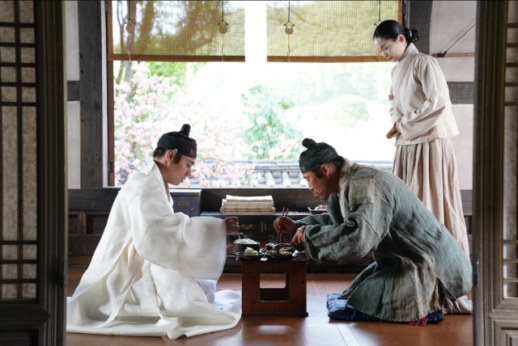 Why The King's Warden reigns over Korea's box office SEOUL, February 24 (AJP) - The mix of tragedy and humor, family and community affection, and grass-roots patriotism has long been a reliable formula for box-office success in South Korea. Audiences have found that combination in unusually polished form in The King’s Warden. Korean box office is no longer built for monopolies. Streaming platforms fragment attention. Mid-budget films struggle for screens. Audience loyalty has grown increasingly fickle. And yet, for three weeks running, The King’s Warden has behaved like a film from another era — one that gathers viewers not through spectacle or algorithms, but through the quiet accumulation of trust. The historical drama has topped the domestic box office for three consecutive weeks and has now surpassed 6 million cumulative viewers. As of its 20th day in theaters on Feb. 23, the film had drawn about 6.02 million moviegoers and generated 58.3 billion won ($43 million) in revenue. Over the Feb. 20–22 weekend alone, more than 1.41 million people visited theaters to see the film, accounting for 73 percent of total box office sales. Even as its screen count declined from more than 2,100 to around 1,700, the film has maintained clear market dominance. On Feb. 23, it captured 73.0 percent of total revenue while occupying just 29.6 percent of screens. In most competitive release cycles, revenue share tends to track screen share. The wide gap points to unusually strong demand consolidation around a single title. This is not a seasonal spike. It is consolidation. What distinguishes The King’s Warden from recent hits is that its success has been built less on marketing saturation than on accumulated credibility. In an industry increasingly driven by opening-weekend numbers and short attention cycles, the film has advanced at an older, steadier pace. Viewers are not rushing in out of fear of missing out, but returning with recommendations. Its dominance reflects not hype, but confidence — the sense that this is a film that can be trusted with time, emotion and attention. “I really enjoyed The Face Reader. In that film, the story revolved mainly around Grand Prince Suyang. This time, the narrative centers on Danjong. It feels connected, yet completely different. After watching the movie, I found myself wanting to learn more about Danjong," said Cho Hyun-chul, a 34-year-old office worker in Seoul. Bae Ji-hoon, a 32-year-old office worker living in Jeju, saw it out of curiosity after the news report about the president praising it. "Honestly? I enjoyed it more than I expected. Historical films often feel repetitive, but this one felt warm like a family movie while still carrying a serious tone.” In a market shaped by streaming algorithms and franchise branding, such patience-driven momentum has become increasingly rare. The film’s commercial trajectory reinforces that reading. After cresting during the Lunar New Year holidays, when daily admissions topped 650,000 on Feb. 17–18, most releases would normally settle into predictable decline. The King’s Warden did not. Weekday attendance stabilized at 200,000 to 260,000 viewers, before rebounding to 581,167 on Feb. 21 and 568,306 on Feb. 22. Even after the holiday period ended, market share remained above 70 percent. Over the Feb. 20–22 weekend, the film generated more than 13.8 billion won in revenue. Its cumulative gross reached 58.3 billion won by its 20th day. Such post-holiday resilience suggests limited substitution toward competing titles — another indicator that audiences are actively choosing the film rather than drifting toward it. Released on Feb. 4, the film reached the 6 million mark in just 20 days and is now widely expected to surpass 10 million viewers in a nation of about 52 million people. On paper, the subject matter looks forbidding. The film revisits the exile and death of King Danjong, dethroned as a teenager after his uncle’s coup in the mid-15th century and sent to remote Yeongwol before being executed. It remains one of the bleakest chapters in Joseon history. Even today, Yeongwol is part of the so-called “BYC” region — Bonghwa, Yeongyang and Yeongwol — regarded as one of the country’s most remote inland areas. Rather than presenting the story as a court thriller, The King’s Warden refuses the usual grammar of palace intrigue. Power remains largely offscreen. The court is distant. Violence is implied rather than staged. Instead, the camera stays in kitchens, fields and small courtyards, where a deposed boy-king learns to live as an anonymous adolescent among villagers. What distinguishes this film from earlier portrayals of Danjong is not new information, but new attention. Rather than presenting him as a national symbol, the screenplay treats him as a teenager navigating isolation, shame and dependence. His relationships with ordinary townspeople form the narrative spine. They feed him. Protect him. Pretend, at times, not to know who he is. In doing so, the film reframes tragedy as intimacy. The drama unfolds through accumulation — shared meals, hesitant conversations, small gestures of loyalty. Humor surfaces quietly, never as release, but as survival. It is this tonal balance — grief without melodrama, warmth without sentimentality — that gives the film its emotional credibility. Cultural critic Kim Heon-sik attributes the film’s success to its cross-generational accessibility and reinterpretation of history. “There have been few films recently that families across generations could watch together,” he said. “During the Lunar New Year, audiences were looking for that kind of option.” Kim noted that the film reshapes Danjong’s image. “He has traditionally symbolized sacrifice and tragedy,” he said. “This film overlays his story with hope and positivity. It adds imagination without distorting historical facts.” He also pointed to the evolution of director Jang Hang-jun. “His trademark wit remains, but this is not merely a comedy,” Kim said. “It is grounded in history and has strong character construction.” With sustained market concentration, post-holiday resilience, broad generational appeal and unusually strong audience loyalty, The King’s Warden has emerged as one of the most closely watched theatrical phenomena of the year that may finally put an end to a yearlong drought in K-movie blockbusters. 2026-02-24 17:42:55