

Journalist

Jack L. Rozdilsky
-
 Volkswagen Group Names Andreas Mindt as Head of Group Design Andreas Mindt, head of design for the Volkswagen brand, will also take on the role of head of group design, succeeding Michael Mauer, who left the post as part of a generational change. Volkswagen Group said Monday that Mindt will oversee design across the group starting March 1. Mindt graduated from Pforzheim University of Design and began his career at Volkswagen Group in 1996. Through 2014, he worked at the Volkswagen brand, contributing to exterior design including the first-generation Tiguan and the Golf 7. Until 2021, he led a revamp of Audi exterior design, working on models ranging from the Audi A1 to the e-tron GT and from the Q3 to the Q8. Since February 2023, he has served as head of design for the Volkswagen passenger-car brand. Volkswagen Group CEO Oliver Blume said he looks forward to working even more closely with Mindt, adding that Mindt “made a significant impact in a short time” based on his achievements and expertise at the Volkswagen brand. Blume said Mindt played a key role in ensuring Volkswagen vehicles are once again clearly recognized as “true Volkswagens.” 2026-02-24 09:45:24
 -
 OPINION: With US tariff ruling, trade war enters new phase SEOUL, February 24 (AJP) - Two months into the new year, uncertainty continues to mount, unsettling businesses and consumers alike. What matters as much as what changes is what holds steady — yet unexpected shocks keep emerging and how governments and companies respond will determine what lies ahead. A new variable has hit global trade. The U.S. Supreme Court ruled that U.S. President Donald Trump's reciprocal tariffs and fentanyl-related tariffs imposed under the International Emergency Economic Powers Act (IEEPA) were illegal. The court said that while IEEPA grants a president the authority to "regulate" imports during a national emergency, it does not explicitly authorize "tariffs." The Trump administration wasted no time finding alternatives. Citing Section 122 of the Trade Act, it announced a global tariff of 15 percent for up to 150 days. It has also begun weighing "Super 301" as a tool to target specific countries with retaliatory tariffs. Attention is now turning to what comes next. With 64 percent of Americans opposing Trump's tariff policy, U.S. industry has welcomed the ruling as a positive sign for the economy. Financial markets, however, remain unsettled: the dollar fell 0.2 percent against major currencies, while U.S. stocks rose. Trump is expected to quickly work to keep tariff measures going. The tariff battle could also become a political setback for him in November's midterm elections, yet aggressive efforts to regain momentum are likely to continue, as voter sentiment may do little to constrain him. The next stage is how other countries respond and how carefully they tread. Rash moves could backfire, as Trump still has powerful options at his disposal. A sudden action could trigger Super 301 measures that even the Supreme Court might not be able to block. China appears quietly pleased, judging that Trump's bargaining power has weakened and that Beijing can hold out longer. The EU is observing cautiously, even as it maintains that conditions may not worsen. Canada remains broadly optimistic, while Mexico is wary that the U.S.-Mexico-Canada Agreement could face new fallout. Japan has avoided issuing a formal statement, reaffirming its commitment to promised U.S. investments and emphasizing that sector-specific tariffs such as those on autos or steel and aluminum are not affected by the ruling. South Korea has taken a stance similar to Japan's, signaling a cooperative approach toward Washington. Anxiety persists after Trump recently warned he could raise South Korea's reciprocal tariff from 15 percent to 25 percent over delays in fulfilling investment pledges. Concerns are heightened because Trump often relies on brinkmanship when cornered. Overall, the current mood in South Korea–U.S. relations leaves little room for complacency. The calculus is complicated by Japan's new government under Prime Minister Sanae Takaichi, which has moved closer to Washington while sharpening its confrontation with China. Given Northeast Asia's security environment, South Korea cannot easily ignore U.S. economic pressure amid China's growing influence, North Korea's nuclear threat and its deepening military ties with Russia. There have been signals that the role and function of U.S. forces stationed in the region could change. Japan is accelerating its efforts to become a country capable of waging war, while scenarios of a Chinese invasion of Taiwan persist, drawing Taiwan closer to the U.S. South Korea's stance remains uncertain. Within the government, a debate is growing between those who prioritize the U.S. alliance and those who favor greater strategic independence including closer ties with China. There is disagreement over South Korea's investment pledges to the U.S., following the ruling, but the two are separate issues. To protect its national interests, South Korea should first create conditions for profitable investment in the U.S. market, diversifying supply chains, shifting energy import sources, and helping South Korean companies capture new opportunities there. In areas Washington is rushing to rebuild, such as semiconductors and shipbuilding, South Korean firms are not the only capable players, with Taiwan and Japan possessing nearly comparable technology. Even if South Korea is excluded, U.S. rebuilding would not face major problems. If South Korea hesitates to cooperate with the U.S. or Japan due to concerns about North Korea or China, the fallout could spill over into the economic sphere as well. South Korea–U.S. relations remain on thin ice. * This article, published by Aju Business Daily, was translated by AI and edited by AJP. 2026-02-24 09:41:01
 -
 Retired Speedskater Kim Bo-reum Says She’s Weighing Her Next Chapter Retired South Korean speedskater Kim Bo-reum has shared an update on her life after leaving the sport. Kim appeared on the KBS Joy program “Ask Anything” that aired on the 23rd. Asked how she has been doing, Kim said, “I’m not doing anything.” When Seo Jang-hoon asked, “Unemployed?” she nodded. She said she is thinking about “how to live” her second chapter, adding that she retired about three weeks before the filming date. Explaining her decision, Kim said she considers her peak as an athlete to have been the 2018 Pyeongchang Olympics. “My original dream was to win a gold medal at the Olympics and retire in that moment, but there was a bit of a setback when I won silver,” she said. She added that she did not compete in the latest trials and that she has considered retiring every year since Pyeongchang. After Seo said she must have struggled when something she did not want happened at a young age, Kim said the experience made her feel she could handle whatever comes next. “I’ve become tougher than other people, and I’m confident I won’t break easily, so I want to try many different things,” she said.* This article has been translated by AI. 2026-02-24 09:34:42
 -
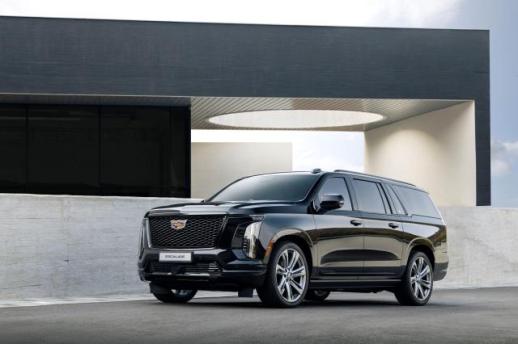 Cadillac Launches 2026 Escalade in South Korea With Super Cruise Hands-Free Driving Cadillac said Monday it has launched its flagship SUV, the 2026 The New Escalade, and begun official sales in South Korea. The updated model keeps the Escalade’s performance while adding GM’s hands-free driver-assistance system Super Cruise, along with T Map connected services and a traffic sign recognition feature. Super Cruise, newly applied to the 2026 The New Escalade, supports hands-free driving and automatic lane changes on about 23,000 kilometers (about 14,300 miles) of highways in South Korea. Using high-precision road data and sensor fusion from cameras and radar, the system is designed to help control the vehicle safely even in complex conditions such as curves and construction zones. T Map connected services are also new. Drivers can check real-time traffic and suggested routes on the infotainment center screen and instrument cluster without connecting a smartphone. The newly added traffic sign recognition system, or TRS, is designed to help drivers identify the speed limit on the road they are traveling. It displays the limit on the cluster using camera and navigation data. The 2026 The New Escalade is powered by a 6.2-liter V8 gasoline engine producing 426 horsepower and 63.6 kg·m of torque, paired with a 10-speed automatic transmission. Cadillac said Magnetic Ride Control 4.0, which analyzes the road surface 1,000 times per second, works with an adaptive air-ride suspension to improve ride comfort. The vehicle is offered in two versions: a standard model and the extended-wheelbase ESV. Prices in South Korea, based on a 3.5% individual consumption tax rate, are 168.07 million won for the standard model and 190.07 million won for the ESV. “The 2026 The New Escalade is a model that takes the standard for a luxury flagship to a new level by adding cutting-edge intelligent technologies such as Super Cruise and T Map connected services,” said Yoon Myung-ok, GM Korea’s chief marketing officer and head of communications.* This article has been translated by AI. 2026-02-24 09:27:19
 -
 Celltrion unveils dual-track obesity drug strategy with quad-action injectable and oral pill SEOUL, February 24 (AJP) - Celltrion announced it is pursuing a two-pronged approach to the fast-growing obesity treatment market, developing both a first-in-class quadruple-action injectable and a multi-target oral drug designed to challenge dominant players in the space. The injectable candidate reported Tuesday, CT-G32, targets four biological pathways simultaneously, moving beyond the dual- and triple-action GLP-1-based therapies that currently dominate the market. Celltrion said the drug aims to minimize side effects such as muscle loss and efficacy variation among patients while enhancing appetite suppression and weight reduction. The company plans to file an investigational new drug application in the first half of 2027. The oral candidate, meanwhile, acts on multiple targets including GLP-1 receptors, distinguishing it from rival oral treatments that rely on a single mechanism. Celltrion said the pill is expected to broaden patient access by offering easier storage and administration compared to injectables, with an IND filing targeted for the second half of 2028. The push for obesity drug follows a worldwide demand for the market, soon to grow to $173.5 billion by 2031, according to GlobalData, as the worldwide adult overweight rate has surged past 40 percent from about 25 percent in the 1990s. The South Korean drugmaker said the two treatments are designed to complement each other across different stages of obesity care — the injectable for patients requiring aggressive early weight loss, and the oral drug for those seeking long-term maintenance or alternatives to injections. "We plan to enter the obesity drug market with differentiated competitiveness, building on our established dominance in autoimmune diseases and oncology," a Celltrion spokesperson said. "We will do our utmost to maximize corporate value and evolve into a global pharma giant." 2026-02-24 09:17:51
 -
 Toyota Korea to Sponsor O-NE Superrace Championship for 2026 Season Toyota Korea said Monday it has signed an official sponsorship agreement for the 2026 season of the O-NE Superrace Championship, the country’s largest motorsports series. The company has served as an official Superrace sponsor for seven straight years since 2020, it said, as part of efforts to expand motorsports culture in South Korea. Manabu Koyama, CEO of Toyota Korea, and Seokho Ma, the newly appointed CEO of Superrace, attended the signing ceremony along with officials from both sides. Superrace renamed its top-tier category in the 2025 season, changing the official title from the “Super 6000 Class” to the “TOYOTA GAZOO Racing 6000 Class.” Toyota Korea has participated since 2020 as a “cowl sponsor,” applying the exterior design of the GR Supra to Super 6000 race cars. Beginning in the 2025 season, it expanded its role to become the category’s naming sponsor, the company said. Toyota Korea said it is pursuing a range of motorsports initiatives based on its global philosophy of building better cars through racing. Along with backing the top professional series, it said it created the “Prius PHEV Class,” described as South Korea’s only plug-in hybrid one-make race, to broaden participation across professional and amateur racing. The company also sponsors the Boryeong-AMC International Motor Festival run by Ajou Motor College, and operates programs including the “GR Racing Class” and the “GR Kids Superrace School.” Starting in the 2026 season, the TOYOTA GAZOO Racing 6000 Class will shorten its final-race distance from 170 kilometers to about 100 kilometers, Superrace said, aiming for its fastest races yet. The series will also abolish the “success weight” handicap system to emphasize head-to-head competition. The rule had added up to 50 kilograms based on results; its removal is expected to allow drivers to draw out maximum vehicle performance. “As a brand with genuine commitment to motorsports, we are pleased to participate as a sponsor of the O-NE Superrace Championship for the seventh consecutive year,” Koyama said. He added that he hopes this season will vividly convey Toyota Gazoo Racing’s pursuit of “extreme challenge” and “driving fun” to customers in South Korea. The 2026 Superrace Championship season is set to open April 18-19 with a double round at Yongin Everland Speedway. Organizers said they will try new combinations of culture and events to broaden motorsports’ appeal. The third round will be held alongside the “Asia Motorsports Carnival” and the Park Music Festival, a major domestic music event. * This article has been translated by AI. 2026-02-24 09:04:11
 -
 Jung Hae-in to Hold March Fan Meeting in Seoul; Fan Club Presales Open Today Actor Jung Hae-in will meet fans at a March fan event in Seoul, his agency said. FNC Entertainment said on its official social media channels on Feb. 23 that it released an additional poster for the 2026 Jung Hae-in fan meeting, titled ‘Jung Hae-in Chwihyangin Gathering.’ The poster shows Jung smiling beside a teddy bear wearing a hat that reads “HAPPY BIRTHDAY,” marking the fan meeting ahead of his April 1 birthday. The 2026 fan meeting will be held March 28-29 at Ewha Womans University’s Grand Auditorium in Seoul. It will be his first in-person meeting with domestic fans in about a year. Fan club presales open at 8 p.m. today (24) through Melon Ticket. General sales begin at 8 p.m. on the 27th.* This article has been translated by AI. 2026-02-24 08:49:21
 -
 Hyundai Motor Extends LACMA Partnership Through 2037 Hyundai Motor said on Feb. 24 it has extended its partnership with the Los Angeles County Museum of Art, or LACMA, through 2037. Through the partnership, Hyundai has sponsored eight exhibitions since 2015, starting with “Rain Room” and continuing through “Tavares Strachan: The Day Tomorrow Began,” which opened in October. The company said the support has included shows exploring the intersection of art and technology, as well as exhibitions rooted in research on Korean art history, including Korean calligraphy and modern art. Hyundai has also supported one of LACMA’s flagship initiatives, the Art + Technology Lab, backing a wide range of efforts over the past decade, including 45 artist projects, the company said. Along with the extension, Hyundai and LACMA unveiled a new exhibition series, the “Hyundai Project.” The revamped Hyundai Project will be an exhibition program that takes an in-depth look at the work of internationally recognized artists with ties to Los Angeles and the Pacific Rim region, while presenting new works at LACMA. It is scheduled to run every other year starting in 2028. Ahead of each opening, the partners plan to install a large banner work by the featured artist on the exterior of LACMA’s BCAM building, aiming to extend the experience beyond the galleries. LACMA’s Art + Technology Lab will begin selecting and supporting artist projects through a biennial open call starting this spring. The museum also plans to make public programs such as symposiums and demo days a regular feature, offering audiences a look at artists’ research and experimentation. Hyundai Motor Group Executive Chair Euisun Chung said, “Through our long-standing collaboration with LACMA, Hyundai has supported the convergence of art and technology and broadened the horizons of Korean art.” He added, “We will continue diverse collaborations that inspire the present era, including supporting artists’ creative experiments and expanding opportunities for audiences to engage with art.” LACMA CEO Michael Govan said, “Through our partnership with Hyundai, we have added depth to exhibitions and the collection, and provided emerging creators with new opportunities through research and experimentation.” He added, “Through our partnership with Hyundai, which aims for artistic innovation and the expansion of global discourse, we will strengthen support for future generations of creators.” Hyundai said it also works with art institutions worldwide, including Tate in the U.K., the Whitney Museum of American Art and the Korean Pavilion at the Venice Biennale, presenting a range of art projects.* This article has been translated by AI. 2026-02-24 08:48:24
 -
 1 dead, 3 injured due to fire at aging apartment complex in southern Seoul SEOUL, February 24 (AJP) - A fire broke out in an apartment unit in southern Seoul on Tuesday, leaving one person dead and three others injured. About 70 residents were evacuated after the fire began at around 6:20 a.m. at the Eunma apartment complex in Daechi-dong, an affluent neighborhood in Seoul's Gangnam district, according to district officials. Fire authorities said they contained the fire in about an hour and were working to extinguish the remaining flames. The aging complex, built in 1979 and long slated for redevelopment into high-rise skyscrapers that could house nearly 6,000 households, has seen property prices surge in recent years. 2026-02-24 08:37:31
 -
 Korea's producer prices on mild increase in Jan on brisk chip demand SEOUL, February 24 (AJP) -South Korea’s producer prices posted mild gains in January despite a softer U.S. dollar against the won and falling fuel prices, supported by brisk chipmaking activity. According to data released by the Bank of Korea on Tuesday, the producer price index (PPI) for January stood at 122.50 (2020=100), up 0.6 percent from the previous month and 1.9 percent from a year earlier. The PPI has recorded monthly increases since September. By category, prices for agricultural, livestock and fishery products rose 0.7 percent, with agricultural products up 1.4 percent and livestock products up 0.9 percent. Manufactured goods increased 0.6 percent, driven by primary metal products, which rose 3.0 percent, and computer, electronic and optical equipment — including semiconductors — up 1.8 percent. Service prices climbed 0.7 percent, led by finance and insurance, up 4.7 percent, and transportation services, up 0.7 percent. Among individual items, prices jumped for DRAM chips (49.5 percent), pumpkins (41.4 percent), silver bullion (43.6 percent), butadiene (26.7 percent), sulfuric acid (15.9 percent), consignment brokerage fees (15.2 percent), primary refined copper products (11.0 percent), beef (6.8 percent) and flash memory (9.9 percent). Prices fell for frozen squid (19.8 percent), mixed sauces (10.4 percent), hotels (7.5 percent), gasoline (6.0 percent) and diesel (5.1 percent). The domestic supply price index, which tracks price changes including imports, rose 0.3 percent from the previous month. Raw material prices fell 0.8 percent, while intermediate goods rose 0.6 percent. The total output price index, which includes export goods along with domestic shipments, rose 1.3 percent, led by manufactured goods, up 1.8 percent, and services, up 0.7 percent. Lee Moon-hee, head of the Bank of Korea’s price statistics team, said key price factors should be closely monitored, noting that Dubai crude prices rose in February from the previous month while the won-dollar exchange rate edged down. Still, Lee said spillover effects were likely to remain limited given the nature of the items driving the increase and a decline in domestic supply prices for consumer goods. He said the rise in producer prices was largely attributable to intermediate goods such as primary metal products and semiconductors, suggesting that any pass-through to consumer prices would likely appear with a time lag. He added that consumer goods prices in the domestic supply index fell for the first time in eight months in January, since May 2025, as the Lunar New Year fell in January last year versus February this year. On U.S. tariffs, Lee said they are not directly reflected in the producer price index, as it measures price changes for goods supplied by domestic producers to the domestic market. 2026-02-24 08:36:31