
Journalist

Jang Suna
-
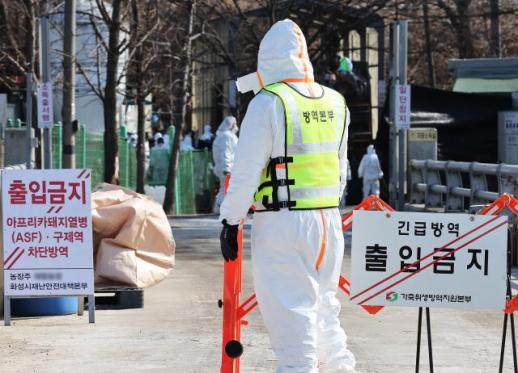 87% of This Year's African Swine Fever Cases Linked to Foreign Sources This year, 87% of the confirmed cases of African swine fever (ASF) in South Korean farms have been traced back to foreign sources. The primary routes of transmission are believed to be through feed ingredients and the compounded feed made from them. The Animal and Plant Quarantine Agency released the findings of its epidemiological investigation into the causes of ASF on May 19. Between January 16 and March 16, 24 cases of ASF were reported across seven provinces nationwide. Notably, the disease spread to regions beyond the previously affected areas of Gyeonggi, Gangwon, and North Gyeongsang, including South Chungcheong, North Jeolla, South Jeolla, and South Gyeongsang. Of the 24 cases, three were of a type previously identified in South Korea, while 21 were linked to strains originating from abroad. Key factors contributing to the outbreak include infection through feed ingredients, illegal distribution of livestock products, and contamination from wild boars. The Central Disaster Management Headquarters noted that ASF genes from foreign strains were detected in feed ingredients and compounded feed supplied to the affected farms, confirming a link between the farms and the contaminated feed. Additionally, ASF genes were found in six unreported products seized during crackdowns on illegal livestock products, raising concerns about the potential for virus entry through border inspection networks. Authorities also believe that contamination from wild boar carcasses may have transmitted the virus to domesticated pigs on farms. The Central Disaster Management Headquarters is enhancing its biosecurity measures. A testing system for ASF has been established, requiring inspections of all pigs being shipped from slaughterhouses nationwide. To prevent ASF entry through illegal livestock products, the agency is expanding X-ray inspections of travelers' luggage. Park Jeong-hoon, head of the Food Policy Office at the Ministry of Agriculture, Food and Rural Affairs, stated, "We are implementing proactive biosecurity measures starting from the entry of foreign workers to slaughterhouses and wild boars to prevent a recurrence of ASF. We urge farms to actively cooperate with biosecurity management, including restricting access for people and vehicles and prohibiting the entry of illegal livestock products into farms."* This article has been translated by AI. 2026-05-19 15:43:35
 -
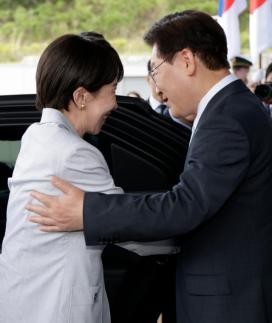 President Lee Welcomes Japanese Prime Minister Takaichi in Andong President Lee Jae-myung personally welcomed Japanese Prime Minister Sanae Takaichi on May 19 in Andong, where they were set to hold a Korea-Japan summit.President Lee stood at the entrance of a hotel in downtown Andong around 1:40 p.m. waiting for the arrival of Prime Minister Takaichi's vehicle.As the black car arrived, President Lee greeted Takaichi with a bright smile, clapping his hands and shaking her hand.The two leaders, meeting for the third time in an official capacity, displayed their camaraderie by holding hands and patting each other on the shoulder."I appreciate you coming all the way to our small rural city. I have been waiting since last night," President Lee said in welcoming Takaichi.Takaichi praised the traditional music band and honor guard that preceded her vehicle, saying, "Wonderful," and smiled broadly at President Lee, expressing her gratitude.Before entering the meeting venue, Takaichi bowed to the band and the press, following President Lee's lead.On this day, President Lee wore a sky-blue tie that matched the tone of Takaichi's suit jacket.A Blue House official explained, "The tie was chosen to convey a friendly feeling with a special meaning of shuttle diplomacy, symbolizing respect and trust."* This article has been translated by AI. 2026-05-19 15:42:00
 -
 Kim Kwan-young Leads Slightly Over Lee Won-taek in Jeonbuk Governor Race A recent poll indicates a tight race between Lee Won-taek of the Democratic Party and independent candidate Kim Kwan-young in the Jeonbuk governor election. The survey, conducted by Hangil Research on May 16-17 and commissioned by the New Jeonbuk Newspaper, involved 1,001 residents aged 18 and older in Jeonbuk. The results, released on May 18, show Kim Kwan-young leading with 42.1% support, while Lee Won-taek follows closely with 40.5%. The poll also recorded 4.9% for Yang Jeong-moo of the People Power Party, and 2.7% and 2.4% for independent candidate Kim Seong-soo and Baek Seung-jae of the Justice Party, respectively. The 1.6 percentage point gap between Kim and Lee falls within the margin of error, indicating a highly competitive race. Historically, Jeonbuk has been a stronghold for the Democratic Party, but the emergence of Kim Kwan-young as an independent candidate, following his expulsion from the party over allegations of cash distribution, has fragmented voter support. The poll was conducted using a mobile phone ARS method, achieving an 8.5% response rate. The margin of error is ±3.1 percentage points at a 95% confidence level. For more details, please refer to the Central Election Survey Deliberation Committee's website. * This article has been translated by AI. 2026-05-19 15:39:22
 -
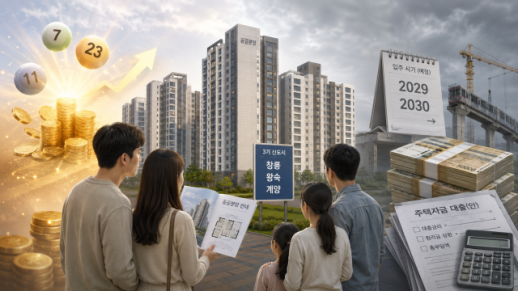 Public Housing Applications Open for New Towns in South Korea As public housing applications begin for key districts in South Korea's third new towns, prospective buyers are facing complex calculations. While the application price cap is expected to make these units more competitively priced than surrounding markets, rising construction and land costs have led to higher-than-expected prices, making it difficult to view these applications as a "lottery" opportunity. According to the Ministry of Land, Infrastructure and Transport, the Korea Land and Housing Corporation (LH), and the housing industry, special applications for the Namyangju Wangsu 2 A-1 and A-3 blocks and the Goyang Changnyeong S-1 block will start on May 26, followed by general applications. The new public housing application for Incheon Gyeyang A9 block will take place from May 27 to 28. Last month, a notice was issued for the recruitment of residents for 2,309 units in these third new towns. The largest offering comes from the Namyangju Wangsu 2 district, with a total of 1,498 units available: 812 units in the A-1 block and 686 units in the A-3 block. This marks the first public sale in the Wangsu 2 district, adding to its significance. The A-3 block will feature 390 units of 59 square meters, 102 units of 74 square meters, and 194 units of 84 square meters. The A-1 block is a public-private partnership project developed by LH and Kumho Construction. The prices for the A-1 block's 84 square meter units are set at 693.63 million won, while those in the A-3 block are priced at 732.45 million won. The A-1 block's 59 square meter units are priced at 493.04 million won, and the 74 square meter units at 613.68 million won. In the A-3 block, the 59 square meter units range from 526.34 million to 527.14 million won, and the 74 square meter units are priced at 646.11 million won. The proximity to the Dasan New Town and improvements in transportation, such as the Gangdong-Hanam-Namyangju line, are expected to sustain interest from buyers. The Goyang Changnyeong S-1 block boasts strong accessibility to the northwest region of Seoul. The "Goyang Changnyeong Umirin Grenity" is a public-private partnership project involving the Umirin Construction consortium, comprising 494 units. The units range from 59 to 84 square meters, with an average price of 783.40 million won for the 84 square meter units. This public sale follows a pre-application process conducted in July 2022, targeting remaining units after excluding those allocated to pre-application winners. The application schedule includes special applications on May 26, general applications on May 27-28, a winner announcement on June 11, and contract signings from July 27-30. Particularly, the Changnyeong district's proximity to the Eunpyeong and Mapo areas of Seoul, along with expectations for a new GTX-A Changnyeong station, is likely to attract significant demand. However, the inclusion of pre-application winners may limit the actual number of new units available for application. While the accessibility to Seoul and the brand reputation of the development are seen as advantages, the rising price of 84 square meter units into the upper 700 million won range may impact buyers' ability to finance their applications. The Incheon Gyeyang A9 block is the only newlywed hope town among the major offerings. Out of a total of 475 units, 317 will be available for public sale, while 158 will be designated as happy housing for future supply. The block consists solely of 55 square meter units, with average prices ranging from 491.35 million to 496.53 million won. This development is targeted at newlyweds, prospective newlyweds, and single-parent families, making the applicant pool relatively limited compared to Wangsu 2 and Changnyeong. Market interest centers on whether these developments can be considered "lottery applications" in the metropolitan area. The Wangsu 2 district is viewed as competitively priced compared to major units in the nearby Dasan New Town. Similarly, Changnyeong's accessibility to northwest Seoul and anticipated transportation improvements may enhance its appeal to genuine buyers. However, there are notable concerns. The price for the 84 square meter units in Wangsu 2 is around 700 million won, while Changnyeong's units are priced in the upper 700 million won range, posing a significant initial financial burden for prospective buyers. Complaints have also arisen regarding the higher-than-expected prices compared to pre-application estimates. The time remaining until occupancy is another variable; the Goyang Changnyeong S-1 block is scheduled for occupancy in May 2029, while the Namyangju Wangsu 2 A-3 block is set for May 2030. With a considerable gap between application and actual occupancy, factors such as transportation delays, interest rate fluctuations, and changes in surrounding market prices must be carefully considered. Experts believe that demand will vary significantly by district. While Wangsu 2 and Changnyeong are likely to attract interest due to anticipated transportation improvements and competitive pricing, Gyeyang may face limited demand due to its focus on newlywed housing. A housing industry representative stated, "While the price cap does make these units cheaper compared to surrounding markets, the financial burden and risks associated with the timing of occupancy make it difficult to approach these applications as merely a lottery. It is essential to consider application qualifications, residency obligations, resale restrictions, and living conditions at the time of occupancy comprehensively."* This article has been translated by AI. 2026-05-19 15:31:41
 -
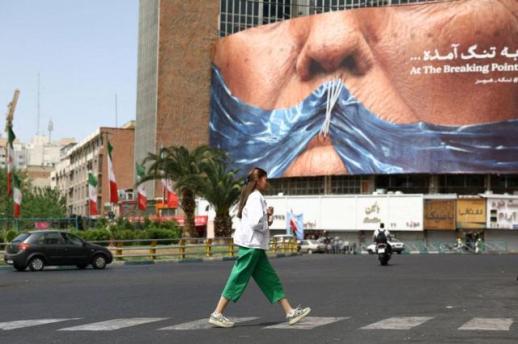 ASIA INSIGHT: Twelve weeks on, Middle East conflict still has no way out SEOUL, May 19 (AJP) - Now about 12 weeks into the conflict in the Middle East which began with joint U.S. and Israeli airstrikes against Iran in late February, there is still no end in sight. What some expected to be a short, contained confrontation has instead become a prolonged regional crisis with widening economic and political consequences. At the center of the prolonged standoff is a fundamental issue. Both sides say they want a deal, but they remain far apart on what that deal should look like. U.S. President Trump has blown hot and cold, threatening large-scale military action one moment and signaling openness to talks the next. He recently called off a planned strike after leaders from Qatar, Saudi Arabia, and the United Arab Emirates (UAE) urged restraint, warning of wider regional spillover. Iran, for its part, has reportedly put forward revised proposals through intermediaries, focusing on ending hostilities. However the U.S. has dismissed them as insufficient, demanding deeper concessions on Iran's nuclear program and its broader role in the region. Tehran, in turn, sees Washington's demands unrealistic and one-sided. While diplomacy stalls, the conflict continues to affect the wider world. Disruptions in and around the Strait of Hormuz, a key global shipping route, have unsettled energy markets and pushed oil prices sharply higher. That surge has fueled inflation fears and triggered a selloff in global bonds, with rising yields in the U.S., Japan, and other major economies. Low-level clashes have become more frequent and persistent. Drone attacks and maritime threats have not escalated into full-scale regional war, but they have not stopped either. Instead, they have created a pattern of sustained pressure that keeps the region on edge. Gulf states such as Qatar, Saudi Arabia and the UAE are trying to prevent further escalation, urging restraint while quietly pushing for negotiations. Their involvement reflects a broader concern that even a limited conflict is now affecting trade security, energy supplies, and long-term economic stability across the world. Despite ongoing diplomatic efforts, a breakthrough remains elusive as the two sides continue to see the conflict differently, leaving a deal distant for now. With the Middle East conflict dragging on, it has become more dangerous, with no clear way out. History reminds us that wars are far harder to end than to start. In a region where religious, geopolitical, and energy interests are deeply intertwined, the line between victory and defeat often blurs. Markets have already stopped asking when the war will end. The question now is how long the instability will last. 2026-05-19 15:27:40
 -
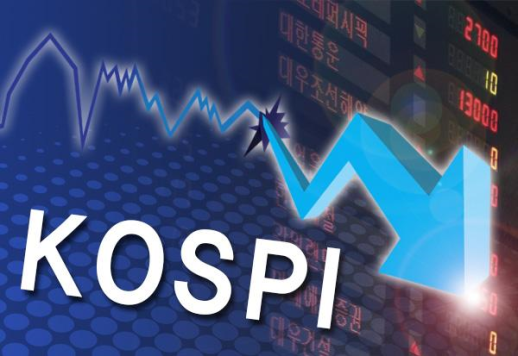 KOSPI Plummets Over 3% Amid Heavy Foreign Selling, Falls Below 7200 The KOSPI and KOSDAQ are experiencing significant declines during trading hours. Following substantial foreign net selling, the KOSPI dropped to the 7100 range, while the KOSDAQ, which had initially risen, fell over 2%. As of 2:18 PM on May 19, the KOSPI was trading at 7267.63, down 248.41 points (3.31%) from the previous trading day. The index opened at 7425.66, down 90.38 points (1.20%). The KOSPI fell to as low as 7141.91 during the day, marking the second consecutive trading day below the 7200 level, following a previous intraday low of 7142.71. This volatility comes after a recent sharp rise in the index. While individual investors purchased a net 4.6521 trillion won worth of stocks, foreign and institutional investors sold a net 4.7283 trillion won and 196 billion won, respectively. Most of the top market capitalization stocks are in decline. Samsung Electronics fell 1.78%, SK Hynix dropped 4.73%, SK Square decreased by 7.14%, Hyundai Motor fell 9.50%, LG Energy Solution declined 2.08%, Samsung Electro-Mechanics dropped 4.85%, Doosan Enerbility fell 6.16%, and HD Hyundai Heavy Industries decreased by 3.09%. In contrast, Hanwha Aerospace rose by 4.97%, and Samsung Life Insurance increased by 0.16%. At the same time, the KOSDAQ was trading at 1079.63, down 31.46 points (2.83%) from the previous trading day. The index opened at 1111.36, up 0.27 points (0.02%) but quickly turned downward. The intraday low of 1063.28 is the lowest level since April 7, when it recorded 1026.95. Individual investors bought a net 1183 billion won worth of stocks, while foreign and institutional investors sold a net 350 billion won and 401 billion won, respectively. Most of the top KOSDAQ stocks are also experiencing declines. EcoPro BM fell 3.68%, EcoPro dropped 3.94%, Rainbow Robotics decreased by 10.86%, Kolon TissueGene fell 2.58%, Samchundang Pharm dropped 2.14%, JUSUNG Engineering decreased by 4.34%, Rino Technology fell 3.86%, HLB dropped 2.19%, and ABL Bio decreased by 1.25%. However, Alteogen rose by 2.24%. Analysts suggest that profit-taking pressures are increasing following the recent rapid rise. Han Ji-young, a researcher at Kiwoom Securities, explained, "The decline in U.S. semiconductor stocks due to the Seagate incident, rising U.S. 10-year bond yields, and caution ahead of Nvidia's earnings and the April Federal Open Market Committee (FOMC) minutes have all played a role." She added, "However, the greater factor appears to be the unresolved overextension from the domestic market's surge earlier this year. The significant drops in sectors like robotics and ESS, which had previously seen substantial gains, indicate a weakening market sentiment towards growth stocks."* This article has been translated by AI. 2026-05-19 15:27:20
 -
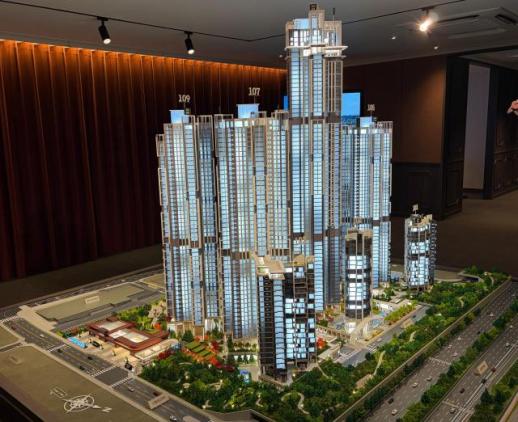 DL E&C Proposes 'Acro Apgujeong' in Competitive Apgujeong 5 District Reconstruction DL E&C has launched a comprehensive campaign in the competitive bidding for the reconstruction of Apgujeong 5 District, emphasizing a construction period of 57 months, a 244-pyeong super penthouse, and attractive financial conditions. The atmosphere is heating up as they openly challenge Hyundai Engineering for the support of district members. On May 19, DL E&C held a presentation at the promotional center for Apgujeong 5 District (Apgujeong Hanyang 1st and 2nd phases) located in the Taeseung Building in Sinsa-dong, Gangnam, Seoul, where they unveiled their proposal, 'Acro Apgujeong.' During the presentation, Shim Jae-seok, head of the urban redevelopment project team at DL E&C, stated, "'Acro Apgujeong' will achieve first place in relocation, first place in occupancy, and first place in market value," adding that the focus is on the structural quality and essence of the apartments rather than just their appearance. Following the 30-minute presentation, attendees gathered around a large model of the complex displayed in the center of the promotional center. The model depicted the future of Apgujeong 5 District, which will be reconstructed into a 6-story underground and 68-story above-ground complex with a total of 1,397 units. DL E&C emphasized that all units will be oriented southward, facing the Han River. Throughout the presentation, DL E&C highlighted 'specialized design' as a key competitive advantage. Of the 1,397 units, 1,293 will be designed as specialized units, ensuring that all 1,232 members can occupy at least one unit with specialized features. A notable differentiator is the '244-pyeong super penthouse,' which will occupy the top three floors of the building, making it the largest in the entire Apgujeong 2nd, 3rd, and 4th districts, according to DL E&C. A DL E&C representative remarked, "The existence of the super penthouse itself elevates the overall value of the complex," asserting their intention to secure the top-tier complex in Apgujeong, similar to the Acro River Park in Banpo. The interior of the units will feature a maximum ceiling height of 3 meters and a 5-bay structure that maximizes views of the Han River. Twelve sky community spaces, including a sky library and sky lounge, as well as parking spaces averaging 3.2 per household, were also presented as differentiating factors. Throughout the presentation, DL E&C continued to challenge Hyundai Engineering's proposal. They claimed that Hyundai's assertion of "100% Han River views for all units" is misleading, stating, "Only 67 units will have curved specialized designs," and emphasized the need to evaluate the actual views. DL E&C also criticized Hyundai's proposed aluminum sheet exterior finishing as a "cheap material," asserting that they will use high-quality ceramic panels that are 30-60% more expensive, enhancing durability and resistance to pollution. They noted that Hyundai had previously proposed ceramic panels for the Apgujeong 3 District. They released comparative data on the performance requirements for multi-family housing, claiming that they received higher ratings than Hyundai in most categories, including physical lifespan, concrete design strength, fire resistance, and sound insulation. They also highlighted that, according to statistics from the Ministry of Land, Infrastructure and Transport's Dispute Mediation Committee, they have had zero official defect cases since 2023. Financial conditions were also a key focus. DL E&C proposed a loan-to-value ratio of 150% for relocation funds, a 0% interest rate on mandatory project costs, a maximum 7-year deferral on contribution payments after occupancy, and full funding for the cooperative's project costs. They specifically proposed a construction period of 57 months, shorter than the original plan of 63 months and Hyundai's proposal of 67 months. DL E&C explained that this 10-month reduction could save approximately 1 billion won per unit, totaling 1.232 trillion won in financial costs. DL E&C emphasized that "Apgujeong 5 District is the only project the company is focusing on," allowing them to offer competitive conditions with minimal margins. They argued that Hyundai's financial conditions from previous projects in Apgujeong 2 and 3 districts would limit their ability to offer better terms for the 5th district. They added, "There are no hidden numbers as criticized by Hyundai. Please look at the numbers as they are. DL E&C is essentially all-in on Apgujeong 5 District." Exiting the promotional center, banners announcing the upcoming contractor selection meeting were visible throughout the Apgujeong 5 District, with activity from members and stakeholders continuing. On the same day, a site briefing was actively taking place in the nearby Apgujeong 3 District, and Hyundai's promotional vehicles were seen circulating the area. The entire Apgujeong area appeared to be in a competitive atmosphere for reconstruction bids. The Apgujeong 5 District boasts a strong location advantage, with the nearest Dongin 3 building just a 10-minute walk from the Apgujeong Rodeo Station on the Bundang Line. During the weekday afternoon visit, residents were spotted using umbrellas while heading towards the Galleria Department Store. The Apgujeong 5 District is indeed adjacent to a vibrant shopping area. The area is also home to numerous popular restaurants, boutiques, and cafes around Apgujeong Rodeo Street and Dosan Park. With the potential for Han River views, competition for high-end residential properties in the Gangnam area is expected to intensify. The contractor selection meeting for Apgujeong 5 District is scheduled for May 30, where the final contractor will be chosen between Hyundai Engineering and DL E&C. The construction cost is estimated at approximately 1.5 trillion won.* This article has been translated by AI. 2026-05-19 15:22:21
 -
 Credit Card Companies Expand Loan Services Amid Declining Profitability As the credit card industry faces declining profitability due to reduced merchant fees, companies are expanding their financial services focused on credit loans, resulting in increased funding levels. Samsung Card, in particular, has shown aggressive growth, recording the largest increases in both credit loans and funding balance. In contrast, Shinhan Card, the industry leader, has adopted a strategy emphasizing asset efficiency, leading to a different trend. According to the financial sector on May 19, the average funding balance for eight major credit card companies (Shinhan, Samsung, Hyundai, KB Kookmin, Lotte, Woori, Hana, and BC Card) reached 174.42 trillion won at the end of the first quarter, marking a 2.2% increase from 170.73 trillion won in the same period last year. Unlike banks, credit card companies cannot accept deposits, so they rely on corporate bonds, asset-backed securities (ABS), and commercial paper (CP) for operational funding. The decline in profitability from their core payment business, due to ongoing reductions in merchant fees, has prompted these companies to accelerate their expansion into interest-based financial services such as credit loans, cash services, and installment financing. According to the Korea Credit Finance Association, the credit loan balance for the eight card companies increased from 39.29 trillion won to 39.68 trillion won, a rise of 1.0% or 394.8 billion won during the same period. Notably, Samsung Card's credit loan balance grew by 452.7 billion won over the past year, the largest increase in the industry. Its funding balance also rose by 2.28 trillion won, marking the most significant expansion. Industry analysts attribute this growth to Samsung Card's relatively stable delinquency rate, which allows for aggressive expansion in credit loans and installment financing. As of the first quarter, Samsung Card maintained the lowest delinquency rate in the industry at 1.00%, down 0.12 percentage points from the previous year. This lower risk profile has enabled the company to pursue credit loan expansion more actively. A Samsung Card representative stated, "We are providing stable funding to mid- to low-credit customers through mid-interest loans and plan to manage our credit loan balance based on risk management moving forward." Conversely, Shinhan Card experienced a decrease in its funding balance by 1.18 trillion won, the largest decline among its peers. Its credit loan balance also fell by 161.9 billion won over the year. This shift is interpreted as a focus on maintaining asset quality and efficiency rather than aggressive growth. In the first quarter, Shinhan Card's credit loan transactions totaled 2.22 trillion won, slightly down from 2.21 trillion won in the same period last year, while cash services dropped by 9.2% to 2.89 trillion won. A Shinhan Card spokesperson commented, "In the face of increasing domestic and international uncertainties, we are focusing on optimizing our portfolio by reducing low-efficiency businesses and expanding high-efficiency ones. We are also committed to proactive risk management to continue improving our asset structure." 2026-05-19 15:19:30
 -
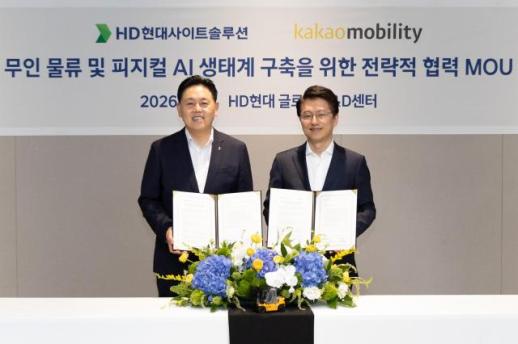 Kakao Mobility and HD Hyundai Site Solutions Expand Collaboration on Physical AI in Logistics Kakao Mobility is partnering with HD Hyundai Site Solutions to expand the Physical AI ecosystem focused on logistics operations. On May 19, Kakao Mobility announced that it has signed a strategic memorandum of understanding (MOU) with HD Hyundai Site Solutions to build a next-generation unmanned logistics and Physical AI ecosystem. The two companies plan to jointly promote automation and unmanned operations across logistics sites in line with the industry's shift from hardware-centric automation to software-based operational systems. Physical AI combines digital AI with physical equipment in the real world to perform actual tasks. The market for this technology is rapidly expanding, particularly in areas such as robotics, autonomous driving, and smart logistics. In this collaboration, Kakao Mobility will handle platform capabilities, including integrated control of heterogeneous mobile units and transport management systems (TMS). HD Hyundai Site Solutions will provide technology for unmanned autonomous industrial vehicles (forklifts) and logistics control solutions. The companies aim to jointly pursue platform integration and technology proof of concept (PoC) in logistics, utilizing data collected during the validation process to identify new business models and global expansion opportunities. Kakao Mobility intends to extend its operational experience from existing robot delivery and valet parking services into the industrial logistics sector. The strategy includes creating an environment where various industrial vehicles can be integrated and operated on a single platform, thereby broadening the application of Physical AI. Specifically, the focus will be on establishing a "seamless operational optimization environment" that connects the entire logistics process, from order receipt to middle-mile transportation and internal warehouse operations. The company expects this will reduce data silos and delays caused by system separations in existing logistics operations. Ryu Geung-seon, CEO of Kakao Mobility, stated, "This collaboration marks a significant starting point for Kakao Mobility to expand its integrated capabilities for heterogeneous mobile units into industrial settings. By combining Kakao Mobility's software capabilities with HD Hyundai Site Solutions' industrial vehicle and logistics solution expertise, we will enhance the logistics AX model and continuously expand the application of Physical AI technology."* This article has been translated by AI. 2026-05-19 15:16:43
 -
 Hyundai Engineering & Construction Shares Plummet for Third Consecutive Day Amid Rebar Shortage Hyundai Engineering & Construction is experiencing a decline in stock prices for the third consecutive trading day due to the fallout from a rebar shortage in the GTX-A Samsung Station construction project. Concerns over the financial burden of reinforcement costs and potential administrative penalties are weighing heavily on investor sentiment. As of 2:20 PM on May 19, the Korea Exchange reported that Hyundai Engineering & Construction shares were trading at 139,700 won, down 5,200 won (3.59%) from the previous trading day. The stock had already dropped 8.45% on May 15 and fell another 6.52% on May 18, totaling a decline of over 14% in just two days. This marks three consecutive days of falling prices. The recent drop is attributed to the confirmation of a significant rebar shortage at the GTX-A Samsung Station construction site. According to the Ministry of Land, Infrastructure and Transport, 50 out of 80 columns in the underground fifth-floor platform failed to meet load-bearing standards, with approximately 178 tons of main rebar missing. Hyundai Engineering & Construction stated that it discovered the issue during an internal quality inspection last year and reported it to the Seoul city government. The company is currently undertaking safety reinforcement work using steel plate reinforcement methods. However, market sentiment is more concerned about the potential for penalties and restrictions on future bidding rather than the reinforcement costs themselves. In fact, the Seoul city government has reportedly initiated procedures to impose penalties on Hyundai Engineering & Construction. Industry analysts suggest that if penalties are enforced, they could negatively impact the company's ability to bid on public projects and its construction capability assessments.* This article has been translated by AI. 2026-05-19 15:15:00