
Journalist

Jeannette Wicks-Lim, Jasmine Kerrissey
-
 Elon Musk Misses Final Arguments in OpenAI Trial Amid Trump’s China Visit Elon Musk, CEO of Tesla and SpaceX, did not attend the final arguments in the OpenAI trial. He is reportedly accompanying President Donald Trump on his visit to China. On May 14, Musk's lead attorney, Steven Molo, apologized to the jury for Musk's absence during the final arguments held at the federal court in Oakland, California. Molo emphasized that Musk is passionate about the case and that his absence does not indicate a lack of interest. The trial stems from a lawsuit Musk filed against OpenAI co-founders Sam Altman and Greg Brockman. Musk alleges they violated their promise to keep OpenAI a nonprofit organization and gained unfair advantages during the restructuring of the company. The controversy surrounding Musk's absence has intensified in light of his legal status. CNBC reported that Judge Yvonne Gonzalez Rogers previously designated Musk as 'subject to recall,' meaning he could be summoned back to court on short notice if necessary. Musk had already testified during the first week of the trial. Typically, witnesses must seek court permission to travel long distances, and it is unclear whether Musk received such permission for his trip to China, according to a court spokesperson. Musk's legal team did not respond to inquiries regarding the court's approval. Musk joined Trump on his visit to China just before the final arguments began. Trump met with Chinese President Xi Jinping in Beijing. The delegation also included Jensen Huang, CEO of NVIDIA, and Tim Cook, CEO of Apple. OpenAI quickly seized on Musk's absence as a point of contention. OpenAI attorney William Savitt stated during the final arguments, "Musk is not here today. My clients are here because they take this matter seriously." Both Altman and Brockman were present in court. OpenAI's legal team directly countered Musk's claims. Savitt and attorney Sarah Eddy presented evidence, arguing that Musk had previously sought to transition OpenAI into a for-profit entity but only intended to pursue this when he could control the company or merge it with Tesla. Eddy claimed that Musk's initial donations to OpenAI came with specific conditions, but he failed to provide proof of this. He pointed out that testimonies from Musk's associates and former OpenAI director Siobhan Gilly did not support Musk's claims.* This article has been translated by AI. 2026-05-15 09:27:54
 -
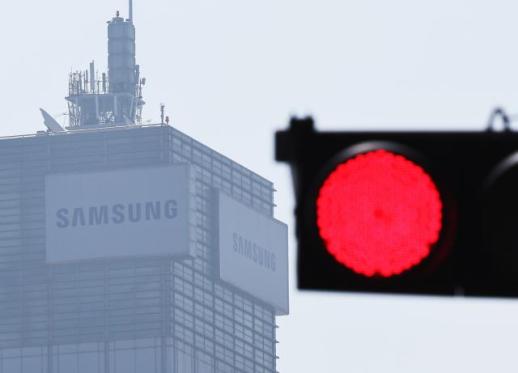 Samsung Workers Plan Nationwide Strike Amid Ongoing Labor Dispute The labor dispute at Samsung Electronics is escalating toward a nationwide strike. The National Labor Relations Commission's mediation efforts have failed, prompting the Samsung Electronics Labor Union to announce a strike starting on the 21st. The disagreement centers around the formalization of a performance bonus system. However, the current situation at Samsung extends beyond mere wage disputes, raising significant concerns about potential impacts on South Korea's semiconductor industry and the broader national economy. At the heart of the conflict is the performance bonus system. The union demands that a certain percentage of operating profit be enshrined in a collective bargaining agreement as a source for performance bonuses. Yet, the semiconductor industry is characterized by extreme volatility, with boom and bust cycles that can shift within a few quarters. Indeed, Samsung Electronics has recently experienced a significant downturn in performance amid a semiconductor industry slump, only now beginning to enter a recovery phase. Demands to institutionalize performance bonuses as fixed costs, disregarding the industry's structural realities, are difficult for the company to accept. The timing of the strike is particularly concerning. Global competition in the semiconductor sector has reached a critical level. The United States is pouring substantial subsidies into reshaping its domestic supply chain, while China is fiercely pursuing semiconductor self-sufficiency. Taiwan's TSMC is accelerating investments in expanding production capacity and advanced processes. With the growth of the AI market, the competition for semiconductor dominance is now pivotal to national competitiveness. If a nationwide strike at Samsung Electronics materializes, the repercussions will extend beyond the company itself. Disruptions in semiconductor production could lead to decreased exports, harm to partner companies, and reduced investment. Samsung is a cornerstone of South Korea's manufacturing sector, and any instability within the company will inevitably affect the national economy. It is difficult to view the union's aggressive stance, ignoring these implications, as a responsible approach. Particularly alarming is the increasingly militant direction of recent union actions. The company has even filed for a court injunction to prohibit illegal strike activities, reflecting this backdrop. Semiconductor manufacturing differs from general manufacturing; maintaining cleanroom standards and production line stability is crucial. Any production disruptions or safety issues can lead to long-lasting damage that is hard to rectify. Escalating conflicts surrounding critical national industrial facilities is not desirable. While it is valid to argue that Samsung should not remain entrenched in an authoritarian organizational culture, it is clear that the company has changed from the past. It recognizes the union as a legitimate negotiating partner, and its wage and welfare levels are among the highest in the country. Notably, despite the downturn in the semiconductor market last year, the company has maintained employment stability without large-scale restructuring. Demanding unilateral concessions without considering the sustainability of the business and industrial competitiveness is not a realistic solution. Labor rights must be respected. However, these rights should be exercised in a manner that acknowledges industrial realities and social responsibilities, especially for a company like Samsung Electronics that significantly impacts the national economy. What is needed now is not a battle for justification or a confrontational stance, but a practical compromise that preserves industrial competitiveness while establishing a reasonable compensation system. The government must also clarify its principles. In a situation where significant disruptions to a key national industry are anticipated, it should actively engage in necessary mediation and management. Striking a balance between the principle of labor rights protection and the reality of maintaining industrial competitiveness is crucial. A nationwide strike at Samsung would be a battle with no winners. If the company falters, workers will also be at risk, and if the industry wavers, the national economy will inevitably suffer. Now is not the time to escalate confrontations; it is time to view the reality with a clear perspective.* This article has been translated by AI. 2026-05-15 09:24:27
 -
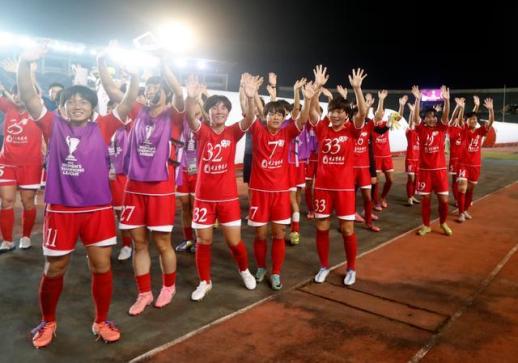 North-South Women's Football Match in Korea Sells Out in 12 Hours North Korea's My Hometown Women's Football Team's visit to South Korea has generated significant interest, leading to the complete sellout of tickets for the semifinals of the 2025-2026 Asian Football Confederation (AFC) Women's Champions League (AWCL) within just half a day. According to the Korea Football Association, tickets for the AWCL semifinals, which went on sale on May 12, sold out within approximately 12 hours, with 7,087 of the total 9,000 seats being purchased. The AWCL semifinals will be held in a single-elimination format. The match between South Korea's Suwon FC Women and North Korea's My Hometown Women's Football Team is set for May 20 at 7 PM at Suwon Sports Complex. This marks the first time since December 2018 that a North Korean team has participated in a sports event in South Korea. Notably, this is also the first visit by the North Korean women's football team to South Korea in 12 years since the 2014 Incheon Asian Games. The South Korean government has officially approved the North Korean team's visit. On May 14, the Ministry of Unification announced, "We have approved the visit of My Hometown Women's Football Team to South Korea for the 2026 AWCL." The approved delegation consists of 27 players and 12 staff members, totaling 39 individuals, who will stay from May 17 to May 24. They are expected to enter South Korea through Incheon International Airport on May 17, holding certificates for their visit in accordance with the Inter-Korean Exchange and Cooperation Act. A large-scale joint cheering event will also take place during the match. Approximately 200 organizations, including the Council of Civil Organizations for Inter-Korean Cooperation, the National Council for Reconciliation and Cooperation, the Coalition for Peaceful Unification, and the Hankyoreh Foundation for Unification Culture, have recently formed the '2026 AFC-AWCL Women's Football Joint Cheering Squad.' In support of the civilian cheering efforts, the government has decided to allocate approximately 300 million won from the Inter-Korean Cooperation Fund. The Ministry of Unification stated, "About 3,000 participants are expected to cheer for both teams, emphasizing support for all players. We have also provided guidance on the 'prohibited items' under AFC regulations and the ban on political and religious messages in the stadium." The joint cheering squad noted, "Considering this is a club competition, we plan not to use the national names. If necessary, we will refer to North Korea (Chosun) in conjunction with the match." Cheering slogans such as 'Go Suwon, Keep it Up My Hometown' and 'We Support Suwon FC Women, Welcome My Hometown Women's Football Team' are expected to be used.* This article has been translated by AI. 2026-05-15 09:22:29
 -
 Hana Financial Becomes Major Shareholder in Dunamu with $1 Billion Investment Hana Financial Group has made a significant investment of 1 trillion won (approximately $1 billion) in Dunamu, positioning itself as the fourth-largest shareholder in the company. This investment is seen as a culmination of the long-standing trust between Hana Financial Chairman Ham Young-joo and Dunamu Vice Chairman Kim Hyung-nyeon.On May 15, Hana Financial announced that the Hana Bank board approved the acquisition of 2,284,000 shares of Dunamu from Kakao Investment for about 1.03 trillion won. With this purchase, Hana Bank now holds a 6.55% stake in Dunamu, securing its status as the fourth-largest shareholder.This investment marks the largest ever by a domestic commercial bank in a virtual asset company. Following this transaction, Hana Financial has quickly ascended to become the fourth-largest shareholder in Dunamu. As of last year, the largest shareholder in Dunamu was Chairman Song Chi-hyung (25.51%), followed by Vice Chairman Kim Hyung-nyeon (13.10%) and Woori Technology Investment (7.20%). Kakao Investment, previously among the top three shareholders, has seen its stake reduced and has lost its major shareholder status.The two companies have previously collaborated on projects, including proof of concept for overseas remittance services utilizing blockchain technology. This stake acquisition is expected to enhance synergies not only between Hana Financial and Dunamu but also with Naver Financial, which is set to exchange shares with Dunamu.Chairman Ham stated, "This equity investment is a strategic decision to accelerate financial innovation based on digital assets. We will focus all our capabilities to lead the creation of the K-blockchain ecosystem with Dunamu and help the domestic digital asset industry reach a global leadership level."* This article has been translated by AI. 2026-05-15 09:19:58
 -
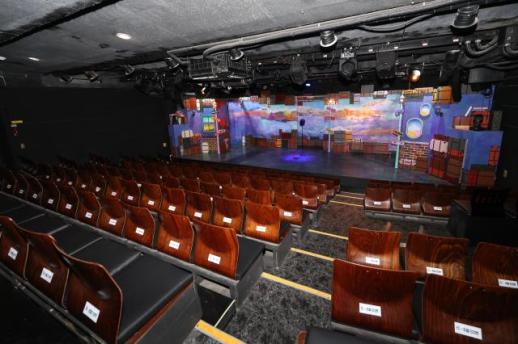 Artists Struggle with Lengthy Process of Arts Activity Certification Illustrator Jeong So-hee took over two years to pass the Arts Activity Certification process. Despite having over 20 exhibitions to his name, he faced repeated rejections and requests for additional documentation before finally receiving approval this year. He stated, "I had to invest more energy in writing a report to prove I am an artist than in creating my work."The controversy surrounding the Arts Activity Certification is spreading throughout the cultural and artistic community. Artists point to the unclear evaluation criteria, prolonged delays in the review process, and administrative standards that are disconnected from reality as issues that need addressing.On November 6, 2010, Lee Jin-won, a solo indie band member of 'Moonlight Fairy Home Run,' was found dead at his home in Yeongdeungpo, Seoul. A few months later, on January 29, 2011, screenwriter Choi Ko-eun was discovered dead at her residence in Seoksu-dong, Anyang. Both artists were well-known in the indie music and film industries but struggled with financial difficulties due to unfair contract structures and unstable incomes. Their deaths prompted the enactment of the 'Arts Welfare Law' on November 18, 2012, which led to the establishment of the Arts Welfare Foundation the following day.The Arts Activity Certification system aims to provide a minimum social safety net and access to welfare for struggling artists. It is considered a necessary qualification for applying to various government and public institution support programs, including creative grants, rental housing, employment insurance, and loan programs.However, artists on the ground express a lack of guidance regarding the system.Visual artist Shin Yoon-jung applied for the Arts Activity Certification four times but was rejected each time. He said, "I was at a loss about how to prepare because I couldn't understand the criteria for sincerity. Even trying to guess based on the experiences of other artists, the standards kept changing."Shin also eventually passed the review but has yet to receive a clear explanation from the welfare foundation regarding the reasons for his approval. He expressed concern about not being able to endure the same process if he were to be rejected in the next review.The review period has also been problematic. Artists, including Jeong and Shin, reported waiting at least three to six months for the results of their re-evaluations.Han Mo, 31, who has worked in stage direction, shared, "I received a 'not approved' notice while on my way from a logistics center to the theater. It felt pointless after waiting four months."Discrepancies between the review criteria and reality have also come under scrutiny.A flat painter pointed out that participation in art fairs, which are auction-style exhibitions, is not recognized as artistic activity. "The fastest way to establish a long-term relationship with a gallery and hold a solo exhibition is to pay to participate in an art fair," the artist explained. Despite submitting a history of participating in a prominent art fair known for showcasing emerging artists for several years to prove 'continuity,' he received a response stating, 'it cannot be recorded.'He added, "It doesn't make sense that even major art fairs like Kiaf/Frieze, which the First Lady has attended, cannot be recorded as they are not considered 'solo exhibitions.'"As dissatisfaction grew within the arts community, a discussion on the Arts Activity Certification was held on April 22, organized by lawmaker Son Sol at the National Assembly's Culture, Sports and Tourism Committee. Participants criticized the lack of clarity in evaluation criteria, poor communication, and the opacity of the review process.Installation artist Lee Seung-hyun stated, "We are not asking for the threshold to be lowered indiscriminately; we want to know what the problems are and what criteria lead to rejection."Calls for transparency in the review process were also voiced. Actor Oh Se-gon, who participated in the initial design task force for the Arts Activity Certification system, emphasized the need to clarify who the committee members are and whether there were offline discussions and debates.A survey conducted by artists themselves revealed similar sentiments. About 63.6% of respondents deemed the current evaluation criteria inappropriate, and 53% reported a lack of feedback regarding reasons for rejection.The Ministry of Culture and the welfare foundation also had their perspectives. Kim Ga-jin, head of the planning and coordination team at the Korea Arts Welfare Foundation, stated during the discussion, "We need to verify whether individuals are truly pursuing art as a profession, whether their results can be documented, and whether their works have been consumed and distributed to the public." She explained that the increasing number of applicants who do not meet all three criteria has made rejections unavoidable.Regarding delays in the review process, she noted, "The number of applications has surged, but we lack sufficient personnel to handle them," adding that currently about ten staff members are responsible for the reviews.As of March 2026, there are five full-time and five contract workers involved in the Arts Activity Certification review process. With 43,419 applicants' documents being reviewed by just over ten people, the lack of established criteria and delays are understandable, according to their explanation.However, there are voices on the ground that find these explanations insufficient.A notable example is the 'Youth Artists' Arts Activity Savings Account' program, which began last year. This initiative allows young artists to save a certain amount, with the government matching that amount. The program saw a large influx of applicants.However, as of February 4, 2026, the application period closed within half a day due to being 'first-come, first-served.' Critics point out the contradiction in explaining that the review process takes a long time due to a shortage of reviewers while support program applications close within a day.This year, the total budget for the Ministry of Culture, Sports and Tourism is approximately 7.8555 trillion won, an 11.2% increase from last year. Of this, the Arts Welfare Foundation's share is around 200 billion won. However, how that money is spent remains unclear.Artists emphasize that understanding the actual creative environment is more important than simply increasing the budget. Jeong, who previously spoke to the media, questioned, "I want to ask if the current criteria truly serve artists who are solely dedicated to creation," stressing the need for a broader understanding of artists' creative activities.* This article has been translated by AI. 2026-05-15 09:17:31
 -
 Big Tech's AI Power Struggle Intensifies Among Companies, Government, and Security The global AI industry is escalating beyond mere model competition, with a focus on corporate, security, and platform dominance. On May 14, developments included Anthropic's rapid expansion in the corporate AI market, tensions between OpenAI and Apple, and increased AI oversight by the U.S. government. Anthropic Surpasses OpenAI in Corporate AI Market Anthropic is quickly establishing its presence in the corporate AI sector. According to market data firm Ramp's AI index, Anthropic's adoption rate of AI in businesses has reached 34.4%, surpassing OpenAI's 32.3% for the first time. This shift is attributed to a surge in demand for automation in coding, legal, and financial tasks based on the Claude model. On the same day, Anthropic announced an expansion of its strategic partnership with PwC. PwC plans to train 30,000 U.S. employees on the 'Claude Code' and aims to extend AI utilization throughout its global organization. The two companies will also establish a separate AI Center of Excellence (CoE) to jointly pursue corporate AI transformation projects. Industry experts suggest that Anthropic is evolving from a simple generative AI company into an 'enterprise operating platform.' The rapid increase in demand for AI agent-based task automation is reshaping the corporate market landscape, which has traditionally been dominated by OpenAI. OpenAI-Apple Tensions Rise Over Platform Control Tensions between OpenAI and Apple are also escalating. According to Bloomberg, OpenAI is considering legal action regarding its AI collaboration agreement with Apple. Initially, the two companies planned to integrate ChatGPT into Siri and the iOS ecosystem, but conflicts have arisen as Apple expands its adoption of other AI models, including Google Gemini and Anthropic Claude. Particularly, Apple is exploring options that would allow users to select their preferred AI models in its next operating system, potentially diminishing OpenAI's influence within the platform. Industry analysts have noted that "the search engine wars of the AI era are now shifting to operating systems and personal assistant platforms." U.S. Government Strengthens AI National Security Oversight The U.S. government's moves to regulate AI are accelerating. Major companies, including Google, Microsoft, and xAI, have agreed to pre-submit next-generation AI models to agencies under the U.S. Department of Commerce. This initiative aims to verify the security and risks of models before they are publicly released. Simultaneously, the U.S. Department of Defense has signed contracts with OpenAI, Google, Microsoft, and AWS to enhance military AI collaboration through secure networks. In contrast, Anthropic continues to express concerns over the use of surveillance and autonomous weapons, leading to ongoing tensions with the Defense Department. * This article has been translated by AI. 2026-05-15 09:13:18
 -
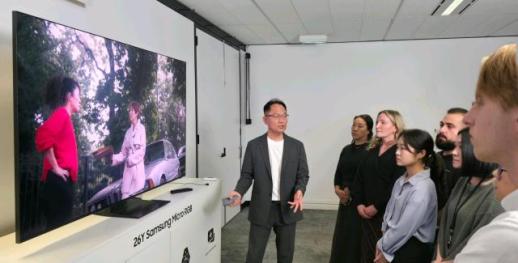 Samsung Unveils Next-Generation Displays at 2026 Australia Tech Seminar Samsung Electronics is accelerating its efforts to capture the premium TV market in Australia, a region known for its strong sports viewing culture and high console gaming usage. The company is focusing on a premium strategy that emphasizes AI-based picture quality technology and gaming features.From May 14 to 15, Samsung hosted the '2026 Australia Tech Seminar' in Sydney, where it showcased new AI TV technologies and its next-generation display lineup.The seminar is an annual event held since 2012, aimed at introducing Samsung's latest audio and visual technologies to global experts.Key local tech media, industry representatives, and consumer outlets attended the event organized by Samsung's Australian branch.During the seminar, Samsung introduced its 2026 screen products, including Micro RGB and OLED TVs, as well as Odyssey gaming monitors, highlighting key technologies.The company presented advanced display technologies and AI-driven viewing experiences tailored to Australian content consumption trends and living environments, emphasizing its home entertainment strategy.Notably, the new TV models feature enhanced AI capabilities designed to provide a more evolved viewing experience.The new TVs include the 'Vision AI Companion,' which analyzes the viewer's environment and content to deliver an optimized experience.Samsung also demonstrated the 'AI Football Mode,' which enhances the sports viewing experience by using AI to analyze soccer match scenes in real-time, delivering vivid colors and smooth motion while enhancing crowd sounds and commentary for greater immersion.Additionally, Samsung showcased its advanced display technology with the 'Micro RGB' TV, which utilizes the 'Micro RGB AI Engine' to finely adjust colors and contrast, achieving improved color representation and optical control compared to traditional TVs, ensuring stable picture quality across various viewing environments.The TV also features 'Micro RGB Color Booster Pro' and 'Micro RGB HDR Pro,' which provide clear and consistent colors regardless of brightness conditions.The event also highlighted the picture quality performance of the 2026 Samsung OLED (S95H), which is the first Samsung OLED to incorporate burn-in prevention technology, minimizing image retention during extended viewing.Samsung introduced several new gaming monitor products, including the 'Odyssey 3D,' which provides realistic 3D effects without glasses by analyzing user gaze in real-time using Eye Tracking and View Mapping technologies; the 'Odyssey G8 (G80HS),' the first gaming monitor to offer 6K ultra-high resolution and a 65Hz refresh rate; and the 'Odyssey OLED G8 (G80SH),' which supports fast response times and excellent black color representation with deep contrast ratios, delivering an unparalleled gaming environment.Lee Hun, Vice President of Samsung Electronics' Visual Display Business, stated, "Samsung is innovating picture quality and overall user experience based on AI technology, actively expanding the 'AI TV era.' We will continue to evolve user-centered viewing environments through differentiated AI screen experiences."* This article has been translated by AI. 2026-05-15 09:11:12
 -
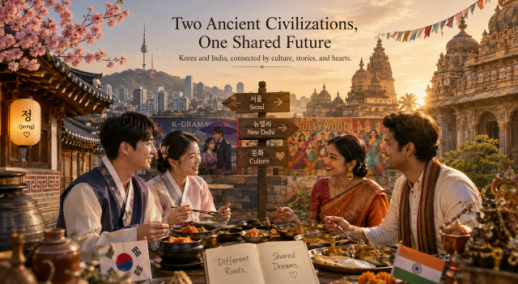 AJP Korea-India Essay Contest Winner: Grand Prize SEOUL, May 15 (AJP) - There is a particular kind of magic that happens when two ancient civilizations recognize themselves in each other. It does not announce itself loudly. It arrives quietly — in the similarity between the deep bow of a Korean elder greeting a guest and the folded-hands namaste of an Indian grandmother; in the way both a Korean grandmother's doenjang jjigae and an Indian mother's dal carry the same grammar of love — slow-cooked, unpretentious, irreplaceable. Korea and India are not obvious twins. On the surface, they seem to belong to different chapters of Asia's story. One is a compact, technologically hyper-advanced nation of 51 million people that rebuilt itself from rubble within a single generation. The other is a vast, ancient subcontinent of 1.4 billion, a democracy of staggering diversity, still in the energetic middle chapters of its own transformation. And yet, when you place these two worlds side by side — not in the language of trade figures or diplomatic communiqués, but in the language of everyday life, of street food and festivals, of K-dramas and Bollywood, of temples and technology — something remarkable emerges. This essay is that portrait. It is written in the belief that culture is the truest diplomacy, that shared moments are the foundation of shared futures, and that the most important frame two nations can inhabit together is not a formal summit photograph, but the frame of a story both peoples recognize as their own. I. The Kitchen as Common Ground Begin with food, because food never lies. Walk through a Korean market — Gwangjang in Seoul, perhaps — and the sensory experience is immediately familiar to anyone who has grown up around Indian bazaars. The riot of color. The vendors who have been at the same stall for thirty years and consider themselves artists, not merchants. The smell of fermentation, of spice, of things that have been slow-processed into something greater than their ingredients. A Korean pojangmacha — the beloved street tent stall — operates on the same democratic philosophy as an Indian dhaba: the food is honest, the portions generous, the customers from every walk of life, and the cook has an opinion about how things should be done that no restaurant critic could shake. Kimchi and Indian pickle — achar — are not the same food. But they are the same idea: the transformation of humble vegetables into something complex and alive through fermentation and patience. Both cultures understood, long before modern science confirmed it, that the gut is where health begins. Both built entire culinary philosophies around this intuition. Tteok — Korean rice cakes — appear at every significant moment of Korean life: birth, the hundredth day, first birthday, weddings, ancestral rites, the new year. Modak, the sweet rice dumpling offered to Ganesha in India, carries an almost identical weight of sacred meaning. Rice, shaped by hand and offered with intention, becomes ceremony in both cultures. The grain that feeds both nations daily also marks their most important thresholds. This is not coincidence. It is the convergence of two agricultural civilizations that built their deepest rituals around the rhythms of planting and harvest, that understood food as not merely sustenance but as the primary language of care. II. The Screen as Mirror In 2020, something unexpected happened in India. A Korean drama called Crash Landing on You found its way onto Indian streaming platforms, and millions of Indian viewers — who had perhaps never thought much about Korea beyond Samsung phones and Hyundai cars — fell completely, helplessly in love with it. They were not falling in love with the exotic. They were falling in love with the familiar. The drama's central tensions — love across social barriers, family expectation versus personal desire, the weight of duty toward parents, the question of whether following your heart constitutes bravery or selfishness — are not specifically Korean concerns. They are human concerns, but they are especially familiar concerns to anyone who has grown up in a culture where family is not background but foreground, where individual decisions are never fully individual, where love must reckon with approval and approval must reckon with tradition. Indian viewers recognized this immediately. They recognized the mother who loves fiercely but controls with equal fierceness. They recognized the young person caught between a dream and a duty. They recognized the particular comedy of large extended families inserting themselves into everything. They recognized the food being pushed toward people as the primary expression of concern. The Korean Wave — Hallyu — has been building in India for years, but it is not simply a matter of Indian audiences consuming Korean content. It is a cultural conversation. Indian music has its own enormous global footprint, and Korean listeners have discovered in Bollywood's emotional directness something that resonates — the willingness to cry in public, to declare love operatically, to let songs carry the weight that polite conversation cannot. There is something significant happening here that goes beyond entertainment trends. When people recognize themselves in another culture's stories, they become — quietly, without policy or proclamation — less foreign to each other. Every Indian teenager who learned to make ramyeon after watching a Korean drama, every Korean student who discovered the depth of Indian cinema beyond the stereotype of sudden dance numbers, has performed a small but genuine act of bridge-building. III. Everyday Life: The Texture of Shared Time The most profound commonalities between Korea and India are not in the grand gestures but in the daily texture of life. Both cultures organize existence substantially around the concept of jeong in Korean and apnapan in Hindi — an untranslatable quality of deep attachment, familiarity, and belonging that develops between people over shared time. Neither word translates cleanly as "love" or "friendship"; both describe something warmer and less dramatic than love, more binding than friendship — the feeling that someone or something has become woven into who you are. Both cultures are also, in their bones, communal in ways that post-industrial Western societies frequently are not. The Korean concept of nunchi — the social intelligence required to read a room, to understand what is needed without being told, to subordinate individual impulse to collective harmony — has functional equivalents across Indian social life, where reading the emotional weather of a gathering and adjusting accordingly is considered a fundamental social skill. The education cultures of both countries are strikingly parallel. In both Korea and India, the examination is not merely an academic event but a family ordeal, a community project, a civilizational pressure point. Families restructure their entire lives to support studying children. The outcome is treated as meaningful not just for the individual but for the family's standing. This reflects something real: a belief in education as the primary vehicle of transformation, a conviction that knowledge is the most honorable form of advancement — rooted in both Korea's Confucian scholarly tradition and India's ancient reverence for the guru and the vidya — the teacher and the knowledge. IV. The New Frame: Technology and Tradition In 2026, both Korea and India stand at a remarkable intersection of ancient culture and accelerating technology, and the choices each is making at this intersection look, once again, strikingly similar. Korea has become one of the world's most advanced digital societies while simultaneously experiencing a powerful resurgence of interest in traditional arts — hanji papermaking, hanbok fashion, minjung painting, traditional fermentation. The tension between preservation and transformation is not resolved but held, thoughtfully, by a culture that has learned to carry both at once. India is navigating its own version of this: one of the world's fastest-growing digital economies, home to a booming tech sector and a generation of entrepreneurs who are as comfortable in Silicon Valley as in their home cities, while simultaneously seeing a renaissance of interest in classical dance, regional languages, traditional textiles, and indigenous ecological knowledge. Both nations are using technology not to replace tradition but to amplify and preserve it. Korean developers have built apps to teach hanji crafts to young people who might never have encountered them. Indian technologists have created digital archives of classical music performances, regional dialect dictionaries, and visual records of craft traditions at risk of disappearing. In both cases, the frame of the future is being used to hold images from the past — not as nostalgia but as living inheritance. Artificial intelligence now enters this frame. The contest for which this essay is written is itself a signal of where both cultures are heading: toward a future in which AI is not a replacement for human creativity but a collaborator in it, a tool for capturing and sharing the moments that would otherwise go unrecorded. An Indian farmer describing the particular quality of monsoon light on a rice paddy. A Korean grandmother demonstrating the precise angle of wrist required to make perfect mandu. A young person in Seoul and a young person in Mumbai, connected by a shared love of a song, a film, a flavor, discovering that their interior lives are less different than their geographies suggest. AI can help record these moments. But it cannot manufacture their meaning. The meaning comes from the cultures themselves — from the depth of what Korea and India each carry, and from the genuine recognition that passes between them when they encounter each other honestly. V. A Future Built from Shared Moments There is a Korean proverb: ganeun mari gowaya oneun mari gopda — "For beautiful words to come back to you, beautiful words must go first." There is an Indian equivalent in the concept of karma, but also in the simpler folk wisdom that the well-digger's children do not go thirsty. Both traditions understand that what we offer shapes what we receive; that relationship is built through accumulated acts of consideration; that the future is made from the quality of the present moment. The relationship between Korea and India is still, in many ways, in its early chapters. The diplomatic relationship is relatively young. The awareness that ordinary citizens of each country have of the other is growing but still partial. There are gaps in understanding, moments of genuine cultural distance, areas where the differences are real and worth acknowledging honestly. But the trajectory is clear. The cultural currents are moving toward each other, driven not by governments but by millions of individual people — the Indian student learning Korean to understand a drama without subtitles, the Korean traveler who goes to India expecting temples and leaves having been changed by something less nameable and more important, the chef who realizes that fermentation is fermentation regardless of which ocean it originated beside, the musician who hears in the other tradition's scales something that answers a question their own tradition posed. The frame that contains Korea and India together is not yet full. It is still being composed. But the image that is emerging is one of two ancient, resilient, creative, and profoundly human civilizations who have discovered, at the beginning of the twenty-first century, that they have more to say to each other than either had imagined. Every shared meal is a line in that composition. Every drama watched across the border is a brushstroke. Every student who learns the other language, every entrepreneur who builds a bridge between Seoul and Bangalore, every grandmother whose recipe travels farther than she ever did — each adds to the frame. The frame is ours. The future it holds is shared. And the moment — this particular moment of recognition and possibility — is exactly the right one to capture. *The author, Sonali Ray, is based in India. Her writing was submitted in English. 2026-05-15 09:09:23
 -
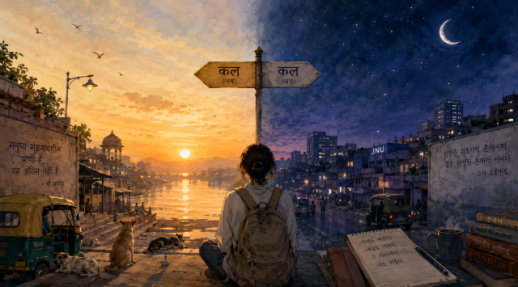 AJP Korea-India Essay Contest Winner: Gold Prize SEOUL, May 15 (AJP) - In Hindi, there is a word called "kal." It means both “yesterday” and “tomorrow.” When I first learned this word as a Hindi major in college, I thought it felt very much like India itself. Two completely opposite ideas existing within a single word. A word that refuses to define only one thing. At the time, however, I did not understand why it stayed with me for so long. In the winter of my second year at university, I traveled to India for a school-organized exchange program. India, which I visited despite everyone’s worries, was quite different from what I had expected. From the cold air I felt the moment I stepped off the plane, to the taxi driver who waited patiently with the meter turned off after we realized we had the wrong address, and who even stopped to ask strangers for directions himself when we could not find the place — everything slowly broke down the arrogance and prejudice I did not know I had. Strangely, the feeling that I had lost something made me feel lighter. That night, I fell asleep with the cold air of India drifting through the window. The next morning, I woke up early. The sound of motorcycles being repaired at the shop below the hostel and the barking of stray dogs fighting outside struck my ears through the open window. Half awake, I stepped outside and tried to catch a tuk-tuk. I thought it would be easy since I was out so early, but it was not. More than ten drivers waiting outside the hostel began arguing over who would take me. The chaos felt like stepping directly into the middle of real life. Feeling responsible for the situation I had caused, I tried to calm everyone down and solve it fairly by choosing based on price. In the end, that was what I did. As I caught my breath inside the tuk-tuk, I thought about the convenience of taxis in Korea. Now, all we have to do is open an app and a car arrives right in front of us. But many taxi drivers in Korea often say life was better before these apps existed. High commission fees, pressure to accept rides, and endless waiting for requests leave drivers trapped in a system where waiting itself becomes exhausting. Even I find myself staring nervously at my phone when I am in a hurry, unable to do anything until a driver finally accepts my request. That is what life without choice feels like. The waiting grows longer, and during that time, people slowly become smaller. We think we have choices, but in reality, society and systems often choose for us. We simply receive the result. Maybe that is why it has become harder to find taxis on the street. People begin predicting each other’s behavior, moving only toward crowded places, and waiting once again. The waiting simply changes shape. In that process, we stop becoming people who choose and move on our own. Instead, we become people waiting to be chosen. And it is not only about taxis. In this false sense of convenience, we have started taking other people’s time and labor for granted. We have also lost small moments of understanding and consideration for one another. My main destination in India was Jawaharlal Nehru University in New Delhi. The university is well known in Korea, especially for its Korean language department. Located deep within the hills, it still took another ten minutes by tuk-tuk after reaching the area. When I arrived, stray dogs were resting on the stairs and sofas as if they were welcoming me. Although it was part of a Korean language exchange program, many of the classes focused on Indian history, traditions, and language. I especially enjoyed the literature class. Reading passages written during the colonial period allowed me to feel more deeply connected to that history. Sharing the pain of colonial experience also made me feel closer to India itself. “Man is a transitional being; he is not final.” This quote by Indian philosopher and independence activist Sri Aurobindo means that human beings are unfinished and always changing. To me, this sentence describes India better than anything else. Indian people rarely give absolute answers. Even my Hindi professor often avoided saying “yes” or “no.” Instead, he tilted his head slightly — a gesture that can mean both agreement and disagreement, or answered with “maybe.” That is because possibilities are always left open. India seems to understand that deciding something too quickly can be both arrogant and careless. Perhaps that openness is why the country was able to rebuild itself after independence, developing industries such as textiles and tea while later becoming a global leader in pharmaceuticals through constant challenges and new attempts. We all know we should leave room for possibility, yet modern society pushes us to define everything too quickly. For the past several years, introducing ourselves with MBTI types has become almost natural. It is easy, simple, and convenient. “I” means shy, “E” means outgoing, “T” means logical, and “F” means emotional. But from the beginning, I always felt uncomfortable with it. I was afraid of being reduced to only four letters while every other possibility about me disappeared. During introductions, I often avoided the test altogether because I disliked the feeling of being explained so quickly and so completely. Even when I asked friends whether they found this strange, most replied that it simply made people easier to understand. Society does not easily allow people to change their decisions. It demands quick and certain answers. That is why we live in constant tension, preparing ourselves for futures that may never even arrive. And the easiest way to prepare for the future is by copying what already exists. Ignoring our own uniqueness, we stop thinking deeply and focus only on fitting into familiar shapes. Modern society builds walls in pursuit of comfort, even though that comfort is often temporary and uncertain. But perhaps our exhaustion comes from those very walls. Maybe stopping our thoughts would make life easier. Still, it feels wasteful to live that way when we were born as people capable of reflection. In his essay You, the Sentence, Yoo Jin-mok writes that “you” and “I” are part of the same sentence, and that we do not need quotation marks or references to explain ourselves. Every person carries a different meaning, and we can only understand each other within the full context of a sentence. Sometimes, understanding can happen simply through eye contact, without explanation or effort. This trip to India taught me how to accept things as they are. In a country where nothing has only one answer, I came to understand that yesterday can become tomorrow, and tomorrow can become yesterday. And somewhere in between, I think I will remain, without deciding completely which one I am. *The author, Kim Ji-youn, is based in Korea. Her writing was submitted in Korean, and was translated into English by AI. 2026-05-15 09:08:44
 -
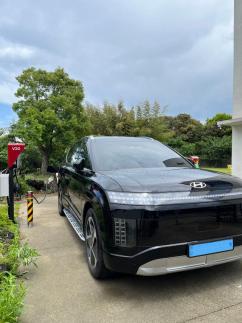 Hyundai Launches V2G Pilot Program for Electric Vehicles in Jeju Hyundai Motor Group announced on May 15 that it will officially launch a Vehicle-to-Grid (V2G) pilot program for general customers in Jeju Island. V2G technology connects electric vehicle (EV) batteries to the power grid, allowing for two-way energy exchange. This approach transforms electric vehicles from mere transportation into strategic assets for energy storage and distribution. The company has been operating a V2G pilot program in collaboration with the mobility platform SoCar since the second half of last year and is now expanding it to include local residents. Forty Jeju residents who own Hyundai's Ioniq 9 or Kia's EV9 and can install V2G bi-directional chargers at their homes or workplaces have been selected as participants. These participants are early adopters with a strong interest in the environmental benefits of V2G technology. Hyundai Group conducted field surveys to ensure a diverse representation of occupations and residences among the final participants. They will receive free installation of the bi-directional chargers and full coverage of EV charging fees during the pilot period. Participants will experience a new form of mobility, utilizing their electric vehicles not just for charging but as 'mobile energy storage systems' (ESS) that can store and supply power. The full implementation of V2G is expected to shift the energy industry from a supplier-centric model to a locally driven economic model. In Jeju, which has a high proportion of wind and solar energy, excess power generated during the day can be stored in electric vehicles and returned to the grid at night, maximizing the utilization and economic viability of renewable energy. Hyundai Motor Group plans to accelerate the development of the domestic V2G ecosystem and industry activation in collaboration with the government and local authorities through this pilot program expansion. A Hyundai Group official stated, "We expect the V2G pilot program, which involves direct participation from the residents of Jeju, to support the realization of local energy production and consumption. It will also play a significant role in achieving Jeju's carbon neutrality vision for 2035." Meanwhile, Jeju is serving as a testbed for carbon neutrality policies, aiming to achieve net-zero emissions by 2035, 15 years ahead of the national target. The island is pursuing various roadmaps to transition its energy production and consumption paradigms. By 2035, Jeju plans to expand its renewable energy generation capacity to 7GW, increasing its share of renewable energy to over 70%. It will also convert existing thermal power plants to hydrogen combustion and co-firing plants. Additionally, the island is testing technologies to promote distributed energy through regulations on new registrations of internal combustion vehicles and the transition of large buses and trucks to hydrogen vehicles, along with V2G initiatives.* This article has been translated by AI. 2026-05-15 09:08:04