
Journalist

Jeannette Wicks-Lim, Jasmine Kerrissey
-
 From K-Pop to K-Ink: Korea prepares to bring tattooing into the open SEOUL, May 15 (AJP) - Since a 1992 Supreme Court ruling effectively restricted tattoo procedures to medical professionals, South Korea’s tattoo industry has operated in a legal gray zone. Under the newly passed Tattooist Act, the country is now building its first national licensing and safety framework for non-medical tattoo practitioners. The law, overseen by the Ministry of Health and Welfare, passed the National Assembly on Sept. 25, 2025 and is scheduled to take effect two years after promulgation, with enforcement expected around September or October 2027. Despite the legal restrictions, tattoo culture and cosmetic tattoo procedures have expanded rapidly in South Korea alongside the rise of K-beauty and Korean cultural exports. Industry estimates suggest that around 350,000 people were engaged in tattoo-related work in Korea as of 2021, while the Korea Tattoo Association estimates the domestic tattoo market at roughly 1 trillion won, ($667 million). An anonymous tattoo artist said one of the biggest changes under the new system would be the ability to work more openly without fear of legal uncertainty. “For many tattoo artists, being able to work in our own studios without constantly worrying about legal risks is probably the biggest change,” the artist said. Under the new law, non-medical tattoo practitioners who pass a national licensing examination and obtain government certification will be permitted to legally perform tattoo procedures. The framework also introduces hygiene and safety requirements including sterilization standards, single-use needles, infectious waste disposal rules, mandatory safety education and liability insurance requirements for tattoo businesses. Tattoo studios will be required to register with local governments, while tattoo artists must maintain records related to procedures, pigments and side effects. Tattooing minors without parental consent and performing tattoo procedures outside registered workplaces will also be prohibited. The Ministry of Health and Welfare and tattoo-related organizations participated in a consultation meeting attended by more than 40 industry groups on Tuesday, officials discussed licensing examinations, hygiene standards, temporary business registration measures and safety management rules for tattoo facilities. “The purpose of the Tattooist Act is to allow non-medical tattoo practices while ensuring public health and hygiene management,” Vice Health Minister Kim Han-sook said during the meeting, according to the ministry. As the government prepares subordinate regulations for the new framework, industry groups are also moving to establish formal educational standards for tattoo practitioners. On Friday, the Korea Tattoo Association held a publication event in Seoul for three standardized tattoo textbooks covering advanced tattoo techniques, cosmetic tattoo procedures, hygiene management and safety practices. The association said it had officially submitted the books a day earlier to the health ministry, the Korea Health Personnel Licensing Examination Institute and the Ministry of Food and Drug Safety as reference materials for future licensing, regulatory and safety policies. The association described the publication effort as part of a broader push to move the industry away from informal apprenticeship-style training practices that had long dominated the sector amid the absence of official standards. “For a long time, the industry remained outside institutional systems,” Chairman of Korea Tattoo Association, Song Kang-seop said in a statement. “Submitting standards created by the industry itself to government authorities is, in a sense, the first step toward standing before the government with confidence.” 2026-05-15 15:34:37
 -
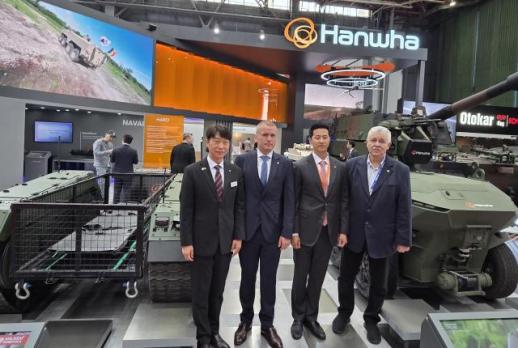 Hanwha signs teaming agreement with Milrem Robotics for Romanian UGV program SEOUL, May 15 (AJP) - Hanwha Aerospace has signed a teaming agreement with Estonia’s Milrem Robotics to jointly pursue Romania’s unmanned ground vehicle program, as the South Korean defense firm seeks to expand its presence in the European market. The agreement was signed during the Black Sea Defense & Aerospace, or BSDA 2026, exhibition in Bucharest by Hanwha Aerospace, its Romanian subsidiary Hanwha Aerospace Romania and Milrem Robotics, Hanwha Aerospace said Friday. Under the agreement, Hanwha Aerospace Romania is expected to serve as the prime contractor and lead local production, offering wheeled UGV platforms based on Hanwha’s Arion-SMET and the upgraded GRUNT variant. Milrem Robotics will provide its THeMIS tracked UGV platform and related technologies as part of Hanwha’s integrated proposal. Hanwha said the partnership is aimed at delivering a flexible and scalable unmanned solution tailored to Romania’s operational needs, while strengthening local industrial capabilities and broader European cooperation. “We are pleased to mark this collaboration at BSDA 2026, which represents an important step in bringing advanced unmanned capabilities into Romania through localized production and industrial cooperation,” said Lino Lim, CEO of Hanwha Aerospace Romania. Kuldar Väärsi, CEO of Milrem Robotics, said the company sees strong potential to expand manufacturing capabilities to Romania in cooperation with Hanwha. Ahead of the exhibition, Hanwha Aerospace and Milrem Robotics also conducted a live manned-unmanned teaming demonstration near Bucharest on May 12. 2026-05-15 15:25:27
 -
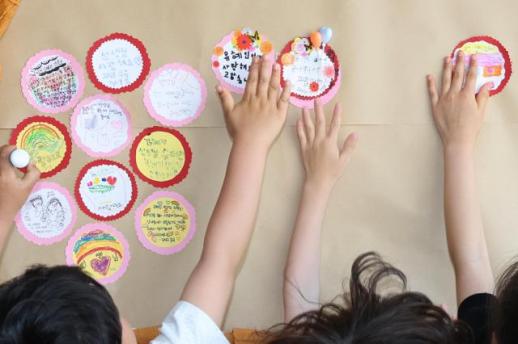 Teachers Face Restrictions on Celebrating Teacher's Day in South Korea "The grace of a teacher is like the sky, the more I look up, the higher it seems. The true teacher who teaches us to be righteous is like a parent in our hearts. Oh, thank you for the love of a teacher, oh, I will repay the grace of a teacher." This song, traditionally sung on Teacher's Day, has become increasingly rare to hear. Small classroom celebrations have also come under scrutiny. The Gyeongsangbuk-do Office of Education announced through an internal bulletin that under the Anti-Corruption Act, teachers, students, and parents are considered "direct stakeholders." They advised against giving or sharing cakes with teachers on Teacher's Day. "While making Teacher's Day cards, the children were asking, 'Can we give a gift to the teacher, or not?' I overheard some students saying, 'Even giving a carnation or a drink could get the teacher in trouble,'" said Yoon Mi-sook, a sixth-grade teacher at S Elementary School in Busan, expressing her disappointment. "The children likely had no ill intentions, but I felt a sense of shame in a classroom where it has become normal to discuss that 'even a drink could get the teacher in trouble' before Teacher's Day," she reflected. She questioned, "Is this situation really normal?" On a day meant to honor teachers, they now find themselves weighing the legal risks of accepting a piece of cake or a single carnation from students. This situation is particularly ironic in South Korea, where the term "teacher" has historically symbolized respect and moral authority. In Confucian culture, teachers are seen not just as knowledge bearers but as figures who impart character and order, and the tradition of singing "The Grace of a Teacher" and writing thank-you letters continues in schools today. Teacher's Day originated in 1958 when members of the Youth Red Cross visited sick teachers. The date was established as May 15, the birthday of King Sejong, in 1965, becoming a national holiday. However, with declining teacher authority, malicious complaints, and various legal burdens, many teachers now express that "the day has become just a name." Pride in the teaching profession has long been in decline. According to a survey released by the Teacher Labor Union Federation on May 14, more than half of teachers have considered resigning in the past year. Only about 5% of teachers feel respected by society, and only about 30% report feeling fulfilled in their teaching careers. Feelings of helplessness regarding violations of teacher rights and a breakdown of trust are also evident. A survey conducted by the Korean Federation of Teachers' Associations (KFTA) ahead of the 45th Teacher's Day, involving 8,900 teachers from various educational levels, revealed that 49.2% of respondents felt their professional pride had decreased in the past one to two years. The most significant moment of helplessness for teachers was identified as "when they are not trusted by students and parents and when their rights are violated" (67.9%). The atmosphere in local schools mirrors these sentiments. A recent survey by the Busan Teacher Labor Union, which included 7,180 teachers nationwide (383 from Busan), found that 69.2% of Busan teachers would not choose the teaching profession if they could start over. Additionally, 80.9% expressed concern about being reported for child abuse even during legitimate educational activities, and 85.1% felt that the emotional abuse clause in child abuse laws stifles educational activities. Teachers report that the school environment is increasingly becoming a "defensive classroom culture." There are also concerns that the rise of AI and smartphones is altering teachers' authority. Yoon noted, "What used to be part of student guidance is now approached with manuals and the possibility of complaints in mind. Many teachers record counseling sessions to prepare for any potential complaints or reports." She added, "I try to maintain a certain distance from students, using formal language during class and teaching them not to approach too casually," reflecting a fear that familiarity could lead to misunderstandings or disputes. A teacher named Baek from an elementary school in Gangnam remarked, "Teachers are no longer seen as the ones who know all the answers. The authority of teachers is changing in the digital environment." In recent years, South Korea has seen repeated incidents of teacher deaths and controversies over violations of teacher rights. Following the death of a teacher at Seoi Elementary School in 2023, thousands of teachers gathered in Yeouido, Seoul, demanding protection for teacher rights, yet many teachers feel that "nothing has practically changed." Violence against teachers is no longer considered rare. Last month, a student attacked a teacher with a weapon in Gyeryong, South Chungcheong Province. A survey conducted by the Teacher Labor Union Federation among 7,307 teachers revealed that 67% had experienced physical threats from students, and 32% had been physically assaulted. Experts analyze that while South Korean society still speaks of a Confucian culture of "respect for teachers," the necessary trust and discretion for teachers are not adequately supported in practice. They continue to demand guidance and emotional support for students while the authority and protection needed to uphold these responsibilities have weakened. The status of the teaching profession, once a symbol of stability and social respect, is also in decline. The decrease in the school-age population, combined with the burden of complaints and legal risks, has led to a decline in the attractiveness of teaching as a career. According to the admissions industry, the cutoff scores for major teacher training colleges for the 2025 academic year have dropped compared to the previous year. The cutoff scores for five teacher training colleges, including Seoul National University of Education, Chuncheon National University of Education, Korea National University of Education, Gwangju National University of Education, and Cheongju National University of Education, fell from 3.22 to 3.61. The gender imbalance in elementary education continues. According to the Seoul Metropolitan Office of Education, among the 210 final successful candidates for the 2026 public elementary school teacher appointment exam, only 30 were male, accounting for 14.3%. Among the total of 295 successful candidates for kindergarten, elementary, and special education schools, only 32 were male (10.9%). Among the 48 successful kindergarten teachers, only one was male, and all seven successful special education kindergarten teachers were female. In this context of gender imbalance, male teachers report feeling overwhelmed by their workloads. A male teacher in his 30s from Daejeon, named Yeon, said, "With so few male teachers, physically demanding tasks or difficult situations often fall to the few male teachers. It's not easy to express that I'm struggling in this atmosphere." Teachers emphasize that what is needed in the educational field is not just laws and systems, but trust and a sense of community. "What teachers desire is not the authority of the past, where we wouldn't dare step on the shadow of a teacher." Yoon stated, "Just as my child is precious, so is every other child. We need a basic consideration and sense of community that prevents harm to others as we protect our own children." She added, "Consideration and compromise are not losses; they are opportunities to expand a child's capacity for empathy. Education cannot be completed solely through laws and systems. When respect and consideration fill the gaps, both teachers and students, as well as parents, can feel more at ease." As another Teacher's Day approaches, what teachers hope for is not grand respect or songs of gratitude, but a classroom where they can teach without fear.* This article has been translated by AI. 2026-05-15 15:21:00
 -
 Korea Financial Group Shares Decline Despite Strong Earnings as KOSPI Drops Shares of Korea Financial Group, which had shown strength earlier in the day, are now declining as the KOSPI index turns sharply downward. As of 2:51 PM on May 15, Korea Financial Group's stock was trading at 257,000 won, down 0.39% from the previous session. At one point, the stock had risen by more than 8%. The stock initially gained traction in the morning as the KOSPI index surpassed the 8,000 mark, buoyed by expectations of improved performance amid a favorable market. However, the KOSPI has since dropped to around 7,400. On May 14, Korea Financial Group reported that its consolidated operating profit for the first quarter of this year reached 1.1063 trillion won, marking a 108.9% increase compared to the same period last year. Revenue rose to 11.9966 trillion won, up 123.7%, while net profit climbed 99.6% to 916.7 billion won. Analysts have raised their target prices for Korea Financial Group. SK Securities increased its target from 399,000 won to 410,000 won, while Daol Investment & Securities and NH Investment & Securities adjusted theirs from 350,000 won and 340,000 won to 400,000 won, respectively. Meritz Securities raised its target from 335,000 won to 365,000 won, and Shinhan Investment Corp. increased its target from 320,000 won to 350,000 won. Samsung Securities also raised its target from 270,000 won to 320,000 won. Jang Young-im, a researcher at SK Securities, stated, "The bullish market is expected to continue into the second quarter, sustaining the growth in brokerage and asset management commission revenues. Korea Financial Group is poised to benefit across all sectors due to the strong stock market, demonstrating robust profit capacity." Yoon Yoo-dong, a researcher at NH Investment & Securities, noted, "While the overall strong performance in the securities industry has made it more challenging to differentiate stock prices, Korea Financial Group's diversified structure with multiple financial affiliates highlights its potential for continued earnings and stock price growth during prosperous periods."* This article has been translated by AI. 2026-05-15 15:18:21
 -
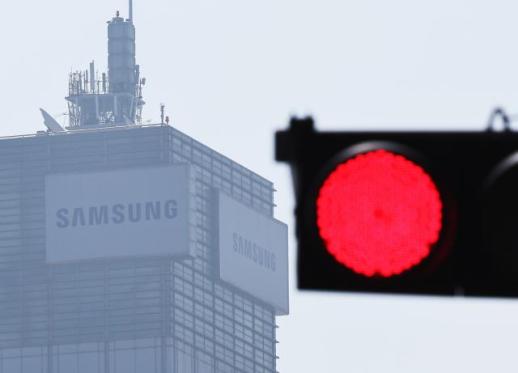 Blue House Hopes for Resolution as Samsung Workers Threaten Strike The Blue House expressed concern on May 15 regarding the Samsung Electronics labor union's announcement of a potential general strike, stating, "Given Samsung's significant role in the national economy, we hope that a strike can be avoided and that negotiations between labor and management conclude successfully." Lee Gyu-yeon, the Blue House's chief of public relations, addressed questions during a briefing at the Chunchugwan regarding whether the government is considering invoking emergency mediation rights if the union proceeds with the strike. He responded, "We are not at a stage where such a decision can be made yet." Lee emphasized, "We are not merely observing; Samsung's impact on the national economy is substantial. Approximately one in ten citizens holds Samsung Electronics stock, either directly or indirectly, and there are around 1,700 partner companies associated with it." He added, "We are watching the situation with considerable concern and apprehension." However, he clarified that this concern does not automatically lead to the invocation of emergency mediation rights. He noted that Minister of Trade, Industry and Energy Kim Jeong-kwan had mentioned the necessity of such action, stating, "I believe he was expressing what needed to be said in his capacity as the Minister of Trade, Industry and Energy." Minister Kim had previously indicated via X (formerly Twitter) that if the Samsung Electronics union proceeds with the general strike on May 21, invoking emergency mediation rights would be unavoidable. If the Minister of Employment and Labor invokes these rights, the union would be required to suspend all strike activities for 30 days. Lee also addressed questions about whether Minister Kim's comments were made without coordination with the Blue House, stating, "That is not the case. Each ministry is fulfilling its respective roles, including the Ministry of Economy and Finance, the Ministry of Trade, Industry and Energy, and the Ministry of Employment and Labor." * This article has been translated by AI. 2026-05-15 15:15:46
 -
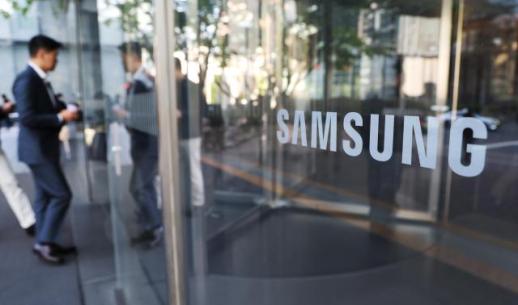 Samsung Electronics Executives Meet with Union Leaders to Address Bonus Dispute Samsung Electronics' semiconductor division executives have traveled to the Pyeongtaek campus to meet directly with union representatives in an effort to resolve a dispute over performance bonuses.According to industry sources on May 15, Vice Chairman Jeon Young-hyun and other executives from the semiconductor (DS) division are set to meet with Choi Seung-ho, chairman of the Samsung Electronics branch of the Korean Metal Workers' Union.In an official statement, the executives expressed their belief that the union is part of a shared family and community, stating, "We will approach the dialogue with an open attitude, without conditions." They also urged the union to engage in discussions promptly, considering the public's concerns and the national economy.This marks the first time the executives have taken such direct action to meet with union leaders. With a general strike announced by the union just six days away, this move is seen as a strong commitment to avert a strike that could result in losses amounting to tens of trillions of won.Samsung Electronics emphasized its dedication to resolving internal issues amicably while focusing on enhancing its technological competitiveness.The executives stated, "We are in an era of infinite competition where the global business environment is changing rapidly, and we cannot afford to waste time on internal matters." They pledged to collaborate and share wisdom while considering the current economic situation and South Korea's long-term future.They concluded by promising to be a steadfast pillar for the national economy through sound management, continuous technological innovation, and bold future investments.* This article has been translated by AI. 2026-05-15 15:13:03
 -
 Orion's Q1 operating profit jumps 26% on robust overseas sales SEOUL, May 15 (AJP) - South Korean confectioner Orion announced that its first-quarter operating profit climbed 26 percent from a year earlier to 165.5 billion won ($109.9 million), powered by brisk demand at its overseas subsidiaries. Consolidated revenue rose 16 percent to 930.4 billion won in the January to March period, according to a regulatory filing released Friday. Orion, the country's second-largest snack maker and the original producer of Choco Pie, said overseas units in China, Russia and Vietnam drove the gains. The Russian arm posted a 66.2 percent surge in operating profit to 14.2 billion won as revenue rose 34.7 percent to 90.5 billion won, lifted by expanded capacity for fish-shaped pastries and fresh pies. China revenue jumped 24.8 percent to 409.7 billion won on Lunar New Year demand and stronger pie and potato-snack sales, while operating profit there leapt 42.7 percent to 79.9 billion won. The Vietnam unit logged a 17.9 percent revenue rise to 151.3 billion won on Tet holiday spending and new product launches, and India sales soared 67 percent to 9.8 billion won. Domestic earnings held steady, with revenue inching up 0.4 percent to 283.4 billion won despite sluggish local consumption and rising raw material costs. Orion plans to accelerate capacity expansion in the second half, including a new production line for Poca Chips crisps at home, completion of a third plant in Hanoi, and a doubling of fish-shaped pastry output in Russia alongside construction of a new factory in Tver. "We will expand supply volumes through pre-emptive investment in production and logistics facilities at home and abroad, and further lift our growth momentum in the second half," a Orion spokesperson said. Shares of Orion traded at 139,600 won pert stock at 3:10 p.m., 2.58 percent lower than the day before. 2026-05-15 15:12:41
 -
 ChabioTech Reports Revenue Growth in Q1 2026 Amid Global Healthcare Expansion ChabioTech announced on May 15 that it recorded consolidated revenue of 329.7 billion won in the first quarter of 2026, an 8% increase compared to the same period last year. The company attributed its stable growth in global healthcare operations across the United States, Australia, Singapore, and Japan, along with the integration effects from Kakao Healthcare and Chai AI Healthcare. The growth of key subsidiaries, including CMG Pharmaceutical and Chacares, also contributed to the revenue increase. However, the company reported an operating loss of 30.7 billion won, primarily due to investments in expanding its digital healthcare business and research and development in advanced regenerative medicine. The net loss for the period was 2.6 billion won, reflecting a reduction in the deficit by 24.4 billion won compared to the previous year, influenced by portfolio restructuring and asset efficiency improvements. On a standalone basis, revenue rose by 9% to 16.2 billion won, driven by growth in IT, biotechnology, and cord blood-related businesses. Notably, the IT sector continued to grow due to the expansion of digital healthcare infrastructure and increased projects for smart hospital systems. Standalone operating losses amounted to 1.4 billion won, impacted by increased research and development investments. However, due to the sale of shares in Solidus Investment, the net profit turned positive at 20.8 billion won. ChabioTech's digital healthcare platform integrates the entire process for foreign patients residing abroad to receive consultations and follow-up care from domestic medical professionals. The company plans to accelerate the enhancement of its digital healthcare business model linked to medical, healthcare, and clinical data, as well as secure growth drivers based on regenerative medicine and AI. Meanwhile, ChabioTech is advancing the development of key pipelines, including the gene therapy for idiopathic pulmonary fibrosis, 'CHAGE-201-IPF', the allogeneic CAR NK cell therapy 'CHACAR-NK-201', and the cell therapy for ovarian insufficiency, 'CHAUM-101'.* This article has been translated by AI. 2026-05-15 15:10:43
 -
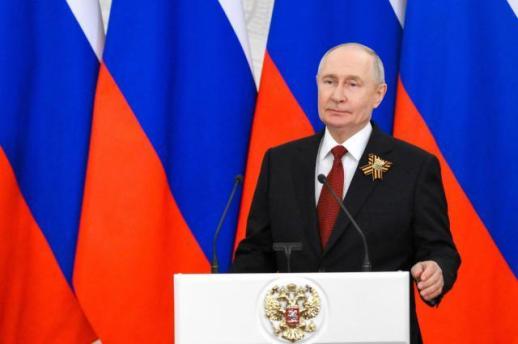 Putin's Visit to China Nears Final Coordination, Expected on May 20 Russian President Vladimir Putin's upcoming visit to China is in the final stages of coordination. The Kremlin has announced that preparations for the visit are nearly complete, and the South China Morning Post (SCMP) reports that Putin is expected to visit Beijing for a one-day trip on May 20. On May 14, Dmitry Peskov, the Kremlin spokesperson, stated during a briefing that the date of Putin's visit would be announced very soon. He noted, "The visit is in preparation, and I can say that the preparations are already complete. Only final touches remain. It will happen very soon." While the Kremlin has not disclosed a specific date for the visit, SCMP cited multiple sources indicating that Putin is scheduled to visit Beijing next week, with May 20 being the anticipated date. This visit is particularly noteworthy as it follows President Donald Trump's trip to China. Trump visited China from May 13 to 15 to discuss trade, the Iran conflict, and Taiwan issues with Chinese President Xi Jinping. TASS previously reported that Putin is expected to travel to Beijing shortly after Trump's visit. If Putin's trip to China proceeds as planned, key topics for discussion are likely to include the Ukraine war, the situation in the Middle East, and issues related to energy and trade cooperation. Amid prolonged Western sanctions, Russia aims to expand its economic and diplomatic collaboration with China. Meanwhile, China seeks to maintain strategic cooperation with Russia while managing its relationship with the United States.* This article has been translated by AI. 2026-05-15 15:09:00
 -
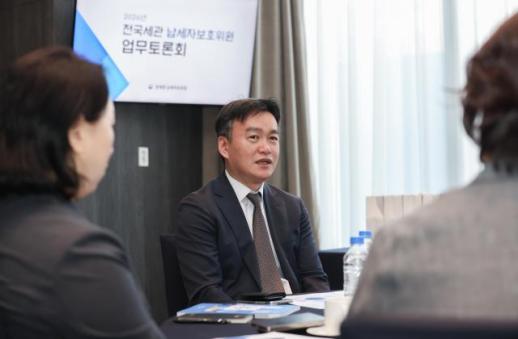 Lee Jong-wook Appointed as New Commissioner of the Korea Customs Service Lee Jong-wook has been appointed as the new commissioner of the Korea Customs Service, recognized as a customs expert with extensive practical experience. Born in 1974 in Sangju, North Gyeongsang Province, Lee graduated from Yonsei University with a degree in economics and completed a master's degree in public administration at Rutgers University in the United States. He entered public service after passing the 43rd National Civil Service Examination. Throughout his career, he has held various positions, including director of the Export-Import Logistics Division, director of the Creative Planning and Finance Division, director of Human Resources Management, and director of Customs Planning. He also served as the head of the Incheon Customs Port Inspection Bureau, director of the Examination Bureau, director of the Customs Bureau, Planning and Coordination Officer, and director of the Investigation Bureau. While serving as the director of the Investigation Bureau, he led the newly established Special Investigation Team for Trade Security at the headquarters. He was appointed as the deputy commissioner of the Korea Customs Service in October of last year and has now been promoted internally to commissioner. Lee is the fifth internal appointment to the position of customs commissioner, following former commissioners Sung Yun-kap in 2005, Cheon Hong-wook in 2016, Noh Seok-hwan in 2020, and Lee Myung-gu in 2025. Lee Gyu-yeon, senior presidential secretary for public relations, praised Lee, stating, "He is a seasoned bureaucrat who has held key positions, successfully uncovering large-scale illegal circumvention of exports and jointly cracking down on significant amounts of narcotics with the Thai government. He is well-suited to support companies' trade and investment activities while preventing customs violations that threaten public safety." ◇ Profile △ Born in 1974 △ Graduated from Yonsei University with a degree in economics △ Master's degree in public administration from Rutgers University △ Passed the 43rd National Civil Service Examination △ Former director of the Creative Planning and Finance Division at the Korea Customs Service △ Former director of Human Resources Management at the Korea Customs Service △ Former director of Customs Planning at the Korea Customs Service △ Former head of the Incheon Customs Port Inspection Bureau △ Former director of the Examination Bureau at the Korea Customs Service △ Former director of the Customs Bureau at the Korea Customs Service △ Former Planning and Coordination Officer at the Korea Customs Service △ Former director of the Investigation Bureau at the Korea Customs Service △ Former deputy commissioner of the Korea Customs Service* This article has been translated by AI. 2026-05-15 15:06:00