SEOUL, May 15 (AJP) - Since a 1992 Supreme Court ruling effectively restricted tattoo procedures to medical professionals, South Korea’s tattoo industry has operated in a legal gray zone. Under the newly passed Tattooist Act, the country is now building its first national licensing and safety framework for non-medical tattoo practitioners.
The law, overseen by the Ministry of Health and Welfare, passed the National Assembly on Sept. 25, 2025 and is scheduled to take effect two years after promulgation, with enforcement expected around September or October 2027.
Despite the legal restrictions, tattoo culture and cosmetic tattoo procedures have expanded rapidly in South Korea alongside the rise of K-beauty and Korean cultural exports. Industry estimates suggest that around 350,000 people were engaged in tattoo-related work in Korea as of 2021, while the Korea Tattoo Association estimates the domestic tattoo market at roughly 1 trillion won, ($667 million).
An anonymous tattoo artist said one of the biggest changes under the new system would be the ability to work more openly without fear of legal uncertainty.
“For many tattoo artists, being able to work in our own studios without constantly worrying about legal risks is probably the biggest change,” the artist said.

Under the new law, non-medical tattoo practitioners who pass a national licensing examination and obtain government certification will be permitted to legally perform tattoo procedures. The framework also introduces hygiene and safety requirements including sterilization standards, single-use needles, infectious waste disposal rules, mandatory safety education and liability insurance requirements for tattoo businesses.
Tattoo studios will be required to register with local governments, while tattoo artists must maintain records related to procedures, pigments and side effects. Tattooing minors without parental consent and performing tattoo procedures outside registered workplaces will also be prohibited.
The Ministry of Health and Welfare and tattoo-related organizations participated in a consultation meeting attended by more than 40 industry groups on Tuesday, officials discussed licensing examinations, hygiene standards, temporary business registration measures and safety management rules for tattoo facilities.
“The purpose of the Tattooist Act is to allow non-medical tattoo practices while ensuring public health and hygiene management,” Vice Health Minister Kim Han-sook said during the meeting, according to the ministry.
As the government prepares subordinate regulations for the new framework, industry groups are also moving to establish formal educational standards for tattoo practitioners.

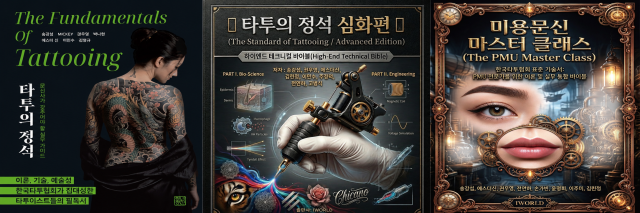
On Friday, the Korea Tattoo Association held a publication event in Seoul for three standardized tattoo textbooks covering advanced tattoo techniques, cosmetic tattoo procedures, hygiene management and safety practices. The association said it had officially submitted the books a day earlier to the health ministry, the Korea Health Personnel Licensing Examination Institute and the Ministry of Food and Drug Safety as reference materials for future licensing, regulatory and safety policies.
The association described the publication effort as part of a broader push to move the industry away from informal apprenticeship-style training practices that had long dominated the sector amid the absence of official standards.
“For a long time, the industry remained outside institutional systems,” Chairman of Korea Tattoo Association, Song Kang-seop said in a statement. “Submitting standards created by the industry itself to government authorities is, in a sense, the first step toward standing before the government with confidence.”

Copyright ⓒ Aju Press All rights reserved.