
Journalist

Jeon Woon
-
 Is a Korean Won Stablecoin Possible? The 21st-century global economy is currently engaged in two simultaneous currency wars. One is the visible battle over interest rates and exchange rates, while the other is a quiet struggle for dominance in digital currencies on the blockchain. Just as countries with oil once shaped the global order, nations that control digital payment networks and stablecoins are poised to lead the future financial landscape.Recently, a policy symposium at the Global Finance Conference in Seoul symbolized this shift in the era. The forum, themed "The Spread of Tokenized Securities (STO) and Stablecoins and Changes in Financial Economics," was not merely a discussion on virtual assets; it was a national strategy meeting questioning the future viability of Korean finance.Professor Lee Jong-seop's remarks were particularly significant. He asserted, "The discussion on whether to adopt stablecoins is already outdated." He warned that countries that delay action risk becoming mere consumers in a global order that is already in motion.Currently, the market capitalization of dollar-based stablecoins has surpassed $300 billion. While this figure is still small compared to the global foreign exchange market or the U.S. Treasury market, its growth rate outpaces traditional financial systems.Importantly, it is not just about the numbers. Dollar stablecoins have evolved into a core infrastructure for international remittances, online payments, and digital asset transactions.The United States does not view this as merely a private industry. Through dollar-based stablecoins, it aims to establish a new Bretton Woods system for the digital age. Just as the petrodollar era was initiated by tying oil payments to the dollar, there are analyses suggesting that the U.S. seeks to create a digital dollar system on the blockchain.Tokenization of U.S. Treasury bonds is particularly symbolic. If U.S. Treasury bonds are traded in real-time on the blockchain, allowing global investors to access U.S. assets through dollar stablecoins, the dollar-centric structure in the digital financial market will be further reinforced. Ultimately, stablecoins are not just coins; they represent a new technological facade of U.S. financial hegemony.The challenge lies for countries like South Korea, which are not reserve currency nations. If global digital payments are restructured around dollar stablecoins, the international influence of the won could diminish significantly. As Korean companies and consumers engage more in the global digital market, they may find themselves increasingly dependent on the dollar ecosystem.This is why Professor Lee emphasizes the need for a Korean model. His core argument is straightforward: create an "expansive structure" that relies on central bank digital currencies (CBDCs) and bank deposit tokens, allowing the private sector to develop various won-based stablecoin services.This model is meaningful because it reflects the realities of the Korean financial market. South Korea is neither a dollar hegemon like the U.S. nor a country with a strong capital control system like China. However, it possesses world-class IT infrastructure, a mobile payment culture, and a robust content industry.Ultimately, South Korea's battleground is not "reserve currency" but the "digital ecosystem." This is where the significance of K-content emerges. BTS, K-pop, webtoons, games, dramas, and online fandoms have already formed a global consumption ecosystem that transcends borders.Young generations around the world are consuming Korean content and connecting with Korean culture. If this consumption flow connects with a won-based digital payment network, the situation could change dramatically.For instance, if global fans use won-based stablecoins for music purchases, concert tickets, webtoon payments, and game item transactions, it would expand the digital financial ecosystem beyond simple content exports. This could lead to increased demand for the won and a greater need for won-based deposits and Treasury bond collateral in the long run.This structure could also provide new vitality to the Korean capital market. Stablecoins fundamentally require collateral assets to maintain stability, necessitating safe and liquid assets.As a result, demand for deposits, Treasury bonds, and high-quality short-term bonds is likely to increase. This could enhance the liquidity and depth of the entire Korean financial market, positively impacting the internationalization of the Treasury bond market and the activation of the tokenized securities (STO) market.The Global Finance Conference policy symposium is significant not just as an academic event but as a signal of a shift in Korean financial policy direction. Just a few years ago, Korean financial authorities tended to view virtual assets solely as speculative targets. Now, the world is beginning to recognize stablecoins as the next-generation financial infrastructure.Major financial hubs such as the U.S., Europe, Singapore, Hong Kong, and the UAE are moving toward a dual approach of regulation and nurturing. The strategy is not to block digital assets but to bring them into the regulatory framework.In the U.S., there is an effort to strengthen digital dollar hegemony through dollar stablecoins, while Europe aims to establish a euro-based digital payment ecosystem. Singapore is pursuing a global digital asset hub strategy, and Hong Kong is positioning itself as a digital financial gateway connected to mainland China.If South Korea falls behind, it risks losing not just its blockchain industry competitiveness but also the possibility of being relegated to a peripheral country in future global payment networks and capital flows.The most significant implication of this forum is that stablecoins are now being viewed as a "financial order issue." Stablecoins are no longer just cryptocurrencies; they have become part of a massive structural change connected to international finance, payment systems, Treasury markets, digital trade, and platform economies.Currently, stablecoins can be categorized into four main types:The first is fiat-backed, issued against U.S. dollars, Treasury bonds, or deposits. This type is the most stable and currently dominates the market.The second is crypto-backed, using assets like Bitcoin or Ethereum as collateral. While it has the advantage of decentralization, it suffers from high price volatility.The third is algorithmic, designed to maintain value by adjusting supply through algorithms. However, past large-scale collapses have raised trust issues.The fourth is linked to central bank digital currencies (CBDCs), based on the trust of central banks and connected to private payment systems.Most major countries are focusing on the first and fourth models. The U.S. is combining private stablecoins with the Treasury bond market, while China is building a state-controlled model centered around the digital yuan.The key takeaway for South Korea to benchmark is not technology but an "ecosystem strategy." South Korea lacks dollar hegemony like the U.S. and strong state control like China. Instead, it has strengths in content and platform competitiveness.Therefore, South Korea needs to build a unique model that integrates finance, culture, and platforms. This involves not just creating coins but connecting K-content consumption with digital payments and leading to innovations in tokenized securities and capital markets.The future of a Korean won stablecoin ultimately hinges on K-content and the platform economy.South Korea possesses world-class cultural content influence. K-pop, dramas, webtoons, and games have already shaped a global digital consumption culture. If a won-based digital payment system is integrated, South Korea could evolve from a mere content exporter to a digital cultural and financial platform nation.To achieve this, the role of policymakers is crucial.First, a clear regulatory framework must be established. Uncertainty poses the greatest risk. It is essential to quickly establish issuance criteria for stablecoins, collateral regulations, and consumer protection systems.Second, a collaborative ecosystem among banks, fintech companies, and content platforms should be fostered. The finance and cultural industries must work together to create synergy.Third, capital market innovation linked to the tokenized securities (STO) market is necessary. If Treasury bonds, corporate bonds, and content IP can be tokenized, the structure of the Korean capital market itself could change.Fourth, international cooperation strategies are also important. Particularly, there is a need for strategies to expand won-based digital payment networks in the Asian market.Ultimately, stablecoins are not just cryptocurrencies. They represent a question of which country will dominate the platform in the future digital civilization order.South Korea stands at a critical crossroads. If the new experiment connecting K-content and digital finance succeeds, the won could evolve from a minor non-reserve currency to a significant connecting currency in the Asian digital economy. 2026-05-17 07:31:52
 -
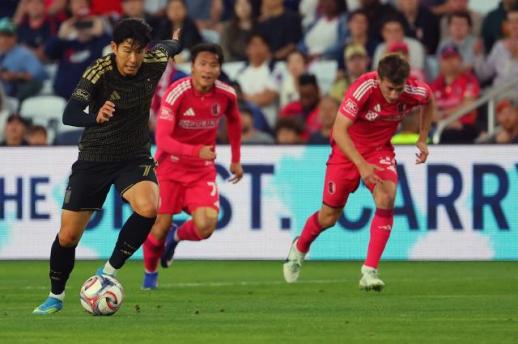 Son Heung-min heads to fourth World Cup as Korea names 26-man squad SEOUL, May 17 (AJP) - Son Heung-min will lead South Korea to his fourth and possibly final World Cup after head coach Hong Myung-bo named the 26-man squad for the 2026 tournament on Saturday. Hong announced the roster in Seoul, selecting three forwards, 10 midfielders, 10 defenders and three goalkeepers for the June 11-July 19 World Cup in North America. South Korea competes in Group A against Czechia, South Africa and Mexico, with all three group-stage matches to be played in Mexico. Son, now with Los Angeles FC, will become only the fourth South Korean player to appear in four World Cups, joining Hong Myung-bo, Hwang Sun-hong and former goalkeeper Lee Woon-jae. The 33-year-old previously played at the 2014 Brazil, 2018 Russia and 2022 Qatar tournaments. Key European-based players Lee Kang-in of Paris Saint-Germain and Kim Min-jae of Bayern Munich were also included, along with Mainz midfielder Lee Jae-sung and Feyenoord midfielder Hwang In-beom, who is recovering from an ankle injury. Besiktas forward Oh Hyeon-gyu earned his first World Cup call-up after serving as a reserve player at the 2022 tournament, when Son was recovering from a facial fracture but ultimately played all four matches in Qatar wearing a protective mask. Jens Castrop of Borussia Monchengladbach also made history as the first foreign-born player of mixed heritage to be named to South Korea’s World Cup squad. The 22-year-old was born to a Korean mother and German father. Gangwon FC defender Lee Gi-hyuk was among the surprise selections. The left-footed center back, who has only one senior cap, was chosen to help fill the gap left by injured defender Kim Ju-sung. Veteran goalkeepers Kim Seung-gyu and Jo Hyeon-woo were both included, continuing their long-running competition for the No. 1 spot. Kim, 35, is the oldest player in the squad, while Castrop and Stoke City midfielder Bae Jun-ho, both 22, are the youngest. Hong also named three “training partners”: Jeonbuk midfielder Kang Sang-yoon, Jeonbuk defender Cho Wi-je and FC Seoul goalkeeper Yoon Ki-wook. South Korea will open its campaign against Czechia in Guadalajara on June 11, followed by Mexico on June 18 and South Africa in Monterrey on June 24. The team will depart for Salt Lake City on Monday for altitude training before playing friendlies against Trinidad and Tobago and El Salvador. South Korea will then move to its base camp in Guadalajara on June 5. Hong said the expanded 48-team tournament, staged across three countries for the first time, would test teams’ ability to cope with travel, altitude and climate conditions. “We will try to turn these challenges into opportunities to pull off surprises,” Hong said. “We have always been underdogs at World Cups, and this year’s tournament will be a good opportunity for us to stage an upset.” 2026-05-17 06:16:37
 -
 China and U.S. Reach Preliminary Agreement on Tariff Reductions The Chinese Ministry of Commerce announced that the United States and China have reached a preliminary agreement on tariff reductions and the easing of non-tariff barriers during their recent summit. According to Yonhap News on May 16, a ministry spokesperson stated in a press release posted on their website that both countries achieved initial results in economic and trade discussions during high-level talks held on May 13 in South Korea and the summit in Beijing on May 14. The spokesperson noted, "Both sides agreed to continue implementing previous negotiation outcomes and have formed a positive consensus regarding tariff measures. They will discuss tariff reductions on key products through a trade committee and have agreed in principle to reduce tariffs on products of mutual importance on an equal scale." The spokesperson added that the two nations aim to address non-tariff barriers and market access issues for certain agricultural products and to promote substantial progress. Additionally, the U.S. has committed to actively addressing China's long-standing concerns regarding automatic seizures of dairy and seafood products, the export of Chinese bonsai to the U.S., and the recognition of certain regions in Shandong Province as free from avian influenza. In turn, China will work to resolve U.S. concerns regarding the registration of beef facilities and the export of poultry from certain states to China. The spokesperson also mentioned, "Both countries have agreed to promote bilateral trade expansion in agriculture and other sectors through mutual tariff reductions on a specified range of products." Furthermore, the spokesperson explained that both nations have developed plans for China to purchase aircraft from the U.S. and for the U.S. to ensure the supply of aircraft engines and parts to China, agreeing to continue cooperation in these areas. The spokesperson concluded, "Both sides are currently negotiating the details of the outcomes and are working to solidify and effectively implement the consensus established by the leaders, thereby injecting more certainty and stability into future U.S.-China economic and trade cooperation and the global economy." On May 13, President Donald Trump visited China for the first time in nine years, where he held talks and discussions with President Xi Jinping before departing on May 15 after a three-day visit.* This article has been translated by AI. 2026-05-17 06:09:08
 -
 India Day Celebrated on the Han River: A Cultural Exchange May brought an early summer to the Han River. Under a clear blue sky without a hint of fine dust, brilliant sunlight danced on the silver waves. That afternoon, fresh green buds painted the Yeouido riverside in vivid colors, while an unfamiliar scent wafted through the river breeze—an aromatic blend of saffron, turmeric, and cardamom, a smell rarely encountered in the heart of Seoul.People paused, their ears perked up, and they found themselves walking toward the source of the enticing aroma.This was the inaugural 'India Day' event organized by the Indian Embassy in South Korea. Booths lined both sides of the venue, symbolizing India's 28 states. Cultures from North and South India, as well as from the eastern and western regions, were showcased along the riverside. Saffron, cobalt blue, crimson, and golden fabrics fluttered in the May breeze, while traditional dances and songs performed by Indians from various regions filled the stage.As attendees followed the scent of spices, they soon found themselves clapping along to the unfamiliar rhythms.Gokarnal Das, the Indian Ambassador to South Korea, joked, "We specially ordered the weather from India for today." Indeed, the riverside in Yeouido felt more like a festive square in an Indian city than a part of Seoul. People arrived on bikes, couples strolled with their dogs, and families lined up for henna experiences, mingling naturally under the tents.However, the significance of the Han River on this day cannot be fully captured by the aroma of spices or the vibrant dances.India is home to 1.47 billion people, representing a diverse tapestry of cultures. It is not a monolithic nation; it comprises 28 states, hundreds of tribes, dozens of official languages, and a civilization with thousands of years of history. Hinduism, Islam, Buddhism, and Sikhism all have roots in this land, which is home to one of the world's oldest urban civilizations.How have we understood such a country until now?Curry and yoga. Bollywood and IT developers. For a long time, this has been the extent of how Korean society has engaged with India. Conversely, for Indians, Korea has been synonymous with Samsung, Hyundai, and K-pop. The two great civilizations have reduced each other to a few keywords over the years.This disparity is reflected in numbers. Approximately 18,000 Indians reside in South Korea, while the number of Koreans living in India is even lower. Although trade has rapidly expanded, there remains a significant gap in language and talent to truly understand each other. The recent Korea-India summit, which had to rely on double interpretation due to the absence of a Hindi interpreter, highlights this reality. While the economies have already shaken hands, the people and cultures have yet to exchange a proper greeting.As the global balance of power shifts, India is no longer a distant land.Emerging as a strategic counterbalance between the United States and China, India is the world's most populous country and a key market for Korean companies over the next decade. Geopolitically and economically, India has become a crucial partner for Korea. However, true partnership cannot be built solely on agreements and trade statistics. It requires an understanding of each other's histories, sharing meals, and experiencing each other's rhythms.Thus, the scenes along the Han River that day created memories that will last longer than any diplomatic document.Citizens gathered in the shade of trees, listening to the sounds of traditional Indian instruments. Children widened their eyes at the unfamiliar scent of spices. Young couples laughed as henna designs were drawn on their hands. A middle-aged man fumbled through a conversation with an Indian booth operator while savoring a plate of biryani. These moments etched a deeper connection between the two nations than any official statement could.The initial encounters between civilizations are often simple. They begin with smells, sounds, tastes, and gestures. A bowl of curry can bridge gaps more effectively than grand declarations, and a hand drawing henna can build connections more meaningfully than a handshake between leaders.Ambassador Gokarnal Das remarked, "As the saying goes, when hearts connect, today’s gathering symbolizes the unity of Korean and Indian cultures." Kwak Young-gil, chairman of the Aju Media Group, added, "This is not just a cultural event; it is a moment for both countries to understand each other's histories and cultures and to forge future innovations and friendships together."The Han River is inherently an open space. It is a place where anyone can pass through, linger, and mingle. It is not just the river of Seoul citizens but belongs to everyone who traverses this city. Symbolically, on that open riverside, Seoul and Delhi, Busan and Mumbai, kimchi and curry, K-pop and Bollywood flowed side by side.Perhaps these two civilizations are just beginning to discover each other. Some may say it is too late. However, considering the day when the child who first paused to smell the spices on the Han River grows up and thinks about visiting India, today may not be such a late start after all.* This article has been translated by AI. 2026-05-17 06:07:36
 -
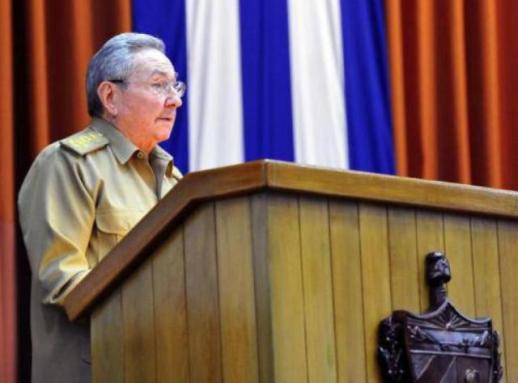 U.S. Targets Raúl Castro's Financial Network in Cuba The U.S. government is reportedly preparing to charge Raúl Castro, the 94-year-old former First Secretary of the Communist Party of Cuba, as attention turns to GAESA, the military-run state enterprise that controls much of Cuba's economy. GAESA, which Raúl Castro helped establish, monopolizes Cuba's internet services and operates around 100 hotels, leading to concerns about the privatization of the economy. According to reports from the New York Times and CNN on May 15, GAESA was founded in 1995 to strengthen Cuba's defense sector during a time of economic turmoil following the collapse of the Soviet Union. At that time, Raúl, then Minister of Defense, persuaded his brother Fidel Castro to allow the military to create a company to manage economic interests, a move aimed at addressing challenges such as paying soldiers' salaries. As Cuba's economy began to recover in the late 1990s, GAESA expanded its influence. While the military initially reinvested GAESA's profits into public services like hospitals, education, and food distribution, the New York Times now characterizes GAESA as a tool for consolidating power within the Castro family. Today, GAESA has transformed into a major conglomerate, controlling 40% to 70% of the Cuban economy. Through its intermediary company CIMEX, a state-owned import-export firm, GAESA operates Cuba's largest private bank, Banco Financiero Internacional, as well as the country's sole internet service provider, hundreds of gas stations, and supermarkets. It also directly manages numerous travel agencies and hotels. However, GAESA's financial status remains opaque, with no records in government budgets despite being a military entity. A former government auditor who served for 14 years was reportedly fired in 2024 after stating he had no knowledge of GAESA's finances. The New York Times reported that GAESA is controlled by the Castro family, with General Alberto Rodríguez-Calleja, Raúl Castro's son-in-law, managing it from 2011 until his death in 2022. General Ania Guillermina Lastres Morera has since taken over, reportedly having connections with Raúl Castro's grandson, Raúl Guillermo Rodríguez Castro. Flight records from 2024 indicate that the two traveled together on a private jet to Panama. Guillermo Castro was part of the Cuban delegation that met with U.S. Secretary of State Marco Rubio earlier this year, alongside Oscar Pérez-Oliva Fraga, the great-grandson of the Castro brothers. CNN noted that when Raúl Castro resigned as First Secretary of the Communist Party in 2021, it seemed to mark the end of 60 years of Castro family rule, but many Cubans still believe Raúl wields "shadow power." The U.S. State Department imposed sanctions on GAESA on May 7, aiming to cut off financial resources for the Castro family and military elites. The sanctions freeze GAESA's assets in the U.S. and prohibit transactions between GAESA and U.S. citizens, as well as any transactions involving U.S. territory. The State Department indicated that additional measures would be implemented in the coming weeks. CBS reported on May 15 that the U.S. government is preparing to charge Raúl Castro in connection with the 1996 shooting down of four aircraft operated by the humanitarian group Brothers to the Rescue. 2026-05-17 05:16:23
 -
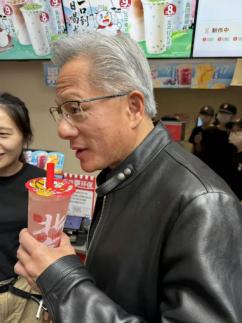 NVIDIA CEO Jensen Huang Enjoys Street Food in Beijing, Eric Trump Visits Great Wall Jensen Huang, CEO of NVIDIA, accompanied President Donald Trump on his recent trip to China and took the opportunity to explore local street food in Beijing. On May 15, videos and photos surfaced on Chinese social media platforms, including Weibo, showing Huang interacting with residents in the historic hutong area of Nanluoguxiang. Despite the sweltering heat, with temperatures nearing 30 degrees Celsius, he donned his signature black leather jacket while sampling traditional fermented soybean drink, Douzhi (豆汁). He also visited the renowned Beijing restaurant, Fangzhuang 69, known for its authentic zhajiangmian (noodles with soybean paste), and purchased a peach drink from the budget beverage brand, Mishi Bingcheng, priced at 8 yuan (approximately $1.20). Local media reported that the drink is being heavily promoted by Mishi Bingcheng under the slogan "Pick of the Big Shots," leading to high sales. Huang has consistently made headlines for his interactions with locals during his visits to China. This year alone, he has traveled to China more than four times, previously dining on hot pot in a restaurant in Shenzhen and taking photos with staff, as well as visiting a traditional market in Shanghai to enjoy street food. Meanwhile, on the same day, Eric Trump, the son of President Donald Trump, and his wife Lara gained attention online for a commemorative photo taken at the Great Wall of China. After completing their itinerary in China, Lara shared a photo on her social media, expressing, "It was an honor to share such an unforgettable trip together." 2026-05-17 00:04:39
 -
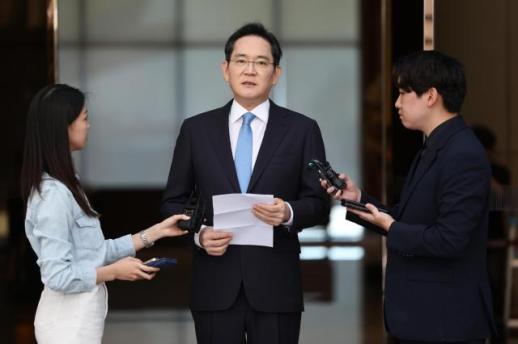 Samsung Chairman apologizes for labor standoff as tech giant agrees to resume talks SEOUL, May 16 (AJP) - Samsung Electronics Chairman Lee Jae-yong issued a rare public apology on Saturday regarding the ongoing labor dispute that has threatened a major disruption at the world’s largest memory chipmaker, just as management and labor groups agreed to return to the negotiating table. Returning to South Korea via Gimpo Business Aviation Center from an overseas business trip, Lee directly addressed the escalating tensions that have brought the company to the brink of a historic work stoppage. "I sincerely apologize to our customers worldwide and to the public for causing concern over our internal company matters," Lee told reporters, bowing deeply. "To our labor union and the members of the Samsung family: we are one body, one family. Now is the time to wisely gather our strength and move forward in the same direction." Lee’s intervention appeared to act as a catalyst for a sudden diplomatic breakthrough, coming less than 24 hours after an unprecedented but inconclusive face-to-face meeting between the union and semiconductor division chief Jun Young-hyun. Following the chairman's remarks, both Samsung management and the union accepted a proposal from the National Labor Relations Commission to resume physical negotiations on Monday, May 18. In a major concession aimed at breaking the deadlock, management also agreed to a union demand to replace its chief negotiator with the top human resources executive of the Device Solutions (DS) semiconductor division. Despite the agreement to resume talks, the dispute remains highly volatile as the May 21 strike deadline looms. While the overarching joint labor coalition has threatened an 18-day general strike if its demands for transparent profit-sharing incentives are not met, the labor front itself is showing unprecedented internal cracks. Over the past week, thousands of workers have reportedly resigned from the main unions, fueled by sharp internal criticism from the company's finished-goods divisions that the current negotiations are disproportionately favoring the semiconductor sector. With direct financial and indirect supply chain risks estimated by industry analysts to reach as high as 100 trillion won ($74 billion) in the event of a prolonged shutdown, the war of nerves between Samsung's leadership and its workforce is expected to intensify over the weekend. Observers note that the newly restructured management team and union leaders will likely engage in frantic, behind-the-scenes maneuvering to draft a viable compromise before Monday's formal session begins. 2026-05-16 23:11:06
 -
 Samsung's Lee Jae-Yong Apologizes Ahead of Union Strike, Negotiations Resume May 18 Lee Jae-Yong Apologizes, "It's All My Fault"...Negotiations Resume May 18 Samsung Electronics Chairman Lee Jae-Yong publicly apologized to the nation and customers just five days before a planned strike by the company’s labor union. The company and the union have agreed to resume negotiations on May 18. Upon arriving at the Seoul Gimpo Business Aviation Center on May 16, Lee stated, "I sincerely apologize to our global customers for the anxiety and concern caused by our internal issues," adding, "I bow my head in apology to the people of our nation who always support, love, and challenge Samsung." During his apology, Lee bowed his head three times. He emphasized, "I will take the brunt of the harsh winds and take full responsibility. Let’s do our best so that we can all be proud to be part of Samsung." Following this, the company and the union agreed to hold a second post-adjustment meeting on the morning of May 18 at the Central Labor Relations Commission in Sejong City. The meeting will be directly overseen by the commission's chairperson. Previously, Samsung Electronics and the union engaged in marathon negotiations mediated by the commission from May 11 to early May 13. However, they failed to reach an agreement on performance bonus criteria, leading to a breakdown in talks. The commission had requested the two parties to reconvene on May 16, but the union declined, resulting in the cancellation of that meeting.* This article has been translated by AI. 2026-05-16 21:28:38
 -
 Heizee Explains Family Trip Without Second Son Due to Ongoing Treatment YouTuber Heizee, whose real name is Kang Hye-jin, explained why her family traveled without her second son. On May 16, a video titled "The Story You Asked About: Why My Second Son Wasn't with Us on Our Trips" was posted on her YouTube channel, "Hyejin's." In the video, Heizee shared, "Many people have been curious about Seung-yu, and I often receive questions like, 'Why isn't Seung-yu joining you on your trips?'" She continued, "Seung-yu has been undergoing treatment for otitis media for four months now, following a cold in January. His symptoms can worsen with even slight changes in his condition, so we have to be cautious about going out depending on how he feels." She added, "While we prefer to spend time together as a family of four, Seung-yu's health and condition are our top priority, which sometimes means he cannot join us." Heizee noted that their recent trip to Busan was originally planned for two nights and three days but was shortened to one night and two days due to Seung-yu's condition. "I know many people enjoy seeing our family together, and I will continue to share more of our daily lives as a family of four in the future," she said. Heizee married Park Chung-hyuk, the CEO of Kidsworks, in November 2018.* This article has been translated by AI. 2026-05-16 20:48:57
 -
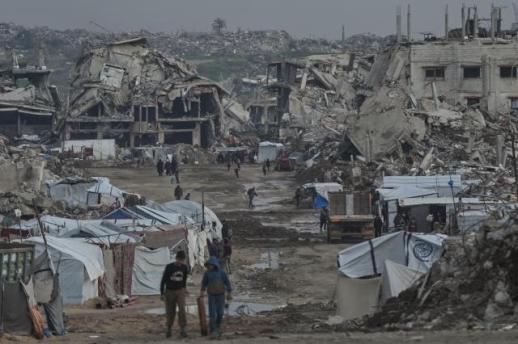 Israeli Military Announces Elimination of Hamas Leader Izz al-Din al-Hadad The Israeli military announced on May 16 that it has eliminated Izz al-Din al-Hadad, a leader of Hamas and head of its military wing, the Izz ad-Din al-Qassam Brigades, in the Gaza Strip. According to Yonhap News, the Israeli military stated that al-Hadad was killed in a targeted airstrike carried out the previous night, describing him as one of the architects of the brutal massacre that occurred on October 7. Al-Hadad took over as the military chief and leader of Hamas in Gaza following the assassination of former Hamas leader Mohammed Sinwar in May of last year. The Israeli military emphasized that al-Hadad had been actively rebuilding the military capabilities of the terrorist organization and planning numerous attacks targeting Israeli civilians and military personnel until recently. Additionally, the military noted that al-Hadad had been responsible for detaining and managing many Israeli hostages throughout the conflict, employing tactics that used hostages as human shields. Earlier, Israeli Prime Minister Benjamin Netanyahu and Defense Minister Yoav Gallant confirmed that targeted strikes had been conducted against al-Hadad in Gaza City, the largest city in the Gaza Strip.* This article has been translated by AI. 2026-05-16 20:36:55