
Journalist

Jeon Woon
-
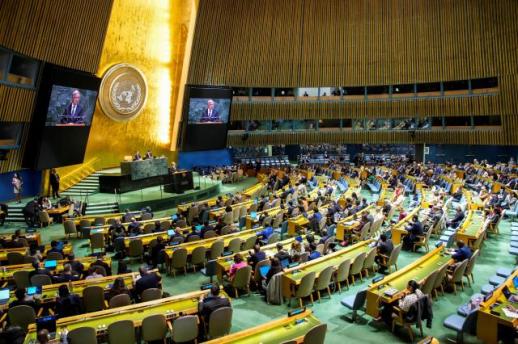 NPT talks collapse again over nuclear disputes involving N. Korea, Iran SEOUL, May 23 (AJP) - The 11th Review Conference of the Treaty on the Non-Proliferation of Nuclear Weapons (NPT) ended Friday without adopting a consensus document, as member states failed to narrow differences over North Korea, Iran and nuclear disarmament. The four-week conference, held at the U.N. headquarters in New York, had been expected to produce a final document on strengthening the NPT regime. But negotiations broke down over regional nuclear threats and how to implement disarmament commitments. It was the third straight failure after similar breakdowns in 2015 and 2022, raising concerns about the credibility of the NPT system. The latest meeting had been expected to face difficulties from the outset, as it opened amid heightened international tensions, including the U.S.-Iran war. Vietnamese Ambassador to the U.N. Do Hung Viet, who chaired the conference, announced late Friday that member states had failed to reach consensus on the final document. He later told a news conference that “no one blocked consensus,” but said “a very important reason” for the failure was a provision in the final draft stating that Iran “can never seek, develop or acquire any nuclear weapons.” Negotiators worked until the final hours, preparing a fourth revised draft and distributing it to delegations early Saturday, but still failed to bridge differences. References to North Korea’s nuclear program were removed entirely during the revision process. Kim Sang-jin, South Korea’s deputy permanent representative to the U.N., expressed deep regret that the document failed to include even a brief message on North Korea. “It should have been clearly stated that North Korea can never have the status of a nuclear-weapon state under the NPT regime,” Kim said. Viet explained that references to specific regional issues, including North Korea and Iran, had to be removed to secure space for the NPT’s three main pillars — disarmament, nonproliferation and the peaceful use of nuclear energy. Attempts to include stronger language on nuclear-weapon states’ disarmament obligations also faced resistance, while a call for follow-up talks on the expired U.S.-Russia New Strategic Arms Reduction Treaty was left out of the final draft. Izumi Nakamitsu, the U.N. high representative for disarmament affairs, criticized nuclear-weapon states for demanding nonproliferation commitments from non-nuclear states while failing to meet their own disarmament obligations. The failure to reach consensus for a third consecutive review cycle is “a serious lesson that the entire international community must take to heart,” she said. 2026-05-23 14:10:17
 -
 Seoul's New Attraction: The 'Seoul Moon' Balloon Offers Unique City Views Seoul is a city that often requires its residents to look up. With towering buildings, complex roads, and people constantly on the move, there is little time for reflection. Whether navigating subway transfer corridors or waiting at crosswalks in the financial district, the city rarely allows for a moment of pause. In the center of Yeouido Park, a massive white balloon known as the 'Seoul Moon' momentarily shifts this familiar perspective. Adorned with the phrase 'SEOUL MY SOUL' and a smiling face, it resembles a city branding sculpture from afar, while up close, it evokes memories of amusement park rides. It appears lighthearted and whimsical—until the doors close. ▲ As the doors close, height takes precedence over scenery For those with a fear of heights, the 'Seoul Moon' serves as a small test before becoming a viewing platform. As the balloon slowly ascends, the heart reacts faster than the feet can feel the distance below. The seating area is donut-shaped, open on all sides, making the view both exhilarating and intimidating. No matter where one looks, the ground is visible, and the balloon sways slightly with the wind. Fear is omnipresent, equally distributed in all directions. As the cable loosens, Yeouido Park drifts further away. People, once clearly visible, shrink to mere dots below. While the sound of the wind fills the ears, the stunning view of Seoul momentarily fades from focus. The beauty is acknowledged, but fear takes precedence. Only upon reaching the maximum height does the view begin to register. The National Assembly and bridges over the Han River, along with cars on the roads, appear flattened like toys. What typically feels large and bustling from the ground seems surprisingly small and serene from above. The city itself hasn’t changed; only the perspective has. The 'Seoul Moon' is a tethered helium balloon that rises to a maximum height of 130 meters. Shaped like a full moon with a diameter of 22 meters, each ride lasts about 15 minutes from boarding to disembarking. Adult tickets cost 25,000 won. According to the Seoul Tourism Foundation, over 100,000 passengers have taken the ride, with approximately 44% being foreign visitors. Before boarding, German tourists Milita and Carsten shared that they discovered the 'Seoul Moon' through the travel app Klook and decided to visit Yeouido Park. Having arrived in Korea less than a day ago, their expectations were simple: "We want to look down at the buildings of Seoul from above." For first-time visitors to Seoul, this balloon offers a quick overview of the city. Before familiarizing themselves with the subway map or navigating the alleyways, they can gain a bird's-eye view of the entire city. ▲ After descending from the sky, the river awaits After descending from the sky, the next destination was the Han River Bus terminal in Yeouido. Upon boarding the boat, passengers initially settled inside. At the bow, people were already bustling about, taking photos and enjoying the breeze. Watching them through the glass, it was clear that everyone was savoring the moment in their own way, creating a beautiful scene. With the Han River as a backdrop, some passengers were dancing. Eventually, they ventured outside to take photos and feel the wind. Experiencing the river breeze directly was different from viewing it through glass. The wind was stronger and colder than expected. As the boat moved into the center of the river, Seoul unfolded on both sides. To the south, sleek, tall buildings lined the shore, while to the north, older residential areas and heavy apartment complexes stood in a row. This view revealed a side of Seoul that one would never encounter on the subway. As they watched the people outside, they soon became part of the scenery themselves. As the boat passed under the Jamsu Bridge, a sign reading '7.75m' caught their attention. While the concrete bridge loomed overhead, the boat glided beneath it without a hitch. Only the passengers felt the tension. The Han River Bus is a water transportation service connecting seven terminals, including Jamsil, Ttukseom, Okus, Apgujeong, Yeouido, Mangwon, and Magok. The standard fare is 3,000 won, with transfer discounts and climate-friendly card options available. Since its launch in September of last year, it has served over 270,000 passengers. Inu-rim, a resident of Yeouido, uses the Han River Bus as a practical means of transportation. He noted that the route from Apgujeong to Yeouido aligned perfectly with his needs. "It’s great to enjoy the Han River while getting home," he said, adding that while it’s not a daily commute, it’s a nice option for occasional experiences. Christel, visiting from Mexico, offered a succinct evaluation. "If you want to enjoy the scenery without rushing, this is the perfect boat for you." ▲ A time that becomes a landscape rather than a destination Seoul is a fast-paced city. Transfer times, traffic flow, office schedules, and smartphone notifications all synchronize with the rhythm of speed. Slowness is often categorized as inefficiency. However, the 'Seoul Moon' and the Han River Bus momentarily transform this inefficiency into a shared experience. One elevates people into the sky, making the city appear smaller, while the other carries them slowly across the river. There were moments when fear almost made one close their eyes or stay indoors. Had they done so, they would have seen nothing. In that brief time, Seoul became not a destination, but a landscape.* This article has been translated by AI. 2026-05-23 13:55:57
 -
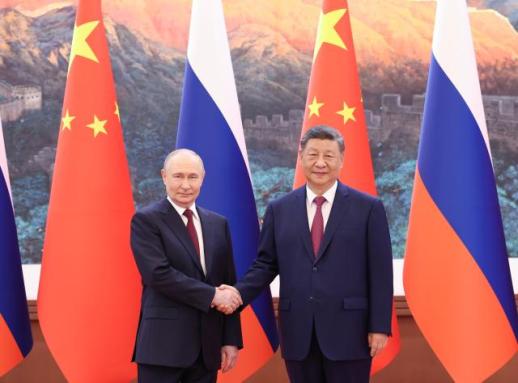 ASIA DEEP INSIGHT: Global order axis to move again as Xi heads to Pyongyang Beijing in May 2026 was no ordinary capital city. It had become a vast reception chamber where the currents of global power intersected and collided — a strategic stage upon which the outlines of a new international order were being tested. Within days, U.S. President Donald Trump and Russian President Vladimir Putin arrived in Beijing in succession. European leaders intensified contacts with China. Middle Eastern rulers and Central Asian heads of state also gravitated toward Beijing. The world, unmistakably, was turning eastward once again. This was not merely a sequence of diplomatic events. It was a historical signal — evidence that the world order forged over centuries since the Industrial Revolution is beginning to shift direction. For generations, London stood at the center of the world economy. Later, New York and Washington became the twin pillars of finance, military power, industry, and modern civilization itself. Yet as the mid-21st century approaches, the geopolitical and economic center of gravity is moving again — toward the Pacific Rim and the far eastern edge of Eurasia: Northeast Asia. At the center of that transformation stands China. China is now the world’s largest manufacturing nation, its largest exporter, and one of its biggest importers of crude oil. Its influence stretches across electric vehicles, batteries, rare earths, solar energy, drones, artificial intelligence infrastructure, and global supply chains. The reason world leaders continue to arrive in Beijing is ultimately simple: no major question involving energy, trade, manufacturing, logistics, or investment can now be addressed without China. The defining diplomatic image of May came immediately after Trump’s Beijing visit, when Putin arrived shortly thereafter. The spectacle of the leaders of the United States and Russia — the world’s two greatest military powers — traveling to Beijing in succession symbolized the transformation now underway in international politics. Chinese President Xi Jinping has constructed a layered and highly disciplined diplomatic strategy. With the United States, China competes fiercely while carefully managing the relationship to avoid outright rupture. With Russia, Beijing deepens strategic coordination without surrendering autonomy. China confronts Washington over tariffs, semiconductors, Taiwan, and artificial-intelligence supremacy, yet still seeks to preserve economic interdependence. At the same time, it expands energy, financial, and security cooperation with Moscow to counterbalance the U.S.-led order. What is emerging is, in effect, a “New Beijing System.” The war in Ukraine has accelerated this transformation. As Russia lost much of the European market under Western sanctions, it moved rapidly into China’s economic orbit. Russian oil and gas increasingly flow eastward. Settlement in yuan has expanded sharply. The “Power of Siberia” pipeline project is more than an energy venture; it is a geopolitical artery binding Russia and China into a new Eurasian economic axis. Yet beneath this partnership lies a quieter reality: Russia’s structural weakening. Putin still projects the image of a formidable strongman, but the prolonged war in Ukraine has steadily drained Russian national power. Population decline, industrial stagnation, sanctions, and technological isolation have undermined Moscow’s long-term capacity — particularly in the Russian Far East. Vladivostok, Khabarovsk, and Sakhalin increasingly appear less connected to Europe than to the economies of Northeast Asia. Chinese capital, logistics networks, manufacturing chains, and consumer markets have penetrated deeply into the region. Formally Russian territory, these areas are, economically speaking, becoming extensions of the broader Northeast Asian production system. In many respects, Russia’s Far East no longer resembles the frontier of a resurgent empire. It increasingly resembles the outer periphery of a China-centered economic sphere. The Middle East reveals a similar pattern. Iran, Saudi Arabia, and the United Arab Emirates now regard China as an indispensable customer. The United States still dominates the region militarily, but China has begun exercising influence through purchasing power rather than aircraft carriers. Iran, isolated by sanctions and geopolitical confrontation, has become increasingly dependent on Chinese demand for its oil exports. Russia faces a comparable predicament. With access to Western markets shrinking, Moscow has little choice but to lean on China’s vast consumer economy. This marks a profound transformation in the nature of global power itself. For decades, the United States shaped the world’s energy order through the dollar and naval supremacy. China, by contrast, is shaping geopolitics through market gravity. As the world’s largest manufacturing power and one of its largest consumer economies, China exerts strategic influence simply by buying. And it is precisely at this moment that the strategic significance of South Korea and Japan rises once more. In Northeast Asia, only Korea and Japan possess the economic and technological weight capable of balancing China. Japan retains world-class strengths in materials, components, precision engineering, and finance. South Korea commands leadership in semiconductors, batteries, AI servers, shipbuilding, and cultural industries. Should Seoul and Tokyo move beyond historical antagonism and deepen strategic cooperation, a new equilibrium could emerge in Northeast Asia. Washington clearly hopes for such an outcome. The United States alone cannot indefinitely bear the economic and strategic burden of containing China. Expanded Korea-Japan cooperation across supply chains, artificial intelligence, aerospace, nuclear energy, defense industries, and biotechnology could create a powerful new axis in the Indo-Pacific. The AI era, in particular, presents fresh opportunities for both nations. While China advances through sheer scale and speed, Korea and Japan possess advantages in ultra-precision manufacturing, advanced semiconductors, robotics, and high-end industrial technology. The concentration of industrial and technological power in Northeast Asia is no coincidence. Before the Industrial Revolution, Asia stood at the center of the global economy. China and India accounted for enormous shares of world GDP. The Silk Road and maritime trade routes flowed through Asian civilization. Only after Britain’s industrial ascent did global dominance migrate westward toward Europe and eventually the United States. Now the historical tide is turning again. China is the world’s manufacturing giant. South Korea is the global leader in advanced memory semiconductors. Japan remains a superpower in precision manufacturing and robotics. The strategic heart of the global AI, semiconductor, and industrial supply chain system is increasingly converging in Northeast Asia. History does not move in straight lines. It moves in cycles. The center of world power that shifted westward after the Industrial Revolution is gradually returning eastward once again. Yet the emerging order is anything but simple. The United States remains the world’s dominant military and financial power. China commands manufacturing capacity, supply chains, and market scale. Russia, though weakened, still possesses nuclear weapons and immense natural resources. Europe, despite economic stagnation, retains formidable technological and financial depth. In this increasingly complex geopolitical environment, South Korea can no longer survive through the traditional diplomacy of a middle power alone. Korea must begin to view itself differently — as a strategic nation possessing critical leverage in semiconductors, AI, batteries, shipbuilding, nuclear power, and cultural influence. At the same time, Seoul must broaden its strategic partnerships with emerging powers such as India, Brazil, Saudi Arabia, the UAE, and Türkiye. India is poised to become the world’s largest population center and a major AI and technology power. Brazil remains a resource and agricultural giant. Türkiye occupies a vital geopolitical crossroads connecting Europe, the Middle East, and Central Asia. Saudi Arabia and the UAE are rapidly repositioning themselves through investments in AI, smart cities, hydrogen economies, and advanced infrastructure. The world is no longer moving toward a simple U.S.-China bipolar structure. It is evolving toward a multipolar order. And at the center of that transformation lies Northeast Asia. Seoul, Tokyo, and Beijing are emerging as the critical theaters of future economic, technological, and geopolitical competition. May 2026 in Beijing was heated not merely by diplomacy, but by the deeper currents of history itself. And now the world is watching another possible development: Xi Jinping’s potential visit to Pyongyang. As North Korea and Russia deepen military and strategic ties in the wake of the Ukraine war, Beijing is unlikely to tolerate Pyongyang drifting too far into Moscow’s orbit. For China, North Korea is not simply a neighboring state. It is a strategic buffer bordering the American alliance system and a central pillar of Beijing’s influence in Northeast Asia. A future visit by Xi to Pyongyang would therefore carry significance far beyond ceremonial diplomacy. It would signal that Beijing still intends to shape the Korean Peninsula’s strategic direction and draw North Korea back firmly within China’s geopolitical sphere. Ultimately, all the scenes unfolding in Beijing converge into a single historical question: What kind of order will define the Asian century of the 21st century? And amid this vast civilizational transition, what kind of nation will Korea choose to become? 2026-05-23 13:31:01
 -
 Conflict Over Performance Bonuses Intensifies Amid AI Boom in South Korea “I want to receive performance bonuses based on my results, but it feels like I’m playing a game where the outcome is already decided,” said Yoo, a 31-year-old employee at a major South Korean corporation. “The criteria for performance bonuses change every year, making it hard to predict. The issue isn’t the money; it’s that the standards keep changing and aren’t clearly defined.” As Samsung Electronics and SK Hynix, leaders in the domestic semiconductor industry, continue to achieve record-breaking results thanks to the AI semiconductor boom, conflicts surrounding performance bonuses and compensation systems are intensifying in the workplace. While U.S. tech giants are significantly increasing stock options and equity compensation to attract key AI talent, South Korea is witnessing repeated labor disputes over the criteria and distribution methods for performance bonuses. Samsung Electronics and its labor union signed a tentative agreement following a government mediation process, temporarily postponing a planned general strike. However, the potential for renewed conflict remains, depending on the results of a member vote on the tentative agreement scheduled for the 27th. As a key player accounting for about 20% of South Korea's total exports, any production disruptions at Samsung could significantly impact the domestic industry and financial markets. The core of the tentative agreement at Samsung Electronics is to fix the performance bonus pool for the semiconductor (DS) division at 10.5% of agreed business performance and to eliminate the payment cap, introducing an unprecedented compensation system. This change allows for substantial stock performance bonuses for employees, particularly in the memory division, marking a test of a new compensation model aligned with the AI semiconductor boom. This situation has strengthened calls for more transparency and predictability in the criteria and decision-making processes for performance bonuses. Industry experts argue that the unclear compensation system has exacerbated recurring labor disputes, and this agreement could serve as a new benchmark for performance distribution during the AI boom. This trend is expected to influence discussions on compensation systems at other ICT companies, including Kakao, which recently faced the possibility of its first headquarters strike after a vote in favor of a strike. The differences in compensation systems between South Korean and U.S. companies have become more pronounced in the wake of the AI boom. In South Korea, wage increases are primarily driven by performance bonuses rather than base salaries. An analysis of raw data from the Ministry of Employment and Labor's 'Business Labor Force Survey' by the Korea Employers Federation revealed that special payments (including performance bonuses) increased by 8.1% in the first half of 2025 compared to the same period the previous year, significantly outpacing the increase in fixed salaries (2.9%). However, the distribution of performance bonuses is heavily skewed towards large corporations. According to data received by Kim Wi-sang, a member of the People Power Party, from the Ministry of Employment and Labor, as of June last year, 43.8% of workplaces with over 300 employees and 46.2% of those with over 1,000 employees operated performance bonus systems, compared to just 6.4% of small businesses with fewer than 300 employees. Performance distribution systems are collective performance reward systems based on whether a company meets its management goals, distinguishing them from individual performance bonuses based on personal evaluations. South Korean companies tend to have a strong structure for distributing performance bonuses based on overall company performance. Cash bonuses and welfare benefits are predominant, often prioritizing organizational performance over individual contributions. This contrasts with the compensation systems of U.S. tech giants, which focus on securing key talent and individual contributions. Experts analyze that the recurring conflicts over performance bonuses stem not just from corporate culture but also from structural differences in labor market flexibility, performance evaluation methods, and risk-sharing frameworks. Eric Cambria, a professor at Nanyang Technological University, noted, “U.S. tech companies are intensely focused on securing key research personnel that will determine their AI competitiveness. The trend of concentrating stock options and long-term rewards on key developers is strengthening.” Indeed, competition for top talent among U.S. tech giants has intensified following the AI boom. Financial data reviewed by The Wall Street Journal indicates that OpenAI's average stock compensation per employee is approximately $1.5 million for 2025. Meta reflected $20.4 billion and Alphabet $27.1 billion in stock-based compensation for the same year. U.S. companies are also reinforcing structures that reflect not only overall company performance but also individual contributions and strategic input in their performance bonuses. Companies like Meta and Google are known to consider a comprehensive range of factors, including rank, individual evaluations, and organizational performance, when determining compensation. The demand for AI talent is surging. According to global recruitment platform Indeed, job postings for 'Forward-Deployed Engineers,' who directly apply AI systems in the workplace, skyrocketed from 643 in April last year to 5,330 in April this year, an increase of about 729%. Choi Jae-pil, a professor at Sungkyunkwan University's Graduate School of Business, stated, “As AI standardizes repetitive tasks, the phenomenon of concentrating rewards on 'superstar talent' that creates strategic value will intensify.” He added, “As AI enables more transparent evaluations of previously hard-to-quantify performance, the introduction of differentiated compensation systems by companies is likely to accelerate. Ultimately, in the AI era, the question of 'who is irreplaceable' will become the standard for compensation.” He further noted, “Whether companies can retain key talent will determine their competitiveness. Companies are likely to shift their compensation systems toward stock options and long-term incentives. However, South Korea still has a strong collective culture and cash-based performance bonus system, which may lead to greater internal resistance during the process of introducing differentiated compensation systems compared to the U.S.” Differences in labor market structures are also cited as a backdrop to the recurring conflicts over performance bonuses. Shin Hyun-han, a professor at Yonsei University's School of Business, pointed to 'labor market flexibility' as a reason why U.S. companies tend to disclose evaluation criteria and compensation systems more transparently. He explained, “In the U.S., dissatisfied key talents can quickly move to competitors, prompting companies to naturally offer higher compensation to retain talent. Consequently, the employees who remain in the organization are those who agree with the corporate culture.” In contrast, he noted, “In South Korea, the burden of potential wage loss and career uncertainty makes it difficult for employees to leave easily. As a result, dissatisfied employees often remain in the organization and voice their concerns.” He described this as a “vicious cycle of performance bonus disputes,” where no matter how much bonuses are increased, relative deprivation persists. Differences in evaluation methods also emerge. Professor Shin stated, “U.S. companies tend to clearly disclose KPIs (Key Performance Indicators) or OKRs (Objectives and Key Results), while South Korean companies often rely on qualitative judgments from evaluators.” He added, “As a result, information asymmetry deepens, and ultimately, the degree of freedom in dismissals influences the transparency of companies.” He emphasized that what is crucial for employees is “predictability,” suggesting that maintaining base salaries while differentiating performance bonuses could be a realistic alternative. He stated, “The clearer the criteria become, the easier it is for employees to accept the results or make rational choices to leave if necessary.” There is already a growing perception that “effort and rewards are not connected.” SJ, a thirty-something employee at a subsidiary of a major corporation, expressed his frustration, saying, “The companies we supply to are having performance bonus parties, but we end up with nothing.” He noted, “In a vertically integrated structure, the profitability of subsidiaries is often determined by internal trading structures or group-level distribution methods. There needs to be more transparent and consistent disclosure of evaluation criteria for individuals, departments, and business units so that employees can accept the results.” He added, “Currently, no matter how much performance we deliver, the company often explains it away with the logic of being in a 'crisis situation.' Clear criteria are necessary for employees to feel motivated and grow alongside the organization.” However, experts caution that simply adopting the U.S. compensation system is not the solution. Kim Jin-young, a professor at Korea University, stated, “The high compensation in the U.S. comes with the structure of accepting the risks of layoffs and income volatility. To share performance, there must be a structure that also shares risks during downturns.” He added, “In South Korea, there is often a focus solely on the high compensation of the U.S. model, but underlying it are employment instability and labor market risks. Rather than trying to solve inequality issues solely through internal performance bonuses, it is necessary to approach them from a broader social structural perspective.” Experts believe that as the AI era progresses, South Korean companies will face increasing pressure to reform their compensation systems. However, they agree that rather than simply imitating the U.S. performance compensation system, it is essential to redesign compensation structures that fit the labor market structure and organizational culture in South Korea. Professor Choi emphasized, “Ultimately, what matters is how fairly and reliably employees perceive the performance evaluation and compensation systems. In the AI era, changes in compensation systems must go hand in hand with transformations in organizational culture and labor market structures.”* This article has been translated by AI. 2026-05-23 11:07:06
 -
 KB Kookmin Bank to Provide $230 Million in Financial Support for SMEs Affected by Middle East Conflict KB Kookmin Bank is set to provide 230 billion won (approximately $230 million) in financial support to assist small and medium enterprises (SMEs) facing challenges due to the ongoing conflict between the U.S., Israel, and Iran. On May 22, the bank announced it has signed a memorandum of understanding with the Technology Guarantee Fund to implement inclusive financial support aimed at helping SMEs overcome crises stemming from the Middle East conflict and global instability.According to the Ministry of SMEs and Startups, as of May 20, the number of reported cases of damage and concerns related to SMEs affected by the Middle East conflict has risen to 834, an increase of 35 from the previous week.Of the reported cases, 628 involved damage or difficulties, while 135 were categorized as concerns. The most common issue reported was transportation disruptions, accounting for 276 cases (43.9%), followed by other issues at 232 cases (36.9%). The prolonged conflict between the U.S. and Iran has led to a diversification of reported damages.In response, KB Kookmin Bank plans to make a special contribution of 5 billion won to the Technology Guarantee Fund, which will facilitate approximately 230 billion won in guarantee-backed loans. This includes 60 billion won in special contribution guarantees and about 170 billion won in guarantee fee support.Eligible companies must meet the technical requirements set by the Technology Guarantee Fund and include those directly exporting to the Middle East, companies affected by disruptions in the supply chain of Middle Eastern crude oil, and those facing difficulties due to rising exchange rates and logistics costs.These companies can receive a guarantee certificate with a 100% guarantee rate for three years through the special contribution agreement. They may also choose to receive a total of 1.2 percentage points in guarantee fee support over two years.A representative from KB Kookmin Bank stated, "We hope this agreement will provide practical assistance to companies that have suffered direct and indirect damages, as well as those facing financial burdens due to high oil prices and exchange rates. We will continue to support SMEs as their financial partner."* This article has been translated by AI. 2026-05-23 11:01:15
 -
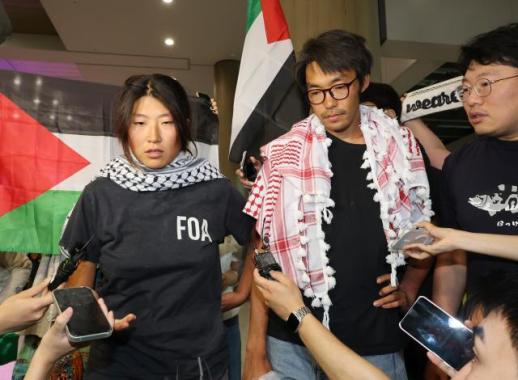 Activists Detained by Israeli Forces Return Home, One Reports Hearing Loss Two South Korean activists who were detained by Israeli forces while attempting to reach Gaza returned home on May 22. Kim Ah-hyun (alias Haecho) and Kim Dong-hyun arrived at Incheon Airport around 6:24 a.m. on a flight from Bangkok, Thailand. Speaking to reporters, Kim Ah-hyun recounted, "We were illegally abducted by Israel during our voyage to Gaza and imprisoned. The Israeli occupying forces were extremely angry, and many people were beaten while we were in custody." Kim Dong-hyun stated, "What Israel did to us was to hijack our boats in international waters and continuously torture and imprison civilians. We only experienced a fraction of the violence perpetrated by Israel, but it was truly unbearable." Kim Ah-hyun also shared details about his health, saying, "I was beaten multiple times, and now I have difficulty hearing out of one ear." Regarding their mission to Gaza, Kim Ah-hyun explained, "Many people are dying not only from bombings but also from starvation. I believed that as long as there are people there, we must attempt to sail again, regardless of the dangers in the Middle East." When asked about his passport being invalidated, he asserted, "I believe people have the right to live where they want and travel where they wish. Even if the government tries to stop me with legal procedures like invalidating my passport, I have the right to do what I want." Kim Ah-hyun remarked, "Many consulates are avoiding diplomatic conflicts with Israel due to the dangerous situation in the Middle East. In that context, I think the South Korean government has done what it needed to do."* This article has been translated by AI. 2026-05-23 10:58:31
 -
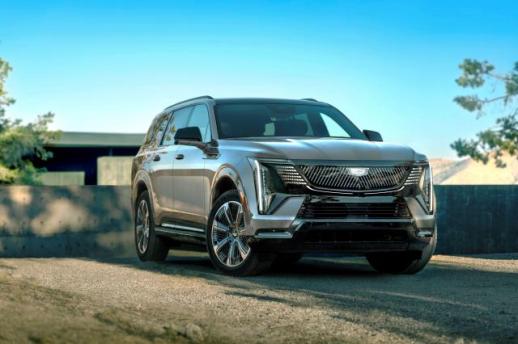 Cadillac Escalade IQL Launches as Longest Electric SUV in Korea Cadillac launched the all-electric long-body flagship SUV, the Escalade IQL, in Korea on May 22. The Escalade IQL builds on the exceptional performance of the Escalade IQ, unveiled last November, featuring an extended length and a more spacious interior. It comes standard with the 'Super Cruise' feature, allowing drivers to take their hands off the steering wheel while maintaining attention on the road. This advanced driver assistance system from General Motors (GM) is currently available on approximately 23,000 kilometers of highways and major roads in Korea. With a length of 5,820 mm and a wheelbase of 3,460 mm, the Escalade IQL is the longest electric SUV currently sold in Korea, offering impressive body proportions and ample interior space. The vehicle's body is 105 mm longer than the Escalade IQ, providing more room in the third row and increased cargo capacity. The driver’s area features a 55-inch Horizon Curved LED display (35 inches for the driver and 20 inches for the passenger), creating a stunning visual experience for passengers. The executive seats in the second row, equipped with massage functions, enhance the luxurious riding experience. The Escalade IQL is powered by a 205 kWh large-capacity battery, certified to provide a driving range of 710 km on a single charge (combined standard). Its electronic four-wheel steering system offers agility that surpasses typical large SUVs. Additionally, it features Magnetic Ride Control 4.0, which detects road conditions up to 1,000 times per second to adjust damping in real-time, and an adaptive air ride suspension that automatically adjusts the ride height based on driving conditions, enhancing safety. A representative from Korea GM stated, "The newly launched Escalade IQL stands out with its long body, making it the longest electric SUV in the domestic market. Customers can experience first-class comfort and outstanding driving performance as soon as they take delivery." According to the Korea Automobile Importers and Distributors Association (KAIDA), 128 units of the Cadillac Escalade were sold in the first quarter of this year, placing it among the top sellers in the domestic luxury large SUV market.* This article has been translated by AI. 2026-05-23 10:57:00
 -
 Rising Interest in Temples Reflects 'Hip Buddhism' Trend The demand for visiting temples has been confirmed through actual travel data amid the rising trend of 'Hip Buddhism.' Tmap Mobility reported on May 22 that an analysis of Tmap driving data from 2023 to 2025 showed a continuous increase in temple visitation over the past three years. Notably, the number of temple destination settings last year increased by 26.9% compared to the previous year. This reflects the trend of consuming traditional Buddhism not just as a religion but as an everyday experience and cultural content. Last year, the most visited temple was Bulguksa, followed by Naksansa, Tongdosa, Haedong Yonggungsa, and Bomunsa. Interest in temple experience programs is also growing. According to the Korean Buddhist Cultural Business Corporation, a total of 349,219 participants took part in temple stay programs across 158 temples nationwide last year. The popularity of Buddhist cultural content continues to rise. The '2025 Seoul International Buddhist Expo,' held in April, attracted over 200,000 visitors over four days, setting a record for the event. During the expo, the number of destination settings for COEX increased by 4.1% compared to the previous week, and was 77% higher than the week following the event. Tmap Mobility stated, "We plan to analyze changing lifestyles and social trends from various perspectives based on driving data."* This article has been translated by AI. 2026-05-23 10:54:21
 -
 Government to Increase Waste Incineration Fee for Out-of-Region Waste 정부가 폐기물 소각시설이 있는 지방자치단체가 다른 지자체 폐기물을 처리할 때 추가로 받는 수수료의 가산금이 10%에서 20%로 올리는 방안을 추진한다. 공공 소각시설 설치 사업의 재정 지원은 확대한다. 기후에너지환경부는 22일 경제관계장관회의에서 이런 내용의 공공 소각시설 조기 확충 방안을 보고했다. 올해부터 수도권에서 생활폐기물 직매립이 금지되면서 수도권 쓰레기가 충청 등 타 지자체로 옮겨져 처리되는 문제가 발생하고 있다. 생활폐기물을 그대로 묻지 못하고 소각하거나 재활용품을 골라내는 작업을 거친 뒤 잔재물만 묻을 수 있는 조치가 시행됐지만 수도권 지자체들이 공공 소각시설을 제때 확보하지 못했기 때문이다. 특히 생활폐기물 직매립 금지가 2030년 전국으로 확대 시행되는 만큼 정부는 공공 소각시설 확충에 속도를 낼 예정이다. 우선 폐기물 처리수수료 가산금을 현행 폐기물 처리 수수료의 10%에서 20%로 늘린다. 가산금은 지자체가 공공 소각시설에서 다른 지자체 생활폐기물을 처리해줄 때 폐기물 처리 수수료에 더해 추가로 받는 금액이다. 이를 통해 주민 지원 기금을 더 확보하고 소각시설 주민 수용성을 높인다. 공공 소각시설 설치 사업 지방재정투자심사는 기후부가 행정안전부와 협의해 면제한다. 올해 5월 기준 사업 계획이 구체화한 20개 공공 소각시설 설치 사업이 1차 연도 지방재정투자심사 면제된다. 수도권에서는 부천시·의정부시·김포시·구리시·과천시, 충청권에서는 세종시·충주시·영동군·아산시, 호남권에서는 전주시·담양군·고흥군·영암군·장성군·완도군, 영남·강원권에서는 대구시·김천시·고령군·창녕군·철원군 등의 지방재정투자심사가 면제된다. 국고 지원 대상은 확대된다. 소각시설 설치비뿐 아니라 기존 시설을 철거하는 비용과 부지 매입비도 국고를 지원한다. 공공 소각시설 설치 사업 관련 설계 적정성 검토는 계획설계 단계에선 검토받지 않도록 절차를 간소화한다. 사업방식과 관련해서는 턴키 방식과 정액 지원 사업 등 행정절차에 드는 시간이 짧은 사업방식을 우선해서 지원한다. 국고 지원액을 최초 산정액으로 고정해 총사업비 관리 대상에서 제외되는 정액 지원 사업의 경우 국고 보조율을 확대한다. 기후부는 '공공 소각시설 확충 지원단'을 통해 사업 추진 상황을 지속해서 점검한다. 또 환경영향평가 관련 사항을 사전에 검토해 환경영향평가 협의가 장기화하는 것을 막겠다는 계획이다. 김성환 기후에너지환경부 장관은 "생활폐기물 발생지 처리 원칙이 현장에서 제대로 작동하기 위해서는 공공 처리기반을 제때 갖추는 것이 핵심"이라며 "직매립 금지 제도의 전국 시행에 차질없도록 현장의 문제를 지속적으로 해결해 나갈 것"이라고 말했다.* This article has been translated by AI. 2026-05-23 10:52:18
 -
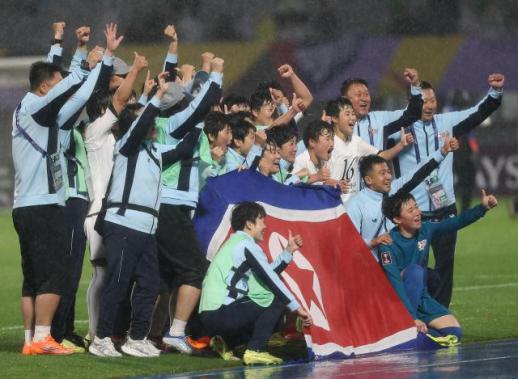 North Korean football club's South visit unlikely to thaw inter-Korean ties: report SEOUL, May 23 (AJP) - North Korean women’s football club Naegohyang FC’s recent visit to South Korea is unlikely to lead to a broader thaw in inter-Korean relations, a South Korean state-run think tank said Friday. A recent report by the Institute for National Security Strategy said the visit should be viewed not as a signal of reconciliation but as “a limited form of contact between two states through an international sporting event,” according to researcher Kim Bo-mi. Naegohyang FC arrived in South Korea on May 17 to participate in the Asian Football Confederation Women’s Champions League. The North Korean side defeated Suwon FC Women 2-1 in the semifinals on May 20 and is set to face Japan’s Tokyo Verdy in the final at 2 p.m. Saturday in Suwon. The visit marked the first trip by a North Korean sports team to South Korea since 2018, drawing attention amid prolonged tensions between the two Koreas. But Kim said the behavior of the North Korean delegation and Pyongyang’s state media coverage suggested the North was intentionally avoiding any narrative of inter-Korean reconciliation or ethnic unity. “North Korea made clear that it views South Korea not as a partner for exchange and cooperation, but as a separate state encountered in an international competition,” Kim wrote. During the tournament, North Korean players and officials also appeared cautious about attaching political meaning to the visit, repeatedly emphasizing that they were focused “only on football.” Kim said it remains unlikely that the visit will trigger rapid improvements in inter-Korean ties or revive large-scale sports exchanges such as unified Korean teams, which were pursued during periods of relatively friendly relations in the past. “For the time being, inter-Korean relations are likely to show a complex pattern in which military tensions and limited exchanges coexist,” she said. Kim urged Seoul to recognize North Korea’s participation in limited exchanges under international norms and develop policies that reflect the changing nature of inter-Korean relations. 2026-05-23 10:50:51