
Journalist

Jeon Woon
-
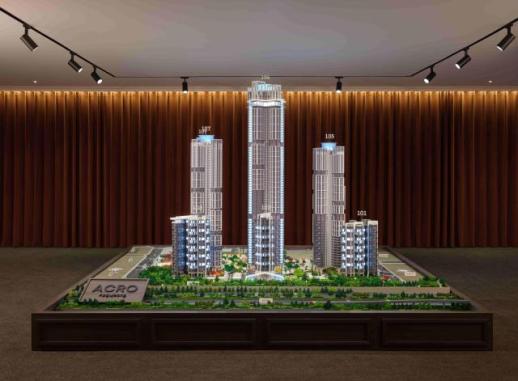 DL E&C Unveils 'Acro Apgujeong' Design with Unique Features for All Residents DL E&C has introduced its design proposal for the 'Acro Apgujeong' project, emphasizing unique features such as views of the Han River, specialized ceiling heights, and terrace and penthouse designs as part of its strategy to differentiate high-end residential offerings. Recently unveiled at the promotional center for the Apgujeong District 5 redevelopment, the design ensures that all 1,232 members of the cooperative will have access to at least one unit with specialized features. The company explained that the design focuses on enhancing the overall quality of space and living experience throughout the complex, rather than concentrating solely on a few high-end units. It includes a variety of configurations such as single-unit manor houses, terrace residences, large penthouses, and units with specialized ceiling heights to reflect the unique characteristics of each unit. DL E&C is particularly highlighting the 'specialized design' as a key competitive advantage in this bidding process. Out of a total of 1,397 units, 1,293 are designed with specialized features, ensuring that all cooperative members can occupy at least one unit with these elements. Specifically, the proposal includes: 243 units with high ceiling specifications, 11 penthouses, 66 terrace houses, 184 units with tilt designs, 955 units with three-sided openings, and 277 units with five-bay designs. The tilt design adjusts the angle of windows to enhance views and openness, while the five-bay design places living rooms and bedrooms prominently at the front to improve natural light and ventilation. A key aspect of the design is the view of the Han River. DL E&C has proposed a layout that allows for river views from the cooperative members' units, with some units featuring multi-faceted openings and multi-room view configurations. The design aims to create a sense of openness throughout the living spaces. The design also includes specialized ceiling heights to enhance spatial perception, with some units featuring ceilings as high as 6.6 meters to maximize views and openness. The terrace designs are intended to improve connectivity between indoor and outdoor spaces. DL E&C has planned not only large penthouses but also medium and small-sized penthouses to cater to diverse residential demands. The design also incorporates strategies to increase the usable interior space of the units. A DL E&C representative stated, "Considering the location and symbolism of Apgujeong District 5, we have comprehensively reflected aspects such as views, spatial configuration, community, and design details in our proposal, aiming to enhance residential quality." Industry experts believe that the symbolic significance of Apgujeong District 5 as a redevelopment site along the Han River will make views, design quality, and product differentiation key factors in the bidding competition.* This article has been translated by AI. 2026-05-23 17:06:00
 -
 Stellantis to Launch Over 60 New Models, Including 29 Electric Vehicles by 2030 Stellantis plans to launch over 60 new models, including 29 electric vehicles, by 2030 as part of its electrification strategy. This move is seen as a response to recent challenges in the electric vehicle market and declining sales in North America. On May 21, Stellantis held an Investor Day at its North American headquarters, unveiling its €60 billion five-year strategic plan, dubbed "Fast Lane 2030." The strategy includes the introduction of 29 battery electric vehicles (BEVs), 15 plug-in hybrids and range-extended electric vehicles (PHEVs and REEVs), 24 hybrid electric vehicles (HEVs), and 39 internal combustion and mild hybrid vehicles (ICE and MHEVs), totaling over 60 new models. Additionally, more than 50 major model updates are planned. Stellantis has faced difficulties due to slowing growth in the electric vehicle market and poor sales in North America, leading to a reported loss of €22.2 billion ($26.5 billion) earlier this year after scaling back its electric vehicle operations. As part of its new plan, Stellantis is emphasizing a "multi-energy strategy" that incorporates electric vehicles, hybrids, and high-efficiency internal combustion engines. The company will allocate over €24 billion, approximately 40% of its total research and development and capital investment, to develop next-generation platforms, powertrains, and new technologies. By 2030, half of its global production will come from three global platforms, including the new "STLA One" architecture. The brand strategy has also been restructured. Jeep, Ram, Peugeot, and Fiat have been designated as core global brands, with 70% of new global assets prioritized for their development. Chrysler, Dodge, Citroën, Opel, and Alfa Romeo will share platforms and assets to enhance brand differentiation. Maserati plans to introduce two new models in the E-segment. Regional strategies have been clarified as well. In North America, 11 new models will be launched, increasing sales volume by 35%. The company aims to strengthen its presence in the mass market by introducing seven vehicles priced under $40,000 and two under $30,000. North America will receive 60% of the total €36 billion investment across all brands and products. In Europe, the focus will be on introducing next-generation urban electric vehicles (E-Cars) and improving production efficiency. The new urban electric vehicles will be produced at the Pomigliano d'Arco plant in Italy. In South America, Stellantis will expand its presence in the pickup truck market, while in the Middle East and Africa, it will pursue localization strategies and expand partnerships in Asia. The Asia-Pacific region, including South Korea, aims to enhance profitability through a lightweight business structure based on strategic alliances and increased exports. Antonio Filosa, CEO of Stellantis, stated, "Fast Lane 2030 is a long-term profitability growth strategy designed after meticulous analysis over the past several months."* This article has been translated by AI. 2026-05-23 17:03:28
 -
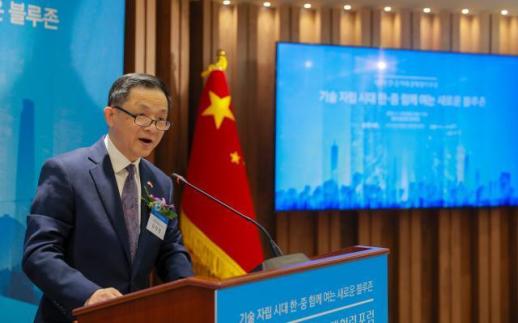 Chinese Ambassador to South Korea Praises President Lee's Critique of Anti-China Sentiment Chinese Ambassador to South Korea, Xing Haiming, expressed his appreciation for President Lee Jae-myung's criticism of fake news and the promotion of anti-China sentiment by some South Korean media. On May 22, the ambassador shared his thoughts on social media platform X (formerly Twitter), stating, "I hope that the entire Korean society can discern right from wrong and voluntarily reject fake news, discrimination, and incitement to enhance friendship between our two nations." In a subsequent post, he remarked, "Some minority media in Korea have fabricated and disseminated fake news to attract attention and increase viewership," urging adherence to journalistic ethics and factual reporting on China. He added, "Do not continue to deceive readers." Earlier, President Lee had addressed reports on May 21 regarding Chinese buyers purchasing numerous apartments in Gangnam, suggesting these reports were likely fabricated to serve as propaganda for anti-China sentiment. He vowed to hold those responsible accountable. The media outlet in question had reported on May 15 that, just before the reintroduction of a capital gains tax on multiple homeowners, Chinese buyers were concentrating their purchases in areas like Gangnam, Songpa, and Yongsan. However, the Ministry of Land, Infrastructure and Transport refuted this claim, leading to the article's removal. The ministry clarified that among the 592 foreign buyers who applied for ownership transfer registration for collective buildings in Seoul from January to April this year, only 218 were Chinese, and just five of those purchased properties in Gangnam. During a Cabinet meeting the previous day, President Lee strongly criticized the report after receiving a briefing from the Ministry of Land, Infrastructure and Transport. * This article has been translated by AI. 2026-05-23 17:00:40
 -
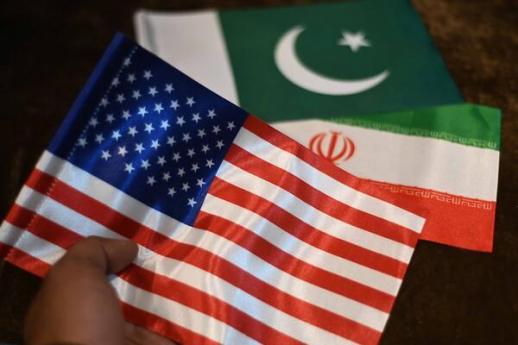 U.S. and Iran Exchange Messages on Peace Talks via Pakistan The United States and Iran are reportedly exchanging messages regarding peace talks through Pakistan. While direct conversations have not occurred, diplomatic channels facilitated by the intermediary nation remain active. On May 22, Anadolu Agency cited Iran's semi-official ISNA news outlet, stating that messages between Tehran and Washington continue via Pakistan's mediation. Earlier, Reuters reported that Iran had conveyed its response to a U.S. peace proposal through the intermediary, Pakistan. Al Jazeera also referenced comments from an Iranian Foreign Ministry spokesperson, confirming that Tehran's reply was delivered to the U.S. through Pakistan. ISNA reported that the latest U.S. proposal has narrowed some differences between the two sides. However, Iran maintains that the U.S. must abandon military solutions for further progress to be made. Reuters echoed this sentiment, noting that while the gap between the two sides has narrowed, disagreements remain regarding uranium stockpiles and control over the Strait of Hormuz. Pakistan's mediation efforts are becoming more concrete. Mohsin Naqvi, Pakistan's Interior Minister, has reportedly visited Tehran for the second time in a week to relay messages from the U.S. to Iranian officials. Al Jazeera also reported that General Asim Munir, Chief of Army Staff of Pakistan, is scheduled to visit Tehran for discussions with Iranian authorities. Negotiations have yet to reach a conclusion, with key issues including the handling of Iran's enriched uranium stockpile and navigation through the Strait of Hormuz. Reuters reported that Iran's leadership has instructed against exporting enriched uranium. The U.S. and Israel insist that any peace agreement must include provisions for uranium export. The Strait of Hormuz remains a contentious issue, with the U.S. demanding the lifting of navigation restrictions while Iran insists on maintaining control over the waterway. Iran prioritizes a complete end to hostilities and guarantees against further attacks from the U.S. and Israel, while the U.S. seeks to include nuclear activity limitations and navigation assurances in the peace terms. Major foreign news outlets indicate that while diplomatic channels between the U.S. and Iran are being maintained and some differences are being narrowed, significant time is still needed to finalize a comprehensive agreement.* This article has been translated by AI. 2026-05-23 16:58:09
 -
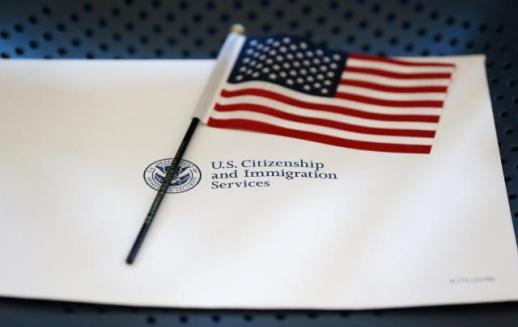 Trump immigration overhaul to rattle Korean Americans and wider Asian diaspora SEOUL, May 23 (AJP)-The Trump administration’s latest immigration crackdown is sending shockwaves through Korean American and broader Asian immigrant communities after the government announced that most foreigners seeking U.S. permanent residency will now have to leave the United States and apply for green cards from their home countries. The policy, unveiled Friday by the U.S. Citizenship and Immigration Services (USCIS), effectively dismantles a decades-old practice known as “adjustment of status,” under which temporary visa holders already living in the United States could apply for permanent residency without leaving the country. USCIS said green cards granted from within the U.S. would now be limited to “extraordinary circumstances,” though it did not clearly define what qualifies. The move marks one of the most aggressive restrictions on legal immigration since President Donald Trump returned to office, broadening the administration’s hardline agenda beyond undocumented immigration and into employment-, student- and marriage-based migration channels that have long underpinned Asian immigration to the United States. For Korean Americans, the impact could be especially significant. According to South Korea’s Overseas Koreans Agency, about 2.56 million ethnic Koreans and Korean nationals live in the United States, making it the world’s largest Korean diaspora community and accounting for roughly 36 percent of all overseas Koreans globally. While most are already U.S. citizens, a substantial share remain on temporary visas, green cards or in transition toward permanent residency — precisely the groups affected by the new rule. The policy threatens to disrupt a well-established immigration pipeline heavily used by Koreans: student visa to Optional Practical Training (OPT), then H-1B work visa, followed by permanent residency. South Korea sent more than 42,000 students to U.S. universities during the 2024–25 academic year, ranking third globally after India and China. Many later pursue jobs in technology, engineering, medicine and finance sectors that depend on employment-based green card sponsorship. Under the new system, however, such applicants may now have to leave the United States mid-career and wait abroad — potentially for months or even years — while U.S. consulates process their cases. Immigration lawyers warn the disruption could be severe not only for immigrants but also for American employers already facing shortages in high-skilled industries. “Consular processing” abroad is already burdened by long backlogs, and shifting hundreds of thousands of applications overseas could create bottlenecks that separate families and interrupt employment. More than 820,000 green cards were granted to people already inside the U.S. through adjustment of status in 2024 alone, according to Department of Homeland Security data. Marriage-based immigration may face some of the harshest consequences. More than 70 percent of marriage green cards issued last year were processed through adjustment of status inside the United States. Korean nationals married to U.S. citizens — a growing demographic among professionals and students — may now be forced to return to South Korea while applications are reviewed, raising the prospect of lengthy family separations. Asian communities overall are expected to bear a disproportionate share of the impact. Asian immigrants dominate many of the pathways targeted by the rule, particularly student and employment-based migration. Asians account for roughly 72 percent of international students in U.S. higher education, with South Koreans representing about 4 percent of the total. Advocacy groups such as AAPI Data have warned that South Koreans, Chinese, Taiwanese, Japanese and Indian immigrants are especially vulnerable because they are heavily concentrated in professional and education-linked visa categories. The policy also arrives amid a broader climate of intensified immigration enforcement. Research cited by advocacy organizations found that Immigration and Customs Enforcement arrests involving Asians more than tripled during the early months of the Trump administration compared with the previous year. Many Asian Americans reported feeling less secure and less willing to participate publicly in civic or political life as anti-immigration rhetoric escalated. The administration defended the move as a return to the original intent of U.S. immigration law. “This policy allows our immigration system to function as the law intended instead of incentivizing loopholes,” USCIS spokesman Zach Kahler said, arguing that requiring applicants to process from abroad would reduce the number of people remaining illegally in the U.S. after visa denials. Critics, however, say the measure amounts to a structural rollback of legal immigration itself rather than a procedural adjustment. Immigration attorneys and former Department of Homeland Security officials expect multiple court challenges in the coming months, especially because USCIS has yet to clarify which immigrants may qualify for exemptions under “extraordinary circumstances.” For Korean Americans and many Asian immigrant families, the uncertainty has already begun reshaping calculations about education, work and life in the United States. What had long been viewed as a predictable pathway toward permanent residency — study, work, settle, naturalize — is suddenly far less certain. 2026-05-23 16:56:30
 -
 Samwha Capacitor Hits Upper Limit on Optimism for MLCC Market, Sets New 52-Week High Samwha Capacitor has reached its upper trading limit, buoyed by expectations of an improved market for multilayer ceramic capacitors (MLCC). The surge in its stock price is attributed to anticipated performance gains from increased investments in AI data centers and the significant rise in Samsung Electro-Mechanics shares, which has had a positive spillover effect. As of 1:40 PM on the Korea Exchange on May 22, Samwha Capacitor's stock was trading at 102,000 won, up 23,500 won (29.94%) from the previous trading day. This marks a new 52-week high, representing a 155% increase from its 52-week low of 40,000 won recorded on March 4 of last year. The company has seen a sharp rise in its stock price, including a 23% jump on May 20. Analysts suggest that investor sentiment is increasingly focused on Samwha Capacitor as a beneficiary of the improving MLCC market and the growing demand related to AI data centers. Notably, Samsung Electro-Mechanics shares surpassed 1.3 million won for the first time, soaring nearly 420% since the beginning of the year. This has led to increased buying interest in Samwha Capacitor, which has also risen approximately 250% during the same period. Market analysts are paying close attention to the potential for Samwha Capacitor's MLCC performance to improve due to the expansion of investments in AI data centers. Lim Eun-young, a researcher at Samsung Securities, noted, "In the first quarter, MLCC sales increased by 24.2% year-on-year to 38.7 billion won, accounting for 52% of total sales of 72.8 billion won. The supply of MLCCs for power infrastructure and devices such as UPS, PDU, and PSU needed for data center operations is expanding." She added, "With leading MLCC manufacturers like Murata and Samsung Electro-Mechanics forecasting price increases due to supply shortages, Samwha Capacitor is likely to benefit from a trickle-down effect starting in the second quarter. If the effects of the ongoing expansion at the Yongin plant are factored in, production could increase by 40-50%." There are also expectations that the market conditions reminiscent of the 2018 cloud data center investment boom may reemerge. At that time, Samwha Capacitor recorded an operating profit margin of 29.6% due to an increase in the proportion of MLCC sales, with its stock price reaching an all-time high of 109,500 won. Additionally, growth prospects for DC link capacitors used in electric vehicles are positively influencing the stock price. DC link capacitors are essential components that stabilize voltage fluctuations in electric vehicle inverters. As Hyundai and Kia expand their hybrid and electric vehicle lineups and the European electric vehicle market continues to grow, demand for these components is expected to rise.* This article has been translated by AI. 2026-05-23 16:56:12
 -
 To Avoid Becoming a 'Feast for Yeouido,' South Korea Must Address Economic Inequality The 'trickle-down effect' has long been a term associated with conservative economic policies in South Korea. This concept, often referred to as the trickle-down effect, suggests that when large corporations grow and generate significant profits, the benefits will eventually flow down to suppliers, local communities, and consumers. The successful industrialization centered around large corporations has lent credence to this argument. In contrast, the 'fountain effect' represents a progressive viewpoint. It argues that a thriving economy relies on the purchasing power of the working class and middle class. The income-led growth strategy of the Moon Jae-in administration exemplifies this perspective. The trickle-down and fountain effects ultimately reflect the longstanding conflict between 'growth-first' and 'distribution-first' ideologies. The trickle-down effect has also been a narrative in the manufacturing sector. The success of major companies like Samsung, Hyundai, and LG has made this narrative familiar. However, as South Korea has moved beyond the industrialization era, the trickle-down effect has become increasingly negligible. Recently, however, the Korean economy has been stirred by a resurgence of the trickle-down effect, this time originating not from manufacturing but from the capital markets. The stock market is experiencing an unprecedented boom. The KOSPI index, which has been rising faster than any other in the world, is on track to reach the 8,000-point mark. Events that once caused anxiety among investors, such as the recent Middle Eastern conflicts, have become mere variables in the Korean stock market. Conversations about stock prices are ubiquitous, with people discussing their gains in restaurants and on the streets. Everyone, from the elderly to young adults, housewives to office workers, is captivated by the stock market. The saying, "When a housewife with a baby appears in the trading room, it's time to sell," has lost its relevance. Many are envious of memes circulating on social media claiming, "I made millions in an instant." The trickle-down effect from the stock market is also reflected in economic indicators. The surge in stock prices is beginning to warm the real economy. The Bank of Korea reported that the consumer sentiment index (CCSI) for May jumped to 106.1, a 6.9-point increase from the previous month, marking the largest rise since June of last year. The current economic assessment index rose by 15 points, the most significant increase in over five years. This optimism is attributed to strong semiconductor exports and the soaring KOSPI, indicating the so-called asset effect, where rising stock prices stimulate consumer spending. The semiconductor industry's robust performance has also boosted the real gross national income (GNI). In the first quarter of this year, real GNI increased by 7.5% compared to the previous quarter and surged by 12.3% year-on-year, a record-breaking figure. The semiconductor sector shows no signs of slowing down, and the stock market's rapid rise has bolstered the current government's confidence. With the index soaring past 2,000 points and approaching 8,000, there is ample reason for pride, reflected in President Yoon Suk Yeol's approval ratings, which remain above 60%. However, the benefits of this boom are not being felt equally. Many lament that it is still a 'feast for Yeouido,' as the surrounding economy remains sluggish. Small business owners continue to struggle, with the number of annual business closures expected to surpass 1 million in 2024 and the closure rate hovering around 9%. The delinquency rate for personal loans among the five major banks rose to 0.78% in the first quarter. In the real estate market, concerns over rental instability are growing. Not all stock investors are reaping rewards. Following the KOSPI's brief surge above 8,000 points, a market downturn led to forced sell-offs totaling 300 billion won over three days starting on May 20. While the exact number of retail investors affected remains unclear, many who chased the dream of striking it rich may be facing significant losses. The current stock market situation is not merely a fleeting boom; many analysts suggest it reflects structural changes. The long-overlooked South Korean stock market is being re-evaluated, which is undoubtedly a positive development. However, the benefits have yet to reach the broader society. Behind the dazzling figures of the semiconductor and capital markets, shadows of small business struggles, domestic consumption issues, debt, and high-interest rates loom large. This is where the government must focus its attention. It remains uncertain whether the trickle-down effect from the stock market will genuinely strengthen the South Korean economy or merely lead to further polarization and debt repercussions. On May 21, Financial Services Commission Chairman Lee Ok-keun proposed a 'shift to inclusive finance,' highlighting the importance of addressing these issues. The suggestion by Kim Yong-beom, head of the Presidential Policy Office, to consider utilizing excess tax revenues at the national level also holds merit. This could mark the beginning of serious discussions on how to sustain the trickle-down effect that started in the stock market. It is crucial to also examine the competitiveness of industries outside of semiconductors and real estate, particularly small businesses. There is no such thing as an endlessly flowing fountain. The stream of money pouring from the stock market could dry up at any moment. Now is the time to listen closely to the cries that are being drowned out by the celebratory sounds of popping champagne.* This article has been translated by AI. 2026-05-23 16:54:00
 -
 HD Construction Machinery Signs MOU for Ukraine Reconstruction Cooperation HD Hyundai is expanding its cooperation with the Mykolaiv regional government of Ukraine beyond equipment support to establish a long-term collaboration framework for overall reconstruction efforts. On May 22, HD Construction Machinery announced that it signed a memorandum of understanding (MOU) with the Mykolaiv regional government at the HD Hyundai Global R&D Center in Pangyo the previous day. The signing ceremony was attended by key officials, including Mykolaiv Governor Vitaliy Kim, HD Hyundai Vice Chairman Cho Young-cheol, and HD Construction Machinery President Moon Jae-young. This agreement builds on a previous collaboration established in 2023, which focused on the donation of construction equipment and training. Both parties agreed to continue their existing cooperation while expanding their partnership to include equipment supply, the establishment of local training centers, service and maintenance support, financial assistance, and energy infrastructure recovery, thereby creating a comprehensive support model for reconstruction efforts. HD Construction Machinery plans to establish a branch in Kyiv, Ukraine, in 2024 and has strengthened its local cooperation foundation through training programs for government officials, including those from the Ministry of Territorial Development, invited last year. HD Hyundai also aims to develop an integrated reconstruction cooperation model that links its capabilities in construction machinery and energy sectors. Cho Young-cheol, Vice Chairman of HD Hyundai, stated, "We will establish a cooperation system that can contribute practically to Ukraine's reconstruction beyond simple equipment supply, and we will actively support local infrastructure recovery and stabilization using our capabilities in construction machinery and energy sectors." Vitaliy Kim, a fourth-generation Korean and Ukrainian, remarked, "This agreement is an important milestone for the systematic reconstruction of Mykolaiv Oblast and will serve as a key driving force for rebuilding infrastructure, energy, and local communities. I sincerely thank HD Hyundai and South Korea for their ongoing support and the establishment of a long-term partnership." In September of last year, a delegation of Ukrainian government officials visited HD Hyundai's key facilities to secure the technical capabilities necessary for reconstruction and to strengthen cooperation. The delegation, which included officials from the Ministry of Territorial Development, toured the HD Construction Machinery campus in Ulsan, examining excavators and production lines while discussing reconstruction cooperation strategies.* This article has been translated by AI. 2026-05-23 16:51:28
 -
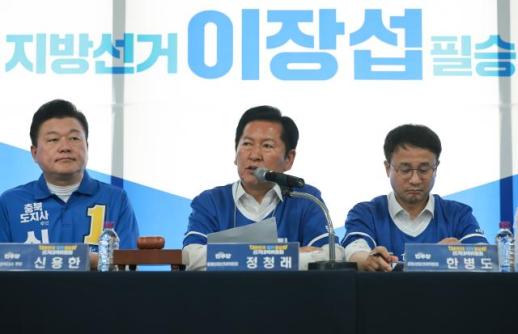 Jung Cheong-rae Calls for Apology from Shinsegae Chairman and Lawmaker Over Starbucks Controversy Jung Cheong-rae, the chairman of the Democratic Party, has called on Shinsegae Group Chairman Shin Yong-jin and People Power Party floor leader Song Eon-seok to "kneel and apologize" regarding the ongoing controversy surrounding Starbucks Korea's "Tank Day." He also announced plans to propose a strengthened version of the 5·18 special law. During a meeting of the election campaign committee in Cheongju on May 22, Jung stated, "There must never be a denial of history or an insult and mockery of human dignity, which is a universal value. Starbucks and Shin Yong-jin must once again kneel and sincerely apologize to the public. Apologize before the boycott of Starbucks spreads from Gwangju." Jung continued to express his discontent towards Song, who recently sparked controversy with comments suggesting he would not visit Gwangju because it was "dirty." In a recent press conference, Jung remarked, "No matter how I hear it, it sounds like 'I won't go because it's dirty.' Is he testing the hearing of the entire nation?" He criticized Song for threatening legal action after Jung posted about the comments on Facebook, saying, "He should either take legal action or apologize; he must do one or the other." Jung also pointed out that the People Power Party has yet to apologize for the state of emergency and is engaging in what he termed a "rebellious nomination" by calling for a return to the past. He warned that the public would deliver a stern judgment and urged them to apologize before it is too late. Regarding the 5·18 Gwangju Democratization Movement, Jung indicated that he would propose an amendment to the special law that would penalize not only the dissemination of false information but also mockery and insults related to the democratization movement. He stated, "President Lee Jae-myung is also strongly addressing Starbucks' belittlement of the 5·18 movement. Therefore, I am adding provisions to punish defamation due to the dissemination of false information and mockery and insults against the democratization movement. I will ensure that this amendment passes in the National Assembly immediately after the June 3 local elections."* This article has been translated by AI. 2026-05-23 16:48:58
 -
 Chinese State Media Calls President Lee Jae-myung a Formidable Leader Chinese state media has recently focused on President Lee Jae-myung's approach to China and his practical diplomatic efforts. They noted his public pushback against rising anti-China sentiment in South Korea and his emphasis on the necessity of trilateral cooperation among South Korea, China, and Japan during Korea-Japan diplomatic discussions, labeling him as "a formidable leader." The Newtanqin account, affiliated with the Chinese state-run Xinhua News Agency, highlighted President Lee's strong criticism of a recent fake news report claiming that "Chinese nationals purchased 944 apartments in Gangnam, Seoul," calling it a "false report that incites anti-China sentiment." The outlet remarked, "This is a rare scene in today's South Korean political landscape," pointing out that there are still factions in South Korea that view China through a biased lens and are dissatisfied with improving Korea-China relations, leading to various distortions and smear campaigns. They concluded that President Lee is relatively composed, having consistently drawn lines against anti-China rhetoric and calling for a stern response this time as well. The Chinese media particularly noted that President Lee has publicly acknowledged the need to manage relations with China while maintaining cooperation with the United States and Japan. Newtanqin reported that during a press conference following the Korea-Japan summit, Japanese Prime Minister Takaiichi Sanae emphasized strengthening Korea-Japan and Korea-U.S.-Japan strategic cooperation but did not mention China directly. In contrast, President Lee stated, "In addition to Korea-Japan and Korea-U.S.-Japan cooperation, mutual respect and collaboration among the three countries—Korea, China, and Japan—are also important," even proposing ways to enhance civilian-centered Korea-China-Japan cooperation. The media interpreted this as Takaiichi intentionally avoiding mention of China, while President Lee emphasized the importance of strengthening cooperation with China. Furthermore, the differences in social media activity following the Korea-Japan summit caught attention. During her visit to South Korea, Takaiichi posted multiple photos and messages expressing her gratitude for the hospitality she received from President Lee. However, there were no related posts on President Lee's social media accounts. Newtanqin also noted that President Lee typically shares his diplomatic activities on social media. For instance, he recently disclosed his conversations with U.S. President Donald Trump and Mexican President Claudia Sheinbaum, as well as a meeting with U.S. Treasury Secretary Scott Vessen, but there was no mention of Takaiichi. Chinese media have assessed that despite the recent trend of improving Korea-Japan relations, the Lee Jae-myung administration is making efforts to manage its relationship with China. The Chinese state-run Global Times analyzed on May 18 that despite the friendly atmosphere between the leaders of Korea and Japan, there remains a significant gap between the two countries. The Global Times stated that amid significant regional and global uncertainties, President Lee is attempting to improve relations with Japan through practical diplomacy while continuing the pro-Japan policies of the Yoon Suk-yeol administration regarding historical and territorial issues. At the same time, he is also striving to steadily restore relations with China, noting that President Lee is avoiding a one-sided approach amid deteriorating China-Japan relations.* This article has been translated by AI. 2026-05-23 16:46:33