

Journalist

Jinkyu, Myung
-
 Mercedes-Benz Korea Signs Retail of the Future Deal With 11 Dealers, Launch Set for April Mercedes-Benz Korea said it held a signing ceremony on the 25th at the Shilla Seoul hotel with 11 authorized dealers to support the rollout of a new vehicle sales model, “Retail of the Future” (RoF). The company said RoF will be officially implemented April 13. Under RoF, Mercedes-Benz Korea will integrate vehicle pricing and inventory management that previously differed by dealer. Customers will be able to buy vehicles at a single company-set price at any authorized showroom nationwide, without negotiating, and check nationwide inventory in real time, the company said. The company said a standardized sales process spanning online and offline channels is intended to provide the same level of customer experience nationwide. Mercedes-Benz Korea and the 11 dealers said they have worked since 2023 to prepare for RoF, including building systems, stabilizing operations, training dealers and establishing on-site processes. They said they plan to continue close cooperation to ensure the new model takes hold. “RoF is a strategic decision to ensure customers can enjoy a consistent and trustworthy purchase experience, wherever and whenever, that matches the brand,” Mercedes-Benz Korea CEO Matthias Geitl said. He said it was meaningful to be able to introduce the new sales model in April based on close discussions with the 11 dealers over the past three years, with shared goals of improving customer experience and satisfaction and pursuing mutual growth. Starting April 13, customers will be able to check vehicle prices and information on the official Mercedes-Benz website, choose an authorized showroom nationwide, and proceed with detailed purchase consultations and test drives, the company said. Mercedes-Benz Korea and its dealers also agreed to continue the social contribution activities they have jointly carried out over the past 12 years after RoF is introduced. Mercedes-Benz Korea said it launched the “Mercedes-Benz Social Contribution Committee” in 2014 with its local affiliates and the 11 authorized dealers and has carried out various social contribution programs aimed at growing together with Korean society. 2026-02-26 09:36:23
 -
 Korea's top-shelf defense export K9 anchors India's frontline firepower in evolving form POKHRAN, INDIA, February 26 (AJP) - The desert does not forgive hesitation. At the Pokhran Field Firing Ranges, under the abrasive winds of the Thar Desert, the K9 Vajra-T halted only long enough to compute its fire solution. Turret rotating independently of the hull, target data fed digitally, the first round was out within 30 seconds. On the move, the gun delivered in under a minute. Moments later, the battery displaced — engines growling, tracks carving arcs through sand — before counter-battery response could materialize. This was the tempo of “Exercise Agni Varsha,” conducted by the Indian Army’s Southern Command and observed by defense journalists from 25 countries. Tanks, mechanized infantry, legacy artillery, rocket platforms, Apache attack helicopters, indigenous ALH gunships and drones operated in concert. But the rhythm of the maneuver hinged on one platform: the K9. From Korean flagship to Indian backbone The Vajra-T is derived from South Korea’s K9 Thunder, widely regarded as Korea’s flagship land weapon system and one of its most successful high-value defense exports. Manufactured in India through a partnership between Hanwha Aerospace and Larsen & Toubro, the program reflects both technology transfer and industrial localization. More than 50 percent of components are now produced at L&T’s Hazira facility. The first 100 units were delivered ahead of schedule, prompting a repeat order for another 100, with localization set to exceed 60 percent. The platform’s battlefield credentials explain why it has become both Korea’s top-shelf artillery export and the backbone of India’s integrated firepower. Why K9 sits at the top tier of Korean defense exports The K9’s status is not symbolic. It commands roughly half of the global tracked 155mm self-propelled howitzer export market, operates in 11 countries and exceeds 1,700 units worldwide. Its competitive edge rests on several defining features: range, speed and survivability delivered as a complete ecosystem rather than a standalone gun. The 155mm/52-caliber platform projects precision fire beyond 40 kilometers, unleashes six to eight rounds per minute in burst mode, and delivers its first shot within 30 seconds when halted — or under a minute on the move — while a 1,000-horsepower engine drives it across deserts, mountains and high-altitude sectors with equal reliability. Its fully rotating 360-degree turret allows engagement without hull repositioning, compressing exposure time in counter-battery environments, and when paired with the K10 resupply vehicle and integrated digital fire-control architecture, the system sustains high-tempo “shoot-and-scoot” operations that modern warfare demands. That fusion of firepower, mobility, rapid deployment timelines and export-ready industrial partnership is what has elevated the K9 beyond a successful artillery piece into Korea’s top-shelf land defense export — and why it now anchors India’s evolving frontline firepower doctrine. The K9 is rarely sold alone. The K10 Ammunition Resupply Vehicle — carrying 104 rounds and transferring ammunition at 12 rounds per minute — sustains high-tempo operations. Packages typically include maintenance, training and technology transfer. This ecosystem model — rather than a standalone hardware sale — has driven repeat procurement in Europe, Asia and the Middle East. Competitiveness in Europe In European competitions, including Norway’s procurement process, the K9 outperformed Germany’s PzH 2000. The determining factors were structural: faster delivery cycles (18–24 months versus 3–5 years), balanced price-to-performance ratio, proven operation across desert, arctic and mountainous environments, and willingness to localize production and transfer technology – as well proven in the track record in India. Essential along India’s Pakistan frontier Along India’s western border with Pakistan, artillery is not a secondary arm — it shapes deterrence posture. In desert sectors and open plains, where concealment is limited, mobility and rapid displacement determine survivability. The K9’s range allows engagement of deep targets while maintaining operational depth. Its rapid response time and shoot-and-scoot capability reduce exposure to counter-battery fire. The powerful engine sustains maneuver across sand under extreme temperatures. Indian officials have noted the system’s operational deployment and its positioning along sensitive border sectors. Within India’s doctrine, the K9 forms a forward mobile strike layer, complementing legacy systems positioned further rearward. As the final salvos faded over Pokhran, the K9 units shifted positions with practiced discipline. Within minutes, their tracks were erased by wind. The exercise underscored why the K9 is widely regarded as Korea’s top-tier land defense export: speed, adaptability and integration into modern maneuver warfare. In India’s evolving artillery doctrine — particularly along sensitive borderlines — the K9 Vajra-T is no longer a procurement success. It is operational infrastructure. 2026-02-26 09:33:21
 -
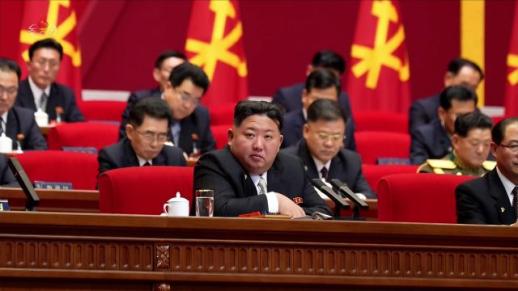 Pyongyang sidelines Seoul while signaling potential for Washington ties SEOUL, February 26 (AJP) - North Korean leader Kim Jong-un stated that there is "no reason not to get along" with the United States if Washington abandons its hostile policy, even as he intensified his rhetoric against South Korea by vowing to permanently exclude the country from the category of "compatriots." North Korea's state media Korean Central News Agency (KCNA) reported Thursday that Kim delivered a summary report during the 9th Congress of the Workers' Party of Korea, which concluded the previous day. Kim noted that the future of relations with the U.S. depends entirely on Washington's willingness to respect North Korea's status as a nuclear-armed state. He stated that Pyongyang is prepared for both "peaceful coexistence or eternal confrontation," placing the responsibility for the next move on the U.S. While maintaining a measure of strategic flexibility toward Washington, Kim took an exceptionally aggressive stance toward South Korea, effectively sidelining Seoul from any future diplomatic roadmap. He characterized the conciliatory approach of the Lee Jae Myung government as a "deception" and repeatedly dismissed the possibility of dialogue. Kim further solidified his "hostile two-state" policy, declaring that South Korea would be "permanently excluded from the category of our fellow countrymen." The North Korean leader warned that any actions by South Korea perceived as a threat to the security environment could trigger the use of physical force, including "preemptive strikes." He claimed that such actions could lead to the "complete collapse" of South Korea, emphasizing that the North has the technical and theoretical means to execute such a response. The timing of these declarations is significant as the Congress of the Workers' Party serves as the highest decision-making body in North Korea. These rare gatherings are used to define the nation's strategic direction and consolidate the leader's authority. By delivering these remarks during the 9th Congress, Kim has effectively codified the "hostile two-state" doctrine into the country's formal political roadmap. The current hostility represents a sharp departure from the inter-Korean relations seen under former President Moon Jae-in. Between 2017 and 2022, the two nations engaged in significant diplomacy, leading to the 2018 Panmunjom Declaration and multiple high-level summits. This period of engagement eventually paved the way for the first-ever meeting between a sitting U.S. president and a North Korean leader. Tensions began to resurface and eventually sour during the administration of President Yoon Suk Yeol, who prioritized military deterrence and strengthened trilateral cooperation with the U.S. and Japan. Under the Yoon government, the 2018 Comprehensive Military Agreement was effectively scrapped, and North Korea officially designated South Korea as its "primary foe" in early 2024. Despite the 2025 election of the Lee Jae-myung administration, which has signaled a preference for de-escalation, Pyongyang indicated that it has no intention of returning to a partnership for unification. Kim described the habit of treating South Korea as a fellow ethnic group as an "erroneous practice" that should no longer be tolerated. Kim concluded the report by signaling a policy of strategic ambiguity. He noted that North Korea's future military and diplomatic maneuvers would remain hidden, suggesting that keeping rivals unable to calculate Pyongyang's next moves would serve as a psychological deterrent. 2026-02-26 09:19:04
 -
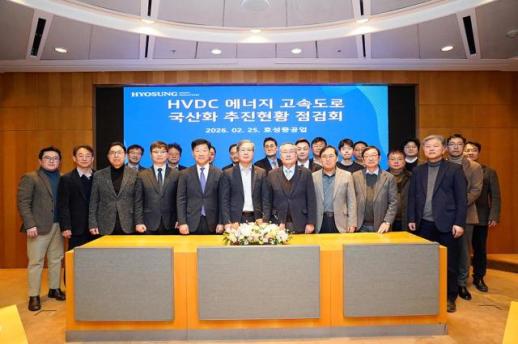 Hyosung Heavy Industries Reviews HVDC Localization Plan With Industry, Academia Hyosung Heavy Industries outlined a roadmap to localize high-voltage direct current, or HVDC, technology, a key element of the government-led “West Coast Energy Superhighway” project. The company said Wednesday it held a review meeting at its headquarters in Seoul’s Mapo district with officials from Korea Electric Power Corp., the Korea Electrical Manufacturers Association, and experts from industry, academia and research institutes. The West Coast Energy Superhighway is a national backbone grid project aimed at reliably delivering large-scale offshore wind power to the Seoul metropolitan area. The meeting was set up to closely assess progress in localizing large-capacity, voltage-source HVDC technology — an area that has relied heavily on overseas technology — and to discuss next steps. Hyosung Heavy Industries presented the status of its localization work on key components for a 2-gigawatt voltage-source HVDC system, including converter valves and control systems. The company said voltage-source HVDC makes power control easier than conventional current-source systems and is advantageous for grid stability, making it essential for connecting renewable energy. Presentations also were given by leading domestic experts. Professors from Seoul National University, Yonsei University and Kyungpook National University, participating as a technical cooperation group, discussed research in areas including system optimization and grid-stabilization technologies. Lee Jong-pil, a center director at the Korea Electrotechnology Research Institute who joined as an adviser, presented on certification testing for converter valves, a core component. Participants agreed the West Coast Energy Superhighway could serve not only as a domestic grid buildout but also as a springboard for Korean HVDC technology to enter global markets. They said technology self-reliance could lead to a broader domestic HVDC ecosystem spanning equipment, systems and engineering, and strengthen export competitiveness. “HVDC technology is at the core of national energy security,” Seoul National University professor Choi Seong-hwi said. “To reduce dependence on overseas technology and secure sovereignty over the power grid, building a localization ecosystem is essential.” A Hyosung Heavy Industries official said the company is moving ahead with localization “without disruption” based on capabilities built up in power equipment and HVDC technology. The official said Hyosung plans to complete the project successfully through close cooperation with related organizations, including the government and KEPCO, and to expand into global markets.* This article has been translated by AI. 2026-02-26 09:18:21
 -
 KGMC Delivers First E-STANA, South Korea’s First 7-Meter Low-Floor Electric Bus KGM Commercial, or KGMC, said Feb. 26 it has begun deliveries after handing over the first unit of its E-STANA, a 7-meter-class low-floor electric bus it says is the first of its kind developed in South Korea. KGMC held the handover ceremony Feb. 25 at Jagyeong Village Bus in Gwangmyeong, Gyeonggi Province, with KGMC CEO Kim Jong-hyun and Jagyeong Village Bus CEO Jang Gwan-su attending along with officials from Gwangmyeong City Hall, the Gyeonggi Village Bus Association and representatives of about 10 village-bus companies in the province, the company said. Jagyeong Village Bus, founded in 1992, operates in southern Gwangmyeong and serves areas with limited transportation options. The company said it chose the low-floor E-STANA to better serve riders with mobility challenges. "Until now, there was no domestic 7-meter low-floor electric bus, so we had no choice but to buy diesel buses," Jang said. "KGMC’s E-STANA, the first domestically produced 7-meter low-floor electric bus, will be a practical, close-to-home means of transportation that people with disabilities and older adults can use more conveniently." KGMC said the E-STANA was independently developed with South Korean road conditions in mind and is designed for safety, durability and convenience. Features include a 12.3-inch digital instrument cluster, an electronic parking brake system, an electronic brake system, auto-hold, electronic stability control and a rear-collision warning system, as well as wheelchair-access convenience equipment based on city-bus specifications. The bus is equipped with a 154.8-kWh lithium-ion high-voltage battery from Samsung SDI and has a driving range of 328 kilometers per charge, KGMC said. KGMC said the model is eligible for national and local government subsidies for electric vehicles, as well as subsidies for low-floor buses, which it said can reduce buyers’ costs. KGMC is also expanding outreach through a nationwide E-STANA roadshow that visits bus operators. The company said it has held events at about 30 locations since January, starting in Seoul and Gyeonggi Province and moving through Chungcheong and Honam, and plans to visit about 10 more sites in the Yeongnam region, including Busan, through March. * This article has been translated by AI. 2026-02-26 09:15:19
 -
 Hyundai Glovis Wins South Korea Labor Minister’s Award for Safety Cooperation Hyundai Glovis said it has received a South Korean labor minister’s award in recognition of its work to prevent accidents at industrial sites. The company said Thursday it was named an outstanding participant in a large company-small business workplace safety cooperation program at a signing ceremony held Wednesday at the Peace & Park Convention in Seoul’s Yongsan district. Attendees included the minister of employment and labor, the head of the Korea Occupational Safety and Health Agency, Hyundai Glovis Safety and Environment Center chief Kim Il-hwan and about 250 government and corporate officials, the company said. The program is hosted by the Ministry of Employment and Labor and administered by the Korea Occupational Safety and Health Agency. It supports parent companies and partner firms in voluntarily carrying out workplace safety and health improvements. Hyundai Glovis said it was recognized for continuing field-focused safety and health support tailored to logistics worksites and for actively reflecting feedback from partner companies and workers. It said it has recorded zero serious industrial accidents from 2021 to the present. Since 2021, the company has provided partner firms with free side safety supports for vehicle carriers to help prevent falls during loading and unloading. It later developed a second-generation support designed to improve both convenience and safety and expanded distribution, it said. Hyundai Glovis also said it developed and distributed a customized lightweight safety helmet for truck drivers. The new helmet weighs 250 grams, with volume reduced by 16% and weight by 14% compared with conventional industrial helmets, it said. The helmet passed safety certification screening by the Korea Occupational Safety and Health Agency, the company said. The company said it also runs virtual reality-based hands-on safety training and selects and rewards a monthly safety excellence employee to help embed a workplace safety culture. “Under the belief that our partners’ safety is Hyundai Glovis’ safety, we have continued a shared-growth approach to safety management,” a company official said. “We will continue expanding safety and health programs with our partners to raise safety standards across industrial sites.”* This article has been translated by AI. 2026-02-26 09:06:28
 -
 OPINION: Risks lurking behind South Korea's export boom SEOUL, February 26 (AJP) - Despite heightened external uncertainty, exports have posted unexpectedly strong performance so far this year. Preliminary cumulative figures through mid-February show an increase of roughly 30 percent, a notable gain. With the domestic economy still struggling to regain its footing after a prolonged slump, this export surge comes as welcome relief. Still, it remains uncertain how long this momentum can last. Uncertainty persists in the semiconductor sector, which accounts for more than 30 percent of South Korea's exports. Expectations have been buoyed by surging demand from artificial intelligence (AI) data centers and forecasts of a semiconductor "supercycle," with the market expected to expand by more than 15 percent annually through 2030. Yet as both the IMF and OECD have cautioned, the path of artificial intelligence remains highly uncertain, and questions persist over whether the enormous investment being poured into the technology by major global tech companies will ultimately pay off. With OpenAI reportedly scaling back its computing ambitions and Nvidia pulling a long-term investment agreement with it, policymakers and companies should watch for an AI bubble and reassess whether the semiconductor supercycle still has much further to run. Equally uncertain is the persistence of the so-called "K-boom" in defense, shipbuilding, and nuclear power. Exports of defense products to NATO members have surged following Donald Trump's retreat from traditional alliance commitments, while deepening South Korea–U.S. cooperation in shipbuilding and nuclear energy has provided an additional boost to export growth. Whether these tailwinds will prove durable remains an open question. At the same time, South Korean defense exports to NATO members face real headwinds including stiff competition from established suppliers such as France, Germany and the U.S., and a persistent preference among alliance members to source equipment domestically. Nor should Seoul take its partnership with Washington for granted, as U.S. foreign policy has rarely been less predictable. The same caution applies to industries such as food and biotechnology, which have become notable export drivers in recent years thanks to the resurgence of the Korean Wave. Japan's once-formidable cultural export boom now seems like a relic of another era, and there is no guarantee that the Korean Wave will not lose momentum. South Korea has avoided the catastrophic collapses that scarred Japan, but it has long struggled with sluggish growth. Meanwhile, emerging competitors - not just China but increasingly India and Viet Nam - are rapidly closing the gap. None of this means the Korean Wave will vanish, but South Korea cannot afford to assume its momentum will last. It is also worth assessing whether recent export performance truly reflects companies' fundamental competitiveness - that is, enduring strengths such as technological capability, production efficiency, and organizational effectiveness that are less reliant on external conditions. For example, the technological level of semiconductors, displays, and secondary batteries was already assessed in 2024 as lagging behind China, highlighting how quickly competitiveness may be eroding. If this trend continues, export competitiveness in these industries is likely to decline as well. Even so, maintaining the current level of exports amid rising global trade uncertainty is no small feat, and both export competitiveness and the Korean Wave appear set to remain resilient for the time being. For now, South Korea's export-oriented companies and industries seem likely to sustain their growth. However, no company or sector is immune to rapidly changing external conditions, and the risks surrounding the current boom require careful attention and proactive preparation. * This article, published by Aju Business Daily, was translated by AI and edited by AJP. 2026-02-26 08:57:23
 -
 Kia Named One of South Korea’s 100 Best Companies to Work For Kia said Wednesday it was named one of South Korea’s 100 Best Companies to Work For at the “GPTW Management Innovation Conference” held Tuesday at the Conrad Seoul in Yeouido. Great Place to Work, or GPTW, is a U.S.-based global evaluator that diagnoses and assesses workplace culture at about 30,000 companies in 170 countries each year. Its certification process has three stages following domestic and international verification. Kia earned the first-stage certification after recording a 79% positive response rate in an online employee survey. The company was also rated highly in its workplace-culture submission, leading to its selection for the top-100 list. More than 5,000 employees in South Korea across all job categories took part in the survey, which included 60 questions. Respondents reported high satisfaction in areas including ethical management, pride in the company, trust in leaders, engagement and a participatory culture. In the workplace-culture submission, evaluators gave favorable marks to Kia’s stated direction of being “customer-centered, people-centered.” Kia said it runs programs to strengthen internal communication, including “CEO Live,” an online town hall with senior management that includes global employees, and monthly Kia value meetings held by each division. Programs that cross workplace and job boundaries also drew attention, the company said. In 2024, marking its 80th anniversary, Kia held a “Kia, Let’s Run Together” marathon event for employees across all job groups in South Korea. Last year, it also rolled out companywide a “Happy New Kia” program in which division and office leaders encourage new employees on their first day. A Kia official said the company’s domestic and overseas units will work together to build an agile and flexible culture under its customer- and people-centered direction, adding that Kia will seek certification as one of the world’s best places to work based on the latest recognition.* This article has been translated by AI. 2026-02-26 08:54:16
 -
 Autonomous A2Z Exports Self-Driving System to UAE Autonomous A2Z will export its autonomous driving system to the United Arab Emirates. The company said Thursday that it delivered an export approval certificate on Feb. 25 (local time) in Abu Dhabi to its local joint venture. Autonomous driving is designated by the South Korean government as a national core technology, requiring prior approval from relevant authorities for overseas exports on technology security grounds. After a review by the Ministry of Trade, Industry and Energy, Autonomous A2Z became the first in the autonomous driving sector to receive export approval, the company said. Attendees included Ha Jung-woo, senior presidential secretary for AI Future Planning; Choi Young-jun, minister-counselor at the South Korean Embassy in the UAE; and Kim Sang-jin, director at the National AI Strategy Committee, as part of a South Korean special delegation. Autonomous A2Z Chief Strategy Officer Yoo Min-sang shared the joint venture’s business roadmap and discussed plans for testing and commercialization. Munira Al Marzouki, a managing director at Space42, the joint venture partner, also attended and confirmed the approval certificate. With the approval, the company plans to deploy in the UAE its self-developed Level 4 autonomous vehicle, ROii, along with various modified vehicles. It aims to win $7.6 million (about 11 billion won) in contracts by the end of this year and generate $78 million (about 110 billion won) in local revenue by 2035. The company said the figures reflect UAE government policy goals, including shifting 25% of Dubai public transportation to autonomous operation by 2030 and a full transition to autonomous driving in Abu Dhabi by 2040. Chief Executive Han Ji-hyung said autonomous driving is a national strategic industry combining AI, semiconductors, communications, software and urban infrastructure. “This export approval goes beyond one company’s overseas expansion,” Han said. “It shows autonomous driving has entered the global stage as a core technology that will help lead South Korea’s push to become one of the world’s top three AI powers.” 2026-02-26 08:39:18
 -
 The Cross’ Lee Si-ha Takes Office as Korea Music Copyright Association President Lee Si-ha, a member of the band The Cross, has been inaugurated as the 25th president of the Korea Music Copyright Association, known as KOMCA, and laid out a four-year plan centered on creators. Taking office, Lee said he would “change the center of the association,” signaling a push for practical reforms. Lee outlined four main tasks. First, he said the association will focus not only on expanding collections but on increasing the real income of Korean songwriters — shifting from headline figures to raising the amounts that reach creators. Second, he called for building a framework in which artificial intelligence and music writers can coexist. Rather than viewing the spread of AI only as a threat, he said the association will work to institutionalize a fair compensation system. Third, Lee said he aims to double the amount of copyright royalties flowing into South Korea from overseas by strengthening global collection networks and reorganizing rights-protection systems. Fourth, he pledged tangible improvements in creator welfare, saying the association will redesign its benefits system so writers can work in a more stable environment. “We will become an association that changes creators’ lives, not one that just grows numbers,” Lee said, adding, “I will prove it with results within four years.” Lee has performed with The Cross alongside vocalist Kim Hyeok-geon, who suffered an unexpected accident, and is known for hits including “Don’t Cry” and “For You.” He is also a professor at Sejong University’s Graduate School of Industry. Lee said he plans to pause his music activities for the next four years and focus on making KOMCA an organization that contributes in practical ways to South Korea’s national interest.* This article has been translated by AI. 2026-02-26 08:28:20