

Journalist

Jinkyu, Myung
-
 Dairy Industry Faces Challenges as Milk Consumption Declines Domestic consumption of white milk is rapidly declining due to low birth rates, changes in food culture, and the rise of alternative beverages. As growth in the core dairy processing business slows, the industry is seeking new avenues through dining, processed foods, and exports. According to the Dairy Promotion Association, per capita consumption of white milk fell to 22.9 kilograms last year, down 9.5% from 25.3 kilograms the previous year. This marks the lowest level since the late 1980s. While milk consumption has been decreasing annually since 2001, this is the first time it has dropped nearly 10% in just one year. The burden of raw milk prices has eased somewhat, as the association decided not to negotiate raw milk prices this year, keeping the price for drinking milk at 1,084 won per liter for the third consecutive year. However, the obligation to purchase a certain amount of raw milk remains a significant burden despite the decline in consumption. The background to this situation is the mandatory raw milk purchase quota system introduced in 2002, which requires dairy companies to buy a specified amount of raw milk. The issue lies in the fact that, despite changes in consumption patterns, the distribution of raw milk is still primarily focused on white milk. Currently, the quota allocates 88.5% for drinking milk and only 5% for processed milk. Meanwhile, demand for processed milk products such as fermented milk, cheese, cup coffee, and protein drinks is increasing. In fact, while consumption of white milk decreased last year, processed milk consumption rose to 6.4 kilograms per person, a 33.3% increase from the previous year. Industry voices are growing louder in calling for reform of the quota system to align with changing consumer trends. The influx of imported milk also poses a challenge. Since January, U.S. milk has been entering the market duty-free, and tariffs on EU milk will be completely eliminated in July. According to the Korea Customs Service, the import volume of sterilized milk last year reached 50,800 tons, more than double the 23,000 tons imported in 2021. Price-competitive imported milk is expanding its influence, particularly in the business-to-business (B2B) market, including cafes and bakeries. Dairy companies are responding by diversifying into dining, exports, and product portfolios. Maeil Holdings reported dairy processing sales of 1.09 trillion won last year, roughly on par with the previous year's 1.09 trillion won, while its dining segment, which includes operations like Paul Bassett and Crystal Jade, saw sales rise to 213.6 billion won, an increase of 7.7 billion won from last year. Binggrae is accelerating its efforts in overseas markets. Although domestic sales of refrigerated products have declined, exports increased to 72.8 billion won, up from 71.1 billion won the previous year. Binggrae is expanding sales of Melona and banana-flavored milk in the U.S., China, and Vietnam and established a subsidiary in Australia last December. Namyang Dairy Products achieved a turnaround with sales of 914.1 billion won and an operating profit of 5.1 billion won last year, attributed to a 25.6% increase in the share of other segments, including Chocoemong and Take Fit. An industry insider stated, "The decline in white milk consumption is not a temporary phenomenon but a structural change. It is time to reorganize the raw milk supply structure and overall business portfolio to align with consumer trends."* This article has been translated by AI. 2026-05-31 16:39:00
 -
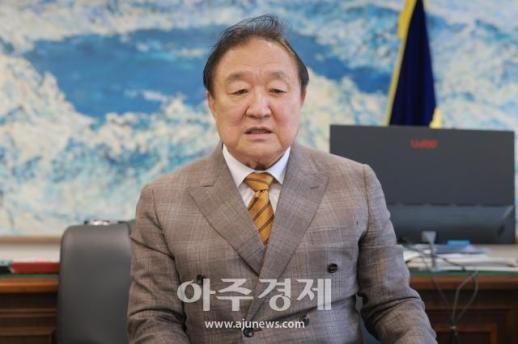 Evaluation of Lee Jae-myung's First Year in Office Highlights Economic Growth and Political Challenges As President Lee Jae-myung approaches his one-year anniversary in office, elders from various fields have positively assessed his communication with the public and improved economic indicators. However, they expressed disappointment over cooperation with opposition parties and the deepening polarization, urging the administration to address these issues during the remainder of its term. On May 31, Aju Economy gathered evaluations from four prominent figures in politics, economics, diplomacy, and society regarding the government's performance since its inception. Jeong Dae-cheol, chairman of the Constitutional Council, stated, "President Lee enjoys popular support. His frequent communication with the public is commendable," highlighting the administration's high approval ratings and communication skills. President Lee has engaged directly with citizens through town hall meetings and live broadcasts of cabinet meetings, receiving positive feedback for these innovative approaches. Jeong emphasized that the president and the ruling Democratic Party need to make greater efforts to cooperate with opposition parties like the People Power Party. He remarked, "Currently, politics resembles a state of war," and noted that the lack of collaboration and integration in politics is primarily the ruling party's responsibility. He suggested, "The majority party should give and take to revitalize politics." Joo Hyung-hwan, former Minister of Trade, Industry and Energy, acknowledged the challenges posed by trade pressures from the U.S. but praised the visible economic indicators, citing a $900 billion export figure, a 2.6% growth rate, and a KOSPI index of 8000, thanks to a booming semiconductor market. However, he cautioned that the high exchange rates, inflation, and interest rates have severely impacted the economy, exacerbating polarization. He stressed the need for more stable macroeconomic management, advocating for targeted fiscal expansion while maintaining reasonable stability. He also called for a fundamental shift in industrial policy based on artificial intelligence to transform the industrial structure established during the heavy chemical industry era of the 1970s. Opinions also emerged that the Lee administration has performed well in foreign affairs and security. Yang Mu-jin, chair professor at the University of North Korean Studies, remarked, "The administration has pursued practical diplomacy centered on national interests. The U.S.-Korea alliance has helped maintain a balance in relations with Japan and China." He noted that the defense cooperation with the U.S. has been effective, stating that the U.S. tariff pressures are not unique to South Korea but affect the entire world, thus downplaying their significance. He added that the ongoing war between Russia and Ukraine and U.S. sanctions against Russia have limited South Korea's ability to restore relations with Russia, predicting that once the war concludes, it will only be a matter of time before relations are normalized. Concerns have also been raised regarding the government's judicial and prosecutorial reforms, with some viewing them as excessive. Kim Hyun, former president of the Korean Bar Association, expressed concern that the abolition of the prosecution office could hinder effective criminal investigations, significantly infringing on citizens' basic rights. He warned that the introduction of a law against judicial distortion could allow anyone to file complaints against judges and prosecutors, potentially jeopardizing the integrity of the judiciary and leading to political pressure. He lamented that over the past year, the rule of law has deteriorated, judicial independence has been compromised, and the principle of separation of powers has been undermined. He emphasized that the separation of powers is crucial for protecting democracy and citizens' rights, urging legislative, judicial, and executive branches to exercise restraint to ensure citizens can live without fear.* This article has been translated by AI. 2026-05-31 16:27:00
 -
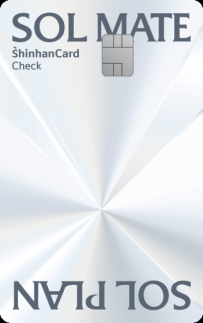 Shinhan Card Launches Senior-Friendly Check Card with Points Rewards Shinhan Card has introduced a new check card aimed at senior customers who frequently visit hospitals, supermarkets, and cafes.On May 31, Shinhan Card announced the launch of the 'SOL Mate Shinhan Card SOL Plan Check (SOL Mate Check Card).' This card offers special rewards of up to 2% for purchases made at establishments commonly frequented by seniors, such as hospitals, supermarkets, and cafes.Eligible categories for the special rewards include hospitals (general hospitals, private clinics, dental clinics, and veterinary clinics), supermarkets (Emart, Traders Wholesale Club, Lotte Mart, and Nonghyup Hanaro Mart), and cafes (Starbucks, Twosome Place, and Paul Bassett).The card also provides rewards of up to 0.4% on spending at all domestic and international merchants, depending on the previous month's spending. If the previous month's spending is between 200,000 and 600,000 won, customers earn a base reward of 0.2% and a special reward of 1.0%. For spending over 600,000 won, the base reward increases to 0.4%, and the special reward rises to 2.0%. The maximum reward limit is 30,000 points per month.Customers who meet the spending requirements for both Shinhan Card and Shinhan Bank will also receive benefits for subscription services. They can earn up to 5,000 points monthly for expenses related to OTT services (Netflix, YouTube Premium, Tving, Disney+) and digital memberships (Naver Plus, Coupang Wow).Eligible customers must maintain a balance of over 1,000,000 won in their payment account for at least 15 days and have spent over 600,000 won in the previous month. Combining both benefits, customers can earn a maximum of 35,000 points per month.The SOL Mate Check Card has no annual fee and is currently available for application at Shinhan Bank branches. It will also be available for issuance through the SOL Bank application in the future.* This article has been translated by AI. 2026-05-31 16:27:00
 -
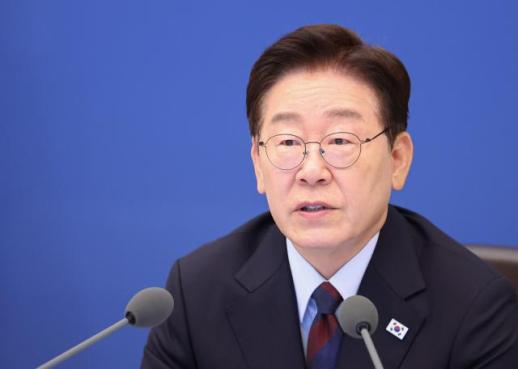 Korean Stock Market Surges Amid Legal Reforms and Global Trends Over the past year, South Korea's economy has faced significant external pressures, including U.S. tariff pressures, conflicts in the Middle East, high exchange rates, and supply chain uncertainties. However, the market has reacted unexpectedly. Once dubbed 'Parkspi,' the Korean stock market has emerged as one of the hottest markets globally, attracting renewed foreign investment. According to the financial investment industry on May 31, the KOSPI index, which stood at around 2,700 when President Lee Jae-myung's administration began last June, has surpassed 8,000 within a year. This nearly threefold increase is unmatched among major global stock markets. During his presidential campaign, Lee promised a 'KOSPI 5,000 era' as a key economic pledge. Since then, his administration has strengthened the fiduciary duties of directors and expanded cumulative voting through amendments to the Commercial Act. Other measures include mandating the buyback of treasury shares, promoting separate taxation on dividend income, and pressuring low PBR companies to improve. The Korea Exchange has also accelerated efforts to enhance market quality by tightening delisting criteria and expelling underperforming companies. In September of last year, President Lee visited the New York Stock Exchange to communicate his commitment to reforming South Korea's capital markets to foreign investors. The government has also intensified penalties for stock manipulation and insider trading. President Lee stated publicly, "I will show stock manipulators what it means to face ruin," emphasizing a tough stance against such practices. These policy changes have translated into market performance. Foreign investors have shown strong buying interest amid expectations of resolving the Korea discount. Another driving force behind the stock market's rebound has been the sectors of AI and semiconductors. As global competition in AI investment heats up, demand for high-bandwidth memory (HBM) has surged, leading to a rapid recovery in the semiconductor industry, particularly for Samsung Electronics and SK Hynix. While shipbuilding, defense, and nuclear power stocks led the market in the first half of the year, AI and semiconductors have taken the lead in the latter half. The government is also pushing for a special law to strengthen and support the semiconductor industry, alongside initiatives like the National Growth Fund to foster the AI sector. As the market's status evolves, the financial landscape is also changing. Once dominated by banks, the financial industry is seeing securities firms emerge as key players. With a surge in trading volumes and investment banking revenues, major securities firms are accelerating efforts to enhance their competitiveness to match global investment banks. Industry experts suggest that domestic securities firms are at a turning point, evolving beyond simple brokerage services to become global investment banks. Concerns remain, however. The rapid rise in stock prices has sparked fears of an AI bubble and discussions about overheating. Additionally, U.S. interest rate policies, geopolitical risks in the Middle East, and fluctuations in the semiconductor cycle continue to pose uncertainties. Nonetheless, the market is increasingly focused on the fact that this upward trend signifies a fundamental shift in the structure of South Korea's capital markets. An industry insider remarked, "Historically, the Korean stock market has always been discounted in the global arena, but now, policies, industries, and capital flows are changing simultaneously. The Korean stock market is rising to the ranks of global central markets."* This article has been translated by AI. 2026-05-31 16:24:00
 -
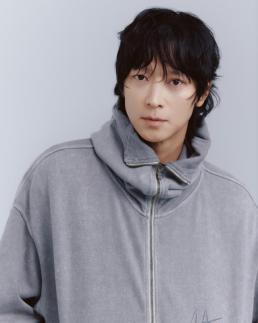 Kang Dong-won Discusses His Role in 'Wild Thing' and the Challenges of Dance Kang Dong-won returns in an unexpected role. The film 'Wild Thing' is a comedy about a mixed-gender dance group called 'Triangle,' which once dominated the music scene but disbanded due to unforeseen circumstances. Now, 20 years later, they attempt a comeback. Kang plays Hyun-woo, a former breakdancer turned struggling broadcaster, navigating the gap between past glory and current reality. His earnest portrayal of Hyun-woo brings both poignant and humorous moments to the film."After the trailer and music video were released, a close friend reached out to me, joking, 'What’s up? Are you short on cash these days?' Ha ha. I thought that comment carried a lot of meaning. I expected reactions like that. I thought, 'Oh, this is going to be fun.' There were a few projects I chose thinking people would be surprised, but I think this one will surprise them the most. It feels like a pleasant betrayal," Kang said.To convincingly portray Hyun-woo, Kang learned to dance. Although he is accustomed to action roles, dancing required a completely different skill set. He practiced late into the night even after filming wrapped."I was really satisfied with how I looked dancing. By the time we filmed the final stage, I thought, 'Wow, I’m actually good at this.' I worked really hard. Even after filming, I kept practicing and would go to the studio at night. As I continued to film the dance scenes, I gained stage experience. At first, I was overwhelmed with singing, dancing, looking at the camera, and engaging the audience, but later, as the choreography became second nature, I focused more on enhancing my lines. My dance lines improved over time," he said.While action and dance both involve physical movement, Kang found the training for each to be entirely different. He had a background in martial arts from a young age, but hip-hop dance required rhythms and attitudes he had rarely encountered."Learning something is similar, but this felt like a completely new sport with no foundation. I had a bit of a base from practicing taekwondo as a child, but hip-hop was different from dance. Matching the beat felt very unfamiliar. At first, I was learning the moves and thought, 'This isn’t working. I need to start with my steps,' so I spent about 30 minutes just walking. I played music and walked with a friend who was teaching me," he explained.He immersed himself in hip-hop culture to better understand Hyun-woo. Although Kang typically does not favor method acting, he felt it was necessary to change his wardrobe for this role. It was not just about mimicking a culture that felt foreign to him but understanding the gestures and movements that came from it."I had to use a lot of swagger in my gestures, but for those who don’t listen to hip-hop, it can seem confusing. It took me a while to adapt. Eventually, I bought clothes that fit the style. I’m not a fan of method acting, but I felt I needed to wear those clothes to understand the culture. I didn’t get why they walked or moved that way, but later I realized it was all about the beat," he said.Kang also took the time to study hip-hop history. He admitted he was almost completely ignorant about the genre. By watching documentaries and following the trends of music and culture, he began to understand the environment in which Hyun-woo grew up."I didn’t listen to hip-hop much. The only thing I knew was Limp Bizkit. I didn’t even know Tupac was a person’s name. Ha ha. I was so uninformed that I had to start studying hip-hop history from scratch. I watched documentaries, and that’s when I started to understand the character of Hyun-woo. I thought, 'He must have been exposed to this kind of music and lived like this during that time,'" he said.Kang was particularly focused on the performances of Triangle during their first album. He did not want to trivialize the stage in a comedy film. Instead, he aimed to perform well enough that even actual dancers from that era would not feel embarrassed watching it."For the first album stage, my goal was to perform well enough to be funny. I wanted to ensure that those who transitioned from being dancers to singers wouldn’t feel embarrassed watching it. I wanted them to think, 'Yeah, I used to do that,' rather than 'I never did that.' I hoped the audience would feel, 'Why is this so good? Why is it funny because it’s good?'"'Wild Thing' does not aim for precise historical accuracy but rather blends the cultural sensibilities of the late 1990s and early 2000s into a cinematic experience. Kang expressed a desire to revive the authentic 'coolness' of that era without mocking it."I wanted to recreate what I saw on TV when I was in high school. It was genuinely cool back then. I never thought about becoming a dance singer, but I wanted to capture that feeling I had as a child. I wanted to incorporate the essence of first-generation idols. I didn’t want to approach it in a purely humorous way. The hairstyles and styles that might seem excessive now were cool back then. I wore my hair and clothes like that too," he said.Hyun-woo once enjoyed a glamorous peak but now lives as a lesser-known broadcaster. Although Kang has maintained his status as a top star, he understands the feeling of being forgotten. He has carried the thought of potentially being forgotten since his debut."I’ve always been on an upward trajectory, but I’ve fluctuated within that. However, I don’t think I’ve ever fallen below the 2012 average. I might have fluctuated around the 50-day average. Ha ha. I’ve always thought about being forgotten since my debut. I felt that way since 'The Temptation of Wolves' did well. I’ve always thought I would eventually be forgotten. I’ve lasted longer than I expected, but someday I will be forgotten. There will come a time when my work decreases, and as a person, I will eventually be forgotten too. People will think, 'Was there someone like that?'">Kang is now considering projects beyond South Korea. However, he is no longer waiting for someone to recognize him and cast him. He has shifted towards creating and taking initiative in his work."In the past, I hoped someone would want to work with me, recognize me, and cast me. But now I think, 'Forget it. I’ll just create it myself.' It doesn’t have to be limited to Korea. To put it simply, I want to work with truly talented people from around the world."* This article has been translated by AI. 2026-05-31 16:24:00
 -
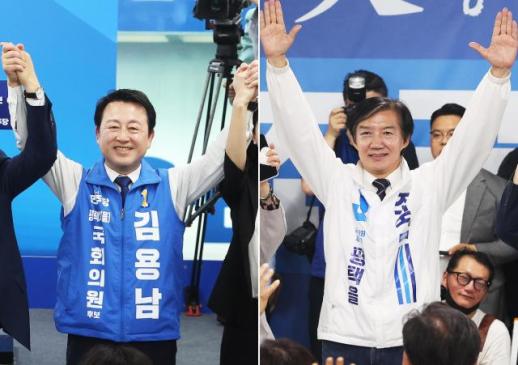 Democratic Party and Justice Party Intensify Campaign in Pyeongtaek The Democratic Party and the Justice Party are ramping up their campaigns for the Pyeongtaek by-election. Following a heated exchange between Democratic candidate Kim Yong-nam and Justice Party leader Cho Kuk, the parties' secretaries-general have also joined the fray. The Democratic Party labeled Cho as a "fake Democratic candidate," while the Justice Party described Kim as a "ticking time bomb of division" for the progressive camp. Lee Hae-min, secretary-general of the Justice Party, issued a statement from Cho's campaign office, criticizing the Democratic leadership's claim that "the suspicions have been resolved" based on Kim's bank account records. He argued that the allegations surrounding Kim's alleged involvement in a loan shark operation remain unresolved. Lee stated, "They have simply copied the arrogant 'apology season 2' habits of Yoon Seok-yeol and Kim Gun-hee. Kim's true nature as a deceptive prosecutor is now evident, misleading voters." Democratic secretary-general Cho Seung-rae did not hide his displeasure regarding the "fake Democratic candidate" remark. He noted, "A few days ago, we met and agreed to refrain from emotional criticisms between secretaries-general, despite individual remarks from lawmakers. Yet, when the situation became unfavorable, they disregarded that promise and resorted to inflammatory language like 'fake candidate.'" He emphasized that the citizens of Pyeongtaek should not bear the burden of a candidate like Kim, who is unfit for office, and that the Democratic camp cannot accommodate a divisive figure like him. Cho continued his criticism of Cho Kuk and the Justice Party during a press briefing at the National Assembly, stating, "The Justice Party candidate should compete under the Justice Party name, not wear a Democratic mask. We hope they will run under their own banner." He added, "Cho claims to represent the Democratic camp, but even Kim Jae-yeon, the chair of the Progressive Party, would disagree with that assertion." He further remarked, "Politics in South Korea does not revolve around the Justice Party or the Democratic Party. It is centered on the supporters of the Democratic Party and the progressive camp. The argument that 'if I win, unification will proceed smoothly; if not, it will be difficult' is absurd logic." Meanwhile, Kim, who was previously known as a "sharpshooter" targeting Cho's private equity fund allegations during his time in the conservative camp, has engaged in a back-and-forth with Cho throughout this election cycle. The two candidates failed to reach an agreement on a potential unification by the start of early voting on May 29, effectively rendering it unfeasible. Observers suggest that the escalating conflict between the two candidates could pose challenges for party unification after the election.* This article has been translated by AI. 2026-05-31 16:18:00
 -
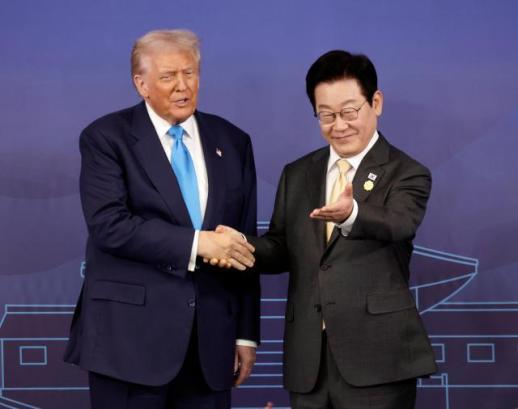 South Korea's Lee Administration Marks One Year of Diplomatic Achievements The Lee Jae-myung administration has focused on pragmatic diplomacy centered on national interests over the past year, seeking a diversified diplomatic strategy. The government has made progress in discussions regarding nuclear-powered submarines and nuclear energy cooperation with the United States, while also improving relations with China and Japan. Amid North Korea's declaration of the South and the U.S. as 'hostile nations,' finding a path to restore inter-Korean relations remains a challenge. During his first year in office, President Lee undertook nine overseas trips, visiting 14 countries and signing 126 memoranda of understanding (MOUs) as part of his diplomatic efforts. One of the administration's notable achievements was the mutual visits between the leaders of South Korea and the U.S. within just 147 days of Lee's inauguration, the shortest period on record. Following a summit with President Donald Trump in Washington, D.C., last August, a second summit was held in Gyeongju during the Asia-Pacific Economic Cooperation (APEC) summit in late October. In the security sector, the administration secured U.S. support for the introduction of nuclear-powered submarines and expanded authority for uranium enrichment and spent nuclear fuel reprocessing for nuclear power plants. These outcomes were outlined in the joint fact sheet from the Korea-U.S. summit held on October 29 in Gyeongju. Relations with China were revitalized following President Xi Jinping's visit to South Korea in November and President Lee's state visit to China in January. The relocation of Chinese facilities from the Korea-China provisional measures zone in the Yellow Sea was also seen as a significant achievement. Despite changes in Japan's leadership, with the resignation of Prime Minister Shigeru Ishiba and the inauguration of Prime Minister Sanae Takaichi, the focus remained on cooperation rather than conflict, continuing security and economic collaboration. Seven summits and meetings between South Korean and Japanese leaders helped restore 'shuttle diplomacy' and strengthen a forward-looking bilateral relationship. In multilateral diplomacy, the administration resumed extensive diplomatic engagement, starting with participation in the G7 summit, and marked a historic first by having a South Korean president preside over a United Nations Security Council meeting, showcasing its leadership as a responsible global power. The Middle East crisis, stemming from the war between the U.S. and Iran, posed a significant test for the government. Amid the blockade of the Strait of Hormuz, South Korean vessels were stranded, and on May 4, the South Korean ship HMM Namoo was attacked while docked in the strait. The government supported the evacuation of citizens by deploying military transport and charter flights from the onset of the war and engaged in continuous consultations with relevant countries, including Iran and the U.S., to ensure the safety of vessels and the resumption of navigation. An investigation into the Namoo incident concluded that the weapon used in the attack was likely a Noor-class anti-ship missile developed in Iran. The South Korean government summoned Iranian Ambassador to South Korea, Saeed Koozechi, to express its protest and demand measures to prevent a recurrence. Additionally, the Israeli government released South Korean nationals who had been detained after being captured by Israeli forces while aboard a humanitarian vessel bound for Gaza. The administration's North Korea policy aims to shift the relationship from 'hostility and confrontation' to 'peaceful coexistence and joint growth' through its 'Korean Peninsula Peace Coexistence Policy.' Following the government's launch in June of last year, measures to restore trust with North Korea were implemented. The military authorities abruptly halted loudspeaker broadcasts to North Korea after a year of resuming them. The issue of leaflet distribution by civilian organizations, which had drawn North Korea's sensitive reactions, was resolved through persuasion from the Ministry of Unification and the passage of related legislation. North Korea has institutionalized its 'hostile two nations' stance, as articulated by Kim Jong-un in December 2023. In his Liberation Day speech on August 15, President Lee declared three principles for North Korea policy: respect for North Korea's regime, no pursuit of absorption unification, and no hostile actions. He also indicated plans for the proactive and phased restoration of the military agreement that the Yoon Suk-yeol administration had suspended. Additionally, the administration has made diplomatic efforts to facilitate dialogue between North Korea and the U.S. President Lee proposed the roles of 'peacemaker' and 'pacemaker' in achieving peace on the Korean Peninsula during his meeting with President Trump. On September 3 of last year, Xi Jinping of China, Vladimir Putin of Russia, and Kim Jong-un of North Korea stood together at Tiananmen Square in Beijing during the 80th anniversary of China's victory in World War II. This marked the first time since the end of the Cold War that the leaders of North Korea, China, and Russia gathered in one place. With a clear alignment of an 'anti-Western and anti-American coalition' centered around China, the administration's pragmatic diplomacy focused on national interests faces another test. 2026-05-31 16:18:00
 -
 Samsung Electronics Becomes World Leader in Automotive Memory, Surpassing Micron Samsung Electronics has achieved the number one position in the global automotive memory semiconductor market for the first time.According to a report released on May 31 by S&P Global Mobility, a specialized automotive industry analysis firm, Samsung's market share in automotive memory rose from 35% in 2024 to 40% last year, securing the top spot.This marks the first time Samsung has surpassed Micron, which saw its market share decline from 40% to 36%, dropping to second place.Analysts attribute this success to Samsung's expansion of its customer base, particularly in the Chinese market. The company significantly increased its market share in China, a high-growth area, beyond traditional automotive markets in Europe, South Korea, and Japan.The demand for high-capacity and high-performance memory semiconductors has surged, driven by the growth of autonomous driving systems and advancements in in-vehicle infotainment (IVI) systems. Samsung's advanced products, including low-power DRAM and Universal Flash Storage (UFS), have received strong responses from customers.Samsung is known to supply automotive memory to companies such as Qualcomm, Bosch, Tesla, and Denso.Historically, the automotive memory market has been considered low-value due to its long replacement cycle of 7 to 8 years and a focus on stability over cutting-edge technology. Additionally, automakers prioritize durability and reliability, maintaining conservative supply chain management, which creates high barriers to entry for new players.Since entering the automotive semiconductor market in 2015 with low-power memory solutions like LPDDR and UFS, Samsung has expanded into automotive solid-state drives (SSDs) and graphics DRAM (GDDR), targeting the premium automotive sector.As a result, Samsung has reportedly achieved an average annual revenue growth of over 40% in the automotive memory market from 2020 to 2025.* This article has been translated by AI. 2026-05-31 16:12:00
 -
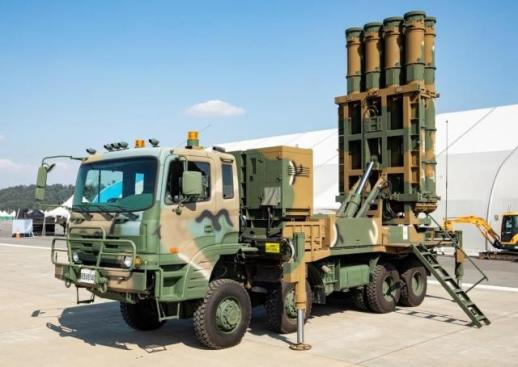 Hanwha Aerospace Discusses New Weapon Exports with Germany and the UK Hanwha Aerospace is in discussions with European countries, including Germany and the UK, regarding new weapon export contracts amid a global increase in military spending triggered by the Ukraine and Iran conflicts. On May 30, during an interview with Bloomberg TV at the 23rd Asia Security Summit (Shangri-La Dialogue) in Singapore, Alex Wong, Chief Strategy Officer of Hanwha Aerospace, shared these insights. "Demand is outpacing supply," Wong stated, adding that the recent conflicts in Ukraine and currently in Iran have highlighted the necessity for global militaries to enhance their production capabilities and ammunition stockpiles. Wong noted that Hanwha is engaging in discussions not only with existing clients like Poland and Romania but also with potential customers in Germany and the UK. He elaborated that the talks encompass not just the procurement of defense systems but also considerations on where to establish new production capabilities and how to utilize local workforce resources. "To protect citizens, a multi-layered and integrated missile defense system is essential," Wong explained. "We cannot afford to wait; we want to secure these systems immediately and hope to localize supply chains to build resilience and rapidly increase production during conflicts." In this context, Wong mentioned that Hanwha Aerospace is increasing domestic production to meet the surging demand for ammunition, missiles, and various weapon systems while also expanding manufacturing bases in Europe and the United States. "Our customers need more ammunition and more intercept missiles," he said. "We have been shifting production to meet that demand." Bloomberg reported that Europe is considered a key growth market for Hanwha Aerospace. Following a commitment from most NATO member countries to raise defense spending to around 5% of GDP last year, European militaries are expanding their acquisition of ground weapon systems, long-range strike capabilities, artillery, and advanced missile defense systems. Hanwha Aerospace is accelerating its efforts in the European market by opening a new office in Berlin this year. After securing a missile contract with Poland last year, the company also won a contract worth 1.3 trillion won to supply Chunmoo multiple launch rocket systems to Norway in February.* This article has been translated by AI. 2026-05-31 16:09:00
 -
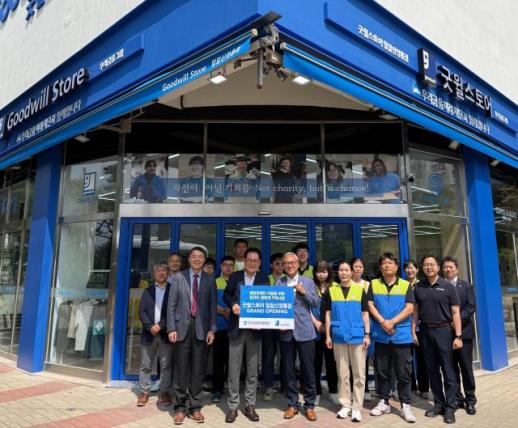 Woori Financial Opens 14th Goodwill Store for Individuals with Developmental Disabilities Woori Financial Group announced on May 31 that its Woori Future Foundation has opened a new Goodwill Store in Hwaseong City, dedicated to supporting the independence of individuals with developmental disabilities. The Goodwill Store operates as a workplace for individuals with disabilities, funded by the sale of donated items from businesses and individuals. The newly opened Goodwill Store in Hwaseong is the 14th location established in collaboration with the Milal Welfare Foundation. It aims to provide stable employment opportunities for individuals with developmental disabilities in the Gyeonggi region and to expand the community's support base. To enhance employment opportunities for individuals with developmental disabilities in local areas, Woori Financial opened Goodwill Stores in Ulsan, Daegu, and Cheongju last year. Additionally, the company introduced a social contribution branch called Goodwill Branch, which combines Woori Bank services with Goodwill Store operations, in Yeoju. This year, the expansion will continue from Hwaseong to other locations, including Hanam and Jeonju. Woori Financial has set a goal to invest a total of 30 billion won by 2034 to establish 100 Goodwill Stores nationwide, providing stable jobs for 1,500 individuals with developmental disabilities. Furthermore, the Woori Future Foundation signed a memorandum of understanding with the Milal Welfare Foundation in 2023 to build an ecosystem for employment for individuals with developmental disabilities, committing to invest 30 billion won over ten years to support the establishment of 100 stores. The foundation aims to open at least six new stores each year and provide first-year salary support to help establish a foundation for independence for individuals with developmental disabilities.* This article has been translated by AI. 2026-05-31 16:09:00