

Journalist

Jinkyu, Myung
-
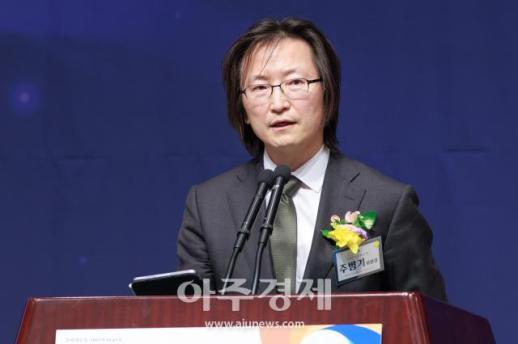 Korea's Fair Trade Commission Calls for End to Retention Practices in Construction Industry Joo Byeong-gi, chairman of the Fair Trade Commission, stated on May 28 that the revised subcontracting law focuses on significantly enhancing payment stability for small subcontractors to ensure they receive fair compensation for their work. He expressed hope for a healthier relationship that fosters mutual growth by correcting unfair clauses that shift costs, such as industrial safety expenses, onto subcontractors. Joo made these remarks during a signing ceremony for a cooperation and fair trade agreement held at the Specialized Construction Hall. The event, attended by officials from the general and specialized construction sectors, aimed to eradicate unfair trading practices in the construction industry and establish a system linking subcontractor payments. Previously, the Fair Trade Commission announced comprehensive measures to strengthen payment stability for small subcontractors, which include expanding payment guarantee obligations, introducing the right to request information related to primary contracts, and mandating the use of electronic payment systems to ensure timely payments. In February of last year, the commission also announced a revision to the subcontracting law, significantly reducing exceptions to payment guarantees to ensure payment stability. Additionally, the scope of the payment linkage system was expanded to include not only the prices of raw materials but also major energy costs. However, concerns persist that unfair practices continue in the field ahead of the law's implementation in August. In response, the Fair Trade Commission, along with 19 major construction companies and the Korea Association of Specialized Construction Contractors, agreed to the cooperation pact, which includes measures for prompt payment and the abolition of retention, correction of unfair clauses, establishment of the payment linkage system, rapid adjustment of delivery prices during emergencies, and the creation of a subcontracting dispute resolution body. Specifically, the agreement aims to eliminate the practice of paying only part of the progress payment to subcontractors while deferring the remainder until project completion, establishing a principle of cash payment within legal deadlines. It also sets forth criteria and procedures for quickly adjusting delivery prices during emergencies, to be negotiated between primary and subcontractors. Furthermore, the 19 major construction companies committed to raising delivery prices by 134.3 billion won as part of the cooperation agreement. Additionally, general contractors will establish an internal subcontracting dispute resolution body to facilitate discussions with subcontractors on issues such as payment disputes and price adjustments. To ensure the effectiveness of the cooperation agreement, a public-private consultative body will be formed to share information on the implementation status of the agreement and trends in the enforcement of the subcontracting law. Joo remarked, "The construction industry is a core sector that underpins our economy, but it is not easy to change the deeply rooted unfair practices and structures in the field overnight. This cooperation agreement was established to eradicate the remaining unfair practices and promote a culture of genuine mutual growth." He added, "The recent instability in international affairs, such as the situation in the Middle East, and the downturn in the construction market have exacerbated challenges across the industry. However, it is during such times that we must work closely together to overcome difficulties. I would like to thank the participants from the general construction industry for adjusting the delivery prices for subcontractors as part of our mutual cooperation efforts." Joo urged, "Please ensure that urgent payment adjustments and the payment linkage system operate smoothly during emergencies such as wars. If you share the various tasks that the Fair Trade Commission needs to address, I will actively consider them for institutional improvements."* This article has been translated by AI. 2026-05-28 10:46:23
 -
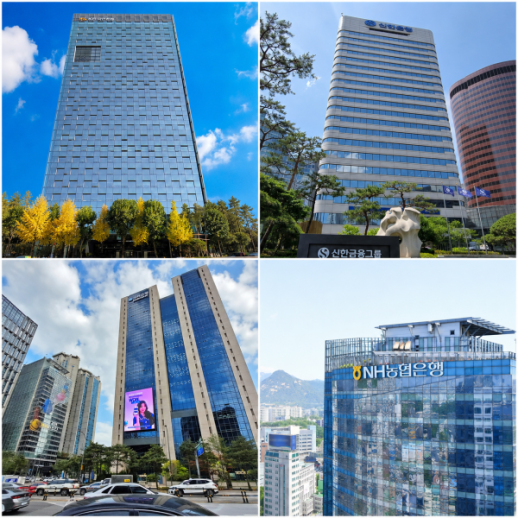 Korean Banks Complete Verification of International Payment Project Agora South Korean banks are accelerating the verification of next-generation international payment infrastructure. KB Kookmin, Shinhan, Woori, and NH NongHyup Bank announced on May 28 that they have completed the prototype verification for the 'Project Agora,' led by the Bank for International Settlements (BIS) and the Institute of International Finance (IIF). The Agora Project is a public-private partnership aimed at verifying whether central bank digital currencies (CBDCs) and deposit tokens can facilitate efficient cross-border payments. Central banks from seven countries, including South Korea, the United States, France, the United Kingdom, Japan, Switzerland, and Mexico, along with over 40 financial institutions, have participated in the project, which recently welcomed the Bank of Canada. Six South Korean banks, including KB Kookmin Bank, Shinhan Bank, Hana Bank, Woori Bank, NH NongHyup Bank, and IBK Industrial Bank, are involved in the initiative. Currently, the cross-border payment system faces challenges such as slow transfer speeds, high costs, and a lack of transparency due to the involvement of multiple intermediaries. To address these inefficiencies, participating institutions examined the feasibility of implementing real-time, multi-currency simultaneous payments, enhancing cross-border payment efficiency, and maintaining currency uniformity in a tokenized environment during the prototype verification. Tokenization refers to the technology that converts deposits or financial assets into blockchain-based digital assets. These banks plan to participate in future real transaction tests based on their experience with Project Agora. The real transaction tests will go beyond prototype verification to assess the applicability of the payment structure based on actual value transfers. The four banks will evaluate the global payment potential of won-based deposit tokens by linking their headquarters with overseas networks.* This article has been translated by AI. 2026-05-28 10:46:19
 -
Korean Banks Complete Verification of International Payment Project Agora Domestic banks are accelerating the verification of next-generation international payment infrastructure.KB Kookmin, Shinhan, Woori, and NH NongHyup Bank announced on May 28 that they have completed the prototype verification for the 'Project Agora,' led by the Bank for International Settlements (BIS) and the Institute of International Finance (IIF).The Agora Project is a public-private partnership aimed at verifying the feasibility of efficient cross-border payments using central bank digital currencies (CBDCs) and deposit tokens.Central banks from seven countries, including South Korea, the United States, France, the United Kingdom, Japan, Switzerland, and Mexico, along with over 40 financial institutions, have participated, with the Bank of Canada recently joining the initiative. Six domestic banks, including KB Kookmin Bank, Shinhan Bank, Hana Bank, Woori Bank, NH NongHyup Bank, and IBK Industrial Bank, are listed as participating institutions.Currently, the cross-border payment system is hampered by a structure that involves multiple intermediaries, resulting in slow transfer speeds, high costs, and a lack of transparency in transactions.To address these inefficiencies, the participating institutions examined the feasibility of implementing real-time simultaneous payments based on multiple currencies, improving cross-border payment efficiency, and maintaining currency uniformity in a tokenized environment during the prototype verification. Tokenization refers to the technology that converts deposits or financial assets into blockchain-based digital assets.These banks plan to participate in future real transaction tests based on their experience with Project Agora. The real transaction tests will go beyond prototype verification to confirm the applicability of the payment structure based on actual value transfers. The four banks will assess the global payment potential of won-based deposit tokens by linking their headquarters with overseas networks.* This article has been translated by AI. 2026-05-28 10:45:37
-
Korean Banks Complete Verification for International Payment Project Agora Domestic banks are accelerating the verification of next-generation international payment infrastructure.KB Kookmin, Shinhan, Woori, and NH NongHyup Banks announced on May 28 that they have completed the prototype verification for the 'Project Agora,' led by the Bank for International Settlements (BIS) and the Institute of International Finance (IIF).The Agora Project is a public-private partnership aimed at verifying the feasibility of efficient cross-border payments using central bank digital currencies (CBDCs) and deposit tokens.Central banks from seven countries, including South Korea, the United States, France, the United Kingdom, Japan, Switzerland, and Mexico, along with over 40 financial institutions, have participated, with the Bank of Canada recently joining. In South Korea, six banks, including KB Kookmin, Shinhan, Hana, Woori, NH NongHyup, and IBK Industrial Bank, are involved in the initiative.Currently, the cross-border payment system is hampered by a structure that involves multiple intermediaries, resulting in slow transfer speeds, high costs, and a lack of transparency in transactions.To address these inefficiencies, participating institutions examined the feasibility of implementing real-time simultaneous payments based on multiple currencies, enhancing cross-border payment efficiency, and maintaining currency uniformity in a tokenized environment during the prototype verification. Tokenization refers to the technology that converts deposits or financial assets into blockchain-based digital assets.These banks plan to participate in upcoming real transaction tests based on their experience with Project Agora. The real transaction tests will go beyond prototype verification to assess the applicability of the payment structure based on actual value transfers. The four banks will evaluate the global payment potential of won-based deposit tokens by linking their headquarters with overseas networks.* This article has been translated by AI. 2026-05-28 10:45:21
-
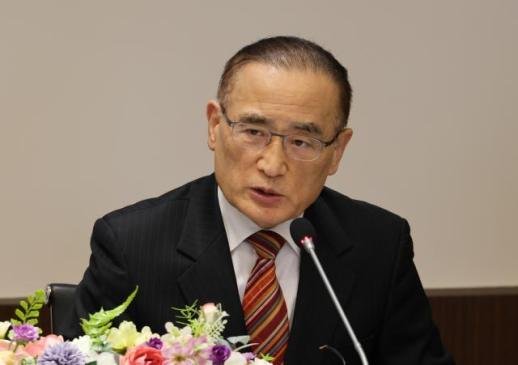 National Security Chief Wei Sung-lak Visits Kazakhstan for Energy Cooperation Talks Wei Sung-lak, the head of South Korea's National Security Office, is set to depart for Kazakhstan on May 28.The Blue House announced that Wei is visiting Kazakhstan, a key trading and investment partner in Central Asia, to discuss preparations for the upcoming Korea-Central Asia Summit scheduled for September.During his visit, Wei will meet with officials from the Kazakh presidential office to review the summit's preparations and coordinate plans for Kazakh President Kassym-Jomart Tokayev's visit to South Korea.Additionally, discussions will cover regional stability and cooperation in energy supply chains.Earlier, South Korea and the five Central Asian countries—Kazakhstan, Uzbekistan, Turkmenistan, Tajikistan, and Kyrgyzstan—agreed to establish the Korea-Central Asia Summit in 2024, with the inaugural meeting set to take place in South Korea on September 16-17.A Blue House official stated, "Our government plans to maintain close communication with Central Asian countries, including Kazakhstan, to ensure the successful hosting of the Korea-Central Asia Summit."* This article has been translated by AI. 2026-05-28 10:43:21
 -
National Security Chief Wi Sung-lak Visits Kazakhstan to Discuss Energy Cooperation Wi Sung-lak, the head of South Korea's National Security Office, is set to depart for Kazakhstan on May 28. The Blue House announced that Wi's visit aims to discuss cooperation with Kazakhstan, a key trading and investment partner in Central Asia, ahead of the upcoming Korea-Central Asia Summit scheduled for September. During his visit, Wi will meet with officials from the Kazakh presidential office to review preparations for the summit and coordinate plans for Kazakh President Kassym-Jomart Tokayev's visit to South Korea. Additionally, discussions will cover regional security dynamics and energy supply chain cooperation. Earlier, South Korea and the five Central Asian countries—Kazakhstan, Uzbekistan, Turkmenistan, Tajikistan, and Kyrgyzstan—agreed to establish the Korea-Central Asia Summit, with the inaugural meeting set to take place in South Korea on September 16-17, 2024. A Blue House official stated, "Our government plans to maintain close communication with Central Asian countries, including Kazakhstan, to ensure the successful hosting of the Korea-Central Asia Summit." * This article has been translated by AI. 2026-05-28 10:43:13
-
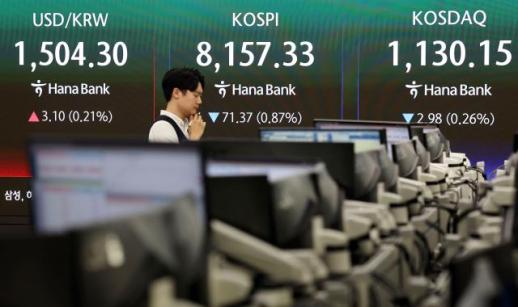 KOSPI Rebounds Amid Retail Buying Despite Foreign Sell-Off The KOSPI index turned upward on the 28th, buoyed by retail investor buying. As of 9:58 a.m., the index was trading at 8,240.30, up 11.60 points (0.14%) from the previous trading day. At this time, foreign investors were net sellers, offloading 23.665 trillion won, while individuals and institutions were net buyers, purchasing 2.606 trillion won and 244.6 billion won, respectively. The KOSPI opened at 8,165.73, down 62.97 points (0.77%) from the previous day, initially widening its losses due to foreign selling. However, strong buying from individual investors soon reversed the trend, pushing the index higher. Among large-cap stocks, SK Hynix rose by 2.45%, Hyundai Motor by 2.35%, Samsung Electro-Mechanics by 2.15%, and LG Energy Solution by 11.47%. In contrast, Samsung Electronics fell by 0.33%, SK Square by 1.49%, and HD Hyundai Heavy Industries by 4.03%. At the same time, the KOSDAQ index showed a decline of 18.36 points (1.62%), standing at 1,114.77. In the KOSDAQ market, foreign and institutional investors were net sellers, offloading 114.4 billion won and 29.1 billion won, respectively, while individuals were net buyers, acquiring 167.5 billion won. Among large-cap stocks, Alteogen fell by 3.62%, Rainbow Robotics by 2.60%, Juseong Engineering by 7.21%, Kolon TissueGene by 5.97%, and Samchundang Pharm by 2.56%. Conversely, EcoPro BM rose by 2.11% and EcoPro by 0.77%.* This article has been translated by AI. 2026-05-28 10:42:24
 -
KOSPI Rebounds Amid Strong Retail Buying Despite Foreign Sell-Off The KOSPI index turned upward on May 28, buoyed by strong retail buying. As of 9:58 a.m., the index was trading at 8,240.30, up 11.60 points (0.14%) from the previous trading day. At this time, foreign investors were net sellers, offloading 23.665 trillion won, while individuals and institutions were net buyers, purchasing 2.606 trillion won and 244.6 billion won, respectively. The KOSPI opened at 8,165.73, down 62.97 points (0.77%) from the previous day, and initially widened its losses due to foreign selling. However, the index reversed course as individual buying intensified. Among large-cap stocks, SK Hynix rose by 2.45%, Hyundai Motor by 2.35%, Samsung Electro-Mechanics by 2.15%, and LG Energy Solution by 11.47%. Conversely, Samsung Electronics fell by 0.33%, SK Square by 1.49%, and HD Hyundai Heavy Industries by 4.03%. At the same time, the KOSDAQ index was down 18.36 points (1.62%), trading at 1,114.77. In the KOSDAQ market, foreign and institutional investors were net sellers, offloading 114.4 billion won and 29.1 billion won, respectively, while individuals were net buyers, acquiring 167.5 billion won. Among large-cap stocks, Alteogen fell by 3.62%, Rainbow Robotics by 2.60%, Juseong Engineering by 7.21%, Kolon TissueGene by 5.97%, and Samchundang Pharmaceutical by 2.56%. Meanwhile, Ecopro BM rose by 2.11% and Ecopro by 0.77%.* This article has been translated by AI. 2026-05-28 10:42:00
-
 Hyundai Mobis Hits New 52-Week High Amid Physical AI Value Chain Reassessment Hyundai Mobis has reached a new 52-week high, driven by investor optimism surrounding the reassessment of its physical artificial intelligence (AI) value chain. According to the Korea Exchange, as of 10:19 a.m. on May 28, Hyundai Mobis shares were trading at 712,000 won, up 24,000 won (3.49%) from the previous trading day. Shortly after the market opened, the stock surged 8.87% to hit 749,000 won, marking a new high. Analysts are focusing on the expansion of Hyundai Mobis's physical AI value chain, leading to upward revisions of target prices. Shinhan Investment Corp. raised its target price from 570,000 won to 900,000 won, an increase of 57.9%. Samsung Securities and LS Securities also adjusted their target prices for Hyundai Mobis to 950,000 won and 870,000 won, respectively. Park Kwang-rae, an analyst at Shinhan Investment Corp., stated, "Hyundai Mobis's after-service (A/S) segment plays a crucial role in supporting the valuation floor as a key cash generator, providing investment capacity for automotive, autonomous driving, and robotics." Lim Eun-young, an analyst at Samsung Securities, noted, "The actuators handled by Hyundai Mobis account for 50% to 60% of the hardware costs for humanoid robots and are also key components for thermal management," indicating an increase in the company's role in the robotics sector. As a result, the price-to-earnings (P/E) ratio has been raised from 13.7 to 18.4.* This article has been translated by AI. 2026-05-28 10:40:35
 -
Hyundai Mobis Hits 52-Week High Amid Physical AI Value Chain Reassessment Hyundai Mobis has reached a 52-week high, driven by investor optimism surrounding the reassessment of its physical artificial intelligence (AI) value chain. According to the Korea Exchange, as of 10:19 a.m. on May 28, Hyundai Mobis shares were trading at 712,000 won, up 24,000 won (3.49%) from the previous trading day. Shortly after the market opened, the stock surged to 749,000 won, marking a new high with an 8.87% increase. Analysts are focusing on Hyundai Mobis's expansion of its physical AI value chain, leading to upward revisions of target prices. Shinhan Investment Corp. raised its target price from 570,000 won to 900,000 won, a 57.9% increase. Samsung Securities and LS Securities also adjusted their target prices for Hyundai Mobis to 950,000 won and 870,000 won, respectively. Park Kwang-rae, an analyst at Shinhan Investment Corp., stated, "Hyundai Mobis's after-service (A/S) sector plays a crucial role in supporting the valuation floor as a key cash generator, providing investment capacity for automotive, autonomous driving, and robotics." Lim Eun-young, an analyst at Samsung Securities, noted that the actuators handled by Hyundai Mobis account for 50% to 60% of the hardware costs for humanoid robots and are also essential components for thermal management. He indicated that this reflects an expanded role in the robotics sector, prompting an increase in the price-to-earnings (P/E) ratio from 13.7 to 18.4.* This article has been translated by AI. 2026-05-28 10:40:05