
Journalist

John Pritchard
-
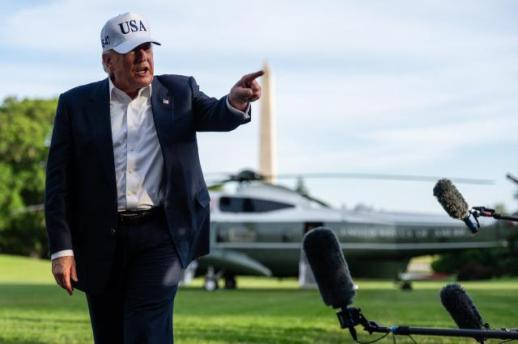 Trump Suggests Weapon Sales to Taiwan Depend on China Negotiations Donald Trump, President of the United States, indicated that the issue of arms sales to Taiwan could be used as a bargaining chip in negotiations with China following a recent U.S.-China summit. In an interview with Fox News' Bret Baier aired on May 15, Trump responded to a question about whether he would approve additional arms sales to Taiwan, stating, "I have not approved it yet. I could approve it, or I could not approve it." He added, "I am holding off on the arms sales to Taiwan, and that depends on China. It’s a very good negotiating chip for us. $12 billion worth of arms is a lot of weapons." Trump emphasized the geographical distance between the U.S. and Taiwan in relation to Taiwan's defense. He noted, "When you look at the situation, China is a very, very powerful country, and Taiwan is a very small island," pointing out that Taiwan is 59 miles (about 95 km) from mainland China, while the U.S. is 9,500 miles (about 15,000 km) away. However, Trump expressed a preference for maintaining the status quo in the Taiwan Strait, stating he does not want war. He remarked, "I don’t want a situation where someone says, ‘Let’s declare independence because the U.S. is backing us.’" He added, "I think while I’m in office, they (China) won’t do anything, but honestly, when I’m not there, they might attack (Taiwan)." Trump also voiced strong dissatisfaction with Taiwan's semiconductor industry, saying, "I would love to see all the semiconductor manufacturers in Taiwan come to the U.S. It would be a great thing to do given the urgency of the situation." He expressed hope that by the end of his term, 40-50% of the global semiconductor industry would be based in the U.S. He claimed that previous administrations allowed Taiwan to grow in the semiconductor sector without tariffs, stating, "They (Taiwan) have stolen our semiconductor (industry) for many years." He added, "We lost the semiconductor industry, but it’s all coming back." When asked whether Taiwanese people should feel safer or less safe following the U.S.-China summit, Trump responded, "Neutral," indicating there would be no change in policy toward Taiwan. He reiterated, "I don’t want someone to declare independence and have us go to war 9,500 miles away. I hope both Taiwan and China exercise restraint." Additionally, Trump mentioned that he raised the issue of the release of Jimmy Lai, a pro-democracy media tycoon imprisoned in Hong Kong, with Chinese President Xi Jinping, noting that Xi's response was "not positive." He quoted Xi as referring to Lai as a "nightmare." This interview took place on May 15 in Beijing, the day after Trump's summit with Xi.* This article has been translated by AI. 2026-05-17 17:06:00
 -
 Namyang Dairy Reports Growth in Q1 Revenue and Operating Profit After Five Years of Losses Namyang Dairy has reported increases in both revenue and operating profit for the first quarter of this year, driven by growth in exports and business-to-business (B2B) channels. This marks a continuation of the company's recovery following its return to profitability last year. According to data released on May 17 by the Financial Supervisory Service, Namyang Dairy's consolidated revenue for the first quarter reached 225.2 billion won, a 4.4% increase compared to the same period last year. Operating profit surged to 500 million won, up 572%, while net profit rose to 6.3 billion won, a 419% increase. The net profit includes 8.27 billion won in compensation payments related to embezzlement and breach of trust involving the family of former Chairman Hong Won-sik, which was recorded as other non-operating income. Since transitioning to the Han & Company management structure, Namyang Dairy has focused on restructuring its business and improving operational efficiency. Although this has led to a reduction in scale due to the elimination of low-profit businesses and products, the company successfully returned to profitability last year and has shown simultaneous growth in revenue and operating profit this year. Analysts attribute the performance improvement to the expansion of growth channels centered on exports and B2B. First-quarter export revenue reached 16.4 billion won, an increase of approximately 81% year-on-year. Exports of milk powder, primarily to Cambodia and Vietnam, rose by about 54%, while exports of other products, including coffee and protein items, surged by 136%. Domestically, sales across major channels such as convenience stores, corporate supermarkets, and e-commerce grew steadily. Revenue from the food service (FS) B2B channel also increased by 13% compared to the previous year. The expansion of partnerships with franchise cafes and catering companies, along with diversification of supply items like milk, fermented milk, and cream, contributed to this growth. Among its products, the protein brand 'Takefit' showed remarkable growth, with first-quarter sales increasing by 72% year-on-year. The company attributed this success to its strategy of expanding product lines and overseas sales channels. In the coffee segment, sales of products like 'French Cafe Coffee Mix with Goat Milk Protein' increased by 14% in the first quarter, while processed milk brands 'Chocoemong' and 'Matchaemong' saw a 7% rise in sales. The premium ice cream and coffee brand Baekmidang also continued its growth trend, with first-quarter sales reaching 7.6 billion won, a 44% increase from the same period last year. Operating profit turned around from a 300 million won loss in the first quarter of last year to a profit of 1.2 billion won this year. Namyang Dairy is accelerating its global expansion efforts. Earlier this year, it signed a memorandum of understanding with Vietnamese distributor Phutai Holdings regarding the supply of formula milk, and in April, it secured an additional supply agreement worth 70 billion won over three years during a South Korea-Vietnam economic delegation visit. A company representative stated, "We are continuing to improve profitability through the restructuring of our product portfolio and channel efficiency, and we plan to expand our overseas business focusing on growth products such as milk powder, coffee, and protein."* This article has been translated by AI. 2026-05-17 17:02:00
 -
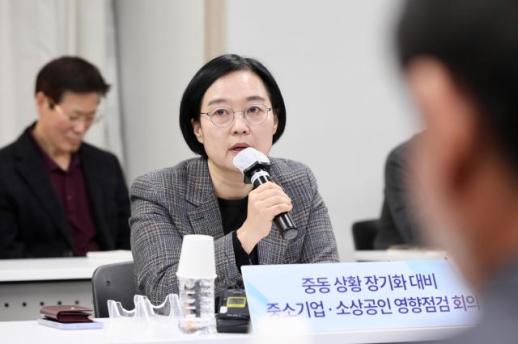 320 Policy Suggestions Received in 100 Days: Minister Responds to SMEs The Ministry of SMEs and Startups has confirmed that approximately 320 policy suggestions have been received through its "Direct Suggestions to the Minister" portal over the past 100 days. As of May 13, a total of 322 suggestions were submitted from February 2 to May 13, averaging 3.5 suggestions per day. Of these, 211 have received responses. The participation of a diverse group, including representatives from small and medium-sized enterprises (SMEs), small business owners, startup founders, bank employees involved in SME financing, and overseas citizens, has been noted as significant in conveying the voices from the field. Minister Han Seong-sook has personally read all the suggestions and responds directly to those that can be addressed immediately. For matters requiring further review, the ministry connects them with relevant departments for detailed examination. The suggestions are categorized into five types based on their content, scope, and necessity for action: 1) System Improvement (issues under the ministry's jurisdiction), 2) Policy Projects (long-term tasks requiring collaboration with other ministries or legislation), 3) Field Communication (inquiries and guidance), 4) Business Promotion, and 5) Others. Starting with an expanded executive meeting on May 18, the ministry plans to discuss key suggestions and system improvements with senior officials to ensure they lead to actual policy enhancements. Notably, suggestions that can be implemented immediately during policy operations have already been acted upon. For example, proposals related to the "Everyone's Startup" project included requests to ease restrictions for existing entrepreneurs and those who have not generated revenue after registering their businesses, as well as allowing overseas citizens to apply. In response, the ministry has included individuals wishing to start a business in a different industry within three years of their initial startup in the eligibility criteria. Additionally, overseas residents can now apply for business registration after verifying their identity through email and contact information. Starting from the second application round scheduled for June 2026, an IP-based identity verification method will be introduced to enhance convenience. Regarding policy funds for small businesses, requests for improvements to the first-come, first-served application system and issues with system stability have been received. The ministry has introduced a policy prioritization evaluation to comprehensively select applicants that align with funding purposes. It has also improved the system to accept all applications submitted during the application period. In response to suggestions for expanding financial support for companies struggling due to the Middle East conflict, the ministry has allocated 250 billion won for emergency management stabilization funds in this year's supplementary budget. Minister Han Seong-sook stated, "From urgent inquiries that need immediate resolution to sharp critiques of current systems regarding small business policy funds, technology protection, and startup support, as well as long-term policy issues requiring in-depth review such as regulatory improvements or legal amendments, each suggestion reflects the earnestness and dedication of the citizens. I recognize the weight of the proposals submitted by the public and carefully consider each response to ensure effective communication."* This article has been translated by AI. 2026-05-17 17:01:02
 -
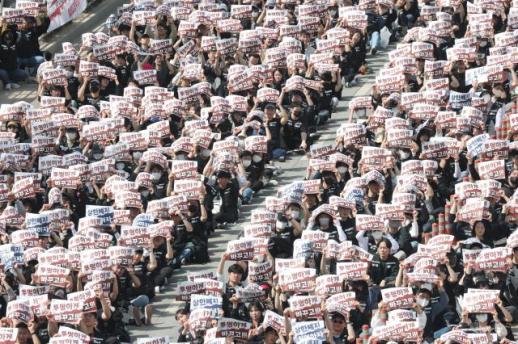 Samsung and Union Enter Final Negotiations Ahead of Strike Samsung Electronics and its labor union are entering final negotiations ahead of a planned strike. Following an apology from Lee Jae-yong, the company's chairman, the government has warned of strong measures, including emergency mediation, should a strike occur. This has raised hopes for a potential agreement between the two sides. According to government and business sources, Samsung and the union will attend a second post-mediation meeting at the Central Labor Relations Commission in Sejong City at 10 a.m. on May 18. This meeting is seen as the last chance to avert a full-scale strike scheduled for May 21, with the commission's chairman, Park Soo-geun, set to oversee the discussions. Previously, the two sides engaged in about 30 hours of initial post-mediation negotiations from May 11 to early May 13 but failed to reach an agreement. After the breakdown of the first round of negotiations, both sides initially declared that no further discussions would take place. However, they have since revived talks through a restructuring of the management negotiation team and a commitment from the union to engage in sincere negotiations. The company has replaced its lead negotiator, promoting Yeo Myung-gu, head of the People Team in the DS (Semiconductor) division, to take over from Kim Hyung-ro, the previous vice president. This change is seen as a response to the union's demand for a negotiation partner with substantial authority, signaling a shift from a defensive stance to a more proactive approach in seeking a compromise. The union has also adopted a more constructive dialogue approach. Choi Seung-ho, chairman of the Samsung Electronics branch of the Federation of Korean Trade Unions, expressed willingness to engage responsibly in the upcoming mediation, responding positively to the company's personnel changes and requests to resume talks. The chairman's appeal and the government's active mediation efforts appear to have influenced this shift in attitude. However, it remains uncertain how much both sides will compromise at the negotiation table. The union continues to demand the abolition of the performance bonus cap and the establishment of a system that allocates 15% of annual operating profits as bonuses. According to the union, during the first round of negotiations, the company proposed performance bonuses of over 600% for the memory semiconductor division, while offering a maximum of 100% for non-memory sectors such as foundry and system LSI. Choi stated, "If employees in the memory division receive bonuses of 500 million won while those in the foundry division only get 80 million won, will those employees remain motivated to work?" He advocates for uniform performance bonuses across the entire DS division. The company, however, argues that providing uniform performance bonuses for the DS division is impractical due to the need for financial flexibility and management capacity. As criticism mounts that the union is prioritizing its own interests at the expense of broader employee concerns, trust in the union is declining. The focus on wage negotiations for the DS division has exacerbated feelings of neglect among employees in the mobile and home appliance sectors. In fact, internal dissatisfaction has surged, with nearly 4,000 members applying to leave the union in the past month, a figure that represents about half of the union members in the DX division. Some speculate that the union's majority status could be at risk. Ahn Gi-hyun, executive director of the Korea Semiconductor Industry Association, remarked, "With both the corporate leadership and government authorities calling for a resolution, it is crucial for both sides to approach the negotiation table with flexible options, considering the catastrophic risks of a strike."* This article has been translated by AI. 2026-05-17 16:56:26
 -
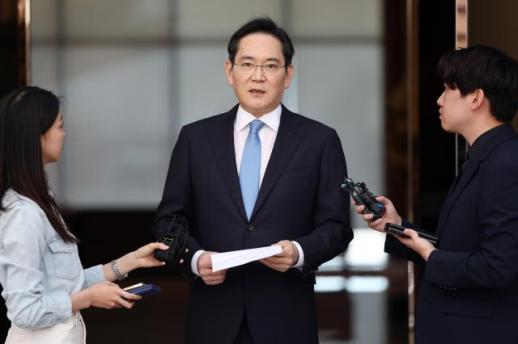 Samsung's Lee Jae-yong Takes Responsibility Amid Labor Negotiations As labor tensions at Samsung Electronics escalated towards an unprecedented strike, efforts by Chairman Lee Jae-yong have reopened negotiations. According to industry sources on May 17, a meeting between the Ministry of Employment and Labor and Samsung Electronics executives, including Vice Chairman Jeon Young-hyun, took place on May 15 to persuade the union. As a result, the two sides agreed to hold a second post-adjustment meeting on May 18, just days before a planned general strike on May 21. Lee's candid response has reportedly influenced the union's shift from its previous stance of deeming further dialogue unnecessary. Upon returning from a business trip, Lee publicly apologized, stating, "I sincerely apologize to our global customers for causing anxiety and concern due to internal company issues." He also expressed regret to the public, saying, "I bow my head in apology to the citizens who always support, love, and challenge Samsung." It is unusual for a business leader to publicly address labor issues and offer an apology. Typically, such matters are handled through management and negotiation channels. With the union's strike declaration posing a national risk to the AI supercycle, Lee's direct message is seen as a necessary step. Notably, Lee appealed directly to the union and employees, stating, "Union members, Samsung family, we are one body, one family," emphasizing the need to unite wisely and move forward together. He added, "I will take the brunt of the harsh winds and take full responsibility." In a time of heightened labor conflict, Lee chose to prioritize apology and accountability over pressure or rigid principles. Observers note that his humble and serious demeanor is emerging as a leadership quality during this crisis. This aspect of Lee's character has been evident before. In August 2022, after his reinstatement, he visited the Giheung campus in Yongin, where he humorously facilitated a video call between an employee and his wife, fulfilling the employee's request for a photo. On the same day, he was also seen having lunch with employees in the cafeteria, further demonstrating his commitment to 'plate management,' where he shares meals with staff. This approach has been interpreted as a genuine desire to connect with employees rather than maintaining a distant image typical of corporate leaders. Lee's recent message diverges from the traditional image of chaebol leaders, opting for a humble communication style rather than authoritative directives. By first apologizing to customers and the public, then referring to the union and employees as 'one family,' he reframed the issue as one of trust for the entire Samsung organization rather than merely an internal negotiation. Samsung Electronics and its union have been at an impasse over the establishment of a performance-based bonus system. Following the breakdown of the first post-adjustment meeting on May 11-12, the possibility of a general strike has increased. Whether Lee's appeal will lead to a resolution in labor negotiations remains uncertain, as substantial agreement on the key issue of performance bonuses is still needed. However, with the chairman acknowledging responsibility and calling for dialogue, analysts suggest that both sides may feel increased pressure to soften their hardline positions. The government's active mediation efforts are also noteworthy. The Ministry of Employment and Labor has been contacting both sides individually to encourage dialogue following the breakdown of negotiations, and sincere persuasion has reportedly created a conducive atmosphere for resuming talks. An industry insider remarked, "This message from Lee is more than just an apology; it signals that he is willing to take on the responsibility for labor disputes. Given that Samsung is at a critical juncture in its semiconductor business recovery, both labor and management need to find an exit strategy."* This article has been translated by AI. 2026-05-17 16:55:28
 -
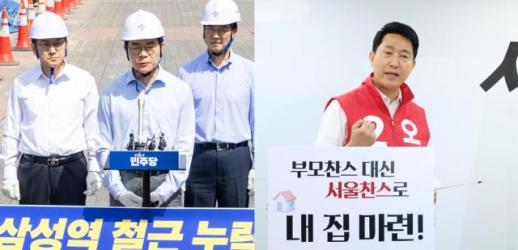 Negative Campaigning Intensifies in Seoul Mayor Race Ahead of Local Elections As the nationwide local elections approach on May 31, the race for Seoul mayor is heating up. Negative campaigning surrounding alleged mistakes and controversies has intensified, increasing tension among candidates. Jung Won-oh, the Democratic Party's candidate, targeted Oh Se-hoon, the People Power Party candidate, over a construction issue involving missing rebar in the GTX-A line at Samseong Station, which occurred during Oh's tenure as mayor. During a visit to the construction site, Jung criticized the situation as a reflection of the city’s irresponsible safety oversight. He questioned when Oh first learned of the construction deficiencies and what actions he took, raising suspicions of a cover-up due to the delay in reporting the issue to the Ministry of Land, Infrastructure and Transport. Jung's campaign labeled the incident as a "reporting omission of the GTX construction failure" and asserted that the city bears responsibility for the problems arising from the construction. Lee In-young, the head of Jung's campaign committee, held a press conference at the National Assembly, demanding that Oh explain whether he concealed the issue during his time as mayor and warned that legal accountability may be pursued if necessary. In response, Oh denied the allegations of covering up the construction failures and escalated his counterattacks by announcing a pledge to eradicate alcohol-related violence. After unveiling his housing promises for young people at his campaign office, Oh stated, "Upon investigation, it turns out that Hyundai Engineering & Construction acknowledged the mistake and reported it themselves; I only learned about it yesterday." He dismissed the cover-up allegations, suggesting that Jung's campaign appears to be on the defensive. Later in the day, Oh announced the "Zero Alcohol Violence Project," which aims to implement a zero-tolerance policy for alcohol-related misconduct among city officials, targeting a past incident involving Jung from 1995 when he was an aide to the mayor of Yangcheon District. The People Power Party also joined the fray, filing a counter-complaint against Democratic Party lawmakers for alleged violations of the Public Official Election Act. Earlier, Democratic Party lawmaker Seo Young-kyo and others accused Jung of assaulting a female employee who refused to stay overnight. Joo Jin-woo, a lawmaker from the People Power Party, announced on his Facebook that Seo's initial complaint reignited the controversy over Jung's alleged coercion, emphasizing the need to thoroughly investigate the claims. The ruling party has vowed not to back down. Lee In-young condemned the "shameless black propaganda" against Jung and stated that three complaints have already been filed, assuring that there will be no cover-up after the elections.* This article has been translated by AI. 2026-05-17 16:40:20
 -
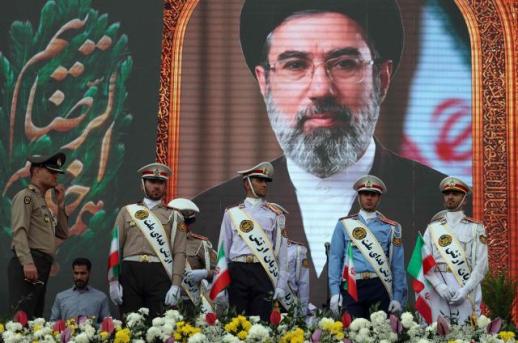 Iran-Backed Militants Expand Attack Plans to Include U.S. Soil Concerns are growing that Iran-backed militant groups may expand their activities beyond the Middle East, including potential attacks on U.S. soil, following revelations of their plans to target Western nations. The New York Times reported on May 16, citing an indictment released in a Manhattan federal court, that Mohammad al-Sadi, a senior official of the Iraqi militia Kata'ib Hezbollah, has been charged with plotting at least 20 attacks against Western countries, including the United States, since the onset of the war in late February. Al-Sadi is accused of planning a firebomb attack at a synagogue in Belgium and a terrorist act against a Bank of America building in Paris. Investigations in the U.S. revealed he also attempted to attack a synagogue in New York City. Iraqi media outlet Saberin News, linked to the militia, reported that al-Sadi was arrested by Turkish security forces while traveling to Moscow via Turkey. While Kata'ib Hezbollah has not commented on al-Sadi's arrest or the charges against him, his lawyer claims he is a "political prisoner and a war captive." This incident raises alarms about the potential for Iran's proxy forces, previously focused on the Middle East, to extend their operations into the U.S. and Europe. Aaron Zelin, a scholar at the Washington Institute for Near East Policy, told the Times, "They (Kata'ib Hezbollah) are now expanding their operational scope beyond war zones to Western countries, suggesting that Iran-supported 'Axis of Resistance' is becoming involved in more attacks against the West." Experts believe that groups like Kata'ib Hezbollah are likely conducting overseas operations with the approval of Iran's Islamic Revolutionary Guard Corps (IRGC). Given the potential backlash against Iran, which is already engaged in conflict with the U.S., it would be difficult for these proxies to operate independently without IRGC consent. Since the late 1980s, Iran has built a network of proxy militias known as the 'Axis of Resistance' throughout the Middle East. These groups have grown into significant armed forces in Iraq and have reportedly participated in attacks targeting the U.S. Embassy in Iraq and oil facilities in Gulf nations following the recent war. The U.S. has repeatedly highlighted the threat posed by Iran-backed militant groups. According to The New Region, U.S. Central Command (CENTCOM) Commander Brad Cooper stated during a Senate Armed Services Committee hearing on May 14 that "in just 30 months before the start of Operation Epic Fury, Iran-backed terrorist groups attacked U.S. troops and diplomats over 350 times. This equates to more than one attack every three days, resulting in the deaths of four U.S. service members and nearly 200 injuries." In response, the U.S. government has increased pressure on Iran-backed militias in Iraq, offering rewards of up to $10 million (approximately 15 billion won) and imposing related sanctions. A State Department spokesperson explained that the reward program for Abu Ala al-Walai, the leader of Kata'ib Sayyid al-Shuhada (KSS), is part of efforts to dismantle Iran-backed militias in Iraq and advance U.S.-Iraq relations.* This article has been translated by AI. 2026-05-17 16:34:19
 -
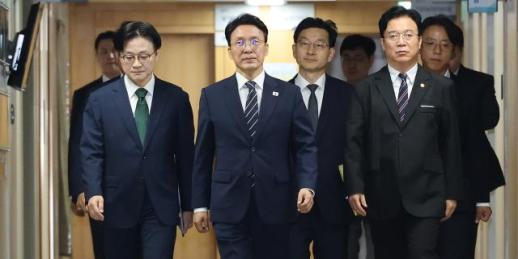 Samsung Electronics Strike Looms as Government Considers Emergency Mediation The impending strike by Samsung Electronics' labor union has deepened concerns for labor authorities. The government, which has maintained a principle of 'self-resolution' between labor and management, has officially mentioned the possibility of invoking emergency mediation for the first time, reflecting the tension between pro-labor policies and economic risks.In a public address on May 17, Prime Minister Kim Min-seok stated, "If a situation arises where the strike could cause significant damage to the national economy, we cannot rule out any possible response measures, including emergency mediation."He emphasized that the negotiations on May 18 represent the "de facto last chance" to prevent a strike, urging both labor and management not to take the gravity of the situation lightly.The presence of Minister of Employment and Labor Kim Young-hoon at the address underscores the government's serious recognition of the issue. Emergency mediation is a measure that can be activated by the Minister of Employment and Labor when a labor dispute poses a significant risk to the national economy.The government's public mention of such a 'last resort' is unusual. Until recently, officials maintained that "emergency mediation is not under consideration," prioritizing resolution through voluntary negotiations and mediation by the Central Labor Relations Commission.However, as the potential for disruptions in semiconductor production becomes more tangible, a shift in sentiment is evident. Minister Kim Young-hoon met with both the union and management on May 15 and 16 to hear their positions and facilitate last-minute adjustments.In light of these developments, both sides have agreed to resume negotiations under the Central Labor Relations Commission's post-adjustment procedures on May 18. With only three days remaining until the strike, this adjustment is likely to be the final negotiation. The union has announced plans for a total strike from May 21 to June 7, with over 46,000 members expressing their intention to participate.If emergency mediation is invoked, strike actions could be suspended for up to 30 days while the Central Labor Relations Commission initiates its own mediation. This measure has not been used since it was activated during a strike in the airline industry under the Roh Moo-hyun administration in 2005.The government's consideration of this option is rooted in the semiconductor industry's critical role in the domestic economy. Semiconductors account for about 35% of South Korea's total exports, and the Korea Development Institute (KDI) has analyzed that a 10% drop in semiconductor exports could reduce the country's GDP by 0.78%. Given the nature of semiconductor production, once a production line halts, it takes considerable time to restart, making the burden of a prolonged strike significant.Industry experts are concerned that if the strike materializes, it could lead to decreased exports, supply chain instability, and shocks to the stock market, given that Samsung Electronics accounts for more than a quarter of the domestic stock market's total capitalization.However, the government's public mention of the possibility of invoking emergency mediation could escalate tensions between labor and the government. The Korean Confederation of Trade Unions criticized the emergency mediation as a "last resort that should only be considered in exceptional circumstances," while the Korean Trade Union Confederation expressed concerns that it could set a precedent for restricting the strike rights of workers in large corporations.* This article has been translated by AI. 2026-05-17 16:28:46
 -
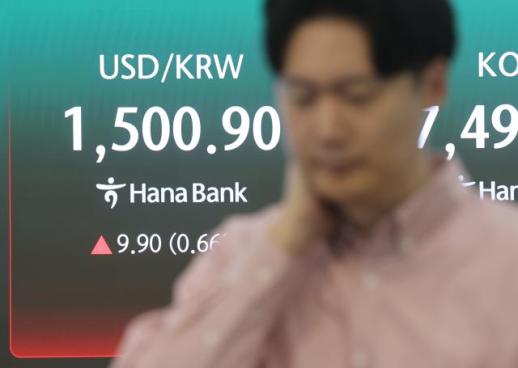 Korean Won Surges Past 1500 Against Dollar Amid Foreign Capital Outflow The won-dollar exchange rate has experienced significant fluctuations, rising nearly 70 won in just over a week to surpass the 1500 mark. This volatility is attributed to ongoing foreign capital outflows, compounded by geopolitical risks in the Middle East and strong dollar pressures. According to the Seoul foreign exchange market on May 17, the won closed at 1500.8 won per dollar on May 15, up 9.8 won from the previous trading day. On that day, the exchange rate opened at 1494.2 won, rising to the low 1500s by mid-afternoon. This marks the first time the rate has exceeded 1500 since April 7. Recent fluctuations in the exchange rate have been pronounced. The rate dropped to 1439.6 won on May 6, only to soar to 1507.7 won on May 15, creating a nearly 70 won gap between the low and high points within a week. Foreign capital outflows are a key factor driving the exchange rate increase. Foreign investors have consistently sold off domestic stocks over the past week, with net sales reaching 31 trillion won over seven consecutive trading days. Moon Da-woon, a researcher at Korea Investment & Securities, noted that foreign investors have been in a selling phase since the fourth quarter of last year, and the recent surge in domestic stock returns has led to additional selling pressure due to profit-taking and rebalancing. Deputy Prime Minister and Minister of Economy and Finance Koo Yun-cheol expressed concern, stating, "The excessive volatility in our economy is being driven by foreign investors selling stocks and speculative trading outside the country." Investor sentiment across the domestic financial market remains subdued. Uncertainties surrounding labor negotiations at Samsung Electronics and concerns over fiscal expansion have led to a sharp rise in bond yields. On May 15, the yield on three-year government bonds closed at 3.766%, up 11.2 basis points from the previous day. This marks the first time the three-year yield has reached the 3.7% range since November 16, 2023. Internationally, political instability in the UK has weakened the pound, further strengthening the dollar and increasing downward pressure on the won. The potential challenge to Prime Minister Keir Starmer from Manchester Mayor Andy Burnham, following his securing of parliamentary candidacy, has raised concerns over fiscal sustainability due to increased spending. As a result, the pound fell to its lowest level in over a month as of May 15. Geopolitical risks from the Middle East are also contributing to upward pressure on the exchange rate. Stalled peace negotiations between the U.S. and Iran, along with inconclusive results from the U.S.-China summit, have led to ongoing uncertainties regarding potential conflicts. Analysts warn that if high oil prices persist, risk appetite may diminish, potentially solidifying the won-dollar exchange rate in the 1500 range. However, some analysts suggest that further upward movement may be limited. Moon noted, "The current range between 1500 and the post-war peak of 1536 is a zone where government intervention is likely, and the burden of levels is quite high. This week, with domestic and external pressures on the exchange rate overlapping temporarily, we expect more short-term increases rather than a sustained rebound." * This article has been translated by AI. 2026-05-17 16:24:37
 -
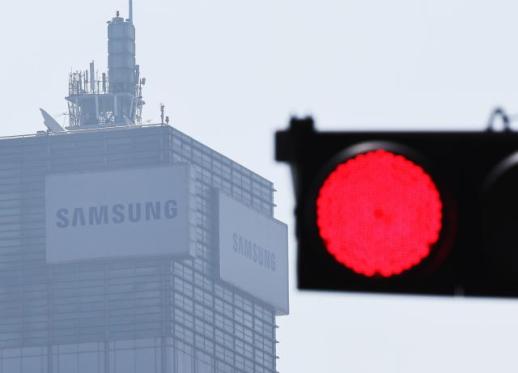 Semiconductor Society Warns Samsung Strike Could Harm Industry Workforce Development The Semiconductor Society, representing the domestic semiconductor academic community, expressed concern over the total strike at Samsung Electronics. On May 17, the society's president, Choi Ki-young, Professor Emeritus at Seoul National University, stated, "The total strike at Samsung Electronics will have a devastating impact on the entire ecosystem of the domestic semiconductor industry," urging both labor and management to avoid the strike. He further noted, "If negotiations are prolonged or production disruptions accumulate, the repercussions will extend beyond the parties involved to affect suppliers, the research community, and the training of future personnel." Professor Choi emphasized, "The semiconductor industry has accounted for over 20% of national exports and is now nearing 40%, serving as a pillar of the South Korean economy. Samsung's semiconductor division is a crucial part of that pillar. Suppliers of materials, components, and equipment, as well as professors and students in the society, have all grown through research and communication within the Samsung semiconductor ecosystem." He added, "Currently, the world is making the largest-scale semiconductor investments in history to keep pace with the AI revolution. It is time for South Korea to unite to secure advanced semiconductor technology for the AI era." Finally, he earnestly appealed, "At this critically important time for the nation, both labor and management should deeply consider the potentially devastating effects on the national economy and the entire semiconductor industry and strive to conclude negotiations amicably."* This article has been translated by AI. 2026-05-17 16:22:29