
Journalist

John Pritchard
-
 Government Launches Drone Initiative to Manage Manure and Prevent Algal Blooms The government has initiated special inspections of stockpiled livestock manure, identified as a major contributor to summer algal blooms. This effort is part of the newly implemented "Algal Bloom Seasonal Management System," which aims to expand monitoring periods and utilize drones and pollution monitoring systems to prevent these blooms before they occur. The Ministry of Climate, Energy and Environment announced on May 17 that it will conduct special inspections of stockpiled livestock manure along major river systems, including the Han, Nakdong, and Geum rivers, until mid-June. These inspections are prompted by concerns that nutrients such as nitrogen and phosphorus from manure could wash into rivers during heavy summer rains, leading to algal blooms. The government is expanding its pollution source management scope as part of the new seasonal management system. Environmental authorities have noted that recent extreme weather has led to an increase in localized heavy rainfall, resulting in repeated instances of pollutants entering rivers. Last year, the number of days with algal bloom alerts reached a record 961 days nationwide. In response, the Ministry has extended the manure management period from March to September to now include February through November. This adjustment considers the characteristics of regions with double-cropping farms, with special inspections continuing in September and October. The inspections will focus on 1,497 stockpiled manure sites identified since February, including 405 on public land and 1,092 on private property, as well as additional checks on manure left near livestock farms and agricultural lands. Joint inspection teams from the Ministry, local environmental agencies, and municipalities will oversee the field management. The government plans to encourage the removal of manure piled on public land by locating its owners and will install covers to prevent rainwater from entering newly discovered manure piles. For private property, the government will provide covers and guidance on proper management practices. Drones and the "Integrated Monitoring System for Watershed Pollution Sources" will be utilized in these inspections. This system, developed by the Korea Water Resources Corporation in 2024, allows for tracking the location of manure and the status of management actions. The government aims to minimize oversight in hard-to-reach areas or extensive river sections by employing drones. Kim Eun-kyung, Director of Water Environment Policy at the Ministry, stated, "Given the trend of algal blooms in summer, we must closely manage manure stockpiled near rivers. Through this special inspection using the integrated monitoring system and drones, we will do our utmost to cover or remove all stockpiled manure before the flood season begins on June 21."* This article has been translated by AI. 2026-05-17 12:21:53
 -
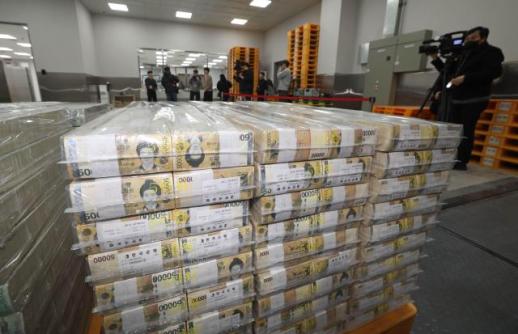 Rising Oil Prices Increase Burden on Cash Transport Industry, Bank of Korea Responds The Bank of Korea is facing increased pressure to maintain the currency circulation system due to a decline in cash usage and rising oil prices. On May 17, the bank announced that it discussed response measures with industry stakeholders during the regular meeting of the Currency Circulation System Related Institutions Council held on May 12. According to the Bank of Korea, while the proportion of cash as a payment method continues to decrease, the total amount of cash in circulation has been on the rise. As of the end of the first quarter of this year, the total currency issuance was approximately 215 trillion won, with steady demand for 50,000 won notes. In contrast, the circulation of coins has been declining since 2020, with a rapid reduction in the net issuance of 10 won coins. Kim Gi-won, head of the Bank of Korea's Currency Issuance Division, stated, "The decrease in cash usage is negatively impacting the profitability of cash transport and ATM operating companies. If this trend leads to reduced accessibility and acceptance of cash, there is a risk that the currency circulation system itself could contract." Participants in the meeting shared concerns that rising oil prices are increasing the cost burden on cash transport companies. Although the cash transport industry is working to defend its profitability through route optimization and expansion of new businesses, the surge in oil prices is exacerbating management challenges. A Bank of Korea official emphasized, "Maintaining a stable currency circulation system is a key responsibility of the central bank," adding that they plan to strengthen cooperation with relevant institutions and develop effective response measures.* This article has been translated by AI. 2026-05-17 12:18:24
 -
 Electronic Financial Industry Surpasses 12 Trillion Won in Revenue Mobile-centric digital financial transactions have rapidly expanded, leading to significant growth in the electronic financial industry last year. However, smaller firms are struggling to improve profitability, exacerbating industry polarization. According to the Financial Supervisory Service, the electronic financial industry's revenue reached 12 trillion won last year, marking a 15.4% increase (1.6 trillion won) from the previous year. Payment gateway (PG) revenue accounted for 9 trillion won, while revenue from the issuance and management of prepaid electronic payment methods totaled 2.2 trillion won. Notably, revenue from prepaid services surged by 29.4% compared to the previous year. Despite overall growth, polarization within the sector is intensifying. As of the end of last year, the top 10 companies among the 241 registered electronic financial firms accounted for 67% of total industry revenue, while smaller firms faced challenges in securing profitability. In fact, as of the end of last year, 29 electronic financial firms did not meet capital requirements and other management guidelines, an increase of one from the previous year. Among these, 21 firms had a history of non-compliance with the standards. However, financial authorities noted that most of the non-compliant firms are small businesses, and that prepaid funds are managed separately through external trusts, limiting potential harm to users. The Financial Supervisory Service plans to strengthen financial disclosure requirements for electronic financial firms starting at the end of next year, in accordance with the revised Electronic Financial Transactions Act. They will also establish a sound management system through demands for corrective actions from non-compliant firms.* This article has been translated by AI. 2026-05-17 12:16:28
 -
 Construction Firms Penalized for Shifting Liability to Subcontractors Construction companies that shifted the responsibility and costs of industrial accidents to subcontractors have faced penalties from regulatory authorities. The Fair Trade Commission announced on May 17 that it imposed corrective orders and fines totaling 729 million won (approximately $550,000) against KR Industries, Dasan Construction Engineering, and NC Construction for violations of subcontracting laws. This action follows an investigation initiated by the Fair Trade Commission in July of last year, focusing on safety-related subcontracting practices in the construction industry. Amid a rise in serious accidents and fatalities on construction sites, the commission scrutinized the practice of main contractors excessively shifting safety management responsibilities onto subcontractors. According to the Ministry of Employment and Labor, there were 605 reported fatalities due to industrial accidents last year, with 286 of those occurring in the construction sector. Notably, the number of fatalities at small construction sites with contracts valued under 500 million won increased by 25 compared to the previous year. The Fair Trade Commission identified a troubling trend where small subcontractors, often lacking the capacity for adequate safety management, bore the brunt of liability. The investigation revealed that these companies included clauses in their contracts that placed the full burden of costs and responsibilities related to accidents on the subcontractors. KR Industries, for instance, established terms in 41 subcontracting agreements with 29 subcontractors from July 2018 to May 2026, stating that "the subcontractor assumes all civil and criminal liability in the event of an accident." Dasan Construction Engineering was found to have imposed 11 unfair clauses, including requiring subcontractors to cover settlement costs for accident victims and allowing deductions from payments for accident-related expenses. Additionally, the company was cited for issuing contracts up to 112 days after the start of construction or providing contracts that omitted payment conditions. NC Construction also included clauses in its contracts that shifted all responsibilities and costs related to safety incidents to subcontractors. Some contracts failed to mention provisions related to the linkage of subcontractor payments. As a result, the Fair Trade Commission imposed a fine of 312 million won on Dasan Construction Engineering for the delayed issuance of contracts and the establishment of unfair clauses. KR Industries and NC Construction received fines of 257 million won and 160 million won, respectively. NC Construction was also fined 5 million won for failing to include payment linkage provisions in its contracts. A Fair Trade Commission official stated, "We expect this to serve as a turning point in preventing main contractors from evading responsibility in transactions with smaller construction firms, which often have weaker safety management capabilities. We will continue to monitor the establishment of unfair clauses that undermine efforts to ensure industrial safety."* This article has been translated by AI. 2026-05-17 12:15:00
 -
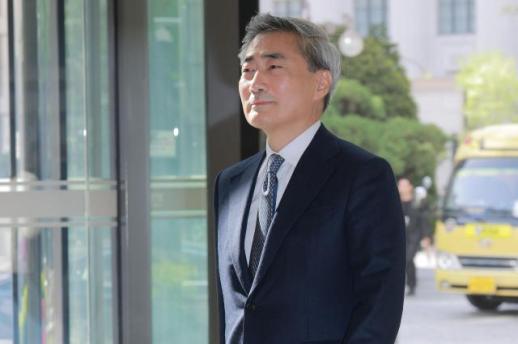 Bank of Korea Governor Shin Hyun-sung to Attend G7 Finance Track Meeting Shin Hyun-sung, the governor of the Bank of Korea, will attend the G7 Finance Track meeting, marking the first time a Bank of Korea governor has been officially invited to participate in this forum. According to the Bank of Korea on May 17, Shin is scheduled to attend the G7 Finance Ministers and Central Bank Governors meeting in Paris, France, on May 18-19 (local time). The meeting will include invited countries such as Brazil, India, and Kenya, alongside the G7 members. The G7 Finance Track serves as a platform to discuss global economic and financial issues and coordinate policy directions ahead of the leaders' summit. The discussions will later be reflected in a joint statement. Topics expected to be addressed at the meeting include global financial imbalances, critical mineral supply chains, and economic security issues related to monetary policy coordination. A Bank of Korea official stated, "During the meeting, Governor Shin plans to exchange views with finance ministers, central bank governors, and representatives from international organizations on key issues such as the global economic situation, monetary policy, and global imbalances."* This article has been translated by AI. 2026-05-17 12:13:00
 -
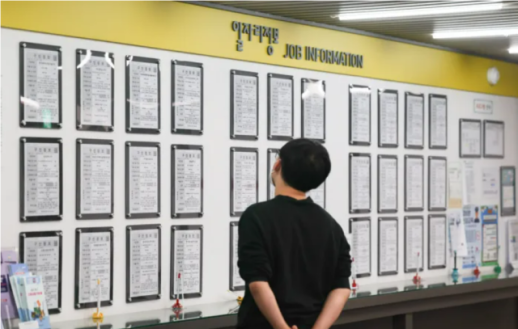 Youth Unemployment Rises Amid Job Growth in South Korea South Korea's job market is experiencing deepening K-shaped polarization, with an increasing number of young people disengaging from the labor force. Despite rising employment figures, job growth is primarily concentrated in large companies and among older workers, while opportunities for youth and small businesses are dwindling. The Korea Employers Federation (KEF) released a report on May 17, highlighting key trends in the current employment landscape. The report indicates a worsening of K-shaped employment polarization, a rise in the number of young people classified as inactive, and a slowdown in labor mobility. Particularly concerning is the growing employment insecurity among young people. Last year, the number of individuals aged 20 to 30 who were inactive reached 717,000, the highest figure since such statistics began being tracked. This indicates that over 700,000 young people have exited the labor market at the entry stage. The number of inactive individuals in this age group has surged from 644,000 in 2023 to 691,000 in 2024. KEF attributes the increase in inactivity among young people to a vulnerable job structure rather than merely a lack of available positions. There is a clear trend of young individuals leaving small businesses and temporary or seasonal jobs, contributing to the inactive population. Among those aged 20 to 30 who have been inactive in the past year, the reasons for leaving their jobs were personal reasons (36.6%), dissatisfaction with working conditions (29.9%), and the end of temporary or seasonal work (19.1%). The current job market is expanding primarily in new industries, among those aged 60 and older, and within large companies, while employment in traditional industries, among those under 60, and in small businesses and temporary jobs is contracting. According to analysis from the National Data Agency, the number of employed individuals under 60 last year was approximately 21.94 million, a decrease of 0.7% from the previous year (22.08 million). In contrast, the number of employed individuals aged 60 and older rose from 6.49 million to 6.83 million, an increase of 5.3% during the same period. Polarization by company size is becoming increasingly pronounced. Small businesses, which account for about 90% of total employment, have seen their employment growth rate stagnate at around 0% since 2023. Meanwhile, employment in companies with over 300 employees increased by 6.1% last year, reaching 3.34 million, up from 3.15 million the previous year. This growth is attributed to strong exports led by large companies, particularly in the semiconductor sector. Labor mobility is also on a downward trend. Last year, the labor mobility rate was 9.8%, continuing a steady decline. This rate measures the proportion of new hires and job changes relative to the total workforce over a specific period. Both the hiring and turnover rates fell from 5.1% in 2024 to 4.9% last year. KEF analyzed that the simultaneous strengthening of companies' hiring reductions and workers' reluctance to change jobs could further entrench the dual structure of the labor market. This trend could exacerbate income inequality and dampen consumption, weakening the overall growth foundation of the economy. Lee Sang-cheol, head of KEF's Employment and Social Policy Division, stated, "While recent employment indicators show a quantitative expansion, structural imbalances such as K-shaped polarization are actually deepening. The disengagement of young people from the labor market and the slowdown in labor mobility pose warning signs that could constrain our economy's growth potential."* This article has been translated by AI. 2026-05-17 12:10:07
 -
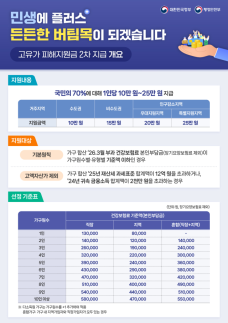 Second Round of High Oil Price Relief Payments Begins on May 18 The Ministry of the Interior and Safety announced on May 17 that the second round of high oil price relief payments will begin at 9 a.m. on May 18, available through both online and offline applications. During the first week of applications, a system based on the last digit of birth years will be implemented to manage the flow of applicants. The second round of payments will target 70% of the population, with amounts varying by region: 100,000 won in the metropolitan area, 150,000 won in non-metropolitan areas, 200,000 won in designated areas with population decline, and 250,000 won in special support regions for population decline. Additionally, individuals who missed the first application period (April 27 to May 8) will have the opportunity to apply during this second round. Applications for the second round will be accepted from May 18 at 9 a.m. until July 3 at 6 p.m., allowing for approximately seven weeks of online or offline submissions. Recipients can choose to receive their payments via credit or debit cards, prepaid cards, or local love gift certificates. Online applications will be available 24 hours a day during the application period, while offline applications will be accepted on weekdays from 9 a.m. to 6 p.m. (4 p.m. for bank branches). To prevent congestion and system overload during the first week of applications, the birth year-based system will be in effect for both online and offline applications, with the possibility of extending this system based on local conditions. Citizens wishing to receive payments via credit or debit cards can conveniently apply online through their card issuer's website, app, or call center, without being restricted by time or location. They can also apply offline at bank branches linked to their cards. Those who prefer mobile or card-type local love gift certificates can apply online through their local government's app or website. For individuals seeking paper local love gift certificates or prepaid cards, they can visit their local administrative welfare center (or community service center) with an ID to apply and receive their high oil price relief payments. The high oil price relief payments can be used for approximately three months, until August 31, after which any remaining balance will expire. Residents of special cities and metropolitan areas (including Sejong and Jeju) can use the payments within those areas, while residents of provincial regions can use them in their respective cities or counties. Recipients who receive payments through local love gift certificates can use them at participating merchants with annual sales of 3 billion won or less. Those receiving payments via credit or debit cards or prepaid cards can use them at small businesses with annual sales of 3 billion won or less, excluding certain sectors such as entertainment and gambling. Gas stations are included, allowing the use of relief funds regardless of sales volume. Minister of the Interior and Safety Yoon Ho-jung expressed hope that the high oil price relief payments will alleviate the burdens on citizens and invigorate local economies. He urged everyone to apply for the payments by July 3 and to remember to use them by August 31.* This article has been translated by AI. 2026-05-17 12:06:37
 -
 Korea Railroad Corporation President Calls for Accelerated Merger with SR and Government Support for Train Replacement Costs The merger between Korea Railroad Corporation (KORAIL) and SR is progressing well, with expectations that the completion date may be moved up. However, the combination of fare freezes and the burden of multi-trillion won investments has raised concerns about deteriorating financial structures. During a press conference on May 14 at a restaurant in Gwangju, KORAIL President Kim Tae-seung stated, "The integration of our organization, financial structure, and safety systems is going very smoothly. We aim to expedite the merger process as much as possible." He noted that the previously anticipated completion date of September could be moved forward based on internal preparations. Kim highlighted that users will experience significant changes once the merger is finalized. He said, "Passengers will be able to book tickets through a single app without distinguishing between KTX and SRT services, and the issue of seat shortages will be noticeably improved, especially for trains departing and arriving at Suseo Station." However, he pointed out that the financial structure remains a pressing challenge. Kim remarked, "Our financial structure is very weak. If this continues, we may face a situation where trains operate but do not generate revenue." KORAIL has not raised fares in the past 15 years, yet during the merger process, it has promised a 10% discount to align with SRT fares. Kim acknowledged, "While fare discounts are a commitment to the public, we are under significant financial pressure. Raising fares requires public agreement and political consensus, making it difficult." Additionally, there is a substantial investment burden. The KTX trains introduced in 2004 are nearing the end of their lifespan and require complete replacement, with replacement costs estimated at around 5 trillion won. Kim believes that government support for half of the replacement costs is necessary and is currently in discussions with the government to include this in next year's budget. He emphasized that this replacement goes beyond merely updating old trains; it involves the introduction of advanced technology. Kim stated, "We are not just replacing old trains; we are incorporating new technologies. The railway technologies we develop must also be exportable." This underscores the connection between new train acquisitions and the competitiveness of the domestic railway industry. The issue of Public Service Obligation (PSO) compensation is also a critical variable. KORAIL has PSO support for operating losses on conventional rail services, but the compensation is insufficient, leading to accumulated financial burdens. Kim noted, "In Europe, most routes, including high-speed rail, are covered by PSO. We need to expand this to all 27 domestic routes, but we can only approach this gradually." Meanwhile, KORAIL demonstrated a train coupling at the Honam Railway Vehicle Maintenance Center on May 14. The coupled trains underwent checks and tests for braking and door functions before completing a test run from Gwangju Songjeong Station to Seoul Station that afternoon. Coupled trains operate by connecting two trains that depart or arrive at the same station, allowing for increased passenger capacity in areas where expanding service frequency is challenging, such as the bottleneck between Pyeongtaek and Osong. Han Gi-eun, head of the high-speed vehicle operations department, explained, "There is only one maintenance line at Honam that can service coupled trains, referred to as Line K. By connecting two KTX-Sancheon trains, each approximately 201 meters long, we can maintain a total length of about 402 meters." 2026-05-17 12:04:43
 -
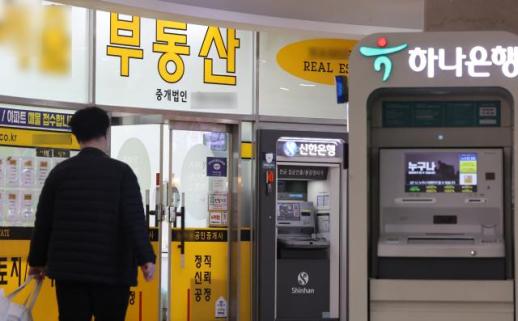 Household Loans Increase by 2.1 Trillion Won, Driven by Housing Loans Last month, household loans from banks increased significantly, primarily driven by housing-related loans. According to the Bank of Korea's report on 'Financial Market Trends' released on May 17, the balance of household loans from deposit banks, including policy mortgage loans, stood at 1,174.9 trillion won at the end of last month, marking an increase of 2.1 trillion won from the previous month. The rise in household loans was largely attributed to an increase in housing loans. The balance of housing loans rose by 2.7 trillion won to 937.6 trillion won last month. After remaining stable in March, housing loans turned upward in April due to increased housing transactions and demand for interim payments, despite a slowdown in demand for rental funds. In contrast, the balance of other loans, including credit loans, decreased by 600 billion won to 236.5 trillion won. This decline followed an increase in March driven by stock investment demand, but in April, repayments increased as individuals sold off stocks. Park Min-cheol, head of the Bank of Korea's Market Analysis Team, stated, "Overall, household loans showed a relatively low growth rate and did not deviate significantly from the government's total management target." The balance of corporate loans from banks reached 1,397.7 trillion won, reflecting an increase of 10.7 trillion won from the previous month. Loans to small and medium-sized enterprises rose by 5.7 trillion won, driven by demand for corporate lending and value-added tax payments from major banks. Corporate loans to large enterprises increased by 5 trillion won from the previous month due to heightened demand for repayments of short-term notes, dividend payments, and corporate bond redemptions at the end of the quarter. As for corporate bonds, the scale of net repayments surged from 300 billion won in March to 3.9 trillion won as companies increased funding through commercial paper and loans amid rising interest rate volatility. Regarding the outlook for household loans, Park noted, "The leading indicator for household loans can be seen in the housing market. As the housing market in the metropolitan area approaches the end of the grace period for the transfer tax on multiple homeowners, related listings have been absorbed, leading to an increase in prices and a significant rise in transaction volume. While household loans are expected to continue a limited growth trend due to tightened financial sector management, there are still factors of instability in the metropolitan housing market, so it remains to be seen whether a stable trend will emerge."* This article has been translated by AI. 2026-05-17 12:03:00
 -
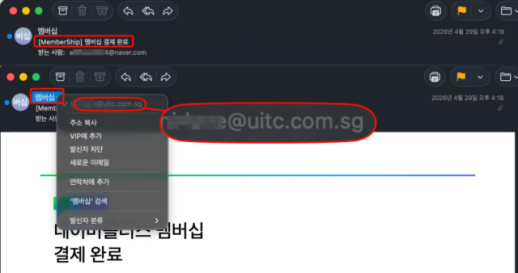 Phishing Emails Masquerading as Naver Plus Membership Notifications Phishing emails disguised as Naver Plus membership payment notifications are being circulated, aiming to steal user account information. These emails trick users into clicking links that lead to fake security pages where they are prompted to enter their passwords. According to the IT industry on May 17, Naver has issued a warning through its customer service about phishing emails posing as "Naver Plus Membership Payment Completed" notifications, urging users to exercise caution. Naver stated, "The phishing emails are titled 'Payment Completed.' The company clarified, "Official Naver notification emails do not use this format." Users should also carefully check the sender's email address, as phishing emails use domains other than the official Naver domain 'navercorp.com.' Additionally, clicking the 'Go to My Membership' button in the phishing email redirects users to a fraudulent domain. The phishing email browser displays a warning labeled 'Attention Required.' Naver emphasized, "Naver login and security settings pages only request information from 'nid.naver.com.'" If users have entered their account information on the phishing page, they should change their Naver account password as soon as possible. They should also update passwords for any other sites using the same ID and password as their Naver account. Phishing attempts impersonating Naver have been repeatedly confirmed. Last August, a new phishing scheme exploiting the frequently used 'easy login' feature was discovered. Naver has previously advised users to verify the domain in the browser's address bar when using the easy login feature.* This article has been translated by AI. 2026-05-17 11:48:55