

The merger between Korea Railroad Corporation (KORAIL) and SR is progressing well, with expectations that the completion date may be moved up. However, the combination of fare freezes and the burden of multi-trillion won investments has raised concerns about deteriorating financial structures.
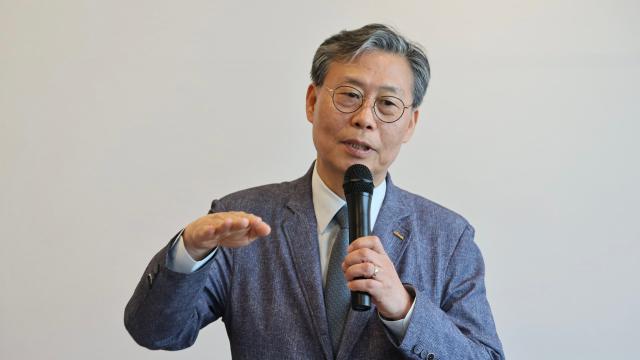
During a press conference on May 14 at a restaurant in Gwangju, KORAIL President Kim Tae-seung stated, "The integration of our organization, financial structure, and safety systems is going very smoothly. We aim to expedite the merger process as much as possible." He noted that the previously anticipated completion date of September could be moved forward based on internal preparations.
Kim highlighted that users will experience significant changes once the merger is finalized. He said, "Passengers will be able to book tickets through a single app without distinguishing between KTX and SRT services, and the issue of seat shortages will be noticeably improved, especially for trains departing and arriving at Suseo Station."
However, he pointed out that the financial structure remains a pressing challenge. Kim remarked, "Our financial structure is very weak. If this continues, we may face a situation where trains operate but do not generate revenue."
KORAIL has not raised fares in the past 15 years, yet during the merger process, it has promised a 10% discount to align with SRT fares. Kim acknowledged, "While fare discounts are a commitment to the public, we are under significant financial pressure. Raising fares requires public agreement and political consensus, making it difficult."
Additionally, there is a substantial investment burden. The KTX trains introduced in 2004 are nearing the end of their lifespan and require complete replacement, with replacement costs estimated at around 5 trillion won. Kim believes that government support for half of the replacement costs is necessary and is currently in discussions with the government to include this in next year's budget.
He emphasized that this replacement goes beyond merely updating old trains; it involves the introduction of advanced technology. Kim stated, "We are not just replacing old trains; we are incorporating new technologies. The railway technologies we develop must also be exportable." This underscores the connection between new train acquisitions and the competitiveness of the domestic railway industry.
The issue of Public Service Obligation (PSO) compensation is also a critical variable. KORAIL has PSO support for operating losses on conventional rail services, but the compensation is insufficient, leading to accumulated financial burdens. Kim noted, "In Europe, most routes, including high-speed rail, are covered by PSO. We need to expand this to all 27 domestic routes, but we can only approach this gradually."
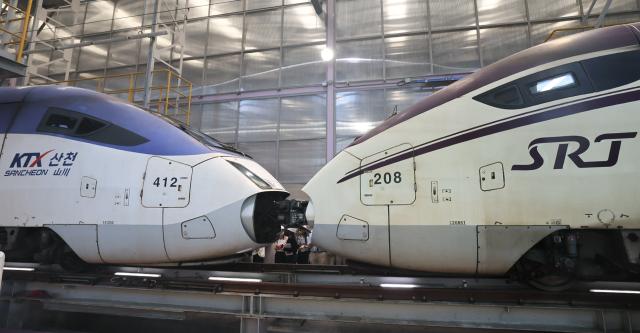
Meanwhile, KORAIL demonstrated a train coupling at the Honam Railway Vehicle Maintenance Center on May 14. The coupled trains underwent checks and tests for braking and door functions before completing a test run from Gwangju Songjeong Station to Seoul Station that afternoon.
Coupled trains operate by connecting two trains that depart or arrive at the same station, allowing for increased passenger capacity in areas where expanding service frequency is challenging, such as the bottleneck between Pyeongtaek and Osong.
Han Gi-eun, head of the high-speed vehicle operations department, explained, "There is only one maintenance line at Honam that can service coupled trains, referred to as Line K. By connecting two KTX-Sancheon trains, each approximately 201 meters long, we can maintain a total length of about 402 meters."
* This article has been translated by AI.
Copyright ⓒ Aju Press All rights reserved.