

Journalist

Jong Eun Lee
-
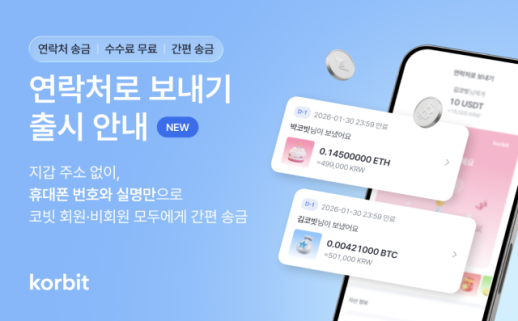 Korbit Launches Contact-Based Cryptocurrency Transfer Service Korbit, a leading cryptocurrency exchange in South Korea, has introduced a new service that allows users to send virtual assets using only a phone number and real name. This service eliminates the need for complex wallet address entries, enhancing the convenience of cryptocurrency transfers to resemble traditional bank transfers. On June 1, Korbit announced the launch of its "Send via Contact" service, which enables users to transfer virtual assets without entering the recipient's wallet address, relying solely on their phone number and real name. The service aims to reduce the risk of errors associated with incorrect address entries during cryptocurrency transfers while improving user convenience. The transfer limit is set at 1 million won per transaction and 10 million won per day. There are no additional transfer fees, as transactions are processed internally within the exchange, eliminating blockchain network fees and waiting times. If the recipient is not a Korbit member, they will receive a notification via text message about the transfer. The recipient must complete the Korbit registration and identity verification process within 72 hours of the transfer request to receive the virtual assets. If not completed within the timeframe, the transferred assets will be automatically refunded to the sender. Security features have also been implemented. Each transfer step includes multi-factor authentication and alerts about potential financial fraud. Transfer notifications will only be sent if the recipient's phone number and real name match. Lee Jung-woo, Korbit's Chief Technology Officer and Chief Product Officer, stated, "The Send via Contact feature is the first step in simplifying the cryptocurrency transfer experience to the level of traditional financial transfers. We will continue to enhance our services to improve both user convenience and security."* This article has been translated by AI. 2026-06-01 10:06:00
 -
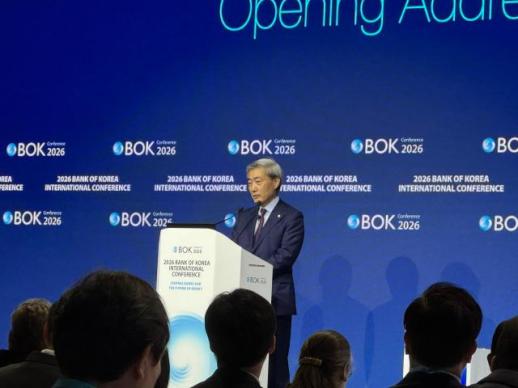 Bank of Korea Governor Shin Hyun-sung Emphasizes Trust as the Essence of Currency Bank of Korea Governor Shin Hyun-sung emphasized that the essence of currency lies in trust, not technology. He explained that the central bank's role is to provide a public framework that allows society to trust and use currency. In his opening remarks at the '2026 BOK International Conference' held on June 1 at the Bank of Korea headquarters in Seoul, Shin stated, "The origin of the central bank is fundamentally related to its public nature, which is a very compelling argument." Shin noted, "The central bank is already facing short-term issues such as high inflation," adding that the conference would provide an opportunity to address not only immediate policy challenges but also broader topics. He remarked, "A lesson we must always remember is that currency is a social institution. It is not merely about technology; it concerns how our society coordinates economic activities." He continued, "Currency exists fundamentally to coordinate our economic and financial decisions. When people make payments, there must be trust that they will receive something in return. A key question to consider when discussing future currency systems is how to preserve that trust within the currency itself." Shin added, "We will not limit our discussions to short-term forecasts at this conference. This event will be an opportunity to broaden our horizons, examine the overall landscape of central banking, and gain a deeper understanding of complex and wide-ranging issues." He also mentioned that the conference would explore the central bank's role within the currency system and address broader historical issues, stating, "We will look to the future while also learning from past lessons."* This article has been translated by AI. 2026-06-01 10:03:00
 -
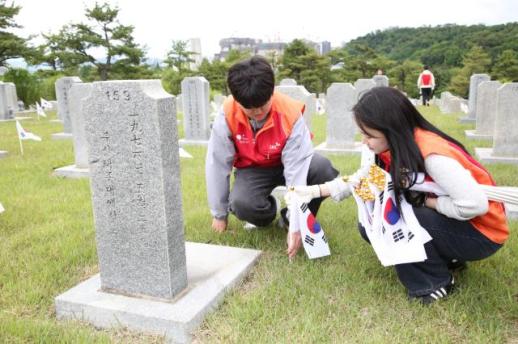 Companies Honor Fallen Heroes with Memorial Activities As Memorial Day and the Month of National Defense approach, various companies are engaging in social contribution activities to honor veterans. Executives and employees are participating directly to commemorate the sacrifices of fallen heroes and fulfill their social responsibilities. According to industry sources, SKC conducted a grave site cleaning activity at the National Seoul Memorial Cemetery to honor fallen heroes ahead of the 71st Memorial Day. The event included participation from CEO Kim Jong-woo and CFO Park Dong-joo, along with other executives and employees. Since establishing a volunteer group in 2004 and forming a sister relationship with the National Seoul Memorial Cemetery in 2008, SKC has continued its activities for 19 years. The volunteer team began with a moment of silence at the Memorial Tower before moving to the 19th grave site, which honors 913 military personnel who died in service. They placed national flags, removed weeds, and cleaned the gravestones. A SKC representative stated, "Through this activity involving both executives and employees, we were able to once again honor the sacrifices of our fallen heroes. We will continue our regular social contribution activities as a responsible company that contributes to the nation and the community." Hyosung also visited the National Seoul Memorial Cemetery on May 22 to conduct a grave site cleaning volunteer activity. Since 2014, Hyosung has held this event twice a year, with employees participating directly. On that day, 15 participants from Hyosung, including employees from Hyosung TNC, Hyosung Heavy Industries, and Hyosung Chemical, as well as university student supporters, paid their respects at the Memorial Tower and engaged in cleaning activities at the 9th grave site, which is part of their sister relationship, including placing national flags and collecting wilted flowers. Hyosung Chairman Cho Hyun-jun has emphasized the importance of continuing social contribution activities to honor and remember the noble sacrifices of those who dedicated their lives to protect the country. GS Global announced that on May 27, about 40 employees, including CEO Kim Sung-won, participated in a grave site cleaning and environmental beautification activity at the National Seoul Memorial Cemetery. After paying their respects at the Memorial Tower, employees engaged in cleaning tasks such as washing gravestones, removing weeds, and organizing the surrounding area, reflecting deeply on the significance of honoring veterans. A GS Global representative stated, "To fulfill our corporate social responsibility, we have linked our grave site cleaning activities with support for childcare, ensuring our employees are directly involved. We will continue to engage in social contribution activities that provide tangible help to the nation and the community." Global shipping company Pan Ocean also held volunteer activities at the National Seoul Memorial Cemetery in honor of Memorial Day. About 30 Pan Ocean employees first visited the Memorial Tower to express gratitude for the noble sacrifices of those who gave their lives for the country. They then conducted maintenance activities at the 43rd grave site (with 1,122 interments), which is part of their sister relationship. Since 2010, Pan Ocean has continued its grave site maintenance and flower offering activities annually. A Pan Ocean representative remarked, "This was a meaningful time for employees to reflect on their love for the country while honoring the sacrifices of those who dedicated their lives for it. We will continue to fulfill our social responsibilities through various social contribution activities." Memorial Day commemorates the loyalty of those who sacrificed their lives for national defense and marks its 71st observance this year.* This article has been translated by AI. 2026-06-01 10:00:00
 -
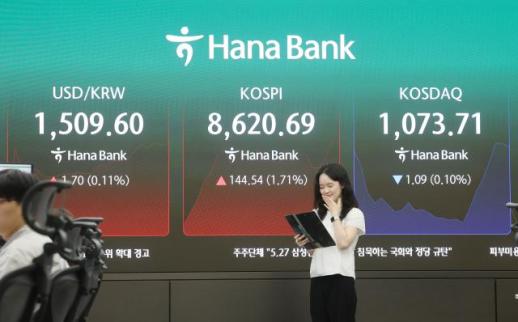 Won-Dollar Exchange Rate Rises Amid Diminished U.S.-Iran Peace Hopes The won-dollar exchange rate opened higher as hopes for a U.S.-Iran peace agreement faded. In the Seoul foreign exchange market on June 1, the exchange rate for the Korean won against the U.S. dollar was 1508.1 won. The rate opened at 1508.8 won, up 0.9 won from the previous session. The renewed preference for safe assets appears to be linked to difficulties in the U.S.-Iran peace negotiations. At the same time, the dollar index, which measures the value of the U.S. dollar against six major currencies, rose by 0.14 to 99.05. On May 30, The New York Times reported that President Donald Trump did not approve a draft memorandum of understanding (MOU) aimed at ending the conflict between the U.S. and Iran. Previously, U.S. and Iranian officials had tentatively agreed on the peace MOU, with only final approval procedures remaining. An Iranian news agency also reported that Iran plans to propose new amendments, indicating that the country is thoroughly preparing for a no-deal scenario. In the bond market, foreign investors have sold a net 1.4162 trillion won worth of securities. Minkyoung Won, an economist at Woori Bank, stated, "The won-dollar exchange rate is expected to rise in line with increasing international oil prices due to weakened optimism regarding the U.S.-Iran negotiations. There is a high likelihood that foreign capital will continue to exit the domestic stock market, and even if individual and institutional buying supports the KOSPI, demand for remittances in the foreign exchange market will lead to an increase in the exchange rate."* This article has been translated by AI. 2026-06-01 09:57:00
 -
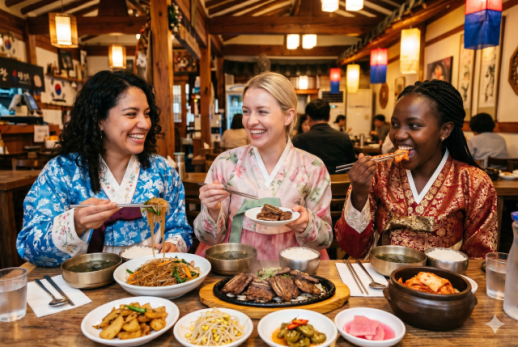 South Korea targets Honduras, Latvia and Kenya to diversify food exports SEOUL, June 01 (AJP) - The Korea International Trade Association has identified Honduras, Latvia and Kenya as strategic target markets to reduce South Korea's heavy reliance on the United States, China and Japan for food exports. The strategy aims to leverage the global popularity of South Korean culture to open new trade channels and sustain long-term growth. South Korean food exports have grown at an annual rate of 5.8 percent since 2015, surpassing 9 billion dollars in 2024. However, more than 50 percent of the export volume over the past decade remained concentrated in just three nations, prompting industry calls for immediate market diversification. The association published its findings Monday in a report outlining export competitiveness and market expansion strategies. Researchers selected the three countries based on surging local interest in South Korean culture, noting they all met strict criteria for cultural fan club growth and consumer goods import increases between 2021 and 2023. The report recommended specific product categories and localized approaches for each emerging market. For Honduras, researchers highlighted snacks such as sweets and ice cream, advising companies to launch sweet, large-capacity products and focus on hypermarket promotions to capture a growing youth demographic and urban population. In Latvia, which recorded the highest food import openness among 14 candidate nations, the association projected strong demand for mild sauces and dressings. The report suggested an integrated marketing campaign spanning YouTube, Google and expanding offline retail networks like hypermarkets and convenience stores. Kenya was identified as a target market for processed rice foods, including tteokbokki and rice crackers. The country offers a rapidly expanding consumer base, improved mobile payment infrastructure and an active e-commerce sector where platforms like TikTok and WhatsApp can drive localized sales. Across all three markets, the association urged exporters to strictly comply with local ingredient labeling rules and eco-friendly regulations driven by environmental, social and corporate governance standards. "Export channel diversification is the key that will determine the competitiveness of K-food going forward," said Kim Moo-hyun, chief researcher at the association. "Our companies should actively utilize services from related organizations, and the government must also strengthen communication with local regulatory authorities centered on diplomatic missions, acting as one team." To support these expansion efforts, the trade association plans to publish five strategic reports on consumer goods exports this year. The organization will also host business-to-business exhibitions linking South Korean companies with local buyers in Ho Chi Minh City and Paris in June, Jakarta in September, and Los Angeles in October. 2026-06-01 09:53:11
 -
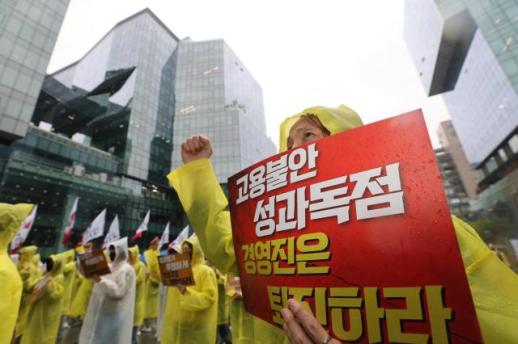 Kakao Union to Strike for Job Security and Compensation Reform The Kakao Union plans to initiate a partial strike on June 10. The union argues that ongoing sales, spin-offs, and restructuring have created job insecurity and demands improvements to the management-centered compensation system. In a statement on June 1, the Kakao branch of the Korean Confederation of Trade Unions said, "Our core demand is to stop the sales, spin-offs, and restructuring resulting from continuous management failures and to secure job stability. We also seek to reform the compensation system that allows management to monopolize excessive rewards while causing job insecurity through poor decision-making." The union explained that the partial strike is intended to address concerns from users about the potential disruption of major services like KakaoTalk. The union stated, "We plan to conduct a four-hour partial strike and a rally in Pangyo on June 10. We will start with this limited action and may escalate the strike depending on the negotiation situation." Previously, negotiations between Kakao and the union had gone through mediation by the Labor Relations Commission, but no agreement was reached, leading the union to secure the right to strike. However, according to the union, no formal negotiations have taken place since the second mediation concluded. A union representative noted, "We have not met separately with the company since the second mediation, and there are no scheduled official meetings following the strike." Regarding the expected participation in the strike, the union stated, "We will know the scale of participation only on the day of the event," and did not provide specific numbers.* This article has been translated by AI. 2026-06-01 09:48:00
 -
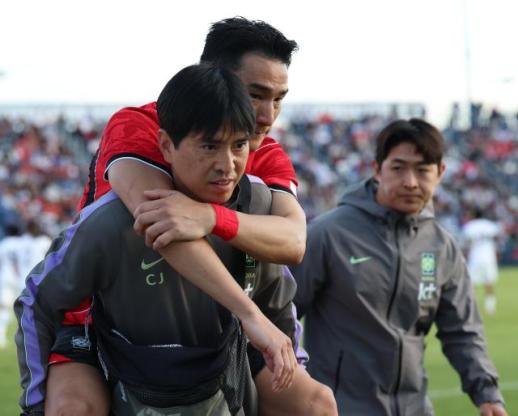 Defender Jo Yu-min Injured, Out of World Cup; Jo Wi-je Replaces Him Jo Yu-min, a central defender for the South Korean national team, will miss the 2026 FIFA North Central America World Cup due to injury. On June 1, the team, led by coach Hong Myung-bo, announced that Jo Yu-min has been released from the squad due to his injury. According to the team, Jo was diagnosed with a partial tear of the plantar fascia in his right foot, requiring an estimated eight weeks for recovery following a medical examination. Jo sustained the injury while playing as a central defender in a friendly match against Trinidad and Tobago on May 31 at Brigham Young University's South Field in Provo, Utah. He fell to the ground after twisting his right ankle while attempting to block an opposing player. After signaling for a substitution, Jo received treatment from the medical staff but was unable to continue and was carried off the field. Subsequent evaluations indicated that he would need to return to South Korea for treatment and rehabilitation, leading to his withdrawal from the team. Jo Wi-je from Jeonbuk Hyundai has been called up as his replacement. He was already in Salt Lake City, Utah, as a training partner and is listed on the preliminary roster of 55 players for the World Cup. He is expected to be included in the final 26-man squad, which is due on June 1. Baek Jun-ho of Stoke City, who was substituted during the match due to concerns over an ankle injury, has been reported to be in good condition.* This article has been translated by AI. 2026-06-01 09:48:00
 -
 LG Group Stocks Surge Amid Anticipation of Jensen Huang and Koo Kwang-mo Meeting LG Group stocks experienced a significant surge on June 1, driven by expectations surrounding the visit of NVIDIA CEO Jensen Huang and his meeting with LG Group Chairman Koo Kwang-mo. This rise is also attributed to a reassessment of the value of artificial intelligence (AI) and robotics businesses. According to the Korea Exchange, as of 9:32 a.m., LG Electronics shares rose by 81,000 won (27.65%) to 374,000 won compared to the previous trading day. LG CNS saw an increase of 29,600 won (26.01%) to 143,400 won, while the holding company LG recorded a rise of 30,500 won (20.80%) to 177,100 won. Market attention is focused on the potential meeting between Huang and Koo. Huang is expected to visit South Korea after attending the NVIDIA annual developer conference 'GTC Taipei 2026,' which opened on the same day. He is scheduled to meet with Koo on June 5 to discuss collaboration in the field of physical AI. Notably, NVIDIA is hosting its first 'Korea Partner Night' dinner event during the conference, raising expectations for expanded AI collaboration with major domestic companies. Analysts suggest that LG Group is entering a phase of valuation reassessment, highlighting the growth potential of its new businesses centered around AI and robotics. On this day, Kiwoom Securities raised its target price for LG from 115,000 won to 200,000 won. This adjustment reflects the increased net asset value (NAV) due to the rise in share prices of key subsidiaries and the likelihood of AI and robotics business values being factored in. Analyst Ahn Young-jun from Kiwoom Securities stated, "Recent stock prices of group companies have risen as the growth potential of new businesses like AI and robotics has come to the forefront. The holding company LG can expect direct benefits not only from the increase in subsidiary values but also from the enhanced capabilities of the group's new businesses." The ultra-large AI model 'EXAONE,' developed by LG AI Research, is also stimulating investor sentiment. Analysts believe that LG's AI technology competitiveness may be highlighted again ahead of the national AI second evaluation scheduled for August.* This article has been translated by AI. 2026-06-01 09:48:00
 -
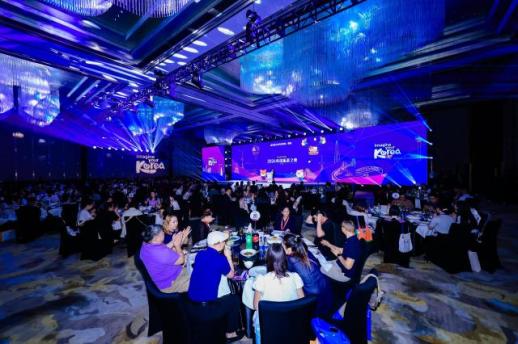 Efforts to Boost Regional Tourism in South Korea Target Foreign Visitors The South Korean tourism industry is actively working to redirect foreign visitors from the metropolitan area to regional destinations. Moving beyond the previous approach of encouraging simple visits to tourist attractions, the industry is focusing on creating direct flight demand from high-income target groups, discovering local content, and improving on-site infrastructure. This strategy aims to enhance the quality and diversity of K-tourism beyond mere quantitative recovery. ◆ Targeting High-Income Chinese Tourists with Direct Flights The first step in revitalizing regional tourism is undoubtedly improving accessibility and expanding the affluent customer base. Recently, the tourism industry has identified the Yangtze River Delta region as a key target to disperse Chinese tourists, who are predominantly concentrated in the metropolitan area. A primary focus is Hangzhou, a city recognized as a 'new first-tier city' in China, known for its economic strength, population, and growth potential. Home to major IT companies like Alibaba, Hangzhou has a resident population of 12.62 million and an annual disposable income per capita of approximately 16 million won. Taking advantage of over 7,000 airline seats operating weekly between Korea and Hangzhou, marketing efforts for direct flights to regional destinations have intensified. At the recent '2026 K-Tourism Roadshow' B2B consultation held locally, over 100 participants, including 39 domestic organizations and local Chinese platforms, discussed developing regional tourism content connecting Hangzhou and Busan. The organization plans to attract visitors to the regions by reflecting the preferences of the Chinese MZ generation, who favor individual travel, through platform marketing linked with diverse industries. ◆ Attracting Tourists with Local Culinary Experiences Having opened the door for regional influx through direct flight routes, the key to retaining these visitors lies in unique local content. Regions facing extinction due to climate change and aging populations are making efforts to secure sustainability by leveraging their unique ingredients. A prime example is the 'Delicious Coexistence on Bi-yang' food festival, which attracted 1,600 tourists over two days at the end of last month. Seven renowned chefs, including Kim Do-yoon and Oh Se-deuk, visited Bi-yang Island to develop new dishes using seasonal ingredients, generating significant interest. Importantly, this initiative is not a one-time festival. New recipes, such as seaweed bibimbap and sea snail bread, are being shared with seven local restaurants on Bi-yang Island for ongoing sales. By combining the region's rustic assets with popular culinary trends, a new demand for tourism is being created, establishing a virtuous cycle that boosts local residents' incomes. ◆ Infrastructure Improvements Key to Eliminating Overcharging As global mega-events approach, local governments are prioritizing proactive assessments of their tourism readiness. They recognize that even with excellent content and direct flight routes, long-term growth is impossible if the reliability of the infrastructure to support these offerings deteriorates. In preparation for the BTS World Tour concert in Busan on June 12-13, the city is launching a comprehensive inspection of the accommodation industry in collaboration with relevant agencies. The plan aims to eradicate persistent issues such as overcharging and unilateral reservation cancellations that have plagued large events. A monitoring campaign called 'Pleasant Interventions' will also be implemented, allowing citizens to report hygiene issues or unfair pricing via QR codes until the end of October. This reflects a sense of urgency to successfully host events that attract global attention, thereby proving the competitiveness of regional tourism. A tourism industry representative stated, "Revitalizing regional tourism cannot be solved simply by increasing overseas promotions. It requires a fair market environment where foreign tourists can confidently spend, supported by content that highlights the unique charm of the regions, to truly usher in a new era of K-tourism in the provinces."* This article has been translated by AI. 2026-06-01 09:45:00
 -
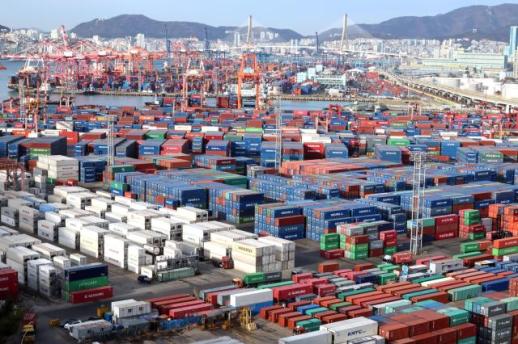 Semiconductor Demand Drives Record $87.7 Billion in May Exports, Surplus Reaches $101.9 Billion South Korea's exports surged over 50% year-on-year in May, reaching a record high. Despite uncertainties stemming from the Middle East conflict, semiconductor exports more than doubled, significantly contributing to the overall increase. The average daily export value also surpassed $4 billion for the first time, with the surplus from January to May exceeding annual records. According to the Ministry of Trade, Industry and Energy and the Korea Customs Service, May's export value totaled $87.747 billion, marking a 53.2% increase compared to the previous year. This achievement represents the highest monthly figure on record, with exports exceeding $80 billion for three consecutive months. South Korea has maintained a positive export trend for 12 consecutive months since June of last year. The average daily export value, adjusted for working days, reached $4.28 billion, the highest ever recorded, surpassing the previous peak of $3.79 billion in March. The robust performance of semiconductor exports played a crucial role in this growth. In May, semiconductor exports soared to $37.16 billion, a staggering 169.4% increase from the previous year, setting a new record. This surge is attributed to rising fixed prices for memory chips, driven by increased investments in artificial intelligence (AI) by major U.S. tech companies, with exports exceeding $30 billion for three consecutive months. Exports of computers and wireless communication devices also saw significant increases, rising to $4.18 billion (up 290.7%) and $1.46 billion (up 12.6%), respectively, due to heightened demand for SSDs used in AI servers and strong sales of new products. Display exports increased by 9.4% to $1.47 billion, influenced by the launch of new mobile products. Consumer goods exports also showed solid growth. Cosmetic exports reached $1.18 billion, a 24.2% increase from last year, marking the highest figure for May. Although agricultural and fishery product exports declined due to reduced shipments of items like coffee and seaweed, processed agricultural products such as noodles and bread increased, resulting in a 4.7% rise to $1.07 billion. Oil product exports surged by 46.6% year-on-year to $5.25 billion, driven by high export prices amid rising oil prices. However, the implementation of maximum price regulations led to a 23.8% decrease in volume, with gasoline, diesel, and kerosene exports dropping by 31.1%, 24.3%, and 99.9%, respectively. Petrochemical product exports rose by 11.1% to $3.7 billion, although volume decreased by 25.5% due to prioritizing domestic supply. In contrast, automobile exports fell by 5.9% to $5.83 billion, impacted by reduced working days, supply shortages due to safety incidents, and logistics disruptions from the Middle East conflict. Steel exports declined by 2.1% to $2.04 billion, reflecting a continued decrease in key products like hot-rolled and thick plates. General machinery exports also dropped by 6.3% to $3.82 billion due to increased logistics costs from the Middle East conflict and U.S. tariffs. Conversely, non-ferrous metal exports rose by 41.5% to $1.67 billion, driven by increased demand for copper and aluminum related to AI data centers. Regionally, exports to China surged by 80.9% to $18.9 billion, driven by a 243% increase in semiconductor exports and solid growth in consumer goods. Exports to the United States also rose by 59.1% to $15.97 billion, primarily due to increased shipments of semiconductors, computers, and electronic devices related to AI investment, despite weak automobile sales. Exports to ASEAN countries reached $15.85 billion (up 58.4%), while exports to the European Union increased by 2.4% to $6.19 billion. However, exports to the Middle East, severely impacted by the conflict, fell by 7.7% to $1.27 billion, largely due to decreased shipments of automobiles and auto parts. Imports rose by 20.8% to $60.8 billion, with energy imports increasing by 15.9% to $11.75 billion. Notably, crude oil imports rose by 25.0% to $8.5 billion, despite a decrease in volume due to the Middle East conflict. Non-energy imports increased by 22.0% to $49.05 billion, significantly influenced by a 71.0% rise in oil product imports to $2.55 billion and a 25.6% increase in semiconductor equipment imports to $2.56 billion. With exports exceeding imports, May's trade surplus reached $26.95 billion, an increase of $20.03 billion from the previous year. This marks the 16th consecutive month of surplus. The cumulative surplus from January to May stands at $101.91 billion, surpassing the previous record of $95.2 billion set in 2017. As exports continue to perform well, the likelihood of surpassing the government's annual export target has increased. The Ministry of Trade set the export target at $740 billion for this year. However, with both the volume and prices of semiconductor exports on the rise, projections indicate a significant expansion in annual export value. From January to May, exports totaled $394.226 billion, comparable to last year's exports of $395.389 billion for the same period. The Korea Institute for Industrial Economics and Trade recently forecasted that this year's exports could increase by 30.3% to $924.4 billion, with a trade surplus of $219 billion. Potential variables include the ongoing Middle East conflict and U.S. tariff policies. Minister of Trade, Industry and Energy Kim Jeong-kwan stated, "Uncertainties in the trade environment, including the resolution of the Middle East conflict, U.S. tariffs, and EU steel TRQ, remain. The government will work closely with major countries to mitigate trade risks for our companies and create a stable export environment." He added, "We will actively support companies' production and export activities by ensuring a stable supply of key raw materials and monitoring supply chains." 2026-06-01 09:45:00