
Journalist

Jun sungmin
-
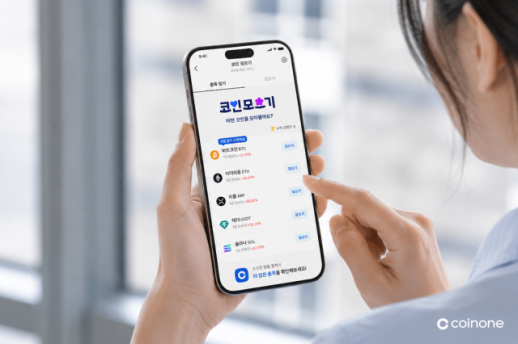 Coinone Launches 'Coin Collecting' Service via KakaoBank Coinone announced on May 19 that it will offer its savings investment service, 'Coin Collecting,' through the KakaoBank app.Coinone transitioned its real-name account partnership from NH Nonghyup Bank to KakaoBank in August 2022 and has renewed the contract annually since then. Customers of Coinone with KakaoBank accounts can now conveniently access the Coin Collecting service.Coin Collecting is an automated order service that allows customers to purchase virtual assets on designated dates based on their chosen asset, frequency, and amount. This service aims to reduce the burden of short-term price fluctuations while pursuing stable long-term returns. Since its launch in December of last year, the service has surpassed 40,000 users.Users can set up their collection rules directly within the KakaoBank app without needing to switch between platforms, and they can monitor their returns in real-time. A total of ten types of virtual assets are supported, and each user can apply for up to 20 collections. The minimum investment amount per collection is 5,000 won, while the maximum is 5 million won.Cha Myung-hoon, CEO of Coinone, stated, "We have launched this service in collaboration with KakaoBank to enhance user experience and attract new customers. We aim to combine Coinone's expertise in the virtual asset sector with the strengths of KakaoBank, which has over 20 million users, to showcase diverse collaborations moving forward." 2026-05-19 08:38:52
 -
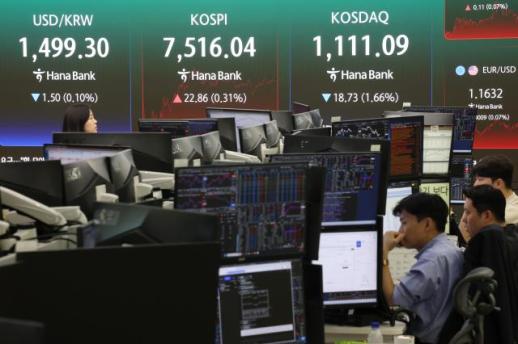 Market Preview: U.S. Stocks Mixed Amid Tech Profit-Taking and Stalled Peace Talks U.S. stock indices closed mixed amid geopolitical risks in the Middle East and a sharp decline in semiconductor stocks, suggesting that the domestic market may enter a phase of increased short-term volatility. Following the KOSPI's historic breach of the 8000 mark, analysts note that profit-taking and concerns over Nvidia's earnings could limit the index's upward potential. On May 18, the Dow Jones Industrial Average rose 0.32%, while the S&P 500 fell 0.07% and the Nasdaq dropped 0.51%. The Philadelphia Semiconductor Index plummeted 2.47%. The market experienced significant fluctuations early in the session due to Middle Eastern risks, interest rate pressures, and profit-taking in tech stocks. However, President Donald Trump’s announcement to postpone military action against Iran helped ease the surge in U.S. Treasury yields, which in turn reduced the market's losses. Sector-wise, weakness in technology stocks, particularly semiconductors, was prominent. Seagate's CEO highlighted at the JP Morgan conference that significant time is needed for new factories and equipment expansions, raising concerns about memory supply bottlenecks. Consequently, Seagate shares fell 6.87%, while Micron dropped 5.95%. SanDisk also declined by over 5%, reflecting widespread profit-taking in memory-related stocks. Additionally, President Trump’s ambiguous messaging regarding Taiwan's defense during U.S.-China summit discussions has heightened concerns over the semiconductor supply chain. As pressures mount on semiconductor stocks, which had surged recently due to expectations of increased AI demand, investor sentiment in domestic semiconductor stocks may also be affected. Despite the Nasdaq's sharp decline and rising U.S. Treasury yields on May 18, the domestic market showed relative resilience, recovering from early losses. The KOSPI dipped to around 7100 but closed at 7516.04, up 0.31%, bolstered by easing labor disputes at Samsung Electronics and an influx of bargain-hunting. In contrast, the KOSDAQ index fell 1.66% to 1111.09. In the securities market, institutions and individuals net bought 1.39 trillion won and 2.21 trillion won, respectively, while foreigners net sold 3.65 trillion won. Samsung Electronics rose 3.88% following news that a court partially granted an injunction against illegal union activities, and SK Hynix increased by 1.15%. The electrical and electronics sector rose 2.01%, contributing to the index's rebound. However, forecasts suggest that the domestic market may experience increased volatility centered around semiconductors due to the impact of the U.S. semiconductor stock decline. The MSCI Korea ETF fell 1.54%, and KOSPI night futures dropped 1.88%. The dollar-won exchange rate closed at 1500.30 won in the Seoul foreign exchange market before falling to 1492.90 won in after-hours trading. Market observers are noting that the KOSPI's recent rapid ascent has been excessive. The KOSPI took only eight trading days to surpass the 8000 mark after breaking through the 7000 level on May 15. Given the unusually swift rise, there is a growing desire for short-term profit-taking. Han Ji-young, a researcher at Kiwoom Securities, stated, "The market is currently sensitive to external factors such as rising U.S. 10-year Treasury yields and Middle Eastern risks, but fundamentally, the pressure from the speed of the KOSPI's rise is more significant after breaching the 8000 mark. We may frequently see increased intraday volatility for the time being." Nevertheless, analysts largely view this adjustment as a process of speed regulation rather than a trend disruption. The KOSPI's 12-month forward price-to-earnings ratio (PER) stands at 8.1, which is not significantly burdensome compared to historical averages, and corporate profit momentum is improving. In fact, the KOSPI's 12-month forward earnings growth rate increased from 197% year-on-year in April to 214% in May. Upcoming major events this week are expected to influence market direction. The Google I/O 2026 annual developer conference on May 19-20 and Nvidia's earnings announcement on May 21 are notable examples. If expectations for increased AI investment are reignited, the sentiment for recently adjusted semiconductor stocks could recover quickly. Kim Ji-hyun, a researcher at Daol Investment & Securities, commented, "While profit-taking is occurring in tech stocks, the rotation within sectors is a positive sign. Although uncertainties remain regarding U.S.-Iran negotiations and interest rate pressures, the market continues to focus on earnings and AI growth potential." Sung Han-young, a researcher at LS Securities, noted, "Global investment firms like Oppenheimer and UBS maintain that the long-term growth potential of AI semiconductors remains intact, but short-term, a portfolio strategy incorporating defensive sectors such as utilities, telecommunications, and pharmaceuticals is necessary." While acknowledging the potential for increased volatility due to recent rapid gains, analysts advise that a strategy of gradual buying during corrections is more effective than reducing exposure to leading stocks. In particular, concerns about supply bottlenecks in the semiconductor sector may actually enhance pricing power, indicating that the trend of improving long-term performance remains valid.* This article has been translated by AI. 2026-05-19 08:37:40
 -
 Middle East Conflict Continues to Weigh on Bitcoin, Trading at $77,000 Bitcoin is struggling to rebound from the $77,000 mark amid concerns over the prolonged conflict in the Middle East and rising U.S. government bond rates.According to CoinMarketCap, as of 8 a.m. on May 19, Bitcoin was trading at $77,702, down 1.18% from the previous day. On the prior day, it had dipped to $76,009, marking its lowest point in nearly two weeks.Major altcoins also experienced declines. At the same time, Ripple (XRP) fell 1.40% to $1.39. Ethereum dropped 2.03% to $2,134.09, while Solana (SOL) decreased by 0.90% to $85.39.Market analysts attribute the decline in risk asset investment sentiment to geopolitical risks in the Middle East and a surge in U.S. government bond rates. President Donald Trump announced on his social media platform, Truth Social, that he had instructed a pause on military operations against Iran, indicating that while immediate attacks are on hold, tensions between the U.S. and Iran remain high with the possibility of future military conflict.Additionally, the yield on 30-year U.S. government bonds has surpassed 5% for the first time in 19 years, contributing to macroeconomic uncertainty. Typically, rising U.S. bond rates strengthen the preference for safe-haven assets, negatively impacting risk assets like Bitcoin.Meanwhile, on the domestic exchange Bithumb, Bitcoin was trading at approximately 1.145 million won ($76,747), reflecting a 0.80% increase from the previous day. The so-called 'Kimchi Premium' showed a negative value of -0.207%, indicating that domestic prices were lower than international rates.* This article has been translated by AI. 2026-05-19 08:33:49
 -
 Controversy Over Historical Distortion in '21st Century Great Lady' Seok Kyung-deok, a professor at Sungshin Women's University, criticized the recently concluded MBC drama '21st Century Great Lady' for its historical inaccuracies, stating it has provided a basis for China's Northeast Project. On May 19, Yonhap News reported that Seok expressed on social media, "For historical content viewed by global audiences through OTT platforms, it is crucial to ensure accurate historical verification and to be aware of the historical distortions by neighboring countries. Missing this aspect is particularly regrettable." He added, "Following criticism from netizens, the production team belatedly issued an apology on the 16th," noting that the controversy is spreading across online communities and social media in the Chinese-speaking world. Seok emphasized, "We must learn from the controversies surrounding SBS's 'Joseon Exorcist' and MBC's '21st Century Great Lady' to prevent such issues from recurring in the future." Earlier, in the 11th episode aired on the 15th, the royal second son, Lee An-daegun, was depicted ascending to the throne after various challenges. However, during the coronation scene, some viewers raised concerns when subjects shouted 'cheonsae,' a term used by vassal states, instead of 'manse,' the symbol of a sovereign nation, and when the king wore a crown associated with Chinese vassals rather than the imperial crown of a sovereign state.* This article has been translated by AI. 2026-05-19 08:30:45
 -
 Today’s High of 31 Degrees, Rain Expected Nationwide Tomorrow Today, temperatures are expected to rise, leading to a hot day, but rain will begin nationwide tomorrow, bringing a shift in the weather pattern. According to the Korea Meteorological Administration, the weather will be mostly cloudy today, becoming overcast by night. The daytime high is forecasted to range from 24 to 31 degrees Celsius. In particular, areas in the southeastern region may see temperatures exceed 30 degrees, with significant temperature differences between day and night across the inland areas. Rain will start in earnest from May 20. Early in the morning, precipitation will begin in the Chungcheong and Jeolla regions, as well as Jeju Island, and will expand to the rest of the country by the morning. Most of the rain is expected to cease by the afternoon of May 21, although some areas in Gangwon Province and Jeju Island may experience rain until the evening. The anticipated rainfall from May 20 to 21 includes 30 to 80 millimeters in Seoul, Incheon, Gyeonggi Province, and the five islands in the Yellow Sea; 30 to 80 millimeters in eastern Gangwon; 20 to 60 millimeters in western Gangwon; and 20 to 60 millimeters in Daejeon, Sejong, and Chungnam. In Chungbuk, 10 to 50 millimeters is expected. Gwangju, Jeonnam, and Jeonbuk are forecasted to receive 20 to 60 millimeters, with over 80 millimeters possible along the southern coast of Jeonnam. Busan, Ulsan, and Gyeongnam are expected to see 20 to 60 millimeters, while the western southern coast of Gyeongnam may receive over 80 millimeters. In Daegu, Gyeongbuk, and the islands of Ulleungdo and Dokdo, 10 to 50 millimeters are anticipated. Jeju Island, excluding the northern region, is expected to receive 30 to 80 millimeters, with mountainous areas possibly seeing over 120 millimeters and the southern mid-mountain areas over 100 millimeters. As the rain falls, temperatures will also drop. The morning low on May 20 is expected to be between 15 and 19 degrees, with a daytime high of 18 to 23 degrees. On May 21, the morning low will range from 13 to 18 degrees, with a high of 18 to 23 degrees, which is lower than the daytime high of 24 to 31 degrees expected today. On May 22, the weather will be partly cloudy nationwide. The morning low is forecasted to be between 11 and 17 degrees, with a daytime high of 19 to 28 degrees. The weekend weather will differ slightly between Saturday and Sunday. According to the meteorological agency, Saturday, May 23, will be mostly cloudy nationwide, with rain expected in Jeju Island. Sunday, May 24, will be clear across the country. Morning temperatures over the weekend are expected to range from 12 to 17 degrees, with daytime highs between 22 and 30 degrees. However, the rainfall on May 23 in Jeju Island and on May 26 in the Chungcheong, southern regions, and Jeju Island may vary. The meteorological agency advises that the timing and areas of rainfall may change due to developments in the pressure system and its movement, urging the public to check the latest forecasts.* This article has been translated by AI. 2026-05-19 08:23:09
 -
 Jensen Huang Predicts China's AI Chip Market Will Eventually Open Jensen Huang, CEO of NVIDIA, expressed optimism that China's artificial intelligence (AI) semiconductor market will eventually open up. His comments came after the U.S. government partially approved the sale of NVIDIA's high-performance AI chip, the H200, to China, although actual product deliveries have yet to occur. In an interview with Bloomberg TV at a Dell-hosted event on May 18, Huang stated, "I believe the Chinese market will open up over time." He noted that while he accompanied then-President Donald Trump on a visit to China, no immediate agreement regarding the H200 sales was reached. The U.S. government previously granted purchase approvals for the H200 to about ten Chinese companies, including Alibaba, Tencent, ByteDance, and JD.com, as well as Lenovo and Foxconn. However, the export approvals have not yet translated into actual sales. According to Reuters, no deliveries of the H200 have been made despite the U.S. authorization, as approvals from Chinese authorities and purchasing decisions from companies are still pending. China's industrial policies also present a variable. The country is accelerating the development of its domestic AI semiconductor industry and views reliance on U.S. technology as a strategic vulnerability. Reuters reported that China is taking a cautious approach to purchasing high-performance AI chips from the U.S., contributing to delays in H200 transactions. For NVIDIA, reviving sales of high-performance AI chips in China is a critical challenge. The ongoing U.S.-China tech conflict and export controls have significantly restricted NVIDIA's sales of AI chips in China. Huang has emphasized that the Chinese AI semiconductor market represents an opportunity worth approximately $50 billion.* This article has been translated by AI. 2026-05-19 08:09:52
 -
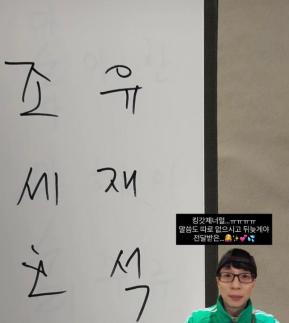 Yoo Jae-suk Gifts Money to Choi Jin-sil's Daughter Choi Jun-hee at Wedding Broadcast personality Yoo Jae-suk recently made headlines for sending a monetary gift to Choi Jun-hee, the daughter of the late actress Choi Jin-sil, for her wedding. On May 18, Choi Jun-hee shared a post on her social media, stating, "King God General. He didn’t say anything, and I received it late," along with a photo. The photo revealed a list of wedding gifts, drawing attention to Yoo Jae-suk's name next to that of Jo Se-ho, who hosted the ceremony. Although Yoo Jae-suk did not attend the wedding, it is believed he sent the gift through Jo Se-ho. Previously, Yoo Jae-suk mentioned Choi Jin-sil in a broadcast, recalling, "Sister Jin-sil was quite close with the producer of 'Living Together.' The producer asked her if she knew any good people, and I recommended a fun friend called 'Grasshopper,' which led to my first role as a variety show MC." Choi Jun-hee married a non-celebrity 11 years her senior on May 16 at a location in Seoul. The wedding was attended by celebrities including Lee So-ra, Um Jung-hwa, Lee Young-ja, Jeong Sun-hee, and Hong Jin-kyung, who came to celebrate her special day. In February, Choi Jun-hee expressed on her social media, "Family has always been a difficult word for me. After a childhood filled with sadness, I have long vowed to create a warm shelter someday. Now, I want to live a stronger and warmer life as someone's wife and with the new family I will build."* This article has been translated by AI. 2026-05-19 08:04:19
 -
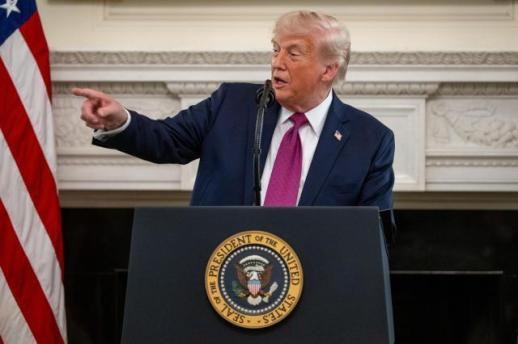 Trump Says He Would Accept Deal to Prevent Iran from Acquiring Nuclear Weapons President Donald Trump stated that he would be satisfied with a deal that prevents Iran from acquiring nuclear weapons. His remarks come as he has postponed military action, leaving room for negotiations. On May 18, during an event at the White House, Trump mentioned that he received requests from leaders in Saudi Arabia, Qatar, and the United Arab Emirates (UAE) to delay military action for two to three days. He noted, "They believe they are very close to an agreement," adding, "If we can ensure that Iran does not have nuclear weapons and they are satisfied, then we would probably be satisfied too." While expressing optimism about the progress of negotiations, Trump added a caveat. He described the developments as "very positive progress" but emphasized that it remains to be seen if they will lead to actual results. He reiterated, "We will not allow Iran to have nuclear weapons," and expressed hope that a resolution could be achieved without military strikes. Earlier, Trump claimed on Truth Social that he had planned an attack on Iran but decided to hold off. He stated that he postponed military action at the request of the King of Qatar, the Crown Prince of Saudi Arabia, and the President of the UAE, instructing the military to be prepared for a large-scale attack if negotiations fail. The Guardian reported that Trump highlighted the prevention of Iran's nuclear armament as a condition for any agreement. However, the outlook for negotiations remains uncertain. Axios reported, citing U.S. officials and sources, that Iran's latest proposal is not being viewed as sufficient progress. Although the proposal included a commitment not to pursue nuclear weapons, it lacked specific promises regarding the cessation of uranium enrichment or the handling of enriched uranium stockpiles.* This article has been translated by AI. 2026-05-19 07:57:55
 -
 Ingenia's KOSDAQ Listing Review Expected This Week Amid Slow IPO Market ◆ Ajou Economic Major News ▷ Ingenia's KOSDAQ listing review results expected this week as major IPOs join the race. - The preliminary review results for Ingenia Therapeutics, a U.S. biotech firm, are expected as early as this week. - Ingenia submitted its application for the KOSDAQ listing on January 30, selecting Samsung Securities as its lead underwriter. - Following Ingenia, several companies with market capitalizations ranging from hundreds of billions to trillions of won are set to enter the listing race. - Adel, a company developing treatments for Alzheimer's, is expected to be a major player in the second half of the year, with an estimated corporate value of around 400 billion won. - The company is currently undergoing a technical evaluation reassessment through a specialized evaluation agency for its formal review application. - LabUp, a company specializing in AI infrastructure and large language model management software, is also expected to submit its preliminary listing application this week. ◆ Major Reports ▷ Impact of single-stock leveraged ETF launches - On May 27, single-stock leveraged and inverse ETFs for Samsung Electronics and SK Hynix are set to launch. - Significant capital inflow is anticipated at launch, but the actual impact on stock price direction is expected to be limited. - The weight of Samsung Electronics and SK Hynix in the KOSPI 200 ETF (over 15 trillion won) and semiconductor leveraged ETFs is already substantial. - A single-stock leveraged ETF launched in the Hong Kong stock market last year also exceeded 10 trillion won in size. - The supply and demand dynamics of these leveraged ETFs have shown a low correlation with stock price direction. - This trend is also observed in single-stock leveraged ETFs in the U.S., such as those for NVIDIA and Tesla. - Leveraged ETFs operate on a structure that performs additional buying (selling) when stock prices rise (fall) through daily rebalancing. - Single-stock leveraged ETFs are likely to act as factors that amplify short-term volatility, focusing on supply and demand at market close rather than medium- to long-term price direction. - Meanwhile, on April 2, a memory semiconductor ETF centered on Samsung Electronics and SK Hynix was launched in the U.S. stock market. - Investment demand for Samsung Electronics and SK Hynix has been actively flowing through the U.S. stock market. ◆ Major Disclosures After Market Close (May 18) ▷ Huons decides to absorb its unlisted affiliate Huons Lab. ▷ Mobile Appliance changes its largest shareholder due to forced selling (Daegwang → Lee Jae-shin). ▷ Zolz announces a 10 billion won third-party allocation capital increase. ▷ HDC affiliate I-Park Youngchang initiates rehabilitation proceedings. ▷ AutoCrypto signs a 2.9 billion won contract for vehicle cybersecurity services. ◆ Fund Trends (As of May 15, excluding ETFs) ▷ Domestic equity funds: +18.9 billion won ▷ Overseas equity funds: -40 billion won ◆ Key Schedule for Today (May 19) ▷ South Korea: Household credit for Q1 ▷ Eurozone: March trade balance ▷ United States: April pending home sales* This article has been translated by AI. 2026-05-19 07:54:54
 -
 Musk Predicts 90% of Driving Will Be Done by AI in 10 Years Elon Musk, CEO of Tesla, predicts that in 10 years, it will be rare for people to drive, with artificial intelligence (AI) handling 90% of driving tasks. On May 18, during a virtual appearance at the Smart Mobility Summit in Tel Aviv, Musk stated, "In five years, or at the latest in ten years, AI will be responsible for about 90% of driving distance in self-driving cars." He added, "In ten years, driving by humans will be quite exceptional." Musk also anticipates a rapid expansion of self-driving cars in the U.S. in the short term. He mentioned that autonomous vehicles without safety monitors could be rolled out nationwide by the end of this year. He noted that such vehicles are already operating in Texas. This short-term outlook aligns with Tesla's robotaxi service currently operating in Austin, Dallas, and Houston, Texas. However, Reuters reported that its own test results indicated long wait times and instances where vehicles were unavailable. Some rides also experienced issues with drop-off points being designated far from the intended destinations. Musk's predictions are closely tied to Tesla's business strategy, which emphasizes robotaxis and full self-driving (FSD) software as key growth drivers amid slowing electric vehicle sales. He has consistently highlighted that self-driving technology is a crucial variable influencing Tesla's corporate value. Nevertheless, there are cautious views regarding the feasibility of these predictions. Reuters pointed out that Musk has made several optimistic forecasts about self-driving cars over the past decade, many of which have not materialized within the proposed timelines. Safety and regulatory issues also pose challenges. The National Highway Traffic Safety Administration (NHTSA) recently announced a recall of 218,868 Tesla vehicles due to potential collision risks from delayed rear camera footage. Additionally, Waymo, a subsidiary of Google's parent company Alphabet, recalled about 3,800 robotaxis in the U.S. due to risks associated with entering flooded roads.* This article has been translated by AI. 2026-05-19 07:51:48