
Journalist

Jun sungmin
-
 Musk Predicts 90% of Driving Will Be Done by AI in 10 Years Elon Musk, CEO of Tesla, predicts that in 10 years, it will be rare for people to drive, with artificial intelligence (AI) handling 90% of driving tasks. On May 18, during a virtual appearance at the Smart Mobility Summit in Tel Aviv, Musk stated, "In five years, or at the latest in ten years, AI will be responsible for about 90% of driving distance in self-driving cars." He added, "In ten years, driving by humans will be quite exceptional." Musk also anticipates a rapid expansion of self-driving cars in the U.S. in the short term. He mentioned that autonomous vehicles without safety monitors could be rolled out nationwide by the end of this year. He noted that such vehicles are already operating in Texas. This short-term outlook aligns with Tesla's robotaxi service currently operating in Austin, Dallas, and Houston, Texas. However, Reuters reported that its own test results indicated long wait times and instances where vehicles were unavailable. Some rides also experienced issues with drop-off points being designated far from the intended destinations. Musk's predictions are closely tied to Tesla's business strategy, which emphasizes robotaxis and full self-driving (FSD) software as key growth drivers amid slowing electric vehicle sales. He has consistently highlighted that self-driving technology is a crucial variable influencing Tesla's corporate value. Nevertheless, there are cautious views regarding the feasibility of these predictions. Reuters pointed out that Musk has made several optimistic forecasts about self-driving cars over the past decade, many of which have not materialized within the proposed timelines. Safety and regulatory issues also pose challenges. The National Highway Traffic Safety Administration (NHTSA) recently announced a recall of 218,868 Tesla vehicles due to potential collision risks from delayed rear camera footage. Additionally, Waymo, a subsidiary of Google's parent company Alphabet, recalled about 3,800 robotaxis in the U.S. due to risks associated with entering flooded roads.* This article has been translated by AI. 2026-05-19 07:51:48
 -
 Trump Withdraws $10 Billion Lawsuit Against IRS Amid Fund Controversy Donald Trump has withdrawn his $10 billion lawsuit against the Internal Revenue Service (IRS). On May 18, documents submitted to the court confirmed that Trump voluntarily dismissed the lawsuit he filed against the IRS. In January, Trump claimed that the IRS and the Treasury Department failed to adequately protect sensitive tax information, resulting in financial and reputational harm. The lawsuit stemmed from a tax information leak involving former IRS contractor Charles Littlejohn, who pleaded guilty to providing Trump’s tax information and that of other high-income individuals to the media. He was sentenced to five years in prison. Trump's team has argued that the government failed to fulfill its duty to protect taxpayer information. Along with the lawsuit withdrawal, a separate compensation fund is being established. The Trump administration plans to create a $1.776 billion fund to compensate individuals who claim to have suffered due to politically motivated investigations and government abuse of power. Reuters reported that this fund is part of an agreement to conclude Trump's unusual lawsuit against the federal government while he is still in office. It has been reported that Trump and his family will not receive direct cash compensation from this agreement. The fund will be managed to review claims from individuals who assert they were harmed by government 'weaponization.' The fund has sparked controversy, with Democrats and watchdog groups criticizing it as a potential avenue for compensating Trump associates or individuals involved in the January 6 Capitol riot. Conversely, Trump's camp maintains that it is a mechanism to assist those harmed by government overreach. The withdrawal of this lawsuit, coinciding with the establishment of a government compensation fund, is unprecedented for a sitting president. As the court was preparing to assess the legal standing of the lawsuit, a settlement was reached, suggesting ongoing debates about the legal basis for the fund, its beneficiaries, and congressional oversight are likely to continue.* This article has been translated by AI. 2026-05-19 07:42:51
 -
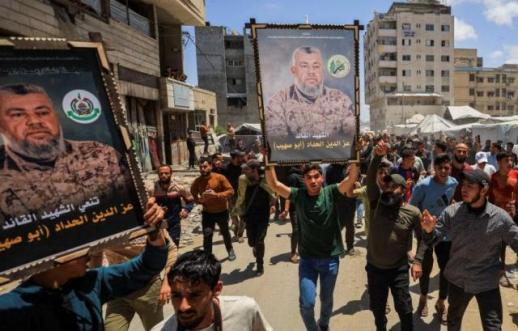 Hamas Appoints Mohammed Awdeh as New Leader in Gaza Hamas has appointed Mohammed Awdeh as its new leader in the Gaza Strip following the death of Izz al-Din al-Haddad, the head of Hamas's military wing, in an Israeli airstrike. On May 18, the Times of Israel reported, citing the Saudi outlet Asharq Al-Awsat, that Awdeh, who previously served as the intelligence chief for Hamas's military wing, the Izz al-Din al-Qassam Brigades, has been selected to lead the group in Gaza. The announcement came shortly after al-Haddad's death. According to Reuters, Israel confirmed that it killed al-Haddad in an airstrike on May 16, a claim that Hamas has also verified. Al-Haddad had been leading Hamas's military operations since the death of Muhammad Sinwar last year. Israel has identified him as one of the key figures behind the surprise attack on Israel by Hamas on October 7, 2023. Awdeh's appointment is seen as a swift move by Hamas to fill the leadership vacuum in Gaza. The group has recently lost several key leaders, including Yahya Sinwar, Muhammad Sinwar, and al-Haddad. Israel continues to exert military pressure on Hamas's leadership, while Hamas is focused on rebuilding its organization and maintaining control in Gaza. Clashes have persisted in the Gaza Strip even after a ceasefire. Reuters reports that hostilities, including airstrikes and exchanges of fire, have continued since al-Haddad's death. Since the ceasefire, approximately 850 Palestinians and four Israeli soldiers have been reported killed. Indirect negotiations regarding a long-term ceasefire and governance in Gaza remain stalled.* This article has been translated by AI. 2026-05-19 07:33:45
 -
 Starbucks Korea removes controversial campaign after CEO sacked SEOUL, May 19 (AJP) -Starbucks Korea apologized and Shinsegae Group, the retailer that owns the largest coffee chain in South Korea, quickly dismissed its chief executive Monday after facing fierce public backlash and condemnation from President Lee Jae Myung over a controversial “Tank Day” marketing campaign launched on the anniversary of South Korea’s May 18 pro-democracy uprising. The coffee chain had promoted discounted “Tank” tumblers through an online event featuring the slogan “Tak!” — expressions critics said invoked traumatic memories of military dictatorship and state violence. The word “tank” was widely interpreted as referencing armored vehicles deployed by martial law troops during the 1980 Gwangju Democratic Uprising, while “tak” recalled the infamous phrase tied to the 1987 torture death of student activist Park Jong-chol. The backlash spread rapidly across social media and civic groups, with accusations that the campaign mocked Korea’s democracy movement and reflected a “shallow understanding of history, with some vowing to launch a boycott of Starbucks Korea. Lee also denounced the campaign in a post on X, calling it “the inhumane behavior of profiteers who deny the values of the Republic of Korea, fundamental human rights and democracy.” He questioned how such an event could be held on a day commemorating those killed during the country’s democratic struggle and demanded accountability. The May 18 Democratic Uprising, known in Korea as the 5·18 Democratization Movement, began in the southwestern city of Gwangju in 1980 after citizens protested against the military regime of Chun Doo Hwan. Troops sent to suppress the demonstrations opened fire on civilians, leaving hundreds dead or missing. The uprising later became a defining symbol of South Korea’s democratization movement and remains one of the country’s most politically and emotionally significant historical events. The campaign’s “Tak!” slogan also evoked the military government’s notorious attempt to cover up Park Jong-chol’s torture death in 1987. Authorities at the time falsely claimed Park died after investigators hit a desk with a “tak” sound, causing him to collapse — a statement that became emblematic of authoritarian deception and brutality. Shinsegae Group Chairman Chung Yong-jin ordered what the company described as its “strongest possible disciplinary action,” removing Starbucks Korea CEO Son Jung-hyun and another executive involved in planning the campaign. Starbucks Korea suspended the promotion and issued multiple public apologies. 2026-05-19 07:29:53
 -
 Lee Ho-sung: A Leader Transforming Banking with Practical Financial Strategies Lee Ho-sung's leadership at Hana Bank begins in the field. He is not a strategist or policy-oriented leader but a hands-on financial professional shaped by years of experience in sales. However, the demands on a bank president today extend beyond mere sales skills. It requires the ability to decide where to allocate funds and how finance connects with industry. Lee has proposed 'productive finance' as the answer to this challenge.He aims to shift capital away from a real estate and collateral-centric structure towards businesses and industries. At the same time, he is redefining Hana Bank's traditional strengths through foreign exchange and global capabilities. His leadership is not flashy; instead, it is practical and execution-focused. The question is whether this execution can be completed as a strategy. Lee is currently in the midst of an effort to transform 'the bank of sales' into 'the bank of judgment.' 'Reading Finance as Flow, Not Just Numbers'Lee's leadership starts not at a desk but in the field. He has spent many years directly engaging with corporate clients, gaining a deep understanding of how finance operates in practice. For him, finance is not just a collection of numbers but a flow. He has learned where capital gets stuck and where it needs to move, which industries are catching their breath, and which companies are missing growth opportunities due to a lack of funds. This experience defines not just his career but his leadership style. While finance-centric leaders make judgments based on figures, field-oriented leaders make decisions based on flow. Lee does not view finance as a competition of interest rates or products; he defines it as 'the movement of capital.' This perspective is simple yet powerful, as the essence of finance is ultimately sending capital where it is needed most. This understanding translates into strategy. He approaches capital allocation not merely as an expansion of lending but as a structural choice. He believes that the role of finance is to bridge the gap between where capital is concentrated and where it is lacking. This approach is closer to practical adjustments than flashy innovations, yet it aligns more closely with the essence of finance. Lee's leadership does not complicate finance; instead, it focuses on accurately reading the simplest principle: the flow of capital and correcting its direction. Productive Finance: Redirecting Capital Towards IndustryLee has clearly defined Hana Bank's strategy as productive finance. This is not just a policy participation but a shift in the philosophy of capital allocation. While traditional finance has focused on real estate and collateral-based assets for reasons of stability and profitability, he aims to redirect this flow towards industries and businesses. Supporting export companies and strategic industries is central to his strategy. This is not merely about expanding corporate loans but redefining the role of finance as a catalyst for industrial growth. This strategy also aligns with Hana Bank's traditional strengths in foreign exchange and trade finance. He has elevated these strengths from mere competitive advantages to core pillars. In a time when global supply chains are being restructured and the volatility of export environments is increasing, foreign exchange and trade finance have become critical elements directly linked to corporate survival. Lee seeks to expand the role of finance at this juncture, transforming the bank from a mere provider of funds to a partner directly involved in the growth processes of businesses. This approach is not flashy. It does not involve visible changes like platforms or digital innovations. However, it expands the role of finance in the most direct and practical way. He is moving industries through capital, thereby strengthening the actual impact of finance on the economic structure. Global Strategy: Connecting Rather Than ExpandingAnother pillar of Lee's leadership is global strategy. However, his approach differs from that of many existing banks. While many financial institutions view global expansion as a new market to tap into, he sees it as a matter of 'connection.' Hana Bank's global strategy is not merely about overseas expansion but about moving in tandem with domestic companies. The overseas network does not exist independently; it is integrated with the export and investment flows of businesses. Lee aims to strengthen this structure further. By supporting companies' global activities based on foreign exchange competitiveness, he naturally expands the bank's global influence. This is not an aggressive expansion strategy but a sustainable approach with lower risks. Especially in an environment of increasing exchange rate volatility, foreign exchange capabilities themselves become a core competitive advantage. He interprets global strategy not merely as scaling up but as connecting value. Finance should serve to connect businesses and markets and mediate capital flows between countries. This is also the strategy most suited to the realities of Korean finance. Digital Transformation: Can Field Finance Adapt for the Future?The biggest challenge facing Lee's leadership is digital transformation. While he possesses strengths rooted in field experience, the financial industry's trends are rapidly shifting towards platform and data-centric models. This creates a conflict with existing financial models. The key issue is how to bridge the gap between accumulated field experience and data-driven decision-making. Currently, Hana Bank is pursuing digital transformation, but it finds itself at a disadvantage in terms of speed compared to competing banks and big tech firms. This is not merely a strategic issue but a structural one. A field-centered organization is strong in stability and execution but may be relatively vulnerable to rapid changes. Ultimately, the success of Lee's leadership hinges on this challenge. Can he maintain the field's sensibility while expanding it into a digital framework? Can he convert the ability to read capital flows into data-driven judgments? If he can connect these two aspects, he will establish himself as a rare leader who understands both traditional and future finance. Conversely, if he fails to make this connection, his strengths may become limitations. SWOT Analysis:Lee's leadership is defined as 'field-based capital allocation financial entrepreneurship.'Strengths include practical experience accumulated in corporate finance and foreign exchange. He understands capital flows from the field and is one of the few leaders capable of executing a productive finance strategy. His global strategy centered on foreign exchange and trade finance is a unique competitive advantage for Hana Bank. Weaknesses include the scalability of the strategy. While field-oriented leadership shows strength in execution, it may face limitations in transitioning to digital and platform-centered finance. Additionally, if the global strategy remains focused solely on foreign exchange, it could lead to long-term growth limitations. Opportunities arise from the restructuring of global supply chains and an export-oriented economic structure. This environment further enhances Hana Bank's foreign exchange competitiveness. Moreover, expanding productive finance presents an opportunity to strengthen the integration of industry and finance. Threats include structural changes in the financial industry. The expansion of platform finance and big tech is rapidly weakening traditional banking models, and falling behind in digital competition could jeopardize market position. Additionally, exchange rate volatility itself poses a risk factor. * This article has been translated by AI. 2026-05-19 07:29:04
 -
 Trump's Approval Rating Drops to 37% Amid Economic and Iran War Concerns President Donald Trump's approval rating has fallen to 37%. Concerns over the Iran war and dissatisfaction with the cost of living are undermining what was once considered his strong point: economic performance. According to a nationwide poll of registered voters released on May 18 by The New York Times and Siena College, Trump's approval rating has dropped to 37%. The Siena Research Institute noted that negative evaluations regarding the economy, cost of living, the Iran war, and immigration policy were particularly pronounced in this survey. One of the key factors behind this decline is the Iran war. The survey found that 64% of voters believe that U.S. involvement in the Iran conflict was a mistake. Additionally, 55% of respondents felt that the costs of the war outweighed any benefits. Economic evaluations have also worsened. In the same survey, 64% of voters rated Trump's economic management negatively, while 69% expressed dissatisfaction with his handling of cost of living issues. Rising energy prices and the burden of living costs appear to have significantly impacted Trump's economic credibility. The drop in approval ratings is also affecting the upcoming midterm elections. In general voting preferences for congressional elections, Democrats lead with 50% compared to Republicans at 39%. However, this shift has not entirely benefited the Democratic Party, as many voters expressed dissatisfaction with both parties and reported low satisfaction levels overall. The trend of declining approval ratings is corroborated by other polls as well. A late April survey by Reuters/Ipsos indicated that Trump's approval rating had fallen to 34%. In that poll, the Iran war, rising gasoline prices, and the cost of living were also identified as major factors contributing to the decline. The White House maintains that President Trump makes national security decisions based on the interests of Americans, not public opinion. The administration also stated that it aims to stabilize the economy through tax cuts, deregulation, and increased energy production.* This article has been translated by AI. 2026-05-19 07:24:15
 -
 Meta to Lay Off 10% of Global Workforce Amid AI Investment Expansion Meta, the parent company of Facebook, plans to notify its global workforce of a 10% reduction in staff as part of an effort to streamline its organizational structure in line with increased investments in artificial intelligence (AI). According to a Reuters report on May 18, Meta intends to announce the layoffs to its approximately 79,000 employees worldwide on May 20. This suggests that around 8,000 jobs may be affected. The layoffs will be communicated regionally, with Meta's Chief People Officer, Janelle Gale, indicating in an internal memo that the notifications will occur in three phases throughout the day. Meta has not provided any external comments regarding this restructuring. This organizational shift is seen as a response to the company's expanded focus on AI investments and a reduction in management layers. Meta is reorganizing to facilitate quicker decision-making at the team level. CEO Mark Zuckerberg has previously indicated that further workforce adjustments could be possible as the company increases its AI investments. Reuters reported that after initiating layoffs on May 20, Meta is also considering additional reductions in the second half of the year, although the scale and timing of these potential layoffs have not yet been determined. In 2023, Meta declared it as the 'Year of Efficiency,' laying off more than 20,000 employees. This latest restructuring marks another significant workforce adjustment following the previous large-scale layoffs. In the big tech sector, there is a growing trend of reshaping workforce structures as investments in AI infrastructure and service development intensify.* This article has been translated by AI. 2026-05-19 07:15:45
 -
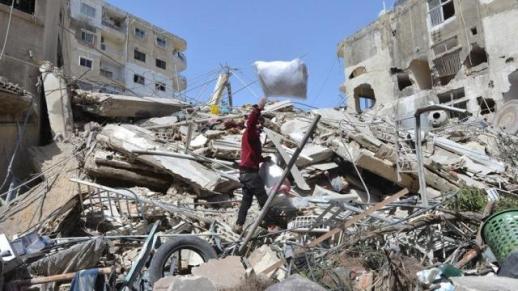 Lebanon Death Toll Exceeds 3,000 Amid Ongoing Israeli Airstrikes The death toll in Lebanon has surpassed 3,000 due to ongoing clashes between Israel and the Lebanese militant group Hezbollah. Despite an extended ceasefire, Israeli airstrikes continue to escalate casualties. On May 18, the Lebanese Ministry of Health reported that since the fighting began on March 2, 3,020 people have died as a result of the conflict, including 292 women and 211 children. The ceasefire, which started on April 17, has recently been extended for an additional 45 days. However, fighting has not ceased on the ground. Reuters reported that although the ceasefire extension was brokered by the United States, Israeli airstrikes and Hezbollah attacks persist. The Israeli military stated it struck over 30 Hezbollah-related facilities in the past 24 hours. Civilian casualties continue to rise. On May 15, an Israeli airstrike hit a civil defense facility in southern Lebanon, killing at least six people, three of whom were emergency responders. The Lebanese state news agency reported that 22 others were injured in the attack. The current conflict escalated in early March when clashes between Hezbollah and Israel intensified. Since then, Israel has conducted ground operations in southern Lebanon and airstrikes across the country, claiming these actions are aimed at preventing Hezbollah's rearmament. Diplomatic solutions remain elusive. The United States is mediating an extension of the ceasefire and security agreements between Lebanon and Israel, but Hezbollah is not participating in negotiations. The Lebanese government is demanding a security agreement focused on the withdrawal of Israeli forces, while Israel insists on Hezbollah's disarmament and border security guarantees. The prolonged conflict has led to a significant number of displaced persons. According to AP, more than one million people have fled their homes in Lebanon. Casualties have also been reported among Israeli soldiers and civilians, as well as UN peacekeeping forces.* This article has been translated by AI. 2026-05-19 07:06:53
 -
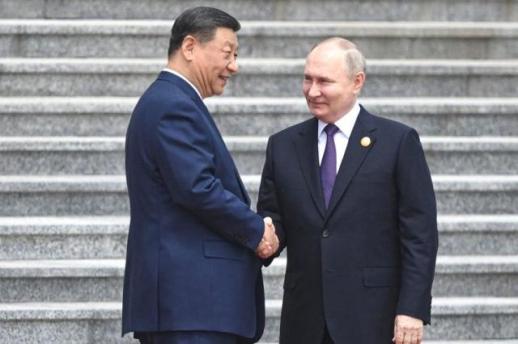 Putin to Visit China for Talks with Xi Following Trump's Trip Russian President Vladimir Putin is set to visit China for a state visit and hold talks with Chinese President Xi Jinping. This meeting follows U.S. President Donald Trump's recent trip to China, highlighting the ongoing diplomatic engagement among the U.S., China, and Russia. According to the Chinese Foreign Ministry and the Kremlin, President Putin will be in China for two days starting today, at the invitation of President Xi. The two leaders are scheduled to meet on May 20 in Beijing to discuss strategic cooperation, economic collaboration, and key international and regional issues. This summit coincides with the 25th anniversary of the signing of the China-Russia Treaty of Good-Neighborliness and Friendly Cooperation. The Kremlin stated that a joint declaration and several agreements are expected to be signed following the talks. President Putin will also meet with Chinese Premier Li Qiang to discuss trade and economic cooperation. Putin's visit is noteworthy as it comes immediately after Trump's trip to China. This indicates China's strategy of maintaining a balance between improving relations with the U.S. while also strengthening its strategic partnership with Russia. Analysts view this as an effort to expand diplomatic options in the face of Western pressures. The backdrop to this meeting is the ongoing war in Ukraine. Russia has increasingly relied on economic and diplomatic cooperation with China amid the protracted conflict and Western sanctions. While China has publicly maintained a neutral stance, it has continued to foster its strategic relationship with Russia. This summit is likely to reaffirm their cooperative stance against Western pressure. Energy cooperation is also a significant agenda item. Following Western sanctions, Russia has heightened its dependence on energy exports to China. The Kremlin noted that the discussions will cover a broad range of economic topics, including the potential for the 'Power of Siberia 2' gas pipeline, which would connect Russian Arctic gas fields to China via Mongolia. The Taiwan issue and U.S.-China relations also play a role in this context. President Xi recently highlighted the Taiwan issue as a major risk factor in U.S.-China relations during his talks with President Trump. China is navigating the need to manage tensions with the U.S. while maintaining its partnership with Russia. This summit is more about solidifying the existing China-Russia cooperation framework rather than declaring a new alliance. The sequence of meetings, first with Trump and then with Putin, underscores China's emerging role as a key player in the diplomatic landscape involving the U.S., China, and Russia, signaling its intent to manage U.S.-China relations while maintaining its anti-Western collaboration with Russia.* This article has been translated by AI. 2026-05-19 06:54:55
 -
 Mixed Results on Wall Street as Tech Stocks Retreat; Nasdaq Falls 0.51% Wall Street closed mixed as rising oil prices and U.S. Treasury yields weighed on the market, leading to profit-taking in technology stocks. The Nasdaq and the S&P 500 both declined, while the Dow Jones Industrial Average posted a slight gain. On May 18, the Dow Jones Industrial Average rose by 159.95 points, or 0.32%, to close at 49,686.12. The S&P 500 fell by 5.45 points, or 0.07%, to finish at 7,403.05, while the Nasdaq Composite dropped 134.41 points, or 0.51%, to end at 26,090.73. The weakness in technology stocks contributed to the declines. The information technology sector within the S&P 500 fell by 0.97%, and the Philadelphia Semiconductor Index dropped by 3.3%. Nvidia saw a 1.3% decrease ahead of its earnings report this week, as profit-taking pressure increased following a recent surge in AI semiconductor stocks. Rising oil prices and interest rates also posed challenges for growth stocks. West Texas Intermediate (WTI) crude oil closed at $108.66 per barrel, while Brent crude finished at $112.10. Concerns over disruptions to oil shipments through the Strait of Hormuz due to tensions with Iran have pushed prices higher. The yield on the 10-year U.S. Treasury note reached a high of 4.659% during the day, marking its highest level since February 2025, before settling at around 4.591%. High oil prices are contributing to inflationary pressures, while elevated interest rates are increasing valuation concerns for technology stocks. However, news that President Donald Trump has postponed military action against Iran, leaving room for negotiations, helped to mitigate some of the market's losses. Despite this, uncertainty remains as the possibility of military response in the event of failed negotiations lingers. Sector performance was mixed. The S&P 500 energy sector rose by 1.8%, marking the highest gain among major sectors, while the information technology sector experienced the largest decline. In individual stocks, Dominion Energy surged by 9.4% following NextEra Energy's announcement of its acquisition, while NextEra Energy fell by 4.6%. Regeneron Pharmaceuticals dropped by 9.8% after disappointing clinical results for its skin cancer treatment. This week, the market's focus will be on Nvidia's earnings report. Given that AI-related stocks have recently led the rally, Nvidia's performance and guidance are expected to be key indicators for a potential rebound in technology stocks. Earnings reports from major retailers, including Walmart, will also provide insights into consumer trends amid rising oil prices and inflationary pressures.* This article has been translated by AI. 2026-05-19 06:46:05