
Journalist

Jun sungmin
-
 Prospects After Emergency Mediation Authority Activation: A Look at Past Cases As tensions rise between Samsung Electronics and its labor union, the possibility of the government activating its "emergency mediation authority" is drawing attention in the industrial sector. Legal experts believe that if this authority is invoked before a strike occurs, it would be an unprecedented preemptive activation. According to legal sources on May 18, the emergency mediation authority is based on Article 76 of the Labor Union and Labor Relations Adjustment Act. The Minister of Employment and Labor can decide to activate emergency mediation if a labor dispute threatens public interest, is large in scale, or poses a significant risk to the national economy or daily life. Before activation, the minister must consult with the chair of the Central Labor Relations Commission. Once activated, the union must immediately cease any strike actions and cannot resume them for 30 days. Legal interpretations suggest that there is no explicit prohibition against activating this authority before a strike begins. However, the requirement of an existing risk means that substantial objective evidence is necessary for actual activation. Lee Jun-hee, a professor at Kwangwoon University, stated, "There is no legal text that makes it impossible under the current law, so it is not unfeasible. However, it must be strictly evaluated whether a risk exists, and there must be objectively recognizable grounds." Historically, the emergency mediation authority has typically been invoked after strikes have already begun and damages have occurred. During the 1993 Hyundai Motor strike, the government initiated the activation process after estimating that long-term disputes had caused losses of 672.7 billion won, including impacts on partner companies. Following the activation, negotiations resumed, leading to a tentative agreement within about 21 hours. In 2005, the government activated the emergency mediation authority during a 25-day strike by Asiana Airlines pilots, which had already resulted in direct damages exceeding 400 billion won. After the activation, the pilots returned to work, and mediation procedures were initiated. In the same year, during a strike by Korean Air pilots, the government activated the authority on the fourth day of the strike, estimating that damages over three days had reached 189.4 billion won. The government feared that prolonged strikes could severely disrupt air logistics and exports. Subsequently, the Central Labor Relations Commission issued a mediation decision that included a 2.5% basic salary increase, resolving the situation. The Samsung Electronics strike situation differs from previous cases. In the Hyundai and airline strikes, government intervention occurred only after production and transportation disruptions had accumulated. In contrast, Samsung is facing potential disruptions before they occur, with signals of intervention coming from the president, political circles, and the judiciary, making this situation unusual. Some analysts have even suggested that a strike could lead to losses of around 100 trillion won, highlighting the seriousness of the matter. Even if the emergency mediation authority is activated, the situation will not automatically resolve within 30 days. Professor Lee explained, "If the Central Labor Relations Commission begins mediation, there is a procedure to confirm the mediation proposal and present it to the parties involved, and during those 30 days, they cannot engage in disputes. If the proposal is rejected or mediation fails, the union can strike again after the 30-day period." Thus, the conflict between Samsung Electronics and its labor union presents a larger challenge beyond the activation of the emergency mediation authority. Even if a strike is halted, conflicts over performance bonuses and internal divisions have already become apparent and are unlikely to be resolved quickly. The industrial sector views this situation as a test not only for the labor relations at Samsung Electronics but also for the crisis response systems of key domestic manufacturing industries.* This article has been translated by AI. 2026-05-18 21:56:03
 -
 Samsung Electronics' AI Glasses Generate Excitement Ahead of Galaxy Unpacked Samsung Electronics is generating buzz as it considers unveiling artificial intelligence (AI) glasses alongside its foldable phones at the Galaxy Unpacked event later this year. Industry analysts suggest that the next-generation AI interface is shifting from wrist devices to eyewear. According to industry sources, Samsung plans to hold the Galaxy Unpacked event in London around July 22, where it is expected to introduce its next-generation foldable phone and AI glasses. While there has been no official confirmation from Samsung, reports indicate that the so-called "Galaxy Glass" could be the first AI eyewear based on Android XR and Google Gemini. The AI glasses are seen as a product that extends Samsung's XR technology, developed under the "Project Infinite," into a lighter and more everyday form. Last year, Samsung introduced the Galaxy XR as the first product based on the Android XR platform, emphasizing an AI companion experience integrated at the system level with Gemini. This approach allows users to understand both the screen and their real-world environment through voice, visual, and gesture inputs. Industry experts believe this experience will serve as the foundation for the AI glasses. While headsets have targeted immersive content and spatial computing, AI glasses are likely to focus on practical AI functions for daily life, such as photography, translation, searching, navigation, and checking schedules without needing to pull out a smartphone. The advantages and limitations identified in the "Infinite" project are expected to inform product planning. Initial reviews of the Galaxy XR have been positive regarding its Gemini-based interactions and lightweight design, but concerns have been raised about long-term comfort and the ecosystem of dedicated apps. Some reviews acknowledged that while it is lighter than the Vision Pro, achieving comfortable wear has proven challenging. Others pointed out that while access to Android apps is broad, XR-optimized applications are still in their early stages. As a result, Samsung's AI glasses are likely to present a lower barrier to entry compared to heavier and more expensive headsets. Market analysts predict that Samsung will leverage the visual and voice AI experiences gained from Infinite XR to create practical eyewear that connects to smartphones, thereby reducing computational burdens. This development is seen as a significant opportunity for the MX division, which has been seeking new growth drivers following the success of foldable phones. The growth potential of the market is another reason Samsung is unlikely to abandon the AI glasses initiative. Market research firm MarketsandMarkets forecasts that the global smart glasses market will grow from $1.22 billion in 2025 to $4.13 billion by 2030, with a compound annual growth rate of 29.4%. According to Omdia, shipments of AI glasses are expected to rise from 5.1 million units in 2025 to over 35 million by 2030. Competitors are also accelerating their efforts. Meta has already commercialized features such as photography, calling, open-ear audio, and AI assistant capabilities through its Ray-Ban smart glasses. Recently, it launched a Ray-Ban display product that combines lens displays with wristband controls, offering functionalities like messaging, notifications, photography, video recording, real-time translation, and walking directions. Apple is reportedly preparing to enter the smart glasses market as well. Bloomberg has reported that Apple is advancing smart glasses as part of its AI device strategy and is considering products that could compete with Meta's Ray-Ban offerings. Analysts believe Apple will aim to address the high price and weight limitations observed in the Vision Pro with its eyewear. The key question is whether AI glasses can transcend being mere wearable accessories and become the next interface after smartphones. If Samsung integrates AI glasses into its ecosystem of devices, including smartphones, Galaxy Watches, Galaxy Rings, and Galaxy XR, it could create a new Galaxy experience centered around users' visual and voice data. If successful, the impact could extend beyond the MX division. If AI glasses connect with SmartThings, they could become a new interface for controlling TVs and home appliances, and serve as an expansion device for demand in robotics, healthcare, and semiconductor sensors within the DX sector. However, challenges such as battery life, privacy concerns, and actual user willingness to wear the devices remain significant hurdles. An industry insider stated, "The core of AI glasses is not how many features are included, but whether they can provide a lightweight and natural experience that users want to wear daily. Samsung's ability to realistically incorporate feedback from its XR devices into eyewear will determine its initial success or failure."* This article has been translated by AI. 2026-05-18 21:52:51
 -
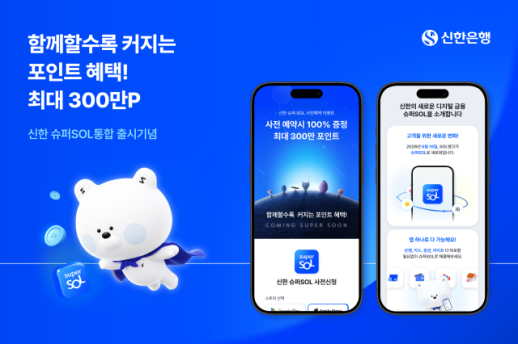 Shinhan Financial Group to Launch 'Shinhan Super SOL' App in June Shinhan Financial Group announced on May 18 that it will launch the 'Shinhan Super SOL' app on June 17. The Shinhan Super SOL is an integrated financial platform that consolidates services from major subsidiaries, allowing users to access banking, cards, securities, and insurance all in one place. The app will feature a generative AI-based agent service to facilitate easier and more convenient access to financial services. In conjunction with the launch, Shinhan Bank will accept pre-registration for event participation until June 12. Customers can access the pre-registration event page through the event sections of major group company apps or via SMS notifications. The program will operate on a tiered benefit system, where the maximum reward of My Shinhan Points per participant will vary based on the number of participants. As more customers join, the maximum benefit limit will increase from 100,000 points to 3 million points. A Shinhan Bank representative stated, "We will continue to expand the benefits and services of 'Shinhan Super SOL' to ensure that customers can access Shinhan Financial's financial and lifestyle services more easily and conveniently."* This article has been translated by AI. 2026-05-18 21:49:44
 -
 Samsung Electronics and Labor Union Fail to Reach Agreement Ahead of Strike Samsung Electronics and its labor union remain at an impasse as they approach a general strike scheduled for May 21. On May 18, Park Su-geun, Chairman of the Central Labor Relations Commission, described the ongoing negotiations as “parallel lines” when asked about the internal discussions at the government mediation office in Sejong. When pressed for any progress, Park reiterated, “parallel lines.” He also noted that there is no adjustment plan from the commission yet. However, he added, “We must coordinate to avoid a strike.” Representatives from Samsung, including Ye Myung-gu, head of the DS division, and Kim Hyung-ro, vice president, did not respond to questions from reporters, and Choi Seung-ho, chairman of the Samsung Group’s labor union, also remained silent. The second round of post-adjustment negotiations is scheduled to take place from 10 a.m. to 7 p.m. on the same day, with final discussions set for the following day, May 19, during the same hours. Given the impending strike, this may be the last opportunity for meaningful dialogue, and there is a possibility that negotiations could extend past midnight. The previous round of negotiations on May 12 concluded around 3:30 a.m. on May 13, well past midnight.* This article has been translated by AI. 2026-05-18 21:48:00
 -
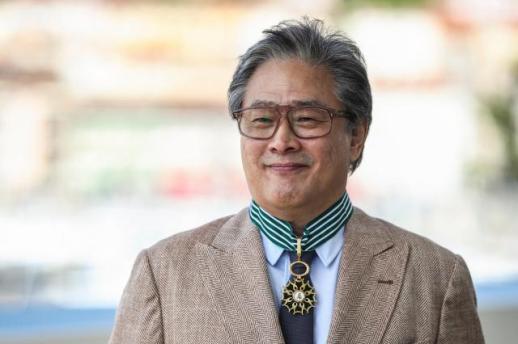 Minister Choi Hyung's Congratulations to Park Chan-wook on Receiving France's Highest Cultural Honor Minister of Culture, Sports and Tourism Choi Hyung sent a congratulatory message to director Park Chan-wook, who received the highest grade of the French Order of Arts and Letters, the Commander. The Ministry announced that Minister Choi sent the message on May 18, congratulating Park on receiving the Commander of the Order of Arts and Letters. “I sincerely congratulate you on receiving the prestigious French Order of Arts and Letters, Commander,” Choi said, adding, “This honor firmly establishes the global stature of the South Korean film industry and elevates our cultural pride.” Choi continued, “Your unique body of work has become a source of inspiration for creators worldwide. I extend my deep admiration for your artistic achievements that have captivated the world and for your pioneering spirit that has opened new horizons in South Korean cinema.” Mentioning the 140th anniversary of diplomatic relations between South Korea and France this year, Choi expressed hope that Park would serve as a bridge to further strengthen cultural ties between the two countries and pledged continued support for his remarkable journey.Earlier, on May 17, French Culture Minister Rima Abdul Malak awarded Park the Commander of the Order of Arts and Letters in Cannes, France. This honor is given to individuals who have made significant contributions to the arts and literature or enhanced the international prestige of French culture. The order is divided into three grades: Chevalier, Officier, and Commander, with Commander being the highest. Park has a long-standing relationship with France. He won the Jury Prize at the Cannes Film Festival in 2004 for “Oldboy,” followed by the Jury Award for “Thirst” in 2009 and the Best Director Award for “Decision to Leave” in 2022. His film “The Handmaiden” was also invited to compete at Cannes in 2016, and he served as a jury member at the 70th Cannes Film Festival in 2017. This year, he was appointed as the first South Korean president of the jury for the 79th Cannes Film Festival. After receiving accolades as a winner, jury member, and jury president, he has now been honored with the highest grade of the French Order of Arts and Letters.* This article has been translated by AI. 2026-05-18 21:45:31
 -
 Government Eases Regulations for Cafes and Wholesale Sellers in Agricultural Areas The government will allow the establishment of cafes in agricultural promotion areas and significantly ease the requirements for wholesale sellers in online markets. This move aims to expand the rural population and enhance market access for small-scale farmers. The Ministry of Agriculture, Food and Rural Affairs announced on May 18 that it has finalized 50 regulatory reform tasks during the third strategy meeting on agricultural and food regulation reform, chaired by Minister Song Mi-ryung. The meeting included 20 participants from the food industry and private experts who discussed urgent and impactful reform measures. To promote energy transition and balanced development in rural areas, the government will relax regulations on floating solar panel installations. The area requirements for these installations on reservoirs and freshwater lakes will also be eased. Additionally, in collaboration with the Ministry of the Interior and Safety, the government plans to apply separate taxation to leased reservoirs and farmland designated for the creation of 'Sunshine Income Villages,' thereby reducing property tax burdens and exempting them from comprehensive real estate tax. To encourage the revitalization of rural communities and increase the rural population, the government will permit the establishment of cafes that utilize agricultural products directly produced by farmers and agricultural corporations. This initiative is expected to generate additional income through agritourism. The government also plans to accelerate regulatory reforms aimed at improving agricultural product distribution structures and fostering future industries. To facilitate small-scale farmers' participation in online wholesale transactions, the government will allow sellers to join online wholesale markets regardless of their sales volume. Furthermore, the system will be improved to maintain organic certification in cases of unintentional pesticide residue detection. The criteria for farmers to receive direct payments will also be relaxed. Currently, farmers with annual non-farm income exceeding 37 million to 43 million won are excluded from receiving area-based direct payments. The new plan will allow the Minister of Agriculture, Food and Rural Affairs to adjust these criteria through official announcements. Additionally, the interim settlement amount for public reserve rice will be increased from 40,000 won to 60,000 won per 40 kg bag. Other initiatives include improving redundant regulations on food origin labeling for delivery services, expanding support for income stabilization costs related to highly pathogenic avian influenza (AI), and broadening the scope of agricultural product gift certificates. Minister Song stated, "Regulatory reform in agriculture and food is fundamentally about changing unreasonable and absurd regulations that do not keep pace with the field. We will not only reduce the number of regulations but also boldly improve those that are unreasonable and absurd." * This article has been translated by AI. 2026-05-18 21:43:00
 -
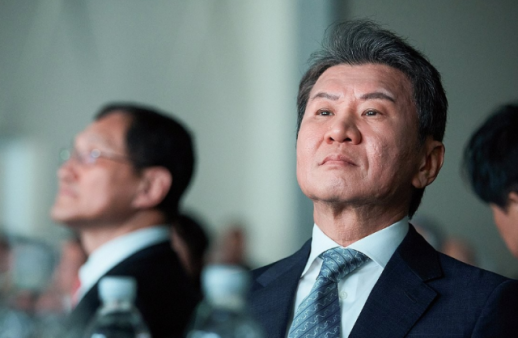 HDC Chairman Chung Mong-kyu Fined 150 Million Won for Omitting 20 Affiliated Companies Chung Mong-kyu, chairman of HDC Group, has been fined 150 million won for allegedly omitting 20 affiliated companies from documents submitted to the Fair Trade Commission (FTC). According to legal sources, the Seoul Central District Court's Criminal Division 11, presided over by Judge Kim Jae-hak, issued a summary order on May 15 for the violation of the Fair Trade Act. A summary order is a procedure that imposes fines or penalties for relatively minor offenses without a formal trial, based solely on written proceedings. The individual can request a formal trial within seven days of receiving the order. Chung has not yet received the summary order. Chung is accused of omitting a total of 20 companies from HDC Group's affiliated company status while submitting documents for designation as a business group with cross-shareholding restrictions from 2021 to last year. According to the FTC, the omitted companies include 12 firms controlled by SJG Holdings, led by Chung's uncle Park Se-jong, and 8 firms controlled by Intrans Shipping, owned by his sister Jeong Yu-kyung and her husband Kim Jong-yeop. The number of omitted companies per year was 17 in 2021, 19 in 2022, 19 in 2023, and 18 in 2024. The FTC determined that false submissions occurred for as long as 19 years, from 2006, when Chung was designated as the head of HDC, until last year. However, due to the five-year statute of limitations, only actions taken after 2021 were subject to penalties. The FTC reported that Chung, who has served as the CEO of HDC, a holding company, for an extended period, was in a position to be fully aware of the scope of affiliated companies and had ongoing interactions with the family-owned firms, indicating intent to conceal. Consequently, the FTC filed a complaint with the prosecution in March. Following an investigation, prosecutors issued a summary indictment against Chung on April 6, imposing the 150 million won fine. HDC Group previously stated, "Chairman Chung does not hold any shares in these companies and had no improper intent or motive to conceal them."* This article has been translated by AI. 2026-05-18 21:38:42
 -
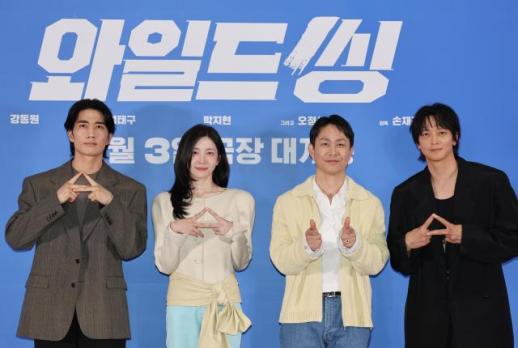 Charming and Fun: Kang Dong-won, Um Tae-goo, and Park Ji-hyun's 'Wild Thing' Aims for June Theatrical Release Loveable and delightful, the film 'Wild Thing' combines nostalgia for the 2000s music scene with K-pop performances in a comedic setting. The chemistry among the cast, along with music and stage elements, raises anticipation about whether the story of the fictional trio 'Triangle' can evoke laughter from audiences in June.On May 18, a press and distribution preview for 'Wild Thing' took place at Lotte World Tower in Jamsil-dong, Songpa-gu, Seoul. Director Son Jae-gon and actors Kang Dong-won, Um Tae-goo, and Park Ji-hyun attended the event to discuss the film.'Wild Thing' tells the story of 'Triangle,' a mixed-gender dance group that once dominated the music scene but disbanded overnight due to an unexpected incident. Now, 20 years later, they embark on a reckless challenge to seize a second chance at success. Kang Dong-won plays the leader Hyun-woo, Um Tae-goo portrays the rapper Sang-goo, and Park Ji-hyun takes on the role of center Domi.Director Son emphasized the importance of making audiences root for the protagonists. He stated, "A key goal was to create a scenario where viewers would want to support the main characters. I believe we have never successfully evoked that feeling before, even when embedding messages and various reasons into the script."He added, "In this film, the protagonists' final choices may initially seem reckless, but as visual movements and music intertwine, those emotions are captured. It seems that relying solely on the script and calculations does not work well."Son noted that the film's message is something that unfolds naturally within the story rather than being explicitly stated, linking it to a line spoken by Hyun-woo in the film. He remarked, "In fact, I have never made a film with the intention of conveying a theme or message. My only criterion is, 'This will be fun.' However, as the film is released, I find myself reflecting on themes and messages. Surprisingly, I discover plausible messages and themes. As I age, I feel that having only three opportunities in a lifetime seems too few. If I think it's over after three times, that feels like a cruel statement. Therefore, that line could naturally convey a message in this story."While the film is set against the backdrop of the early 2000s music scene, the preparation process extended back to the 1990s. Elements such as costumes, stage visuals, and interview formats reflect various images from that era.Director Son explained, "The script specifies the year 2000, but during research, the production team felt that referencing only that specific period seemed too distant from current trends. Therefore, we expanded our references to include the 1990s while preparing the project. Many styles were referenced, so viewers may see styles that resonate with their own experiences and memories."The actors also focused on capturing the era's atmosphere through their speech, demeanor, and stage presence. Kang Dong-won noted, "When looking at materials from that time, the interview styles were somewhat different from today. I thought about how to incorporate those elements when appearing on TV rather than in casual conversation. I remember trying to mix those aspects to create something entertaining."Park Ji-hyun remarked, "The director and staff did a great job of capturing the era's emotional backdrop, allowing me to naturally act as if I were in that time period."Um Tae-goo added, "The external aspects were well crafted by the staff and director. I focused on faithfully portraying what was in the script while considering how to make it appear more authentic."The styling of 'Triangle' evokes images of idol groups from the 1990s and 2000s. Instead of directly referencing a specific group, the actors brought their own interpretations of the styles and stage images they remembered from that time.Kang Dong-won shared, "I referenced various idols. My generation grew up watching them, so I wanted to pay homage to their styles and atmosphere. I also contributed some ideas. For the dance, I thought about other performers and referenced their dance lines, acting with a sense of homage."Park Ji-hyun added, "I, along with others, referenced several idol groups to capture that era. I mentioned that Lee Hyori from Fin.K.L left a strong impression on me because I liked her at that time, and she remains an iconic figure in my memory. I tried to incorporate her freshness, sexiness, and charming smile into my performance."The most challenging aspect for the actors was performing on stage. As 'Triangle' was a once-popular group, the actors had to deliver singing, dancing, and stage performances while being aware of the camera.Kang Dong-won stated, "Performing on stage was my biggest challenge. Since the characters were successful idols, they had to showcase their skills on stage. Typically, in films, looking at the camera is a mistake, but here, not looking at the camera was the mistake. When the lights came on, we had to look at the camera, and every moment of dancing while gazing at it was a challenge."The film's music and performances have already been released ahead of its premiere. The lead track 'Love is' from 'Triangle' has been made available, along with a music video, generating reactions reminiscent of a fictional fandom. The film's setting has expanded into pre-release content, drawing attention.Kang Dong-won expressed gratitude for the positive reactions, saying, "Although it's before the release, I appreciate the good responses. However, I worry that if viewers become too immersed, they might be disappointed after watching the film. The music video represents a part of the film's past, while the movie tells a different story, and I'm concerned that people might conflate the two."Um Tae-goo noted, "We filmed the music video after completing the shoot. After five months of filming, we practiced and became accustomed to the performance, so it was easier to execute. Park Ji-hyun added, "I was curious about how it would be utilized, but I didn't expect the music video to be released. I thought it was a great idea. I'm surprised that many people are enjoying it and sharing diverse comments, showing that audiences are engaging with the film in fresh ways. I hope 'Wild Thing' will also be loved by many."The actors also put effort into portraying characters that transition between the past and present. 'Triangle' is a group that, after its peak 20 years ago, is attempting to return to the stage.Park Ji-hyun stated, "I researched the words and speech patterns used during that time, ensuring that the passage of time between their 20s and 40s could be compared to show the flow of time."Kang Dong-won humorously remarked about the past scenes, saying, "Being 19 is impossible, but I believed in the power of science and technology." He added, "I'm not one to fully trust CGI, but I wanted to receive a lot of help. Since I was also an entertainer when I was young, I wanted to channel the energy of pursuing my dreams."Meanwhile, 'Wild Thing' is set to hit theaters on June 3.* This article has been translated by AI. 2026-05-18 21:25:52
 -
 Vietnam's Durian Exports Surge 262%, But Farmers Face Challenges In the first quarter of this year, Vietnam's durian exports skyrocketed by 230% compared to the previous year, showing a strong recovery. Growth in new markets such as South Korea and the United States is notable, but challenges remain, including high dependence on China, cadmium contamination issues, and price instability. According to Vietnam's Ministry of Agriculture and Rural Development on May 17, durian exports reached approximately $221.7 million (about 333.3 billion VND) in the first quarter, marking a 230% increase year-on-year. Total export volume exceeded 80,000 tons, with fresh durian accounting for about 68,500 tons and frozen durian about 11,600 tons. The surge in export value is primarily driven by frozen durian, which saw an average export price of around $4,302 per ton (approximately 6.46 million VND), over 20% higher than the previous year and 18-22% more than fresh durian. In addition to traditional markets like China, significant growth has been observed in various importing countries. Exports to South Korea surged by 262%, the highest growth rate, while exports to the United States increased by over 107%. Australia and Japan also saw increases of 40% and 12%, respectively. This indicates a growing presence of Vietnamese durian in demanding markets. ◆ China Absorbs 90% of Fresh Durian Exports, Price Instability Persists However, the outlook for future durian exports is not entirely optimistic. China remains the largest market, absorbing about 90% of Vietnam's fresh durian exports. The inconsistency of China's quarantine and purchasing policies leads to repeated price fluctuations. Cases of contamination with harmful substances like cadmium and O-aminophenol continue to occur, disrupting exports to China. Currently, sources from southern production and distribution areas report that the Ri6 variety is priced at 40,000 to 49,000 VND per kilogram (about $2.20 to $2.70), an increase of 5,000 to 7,000 VND from the previous week. In contrast, the Thai variety (Monthong) has decreased by about 3,000 VND, priced at 76,000 to 81,000 VND per kilogram. Dang Phuc Nguyen, Secretary-General of the Vietnam Vegetable and Fruit Association, stated, "The recent recovery in durian prices is due to a temporary stabilization of exports to China and a reduction in the supply of the Ri6 variety from the Mekong Delta region." However, he cautioned that the issues of cadmium and O-aminophenol contamination remain unresolved, which could lead to renewed export restrictions to China. Additionally, overlapping harvest times with Thai varieties are major factors contributing to price instability. Following the harvest in the southwestern Mekong Delta, large-scale shipments of Thai varieties (Monthong) are expected primarily from the southeastern region between May and July, and from the western highlands between August and November, raising concerns about potential price declines in the second half of the year. Experts emphasize the urgent need for zoning of cultivation areas, systematic management, enhanced cadmium testing capabilities, and standardization of cultivation processes. Meanwhile, the Vietnamese government is taking strong measures to address structural weaknesses in the durian export certification system. On May 15, Deputy Prime Minister Ho Duc Phoc convened relevant ministries to request that the Ministry of Public Security investigate broker activities related to cultivation codes, code trading and leasing, and manipulation of inspection results. This comes after 403 cultivation codes and 240 packaging facility codes received non-compliance warnings from China since 2025, indicating that misuse and false usage of codes are undermining export credibility. The Deputy Prime Minister remarked, "If control is not properly implemented, we will see repeated price crashes during bumper harvests, ultimately harming farmers the most." He also directed the simplification of the cultivation code issuance process, decentralization of authority, and further negotiations with the General Administration of Customs of China for additional code approvals.* This article has been translated by AI. 2026-05-18 21:22:54
 -
 Hite Jinro CEO and Executives Buy 30,000 Shares to Promote Responsible Management Twenty executives at Hite Jinro, including CEO Jang In-seob, have initiated a stock buyback. This marks a new beginning for the company following a leadership change after 14 years, with Jang emphasizing responsible management to restore market confidence. Hite Jinro announced on May 18 that Jang purchased 5,000 shares, while eight other executives acquired a total of 10,831 shares. Additionally, 11 more executives plan to buy over 1,000 shares each by June, bringing the total to approximately 30,000 shares purchased by the management team. The decision to buy back shares reflects a serious acknowledgment of the current challenges. According to the Financial Supervisory Service's electronic disclosure system, Hite Jinro reported a consolidated operating profit of 55.9 billion won in the first quarter of this year, a 10.8% decrease from the same period last year. Revenue also fell by 3.6% to 590.8 billion won. Last year, Hite Jinro's consolidated revenue was 2.4986 trillion won, down 3.9% from the previous year, with operating profit dropping 17.2% to 172.3 billion won. The overall contraction in the alcoholic beverage market has impacted Hite Jinro as well. In this context, the executives' personal investments signal their confidence in the company's future. A Hite Jinro representative stated, "Despite the shrinking domestic liquor market and external cost pressures, we are expressing confidence in long-term growth through global market expansion. We expect to improve our performance by enhancing management efficiency and building our strength." Hite Jinro is also significantly increasing investments aimed at penetrating global markets. The company is set to complete its production facility in Vietnam in the second half of this year and is strengthening its lineup of export-oriented products, including fruit liqueurs that mix distilled spirits with fruit juice and sweeteners. Hite Jinro emphasized, "While solidifying our foundation through responsible management domestically, we will achieve growth through aggressive expansion internationally."* This article has been translated by AI. 2026-05-18 21:21:00