
Journalist

Jun sungmin
-
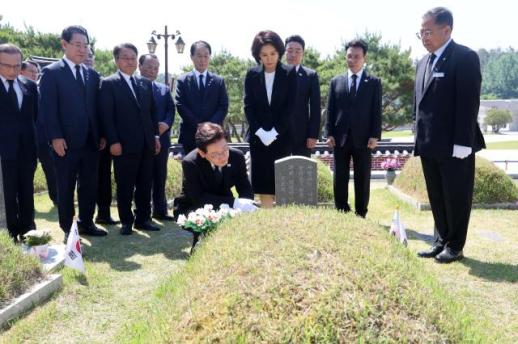
 Candidates for Seoul Mayor Attend 46th Anniversary of May 18 Democratic Uprising Jeong Won-o, the Democratic Party candidate for Seoul mayor, and Oh Se-hoon, the People Power Party candidate, both attended the May 18 Democratic Uprising memorial ceremony on May 18. This marked their first face-to-face meeting since registering as candidates for the June 3 local elections last week. The two candidates attended the 46th anniversary ceremony held on the eighth floor of Seoul City Hall in Jung-gu as special guests. Upon arriving at the venue, both candidates signed the guestbook before entering the ceremony hall to greet attendees. Jeong wrote, "I will carry on the spirit of May in a Seoul where citizens are the masters." Oh wrote, "Reflecting on the spirit of May and its sacrifices, I will strengthen democracy on a solid foundation." Seated next to each other in the special guest section, Jeong and Oh exchanged handshakes and brief conversations. They later joined Jeong Geun-sik and Han Man-jung, candidates for Seoul education superintendent, to lay flowers and pay their respects. This was the first time the two candidates met face-to-face since submitting their registration documents to the Seoul Election Commission on May 14, the first day of candidate registration. The ceremony was attended by key lawmakers from both parties, lending support to the candidates. From the Democratic Party, notable attendees included Jin Sung-jun, co-chair of Jeong's campaign committee, Kim Nam-geun, head of the first policy division, and Lee Jeong-heon, the spokesperson and head of the public relations team. The People Power Party's leadership, including floor leader Song Eon-seok, policy committee chair Jeong Jeom-sik, and secretary general Jeong Hee-yong, were also present, with party leader Jang Dong-hyuk visiting Gwangju directly.* This article has been translated by AI. 2026-05-18 13:26:10
 -
 Court Partially Grants Samsung's Request to Ban Union's Strike Actions Samsung Electronics' request for a court injunction to prohibit union strike actions has been partially granted. This decision comes just three days before a planned general strike on May 21.The Suwon District Court's Civil Division 31, led by Judge Shin Woo-jung, ruled on May 18 that Samsung's request against two unions—the Samsung Electronics branch of the Inter-Corporate Labor Union and the National Samsung Electronics Union—was partially accepted.The court stated, "During the strike period, the safety protection facilities must be maintained and operated with the same level of personnel, operating hours, scale, and duty of care as usual. No actions should be taken to stop, abolish, or interfere with this, nor should union members be encouraged to do so."Additionally, the court emphasized that activities such as preventing damage to work facilities and ensuring the integrity of wafers must be carried out with the same diligence as during normal operations, and union members should not be obstructed from performing these tasks.Specifically, the Suwon District Court instructed the Inter-Corporate Union and its Chairman Choi Seung-ho to refrain from occupying all or part of the facilities or installing locks that would hinder workers' access.As a result, the Samsung Electronics union must conduct its strike on May 21 while ensuring the maintenance of safety protection facilities and providing minimal personnel for essential operations.* This article has been translated by AI. 2026-05-18 13:24:45
 -
 Japan's 10-Year Bond Yield Hits 30-Year High Amid Inflation and Fiscal Concerns Japan's long-term interest rates have surged to their highest level in 30 years, driven by rising oil prices amid instability in the Middle East and concerns over additional government spending. According to the Nikkei newspaper on May 18, the yield on newly issued 10-year government bonds briefly reached 2.8%, the highest level since October 1996. An increase in bond yields typically indicates a decline in bond prices. The 10-year bond yield rose by 0.1 percentage points from the end of the previous week. The Nikkei reported that ongoing inflationary pressures from rising oil prices and worries about increased fiscal spending have led to a continued sell-off in bonds. As turmoil in the Middle East persists, oil prices remain elevated, heightening inflation concerns both domestically and internationally. This has led to a noticeable trend of investors shying away from purchasing bonds. Rising inflation fears increase the likelihood of higher interest rates, which negatively impacts bond prices that move inversely to interest rates. The Nikkei noted that significant increases in long-term interest rates in European and U.S. markets at the end of the previous week influenced the Tokyo market early in the week. U.S. long-term interest rates rose to nearly 4.5%, marking their highest level in about a year, which exerted upward pressure on Japanese rates. Domestically, there are growing expectations that the government will prepare a supplementary budget for the fiscal year 2026, raising concerns about expansive fiscal policy. The anticipation of increased government spending could lead to a rise in bond issuance and fears of fiscal deterioration, contributing to the bond sell-off. Notably, the sell-off has been particularly pronounced in ultra-long-term bonds, which are more sensitive to fiscal concerns. The yield on 30-year bonds also briefly reached 4.17%, setting a new record high.* This article has been translated by AI. 2026-05-18 13:21:43
 -
 Global Energy Crisis: South Korea Must Prepare for Worst-Case Scenarios The prolonged conflict in the Middle East and the blockade of the Strait of Hormuz are pushing the global economy into a state of significant uncertainty. According to the International Energy Agency (IEA), 76 countries have activated economic emergency measures, a sharp increase from 55 just three months ago. This is not merely a phase of rising international oil prices; it is a crisis shaking the very supply chains that underpin the global economy. The Financial Times reports a troubling situation. Global oil consumption is exceeding production by as much as 6 to 9 million barrels per day, leading to a supply shortage. This deficit is being temporarily managed through the use of strategic reserves, but even that is reaching its limits. Since the onset of the war, global oil inventories have decreased by 380 million barrels. JP Morgan has warned that the inventories of OECD countries could approach 'operational stress levels' as early as next month. Market sentiment is also concerning. The chief economist at Aberdeen is considering scenarios where Brent crude prices could soar to $180 per barrel. The European Union's executive body has publicly acknowledged the potential for a global recession if the blockade of the Strait of Hormuz continues. This is not just speculation; it indicates that the global economy is already in a precarious state, depleting reserves while facing energy supply shortages. South Korea is among the countries most dependent on energy imports. The nation relies heavily on foreign sources for crude oil, liquefied natural gas (LNG), and coal, with a significant portion coming from the Middle East. The Strait of Hormuz is a critical route for oil shipments to South Korea, and any disruption or instability in this area would have direct and severe impacts on the country. Signs of trouble are already emerging. Rising international oil prices are not just a matter of higher gas prices at the pump; they are driving up logistics costs, air freight rates, manufacturing expenses, electricity prices, and city gas rates. This ultimately leads to declining corporate profitability, reduced consumer spending, and renewed inflationary pressures. South Korea, with its export-driven manufacturing economy, is particularly vulnerable to surges in energy prices, as key industries like semiconductors, petrochemicals, steel, and automobiles are energy-intensive. The situation is exacerbated by the fact that the global economy is already grappling with high interest rates, geopolitical risks, and supply chain restructuring. The combination of the U.S.-China trade conflict, the prolonged war in Ukraine, and increasing global protectionism, along with energy shocks, could result in far greater repercussions than anticipated. Just as the oil shocks of the 1970s reshaped the global economic order, this crisis could also disrupt industrial structures and international relations. Despite these alarming developments, South Korean society appears to be underestimating the crisis. There remains a strong perception that international oil prices are merely a market variable. However, this is not a situation that can be managed with routine responses. Energy security must be approached as a matter of national survival strategy. The government needs to reassess its response framework based on worst-case scenarios. This includes expanding strategic reserves, diversifying import sources, and reviewing emergency response systems by industry. Plans for stabilizing power supply and logistics networks must also be developed. Energy crises have always led to economic crises, and economic crises ultimately affect the lives of citizens. The world is already operating in an emergency mode. South Korea can no longer afford to rely on optimism and let time slip away. The warning that we are "living on borrowed time" should not be ignored. Crises always strike the least prepared nations first. * This article has been translated by AI. 2026-05-18 13:19:43
 -
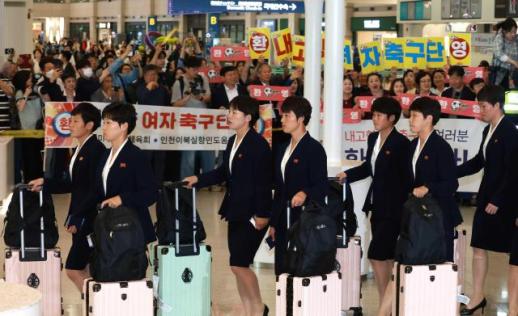 ASIA DEEP INSIGHT: Could soccer match mend divide between two Koreas? As Pyongyang rewrites its constitution to erase the prospect of reunification, a women's soccer tournament in Suwon serves as the final point of contact between two hostile states. At 2:20 p.m. on Sunday, 27 players and 12 staff members wearing matching tracksuits disembarked an Air China flight at Incheon International Airport. They collected their luggage, cleared customs, and boarded buses bound for the Gyeonggi provincial capital. The arrival of a visiting club for the Asian Football Confederation Women’s Champions League semifinals would typically disappear into the routine logistical hum of the South Korean transit system. But the Naegohyang Women’s F.C. had just traveled from Pyongyang via Beijing, traversing a geopolitical boundary that has never been more heavily militarized. When they step onto the pitch against Suwon F.C. Women on Wednesday, it will mark the first time a North Korean sports delegation has entered the South in eight years. The fixture is entirely devoid of diplomatic optimism. We are observing an isolated autocracy that has systematically eradicated every other form of contact with Seoul—severing telecommunications, rewriting its fundamental laws, and detonating physical monuments to peace. Pyongyang has dispatched a soccer team across a border it no longer recognizes as a temporary division, treating it instead as a permanent frontier. The playing field in Suwon south of Seoul is the final operational coordinate where the two Koreas interact. To comprehend the structural friction of this week’s tournament, the rapid dismantling of the inter-Korean apparatus must be examined first. The current communications blackout was initiated on April 7, 2023. At nine in the morning on a Friday, Pyongyang ceased answering the daily administrative calls on the inter-Korean joint liaison office and the military communication lines. These networks were designed to coordinate logistics and prevent accidental naval skirmishes in the volatile West Sea. The receivers in Freedom House have remained dead ever since. That silence preceded a profound doctrinal shift. By early 2024, Kim Jong-un discarded the state doctrine of peaceful reunification that had governed North Korean policy for decades, formally declaring South Korea a principal enemy. The rhetoric materialized into immediate physical action. Pyongyang demolished the Arch of Reunification—a towering stone monument erected by his father in the capital—and began laying thousands of fresh landmines along the Demilitarized Zone. The regime shifted its posture from managing a divided peninsula to fortifying a hardened national border. In March 2026, the Supreme People’s Assembly codified this rupture into the highest law of the land. The legislature scrubbed the concepts of ethnic unity and reconciliation from the North Korean constitution. They formally defined their territorial boundaries, legally designating the Republic of Korea as a foreign adversary rather than a separated brother. The regime even petitioned the International Civil Aviation Organization to terminate the inter-Korean air traffic control network, an administrative link that had previously survived severe military standoffs and nuclear tests. This structural severance makes the presence of the Naegohyang squad at the Suwon Sports Complex jarringly anachronistic. In previous decades, sports diplomacy functioned as the vanguard of a broader geopolitical thaw. When a unified Korean team won gold at the World Table Tennis Championships in Chiba in 1991, or when athletes marched together behind a pale blue Unification Flag at the Sydney Olympics in 2000, both capitals nominally subscribed to the prospect of eventual unity. Even the hastily assembled women's ice hockey team at the Pyeongchang Winter Olympics eight years ago provided the diplomatic cover required for a series of historic summits between Pyongyang, Seoul, and Washington. Today, there is no broader thaw on the horizon. The diplomatic utility of the Suwon match is negligible. President Lee Jae Myung’s repeated offers to restore basic dialogue and resume humanitarian aid have been met with total indifference. North Korea has no intention of utilizing 90 minutes of soccer to restart nuclear negotiations or arrange a border summit. For Mr. Kim, international sports offer a highly specific utility. Fielding a competitive women’s team allows Pyongyang to project normalcy, discipline, and national prestige on the global stage without compromising its hardened borders or exposing its citizens to the corrosive influence of South Korean economic realities. For South Korea, playing the host presents a complex administrative and political burden. It forces a democratic society—currently managing intense regional security anxieties, currency fluctuations against the dollar, and the ongoing pressure to maintain semiconductor sovereignty in a fractured global market—to accommodate representatives of a regime that openly targets its infrastructure. The host nation must adhere to the polite fictions of international sporting protocol, offering training facilities, logistics, and heavy security details to a state that refuses to pick up a telephone to de-escalate live military tensions. The stadium in Suwon will be filled with security personnel, government observers, and global media, all monitoring a fixture governed by strict, mutually agreed-upon laws. The athletes themselves are deployed simply to win a soccer match. They are tasked with navigating an environment where every technical foul, substitution, and post-match handshake will be analyzed for political signaling. The Naegohyang players spent days training in isolation near their embassy in Beijing before securing passage to Seoul, highlighting the convoluted logistics required to move civilians across a sealed perimeter. They operate within a performative contradiction, executing a tactical game plan while their respective defense ministries prepare for worst-case scenarios along the 38th parallel. When the referee blows the whistle to initiate the semifinal, it will trigger a brief, localized suspension of the geopolitical reality that defines the Korean Peninsula. For an hour and a half on a manicured patch of grass, the two hostile states will subject themselves to the exact same set of rules—only to walk off the pitch, board their respective buses, and return to a reality where the concept of a shared existence has been entirely erased. 2026-05-18 13:19:38
 -
 President Lee Attends 5·18 Memorial Ceremony, Remembers Gwangju Solidarity and Sacrifice President Lee Jae-myung attended the 46th anniversary memorial ceremony for the Gwangju Uprising held on May 18 at the 5·18 Democracy Square in front of the former Jeonnam Provincial Office in Gwangju.The ceremony was organized to honor the spirit of citizens and students who resisted military dictatorship to protect democracy 46 years ago and to console the families of the victims.This year's memorial marks the first since the establishment of the people's sovereignty government and was themed "May, Embracing the Plaza Again." The theme reflects a commitment to remember the solidarity and sacrifices shown in Gwangju in May 1980 and to continue the spirit of May together.Notably, the ceremony took place at the newly opened 5·18 Democracy Square, which has been under restoration since 2019. This historic site was where various rallies were held during the Gwangju Uprising, using the fountain in the square as a podium.Approximately 3,000 people attended the ceremony, including 5·18 democracy activists, their families, government officials, and citizens, to commemorate the victims of the Gwangju Uprising and express their gratitude.Before the ceremony, President Lee and First Lady Kim Hye-kyung paid their respects at the 5·18 Memorial Tower in the National 5·18 Democratic Cemetery in Gwangju, alongside leaders of 5·18 civic organizations and representatives of the victims' families. They also visited the graves of three martyrs, including Park In-bae, to honor their memory and express gratitude.The ceremony included a national tribute, a thematic video, commemorative speeches, a special performance for the opening of the former Jeonnam Provincial Office, and a rendition of the song "March for the Beloved."The thematic video vividly depicted the events of the Gwangju Uprising through archival footage and interviews, followed by a declaration from three leaders of 5·18 civic organizations pledging to carry on the spirit of May.The commemorative performance featured actors and a theater troupe reading poetry, novels, and diaries symbolizing the spirit of May, concluding with attendees standing to sing "March for the Beloved."The Gwangju Uprising was a popular uprising that took place from May 18 to 27, 1980, when citizens of Gwangju rose against military dictatorship to defend democracy. On May 25, 2011, documents and photographs related to the Gwangju Uprising were registered as UNESCO World Documentary Heritage.* This article has been translated by AI. 2026-05-18 13:17:57
 -
 China's Industrial Production, Retail Sales, and Investment Decline Amid Ongoing Middle East Conflict China continues to experience sluggish economic performance amid the ongoing conflict in the Middle East. According to the National Bureau of Statistics of China, industrial production in April rose by 4.1% compared to the same month last year, falling short of expectations for a 6.0% increase and the previous month's 5.7% rise. This marks the lowest growth rate since July 2023. Additionally, retail sales in April increased by only 0.2% year-on-year, significantly below the forecast of a 2.0% rise and the previous month's 1.7% increase. This is the lowest figure since December 2022, when consumer spending last showed a decline. Fixed asset investment from January to April also saw a decline of 1.6% compared to the same period last year, reversing the previous month's cumulative increase of 1.7%. These trends reflect the broader economic impact of rising prices due to the Middle East conflict, affecting production, consumption, and investment. Earlier reports released on May 11 indicated that China's consumer price index (CPI) and producer price index (PPI) rose by 1.2% and 2.8%, respectively, compared to the same month last year, significantly exceeding expectations. However, the urban unemployment rate in April improved slightly to 5.2%, better than the anticipated 5.3% and the previous month's 5.4%.* This article has been translated by AI. 2026-05-18 13:16:14
 -
 Samsung Electronics Non-Semiconductor Union Stages Surprise Protest Samsung Electronics' non-semiconductor division union staged a surprise protest outside the Central Labor Relations Commission on May 18, opposing the wage negotiations that are heavily focused on the semiconductor (DS) sector. They also made a novel demand for the distribution of performance bonuses to partner companies.According to industry sources, the Donghaeng Union of Samsung Electronics and the Suwon branch of the National Samsung Electronics Union held a separate demonstration in front of the commission during the wage negotiation post-adjustment meeting. They distributed materials outlining the 'six key demands of DX division workers' and called for the inclusion of additional agenda items for DX division members.The demands include: securing a system for performance bonuses amounting to 15% of operating profit, ensuring common resources for the entire company, and enhancing transparency in the criteria for executive bonuses.Notably, the demand for distributing performance bonuses to partner companies drew attention. The unions stated, "We must secure 15% of operating profit for performance bonuses, with some allocated as common resources for the entire company and some for performance bonuses for partner companies to realize shared value." This marks the first time Samsung Electronics' union has officially mentioned the need for bonus distribution to partner firms during the ongoing bonus conflict.Internally, there are interpretations that this movement is a response to recent criticisms of the inter-company union's total strike phase being labeled as 'selfishness of regular unions.'The Donghaeng Union and the Suwon branch are currently protesting that the wage negotiation structure is primarily focused on the DS sector. They argued, "The inter-company union leading the representative negotiations is solely fixated on the DS sector's performance bonus discussions, continuously excluding key issues for the DX division. The performance bonus resources should reflect the overall value of Samsung Electronics without sector discrimination."However, there is a prevailing view that the likelihood of these demands being adopted as actual post-adjustment agenda items is low. Nonetheless, the public expression of discontent among DX division members is intensifying the internal 'union conflict' at Samsung Electronics.Previously, the Donghaeng Union, primarily composed of DX members, notified the inter-company union and the National Samsung Electronics Union on May 4 of their withdrawal from the joint negotiation team, which had been formed for wage negotiations last November. This marks a visible fracture between the unions after about six months of collaboration. The Donghaeng Union, with over 2,300 members, reportedly has about 70% of its members working in the DX division, which includes TV, home appliances, and mobile sectors.In their official statement at that time, the union criticized, "Despite our proposals and requests for the rights of all members, both unions have not responded. There have been ongoing attacks and derogatory remarks against our union, including malicious labeling as a 'yellow union.'"* This article has been translated by AI. 2026-05-18 13:14:01
 -
 Democratic Party at 45.8% and People Power Party at 33.5%: Gap Narrows A recent poll indicates that the support gap between the Democratic Party and the People Power Party has narrowed. The Democratic Party's support dropped by 2.9 percentage points, while the People Power Party saw an increase of 2.6 percentage points. This shift suggests that some supporters of the Democratic Party may have shifted to the People Power Party. According to a survey conducted by Realmeter on behalf of Energy Economy Newspaper from May 14 to 15, involving 1,003 eligible voters aged 18 and older (with a response rate of 3.7%), the Democratic Party received 45.8% support, while the People Power Party garnered 33.5%. The gap between the two parties decreased from 17.8 percentage points last week to 12.3 percentage points, a reduction of 5.5 percentage points. Regionally, the Democratic Party experienced the largest decline in support in Gwangju and Jeolla, falling 14.3 percentage points to 57.2%. In Seoul, support dropped by 5.2 percentage points to 39.8%, and in Daejeon, Sejong, and Chungcheong, it fell by 5.0 percentage points to 48.2%. Conversely, in Daegu and Gyeongbuk, support rose by 6.9 percentage points to 37.3%. The People Power Party recorded a 7.4 percentage point increase in Gwangju and Jeolla, surpassing the 20% mark with 20.7%. In Seoul, support rose by 5.1 percentage points to 37.9%, and in Daejeon, Sejong, and Chungcheong, it increased by 3.9 percentage points to 35.3%. However, in Daegu and Gyeongbuk, support decreased by 1.2 percentage points to 48.5%. By age group, the Democratic Party had its highest support among those in their 50s at 59.9%. This was followed by 51.3% among those in their 60s, 45.3% among those in their 40s, 42.1% among those aged 70 and older, 37.9% among those in their 30s, and 21.0% among those aged 18 to 29. Notably, support among the 18 to 29 age group fell by 10.4 percentage points, marking the largest decline. The People Power Party showed strength among those aged 70 and older and those aged 18 to 29, with support at 45.8% and 44.6%, respectively. Support among those in their 30s was 35.2%, 30.7% among those in their 60s, 25.9% among those in their 40s, and 22.9% among those in their 50s. Compared to the previous week, support among those in their 30s rose by 9.8 percentage points, and by 7.3 percentage points among those in their 40s. In terms of ideological orientation, the Democratic Party received 79.2% support from the progressive group, 47.0% from the moderate group, and 18.8% from the conservative group. The People Power Party garnered 63.1% support from conservatives, 28.9% from moderates, and 8.0% from progressives. Realmeter attributed the decline in support for the Democratic Party to comments regarding national dividends that sparked ideological controversy, leading to a loss of support among conservatives and moderates. Additionally, issues surrounding candidate nominations in the Gwangju and Jeolla regions and internal party divisions have exacerbated the loss of support. Conversely, the People Power Party's rise in support is attributed to the resolution of conflicts over local election nominations and the launch of its central campaign committee, which has strengthened its appeal among conservative voters. This party support survey was conducted using a 100% automated response method. The margin of error is ±3.1 percentage points at a 95% confidence level. For more details, please refer to the Central Election Survey Deliberation Committee's website.* This article has been translated by AI. 2026-05-18 13:11:59
 -
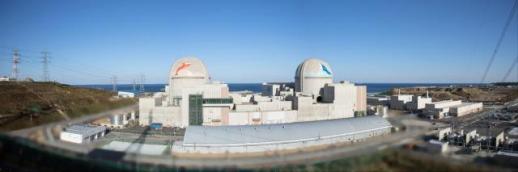 Korea's Proposed Nuclear Decommissioning Standards May Set Global Benchmark Amid rising global demand for nuclear decommissioning, South Korea's proposed standards for the process are gaining traction as potential international benchmarks. The Ministry of Trade, Industry and Energy announced on May 18 that South Korea's 'nuclear decommissioning' standard, the first of its kind, has received approval as a new work item standard (NP) from nine member countries, including the United States, China, and Japan, at the International Organization for Standardization (ISO) in June 2023. This approval follows over three years of discussions within the Technical Committee 85 (Nuclear). The standard encompasses general requirements applicable throughout the entire nuclear decommissioning process, from defining key terms to planning, execution, and management. South Korea aims to finalize the international standard (IS) by December 2027, having begun to gather input from various countries. The global nuclear decommissioning market is on the rise, with industry experts predicting that over 400 to 600 reactors worldwide will enter the decommissioning phase by 2050. The market size is estimated to reach approximately 500 trillion won. However, only a few countries, including the United States, Germany, Japan, and France, have commercial nuclear decommissioning experience, indicating a high barrier to entry due to the complexities involved in handling radioactive waste, contamination removal, radiation safety management, and site restoration. Should South Korea's proposed decommissioning procedures and technologies be recognized as global standards, it could enhance the influence of the Korean model in the international nuclear decommissioning market. The National Standards Agency plans to sequentially develop nine international standards addressing detailed technologies related to radioactive contamination removal and disposal, waste management, and site restoration. Notably, experts from the International Atomic Energy Agency (IAEA) will participate in this standardization effort to ensure alignment with international nuclear safety standards. This collaboration is expected to position South Korea's leadership in establishing international standards that could serve as practical benchmarks for the global nuclear decommissioning industry. Kim Dae-ja, head of the National Standards Agency, stated, "The establishment of this standard marks a significant advancement for our country in leading international standards in the nuclear decommissioning field. We will also take the lead in establishing de facto standards through organizations like ISO and ASME (American Society of Mechanical Engineers) to support the export competitiveness of K-nuclear."* This article has been translated by AI. 2026-05-18 13:09:42