
Journalist

Jun sungmin
-
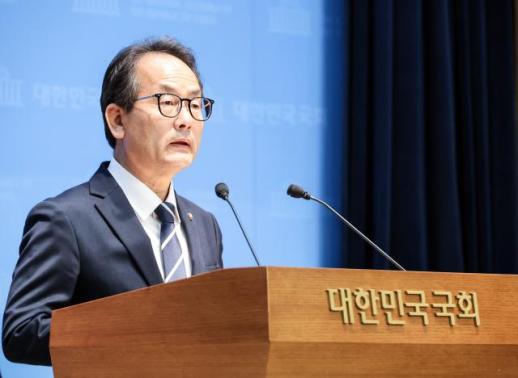 Ruling Party Criticizes Opposition Leader's Comments on Gwangju The Democratic Party harshly criticized Song Eon-seok, the floor leader of the People Power Party, for his comments made after he did not attend the 46th anniversary ceremony of the Gwangju Uprising on May 18, stating, "He has no right to mention the spirit of Gwangju, akin to 'Biden Season 2.'" Kang Jun-hyun, the party's chief spokesperson, spoke to reporters at the National Assembly on May 19, saying, "It is a day to remember the significance of May 18, yet yesterday, Song made a remark during a meeting that he did not attend because he did not want to go to Gwangju, saying, 'I don't know what might happen there.' He later corrected it to 'I didn't go because I was sad.' This is akin to 'Biden Season 2.'" Kang continued, "Whether it was because he found it dirty or sad, his attitude of acting as if he is a victim for not going to Gwangju is problematic. The constitutional amendment to include the spirit of May 18 was likely hindered by the People Power Party. They have no right to mention the spirit of Gwangju." He emphasized, "It is appropriate to sincerely acknowledge and apologize for past actions. What significance does it hold to make excuses?" Earlier, Song faced backlash after responding to a question from reporters about why he did not attend the May 18 ceremony by saying, "I didn't go because it was dirty." Following the controversy, he clarified that he meant he did not go because he was sad. Additionally, Kang warned against negative campaigning by People Power Party candidates ahead of the June 3 local elections and by-elections. He stated, "The issues surrounding People Power Party candidates Oh Se-hoon and Park Hyung-jun are serious. They have not adequately addressed concerns regarding the missing rebar in the GTX-A line and allegations related to LCT. The recent controversy surrounding candidate Kim Yong-nam should not be treated as a casual campaign tactic of 'let's just throw it out there and see what sticks.'"* This article has been translated by AI. 2026-05-19 09:30:00
 -
 Financial Supervisory Service Addresses AI Hacking and Leverage ETF Risks The Financial Supervisory Service (FSS) is intensifying its response to consumer risks associated with cyberattacks utilizing artificial intelligence (AI), the concentration of leverage exchange-traded funds (ETFs), and disorderly recruitment practices by corporate insurance agents (GAs). On May 18, FSS Chairman Lee Chan-jin presided over the second Consumer Risk Response Council, where key issues affecting financial consumers were discussed. This council serves as the highest-level advisory body within the FSS to proactively address potential consumer harm. The potential for cyberattacks using high-performance AI was a major topic of discussion. The FSS expressed concern that AI could quickly identify security vulnerabilities or facilitate simultaneous attacks, leading to significant consumer harm through disruptions in essential banking services. The agency plans to develop response strategies tailored to the characteristics of the financial sector in collaboration with relevant authorities and to enhance information security systems, including the use of generative AI for security purposes. In the insurance sector, issues related to incomplete sales and disorderly practices by GAs were highlighted. Some GAs may encourage unnecessary insurance purchases under the guise of tax, accounting, or labor consulting, or may even engage in illegal private financing. The FSS is considering regulatory reforms, including prohibiting GAs from simultaneously operating consulting services and establishing mutual regulations. In the capital markets, discussions were held regarding investor protection ahead of the launch of single-stock leverage ETFs on May 27. The FSS warned that excessive capital inflow into leverage and inverse ETFs could increase the risk of losses for individual investors and has decided to monitor trading trends and operational status closely. The agency also called for enhanced internal controls regarding securities firms' overseas stock events and investment advertisements. Illegal activities by financial influencers and investment advisors are also under scrutiny. The FSS plans to utilize an AI-based monitoring system to crack down on the provision of illegal investment information and suspicious trading activities on social media in real time. Inspections are being considered for advisory and management firms showing significant signs of illegal activity. Chairman Lee emphasized the need for vigilance regarding the risks and ripple effects associated with the convenience and efficiency of AI use. He stated, "We must respond with a high level of awareness to actions that encourage excessive debt investment and leverage investing, as well as to the disruptive activities of financial influencers and disorderly recruitment practices by GAs."* This article has been translated by AI. 2026-05-19 09:27:00
 -
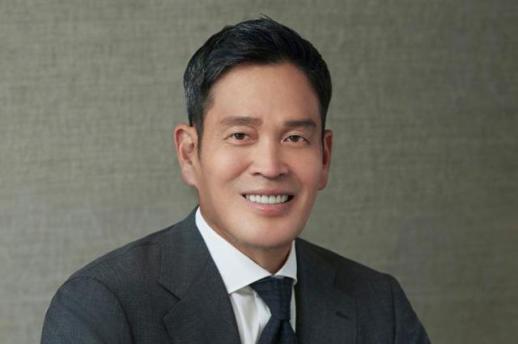 Shinsegae Group's Response to Controversial Marketing Tied to May 18 Democracy Movement Shinsegae Group, led by Chairman Jeong Yong-jin, has taken decisive action in response to a marketing controversy coinciding with the May 18 Democracy Movement anniversary. The company abruptly dismissed the CEO of its subsidiary, Starbucks Korea, and initiated disciplinary procedures against related employees. The swift involvement of top executives in holding individuals accountable is notable, but whether this situation can be viewed merely as a personnel issue remains to be seen. The crux of the controversy lies in specific marketing phrases that evoke sensitive historical events. Criticism has spread online, suggesting that certain expressions recall the May 18 Gwangju Democracy Movement and the torture and death of Park Jong-cheol. While it is difficult to assert that the company explicitly intended this association, it is clear that many consumers felt discomfort and concern. The essence of the issue is more about the 'outcome' than the 'intent.' Corporations are not merely organizations that sell products; they also bear social responsibilities. Particularly, large enterprises and global brands grow based on trust with consumers. In this context, awareness of historical events and social values becomes a critical evaluation criterion. Therefore, this incident reflects not just a marketing blunder but also the effectiveness of the company's sensitivity and internal verification systems. Chairman Jeong Yong-jin's strong response can be interpreted as an effort to mitigate risks early. However, it is worth considering whether the dismissal of the CEO and disciplinary actions provide a fundamental solution. The journey from a phrase being conceived to its public release involves multiple stages of planning, review, and approval. The failure to filter out problematic content suggests flaws in the organization's overall verification system beyond individual accountability. This incident highlights the importance of 'content risk management,' which is distinct from corporate security or internal controls. Recently, companies have been rapidly marketing through social media and mobile platforms. Strategies that leverage short phrases to capture attention and elicit consumer responses have become commonplace. However, using sensitive expressions without adequate review can lead to repercussions that extend beyond advertising effectiveness, damaging corporate trust. Particularly regarding historical events, caution is paramount. In South Korea, May 18 is not merely a past event; it is directly linked to current democratic values. If marketing elements are consumed without considering this context, social backlash is inevitable. This indicates that companies can no longer view historical issues as 'non-business areas.' The rapid criticism from labor groups and civil society reflects the same sentiment. The assessment that the social impact is too significant to dismiss as a mere incident has influenced this response. Even if the company did not intend to provoke conflict, it must take responsibility if it inadvertently causes social discord. Shinsegae Group's announced measures to prevent recurrence—reviewing marketing processes and enhancing internal training—are valid in principle. However, if these remain formalities, they will lack significance. The company must strengthen its pre-review system for sensitive content and improve structures to ensure diverse perspectives are reflected in decision-making processes. Systematic education on historical and social issues should be implemented, particularly for teams responsible for brand communication. This incident sends a message not only about one company but to the broader landscape of South Korean businesses. Corporate activities cannot be separated from society, and consumers increasingly demand higher levels of responsibility and sensitivity. Brand value stems from trust, which can be shaken by a single phrase. Ultimately, the focus should be on prevention rather than reactive measures. Whether this response will be a one-time crisis management effort or a catalyst for changing the organization's culture depends on future actions. Respect for history must become ingrained in corporate culture to reduce similar controversies in the future. May 18 remains a living history. Ignoring the social consensus and sensitivity surrounding it will only increase corporate risks. This incident should remind companies of the principle that 'standards matter more than speed.' Without this awareness, similar issues are likely to recur in different forms. 2026-05-19 09:21:47
 -
 Hana Bank Opens Cooling Centers Nationwide Amid Heat Wave Recently, a heat wave reminiscent of midsummer has swept across the country, prompting Hana Bank to take action in collaboration with the Ministry of the Interior and Safety. On May 19, Hana Bank announced that it will operate "cooling centers" at its branches nationwide. In April, the bank signed a memorandum of understanding with the Ministry of the Interior and Safety to promote the use of cooling and heating shelters. The cooling centers are part of the government's measures to combat extreme heat. Previously, these centers were primarily located in public facilities, but this year, the initiative has expanded to include bank branches. Designated cooling centers will feature signage to help the public locate them easily, and they will maintain a comfortable temperature and cleanliness to provide a pleasant resting space. The centers will be open until September 30, operating from 9 a.m. to 4 p.m. Visitors can access any nearby branch, regardless of whether they are Hana Bank customers. The bank also plans to operate heating shelters during the winter months. A Hana Bank representative stated, "We hope this cooling center will serve as a comfortable refuge for people to relax both physically and mentally during the summer heat and heavy rains. We will continue to provide various and practical support for local residents affected by natural disasters such as heat waves and cold snaps."* This article has been translated by AI. 2026-05-19 09:16:21
 -
 Plastic Surgeon Charged with Drug Violations Linked to Porsche Crash Police have referred a plastic surgeon to prosecutors for allegedly supplying propofol to a driver who crashed through the guardrail of the Banpo Bridge while driving recklessly in February. According to police on May 19, the Yongsan Police Station sent a 40-year-old male surgeon, identified as A, to prosecutors on May 15 for violations of drug control laws. Investigations revealed that A had excessively administered propofol to over ten patients visiting his clinic since August of last year, and had instructed a nurse to administer the drug even when anesthesia was unnecessary. He is also accused of neglecting the management and supervision of controlled substances at his clinic. The clinic is known to be the workplace of a former nurse, identified as B, who allegedly supplied propofol to a 30-year-old woman, identified as Hwang, the driver involved in the Banpo Bridge accident. In March, police conducted a search of the clinic and secured relevant documents, including prescriptions and records of drug inventory. Prosecutors have charged Hwang with violations of drug control laws, driving under the influence, and causing injury through reckless driving. B was also indicted in March for violations of drug control laws. On February 25 at around 8:44 p.m., Hwang was driving a Porsche on Banpo Road when she crashed through the guardrail and fell below the bridge. Her Porsche collided with a Mercedes-Benz traveling along the riverbank below the bridge before plummeting onto the Han River embankment. Both Hwang and the Mercedes driver sustained minor injuries, and their vehicles were severely damaged. Other vehicles on Banpo Bridge were also affected by the incident. Responding to reports of the crash, police discovered a large quantity of propofol, medical syringes, and tubes in Hwang's vehicle, prompting an investigation. Subsequent inquiries revealed that Hwang had been driving under the influence of propofol, leading to her emergency arrest for drugged driving.* This article has been translated by AI. 2026-05-19 09:11:08
 -
 Travel Industry Shifts Focus to Exclusive Experiences The domestic travel industry is moving away from traditional package deals that bundled flights and accommodations. Instead, companies are focusing on building unique digital ecosystems to retain customers while promoting hyper-personalized themed products that cater to niche consumer preferences, such as pet-friendly travel and sports enthusiasts. ◆ Building Exclusive Customer Bases with Mobile Ecosystems and AI Platform companies are leveraging their IT capabilities to establish exclusive customer bases. Kyowon Group's pet-friendly hotel, Kinok, has integrated a QR code-based pet identification registration and management feature through its dedicated app. This initiative aims to provide personalized services based on accumulated data, going beyond simple reservations. Nol Universe has introduced a 'Chat Accommodation' service in the motel category, utilizing interactive AI named Nori. The AI handles routine inquiries in real-time, connecting users to partner operators only for more complex questions. This approach reduces wait times for users and alleviates operational burdens for partners, accelerating digital transformation. ◆ The Rise of the '2040 Enthusiasts' as Key Consumers Major travel agencies are expanding their content-driven themed product offerings to capture the so-called 'enthusiast consumers' who immerse themselves in specific interests. Modu Tour has launched a high-end baseball package that includes a Major League Baseball expert accompanying travelers throughout their trip, providing game previews and interactive programs. Despite the price nearing 8 million won per person, early bookings from passionate baseball fans have been strong. In a similar vein, the company has partnered with the social learning platform Runnable to create an all-in-one 'Run Trip' that combines participation in the December Mount Fuji Marathon with local travel. In fact, Modu Tour's themed travel product booking rate surged by 65% in the first quarter of this year compared to the same period last year, with the 2040 generation making up 87% of users, establishing itself as a key demographic. ◆ Tailored Seasonal Products for High Value The traditional short-distance market is also adopting a diversification strategy, moving away from a supplier-centric approach. In April, Modu Tour sent 19,556 travelers to China, marking a 31% increase from the previous year. Demand for summer peak season bookings has skyrocketed by over 105%. In response, the company has refined its offerings, targeting the 2040 generation with urban culinary experiences in Shanghai and Qingdao, as well as desert experiences in Inner Mongolia, alongside traditional scenic products aimed at older travelers. For Japan's Hokkaido, the company has developed a product that guarantees accommodation in the Biei area, where securing lodging during the summer peak is challenging, combining a relaxed itinerary with local cuisine for a differentiated high-value travel experience. ◆ Efforts to Discover Targeted Exclusive Products through Market Validation There are active attempts to identify exclusive products by thoroughly validating market potential in advance. Hana Tour recently held a travel contest, raising the weight of 'product viability assessment' to 50% to evaluate marketability. This led to the selection of final proposals such as a 'Swiss ESG Train Journey' reflecting the values of a famous celebrity, a 'Daddy and Me Osaka' itinerary designed for affluent relationships, and a 'Small Salon Trip' combining wellness with single accommodations for customers over 40. These proposals will undergo product refinement and are set to be officially launched on June 1. Industry insiders note, "The criteria for consumers choosing travel have shifted from simply 'where to go' to 'who to experience deeply with and what to do.' The ability of travel agencies to create high-quality itineraries that reflect customers' nuanced lifestyles will determine their survival in the market."* This article has been translated by AI. 2026-05-19 09:06:00
 -
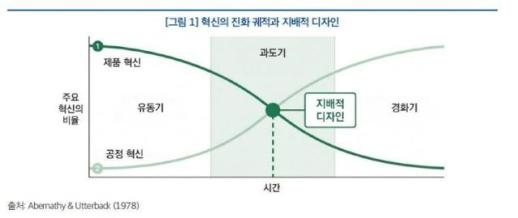 AI Dominance Driven by Infrastructure Competition: GPU, HBM, and Power are Key Factors The generative artificial intelligence (AI) industry has not yet fully matured, and it is currently in a transitional phase just before the emergence of a 'dominant design.' As transformer-based large language models (LLMs) rapidly converge to become the de facto standard, the competition for securing graphics processing units (GPUs), high-bandwidth memory (HBM), and power infrastructure is becoming increasingly important. On May 19, the Software Policy Research Institute (SPRI) released a report titled "Software-Centric Society," which assessed the current state of the AI industry as entering a transitional phase in the late fluid period. The term 'dominant design' refers to a phenomenon where a specific technological structure becomes the market standard, altering the competitive landscape of the industry. The report cites the Ford Model T in the automotive industry and the Apple iPhone in the smartphone market as prime examples. Once a particular design establishes itself as the industry standard, the focus of competition shifts from new features to production efficiency and ecosystem competition. The report indicates that the structure of transformer-based LLMs is converging to become the de facto standard in the AI industry. It states, "Almost all major AI companies have adopted transformer-based large language model structures," noting that the industry is currently converging on a specific design at the architectural level. However, it has not yet reached an official standardization phase. There is currently no official API or architectural specifications from international organizations such as the Organization for Economic Cooperation and Development (OECD), the International Organization for Standardization (ISO), or the International Telecommunication Union (ITU), and the revenue models of AI companies have not yet stabilized. In fact, the report highlights that Anthropic spent approximately $4.1 billion solely on research and development computing costs in 2025. The report particularly identifies infrastructure bottlenecks as a key variable in the competition within the AI industry. Currently, HBM supply is concentrated among a few companies, including SK Hynix, Samsung Electronics, and Micron, while systems based on NVIDIA's H100 and H200 have effectively become the standard for AI computing. Power supply issues are also emerging as a critical factor. A single AI training cluster requires hundreds of megawatts (MW) to gigawatts (GW) of power, making transmission capacity, cooling facilities, and power supply capabilities significant constraints on model expansion. The report predicts, "The future dominant design will likely be influenced not only by the excellence of model design but also by the accessibility of infrastructure resources." Furthermore, the report forecasts that if computing efficiency, official standardization, infrastructure supply stabilization, and revenue model stabilization occur simultaneously within the next 2 to 3 years, the transformer-based AI model paradigm is likely to establish itself as the dominant design across the industry.* This article has been translated by AI. 2026-05-19 09:03:35
 -
 Kakao Avoids Strike Crisis as Labor Mediation Deadline Extended Kakao's labor and management have temporarily averted a strike crisis by extending the mediation deadline with the labor committee amid disputes over wages and performance compensation. However, concerns remain about potential chain strikes as some affiliates have experienced mediation breakdowns. According to industry sources on May 19, Kakao's labor and management agreed to extend the mediation deadline during a session facilitated by the Gyeonggi Provincial Labor Relations Commission the previous day. The meeting, which began at 4:30 PM, concluded around 10 PM. If both parties reach an agreement, the deadline can be extended by up to 10 days from the date of the mediation request. The second mediation deadline is set for May 27. Kakao's labor union has been negotiating with management over the performance compensation structure and wage increases but declared a breakdown in talks after failing to reach an agreement. In addition to Kakao, unions from four subsidiaries, including Kakao Enterprise and Kakao Pay, have also requested mediation from the Gyeonggi Provincial Labor Relations Commission. Notably, some affiliates decided to halt mediation before Kakao's headquarters. The labor unions of DK Tech and XL Games conducted mediation on the same day but ultimately did not reach an agreement. A halt in mediation is determined when significant differences between labor and management make it difficult to achieve an agreement through further discussions. As a result, these unions have gained the authority to initiate strike actions, such as strikes or work slowdowns, following a vote among their members. The two sides have reportedly disagreed over the funding for performance bonuses and the design of the compensation system. Industry observers note that SK Hynix's recent decision to allocate 10% of its operating profit for performance bonuses may have influenced the demands of Kakao's labor union. With the extension of the mediation deadline, Kakao's headquarters has temporarily avoided a crisis. If the union proceeds to strike after the mediation halt, it would mark the first strike at Kakao's headquarters. The union has announced plans for a rally on May 20 at Pangyo Station in Seongnam, Gyeonggi Province. Industry insiders are watching closely to see if the union will escalate pressure on management during future negotiations. A Kakao representative stated, "The mediation deadline was extended by mutual agreement between labor and management, and we will continue to strive for a smooth resolution."* This article has been translated by AI. 2026-05-19 09:00:47
 -
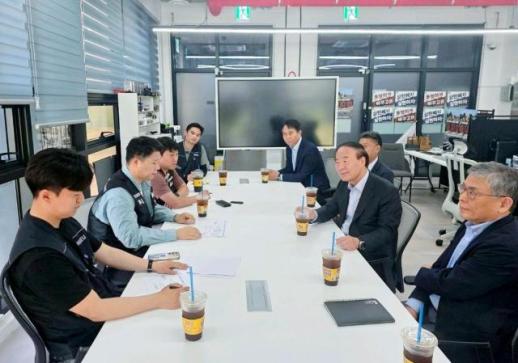 Court Ruling Highlights Tension Between Labor Rights and National Industry The ongoing labor dispute at Samsung Electronics has faced a setback as the Seoul Central District Court recently granted part of the company's injunction against the National Samsung Electronics Labor Union. The court acknowledged the need for restrictions on actions such as entering production facilities, occupying equipment, and threatening safety. While this ruling does not outright deny the union's right to strike, it is interpreted as establishing certain boundaries considering the unique nature of critical national industrial facilities. This decision carries implications beyond a simple labor-management conflict. It brings to the forefront the long-standing issue in South Korean society of balancing labor rights with the protection of national industries. The three labor rights are constitutionally guaranteed. Workers have the right to organize, negotiate, and strike. These rights serve as a minimal safeguard against labor exploitation and unilateral management that have been prevalent during the industrialization process. Regardless of a company's size or industrial significance, limiting labor rights solely on that basis is perilous. If economic logic begins to overshadow labor rights, the overall balance within society is bound to be disrupted. However, the reality cannot be ignored. The semiconductor industry is distinct from general manufacturing. If a production line operating under ultra-fine processes halts or becomes contaminated, it incurs significant time and cost to restore. Disruptions in production do not merely result in losses for a specific company; they can ripple through the global supply chain, exports, the ecosystem of partner companies, and even national credibility. Especially in the context of the U.S.-China-Taiwan competition for semiconductor dominance, any instability in South Korea's production base could directly weaken its industrial competitiveness. The problem is that recent trends in South Korean society are increasingly pushing these two values into extreme conflict. When labor rights are mentioned, an immediate 'anti-business' narrative arises, while discussions of industrial competitiveness are met with accusations of 'labor repression.' When either side is approached as an absolute good, realistic solutions disappear. The court's ruling is significant because it does not prohibit strikes outright while simultaneously asserting the need to protect the safety and stability of critical national industrial facilities. It conveys the message that while labor rights must be respected, actions such as occupying industrial facilities or threatening safety cannot be justified. Conversely, companies must also recognize that they cannot unconditionally suppress union demands under the pretext of being a 'national industry.' Criticism of Samsung's past no-union management practices and rigid organizational culture still exists. Complaints from employees regarding performance bonuses and compensation systems have accumulated. What is needed now is not an escalation of legal battles and power struggles, but a restoration of trust. Unions must view the industrial reality with a clear perspective, while companies need to be more proactive in persuading employees and enhancing transparency in their compensation systems. Industries cannot exist without labor, and if industries collapse, labor cannot remain secure. The South Korean economy currently stands at the center of a massive wave of global supply chain restructuring and technological competition. In this reality, what is required is not a clash of titans but an order of sustainable coexistence. The court's recent ruling prompts a reconsideration of that uncomfortable yet unavoidable balance point. 2026-05-19 08:58:04
 -
![[AJP Spiritual Asia ①] Why humanity must rediscover Asias spiritual heritage in age of AI](https://image.ajunews.com//content/image/2026/05/19/20260519085412753175_518_323.png) [[AJP Spiritual Asia ①]] Why humanity must rediscover Asia's spiritual heritage in age of AI A Grand Asian Journey Toward Civilization, Religion, Humanity and the Future Humanity in the 21st century stands at the threshold of a profound civilizational transformation. Artificial intelligence has begun to learn human language and patterns of thought. Robots and algorithms are steadily replacing large portions of human labor and judgment. Never before has mankind enjoyed such material abundance, and yet never before has it entered such a deep psychological unease. Economies continue to expand, but communities weaken. Technology advances at astonishing speed, yet human sensitivity and moral depth appear increasingly fragile. Across the world, a quiet anxiety is spreading — the fear that while civilization grows more sophisticated, humanity itself may be gradually diminishing. Wars have not disappeared. In the Middle East and Eastern Europe, human lives are still collapsing under the weight of violence and geopolitical conflict. Climate change and ecological destruction now threaten the stability of civilization itself. Extremism, hatred, isolation and depression spread across both developed and developing societies alike. At this point, humanity is returning once more to its oldest questions. What is a human being? Where does civilization go after technology? How can the value of life and the human soul be preserved? And increasingly, the world is turning its eyes back toward Asia. Asia is not merely the factory of the world, nor simply a vast economic marketplace. Asia is one of the great spiritual birthplaces of human civilization. Across this continent, over thousands of years, human beings explored the relationship between humanity and the cosmos, nature and community, heaven and life itself. Hinduism, Buddhism, Confucianism, Taoism and Islam, together with Korea’s indigenous traditions such as Cheondoism , Daejonggyo, Won Buddhism and Jeungsanism, all emerged from a shared civilizational effort to understand the meaning of life, the order of nature and the place of humanity within the universe. It is within this intellectual and spiritual context that Aju Korea Daily and ajupress.com launch the series Spiritual Asia. This is not merely a series introducing religions. It is a civilizational and humanistic project that asks where humanity itself should move in the age after artificial intelligence. More importantly, it seeks to reinterpret Asia’s spiritual heritage in the language of the present and connect it to the future of global civilization. Much of today’s global media remains dominated by politics, markets, war and power. Yet human beings do not live by economics alone. Humanity searches for meaning, asks why life exists, and wonders what lies beyond death. Ultimately, civilization is defined by what human beings choose to regard as sacred. And for centuries, Asia’s religions and philosophies have explored questions of life, harmony, community and the inner world of the human spirit. Hinduism Hinduism is among the oldest living religions in human history. Built upon the Vedas and the Upanishads, Hindu philosophy contains a profound insight: that the origin of humanity and the universe is ultimately one. Brahman represents the supreme cosmic principle, while Atman refers to the soul within the individual. The famous idea that “Atman is Brahman” expresses a worldview in which humanity and the cosmos are fundamentally inseparable. The concepts of reincarnation and karma understand life not as a single isolated event, but as part of a vast cosmic process. The worldwide spread of yoga and meditation culture today is deeply connected to the spiritual depth of Hindu civilization. Buddhism Buddhism began in the sixth century BCE with the enlightenment of Siddhartha Gautama. At its core lies the belief that human suffering originates from greed and attachment. The Four Noble Truths, the Noble Eightfold Path, compassion and the Middle Way evolved into far more than religious doctrines; they became an enduring philosophy for healing the human mind. Buddhism spread from India across China, Korea, Japan and Southeast Asia, becoming one of Asia’s great civilizational pillars. In modern times, Zen Buddhism has deeply influenced Western psychology, spirituality and meditation culture. As the age of AI deepens, Buddhist ideas such as mindfulness and compassion are once again emerging as important alternatives for restoring humanity. Confucianism Confucianism developed from the teachings of Confucius and became the ethical foundation of East Asian civilization. Its core values are benevolence, ritual propriety, filial duty and communal order. Confucianism is less a religion in the conventional sense than a philosophy of how to build a humane society. Human beings, it teaches, exist not in isolation but within relationships. Confucian ideals profoundly shaped the political and educational systems of Korea, China and Japan. Even today, traces of Confucian tradition remain deeply embedded within Korean society’s emphasis on education, family and collective responsibility. Taoism Taoism emerged from the philosophies of Laozi and Zhuangzi and centers on harmony with nature. Its core principle, wu wei — often translated as “effortless action” or “non-coercive living” — teaches that humanity should not violently resist the natural order of the universe. Taoism profoundly influenced Chinese medicine, martial arts, feng shui and longevity culture. In an era increasingly threatened by climate crisis and ecological collapse, Taoist philosophy is being rediscovered as a possible foundation for a more sustainable civilization. Islam Islam began in the Middle East, but in many respects it became one of Asia’s great civilizational systems. Stretching across the Middle East, Central Asia, India and Southeast Asia, Islamic civilization formed a vast intellectual and cultural network. At its heart lies humility before one God. The Qur’an emphasizes justice, communal responsibility, charity and restraint. During the medieval period, Islamic civilization achieved extraordinary advances in mathematics, astronomy, medicine and philosophy, helping shape the intellectual foundations of the later European Renaissance. To reduce Islam merely to images of conflict is to misunderstand one of the world’s deepest spiritual traditions. Cheondoism Cheondoism emerged from Korea’s Donghak movement and became a major spiritual force within modern Korean history. Its central teaching — “Human beings are Heaven” — affirms the sacred dignity of every person. This philosophy became one of the moral foundations of Korea’s democratic and popular movements. The Donghak Peasant Revolution itself was not simply a rural uprising, but a profound cry for human equality and dignity. Daejonggyo Daejonggyo, centered on the spirit of Dangun and the philosophy of Hongik Ingan — “to broadly benefit humanity” — became deeply connected to Korea’s independence movement during Japanese colonial rule. Its spiritual nationalism remains an important moral legacy within Korean society. Won Buddhism Won Buddhism sought to reinterpret Buddhist philosophy for the modern industrial age. Founded by Sotaesan Park Jung-bin, it emphasized spiritual cultivation within everyday life and sought harmony between material progress and spiritual awakening. In many ways, it represented one of Korea’s earliest efforts to reconcile religion with modernity. Jeungsanism Jeungsanism developed around the teachings of Kang Jeungsan and emphasized the philosophy of sangsaeng — mutual life-giving coexistence. It teaches that humanity, nature and the spiritual world are deeply interconnected. In a time increasingly defined by conflict and competition, its philosophy of coexistence has gained renewed relevance. Shinto Shinto, Japan’s indigenous faith, believes that spiritual presence resides within mountains, rivers, trees and ancestors. Japan’s aesthetic sensitivity toward nature and communal harmony remains deeply shaped by Shinto tradition. Sikhism Sikhism, born in India’s Punjab region, emphasizes equality, labor and communal service. Sikhs are renowned for their discipline, solidarity and humanitarian spirit, and continue to play important roles within global Indian diaspora communities. Zoroastrianism Zoroastrianism, which originated in ancient Persia, developed a worldview centered on the struggle between light and darkness, good and evil. Though small in numbers today, it exerted significant influence upon later Abrahamic traditions including Judaism, Christianity and Islam. Despite their differences, Asia’s religions and philosophies share a common insight: human beings are not merely material entities. Humanity is connected to the cosmos, and life exists within relationships rather than isolation. Korean philosopher Ryu Young-mo explored Eastern and Western religions deeply and often remarked, “Truth is one, though the paths are many.” He did not place the Bible against Buddhist sutras, nor Laozi against Confucius, nor Jesus against the Buddha. Rather, he believed that humanity, life and truth ultimately flow from the same great source. This perspective also resonates with Korea’s ancient philosophy of Cheon-Ji-In — Heaven, Earth and Humanity — which understands the universe as an interconnected living order. Today, the world once again stands at a civilizational crossroads. Artificial intelligence and technological revolution may make life more efficient and convenient. Yet technology alone cannot heal loneliness, hatred, war or greed. That is why humanity has begun searching once again for spirituality. And at the center of that search stands the ancient wisdom of Asia. Spiritual Asia is not a series about old religions. It is a civilizational project asking why human beings must remain human in the age after artificial intelligence. And ultimately, this is not merely Asia’s question. It is humanity’s question. 2026-05-19 08:57:53
[[AJP Spiritual Asia ①]] Why humanity must rediscover Asia's spiritual heritage in age of AI A Grand Asian Journey Toward Civilization, Religion, Humanity and the Future Humanity in the 21st century stands at the threshold of a profound civilizational transformation. Artificial intelligence has begun to learn human language and patterns of thought. Robots and algorithms are steadily replacing large portions of human labor and judgment. Never before has mankind enjoyed such material abundance, and yet never before has it entered such a deep psychological unease. Economies continue to expand, but communities weaken. Technology advances at astonishing speed, yet human sensitivity and moral depth appear increasingly fragile. Across the world, a quiet anxiety is spreading — the fear that while civilization grows more sophisticated, humanity itself may be gradually diminishing. Wars have not disappeared. In the Middle East and Eastern Europe, human lives are still collapsing under the weight of violence and geopolitical conflict. Climate change and ecological destruction now threaten the stability of civilization itself. Extremism, hatred, isolation and depression spread across both developed and developing societies alike. At this point, humanity is returning once more to its oldest questions. What is a human being? Where does civilization go after technology? How can the value of life and the human soul be preserved? And increasingly, the world is turning its eyes back toward Asia. Asia is not merely the factory of the world, nor simply a vast economic marketplace. Asia is one of the great spiritual birthplaces of human civilization. Across this continent, over thousands of years, human beings explored the relationship between humanity and the cosmos, nature and community, heaven and life itself. Hinduism, Buddhism, Confucianism, Taoism and Islam, together with Korea’s indigenous traditions such as Cheondoism , Daejonggyo, Won Buddhism and Jeungsanism, all emerged from a shared civilizational effort to understand the meaning of life, the order of nature and the place of humanity within the universe. It is within this intellectual and spiritual context that Aju Korea Daily and ajupress.com launch the series Spiritual Asia. This is not merely a series introducing religions. It is a civilizational and humanistic project that asks where humanity itself should move in the age after artificial intelligence. More importantly, it seeks to reinterpret Asia’s spiritual heritage in the language of the present and connect it to the future of global civilization. Much of today’s global media remains dominated by politics, markets, war and power. Yet human beings do not live by economics alone. Humanity searches for meaning, asks why life exists, and wonders what lies beyond death. Ultimately, civilization is defined by what human beings choose to regard as sacred. And for centuries, Asia’s religions and philosophies have explored questions of life, harmony, community and the inner world of the human spirit. Hinduism Hinduism is among the oldest living religions in human history. Built upon the Vedas and the Upanishads, Hindu philosophy contains a profound insight: that the origin of humanity and the universe is ultimately one. Brahman represents the supreme cosmic principle, while Atman refers to the soul within the individual. The famous idea that “Atman is Brahman” expresses a worldview in which humanity and the cosmos are fundamentally inseparable. The concepts of reincarnation and karma understand life not as a single isolated event, but as part of a vast cosmic process. The worldwide spread of yoga and meditation culture today is deeply connected to the spiritual depth of Hindu civilization. Buddhism Buddhism began in the sixth century BCE with the enlightenment of Siddhartha Gautama. At its core lies the belief that human suffering originates from greed and attachment. The Four Noble Truths, the Noble Eightfold Path, compassion and the Middle Way evolved into far more than religious doctrines; they became an enduring philosophy for healing the human mind. Buddhism spread from India across China, Korea, Japan and Southeast Asia, becoming one of Asia’s great civilizational pillars. In modern times, Zen Buddhism has deeply influenced Western psychology, spirituality and meditation culture. As the age of AI deepens, Buddhist ideas such as mindfulness and compassion are once again emerging as important alternatives for restoring humanity. Confucianism Confucianism developed from the teachings of Confucius and became the ethical foundation of East Asian civilization. Its core values are benevolence, ritual propriety, filial duty and communal order. Confucianism is less a religion in the conventional sense than a philosophy of how to build a humane society. Human beings, it teaches, exist not in isolation but within relationships. Confucian ideals profoundly shaped the political and educational systems of Korea, China and Japan. Even today, traces of Confucian tradition remain deeply embedded within Korean society’s emphasis on education, family and collective responsibility. Taoism Taoism emerged from the philosophies of Laozi and Zhuangzi and centers on harmony with nature. Its core principle, wu wei — often translated as “effortless action” or “non-coercive living” — teaches that humanity should not violently resist the natural order of the universe. Taoism profoundly influenced Chinese medicine, martial arts, feng shui and longevity culture. In an era increasingly threatened by climate crisis and ecological collapse, Taoist philosophy is being rediscovered as a possible foundation for a more sustainable civilization. Islam Islam began in the Middle East, but in many respects it became one of Asia’s great civilizational systems. Stretching across the Middle East, Central Asia, India and Southeast Asia, Islamic civilization formed a vast intellectual and cultural network. At its heart lies humility before one God. The Qur’an emphasizes justice, communal responsibility, charity and restraint. During the medieval period, Islamic civilization achieved extraordinary advances in mathematics, astronomy, medicine and philosophy, helping shape the intellectual foundations of the later European Renaissance. To reduce Islam merely to images of conflict is to misunderstand one of the world’s deepest spiritual traditions. Cheondoism Cheondoism emerged from Korea’s Donghak movement and became a major spiritual force within modern Korean history. Its central teaching — “Human beings are Heaven” — affirms the sacred dignity of every person. This philosophy became one of the moral foundations of Korea’s democratic and popular movements. The Donghak Peasant Revolution itself was not simply a rural uprising, but a profound cry for human equality and dignity. Daejonggyo Daejonggyo, centered on the spirit of Dangun and the philosophy of Hongik Ingan — “to broadly benefit humanity” — became deeply connected to Korea’s independence movement during Japanese colonial rule. Its spiritual nationalism remains an important moral legacy within Korean society. Won Buddhism Won Buddhism sought to reinterpret Buddhist philosophy for the modern industrial age. Founded by Sotaesan Park Jung-bin, it emphasized spiritual cultivation within everyday life and sought harmony between material progress and spiritual awakening. In many ways, it represented one of Korea’s earliest efforts to reconcile religion with modernity. Jeungsanism Jeungsanism developed around the teachings of Kang Jeungsan and emphasized the philosophy of sangsaeng — mutual life-giving coexistence. It teaches that humanity, nature and the spiritual world are deeply interconnected. In a time increasingly defined by conflict and competition, its philosophy of coexistence has gained renewed relevance. Shinto Shinto, Japan’s indigenous faith, believes that spiritual presence resides within mountains, rivers, trees and ancestors. Japan’s aesthetic sensitivity toward nature and communal harmony remains deeply shaped by Shinto tradition. Sikhism Sikhism, born in India’s Punjab region, emphasizes equality, labor and communal service. Sikhs are renowned for their discipline, solidarity and humanitarian spirit, and continue to play important roles within global Indian diaspora communities. Zoroastrianism Zoroastrianism, which originated in ancient Persia, developed a worldview centered on the struggle between light and darkness, good and evil. Though small in numbers today, it exerted significant influence upon later Abrahamic traditions including Judaism, Christianity and Islam. Despite their differences, Asia’s religions and philosophies share a common insight: human beings are not merely material entities. Humanity is connected to the cosmos, and life exists within relationships rather than isolation. Korean philosopher Ryu Young-mo explored Eastern and Western religions deeply and often remarked, “Truth is one, though the paths are many.” He did not place the Bible against Buddhist sutras, nor Laozi against Confucius, nor Jesus against the Buddha. Rather, he believed that humanity, life and truth ultimately flow from the same great source. This perspective also resonates with Korea’s ancient philosophy of Cheon-Ji-In — Heaven, Earth and Humanity — which understands the universe as an interconnected living order. Today, the world once again stands at a civilizational crossroads. Artificial intelligence and technological revolution may make life more efficient and convenient. Yet technology alone cannot heal loneliness, hatred, war or greed. That is why humanity has begun searching once again for spirituality. And at the center of that search stands the ancient wisdom of Asia. Spiritual Asia is not a series about old religions. It is a civilizational project asking why human beings must remain human in the age after artificial intelligence. And ultimately, this is not merely Asia’s question. It is humanity’s question. 2026-05-19 08:57:53