
Journalist

Jung Seokman
-
 SpaceX IPO Highlights Shift in Capitalism as South Korea Lags Behind SpaceX's initial public offering (IPO) is not just a major stock listing; it signifies a shift in the direction of capitalism. Just as the Industrial Revolution transformed society through railroads, oil, automobiles, and the internet, space is now emerging as the next economic frontier. Notably, SpaceX's investment prospectus states, "We will build cities on the Moon and other planets." What once might have seemed like science fiction is now a business plan valued in the trillions by global financial markets. Historically, new civilizations have always begun with the "expansion of mobility." During the Age of Exploration, Europe dominated the seas and reshaped global order, while the United States established economic supremacy through railroads, aviation, and the internet. Today, the U.S. is attempting to pioneer an economic realm beyond Earth through private space enterprises. This is not merely about space exploration; it is a long-term project aimed at redesigning humanity's systems for production, habitation, communication, and logistics. In this context, SpaceX's IPO represents a convergence of economics, philosophy, and national strategy. Investors are not merely betting on a rocket company; they are wagering on who will seize the infrastructure of future civilization. While oil companies were once the lifeblood of industrial society, companies with space transportation networks and satellite systems are likely to become the arteries of future civilization. The challenge lies in South Korea's response to this monumental change. The SpaceX investment prospectus indicates that due to registration issues under South Korean capital market laws, it will be difficult for domestic retail investors to participate directly in the IPO. Despite Mirae Asset Securities being part of the underwriting group, the likelihood of a simultaneous domestic offering has diminished. While global capital markets operate transnationally, South Korea remains mired in complex reporting procedures and rigid regulatory frameworks. This scenario is not unfamiliar. Similar issues have arisen in AI, biotechnology, and platform industries. While the world competes at speed, South Korea spends time on reviews, approvals, and regulatory assessments. The perspective on innovative industries differs significantly; the U.S. asks, "How do we nurture growth?" while South Korea focuses on "How do we control it?" As a result, private space companies have emerged in the U.S., while South Korea has seen an increase in regulatory documentation. A more fundamental issue is the difference in national imagination. The U.S. allows private companies to dream of building cities on the Moon, and the capital markets fund that dream. In contrast, South Korean society still expends energy on real estate prices, short-term performance, and political strife. Management and control take precedence over bold visions for future industries. For the economy to grow, it requires not just technology but also a culture that believes in the future. Both the Industrial Revolution and Silicon Valley ultimately stemmed from national imagination. Of course, regulation is necessary, and protecting investors is important. However, the issue lies in finding balance. Excessive preemptive regulation increases the risk of lacking innovation more than it mitigates the risks of innovation itself. Currently, global capital markets are being reshaped around future industries such as AI, space, and quantum computing. If South Korea's capital markets remain shackled by the regulatory frameworks of the past manufacturing era, it will inevitably fall behind in global competition. National strategy must also evolve. The space industry should be approached not merely as a science and technology policy but as an issue of economic security and industrial hegemony. NASA does not do everything directly; the government sets direction and initial demand, while private companies handle speed and innovation. This is the American model of technological hegemony. South Korea must move away from a government-led approach and cultivate a private sector-centered ecosystem. Regulatory agencies should also shift from a focus on approvals to supporting innovation. Companies must adapt as well. Future industries are becoming a competition not just in manufacturing but in "designing civilization." Semiconductors, batteries, AI, and aerospace should not be viewed separately but as part of an interconnected ecosystem. Today, corporate competitiveness arises from platforms, networks, data, and imagination rather than factory size. The strength demonstrated by SpaceX ultimately lies in its narrative of designing future order rather than just the rockets themselves. The South Korean economy stands at a critical crossroads. In the face of low growth, declining population, and sluggish manufacturing, repeating past methods will hinder new leaps forward. What is needed is not just a few regulatory relaxations but a fundamental shift in national governance philosophy. The country must become one that increases challenges rather than reduces failures. It must transition from a managed economy to an innovative economy. Five hundred years ago, the nation that dominated the seas ruled the world. A century ago, the country that claimed the skies became a great power. Now, those who seize space and AI will likely lead the future order. SpaceX's IPO is not just a stock listing; it is a signal that "the future has already begun." South Korea must now decide whether to remain in the safety zone of regulation or participate in the race to pioneer a new civilization.* This article has been translated by AI. 2026-05-23 10:48:57
 -
 Teacher Who Reported School Misconduct Found Dead After Fall A teacher in his 50s was found dead after falling from an apartment in Gi-echeon City. According to police, the incident occurred around 2 a.m. on May 21. The teacher, identified only as Mr. A, had reported misconduct related to embezzlement and drunk driving by school officials in 2023. Following his whistleblowing, he was reportedly sued for defamation by individuals associated with the school. No suicide note was found at the scene, and police are investigating the circumstances surrounding the fall using CCTV footage and other evidence.* This article has been translated by AI. 2026-05-23 10:46:22
 -
 Launch of National Participation Growth Fund Offers Up to 40% Tax Deduction The National Participation Growth Fund, designed to invest in advanced strategic industries such as artificial intelligence, semiconductors, and secondary batteries, was launched on May 22. According to the financial sector, the Financial Services Commission has begun a three-week subscription period for the fund, which will be available on a first-come, first-served basis. This year, the total fundraising target is set at 600 billion won, with subscriptions available through 10 major banks and 15 securities firms, either in-person or online.Due to the first-come, first-served nature of the offering, it may close early if the allocation is exhausted. The government has allocated 20% (120 billion won) of the total sales for the first two weeks (until June 4) specifically for low-income individuals, targeting those with an annual earned income of 50 million won or less, or a total income of 38 million won or less. Additionally, during the first week, online subscriptions will be limited to 50% of the total.The investment limit is set at 100 million won per person annually, with a maximum of 200 million won over five years. The minimum subscription amount varies by sales firm, ranging from 100,000 won to 1 million won.Tax benefits are available for those who maintain their investment in a dedicated account for three years. A tax deduction of 40% applies to amounts up to 30 million won, 20% for amounts between 30 million and 50 million won, and 10% for amounts between 50 million and 70 million won, with a maximum deduction of 18 million won.Investors who hold their investment for over five years will benefit from a separate taxation rate of 9.9% on dividend income, which can help reduce health insurance premiums and the burden of comprehensive taxation on financial income. However, to receive these tax benefits, individuals must obtain and submit an income verification certificate for the Individual Savings Account (ISA) from the National Tax Service or the Government 24 website.Moreover, individuals who were subject to comprehensive taxation on financial income at any point between 2023 and 2025 can only subscribe through a general account, which has an annual limit of 30 million won. Comprehensive taxation on financial income applies when the total interest and dividend income exceeds 20 million won in a year.The National Growth Fund is a policy fund co-created by the government and the private sector. It will pool public funds to create a master fund, which will then be invested in 10 sub-funds related to advanced strategic industries, combining government finances and private investment. The government plans to raise 3 trillion won (600 billion won annually) from the public over five years out of a total of 150 trillion won. In the event of losses in the sub-funds, the government will cover up to 20% of the public investment using its subordinate financial contributions.However, it is important to note that the loss coverage applies to the public investment amount, not the total losses of the fund. For instance, if a sub-fund consists of 1 billion won in public investment, 200 million won in government finances, and 120 million won in private investment, and losses occur, the government will only cover losses up to 200 million won, which is 20% of the public investment. Therefore, the proportion of government loss coverage relative to the total size of the individual sub-fund may be lower than 20%.Additionally, investors will not be able to redeem their investments for five years, and the fund is classified as a high-risk investment product with no principal guarantee. As a result, individuals must undergo a suitability assessment to determine if their investment profile aligns with this product.* This article has been translated by AI. 2026-05-23 10:45:00
 -
 NH Investment & Securities Raises LG Innotek Target Price by 20% Amid Expansion in Autonomous Driving and Semiconductor Business NH Investment & Securities announced on May 22 that it has raised its target price for LG Innotek from 1 million won to 1.2 million won, a 20% increase, citing the company's expansion in autonomous driving-related businesses beyond vehicle camera modules to include application processor (AP) modules and FC-BGA substrates. The firm maintained its "buy" rating on the stock. Hwang Ji-hyun, a researcher at NH Investment & Securities, noted, "The expansion of the autonomous driving business beyond vehicle camera modules to include automotive AP modules and autonomous driving FC-BGA substrates is a positive development." According to NH Investment & Securities, the automotive AP module business involves modularizing APs sourced from global companies. The company is currently expanding its production capacity, with mass production expected to begin in the fourth quarter of 2026. Quality testing is also underway for the autonomous driving FC-BGA substrates aimed at North American automotive clients, with mass production anticipated in early 2027 upon approval. The analysis indicates that LG Innotek is diversifying its risk by expanding its business from a focus on IT sets to the automotive and semiconductor sectors. LG Innotek has set a target of 5 trillion won in sales from automotive components by 2030. The company expects its automotive component business, which includes communications, lighting, cameras, and battery management systems (BMS), to grow at an average annual rate of 20% over the next five years, surpassing the overall revenue growth rate. The company's efforts to expand its position within the autonomous driving value chain through partnerships with external firms have also been positively received. Last year, LG Innotek invested in the U.S. lidar company Aeva and is currently collaborating on a multi-sensing module project. Aeva is a company selected for NVIDIA's "Hyperion 10" reference platform. Additionally, LG Innotek has established a strategic partnership this year with the U.S. autonomous driving software company Applied Intuition. Hwang stated, "Given that the company has secured numerous global top-tier automotive manufacturers as clients, we expect synergies in terms of sales and customer engagement moving forward."* This article has been translated by AI. 2026-05-23 10:42:20
 -
 Actor Kim Kyuri Victimized in Home Invasion; Suspect Arrested Actor Kim Kyuri was the latest victim of a home invasion, following fellow actress Nana, as a man in his 40s was arrested for assault and robbery at her residence. According to Yonhap News, the Jongno Police Station in Seoul reported that the suspect, identified as A, was apprehended on charges of robbery and assault. A is accused of entering Kim's home around 9 p.m. the previous day, demanding valuables and assaulting the residents. At the time of the incident, Kim was at home with another woman. The two managed to escape when A's attention waned and sought help from nearby citizens. Reports indicate that both women sustained injuries, including fractures and bruises, due to A's assault. Police arrested A around midnight after he turned himself in approximately three hours after the crime. Authorities are investigating whether the crime was premeditated and are considering applying for an arrest warrant for A. This incident follows a series of similar robberies targeting celebrities' homes. In November of last year, a man in his 30s broke into Nana's residence armed with a weapon, threatening her and her mother. Additionally, in April of last year, a robbery occurred at comedian Park Na-rae's home, where valuables worth millions were stolen, drawing significant public attention.* This article has been translated by AI. 2026-05-23 10:39:46
 -
 Korea's Financial Chief Announces Inclusive Finance Initiative Lee Ok-won, the Chairman of the Financial Services Commission, announced plans to launch an 'Inclusive Finance Strategy Promotion Team' next month. The discussions will include appointing a 'Chief Officer for Inclusive Finance' within financial institutions, improving credit evaluation methods, rationalizing soundness regulations, and strengthening management of delinquent debts. This initiative aims to directly address issues related to long-term delinquent debt collection and financial exclusion, particularly in light of the recent Sangnok-su incident. The direction is correct, but the key lies in execution rather than mere declaration. Finance is not just an industry that lends money and collects interest. It is the lifeblood of capitalism, a ladder for individuals to rise again, and fuel for corporate growth. When finance operates correctly, capital flows to productive areas. Conversely, when finance is distorted, money concentrates in real estate and short-term profits, leaving those who have failed without a chance to recover. Historically, finance has evolved alongside the growth of civilization. The banking industry in medieval Italy fostered the growth of commercial cities, and the Industrial Revolution was impossible without long-term capital supply. The United States' position at the center of the global economy is rooted in the dollar system and deep capital markets. Finance has always been an institution that invests in trust and future possibilities. However, South Korean finance has long been overly focused on stability and soundness. While the stability of the financial system is important, an excessive emphasis on stability can turn finance into an organization that avoids risks rather than one that creates new opportunities. A history of delinquency makes it difficult to recover, and without collateral, obtaining startup funds becomes challenging. When finance only considers past failures rather than a person's potential, inclusivity disappears. The issues raised by the Sangnok-su incident highlight this problem. Long-term delinquent debts are traded at rock-bottom prices, and debtors face prolonged collection pressures. While this may make sense from the perspective of financial companies seeking to recover debts, it ultimately reduces the potential for consumption and recovery across society. If finance is perceived as a system that pushes people to the brink rather than one that saves them, trust in the market economy erodes. Globally, financial inclusion is also a significant policy challenge. The Community Reinvestment Act (CRA) in the United States encourages banks to meet the credit needs of low- and moderate-income communities in their service areas. In the UK, Big Society Capital was established as a wholesale investment institution to grow the social investment market. These examples underscore the view of finance as a social infrastructure rather than merely a profit-driven industry. However, inclusive finance must not devolve into welfare finance. The foundation of finance is credit and responsibility. Ignoring risks in support ultimately leads to insolvency and moral hazard. The real challenge is to reduce financial exclusion while maintaining market principles. This requires a change in credit evaluation. The structure that brands a single failure as a lifelong stigma must be corrected. Various data, such as telecommunications payment history, income flow, business sustainability, and platform transaction history, should be utilized to assess a person's recovery potential. The plan to reflect inclusive finance in the governance of financial companies is also significant. Banks and financial holding companies are not merely private enterprises; they operate based on public trust and national deposits. Therefore, they bear a higher social responsibility. However, responsibility alone should not be imposed. To sustain inclusive finance, financial institutions need an incentive structure that balances profitability and soundness. At the national level, inclusive finance should not be confined to support policies for the underprivileged. It must be a growth strategy. Funding should flow into youth entrepreneurship, local economies, second-chance businesses, and new industries. The strength of Silicon Valley emerged from a financial ecosystem that tolerates failure. For the South Korean economy to overcome low growth and population decline, finance must shift from a collateral-centric approach to one focused on potential. From an industrial perspective, the flow of money must change. Finance that remains focused on real estate and stable interest margins cannot nurture future industries. Long-term capital and venture capital are needed in fields such as AI, biotechnology, aerospace, and energy transition. Inclusive finance is not only about helping vulnerable groups but also about broadening the foundation for new growth. At the corporate level, financial companies should view customers not merely as risk subjects but as long-term partners. Inclusive finance is an investment in creating future customers, not a cost. Only financial institutions that earn social trust will survive in the long run. The conclusion is clear. Finance should be a cycle, not a predation. It should be about recovery, not exclusion. It must invest in future possibilities, not just short-term profits. This new promotion team must not become a mere showpiece. The nation, industry, and corporations must all reaffirm the purpose of finance. When money flows towards people, businesses, and the future rather than chasing only profit, South Korean finance can finally restore trust.* This article has been translated by AI. 2026-05-23 10:37:20
 -
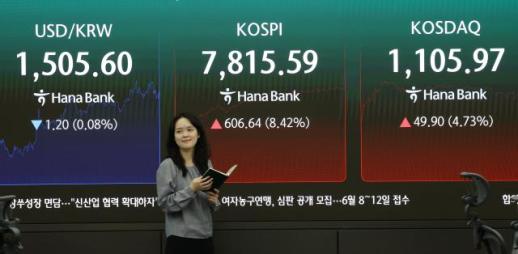 Market Preview: Dow Hits Record High as KOSPI Faces Profit-Taking U.S. stocks rose across the board as optimism about progress in negotiations between the U.S. and Iran led to declines in international oil prices and U.S. Treasury yields. The Dow Jones Industrial Average reached a new all-time high, although NVIDIA saw a drop due to profit-taking. Meanwhile, the domestic market is expected to experience a pause following its recent surge. On May 21, the Dow Jones Industrial Average closed up 276.31 points (0.55%) at 50,285.66, surpassing its previous record of 50,115.67 set on February 6. The S&P 500 index rose 12.75 points (0.17%) to close at 7,445.72, while the tech-heavy Nasdaq composite gained 22.74 points (0.09%) to finish at 26,293.10. The New York market saw increased volatility early in the session due to news related to the Iran negotiations, but later rebounded as expectations for a diplomatic resolution between the U.S. and Iran grew stronger. President Donald Trump mentioned the negotiations were in the 'final stage,' and the U.S. Secretary of State hinted at the possibility of progress, boosting investor sentiment. International oil prices and U.S. Treasury yields also fell. July Brent crude futures dropped 2.32% to $102.58 per barrel, while July West Texas Intermediate (WTI) crude futures fell 1.94% to $96.35. The yield on the U.S. 10-year Treasury note decreased to around 4.57%. In individual stocks, NVIDIA, which reported strong earnings the previous day, fell 1.8%. Despite exceeding market expectations, the decline was attributed to profit-taking following its recent surge. Conversely, IBM surged 12.4% on expectations of subsidies related to quantum computing, with other related stocks like Rigetti Computing also performing well. Walmart, however, fell 7.27% due to a conservative earnings outlook and concerns over fuel costs. The domestic market is expected to digest profit-taking pressures following KOSPI's 8.42% surge the previous day. However, the stability of U.S. interest rates and ongoing optimism regarding U.S.-Iran negotiations are seen as supporting factors. As of 8:35 a.m. on the NXT pre-market, Samsung Electronics was up 0.6%. Hyundai Motor showed slight gains, while SK Telecom rose over 10%, and LG Electronics and Doosan Enerbility recorded gains of around 5%. Analysts suggest that high volatility may continue in the near term, but the trend of leading stocks centered around the AI value chain is expected to remain intact. Han Ji-young, a researcher at Kiwoom Securities, stated, "Recent markets have been heavily influenced by inflation, interest rates, and geopolitical factors, but ultimately, the key will be the progress of U.S.-Iran negotiations. Sectors with strong earnings potential in the AI value chain, such as semiconductors and IT hardware, are likely to maintain relatively stable performance even in a volatile environment."* This article has been translated by AI. 2026-05-23 10:34:43
 -
 Korea's Financial Supervisory Service to Enhance Analyst Protection The Financial Supervisory Service (FSS) is considering reforms to strengthen the independence of research reports from securities firms and to establish protections for analysts. This initiative aims to address the prevalent practice of overly positive reports and the issue of external pressure on analysts. However, the effectiveness of these reforms may be challenged, as the existing reporting center has not received any complaints in its nine years of operation, rendering the current system nearly ineffective. According to the FSS, the 'Unreasonable Research Practices Reporting Center' was established in May 2017 to receive reports of coercion, threats, and undue pressure on analysts. However, since its inception, there have been no complaints filed. Despite the center being operational for nine years, the total number of reports remains at zero.Industry experts argue that the lack of reports does not indicate the absence of issues. Given the rarity of sell reports, if a report were to be filed, the author could be easily identified. Even if a report is made, there are insufficient means to resolve the issue or sanction the company involved. In light of the current ineffectiveness of the existing system, the FSS is internally reviewing measures to improve research practices at securities firms. Future discussions on reforms are expected to focus on creating an 'independent research environment' and establishing 'analyst protection mechanisms.' There is a growing need for institutional safeguards to ensure that research activities based on legitimate analysis and opinions are not stifled by external pressures or legal disputes. Recent backlash from companies and investors regarding certain stocks has also contributed to the discussions on reform. For instance, Samchundang Pharm recently initiated legal action against an analyst who presented an opinion contrary to the company's claims. In 2023, a Hana Financial Investment analyst faced conflicts with some investors after issuing a sell recommendation on EcoPro. Amid these developments, the trend of 'buy bias' in domestic securities reports remains pronounced. According to the Korea Financial Investment Association, as of the end of March last year, the proportion of 'buy' recommendations among the investment ratings of the top 10 securities firms, based on equity capital, averaged 88.5% over the past year. In contrast, the share of 'sell' recommendations was a mere 0.1%. Only Mirae Asset Securities (0.6%) and Meritz Securities (0.5%) issued sell recommendations among the top firms. The proportion of 'neutral (hold)' recommendations, which are often considered as sell signals, also remained low at an average of 11.4%. An FSS official stated, "There is a need for mechanisms to protect analysts when they produce legitimate reports," adding, "This is a matter that requires discussion with the Financial Services Commission, and we are reviewing internal measures for improving practices."* This article has been translated by AI. 2026-05-23 10:33:00
 -
 Bitcoin Surges to $77,500 Amid U.S. Stock Market Rally Bitcoin and other major virtual assets continued their upward trend. Analysts attribute this rise to the strong performance of the U.S. stock market and ongoing inflows into Bitcoin spot exchange-traded funds (ETFs), which have boosted investor appetite for riskier assets. According to CoinMarketCap, as of 8 a.m. on May 22, Bitcoin was trading at $77,547, up 0.19% from the previous day. Ethereum also saw a slight increase of 0.23%, reaching $2,129. Binance Coin (BNB), Solana, and Ripple (XRP) recorded gains of 1.29%, 1.37%, and 0.47%, trading at $656, $87, and $1.37, respectively. Market analysts suggest that the bullish sentiment in the U.S. stock market has improved investor confidence, leading to increased buying activity across the virtual asset market, particularly with the inflow of funds into Bitcoin spot ETFs. Additionally, expectations for the regulation of virtual assets in the U.S. and a favorable policy environment have further fueled this risk-on sentiment. As of 8 a.m. on the same day, Bitcoin was trading at approximately 115.18 million won ($77,604) on the domestic exchange Bithumb, marking a 0.57% increase from the previous day. The 'Kimchi Premium' stood at -1.454%, indicating that the price of Bitcoin in South Korea is lower than that in international markets.* This article has been translated by AI. 2026-05-23 10:30:17
 -
 Trump Delays AI Executive Order, Citing Need to Maintain U.S. Advantage Donald Trump, President of the United States, has postponed the signing of an executive order on artificial intelligence (AI). The order was intended to require companies to consult with the government before releasing advanced AI models, but Trump expressed concerns that it could slow the development of U.S. AI firms. He emphasized the need to maintain American superiority in the ongoing technology competition with China. According to Reuters and Axios, the White House announced on May 21 that the signing ceremony for the AI and cybersecurity executive order, scheduled for that day, would be delayed. The event was expected to include CEOs from major AI companies. Trump told reporters at the White House, "I postponed it because I didn't like some of the content. We are ahead of China and everyone else, and I don't want to do anything that could hinder that advantage." The draft of the executive order reportedly included provisions for companies to consult with the government before unveiling advanced AI models. It also suggested that government agencies could review models up to 90 days before their public release if necessary. Additionally, the order aimed to explore the use of advanced AI models in defending critical infrastructure, such as government systems, banks, and hospitals, against cyber threats. This approach seeks to enhance the defensive capabilities of the government and key facilities while assessing the potential misuse of AI in cyberattacks. This decision indicates that Trump prioritized industrial competitiveness over safety reviews. It suggests a greater emphasis on maintaining momentum in the technology race with China rather than addressing potential risks associated with AI models. The White House has not completely scrapped the executive order. There is a possibility that it will be revised and the signing process will be resumed.* This article has been translated by AI. 2026-05-23 10:27:37