

SpaceX's initial public offering (IPO) is not just a major stock listing; it signifies a shift in the direction of capitalism. Just as the Industrial Revolution transformed society through railroads, oil, automobiles, and the internet, space is now emerging as the next economic frontier. Notably, SpaceX's investment prospectus states, "We will build cities on the Moon and other planets." What once might have seemed like science fiction is now a business plan valued in the trillions by global financial markets.
Historically, new civilizations have always begun with the "expansion of mobility." During the Age of Exploration, Europe dominated the seas and reshaped global order, while the United States established economic supremacy through railroads, aviation, and the internet. Today, the U.S. is attempting to pioneer an economic realm beyond Earth through private space enterprises. This is not merely about space exploration; it is a long-term project aimed at redesigning humanity's systems for production, habitation, communication, and logistics.
In this context, SpaceX's IPO represents a convergence of economics, philosophy, and national strategy. Investors are not merely betting on a rocket company; they are wagering on who will seize the infrastructure of future civilization. While oil companies were once the lifeblood of industrial society, companies with space transportation networks and satellite systems are likely to become the arteries of future civilization.
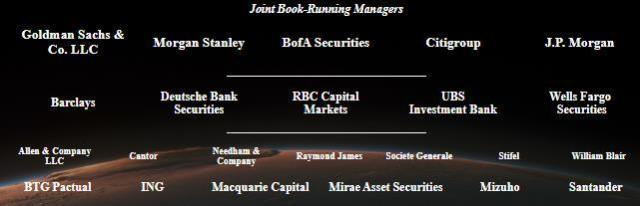
The challenge lies in South Korea's response to this monumental change. The SpaceX investment prospectus indicates that due to registration issues under South Korean capital market laws, it will be difficult for domestic retail investors to participate directly in the IPO. Despite Mirae Asset Securities being part of the underwriting group, the likelihood of a simultaneous domestic offering has diminished. While global capital markets operate transnationally, South Korea remains mired in complex reporting procedures and rigid regulatory frameworks.
This scenario is not unfamiliar. Similar issues have arisen in AI, biotechnology, and platform industries. While the world competes at speed, South Korea spends time on reviews, approvals, and regulatory assessments. The perspective on innovative industries differs significantly; the U.S. asks, "How do we nurture growth?" while South Korea focuses on "How do we control it?" As a result, private space companies have emerged in the U.S., while South Korea has seen an increase in regulatory documentation.
A more fundamental issue is the difference in national imagination. The U.S. allows private companies to dream of building cities on the Moon, and the capital markets fund that dream. In contrast, South Korean society still expends energy on real estate prices, short-term performance, and political strife. Management and control take precedence over bold visions for future industries. For the economy to grow, it requires not just technology but also a culture that believes in the future. Both the Industrial Revolution and Silicon Valley ultimately stemmed from national imagination.
Of course, regulation is necessary, and protecting investors is important. However, the issue lies in finding balance. Excessive preemptive regulation increases the risk of lacking innovation more than it mitigates the risks of innovation itself. Currently, global capital markets are being reshaped around future industries such as AI, space, and quantum computing. If South Korea's capital markets remain shackled by the regulatory frameworks of the past manufacturing era, it will inevitably fall behind in global competition.
National strategy must also evolve. The space industry should be approached not merely as a science and technology policy but as an issue of economic security and industrial hegemony. NASA does not do everything directly; the government sets direction and initial demand, while private companies handle speed and innovation. This is the American model of technological hegemony. South Korea must move away from a government-led approach and cultivate a private sector-centered ecosystem. Regulatory agencies should also shift from a focus on approvals to supporting innovation.
Companies must adapt as well. Future industries are becoming a competition not just in manufacturing but in "designing civilization." Semiconductors, batteries, AI, and aerospace should not be viewed separately but as part of an interconnected ecosystem. Today, corporate competitiveness arises from platforms, networks, data, and imagination rather than factory size. The strength demonstrated by SpaceX ultimately lies in its narrative of designing future order rather than just the rockets themselves.
The South Korean economy stands at a critical crossroads. In the face of low growth, declining population, and sluggish manufacturing, repeating past methods will hinder new leaps forward. What is needed is not just a few regulatory relaxations but a fundamental shift in national governance philosophy. The country must become one that increases challenges rather than reduces failures. It must transition from a managed economy to an innovative economy.
Five hundred years ago, the nation that dominated the seas ruled the world. A century ago, the country that claimed the skies became a great power. Now, those who seize space and AI will likely lead the future order. SpaceX's IPO is not just a stock listing; it is a signal that "the future has already begun." South Korea must now decide whether to remain in the safety zone of regulation or participate in the race to pioneer a new civilization.
* This article has been translated by AI.
Copyright ⓒ Aju Press All rights reserved.