

Journalist

KI SU JEONG
-
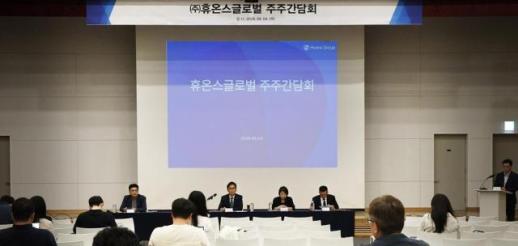 Huons Global Engages Shareholders on Subsidiary Merger Plans Huons Global has begun engaging with shareholders regarding its plans to merge with its subsidiaries. On June 4, the company held a meeting at its headquarters in Seongnam to discuss the merger of Huons and Huons Lab. The meeting aimed to explain the rationale behind the merger and gather shareholder feedback. Attendees raised questions about the appropriateness of the merger ratio and the future strategy for the biotechnology business. Company representatives stated that merging Huons, which has strong cash generation capabilities, with Huons Lab, which possesses advanced biotechnology platform technology, is essential for securing the group's growth foundation. They emphasized that the merger would enhance research and development (R&D) capabilities and allow Huons Lab to accelerate technology transfer through stable funding. Regarding the valuation and timeline for the merger, the company expressed its commitment to incorporating shareholder opinions into the decision-making process. Huons Global plans to hold an extraordinary general meeting on July 3 to determine how voting rights will be exercised concerning the merger. The company is also considering measures to limit the voting rights of major shareholders and related parties. Additionally, the company is reviewing plans for shareholder returns. During the meeting, Huons Global's board requested that shareholders elect a representative to facilitate smooth communication. The company aims to actively engage with this representative to develop its shareholder return strategy. Previously, the company reiterated that it has no current plans for major shareholder equity gifts and that claims linking the merger to succession are unfounded. CEO Song Soo-young stated, "We will ensure that shareholder opinions are accurately reflected in management decisions and will continuously seek transparent management and ways to enhance shareholder value."* This article has been translated by AI. 2026-06-05 14:48:00
 -
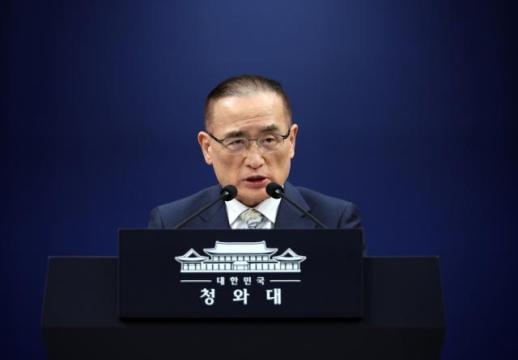 President Yoon to Visit Belgium, EU, Italy, and Attend G7 Summit President Yoon Suk Yeol will visit Belgium, the European Union (EU), Italy, and the Vatican from June 9 to 18, where he will also attend the Group of Seven (G7) summit in France.During a briefing at the Blue House on June 5, National Security Office Director Wi Sung-lak outlined the president's itinerary.President Yoon's first stop will be Brussels, Belgium, where he is scheduled to hold talks with Belgian and EU leaders from June 9 to 10."This year marks the 125th anniversary of diplomatic relations with Belgium," Wi noted, adding that this will be the first bilateral visit by a South Korean leader to the EU in eight years.Following last year's G7 summit in Canada, President Yoon will meet with Antonio Costa, the President of the European Council, and Ursula von der Leyen, the President of the European Commission, for a summit after a year.Additionally, President Yoon will make a state visit to Italy from June 12 to 13 at the invitation of President Sergio Mattarella. This will be the third official meeting with Prime Minister Giorgia Meloni, following discussions during the UN General Assembly last September and Meloni's visit to South Korea in January.Wi stated, "The itinerary includes visits to both Rome and Florence as part of the state events planned by the Italian side."From June 14 to 15, President Yoon will visit the Vatican to meet with the Pope and the Secretary of State of the Holy See.Wi remarked, "This visit marks the first time a South Korean leader has visited the Vatican since Pope Leo XIII's inauguration last May," and added that President Yoon will attend the G7 summit in Évian, France, from June 16 to 17.Meanwhile, it has been reported that U.S. President Donald Trump will also attend the G7 summit.* This article has been translated by AI. 2026-06-05 14:42:00
 -
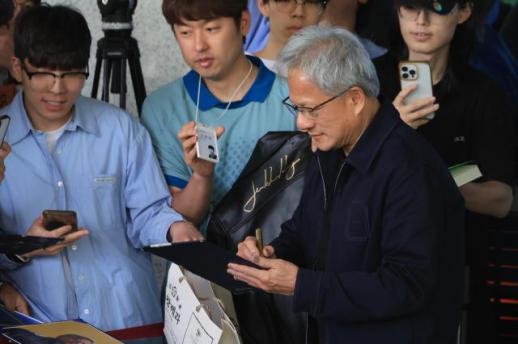 Hyundai Chair to skip Huang's Seoul 'samso' dinner, plans separate meeting SEOUL, June 05 (AJP) - Hyundai Motor Group Chairman Chung Eui-sun will not attend a dinner with Nvidia CEO Jensen Huang and other Korean conglomerate heads held Friday, opting instead for a separate encounter with the chip leader next week, industry sources said. Chung withdrew from the so-called "samso" gathering — named for the samgyeopsal grilled pork belly and soju on the menu — citing a scheduling conflict, the sources said. The dinner, at a restaurant near Hongdae in western Seoul, marks Huang's first such gathering since his October visit. Huang, who arrived Friday for a four-day trip, was expected to dine with SK Group Chair Chey Tae-won, LG Group Chair Koo Kwang-mo and Naver founder Lee Hae-jin. Samsung Electronics Chair Lee Jae-yong who hosted Huang at a Seoul fried-chicken restaurant in October in a meeting dubbed the "kkanbu gathering," is also absent this time owing to overseas commitments. Chung instead plans to receive Huang on June 8 at Hyundai's headquarters in Yangjae, southern Seoul, the sources said. Huang's wider itinerary includes stops at LG Twin Towers, Seoul National University and Naver's offices. Hyundai and Nvidia have deepened ties since the October meeting, when they signed a memorandum to advance physical AI in Korea and pledged about $3 billion to build an Nvidia technology center and a Hyundai application hub. The companies are also collaborating to upgrade Boston Dynamics' Atlas humanoid robot. 2026-06-05 14:41:40
 -
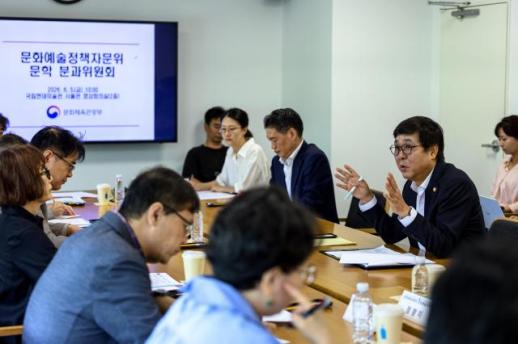 K-Literature Faces Barriers to Global Expansion Due to Lack of Translations "Writers from Taiwan and Singapore have many translated works. Even those who are less active than I am have translations available," said author Eun Hee-kyung during the 3rd meeting of the Literary Subcommittee of the Cultural Arts Policy Advisory Committee held at the National Museum of Modern and Contemporary Art in Jongno-gu, Seoul, on June 5. She emphasized the need for policies to support domestic publishers in releasing translated works to facilitate the global expansion of K-literature. The committee, established under the Ministry of Culture, Sports and Tourism, agreed that strengthening the foundation for translation publishing and enhancing the self-sustainability of the literary ecosystem are essential for the globalization of Korean literature. Eun noted, "Support should enable Korean publishers to directly publish translated works. In Taiwan, local publishers release translated editions, allowing them to submit works for international literary awards like the Booker Prize, even if they have not published locally." She added that increasing the publication of translated works domestically would improve accessibility for overseas readers. Committee members unanimously identified the promotion of translations as a key task for the international expansion of K-literature. Author Bang Hyun-seok pointed out, "If Korean publishers aim to enter overseas markets by publishing translations, the government should provide support. Major domestic publishers like Munhakdongne and Changbi tend to focus only on bestsellers and are reluctant to actively promote them abroad." There was also a strong emphasis on the need for institutional improvements to enhance the self-sustainability of the literary ecosystem. The committee raised the necessity for expanding literary sharing projects, introducing public lending rights, improving access to the National Korean Literature Museum, and enhancing the working conditions of staff at the Korean Literature Translation Institute. Poet Kwak Hyo-hwan remarked, "When the National Korean Literature Museum was being established, Eunpyeong-gu promised various supports, including the introduction of the GTX, but these have not been fulfilled. It is necessary for the Ministry of Culture to demand that Eunpyeong-gu honor its commitments." The National Korean Literature Museum is scheduled to officially open in May 2027. Additionally, there were suggestions to broaden the connection between readers and books by organizing nationwide literary events and systematically establishing literary festivals through initiatives like designating a 'Book Day.' On the same day, the Ministry of Culture introduced policies reflecting the committee's opinions. The ministry plans to refine its support for creative grants, which have primarily focused on mid-career authors, by categorizing them based on experience levels (emerging, promising, mid-career). It will also expand the number of participants in the 'Literary Resident Writer' program, which provides jobs and creative spaces. Furthermore, support for literary magazines, which serve as debut platforms for emerging writers while providing income through manuscript fees, will be strengthened. Starting next year, the annual manuscript fee support for 35 literary magazines will increase from 16 million won to 30 million won for 48 magazines. In response to the growing demand for translation publishing of Korean literature, the establishment of a translation graduate school has been moved up from 2028 to September 2027, and a new project for translating Korean classics and modern masterpieces is set to launch. Minister Choi Hwi-young stated, "We plan to allocate a budget to establish a system for monitoring how our literary works are received abroad and will increase government support to ensure that Korean literature books are adequately distributed to overseas cultural centers."* This article has been translated by AI. 2026-06-05 14:39:00
 -
 NVIDIA CEO Jensen Huang to Meet with Doosan Group Chairman Park Jung-won Jensen Huang, CEO of NVIDIA, is set to meet with Park Jung-won, Chairman of Doosan Group, during his visit to South Korea. This meeting is expected to bolster Park's plans to expand Doosan's portfolio from heavy industry into semiconductor materials and robotics. According to industry sources, the meeting between Huang and key executives from Doosan Group, including Chairman Park, will take place on June 7. The two leaders will meet at a home game for the Doosan Bears against the Kiwoom Heroes at Jamsil Stadium, where Huang will throw the ceremonial first pitch and Park will take the ceremonial first swing. In addition to the baseball event, they are reportedly planning a separate dinner to discuss further collaboration. Huang's interest in Doosan Group is driven by the company's Electronics Division, particularly its CCL (Copper Clad Laminate) business, and Doosan Robotics' focus on physical AI. Huang has expressed ambitions to expand NVIDIA from an AI semiconductor company to an AI infrastructure and systems provider, making this meeting a potential opportunity to connect materials and robotics within NVIDIA's AI ecosystem. One of NVIDIA's key interests is securing a stable supply of CCL. As NVIDIA prepares for mass production of its next-generation AI platform, Vera Rubin, securing CCL is essential. CCL, a thin copper layer applied to an insulating board, is a critical material that determines the performance of PCBs (Printed Circuit Boards). Doosan's Electronics Division has entered NVIDIA's supply chain by producing CCL for AI accelerators, which it supplies to PCB manufacturers. Doosan currently produces CCL for AI accelerators at its facilities in Jeungpyeong, Chungbuk, and Gimcheon, Gyeongbuk. Additionally, the company is establishing a new CCL production base in Thailand, set to begin operations in 2028. Industry experts believe that the new CCL production volume starting in 2028 is likely to be largely secured by NVIDIA. Collaboration with Doosan Robotics, a company focused on software and automation platforms based on physical AI, is also expected to strengthen. Park Ji-won, Vice Chairman of Doosan Group and CEO of Doosan Enerbility, visited NVIDIA's headquarters last September to discuss AI collaboration between the two companies. Following that meeting, they agreed to train NVIDIA's physical AI technology using Doosan's data to build a customized foundation model. In April, Huang's daughter, Madison Huang, visited Doosan Robotics to inspect its production facilities. As both companies aim to launch an industrial humanoid by 2028, this upcoming meeting is anticipated to further solidify their discussions. Chairman Park has been pushing to transform Doosan's traditional heavy industry structure by expanding into semiconductor materials and robotics. Under his leadership, the group is focusing on energy and power, physical AI and robotics, and semiconductors as its three core pillars for restructuring its business portfolio. Industry insiders view the meeting with Huang as a significant step in supporting Doosan's business transformation strategy. An industry source noted, "Since Doosan's Electronics Division is already part of NVIDIA's supply chain, this meeting is likely to expand the scope of collaboration into the robotics sector, strengthening the partnership that encompasses both materials and robotics."* This article has been translated by AI. 2026-06-05 14:39:00
 -
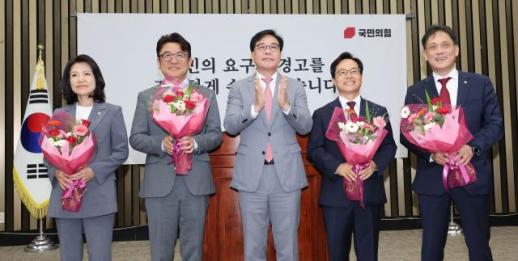 Song Eon-seok Resigns as Floor Leader of People Power Party, Calls for Renewal Song Eon-seok, the floor leader of the People Power Party, announced his resignation from the position on June 5.During a general meeting held at the National Assembly, Song stated, "I wish to resign from the floor leader position today." He emphasized, "The public has not granted unilateral power to any one party or authority, reminding us of the importance of checks and balances in democracy. This has placed a heavy task on the People Power Party to reflect, innovate, and engage more closely with the people." He added, "In light of the public's wishes, I believe our party needs a fresh start. I hope a new floor leader will be elected soon so that the People Power Party can move forward with renewed strength." Reflecting on the past year, he remarked, "It has been anything but easy. When I took on the significant role of floor leader right after our defeat in the presidential election, the party was in turmoil. Amidst this, we faced intense political attacks from President Lee Jae-myung and the formation of a special investigation atmosphere, with numerous controversial laws, including the Yellow Envelope Act, being pushed through the National Assembly, leaving us in a constant state of tension." He continued, "Throughout the past year, I held onto two words: survival and rebuilding. In the face of sudden martial law, impeachment, and the fierce waves of our election loss, I felt it was my responsibility to protect the party and restore the balance of power in South Korean politics, aiming to rebuild the party into one that earns the trust of the people again." Song expressed gratitude to the public and party members for their support during difficult times, stating, "Thanks to you, we were able to survive. Although there are regrets from this local election, we have laid the minimum foundation to rise again." However, he acknowledged, "My capabilities were insufficient, and I have not fully accomplished the task of rebuilding the party. This responsibility now falls to the new floor leader." He concluded, "If I were to sum up my feelings over the past year in one word, it would be humility. Each moment of negotiation was painful due to the invisible arrogance and unilateral management of the ruling party. I hope we will win the next general election and repay our senior colleagues." * This article has been translated by AI. 2026-06-05 14:39:00
 -
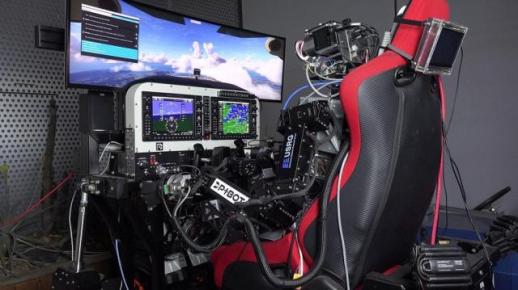 South Korean researchers win best paper award for humanoid pilot robot SEOUL, June 05 (AJP) - A research team has won the 2026 Best Paper Award from the IEEE Robotics and Automation Magazine for developing an artificial intelligence-based framework that allows a humanoid robot to autonomously fly an aircraft, the Korea Advanced Institute of Science and Technology (KAIST) said Friday. The award recognizes a 2025 study detailing PIBOT, a humanoid designed to operate standard aircraft controls without requiring cockpit modifications. The award ceremony took place on June 4, 2026, during the International Conference on Robotics and Automation in Vienna, Austria. The research, based in South Korea, is led by Professor Shim Hyun-chul of the electrical and electronic engineering department at KAIST. The IEEE Robotics and Automation Magazine is a peer-reviewed publication that highlights applied robotics research, recording an impact factor of 7.1 in 2025. The recognized study demonstrated a physical artificial intelligence system capable of acquiring specialized aviation knowledge, recognizing flight situations in real time, and responding adaptively. This differentiates the system from humanoid robots focused primarily on basic movement and cargo transport. The development of PIBOT began in 2021 with an estimated 5.7 billion won in funding over five years from the Agency for Defense Development (ADD). Having completed the initial phase of research, the team has been working since 2024 on a second-phase robot with a human-like physique and joint structure optimized for piloting. Researchers are also collaborating with related organizations to adapt the technology for ground vehicles and ships. "It is very meaningful that the pilot robot technology proposed for the first time in the world by a domestic research team has been recognized as a world-class research achievement thanks to the support of large-scale domestic projects," Professor Shim said. "We will further develop the research so that humanoid robots can help people in real environments and safely operate complex systems." Doctoral students Min Sung-jae, Kang Gyu-ri, and Kim Hyung-joo participated as co-first authors of the study. (Reference Information) Journal/Source: IEEE Robotics and Automation Magazine Title: Toward Fully Autonomous Aviation: PIBOT, a Humanoid Robot Pilot for Human-Centric Aircraft Cockpits Link/DOI: https://doi.org/10.1109/MRA.2024.3505774 2026-06-05 14:36:44
 -
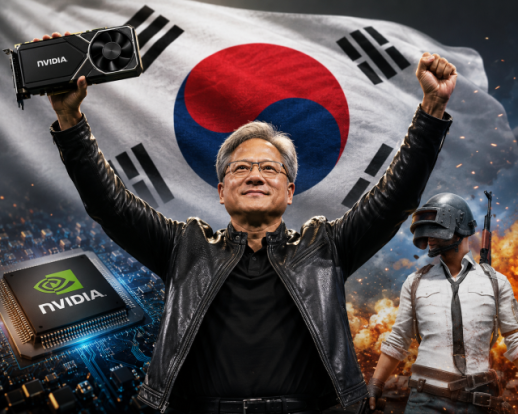 Nvidia CEO's Seoul trip signals shift from chip buyer to physical-AI partner SEOUL, June 5 (AJP) - When Nvidia's CEO Jensen Huang stepped off his plane at Gimpo International Airport on Friday and made an esports cafe his first stop, the image was familiar: the chip merchant returning to the gaming culture that built him. The substance of this visit, however, points somewhere far off. This trip is less about who buys Nvidia's graphics cards than about who can help the company teach machines to act in the physical world. South Korea, a manufacturing power with chips, robots and factories in equal measure, is being recast from customer to co-developer. The pivot has a clear starting line. At the APEC summit in the southeastern city of Gyeongju last October, Huang unveiled a plan to deploy more than 260,000 Nvidia GPUs across South Korea, with Samsung, SK Group, Hyundai Motor Group and Naver each building artificial intelligence (AI)-dedicated factories to anchor the rollout. That announcement seeded the infrastructure. The current visit is about putting it to work, turning raw computing capacity into trained systems that can drive cars, run assembly lines and move robots through real space. The distinction matters because physical AI is where the next phase of the industry is being fought. Cloud-based chatbots run on data centers alone, but robots and self-driving cars must perceive, decide and act in a messy physical world, and the companies that can supply both the hardware and the real-world testing grounds stand to capture the value. Few countries pair those strengths as tightly as Korea. "Hyundai Motor has already said it would put Atlas to work on its factory floors. Korean firms are increasingly stressing automation through physical AI, embedding it in cars and then in humanoids," said Dr. Bum-jae You, principal research scientist and former head of humanoid development at the Korea Institute of Science and Technology. Nowhere is that clearer than at LG. Huang is expected to meet LG Group Chairman Koo Kwang-mo today, in talks centered squarely on physical AI, and the market has taken notice: shares of LG Electronics have more than tripled this year, hitting their daily limit twice on hopes of a deeper Nvidia tie-up. "LG isn't widely known for this outside the company, but internally it has been working on a mobile-controlled, two-armed home robot," said You. "Because it is a machine that could work in both factories and homes, it could stand out all the more as physical AI." LG Electronics has spent the past year pushing aggressively into the field, anchoring its effort on the AI home robot it calls CLOiD while developing actuators, robot sensing and smart-factory systems. It already runs Nvidia's Omniverse platform to build digital simulations of its own production lines. Those simulations are the heart of physical AI. Before a robot lifts a part or a car merges into traffic, it rehearses inside a lifelike digital twin, repeating the task through reinforcement learning across millions of virtual trials until the behavior holds up in reality. The conversation reaches well beyond a single company. Analysts expect cooperation to broaden across LG affiliates, drawing in the EXAONE generative model from LG AI Research, the semiconductor substrates and sensing technology of LG Innotek, and the AI cloud business of LG Uplus. The visit also lands as Nvidia pushes into telecommunications, an arena some see as the connective tissue of physical AI. The chipmaker has been expanding an artificial intelligence—radio access network (AI-RAN) alliance with Nokia, a move expected to weigh on the choice of suppliers in Korea. "With Huang's visit, interest in AI-RAN is rising, as Nvidia focuses on expanding the business alongside data centers," said Kim Hong-sik, an analyst at Hana Securities. "The likely shape is a contest between a GPU-based Nvidia-Nokia camp and an Ericsson-Samsung approach built on CPUs with network solutions. More than market share, investors will watch how AI-RAN reshapes the equipment ecosystem, since it is likely to expand alongside the move to 5G standalone and 6G, completing the picture of physical AI." South Korea's other giants slot into the same logic. SK Group and Samsung Electronics supply the high-bandwidth memory that feeds AI accelerators and are building digital twins of their own chip lines, while Naver is converting a GPU supply deal into a deeper technology alliance. That last shift is telling. Naver Cloud said this week it would broaden its Nvidia relationship into a strategic alliance spanning AI infrastructure, models, services and physical AI, moving beyond a simple procurement arrangement. "Our partnership with Nvidia goes beyond a simple GPU supplier-and-customer relationship," Naver Cloud CEO Kim Yu-won said. "It is a strategic decision to develop AI technology together and expand the global AI ecosystem." Yet experts say Naver may be looking further ahead than simply becoming one of the country's top AI service providers. "Naver doesn't build physical robots, but its framework technology for orchestrating and operating fleets of robots is said to be quite advanced," said You. "Beyond AI data centers, there could well be talk of expanding into robot-framework services." Even the gaming meetings that frame the trip belong to this thread rather than to nostalgia. Game studios have spent two decades building convincing virtual worlds, exactly the synthetic environments now prized as training grounds for physical AI. Krafton this year launched Ludo Robotics, a humanoid venture, and has woven Nvidia's ACE character technology into its PUBG and inZOI titles. NC, long a gaming partner of Nvidia, now develops a "world model" through its NC AI unit that teaches robots the laws of physics. The esports stop fits too. Korea turned competitive gaming into a national spectacle from the StarCraft era onward, an appetite that drove demand for graphics hardware and helped seed the computing culture Nvidia rode to dominance, and whose data-rich virtual arenas echo the simulations AI now learns from. In the evening, Huang is set to share grilled pork belly and soju with corporate heads including SK, LG and Naver at a restaurant near Hongik University, a sequel to last year's "chimaek" gathering over chicken and beer. The menu invites easy comparison with that earlier dinner, where the agenda does not: the chicken-and-beer night sealed Korea's role as a supplier of chips and memory, today’s is meant to bind the country into the harder, more lucrative business of making machines that think and move. 2026-06-05 14:33:36
 -
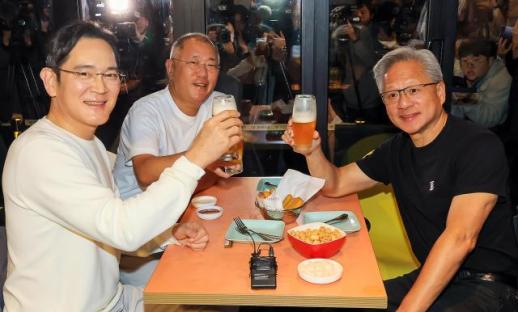 Jensen Huang and Chung Eui-sun Prepare for Second Meeting on Autonomous Vehicles and Robotics Jensen Huang, CEO of NVIDIA, is visiting South Korea, and Hyundai Motor Group is closely monitoring the situation as they anticipate a second meeting with Huang. Most of Hyundai's future business ventures, including autonomous vehicles, humanoid robots, and artificial intelligence (AI), are closely linked to NVIDIA's technology, which could have significant implications if a meeting occurs. According to industry sources, Chung Eui-sun, Chairman of Hyundai Motor Group, is not expected to attend the upcoming meeting with Huang, which will include SK Group Chairman Chey Tae-won, LG Group Chairman Koo Kwang-mo, and Naver Chairman Lee Hae-jin at a barbecue restaurant near Hongdae in Seoul on June 5. However, industry insiders predict that Huang will likely meet with Chung at Hyundai's headquarters in Yangjae after visiting the AI research center and robotics lab at Seoul National University on June 8. If this meeting takes place, it would mark the second encounter since their initial meeting last year. The relationship between Chung and Huang dates back to the APEC summit last year when Huang visited South Korea. During that visit, he solidified their partnership over a meal of chicken and beer at Kkanbu Chicken in Samsung-dong, Seoul, alongside Lee Jae-yong. Since the so-called "Kkanbu meeting," industry experts have noted that collaboration between Hyundai Motor Group and NVIDIA has accelerated. This partnership led to Hyundai receiving 50,000 Blackwell GPUs, which are AI accelerators. Hyundai is leveraging Blackwell to drive innovations in autonomous vehicles, AI data centers, and robotics. Among Hyundai's future projects, autonomous driving technology is the most closely tied to NVIDIA. The company is developing a universal platform capable of supporting autonomous driving from Level 2+ to Level 4, based on NVIDIA's Drive Hyperion platform. To facilitate this, Hyundai appointed Park Min-woo, a former NVIDIA executive, as the head of its AVP division. Last month, the company also hired Lee Hee-seok, another former NVIDIA employee, to expedite the commercialization of autonomous driving technology. Hyundai's robotics initiatives are also expected to benefit directly from this collaboration. Its subsidiary, Boston Dynamics, is equipping its humanoid robot, Atlas, with NVIDIA's Jetson Thor, a dedicated AI computing platform for robots. The two companies are also developing a robotics foundation model that enables robots to understand and mimic human language and actions without programming. A Hyundai representative stated, "We are closely watching the news of Jensen Huang's visit to South Korea," but added, "It has not yet been decided whether a meeting between the two chairmen will take place."* This article has been translated by AI. 2026-06-05 14:33:00
 -
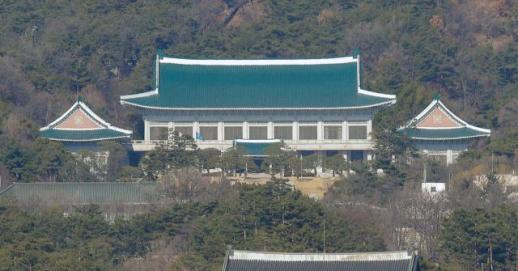 South Korea Expects Constructive Role from China Ahead of Xi Jinping's Visit to North Korea The South Korean government expressed hope on June 5 that Chinese President Xi Jinping's upcoming state visit to North Korea will play a constructive role in regional stability. A Blue House official stated in response to inquiries, "The government is closely monitoring related developments and expects China to take a constructive role regarding issues on the Korean Peninsula." The official added, "We hope that exchanges between North Korea and China will contribute to peace and stability on the Korean Peninsula, and we are maintaining close communication with China through diplomatic channels regarding these matters." A Unification Ministry official remarked, "Our policy for peace and coexistence on the Korean Peninsula supports dialogue and seeks to avoid confrontation. We hope President Xi's visit will advance peace and coexistence on the Korean Peninsula and, by extension, in Northeast Asia." Earlier, a spokesperson for the Central Foreign Affairs Commission of the Communist Party of China announced that Xi would visit North Korea from June 8 to 9 at the invitation of Kim Jong Un, General Secretary of the Workers' Party of Korea and Chairman of the State Affairs Commission. This visit marks Xi's second trip to North Korea since Kim's rise to power and the first since June 2019. It comes approximately nine months after Kim's visit to Beijing in September of last year to attend the 80th anniversary of China's victory in the War of Resistance Against Japanese Aggression.* This article has been translated by AI. 2026-06-05 14:33:00