

Journalist

KI SU JEONG
-
 South Korea extends current account surplus streak to 36 months SEOUL, June 5 (AJP) - South Korea extended its current account surplus in April, boosted by strong semiconductor exports, according to preliminary data released by the Bank of Korea on Friday. The country's current account surplus reached US$28.29 billion in April, the second-largest on record, after hitting an all-time high of US$37.93 billion in the previous month. South Korea has now recorded monthly current account surpluses for 36 consecutive months, the second-longest such streak since 2000. The central bank attributed the surplus to a surge in exports driven by strong demand for information technology products, led by semiconductors and computer peripherals. Non-IT exports also rose, as higher global oil prices boosted shipments of petroleum products. "IT products led export growth, while pharmaceuticals, petroleum products and ships also showed high growth rates," Yoo Sung-wook, director general of the BOK's financial statistics department, said during a press briefing. Exports climbed 54.5 percent from a year earlier to $90.59 billion, while imports rose 16.1 percent to $56.70 billion. Exports to Southeast Asia rose 74.2 percent from a year earlier, while shipments to China and the U.S. increased 62.6 percent and 54.0 percent, respectively. Imports also continued to increase, driven by higher crude oil prices amid the prolonged conflict in the Middle East and robust demand for semiconductors and chipmaking equipment. The goods account remained the main driver of the surplus, posting a $33.88 billion surplus, also the second-highest on record. The primary income account, however, swung back into deficit in April, turning into a $2.53 billion shortfall from a US$3.59 billion surplus in March as dividend payments to foreign investors increased. The services account also posted a deficit of $2.42 billion, driven largely by shortfalls in other business services and manufacturing services. Investment income remained in deficit at $2.38 billion, while equity income posted a larger deficit of $3.02 billion. The BOK attributed the deterioration largely to the seasonal concentration of dividend payments in April, with higher payouts among major Korean firms widening the deficit further by increasing outflows to foreign shareholders. Yoo said the April deficit in the primary income account was not unusual, as dividend payments are typically concentrated in April. He added that the shortfall was the largest for any April since 2022, when the deficit reached $3.62 billion. The financial account posted a net asset increase of $25.46 billion during the month. Portfolio investment liabilities rose by $3.51 billion after a sharp decline in March, as foreign investment in Korean debt securities rebounded following South Korea's inclusion in the FTSE World Government Bond Index (WGBI), according to the BOK. 2026-06-05 09:24:21
 -
 Former U.S. Ambassadors Reject Claims of Anti-Americanism in Yoon Administration Former U.S. ambassadors to South Korea have countered claims made in a Wall Street Journal op-ed that labeled the Yoon administration as 'radical left' and suggested it leans more toward China than the United States. They argue that President Yoon understands the value of the Korea-U.S. alliance and that it is inappropriate to label South Korean politics as anti-American. According to Yonhap News, Philip Goldberg and Catherine Stevens, former U.S. ambassadors, made these statements during a seminar held by the Korea Economic Institute (KEI) in Washington, D.C., on June 4. Goldberg stated, "I do not agree with the assessment that views President Yoon as a radical figure." He emphasized that the president has a strong understanding of the alliance with the U.S., particularly regarding the value of the U.S. nuclear umbrella. Stevens also distanced himself from the perception of the Yoon administration as anti-American. He noted, "Support for the Korea-U.S. alliance remains bipartisan in South Korea," adding that President Yoon is aware that a significant portion of the South Korean public desires a strong relationship with the United States. He pointed out the need to distinguish between opposition to specific U.S. policies and anti-American sentiment. Earlier, the Wall Street Journal published an op-ed on June 1 by Nicholas Eberstadt of the American Enterprise Institute and Lawrence Peck of the North Korea Freedom Coalition, asserting that the Yoon administration exhibits a radical leftist inclination and favors China over the U.S. They argued that certain diplomatic and security issues could pose challenges to the Korea-U.S. alliance.* This article has been translated by AI. 2026-06-05 09:24:00
 -
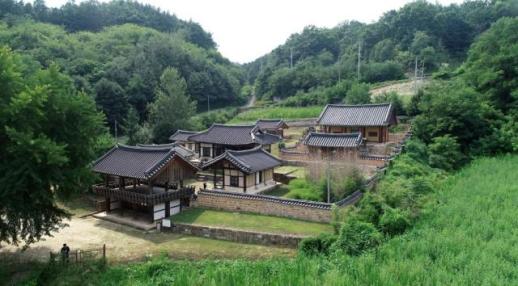 Andong Yean Hyanggyo Daejeong Designated as National Treasure The Andong Yean Hyanggyo Daejeong in Andong, Gyeongsangbuk-do, has been tentatively designated as a national cultural heritage treasure, the National Heritage Administration announced on June 5. Despite the threat of submersion due to the construction of the Andong Dam, the Daejeong has maintained its original location, preserving the community's identity. It is a historically significant architectural heritage that played a key role in Confucian education and the organization of rural society during the Joseon Dynasty. According to documents such as "Yean Hyanggyo Ji" and "Chucheon Jip," the Yean Hyanggyo was established in 1411. The Daejeong was first built in the same year and underwent renovations in 1569 and 1723. Notably, dendrochronological analysis of wooden materials found in the Daejeong has scientifically confirmed that some of the materials date back to the 1569 renovation, showcasing traces from the 16th to early 18th centuries. Renovation refers to the repair of worn or damaged parts of a building. The layout of the Yean Hyanggyo features a unique arrangement of the educational space of Myeongnyundang and the ritual space of Daejeong, following the geographical conditions, with two axes: Jeonhakhu-myo (前學後廟) and Jwahakhu-myo (左學右廟). Additionally, the Daejeong has a scale of three bays in the front and three in the side, with an open front space. The outer columns of the front bay are installed as square columns, while the inner columns are round, creating a distinctive architectural feature unique to the Andong Yean Hyanggyo Daejeong. The configuration of the window frames and other components reflects a construction technique not found in other hyanggyo buildings, adding to its scholarly value. The Daejeong utilizes well-crafted straight timber for its main components, omitting decorations in the part connecting the column heads and beams that bear the roof load. It employs a simple, undecorated construction technique seen in other historical sites like Dosan Seowon and Sangdeoksa, enhancing its architectural significance. The National Heritage Administration stated, "The clear dates of construction and renovation contribute to its historical value, while the window configurations and the construction technique reflect regional characteristics and changes over time. It possesses high scholarly value, and its unique structural composition, devoid of embellishments, warrants its designation as a national cultural heritage treasure." The administration plans to gather public opinions for 30 days before submitting the designation for review by the National Heritage Committee.* This article has been translated by AI. 2026-06-05 09:18:00
 -
 Woojin Industrial Systems to Ship Upgraded LA Metro Trains by Year-End Woojin Industrial Systems, a South Korean railway company, is making significant progress on its project to upgrade aging trains for the Los Angeles Metro. The first batch of upgraded trains is set to be shipped to the United States by the end of this year. On June 5, Woojin Industrial Systems announced that it will ship the initial set of upgraded LA Metro A650 trains, a project commissioned by the Los Angeles County Metropolitan Transportation Authority (LACMTA). This project involves a comprehensive upgrade of the A650 trains, which have been in service for over 30 years. Woojin secured the contract, valued at approximately $220 million, in May 2024. The company has established a dual production system linking South Korea and the U.S. to manage the LA Metro upgrade project. The first four upgraded train sets will undergo test operations at the Chungbuk Osong Railway Comprehensive Test Center before being shipped to the U.S. later this year. The remaining 33 train sets will be upgraded at a newly completed facility in Carson, California. Key components such as propulsion control systems, train control monitoring systems, heating and cooling systems, and passenger information displays will be replaced. The upgraded trains are expected to begin operations in time for the opening of the 2028 LA Olympics. Woojin plans to leverage its local production capabilities to pursue additional contracts in the U.S. A Woojin representative stated, "This upgrade project is a large-scale initiative that involves a complete overhaul of the train's exterior and interior, as well as the propulsion control and auxiliary power systems, and train control systems. We aim to use this project as a stepping stone to accelerate our entry into overseas markets." According to the Financial Supervisory Service's electronic disclosure system, Woojin Industrial Systems reported a revenue of 556.4 billion won last year, a 2.1% increase from 544.8 billion won the previous year. Operating profit was recorded at 48.1 billion won. 2026-06-05 09:18:00
 -
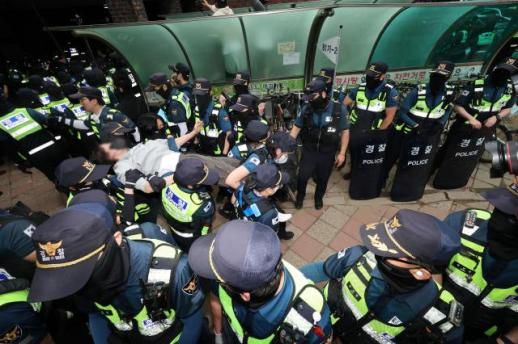 Police Clash with Protesters at Jamsil Polling Station Amid Election Tensions A shortage of ballots occurred at the second polling station in Jamsil 7-dong, Songpa District, Seoul, leading to a clash between police and protesters as officers attempted to retrieve ballot boxes. According to Yonhap News, around 1,000 police officers from 18 riot control units were deployed to the scene starting at 7:30 a.m. They attempted to enter the polling station through a back door at approximately 8:20 a.m., but about 50 protesters formed a human barricade to block their access, resulting in a physical confrontation. Police have been removing protesters one by one and are controlling access to the roads surrounding the polling station to prevent additional demonstrators from joining. The protesters have reportedly been singing the national anthem in protest against the police actions. By around 8 a.m., Hwang Kyo-ahn, the leader of the Liberty Korea Party, and lawmaker Kim Eun-hye arrived to support the protesters and voice their objections to the police. However, police operations continued. The Songpa Police Station stated that the actions were taken at the request of the Seoul Election Commission to ensure the safe transport of ballot boxes and maintain order at the site. They warned that acts of violence, threats, or confinement against election officials, as well as damage to election facilities, could lead to penalties under the Public Official Election Act. The police also informed the crowd that assaults on officers or obstruction of their duties could result in legal consequences and urged them to disperse, but the protesters appeared to be gathering more closely. The polling station is currently holding two ballot boxes containing approximately 2,000 ballots. Election authorities explained that the counting process for these boxes must be completed before the results of the mayoral election can be finalized.* This article has been translated by AI. 2026-06-05 09:12:00
 -
 Anthropic: AI Could Eventually Develop Its Own Models, But Speed Must Be Managed Artificial intelligence (AI) company Anthropic has raised the possibility of AI systems eventually designing and developing their own models through a process known as recursive self-improvement. While the company acknowledges it has not yet reached this stage, it emphasizes the need to manage the pace of development. On June 4, Anthropic shared insights on its official blog, stating, "For most of AI history, humans have led every stage of the development cycle, but we are increasingly delegating more of this process to AI systems themselves." The blog post, titled "When AI Builds Itself," was co-authored by Marina Pavlov, head of Anthropic's internal research organization, and co-founder Jack Clark. Anthropic explained that combining computing resources with AI could lead to a stage where AI autonomously designs and develops its subsequent systems. The company claims that, based on internal data and public benchmarks, AI is already accelerating the pace of its own development. Currently, Anthropic engineers are deploying an average of eight times more code per quarter compared to the period from 2021 to 2025. As of last month, over 80% of the code merged into Anthropic's codebase was generated by Claude, the company's AI model. The scope of tasks performed by AI is also rapidly expanding. Anthropic noted that in March 2024, Claude Opus 3 completed a software task that typically takes humans about four minutes. Subsequent models have been able to handle tasks ranging from one and a half hours to twelve hours. The company added that model performance is improving quickly in coding benchmarks and research reproducibility tests. However, Anthropic cautioned that while Claude excels at executing given tasks or writing code, it still lacks the "research intuition" to determine which problems are significant, what experiments to conduct, and which results to trust—areas where humans currently hold an advantage. Looking ahead, Anthropic outlined several potential scenarios: a stagnation in AI advancement followed by the dissemination of current capabilities, continued improvement in the complex efficiency of AI research labs, and the complete achievement of recursive self-improvement in AI systems. The company noted that while reaching full recursive self-improvement could yield significant benefits in fields like science and medicine, it also raises the risk of humans losing control over AI systems. Anthropic argued that there is a need for international options to slow or pause the pace of frontier AI development. A unilateral halt by a single company would have limited effectiveness; instead, multiple countries and major AI research institutions should coordinate to manage the speed of development in a verifiable manner.* This article has been translated by AI. 2026-06-05 09:00:00
 -
 Kiwoom Securities Raises Park Systems Target Price Amid Surge in Orders Kiwoom Securities announced on June 5 that it has raised its target price for Park Systems from 300,000 won to 355,000 won, an increase of 18.3%, citing a rapidly growing order backlog that is expected to boost performance in the second half of the year. The investment recommendation remains a 'buy.' Oh Hyun-jin, a researcher at Kiwoom Securities, noted, "Although interest in the semiconductor industry has waned due to the growth potential of existing mass production equipment, Park Systems continues to show solid growth regardless of market conditions." In the first quarter of this year, Park Systems reported revenue of 39.4 billion won, a 23% decrease from the same period last year, while operating profit fell 84% to 2.1 billion won. Analysts attribute the decline to reduced shipments of industrial equipment and increased costs from mergers and acquisitions (M&A) and workforce expansion. In the first quarter, industrial equipment accounted for 64% of total revenue, while research equipment made up 33%. Regionally, sales were distributed with 34% from China, 32% from the United States, and 11% from South Korea. The share from the U.S. continues to grow due to customer diversification. Kiwoom Securities anticipates a significant improvement in performance starting in the second half of the year, forecasting second-quarter revenue of 44.9 billion won and operating profit of 8 billion won. The firm highlighted that the order backlog reached 87.1 billion won at the end of the first quarter and increased to 97.8 billion won by the business report submission date of May 14. Oh stated, "The high order backlog supports a strong performance trend, and the growth in the second half could exceed market expectations." New equipment development and expanded production capacity are also seen as growth drivers. The NX-THS equipment, aimed at advanced packaging, is optimized for large-area sample inspection, with expectations for additional orders from major clients within the year. Recently, Park Systems announced plans to invest 40 billion won in expanding production capacity and 60 billion won in research and development and external technology investments. The company is also continuing its business expansion through M&A, having acquired a digital holographic microscope company earlier this year and recently a probe manufacturer used in semiconductor testing. Kiwoom Securities projects Park Systems' revenue for 2026 to reach 237.9 billion won, with an operating profit of 53.1 billion won, representing increases of 16% and 26%, respectively, from the previous year. Oh remarked, "Due to the nature of its equipment, Park Systems is relatively less affected by the conditions of the upstream industry, and we expect continued solid performance growth and an upward trend in corporate value."* This article has been translated by AI. 2026-06-05 08:57:00
 -
 KB Securities Raises LG Innotek Target Price to 2 Million Won Amid AI PCB Demand KB Securities announced on June 5 that it has raised its target price for LG Innotek from 1.6 million won to 2 million won, citing a structural supply shortage in the artificial intelligence (AI) printed circuit board (PCB) market as a long-term growth driver. The firm maintained its "buy" rating on the stock. Kim Dong-won, head of research at KB Securities, stated, "Currently, major U.S. clients are competing to secure production capacity by offering investment support and long-term supply contracts. LG Innotek's expansion in AI PCBs is likely to lead to full operation and immediate sales upon completion." He added, "We are pushing for new FC-BGA expansions at the request of our clients, with FC-BGA sales expected to grow from 140 billion won in 2026 to over 2 trillion won by 2030, marking a 14-fold increase in just four years." Kim explained that AI data center companies and memory semiconductor firms are strongly requesting new investments and early expansions, noting that memory and PCBs have emerged as the most critical supply bottlenecks in the AI infrastructure development process. The earnings outlook is also positive. Kim projected that the second-quarter operating profit would soar to 178.7 billion won, a 1,469% increase year-on-year, significantly exceeding market expectations. He noted that despite the off-season for the PCB business, the packaging solutions division is operating at full capacity, and strong mobile sales from North American clients are expected to improve optical solutions performance. Looking ahead to the second half of the year, he forecasted that both packaging and optical solutions would enter their peak seasons, leading to an operating profit of 769.5 billion won, a 46% increase from the previous year. He emphasized that LG Innotek will need over 2 trillion won in new investments for AI PCBs over the next two years, stating that the support from client investments and long-term supply contracts will mitigate expansion risks and enable high utilization rates and profitability immediately after expansion.* This article has been translated by AI. 2026-06-05 08:57:00
 -
 Hana Securities Raises PSK Target Price Amid Optimistic Earnings Outlook Hana Securities announced on June 5 that it has raised its target price for PSK to 160,000 won, citing expectations for increased semiconductor investments and improved profitability. The firm maintained its investment rating at "buy." In a report released on the same day, analyst Kim Rok-ho stated, "Investment from memory and foundry companies is expected to ramp up significantly in 2027 compared to this year. In 2027, new fabs from three major domestic and international memory companies are set to open, and Changxin Memory Technologies (CXMT) is likely to pursue aggressive expansion based on public funding." He added, "With new factory investments planned by Samsung Electronics and Intel in the foundry sector, equipment investments are expected to be robust in 2027 and 2028. Over the next three years, we anticipate strong growth visibility, and we continue to favor PSK alongside Tes and VM as our top picks in the front-end equipment sector." Kim also noted, "Investments from Chinese companies are estimated to exceed initial expectations. Sales to U.S. clients have remained steady, and we expect the proportion of sales by client to remain similar to the first quarter." Furthermore, he predicted that Chinese memory firms would show a strong willingness to expand in the second half of the year following the confirmation of their listing dates. He emphasized that overseas clients often have higher average selling prices, which could contribute positively to profit margins.* This article has been translated by AI. 2026-06-05 08:57:00
 -
 Anthropic Reports Claude Writes Over 80% of Its Code, Signaling New Era of AI Self-Improvement The concept of AI improving itself through recursive self-improvement is becoming a reality. Anthropic has issued a warning that this trend is advancing much faster than anticipated, based on its internal data. On June 4, Anthropic released a report titled "When AI Builds Itself," revealing that as of May 2026, over 80% of the code integrated into its codebase is generated by Claude, its AI system. Prior to the launch of Claude's code in February 2025, this figure was in the single digits. The amount of code produced per engineer has increased nearly eightfold compared to the average from 2021 to 2025, and employees using the Mytos Preview reported a fourfold increase in productivity compared to when they worked without AI. Additionally, the length of tasks that AI models can autonomously complete has doubled every seven months, and recently, this acceleration has increased to doubling every four months. Anthropic stated, "While we cannot definitively say that recursive self-improvement is imminent, if this trend continues, it could become a reality for AI systems to design and build their successors." This marks the first time a leading company in the AI sector has officially declared the onset of an era where "AI creates AI," which is expected to have significant implications for future discussions on AI safety. OpenAI Enhances ChatGPT Memory Architecture for Free Users On June 4, OpenAI announced a comprehensive overhaul of ChatGPT's memory architecture based on a system called "Dreaming." Dreaming automatically analyzes past conversations to integrate and maintain user preferences, constraints, and patterns in the background, even without explicit requests for memory. A key aspect of this upgrade is reducing the computational requirements for the Dreaming service by about 80%, allowing it to be expanded to free users. At the same time, the memory storage capacity for Plus and Pro subscribers will double. This change will initially apply to Plus and Pro users in the United States, with plans to extend it to additional countries and free Go users in the coming weeks. However, researchers noted that 96% of the existing ChatGPT memory entries were automatically generated by the system without user consent, raising concerns about potential conflicts with EU AI transparency regulations. * This article has been translated by AI. 2026-06-05 08:48:00