

Journalist

KI SU JEONG
-
 Labor Minister Kim Young-hoon Calls for Improvement of 'Free Labor' Practices Labor Minister Kim Young-hoon announced on June 4 that the government will work to eradicate practices of 'free labor' that exploit the comprehensive wage system.During a meeting with employees at the Gasan Digital Complex in Geumcheon-gu, Seoul, Kim stated, "It is a clear violation of the law to deny fair compensation based solely on the existence of a comprehensive wage contract, regardless of actual working hours."He emphasized, "The labor environment that induces free labor by taking advantage of young people's enthusiasm under the pretext of past practices must be improved. We must establish the most basic principle of being compensated for the work done."The meeting was organized to gather feedback on issues faced by workers following the implementation of the 'Guidelines for Preventing Abuse of Comprehensive Wage Systems' in April.In addition to concerns about the comprehensive wage system, employees raised issues related to the use of annual paid leave and after-hours work communications, highlighting their right to disconnect.Kim urged, "If employees feel pressured to take annual leave or are anxious about work communications after hours, then even the best policies are meaningless. I encourage you to actively share your voices from the field."The Ministry of Labor plans to incorporate the feedback gathered during the meeting into future labor inspections and policy development.To specifically address the eradication of comprehensive wage abuse, the ministry will actively promote an anonymous reporting center using mobile promotional buses and anonymous employee communities. It will also implement strict inspections of businesses where reports have been received.Additionally, the ministry plans to support the swift processing of amendments to the Labor Standards Act currently pending in the National Assembly.Furthermore, the ministry will strengthen the establishment of labor time recording and management systems in workplaces, taking strict action and providing guidance on any violations identified during the ongoing planned inspections of basic labor order that began in February.* This article has been translated by AI. 2026-06-04 11:33:00
 -
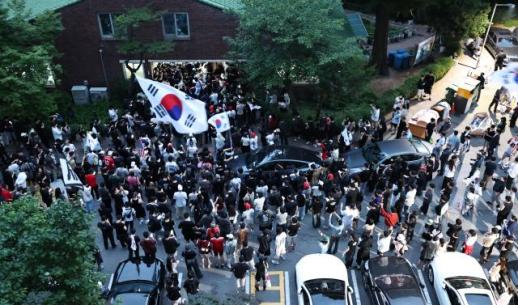 Ballot paper shortage disrupts local elections as ballot box remains unretrieved SEOUL, June 4 (AJP) - A rare logistics failure disrupted this year's local elections in Seoul, where ballot papers ran out at 14 polling stations, delaying voting and angering voters. At one station, a ballot box remained unretrieved as of Thursday morning, fueling further criticism of the already embattled National Election Commission (NEC) over its handling of the vote. The NEC is the independent agency responsible for overseeing the country's elections. The disruption began around 4:40 p.m. the previous day, when ballot papers ran out at several polling stations in southern Seoul, leading to long queues as voters waited for additional ballot papers to arrive. Election officials issued waiting numbers to those who arrived before the 6 p.m. closing time, allowing them to vote even after polls had officially closed. As of Thursday morning, a ballot box at a polling station in Jamsil, in Seoul's Songpa district, had yet to be retrieved, as protesting voters claimed their voting rights had been infringed, according to the NEC. Voting was extended until 10 p.m. there after a shortage of ballot papers disrupted the normal process. However, even after voting ended, the ballot box could not be immediately transferred for counting, as some residents and protesters objected to its removal amid anger over the shortage. Election officials did not immediately proceed with the transfer, and the box remained unretrieved as of Thursday morning. The NEC blamed stronger-than-expected turnout, saying more voters than projected showed up at certain polling stations, exhausting the supply of ballot papers. It said it supplied additional ballot papers to affected stations once the shortage was identified and allowed those already in line to vote after the official closing time. But the surge was widely anticipated, as Wednesday's elections had already seen early voting turnout of 61 percent, up 10.1 percentage points from 50.9 percent in the 2022 local elections, the second-highest level ever recorded in a South Korean local election. The all-time high remains the 68.4 percent recorded in the first local elections in 1995. Local elections are held separately from general elections, which historically draw higher turnout; the 2024 general elections, for comparison, recorded 67 percent. The NEC issued a public apology, admitting that ballot paper shortages caused "great confusion and concern," and said it felt responsible for undermining public trust in fair election management. However, the apology left key questions unanswered, including how many voters were directly affected, whether anyone left without casting a ballot, and why the initial allocation of ballot papers fell short. The incident came after a similar problem during early voting for the 2024 general elections, when some polling stations ran short of printer ink for ballot papers following stronger-than-expected turnout. An unusually long proportional representation ballot, which listed dozens of parties, also pushed ink use beyond available supplies. South Korea is not the first country to face such problems. In Germany, the 2021 federal election in Berlin was later partially rerun after widespread election-day disruptions including ballot shortages, incorrect ballots and long delays. The Federal Constitutional Court ordered a repeat vote in 455 of Berlin's 2,256 electoral districts. Similar irregularities also led to a full rerun of the Berlin state election in 2023, in which CDU candidate Kai Wegner replaced SPD incumbent Franziska Giffey as governing mayor. The NEC said it would hold a comprehensive briefing once counting is completed, covering the cause of the shortage, the handling of the ballot box and any follow-up measures. Meanwhile, incumbent Oh Se-hoon of the main opposition People Power Party (PPP) was re-elected Seoul mayor, defeating strong contender Chung Won-o from the ruling Democratic Party (DP) by approximately 30,000 votes, a margin of less than one percentage point, to secure a fifth term despite unprecedented disruptions in parts of the city. 2026-06-04 11:27:32
 -
 Emerging Contenders for the Presidency After Local Elections With the results of the June 3 local elections and by-elections confirmed on June 4, potential presidential candidates are emerging. From the ruling party, Jung Cheong-rae, leader of the Democratic Party, and Choo Mi-ae, the newly elected governor of Gyeonggi Province, are being mentioned as contenders. From the opposition, Oh Se-hoon, the newly elected mayor of Seoul, and Han Dong-hoon, the newly elected representative for Busan's Buk-gu, are also in the mix. Jung demonstrated his leadership by guiding the Democratic Party to victory in the elections. Although the party lost the highly contested Seoul race, it secured 12 out of 16 metropolitan council seats and maintained nine seats in the by-elections. Notably, Jung successfully defended Jeonbuk, a region previously considered a stronghold for the party. The Jeonbuk elections were marred by allegations of bribery against independent candidate Kim Kwan-young and controversies surrounding the election expenses of winner Lee Won-taek. Additionally, lawmaker Ahn Ho-young's hunger strike demanding a re-investigation into Lee's candidacy led to his hospitalization. This situation sparked debates within the party regarding the expulsion of candidate Kim and the fairness of Lee's completion of the primary. Amidst a divided public sentiment in Jeonbuk, Jung frequently visited the area during his campaign to gauge voter opinions. Choo made history by becoming the first female head of a metropolitan government. With her previous roles as chair of the Legal Affairs Committee, Democratic Party leader, and Minister of Justice, she has now added gubernatorial experience to her resume. If Choo can lead Gyeonggi Province effectively, it could significantly alter the landscape of presidential candidates. Oh achieved a dramatic victory over Democratic candidate Jung Won-oh just 13 hours after the polls closed. His win not only marks him as the first five-term mayor of Seoul but also reinforces the pride of the conservative camp. As the only People Power Party mayor in the metropolitan area, Oh is expected to play a critical role in checking the administration of President Lee Jae-myung. During the campaign, Oh criticized Jung, claiming he would become a puppet for President Lee at the National Assembly, urging voters to choose him for effective oversight. If he raises his voice as an opposition figure in the National Assembly, his presence will likely become more pronounced. The overlap of Oh's term as mayor with President Lee's term is also seen as a potential advantage. Han has seized an opportunity for a reshaping of the conservative landscape. Political insiders suggest that if he successfully returns to the People Power Party, he could be a contender for the party leadership. Should support for current leader Jang Dong-hyuk wane, Han, who has had conflicts with him, may emerge as a viable alternative.* This article has been translated by AI. 2026-06-04 11:27:00
 -
 KOSPI Drops Over 2% Amid Foreign Sell-Off, KOSDAQ Rises More Than 3% The KOSPI index has fallen over 2% due to a significant sell-off by foreign investors. In contrast, the KOSDAQ index has risen more than 3%, showing a starkly different trend. As of 11:15 a.m. on June 4, the KOSPI was down 224.19 points (-2.55%) at 8,577.30, according to the Korea Exchange. While individual investors purchased a net 3.72 trillion won and institutions bought a net 320.3 billion won, foreign investors led the decline with a net sell-off of 4.15 trillion won. Most of the top stocks by market capitalization on the KOSPI are experiencing losses. Notable declines include Samsung Life (-11.77%), LG Energy Solution (-5.76%), Samsung Electro-Mechanics (-5.41%), Hyundai Motor (-4.66%), Samsung Electronics preferred shares (-4.21%), SK Hynix (-3.88%), Samsung Electronics (-2.57%), and HD Hyundai Heavy Industries (-2.23%). However, Samsung C&T has shown strength with a gain of 7.11%. Meanwhile, the KOSDAQ index has risen 31.77 points (3.10%) to 1,057.80 at the same time. In the KOSDAQ market, institutions and foreign investors purchased a net 182 billion won and 21.1 billion won, respectively, while individual investors sold a net 194.3 billion won. In the KOSDAQ, most of the top stocks are on the rise. Significant gains include JUSUNG Engineering (26.71%), Rino Technology (7.22%), Samchundang Pharmaceutical (3.81%), EcoPro (1.80%), and HLB (1.73%). Conversely, Rainbow Robotics (-6.55%), Alteogen (-2.10%), Kolon TissueGene (-0.83%), and Peptron (-0.55%) are experiencing declines. EcoPro BM remains stable.* This article has been translated by AI. 2026-06-04 11:24:00
 -
 Oh Se-hoon Wins Fifth Term as Seoul Mayor in Close Election 6·3 local elections saw Oh Se-hoon of the People Power Party narrowly defeat Jung Won-o of the Democratic Party in a closely contested race for Seoul Mayor. Oh becomes the first mayor in Seoul's history to serve five terms, solidifying his position as a potential presidential candidate.According to the National Election Commission, as of 10:30 a.m. on June 4, with 98.16% of votes counted, Oh secured 49% of the vote, while Jung received 48.28%. The margin between the two candidates was just 37,178 votes. Initially, Jung led by more than 30 percentage points, but as the counting progressed, Oh managed to overtake Jung's vote share.In his victory speech, Oh stated, "This election is a victory for common sense. The citizens have firmly established the great principle of democracy, which is checks and balances. Seoul has remained the last bastion of democracy, preventing South Korea from tipping completely to one side."He added, "Now it's time to get back to work. I will return to the administration immediately and address the issues that burden the lives of citizens one by one." Oh emphasized his commitment to creating a city where everyone, regardless of their background, can achieve fair opportunities, and to making Seoul a city that fosters pride and a warmer, healthier quality of life.Regarding the shortage of ballots, he expressed deep regret, stating, "As a candidate, I feel profound regret over the infringement of citizens' voting rights, which are fundamental and sacred to democracy. A thorough investigation into what went wrong is necessary, and there must be serious accountability and fundamental improvements."While the Democratic Party won in 12 out of 16 metropolitan elections, Oh's victory is seen as a significant win for the People Power Party, reclaiming the politically symbolic Seoul. However, there are concerns that Oh's distancing from party leader Jang Dong-hyuk during the campaign may complicate attributing the victory solely to him.* This article has been translated by AI. 2026-06-04 11:24:00
 -
 Oh Se-hoon Wins Seoul Mayoral Race After Dramatic Comeback In the June 3 local elections, Oh Se-hoon of the People Power Party defeated Jung Won-o of the Democratic Party in a dramatic turnaround, securing his fifth term as Seoul mayor. After trailing in the early vote counts, Oh achieved a comeback just 13 hours after the polls closed, gradually widening his lead to confirm his victory. According to the National Election Commission, Oh successfully retained the mayoral position by defeating Jung, who was referred to as the "choice of President Lee Jae-myung." Jung initially appeared to have the upper hand. Exit polls released at 6 p.m. on election day indicated that Jung was leading by 5.4 percentage points, causing a festive atmosphere in his campaign office. In the early counting, Jung maintained a lead, although the gap narrowed at times, he consistently held the advantage. The mood in Oh's campaign office was somber following the exit poll results, and concerns grew when reports of ballot shortages emerged from polling stations in areas where the People Power Party is strong, such as Songpa, Gangnam, and Gwangjin districts. The party requested a halt to the counting process, but their request was denied by the election commission. The dramatic comeback began early on June 4. At around 7:16 a.m., with 93.9% of the votes counted, Oh surpassed Jung for the first time, securing 2,391,512 votes (48.67%) compared to Jung's 2,388,836 votes (48.61%). This turnaround occurred just 13 hours after the counting began. Cheers and applause erupted in Oh's campaign office as supporters celebrated the unexpected lead. Campaign officials and supporters who had briefly left returned to join the festivities. Meanwhile, Jung's campaign office fell silent, with sighs and expressions of despair as the gap widened to around 10,000 votes just 20 minutes after losing the lead. Once he took the lead, Oh maintained his momentum. Jung declared his defeat before the counting was completed, stating, "I will humbly accept the choice of the citizens. I was lacking," and extended his congratulations to Oh. Oh's victory marks a historic achievement as he becomes the first mayor in South Korea to serve five terms. He was previously elected mayor in 2006 and 2010 but stepped down in 2011 due to the fallout from a failed referendum on free school meals. He later won the by-election in 2021 and the local elections in 2022, setting the record for four terms as Seoul mayor. After his victory was confirmed, Oh expressed gratitude to the citizens, stating, "This election is a victory for common sense. The citizens have firmly established the fundamental principles of democracy, which are checks and balances." He added, "Now it is time to get back to work and address the issues that burden the lives of citizens one by one." Following his remarks, Oh returned to Seoul City Hall to resume his duties as mayor, 38 days after his role was suspended upon registering as a candidate for the local elections on April 27. 2026-06-04 11:24:00
 -
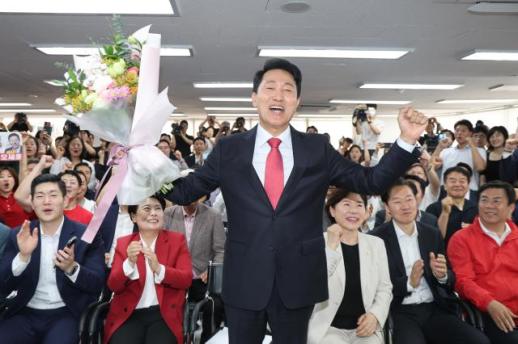 Seoul Mayor Oh Se-hoon Aims to Transform City into Global AI Capital The nation chose the Democratic Party, but Seoul opted for Oh Se-hoon. This local election marked the first nationwide political assessment since the inauguration of the Lee Jae-myung administration. While the Democratic Party triumphed in most regions, Seoul took a different path. The citizens of Seoul prioritized the city over party affiliation and competitiveness over politics. This choice reflects both the evaluation and expectations surrounding Mayor Oh, who has been managing the city for several years. However, the significance of his re-election extends beyond merely serving another term. Mayor Oh now faces a crucial question in Seoul's history: What will the city grow into in the future? Will it be through reconstruction, Han River development, or expanding transportation networks? While all these aspects are important, they are not sufficient on their own. AI has emerged as a pivotal factor in determining national and urban competitiveness, transcending its status as just an industry. During the election, Mayor Oh proposed key pledges such as making Seoul an 'AI-leading city' and establishing a 'youth AI ladder.' Additionally, the city has already announced its vision of becoming a 'Physical AI-leading city,' aiming to transform the entire city into a testing ground for AI. Seoul must now aspire to be more than just the capital of South Korea; it should aim to become the global capital of AI. This is the real challenge presented to Mayor Oh by this election. The 'Miracle on the Han River' has ended. Now, we must create a miracle with AI. Seoul symbolizes the development of South Korea. It was the center of industrialization in the 1960s and gained global recognition through the Olympics in the 1980s. In the 1990s, it grew into a hub for finance and services, and since the 2000s, it has established itself as a center for the digital economy. Almost every scene of South Korea's economic growth has been tied to Seoul. However, past successes do not guarantee future prosperity. The world has entered a new era of competition. In the past industrial revolution, steel and automobiles were the keys to competitiveness. During the internet age, platforms and communication networks held that role. Now, in the AI era, data, talent, algorithms, and innovation ecosystems are the new competitive factors. The issue is that Seoul remains anchored to the formulas of past successes. The city still allocates a significant portion of its administrative capacity to housing, transportation, and urban development issues. While these are essential for improving citizens' quality of life, they alone will not suffice to survive in the global urban competition. Seoul's competitors include New York, London, Tokyo, and Singapore. These cities have already adopted AI as a core strategy for future growth. They are attracting AI research institutes, nurturing AI startups, and competing for AI talent. Seoul can no longer rest on its laurels as the top city in the country. Earlier this year, Mayor Oh announced his vision for a 'Physical AI-leading city.' This plan aims to apply technologies that allow AI to make decisions and act in real-world spaces throughout the city, opening Seoul as a testing ground for technology. This is not merely an industrial policy; it is a declaration to transform the entire city into an innovation platform. What Seoul must do is clear. It should become a city where AI operates most effectively, rather than just a city that supports AI. Tourists should come to Seoul to experience AI-based transportation systems, businesses should come to experience AI administration, and entrepreneurs should come to engage with the AI ecosystem. If the Miracle on the Han River was created by manufacturing, then the future of Seoul must be built on the miracle of AI. The city's competitiveness lies not in its buildings but in its talent. In the AI era, the key resource is not oil but talent. The power driving the global AI competition in Silicon Valley ultimately comes from people. Companies like NVIDIA, OpenAI, and Google are the results of exceptional talent coming together. Seoul already possesses excellent assets. Top universities such as Seoul National University, Korea University, Yonsei University, Hanyang University, and Sungkyunkwan University are concentrated in the city. The best hospitals, financial institutions, and research organizations in South Korea are also located in Seoul. However, these assets are not yet connected into a cohesive ecosystem. Universities conduct research, businesses operate, investors provide funding, and the administration offers support, but they all function separately. For Seoul to become the global AI capital, these elements must be unified. Research from Seoul National University should directly lead to startups, capital from Yeouido should invest in these startups, and the city should provide opportunities for practical testing, creating a virtuous cycle. During the election, Oh proposed the 'Youth AI Ladder' initiative, which aims to establish AI-utilizing environments in public libraries and youth centers, providing opportunities for young people to engage with generative AI. This approach views AI not as a technology exclusive to certain companies or experts but as a fundamental capability for citizens. This direction is correct. In the AI era, it is not those who cannot code who will be left behind, but those who cannot utilize AI. Seoul must become a city where all citizens can harness AI. When citizens utilize AI, businesses will grow. When businesses grow, investment will increase. When investment increases, talent will be attracted back. Ultimately, the competitiveness of the city hinges on the strength of its talent ecosystem. Seoul should become the headquarters of South Korea's AI strategy. South Korea has set the goal of becoming an AI G3 nation. The government is investing substantial budgets to foster the AI industry, and global companies are paying attention to the Korean market. Recently, Google announced plans to establish the world's first AI campus in Seoul, raising expectations for the domestic AI ecosystem. However, national strategy alone is insufficient. The competition in AI ultimately takes place at the city level. The center of AI competitiveness in the U.S. is not Washington, D.C., but Silicon Valley. In China, it is Beijing and Shenzhen. In the U.K., it is London. South Korea must also center its efforts in Seoul. Seoul is not merely an administrative capital. It is where the most talent, capital, and information in South Korea converge. In the AI era, Seoul's role will only become more critical. Yongsan should become a global AI hub, Yeouido should be the center of AI finance, Gangnam should lead in AI startups, and Hongneung should be a base for AI bio-innovation. A massive AI innovation belt must connect all these areas. What the city needs to do is not build more buildings but connect people to people, technology to markets, and universities to businesses. On this network, new industries and companies can emerge. The legacy that Mayor Oh should leave lies here. Han River development can be continued by the next mayor. Reconstruction can also be pursued by future leaders. However, making Seoul the global AI capital is an opportunity that must be seized now, or it may be lost. If Seoul becomes the AI capital, South Korea will become a powerhouse in AI. If Seoul falls behind, South Korea will inevitably lag as well. This election has given Mayor Oh another opportunity. Now, he must transform that opportunity into a future. :SWOT Analysis: Strengths: Mayor Oh Se-hoon's greatest strength is his proven administrative experience, having served as mayor for over a decade. He understands the city's organization and policy mechanisms better than anyone. Additionally, Seoul is home to the country's top universities, research institutions, startups, and financial organizations. The recently announced Physical AI-leading city strategy and Youth AI Ladder policy are significant as they elevate AI to a core agenda for urban growth. Weaknesses: Seoul still has an administrative structure that overly concentrates on real estate and transportation issues. There is a risk that the AI strategy may be treated as just one of many policies rather than a core agenda. Furthermore, the connection between Seoul's strong research capabilities and entrepreneurship remains weak, with universities, businesses, and the investment ecosystem operating in a fragmented manner. Opportunities: Now is the optimal time for Seoul to challenge for the title of global AI capital. The government is pursuing an AI G3 strategy, and global companies are focusing on the Korean AI market. AI is reshaping the industrial structure centered on manufacturing, redefining urban competitiveness. With the right strategy, Seoul has ample potential to become a leading AI hub in Asia, given its existing talent, capital, and infrastructure. Threats: Seoul's greatest threat is global competition. Cities like Singapore, Tokyo, and Shanghai are also making substantial investments to build AI hubs. Additionally, there is a serious issue of talent outflow, with skilled individuals migrating to the U.S. and China. If Seoul fails to leverage AI as a new growth engine, it risks stagnation in urban competitiveness amid aging and low growth.* This article has been translated by AI. 2026-06-04 11:18:00
 -
 IBK Industrial Bank to Provide 1.5 Trillion Won in Financial Support for SMEs IBK Industrial Bank is set to provide 1.5 trillion won in financial support aimed at small and medium-sized enterprises (SMEs). The initiative seeks to assist small businesses that are often overlooked by policy measures while also promoting growth in future strategic industries.The bank has signed a memorandum of understanding with the Korea Credit Guarantee Fund and the Korea Technology Finance Corporation to expand inclusive and productive finance.Under this agreement, IBK will allocate 500 billion won for inclusive finance and 992.5 billion won for productive finance. The contributions include 15.25 billion won for inclusive finance and 27 billion won for productive finance.The inclusive finance support will target legal small businesses, startups that have graduated from incubation, traditional manufacturing firms, and companies undergoing business transitions. IBK plans to reduce loan interest rates by up to 1.3 percentage points and cover the full guarantee fee for the first year, along with 0.5% of the fee for the second year.Productive finance will focus on new growth industries, promising startups, and companies that create jobs, including those in artificial intelligence, biotechnology, content creation, culture, defense, energy, and manufacturing. These businesses will also benefit from a maximum interest rate reduction of 1.3 percentage points, with a 0.5% guarantee fee support from the Korea Credit Guarantee Fund and 0.8% from the Korea Technology Finance Corporation for two years.An IBK official stated, "This agreement is a comprehensive support measure for SMEs and future growth companies that are in policy blind spots. We aim to be a strong pillar to ensure that SMEs do not lose their growth momentum."* This article has been translated by AI. 2026-06-04 11:18:00
 -
 Korean Privacy Commission Launches Investigation into TVING Data Breach The Personal Information Protection Commission (PIPC) has initiated an investigation into a data breach involving the online video service TVING. On June 4, the PIPC announced that it had received a report of the data breach from TVING and has begun examining the circumstances surrounding the incident and the extent of the damage. TVING reported the breach after discovering unauthorized access to its database, which led to the potential exposure of personal information. The compromised data is believed to include user IDs, names, birth dates, genders, connection information (CI), duplicate membership confirmation information (DI), mobile phone numbers, email addresses, refund account numbers, and passwords. According to TVING's preliminary assessment, an unidentified hacker accessed the database containing personal information and transmitted related files externally, resulting in the breach. The PIPC plans to confirm the specifics of the breach and the extent of the damage through document requests and on-site investigations. Additionally, it will check compliance with safety measures and obligations regarding the notification and reporting of personal data breaches, as mandated by the Personal Information Protection Act.* This article has been translated by AI. 2026-06-04 11:18:00
 -
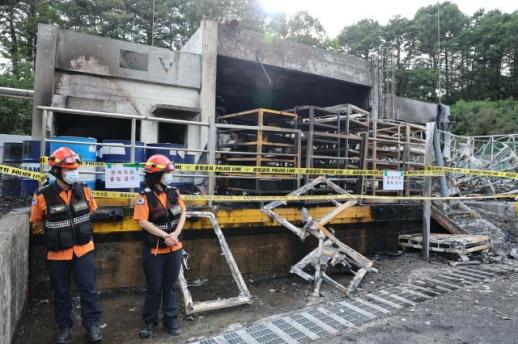 Hanwha Aerospace halts operations at 9 sites for safety inspections SEOUL, June 04 (AJP) - Hanwha Aerospace said Thursday it has suspended operations at nine domestic sites for two days to conduct safety inspections and employee training, following a deadly explosion at its plant in Daejeon. The company said it halted production lines from June 4 to 5, except for some essential processes, under the supervision of each site manager and safety officer. The affected sites include plants in Daejeon, Boeun in North Chungcheong Province and Yeosu in South Jeolla Province, which produce and handle propellants and charges. The shutdown also applies to its Changwon plants in South Gyeongsang Province, which manufacture K-9 self-propelled howitzers, armored vehicles and aircraft engines, as well as R&D campuses in Daejeon, Pangyo and Asan. It marks the first time Hanwha Aerospace has simultaneously suspended operations at multiple sites since the launch of its integrated entity in 2023, following the merger of Hanwha Aerospace, Hanwha Defense and Hanwha Corp.’s defense division. The company said the decision was made because securing a safe workplace environment takes priority over potential production disruptions, as part of efforts to prevent risks similar to the accident at the Daejeon plant. During the inspections, Hanwha Aerospace will review risks related to fires, explosions, serious accidents, unsafe facilities and working conditions, risk assessments and past accident cases. The company will also reexamine machinery, work environments and structures, while checking whether corrective measures and recurrence prevention steps from risk assessments over the past three years have been properly implemented. Hanwha Aerospace said it has also begun reviewing the expansion of unmanned automation for processes related to the production and handling of propellants. Special safety training for employees will also be conducted during the two-day period. Each site will provide training on similar accident cases at home and abroad, workers’ right to stop work in the event of imminent danger and emergency response plans. Hanwha Group said its petrochemical affiliates, including Hanwha Corp., Hanwha Solutions, Hanwha TotalEnergies, Hanwha Impact and YNCC, will also form CEO-led inspection teams by June 10 to review workplace safety, production processes and environmental management at their domestic and overseas sites. 2026-06-04 11:17:15