
Journalist

Kang Jung-woo
-
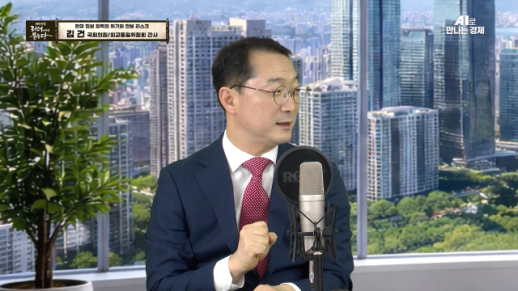 Korean Lawmaker Kim Gun Advocates for Neutrality Amid Middle East Crisis The international order is undergoing a significant transformation. The strategic competition between the United States and China has expanded into a technological hegemony war, while the Ukraine war and conflicts in the Middle East are simultaneously shaking global supply chains and security structures. The security environment surrounding the Korean Peninsula is also challenging, with North Korea's nuclear and missile threats becoming a daily reality. Balancing diplomacy amid the U.S.-China conflict and strengthening the South Korea-U.S. alliance and South Korea-Japan cooperation is increasingly complex. In this tumultuous era, diplomacy has transcended mere inter-state relations to become a matter of national survival. Kim Gun, a lawmaker from the People Power Party, has deeply felt this reality. With 35 years of experience in the Ministry of Foreign Affairs, including negotiations on North Korea's nuclear issues and U.S. diplomacy, he currently serves as the secretary of the National Assembly's Foreign Affairs and Unification Committee, addressing diplomatic and security issues. He asserts, "The essence of diplomacy is ultimately national interest." He believes that actions should be guided by rational judgment and the survival of the nation, rather than emotions or political gains. Recently, Kim has expressed concerns about the government's responses to a range of diplomatic issues, including South Korea-U.S. intelligence cooperation, deterrence against North Korea, the U.S.-China conflict, and the situation in the Middle East. He emphasizes that "diplomacy requires both strength and trust," stating that a strategy of harmonizing relations with neighboring countries on the foundation of the South Korea-U.S. alliance is fundamental to South Korea's diplomacy. In this interview, Kim shared his insights on the differences between diplomats and politicians, the current state of the South Korea-U.S. alliance, the distinction between intelligence and information, the debate over pragmatic diplomacy, the U.S.-China technological hegemony competition, and the direction of South Korean leadership. "Diplomacy is conducted with the mind, while politics is about numbers." — You have transitioned from a diplomat to a politician. What is the biggest difference? "Diplomacy is about intellect, while politics is about numbers. In the National Assembly, securing the support of 150 out of 300 members is essential to pass legislation. Therefore, gaining the support of many is key. In contrast, diplomacy requires extensive study. You must find persuasive arguments and consider the most advantageous solutions for national interests." — Has your diplomatic experience influenced your political activities? "Adapting is not easy. Diplomacy is approached with the mindset of 'if I work hard, the public will eventually recognize it.' However, in politics, if the public does not acknowledge your efforts, you are often seen as having done nothing. The modes of operation are fundamentally different." — How do you define the essence of diplomacy? "The essence of diplomacy is to protect national interests. There is no escaping that." — Is diplomacy about power or trust? "Both are necessary. Without power, diplomacy cannot occur. However, the international community does not operate in isolation. By gaining trust and establishing cooperative relationships, one can achieve much greater strength than acting alone. Ultimately, a balance of power and trust is essential." — Where does South Korean diplomacy currently focus? "On alliances and self-reliance. We must strengthen the South Korea-U.S. alliance while simultaneously becoming stronger ourselves. The most important aspect of diplomacy is balance." "A single word in diplomacy can lead to war." — How significant is the weight of words in diplomacy? "It is extremely important. In the past, during the monarchy, the words of kings could lead to war. Today, if a national leader's statements provoke public sentiment, it can jeopardize national relations." — Should government officials adhere to stricter standards in their statements? "Absolutely. This is why diplomatic language is necessary. If internal negotiation details are disclosed, it can lead to public sentiment clashes, necessitating refined expressions and strategic explanations." — You emphasize the need to distinguish between intelligence and information. "Intelligence refers to all stories circulating in the media, rumors, and expert opinions. Information is the verified intelligence that can be used as a basis for policy. Government policies should be based on information, not intelligence." — We are now in an era of social media politics. "President Trump's approach is quite unique. As a diplomat, I see it as highly risky. When a leader directly discloses intelligence-level information, the public tends to believe it as fact. If it later turns out to be untrue, it can undermine government credibility." "The South Korea-U.S. alliance is on thin ice." — How do you assess the current state of the South Korea-U.S. alliance? "I see it as walking on thin ice. There is a president in the U.S. who views alliances transactionally, and there is a growing sentiment in South Korea that we should move away from a U.S.-centric order. This situation can create instability in the alliance." — Is the issue of limited information sharing serious? "It is very serious. In the context of North Korea's nuclear threats, information sharing between South Korea and the U.S. is crucial for deterrence. The two countries must combine their intelligence to monitor North Korean movements in real-time and respond effectively. Any gaps could encourage North Korea to test its capabilities." — Is North Korea still the biggest risk to South Korea's security? "Yes. While the possibility of nuclear war is low, localized provocations like the Yeonpyeong Island shelling or the sinking of the Cheonan can occur at any time. To deter such provocations, we need overwhelming preparedness." — Does this mean that diplomatic mistakes can lead to security crises? "Yes. Even a signal that there is a rift in the South Korea-U.S. relationship can prompt neighboring countries to test their limits. This is also why we do not expose disagreements between allies to the outside world." — Recently, you referred to the government's diplomacy as 'misguided diplomacy.' "Initially, I thought the direction of pragmatic diplomacy was positive. There seemed to be a realistic approach to South Korea-Japan relations. However, over time, statements from the president and some ministers have created problems." — What concerns you the most? "In diplomacy, a single expression can lead to international issues. Statements that clash with the perspectives of other countries, such as those regarding Israel or North Korea's nuclear program, must be made with caution." "Cooperation between South Korea and Japan is a necessity of the times." — Do you view the current trend in South Korea-Japan relations positively? "Yes. In today's international order, cooperation between South Korea and Japan is essential. Without collaboration amid the U.S.-China conflict, survival becomes difficult. Ultimately, leaders must prioritize national interests." "The core of the U.S.-China conflict is technological hegemony." — How is the global order being reshaped? "The key issue is the U.S.-China technological hegemony competition. The competition over AI, semiconductors, and advanced technologies is shaking the international order." — South Korea finds itself caught in the middle. "Indeed. The U.S. is imposing export controls, while China is weaponizing rare earth materials. We import raw materials from China and export to the U.S. market. Ultimately, we face pressure from both sides." — In the past, the 'pro-U.S. and pro-China' strategy was discussed. "Now, security and economy have become intertwined. We cannot separate U.S. security from Chinese economic interests." — What, then, is the solution? "We must base our strategy on the South Korea-U.S. alliance while managing our economic relations with China. Achieving seemingly incompatible goals simultaneously is the fate of South Korean diplomacy." "In response to the Middle East crisis, South Korea must maintain balance." — How is South Korea responding to the Middle East crisis? "We are responding relatively well. South Korea relies on the Middle East for 70% of its oil. Ensuring stability in the Strait of Hormuz is a key national interest. At the same time, we must manage our alliance with the U.S. without getting embroiled in war." — Do you see potential for restoring relations with Iran? "There is ample potential. Iran has a strong sense of goodwill towards South Korea. If it returns to the international community, it could become a new market for South Korea." — What is the biggest problem in South Korean politics? "Polarization. Strong partisan politics are exacerbating social divisions. Ultimately, we must move towards politics of integration and unity for the nation to grow stronger." "The South Korea-U.S. alliance is the pillar of South Korean diplomacy." — Can you explain your diplomatic philosophy? "I have a phrase I coined: 'Establish the pillar and harmonize with the surroundings.' The pillar of South Korean diplomacy is the South Korea-U.S. alliance. We must build harmonious relationships with Japan, China, Russia, and ASEAN on that foundation." — Why is the South Korea-U.S. alliance so crucial? "The Korean Peninsula has always been at the center of great power conflicts. The South Korea-U.S. alliance has been one of the most successful strategies in deterring war in this region by bringing in an external balancer." — What is the biggest mistake to avoid in diplomacy? "Losing composure. Acting emotionally can jeopardize national interests. Given that South Korea is surrounded by great powers, diplomatic mistakes can lead to national losses." — What is your political philosophy? "Messages should be strong, but expressions should be restrained. When politics becomes overly emotional, the public may feel fatigued." — Do you have any advice for future leaders? "South Korea is a buffer state between maritime and continental powers. Failing to read international dynamics could lead to losing the nation. Future leaders must possess international sensibility and a global mindset." Kim Gun is a seasoned politician with 35 years of experience in the Ministry of Foreign Affairs. He has extensive experience in North Korea's nuclear issues and U.S. diplomacy, having served as the head of the Ministry's Korean Peninsula Peace Negotiation Headquarters. He currently focuses on diplomatic and security issues as the secretary of the National Assembly's Foreign Affairs and Unification Committee. He emphasizes 'national interest' as the core principle of diplomacy. While defining the South Korea-U.S. alliance as the pillar of South Korean diplomacy, he advocates for a strategy of harmonious relations with neighboring countries, termed 'Establish the pillar and harmonize with the surroundings.' Kim stresses the need for South Korea to pursue more sophisticated strategic diplomacy amid the simultaneous challenges of U.S.-China technological hegemony and North Korean nuclear threats. He asserts, "A nation without international sensibility has no future," and insists that South Korean leaders must possess the ability to read the global order. 2026-05-24 07:10:41
 -
 Trump Hints at Finalization of Iran Peace Agreement Soon President Donald Trump has indicated that the final terms and details of a peace agreement with Iran are currently under discussion, suggesting an announcement could come soon. On May 23, Trump stated on social media that an agreement involving the United States, Iran, and several other countries has largely been negotiated, with only final confirmations remaining. He added that, among other elements, the Strait of Hormuz would be reopened. While he did not specify a timeline for the announcement, his comments imply that the ceasefire agreement with Iran is nearing completion. Earlier, U.S. Secretary of State Marco Rubio, who was visiting India, told reporters that there is a possibility of an announcement either later that day, the next day, or in the following days regarding the peace negotiations. Trump also mentioned to local media that negotiations with Iran are progressing significantly, stating he would decide by Sunday, May 24, whether to resume airstrikes against Iran. He noted that he had a very productive call from the Oval Office with leaders and senior officials from Saudi Arabia, the United Arab Emirates, Qatar, Pakistan, Turkey, Jordan, and Bahrain, discussing all matters related to Iran and the peace memorandum of understanding. Trump also highlighted that he had a positive conversation with Israeli Prime Minister Benjamin Netanyahu, indicating that there are no significant disagreements regarding the terms of the ceasefire negotiations with Iran. 2026-05-24 06:54:47
 -
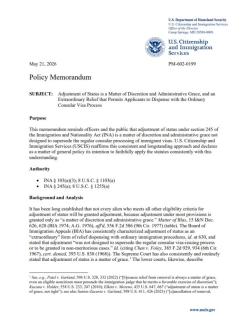 USCIS Advises Green Card Applicants to Apply from Outside the US On Friday, May 22, the U.S. Citizenship and Immigration Services (USCIS) released a six-page memo that has caused significant upheaval in the immigrant community. Immigration law offices have been inundated with calls. While some argue that the memo merely reaffirms existing principles, the prevailing view is that it signals a tightening of the application process, particularly affecting marriage-based and student visa green card applicants. According to CBS News, USCIS stated that most foreign nationals applying for immigrant visas must do so from their home countries. The network noted that this change creates a more challenging situation for hundreds of thousands seeking to obtain green cards while residing in the U.S. Traditionally, applications for U.S. immigrant visas and green cards are submitted at U.S. embassies and consulates abroad. However, many individuals legally residing in the U.S. on work visas, such as H-1B, have opted for the adjustment of status process to apply for green cards from within the country. The New York Times reported that in 2024, 1.4 million individuals received green cards in the U.S., with 820,000 of those through adjustment of status. Over the past two decades, excluding the year 2020 when COVID-19 spread, more than 500,000 people annually have utilized this process. The same applies to those applying for green cards through marriage to U.S. citizens. In 2024, 70% of foreign nationals who married Americans adjusted their status while remaining in the U.S., totaling 250,000 individuals. The crux of the recent announcement is that these adjustments will now need to be applied for at consulates abroad. Notably, applicants from 75 countries designated by the Trump administration, including many in Africa, currently face a suspension of immigrant visa applications. This makes it increasingly difficult for them to return home and apply for green cards. Additionally, undocumented individuals who exceed their allowed stay may find their applications delayed for several years. U.S. immigration authorities emphasized their focus on undocumented immigrants. According to the BBC, USCIS stated, "When foreigners apply for green cards from their home countries, it reduces the effort required by U.S. authorities to locate and deport those who remain unlawfully in the U.S. after a denial of their application," asserting that the immigration system will be more rational and efficient. Following the memo's release, immigration attorneys across the U.S. reported a surge in inquiries, leading to a chaotic work environment, as noted by the New York Times. On social media platforms like Instagram and Reddit, videos explaining the implications of the new policy by immigration lawyers gained popularity. USCIS spokesperson Jack Caller remarked, "Individuals who contribute to the U.S. economy or national interest can still apply through the existing process." Public reaction, which was intense from the morning of May 22, appears to have calmed somewhat. The Seattle Times reported that by the afternoon, it was concluded that the changes might not be as drastic as initially feared. Attorney Aptin Bahador in Seattle stated, "In some respects, it could be argued that nothing has changed."* This article has been translated by AI. 2026-05-24 05:24:57
 -
 Seoul Mayoral Candidates Clash Over Safety and Development Issues Ahead of Elections Park Geun-hye Visits Traditional Market to Support Chu Kyung-ho Former President Park Geun-hye, often referred to as the "Queen of Elections," visited a traditional market in Daegu on May 23 to rally support for Chu Kyung-ho, the People Power Party's candidate for mayor of Daegu, just 11 days before the June 3 local elections. Around 2 p.m., Park visited the Chilseong Market in Buk-gu, Daegu. Wearing a brown patterned top, she toured the bustling market with Chu for about 30 minutes. She greeted vendors and citizens shopping at the market, shaking hands enthusiastically. Citizens welcomed her with applause, chanting, "Park Geun-hye President!" and "Park Geun-hye and Chu Kyung-ho, fighting!" After her visit, Park spoke to reporters, saying, "I heard many people wanted to meet me," and expressed gratitude for the warm welcome, adding that she felt it was long overdue for her to visit the market. She continued, "The economy is struggling, and I wanted to offer some comfort," urging support for Chu, who she believes will implement good policies given his understanding of the difficult economic situation. However, she did not respond to questions about whether she planned to meet with Kim Boo-kyum, the Democratic Party's candidate for mayor of Daegu, who had formally requested a meeting. After Park left, Chu took to the campaign vehicle, appealing for votes by stating he would carry on the legacy of both Park Geun-hye and her father, former President Park Chung-hee, to revitalize the Daegu economy. Chu emphasized, "I will create the world that Park Geun-hye and Park Chung-hee dreamed of, and I will ensure that Daegu, the last bastion of South Korea, overcomes the Democratic Party's influence and revives its economy." President Lee: 'I Will Not Compromise with the Establishment'... Emphasizes Legacy of Roh Moo-hyun President Lee Jae-myung expressed his commitment to continuing the late former President Roh Moo-hyun's philosophy of governance, focusing on reforming power institutions, promoting peace on the Korean Peninsula, and achieving balanced development during a memorial service marking the 17th anniversary of Roh's passing. In a eulogy delivered on May 23 at Bongha Village in Gimhae, Gyeongnam, President Lee stated, "I now feel the heavy responsibility of being the President of South Korea and aim to carry on Roh Moo-hyun's legacy." He added, "I will create a society where success is possible without unfair advantages, and where people receive just rewards for their efforts. I will ensure that South Korea becomes a nation where everyone is respected as a human being and where no one has to give up their life due to economic hardships." Lee also expressed his determination to push forward with reforms that eliminate privileges and unfair practices, stating, "I will not be swayed by the backlash from vested interests, and I will prioritize what is right over political convenience, choosing conscience over compromise and sincerity over calculation." He reiterated his commitment to regional balanced development, saying, "I will create a country where the capital region and other regions grow together, ensuring that no area is left behind and that all citizens prosper equally across the nation." Furthermore, President Lee emphasized his commitment to continuing Roh's policies on inter-Korean relations and peace, referencing the October 4 inter-Korean joint declaration, stating, "I will steadfastly pursue the path of transforming the line of division into a path of peace and open the way for peaceful coexistence and mutual growth, as Roh Moo-hyun envisioned." In the latter part of his eulogy, Lee reflected on Roh's human side, stating, "He liked the nickname 'foolish Roh Moo-hyun' and was willing to bear the stress of being criticized by the people if it meant they could vent their frustrations. Everyone remembers Roh Moo-hyun as a warm-hearted and passionate person." Trump Cancels Attendance at Son's Wedding Amid Iran Airstrike Considerations As the Trump administration considers the possibility of resuming airstrikes against Iran, urgent developments are unfolding in Washington. President Donald Trump canceled his attendance at his son's wedding on May 22 to remain at the White House. According to Yonhap News on May 23, political outlets Axios and CBS News reported that President Trump is seriously contemplating a new airstrike if Iran does not accept the "final proposal" the U.S. delivered on May 20. Anonymous sources cited by Axios indicated that President Trump has shown increasing frustration with the negotiations with Iran in recent days. While he leaned toward a diplomatic solution during a phone call with Israeli Prime Minister Benjamin Netanyahu on May 19, he began shifting toward the option of airstrikes after May 21. However, there are no clear signals that President Trump has made a final decision to resume military action. He stated on May 22, "Iran desperately wants an agreement," indicating he would continue to monitor the situation. Tensions within the U.S. government are also rising. Ahead of the Memorial Day holiday on May 25, many officials have reportedly canceled personal plans. President Trump also decided to return to the White House instead of spending the holiday at his New Jersey golf club after a speech in New York. In a post on his social media platform Truth Social, President Trump explained, "Due to government-related matters and my responsibilities to the United States, I could not attend my son Donald Trump Jr.'s wedding to Bettina Anderson in the Bahamas. I determined it was important to remain at the White House during this critical time." The U.S. and Iran have been engaged in indirect negotiations for an agreement since entering a temporary ceasefire on April 8, but discussions have faced significant challenges. The Iranian Foreign Ministry stated on May 22 that while talks are ongoing, an agreement is not imminent, and the Tasnim news agency, linked to the Islamic Revolutionary Guard Corps (IRGC), reported that key issues are still under negotiation. U.S. Deploys Over 50 Air Refueling Aircraft at Israeli Airport Amid Speculation of Renewed Airstrikes on Iran The United States has reportedly deployed dozens of air refueling aircraft at Ben Gurion Airport in Israel, raising speculation about preparations for a potential resumption of airstrikes against Iran. On May 23, Yonhap News cited the British daily Financial Times (FT) in its report. According to FT's analysis of satellite images, at least 50 U.S. air refueling aircraft have been stationed at Ben Gurion Airport this month. The number of refueling aircraft at the airport has reportedly increased steadily since late February, just before the U.S. and Israel's planned attack on Iran. The count rose from about 36 in early March to 47 by early April, coinciding with the ceasefire, and has now reached 52 this week. Ben Gurion Airport, located near Tel Aviv, is a key civilian aviation gateway for Israel. FT reported, "Gray military aircraft belonging to the U.S. Air Force, particularly refueling aircraft, are filling the airport's parking spaces, making them easily visible to both civilian passengers and motorists on nearby highways." Air refueling aircraft are considered essential for long-range strike operations, as they allow fighter jets to refuel in midair, significantly extending their operational range and flight time. During the previous 'Operation Grand Fury' against Iran, the U.S. deployed KC-135 and KC-46 refueling aircraft throughout the Middle East to support long-range missions by U.S. and Israeli fighter jets. Thus, the recent increase in refueling aircraft could be seen as a precautionary measure in anticipation of renewed airstrikes against Iran. While negotiations between the U.S. and Iran continue, President Donald Trump has maintained that military options are not off the table. Recently, there has been a growing sentiment that the U.S. and Israel could resume airstrikes against Iran within days if negotiations remain stalled.* This article has been translated by AI. 2026-05-24 04:41:05
 -
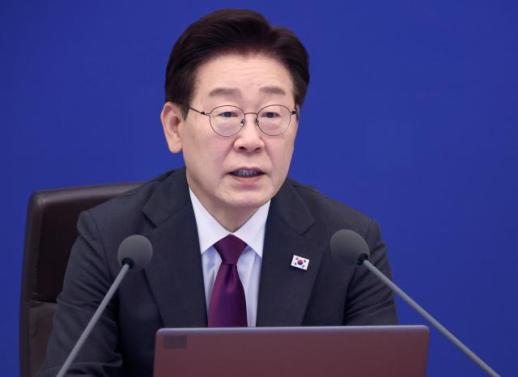 President Lee Criticizes Starbucks Over Controversial 'Siren Event' President Lee Jae-myung has publicly criticized Starbucks Korea over allegations surrounding its past "Siren Event." This comes amid controversy over the company's "Tank Day" marketing campaign, with some netizens raising questions about an event held on April 16. On May 23, President Lee expressed his concerns on social media platform X, stating, "To hold a Siren Event on the anniversary of the Sewol ferry disaster (April 16) is something I hope is not true. It is an act that cannot be done with a human heart." He shared a screenshot of a Facebook post by Democratic Party lawmaker Jeong Jin-wook, who criticized the use of the siren, a figure associated with the Starbucks logo, for an event on such a significant date. Jeong described it as an "outrageous act" to use a siren, which in mythology lured sailors to their doom, on the anniversary of the tragedy. President Lee further stated, "This is not a matter of a minor online community but a major corporation's official event. There is nothing more to say. While the bereaved families are suffering and the nation is in mourning, starting an event that mocks the victims and ridicules the public is unacceptable." He also referenced the earlier controversy surrounding the Tank Day event, asserting that it is difficult to view the incident as accidental, as it mocked the Gwangju Democratization Movement and martyr Park Jong-cheol. He concluded, "There will be a national reckoning for those who habitually demean victims of state violence and disasters for profit. What they are doing is not just poor business practice but a heinous act of moral depravity."* This article has been translated by AI. 2026-05-24 02:58:32
 -
 President Yoon Congratulates North Korean Women's Soccer Team on AFC Championship Win President Yoon Suk Yeol congratulated North Korea's My Hometown Women's Football Team on their victory in the AFC Women's Champions League on May 23. In a message posted on social media, President Yoon expressed, "I extend my heartfelt congratulations to the players of My Hometown Women's Football Team." He praised the high level of competition in the Champions League, stating, "The impressive matches showcased the remarkable development and capabilities of women's soccer in Asia to the world." He added, "I hope this tournament serves as a meaningful opportunity to promote the values of peace and harmony that sports embody, transcending mere wins and losses." The president also offered encouragement to the Suwon FC Women, who faced My Hometown in the semifinals, as well as to their final opponent, Japan's Tokyo Verdy Beleza, and Melbourne City FC. "The fighting spirit of the Suwon FC Women, displayed amid intense interest, will be remembered for a long time," he remarked, acknowledging the efforts of Tokyo Verdy Beleza and Melbourne City FC players as well. He concluded, "The ball is round, and we will meet again. I will vigorously support your next challenges." My Hometown Women's Football Team won the AFC Women's Champions League final, defeating Tokyo Verdy Beleza 1-0 at Suwon Sports Complex. Suwon FC Women faced My Hometown in the semifinals on May 20 but lost 2-1.* This article has been translated by AI. 2026-05-24 02:55:29
 -
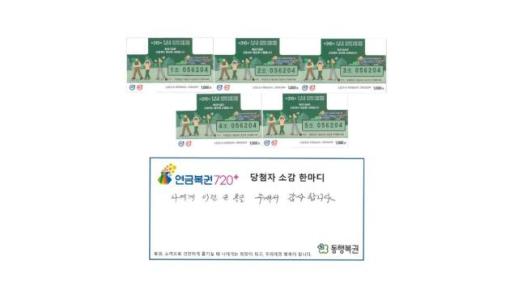 Dreaming of Meeting President Lee Jae-myung Leads to Lottery Win "After dreaming of meeting President Lee Jae-myung and the First Lady, I felt I had to buy a lottery ticket to capture that good energy, so I didn’t tell anyone about it." As interest in the winning numbers for the 1225th Lotto draw on May 23 grows, the story of the winner of the 1st prize (1 ticket) and 2nd prize (4 tickets) in the 310th Pension Lottery 720+ is making headlines. In a recent post on the Donghaeng Lottery winners' bulletin board, the winner of the 310th Pension Lottery 720+ shared, "After dreaming of meeting President Lee Jae-myung and the First Lady, I felt I had to buy a lottery ticket to capture that good energy, so I didn’t tell anyone about it." The winner recounted, "I was looking for a nearby retailer to buy the Lotto and Pension Lottery tickets, but the store owner encouraged me to choose my own numbers. I picked my favorite numbers, '7', and with a hopeful mindset, I chose a ticket ending in '4'." He added, "On the day of the draw, I checked the winning status using a QR code and was shocked to see I had won 1st and 2nd prizes. I couldn’t believe it and told my daughter first. She responded, 'Wow, Mom, I can’t believe this day has come!' I feel incredibly grateful that my hopeful thoughts led to such a wonderful outcome." The winner, who purchased the lottery ticket at a retailer in Nowon District, Seoul, responded to a question about his usual lottery purchases by saying, "I regularly buy Lotto, Pension Lottery, and Spitto tickets each week." Regarding plans for the winnings, he stated, "I intend to use the money to pay off loans and eventually save for a home." Meanwhile, the winning numbers for the 1225th Lotto draw will be available after 8:35 PM today.* This article has been translated by AI. 2026-05-24 02:54:25
 -
 Gas Explosion in Chinese Coal Mine Claims 90 Lives, 9 Missing A gas explosion at a coal mine in Shanxi Province, central China, has resulted in at least 90 fatalities. According to reports from state media including Xinhua and China Central Television (CCTV), the explosion occurred at 7:29 p.m. on May 23 in an underground tunnel in the city of Changzhi, specifically in Qinyuan County. At the time of the incident, 247 workers were present in the mine. Local authorities initially reported that by 6 a.m. on May 24, eight people had died and 38 were trapped underground. However, as rescue operations progressed, the death toll rose sharply to 90, with nine individuals still unaccounted for. A total of 123 injured workers have been transported to hospitals for treatment, with at least four reported to be in serious condition. Xinhua reported that rescue efforts are ongoing, and the exact number of casualties is still being assessed. The cause of the explosion is under investigation. Authorities have taken measures to control the situation regarding the mine's owners and responsible parties. The Ministry of Emergency Management dispatched 345 rescue personnel to the site to assist in the operations. President Xi Jinping has directed that all efforts be made to treat the injured and to thoroughly investigate the cause of the accident, ensuring that those responsible are held accountable under the law. Xi emphasized the need to heighten awareness of industrial safety and to conduct thorough inspections and maintenance to prevent major accidents. Premier Li Qiang also called for a full commitment to rescue operations for those trapped and for the swift and accurate dissemination of information related to the incident. The mine had previously faced penalties this year for inadequate safety measures, including requiring miners to wear work uniforms without reflective markings.* This article has been translated by AI. 2026-05-24 02:51:00
 -
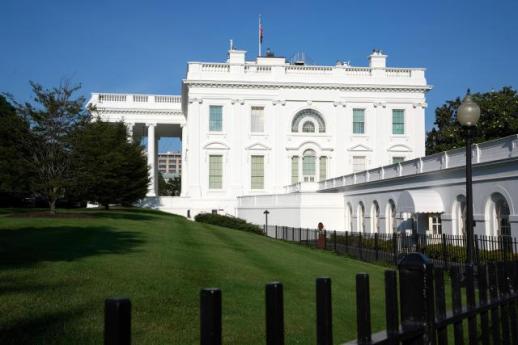 Trump to Soon Approve Taiwan Arms Sales; White House Denies Iran War Delay A senior U.S. military official's comments about a temporary halt to arms sales to Taiwan due to the Iran war prompted a swift denial from the White House. According to Yonhap News on May 23, Reuters reported that a White House official indicated a decision regarding a Taiwan arms package would be made soon. The official clarified that the delay in approving arms sales to Taiwan is not related to the Iran conflict. The official referenced the Trump administration's approval of a $11 billion arms package for Taiwan last year, stating, "As President Trump has indicated, additional approvals will be forthcoming soon." The official emphasized, "President Trump allowed more arms sales to Taiwan than any other president during his first term." Another source cited by Reuters also stated that the delay in arms sales to Taiwan is unrelated to Iran. This source noted, "The U.S. military has sufficient ammunition and weapon stockpiles to carry out President Trump's strategic objectives," adding that the arms sales process typically takes years, making any connection to the Iran war inappropriate. This response effectively counters remarks made by Acting Secretary of the Navy Hong Kao during a congressional hearing on May 21, where he mentioned that arms sales to Taiwan were temporarily halted to secure military supplies needed for the ongoing "Great Fury" operation against Iran. Kao's comments sparked controversy amid concerns raised by U.S. media about potential missile stock shortages due to the prolonged Iran conflict, particularly as a senior military official directly addressed supply issues. U.S. arms sales to Taiwan are governed by the Taiwan Relations Act, enacted in 1979. In January, Congress proposed an additional $14 billion support package for Taiwan, but the Trump administration has yet to grant final approval. Meanwhile, concerns have arisen regarding the potential weakening of U.S. security commitments to Taiwan after President Trump referred to arms sales as a "bargaining chip" following his recent summit with Chinese President Xi Jinping.* This article has been translated by AI. 2026-05-24 02:48:49
 -
 Samsung Electronics Union Vote Exceeds 80%; Some Shareholders Demand Invalidity The union vote on the tentative wage agreement at Samsung Electronics surpassed 80% on May 23, the second day of voting. According to Yonhap News, as of 6:40 PM, 46,185 out of 57,290 eligible voters from the Samsung Group's largest union, the Samsung Corporate Labor Union, participated, resulting in a turnout of 80.62%. At the same time, the second-largest union, the National Samsung Electronics Union, reported a participation of 6,502 out of 8,187 members, yielding a turnout of 79.42%. Combined, the turnout for both unions stands at 80.47%. Voting began at 2:12 PM the previous day and will continue until 10 AM on May 27. For the tentative agreement to be finalized, a majority of eligible voters must participate, and a majority of those who vote must approve it. However, opinions within the unions are divided. The National Samsung Electronics Union and the third-largest union, the Samsung Electronics Labor Union Donghaeng, are currently campaigning against the agreement. Choi Seung-ho, chairman of the Samsung Corporate Labor Union, stated that if the tentative agreement is rejected, he would delegate the remaining negotiations to the new leadership and conduct a vote of confidence. He added that a vote of confidence for the chairman will be held in June, regardless of the voting outcome. As the union voting proceeds, some shareholders are intensifying their calls for the agreement to be declared invalid. The small shareholder platform Act announced that Samsung Electronics accepted its request to review and copy the shareholder registry. This review is expected to take place on May 27 or 28. This request was initiated by the Korea Shareholder Movement Headquarters, which plans to demand a special shareholders' meeting after securing the registry. Previously, the shareholder movement headquarters held a press conference in front of the Supreme Court, arguing that the decision on special bonuses is a shareholder right and emphasizing the need for a special shareholders' meeting. They also plan to file for a provisional injunction to suspend the effectiveness of the agreement and a lawsuit to confirm its invalidity.* This article has been translated by AI. 2026-05-24 02:46:45