
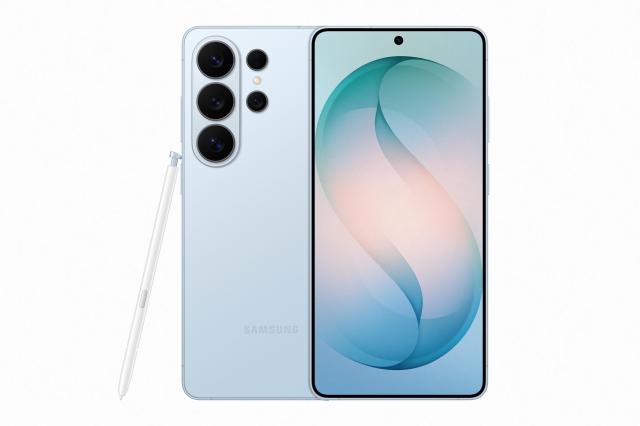
SEOUL, May 25 (AJP) - Samsung Electronics retained its top position in smartphone market share across Latin America, the Middle East, and Southeast Asia in the first quarter of 2026, despite a broader global market slowdown and rising memory costs.
In Latin America, Samsung shipped 12.9 million units, reflecting a 9 percent year-on-year increase and securing a 37 percent market share.
This marks the company's highest quarterly share in the region since the first quarter of 2023. The overall Latin American market grew 3 percent to 34.8 million units during the period.
The company also maintained its lead in the Middle East and Southeast Asia, even as both regional markets contracted. The Middle East smartphone market shrank 6 percent year-on-year to 11 million units amid geopolitical uncertainties, slowing consumer sentiment, and rising memory costs. Nevertheless, Samsung held a 34 percent share in the region.
In Southeast Asia, total shipments fell 9 percent to 21.6 million units. Samsung shipped 4.6 million units in the region to take a 21 percent share, even as the average selling price (ASP) in the market surged 19 percent year-on-year to $349. Market research firm Omdia noted that Samsung managed to increase its share in this environment through continued brand investment and channel expansion.
Omdia attributed Samsung's performance across these regions to the solid initial sales of its flagship Galaxy S26 series and the diverse mid-tier A-series lineup. Industry analysts suggest that in the face of macroeconomic uncertainty and rising memory prices, consumers are gravitating toward proven brands that offer premium experiences and reliable after-sales service.
Globally, Samsung captured a 22 percent share of the smartphone market in the first quarter. During its recent earnings call, the company indicated plans to pursue year-on-year revenue growth in the second quarter, driven by the rollout of new A-series models

Candice Kim
Candice Kim is a dedicated business and technology reporter specializing in the intersection of high-tech innovation and fast-paced consumer trends. Her core beats span the semiconductor, IT, cosmetics, and retail sectors, where she provides in-depth coverage of industry titans including Samsung Electronics, SK hynix, and LG Electronics, alongside leading consumer brands like Olive Young and Musinsa. Whether analyzing complex silicon supply chains or tracking the latest shifts in beauty and fashion retail, Candice is committed to delivering sharp, accurate reporting that keeps readers informed on the forces shaping today's most dynamic markets.
Copyright ⓒ Aju Press All rights reserved.
Related News
-
 Samsung faces pressure from shareholders amid union vote on tentative deal
Samsung's headquarters is seen in southern Seoul, in this photo taken on May 22, 2026. Yonhap SEOUL, May 24 (AJP) - Samsung Electronics has allowed access to its register of shareholders. It comes amid growing opposition from some retail investors over a last-minute, tentative deal between management and its labor union last week that averted an 18-day strike but sparked fresh controversy over how the electronics giant distributes its unprecedented profits, fueled by an artificial intelligence-driven chip supercycle. ACT, a platform for retail shareholders, said Samsung accepted its request to review and copy the register just two days after it was filed. The group is expected to carry out the review at Samsung Electronics' headquarters in southern Seoul later this week. The unusually swift approval gives ACT access to the register, which contains ownership details as well as voting rights and dividend eligibility, allowing the group to pursue coordinated shareholders' action at South Korea's largest listed company by market capitalization. Under South Korean law, shareholders have the right to request access to such records, a step often used as a starting point for collective action. The request was made after the company's tentative wage and bonus-related arrangements raised questions about whether shareholders were receiving a fair share of the company's profits. Once access to the register is completed, the group plans to contact institutional and retail investors, even those holding a minimum number of shares, to seek support for collective action. ACT plans to contact domestic and foreign investors holding over 6,735 Samsung shares, aiming to collectively reach the 1.5-percent threshold required under South Korean law to call an extraordinary shareholders' meeting. To qualify, shareholders must have held their shares for at least six months. The core concern centers on a bonus structure that allocates a fixed share of operating profit to bonus payments, which critics say could come at the expense of dividends and broader shareholder returns, infringing on their interests. ACT argues that while management can hand out one-off bonuses at its discretion, a permanent profit-sharing arrangement of this kind is significant enough that shareholders should have a say. ACT's push comes as Samsung union members are in the middle of a weeklong vote on whether to accept the tentative deal, putting the company under simultaneous pressure from both labor and shareholders. With voting set to close on Wednesday, more than 80 percent of the 57,290 eligible voters out of about 70,505 union members had already voted, raising the likelihood that the deal would pass, with members of the memory division accounting for the largest share at around 24,000, followed by roughly 17,000 from the non-memory business and about 22,000 from other divisions. For the deal to pass, more than half of eligible voters must participate and a majority must vote in favor.
-
 ASIA INSIGHT: The AI Semiconductor age and new strategic heart of global economy
Yonhap SEOUL, May 24 (AJP) - In 2026, the global economy increasingly revolves around three semiconductor giants: Samsung Electronics, SK hynix, and TSMC. In the 20th century, oil, automobiles, steel, and finance defined the architecture of global power. In the 21st century, however, the center of gravity is shifting decisively toward artificial intelligence and semiconductors. AI is no longer merely a technology sector. It is rapidly becoming the operating infrastructure of modern civilization itself — reshaping defense, finance, medicine, education, logistics, communications, manufacturing, and governance. At the core of this transformation lie GPUs, high-bandwidth memory, advanced foundries, and sub-nanometer process technologies. American technology companies may dominate the AI platforms and software ecosystems, but the physical engines powering the AI revolution are increasingly built in South Korea and Taiwan. If the United States controls much of AI's operating system and cloud architecture, then South Korea and Taiwan control the memory systems and production arteries of the AI age. This is why semiconductors are no longer viewed merely as industrial products. They have become strategic national assets — inseparable from economic security, geopolitical influence, and technological sovereignty. South Korea's economy today rests heavily upon semiconductors, particularly Samsung Electronics and SK hynix. Together, the two companies account for nearly half of the total market capitalization of the South Korean stock market. Their influence extends far beyond corporate earnings. Their performance directly affects the national pension system, retirement funds, exchange-traded funds, household wealth, tax revenues, exports, employment, currency stability, and overall economic growth. Samsung Electronics alone has approximately five million retail shareholders, making it one of the largest "national stocks" in modern financial history. When family exposure through pensions and indirect investment vehicles is included, a substantial portion of the South Korean population is tied — directly or indirectly — to Samsung's fortunes. SK hynix, meanwhile, has undergone a remarkable transformation. Once viewed primarily as a conventional DRAM manufacturer, it has emerged as one of the most strategically important companies in the AI era through its dominance in HBM, or High-Bandwidth Memory. HBM has become essential to advanced AI systems because modern AI servers require memory architectures capable of processing enormous volumes of data at extraordinary speed. If GPUs are the "brains" of AI, then HBM functions as the high-speed neural network enabling those brains to think. This has elevated both Samsung and SK hynix into indispensable pillars of the global AI supply chain. Taiwan's TSMC has risen through a different path, but with equally profound consequences. Unlike Samsung and SK hynix, TSMC is not primarily a memory producer. It is the world’s dominant advanced semiconductor foundry. Virtually every major AI and high-performance computing company — including NVIDIA, Apple, AMD, Broadcom, and Qualcomm — depends heavily on TSMC's manufacturing capabilities. TSMC is therefore far more than a contract manufacturer. It is arguably the most important industrial production platform in the modern world. Its strategic importance has transformed Taiwan itself. TSMC now represents roughly 35 to 40 percent of Taiwan's stock market capitalization, and its performance profoundly affects the island's exports, currency, fiscal revenues, employment, investment flows, and national security calculations. This is one reason why the Taiwan Strait issue has become inseparable from global technological stability. Behind the geopolitical tensions lies what analysts often call the "Silicon Shield" — the reality that any disruption to TSMC could destabilize the entire global AI ecosystem. Yet the defining challenge of the AI semiconductor era is not simply technological leadership. It is also the question of how nations allocate profits, sustain investment, reward talent, and preserve long-term competitiveness. This debate has now surfaced sharply inside South Korea. Recent labor agreements at Samsung Electronics and SK hynix have intensified discussion over performance-based compensation systems tied directly to operating profits. Samsung's tentative labor agreement reportedly allocates special performance bonuses equal to 10.5 percent of operating profit, while SK hynix has agreed to dedicate approximately 10 percent of operating profit to employee incentives. From the perspective of employees, the logic is understandable. Semiconductor manufacturing is one of the most demanding industries in the world. Engineers, researchers, and production workers operate under relentless pressure in an environment where technological precision determines global competitiveness. But semiconductors are also among the most capital-intensive industries ever created. Unlike many service industries, semiconductor leadership cannot be sustained through short-term profitability alone. It requires massive reinvestment during boom cycles in order to survive inevitable downturns and finance the next generation of process technologies. A single advanced semiconductor fabrication plant can cost tens of billions of dollars. Missing one technological cycle can result in years of strategic disadvantage. This is why many industry observers are increasingly concerned that rigid profit-sharing structures tied mechanically to operating income could weaken long-term investment capacity. The contrast with global competitors is striking. Micron Technology is dramatically expanding capital expenditures and investing heavily in large-scale fabrication facilities in the United States and Singapore. TSMC has announced plans to spend as much as $56 billion this year alone on capital investment while expanding production bases in Taiwan, the United States, Europe, and Japan. In semiconductors, capital expenditure is not optional. It is survival. This does not mean employee compensation should be minimized. On the contrary, sustainable innovation requires world-class talent and fair rewards. The real issue is balance. Global technology leaders rarely rely on operating profit alone when determining compensation. Companies such as TSMC, Apple, and NVIDIA typically combine multiple indicators: revenue growth, operating margin improvement, shareholder returns, long-term strategic contribution, stock-based incentives, and individual performance assessments. Most importantly, many global firms use restricted stock units and long-term equity compensation to align employee incentives with the company's future value creation. Samsung's recent decision to incorporate stock-linked compensation therefore represents an important shift toward a more globally aligned model. Yet further refinement may still be necessary. Sustainable compensation systems must balance employee rewards, shareholder interests, reinvestment needs, research funding, and long-term competitiveness. This debate is ultimately larger than labor negotiations. It raises a fundamental national question: how should a country distribute the enormous wealth generated by strategic technologies while preserving future competitiveness? Semiconductors today are not merely commercial products. They are strategic infrastructure. The United States clearly understands this reality. Through the CHIPS Act and broader industrial policy initiatives, Washington is attempting to bring advanced semiconductor production within its own national security perimeter. China, meanwhile, is accelerating efforts toward semiconductor self-sufficiency through companies such as Huawei, despite export restrictions and technology controls. Japan, once the world's semiconductor superpower, is also attempting a resurgence through Rapidus while leveraging its enduring strengths in semiconductor materials, chemicals, and precision equipment. The strategic contest now unfolding is therefore not simply economic. It is civilizational. The 19th century belonged to Britain. The 20th century belonged largely to the United States. The defining question of the mid-21st century may become this: Where is the industrial heart of the AI civilization being built? Increasingly, the answer points toward Northeast Asia. Military power may still be dominated by the United States. Global finance may still revolve around the dollar. But the critical production infrastructure of the AI era — memory, foundries, advanced packaging, semiconductor manufacturing ecosystems — is increasingly concentrated across South Korea, Taiwan, Japan, and parts of China. Samsung Electronics and SK hynix supply the memory systems of the AI age. TSMC manufactures many of its cognitive engines. Together, these companies are no longer ordinary corporations. They have become strategic pillars supporting the architecture of the global digital economy. Oil powered the 20th century. Semiconductors are powering the 21st. And today, the heartbeat of that semiconductor civilization can increasingly be heard in Northeast Asia.
-
 Samsung Electronics Union Vote Exceeds 80%; Some Shareholders Demand Invalidity
Samsung Electronics' Seocho office in Seoul on May 22. The union vote on the tentative wage agreement at Samsung Electronics surpassed 80% on May 23, the second day of voting. According to Yonhap News, as of 6:40 PM, 46,185 out of 57,290 eligible voters from the Samsung Group's largest union, the Samsung Corporate Labor Union, participated, resulting in a turnout of 80.62%. At the same time, the second-largest union, the National Samsung Electronics Union, reported a participation of 6,502 out of 8,187 members, yielding a turnout of 79.42%. Combined, the turnout for both unions stands at 80.47%. Voting began at 2:12 PM the previous day and will continue until 10 AM on May 27. For the tentative agreement to be finalized, a majority of eligible voters must participate, and a majority of those who vote must approve it. However, opinions within the unions are divided. The National Samsung Electronics Union and the third-largest union, the Samsung Electronics Labor Union Donghaeng, are currently campaigning against the agreement. Choi Seung-ho, chairman of the Samsung Corporate Labor Union, stated that if the tentative agreement is rejected, he would delegate the remaining negotiations to the new leadership and conduct a vote of confidence. He added that a vote of confidence for the chairman will be held in June, regardless of the voting outcome. As the union voting proceeds, some shareholders are intensifying their calls for the agreement to be declared invalid. The small shareholder platform Act announced that Samsung Electronics accepted its request to review and copy the shareholder registry. This review is expected to take place on May 27 or 28. This request was initiated by the Korea Shareholder Movement Headquarters, which plans to demand a special shareholders' meeting after securing the registry. Previously, the shareholder movement headquarters held a press conference in front of the Supreme Court, arguing that the decision on special bonuses is a shareholder right and emphasizing the need for a special shareholders' meeting. They also plan to file for a provisional injunction to suspend the effectiveness of the agreement and a lawsuit to confirm its invalidity.* This article has been translated by AI.