
Journalist

Katherine M. FitzGerald
-
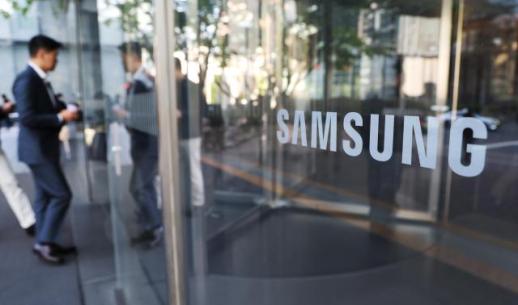 Samsung Electronics Executives Meet with Union Leaders to Address Bonus Dispute Samsung Electronics' semiconductor division executives have traveled to the Pyeongtaek campus to meet directly with union representatives in an effort to resolve a dispute over performance bonuses.According to industry sources on May 15, Vice Chairman Jeon Young-hyun and other executives from the semiconductor (DS) division are set to meet with Choi Seung-ho, chairman of the Samsung Electronics branch of the Korean Metal Workers' Union.In an official statement, the executives expressed their belief that the union is part of a shared family and community, stating, "We will approach the dialogue with an open attitude, without conditions." They also urged the union to engage in discussions promptly, considering the public's concerns and the national economy.This marks the first time the executives have taken such direct action to meet with union leaders. With a general strike announced by the union just six days away, this move is seen as a strong commitment to avert a strike that could result in losses amounting to tens of trillions of won.Samsung Electronics emphasized its dedication to resolving internal issues amicably while focusing on enhancing its technological competitiveness.The executives stated, "We are in an era of infinite competition where the global business environment is changing rapidly, and we cannot afford to waste time on internal matters." They pledged to collaborate and share wisdom while considering the current economic situation and South Korea's long-term future.They concluded by promising to be a steadfast pillar for the national economy through sound management, continuous technological innovation, and bold future investments.* This article has been translated by AI. 2026-05-15 15:13:03
 -
 Orion's Q1 operating profit jumps 26% on robust overseas sales SEOUL, May 15 (AJP) - South Korean confectioner Orion announced that its first-quarter operating profit climbed 26 percent from a year earlier to 165.5 billion won ($109.9 million), powered by brisk demand at its overseas subsidiaries. Consolidated revenue rose 16 percent to 930.4 billion won in the January to March period, according to a regulatory filing released Friday. Orion, the country's second-largest snack maker and the original producer of Choco Pie, said overseas units in China, Russia and Vietnam drove the gains. The Russian arm posted a 66.2 percent surge in operating profit to 14.2 billion won as revenue rose 34.7 percent to 90.5 billion won, lifted by expanded capacity for fish-shaped pastries and fresh pies. China revenue jumped 24.8 percent to 409.7 billion won on Lunar New Year demand and stronger pie and potato-snack sales, while operating profit there leapt 42.7 percent to 79.9 billion won. The Vietnam unit logged a 17.9 percent revenue rise to 151.3 billion won on Tet holiday spending and new product launches, and India sales soared 67 percent to 9.8 billion won. Domestic earnings held steady, with revenue inching up 0.4 percent to 283.4 billion won despite sluggish local consumption and rising raw material costs. Orion plans to accelerate capacity expansion in the second half, including a new production line for Poca Chips crisps at home, completion of a third plant in Hanoi, and a doubling of fish-shaped pastry output in Russia alongside construction of a new factory in Tver. "We will expand supply volumes through pre-emptive investment in production and logistics facilities at home and abroad, and further lift our growth momentum in the second half," a Orion spokesperson said. Shares of Orion traded at 139,600 won pert stock at 3:10 p.m., 2.58 percent lower than the day before. 2026-05-15 15:12:41
 -
 ChabioTech Reports Revenue Growth in Q1 2026 Amid Global Healthcare Expansion ChabioTech announced on May 15 that it recorded consolidated revenue of 329.7 billion won in the first quarter of 2026, an 8% increase compared to the same period last year. The company attributed its stable growth in global healthcare operations across the United States, Australia, Singapore, and Japan, along with the integration effects from Kakao Healthcare and Chai AI Healthcare. The growth of key subsidiaries, including CMG Pharmaceutical and Chacares, also contributed to the revenue increase. However, the company reported an operating loss of 30.7 billion won, primarily due to investments in expanding its digital healthcare business and research and development in advanced regenerative medicine. The net loss for the period was 2.6 billion won, reflecting a reduction in the deficit by 24.4 billion won compared to the previous year, influenced by portfolio restructuring and asset efficiency improvements. On a standalone basis, revenue rose by 9% to 16.2 billion won, driven by growth in IT, biotechnology, and cord blood-related businesses. Notably, the IT sector continued to grow due to the expansion of digital healthcare infrastructure and increased projects for smart hospital systems. Standalone operating losses amounted to 1.4 billion won, impacted by increased research and development investments. However, due to the sale of shares in Solidus Investment, the net profit turned positive at 20.8 billion won. ChabioTech's digital healthcare platform integrates the entire process for foreign patients residing abroad to receive consultations and follow-up care from domestic medical professionals. The company plans to accelerate the enhancement of its digital healthcare business model linked to medical, healthcare, and clinical data, as well as secure growth drivers based on regenerative medicine and AI. Meanwhile, ChabioTech is advancing the development of key pipelines, including the gene therapy for idiopathic pulmonary fibrosis, 'CHAGE-201-IPF', the allogeneic CAR NK cell therapy 'CHACAR-NK-201', and the cell therapy for ovarian insufficiency, 'CHAUM-101'.* This article has been translated by AI. 2026-05-15 15:10:43
 -
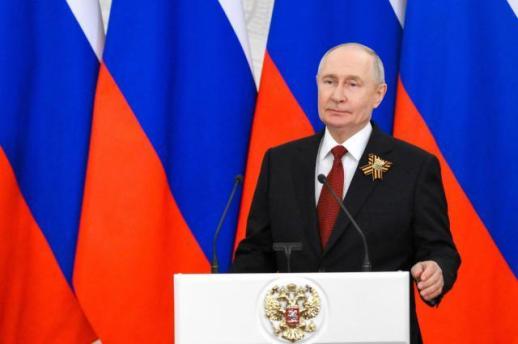 Putin's Visit to China Nears Final Coordination, Expected on May 20 Russian President Vladimir Putin's upcoming visit to China is in the final stages of coordination. The Kremlin has announced that preparations for the visit are nearly complete, and the South China Morning Post (SCMP) reports that Putin is expected to visit Beijing for a one-day trip on May 20. On May 14, Dmitry Peskov, the Kremlin spokesperson, stated during a briefing that the date of Putin's visit would be announced very soon. He noted, "The visit is in preparation, and I can say that the preparations are already complete. Only final touches remain. It will happen very soon." While the Kremlin has not disclosed a specific date for the visit, SCMP cited multiple sources indicating that Putin is scheduled to visit Beijing next week, with May 20 being the anticipated date. This visit is particularly noteworthy as it follows President Donald Trump's trip to China. Trump visited China from May 13 to 15 to discuss trade, the Iran conflict, and Taiwan issues with Chinese President Xi Jinping. TASS previously reported that Putin is expected to travel to Beijing shortly after Trump's visit. If Putin's trip to China proceeds as planned, key topics for discussion are likely to include the Ukraine war, the situation in the Middle East, and issues related to energy and trade cooperation. Amid prolonged Western sanctions, Russia aims to expand its economic and diplomatic collaboration with China. Meanwhile, China seeks to maintain strategic cooperation with Russia while managing its relationship with the United States.* This article has been translated by AI. 2026-05-15 15:09:00
 -
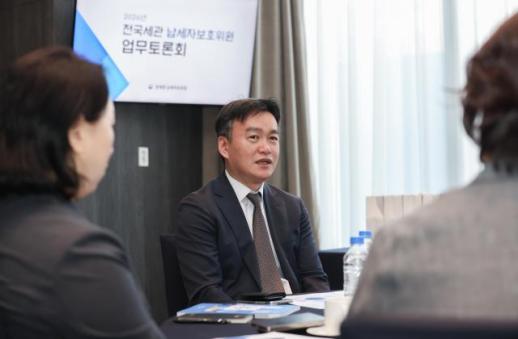 Lee Jong-wook Appointed as New Commissioner of the Korea Customs Service Lee Jong-wook has been appointed as the new commissioner of the Korea Customs Service, recognized as a customs expert with extensive practical experience. Born in 1974 in Sangju, North Gyeongsang Province, Lee graduated from Yonsei University with a degree in economics and completed a master's degree in public administration at Rutgers University in the United States. He entered public service after passing the 43rd National Civil Service Examination. Throughout his career, he has held various positions, including director of the Export-Import Logistics Division, director of the Creative Planning and Finance Division, director of Human Resources Management, and director of Customs Planning. He also served as the head of the Incheon Customs Port Inspection Bureau, director of the Examination Bureau, director of the Customs Bureau, Planning and Coordination Officer, and director of the Investigation Bureau. While serving as the director of the Investigation Bureau, he led the newly established Special Investigation Team for Trade Security at the headquarters. He was appointed as the deputy commissioner of the Korea Customs Service in October of last year and has now been promoted internally to commissioner. Lee is the fifth internal appointment to the position of customs commissioner, following former commissioners Sung Yun-kap in 2005, Cheon Hong-wook in 2016, Noh Seok-hwan in 2020, and Lee Myung-gu in 2025. Lee Gyu-yeon, senior presidential secretary for public relations, praised Lee, stating, "He is a seasoned bureaucrat who has held key positions, successfully uncovering large-scale illegal circumvention of exports and jointly cracking down on significant amounts of narcotics with the Thai government. He is well-suited to support companies' trade and investment activities while preventing customs violations that threaten public safety." ◇ Profile △ Born in 1974 △ Graduated from Yonsei University with a degree in economics △ Master's degree in public administration from Rutgers University △ Passed the 43rd National Civil Service Examination △ Former director of the Creative Planning and Finance Division at the Korea Customs Service △ Former director of Human Resources Management at the Korea Customs Service △ Former director of Customs Planning at the Korea Customs Service △ Former head of the Incheon Customs Port Inspection Bureau △ Former director of the Examination Bureau at the Korea Customs Service △ Former director of the Customs Bureau at the Korea Customs Service △ Former Planning and Coordination Officer at the Korea Customs Service △ Former director of the Investigation Bureau at the Korea Customs Service △ Former deputy commissioner of the Korea Customs Service* This article has been translated by AI. 2026-05-15 15:06:00
 -
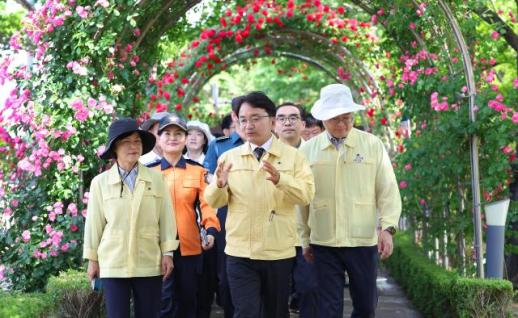 Ministry of Interior Inspects Safety Measures for Jungnang Rose Festival The Ministry of Interior announced that Kim Kwang-yong, head of the Disaster and Safety Management Bureau, visited the site of the Jungnang Rose Festival in Seoul's Jungnang District on May 15 to assess safety management measures for the event. The Jungnang Rose Festival, which began in 2009, is celebrating its 18th edition this year. The festival features a 5.45-kilometer rose tunnel along the Jungnang Stream, showcasing 320,000 roses of 232 varieties. Over the past two years, the festival has attracted more than 3 million visitors each year. With a large number of tourists expected this year, thorough safety management is essential due to concerns about crowd congestion along the viewing paths. Kim Kwang-yong chaired a meeting with officials from the Jungnang District, police, and fire departments to review safety measures, including crowd control, fire prevention, and emergency response plans. After the meeting, he inspected key routes within the festival area, checking intelligent CCTV systems and emergency call buttons for crowd management. He paid particular attention to the 'Second Yeonnyuk Bridge,' where bottlenecks could occur, ensuring the installation of central dividers and guiding pedestrians to keep to the right. Additionally, he confirmed the access routes for ambulances in case of emergencies and encouraged personnel at the joint situation room responsible for on-site safety, emphasizing the importance of close cooperation among agencies. Kim Kwang-yong stated, "The government will work with relevant agencies to ensure that the public can enjoy the festival safely and return home without incident. I also urge visitors to actively cooperate with safety personnel to maintain order at the event."* This article has been translated by AI. 2026-05-15 15:04:16
 -
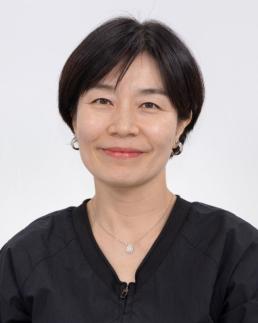 New Appointments in South Korea's Ministry of Health and Customs Service President Lee Jae-myung appointed Hyun Soo-yeop as the new Deputy Minister of Health and Welfare and Lee Jong-wook as the Commissioner of the Korea Customs Service on May 15. This reshuffle comes less than a year after both officials were initially appointed.Lee Gyu-yeon, senior secretary for public relations at the Blue House, announced the personnel changes during a briefing at the Chunchugwan.Hyun Soo-yeop, the new Deputy Minister, is a seasoned bureaucrat who has held key positions in the ministry, including Director of Population and Child Policy and Head of Childcare Policy.Lee noted that Hyun, a working mother of four, has significantly contributed to improving the working conditions for childcare teachers and implementing on-site childcare systems. He described her as the right person to build a comprehensive social safety net that encompasses both welfare and health.Regarding Lee Jong-wook, the new Customs Commissioner, Lee highlighted his success in uncovering large-scale illegal exports and collaborating with the Thai government to crack down on drug trafficking. He emphasized that Lee is well-suited to support stable trade and investment activities for domestic companies while preventing customs violations that threaten public safety.Hyun Soo-yeop and Lee Myung-koo were appointed in June and July of last year, respectively, with Hyun being designated as the 'Dedicated Deputy Minister for Social Isolation' just two days prior to this announcement.When asked about the reasons for the personnel changes, Lee Gyu-yeon acknowledged the challenges of starting a new role and expressed gratitude for the contributions both officials made in laying the groundwork for policies in their respective fields. He added that the new appointments are expected to lead to more efficient and elevated policy development.Additionally, President Lee appointed Moon Sung-yo, the Planning and Coordination Director at the Ministry of Land, Infrastructure and Transport, as the new head of the Saemangeum Development Agency, following the vacancy left by Kim Ui-gyeom's candidacy for a by-election in Gunsan, Gimje, and Buan.Lee Gyu-yeon described Moon as a veteran bureaucrat in land and urban development, noting his role in establishing the infrastructure for administrative-centered complex cities and developing the Busan-Ulsan-Gyeongnam master plan. He expressed optimism that Saemangeum will play a significant role in becoming a hub for future advanced industries such as robotics, hydrogen, and artificial intelligence (AI).Furthermore, President Lee appointed Hong Mi-young, a former lawmaker, as chair of the Sustainable Development Commission, Kim Ki-young, a professor at Yonsei University, as chair of the National Library Commission, and Baek Jong-woo, a professor in the Department of Mental Health at Kyung Hee University, as vice chair of the National Safety Commission.* This article has been translated by AI. 2026-05-15 15:01:39
 -
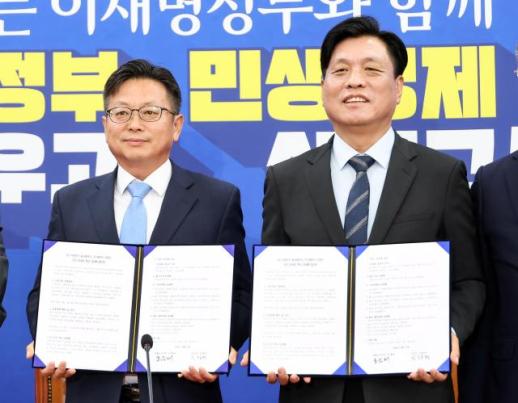 Intensifying Political Maneuvering Ahead of Local Elections in South Korea The National Election Commission will close candidate registration for the June 3 local elections and the National Assembly by-elections on May 15. As the deadline approaches, both major parties are engaged in intense negotiations over candidate unification, a key factor in determining election outcomes. On the same day, the Democratic Party and the Progressive Party held a press conference at the National Assembly, announcing their agreement on a unification strategy for the Ulsan mayoral election, several local council elections, and the Busan Yeonje District mayoral race. This agreement means that Kim Sang-wook, the Democratic Party candidate, and Kim Jong-hoon, the Progressive Party candidate, will compete in a primary determined entirely by public opinion polls. The day before, Hwang Myeong-pil, the candidate from the Justice Reform Party, withdrew his candidacy in support of Kim Sang-wook, effectively finalizing the unification among the progressive camp. As a result, Kim Du-gyeom of the People Power Party and Park Maeng-woo, an independent candidate, will compete against the unified progressive candidate. Although Kim Du-gyeom and Park Maeng-woo had previously announced a halt to their own unification efforts, the rapidly changing situation has raised the possibility of resuming those discussions. Unification efforts are also expected to play a significant role in the Pyeongtaek and Busan North District elections. In Pyeongtaek, three candidates from the progressive camp—Kim Yong-nam of the Democratic Party, Justice Reform Party leader Jo Guk, and Kim Jae-yeon, the Progressive Party's chair—are running against two prominent conservative candidates: Yoo Yi-dong, a former three-term lawmaker from the People Power Party, and Hwang Kyo-ahn, the leader of the Liberty and Innovation Party and a former Prime Minister during the Park Geun-hye administration. Particular attention is focused on the potential unification between Kim Yong-nam and Jo Guk. However, analysts suggest that their past contentious exchanges, particularly when Kim Yong-nam was labeled a 'target' by Jo Guk, may complicate the unification process. Kim Jae-yeon's decision could also be a pivotal factor. If the progressive candidates fail to unify, it could benefit the conservative candidates. In the North District race, a three-way contest is shaping up among Ha Jung-woo of the Democratic Party, Park Min-sik of the People Power Party, and Han Dong-hoon, an independent candidate and former leader of the People Power Party. If Park Min-sik and Han Dong-hoon do not unify, analysts believe Ha Jung-woo may have the advantage. Unification is seen as the most significant variable in this election. The first deadline for unification is set for the candidate registration closure on May 15, with registration ending at 6 p.m. on that day. There is a growing atmosphere encouraging candidates to withdraw in favor of a single candidate. The second deadline is anticipated on May 17, as ballots will be printed on May 18, aiming to minimize the potential for wasted votes among constituents. The third deadline is set for May 20, by which the Democratic Party and the Progressive Party aim to finalize their unification for the Ulsan mayoral race. Official campaigning begins on May 21, making pre-election unification strategically advantageous. Lastly, May 28, the day before early voting, is proposed as the final deadline. Candidates who withdraw by this date will have their status reflected on the early voting ballots, reducing voter confusion. While unification can still occur after this date, historical data suggests that the impact may be limited due to typically high early voting turnout. 2026-05-15 15:00:00
 -
 KOSPI Surges Past 8000 Before Sharp Decline, Breaking Below 7500 The KOSPI index briefly surpassed the 8000 mark for the first time in history but then plummeted by over 5% due to a wave of profit-taking, falling below 7500 to around 7400. According to the Korea Exchange, as of 2:46 PM, the KOSPI was trading at 7456.55, down 524.86 points (-6.58%) from the previous trading day. The index opened at 7951.75, down 29.66 points (-0.37%) from the previous day, but managed to rise above 8000 early in the session. However, a rapid influx of profit-taking, primarily from foreign investors, quickly expanded the decline. At approximately 1:28 PM, a sell-side circuit breaker was triggered due to sudden fluctuations in the KOSPI 200 futures index, halting program sell orders for five minutes. This was the first activation of a sell-side circuit breaker in the KOSPI market since April 2. Lee Kyung-min, a researcher at Daishin Securities, noted, "Although the KOSPI initially broke the 8000 mark for the first time, it turned bearish and retreated toward the 7500 level. The recent concentration on large semiconductor stocks has intensified, leading to a rapid rise followed by profit-taking pressure due to a normalization of this concentration and rising bond yields." Han Ji-young, a researcher at Kiwoom Securities, commented, "The surge in the dollar/won exchange rate back to around 1500 won has led to increased foreign net selling. There is also a burden from the rapid 20.9% increase in the KOSPI since May 1 and the aftereffects of extreme concentration in a few sectors." In the main stock market, individual investors have made a net purchase of 5.4633 trillion won to support the index. In contrast, foreign and institutional investors have focused on profit-taking, selling a net 4.7857 trillion won and 779.2 billion won, respectively. Most of the top market capitalization stocks are showing declines. Samsung Electronics is down 8.61%, SK Hynix is down 7.92%, SK Square is down 6.49%, Hyundai Motor is down 2.11%, LG Energy Solution is down 5.43%, Samsung Electro-Mechanics is down 1.76%, Doosan Enerbility is down 5.72%, HD Hyundai Heavy Industries is down 5.37%, and Samsung Biologics is down 1.86%. The KOSDAQ index has also turned downward. At the same time, the KOSDAQ was recorded at 1138.07, down 53.02 points (-4.45%) from the previous trading day. The index initially rose to 1197.23 but quickly reversed as investor sentiment weakened. In the KOSDAQ market, foreign investors have made a net purchase of 131.8 billion won, while individuals and institutions have sold a net 64.1 billion won and 17.3 billion won, respectively. The top market capitalization stocks in the KOSDAQ are also experiencing declines. Alteogen is down 3.77%, EcoPro BM is down 7.08%, EcoPro is down 8.01%, Rainbow Robotics is down 3.33%, Kolon TissueGene is down 2.10%, Samchundang Pharm is down 4.20%, Rino Technology is down 9.19%, Rigakem Bio is down 2.45%, HLB is down 2.82%, and ABL Bio is down 5.18%. 2026-05-15 14:55:25
 -
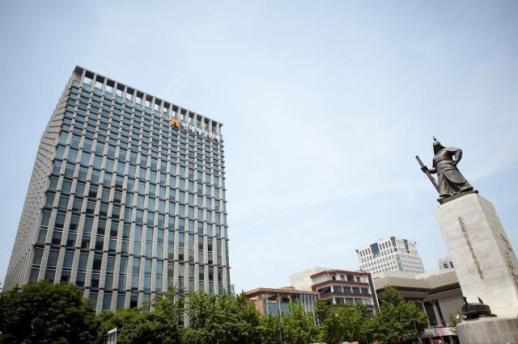 Hyundai Marine & Fire Insurance Reports 1st Quarter Net Profit of 223.3 Billion Won Hyundai Marine & Fire Insurance reported an increase in net profit for the first quarter of 2026, driven by improvements in long-term insurance, despite losses in auto insurance and poor investment performance. The company announced on May 15 that its standalone net profit for the first quarter reached 223.3 billion won, a 9.9% increase compared to the same period last year. The growth was primarily led by long-term insurance, which saw profits rise to 265.9 billion won, a 132.5% increase year-on-year. This improvement was attributed to a slowdown in the growth of actual payouts compared to expected claims, enhancing the gap between expected and actual insurance payouts. Additionally, managing a portfolio focused on high-profit products contributed to maintaining profitability. General insurance profits also increased by 9.4% to 50.2 billion won, thanks to the absence of unusual factors such as large claims and a stable overall loss ratio. However, the auto insurance segment faced challenges, reporting a loss of 14 billion won, marking a shift from profit in the previous year. This downturn was influenced by the cumulative effects of premium reductions implemented until 2025 and rising compensation costs. Investment performance also declined significantly, with investment income dropping by 94.3% to 6.1 billion won compared to the same period last year. This was due to valuation losses from bonds and alternative investments resulting from rising interest rates. Nevertheless, the company anticipates that if interest rates stabilize in the second quarter, some of these valuation losses may be recovered. The insurance contract margin (CSM), a future profitability indicator, stood at 9.17 trillion won, reflecting a 0.7% increase year-on-year. Hyundai Marine & Fire Insurance is managing a portfolio of high CSM products to ensure strong profitability. Furthermore, solvency indicators improved, with the solvency ratio (K-ICS) reaching 207.2% at the end of the first quarter, an increase of 17 percentage points from the end of the previous year. This improvement was achieved through duration matching management, which reduced market interest rate volatility, along with a decrease in required capital due to the improved gap between expected and actual payouts.* This article has been translated by AI. 2026-05-15 14:53:07