
Journalist

Kim SeongSeo
-
 Nvidia Reports Record Revenue for 12 Consecutive Quarters, Driven by Data Center Growth Nvidia, the world's most valuable company by market capitalization, has achieved record revenue for the 12th consecutive quarter. The surge in data center sales, fueled by demand for artificial intelligence (AI) infrastructure, has led to results that exceeded market expectations. On May 20, Nvidia announced that its revenue for the first quarter of the fiscal year (February to April) reached $81.62 billion (approximately 122 trillion won). This marks a 20% increase from the previous quarter's record of $68.13 billion. Compared to the same period last year, revenue has increased by 85%, surpassing the market estimate of $78.85 billion compiled by the London Stock Exchange Group (LSEG). The growth in revenue was primarily driven by the data center segment, which reported sales of $75.2 billion, a 92% increase year-over-year. Specifically, data center computing revenue was $60.4 billion, while networking revenue accounted for $14.8 billion. Revenue from the edge computing segment, which includes PCs, gaming consoles, and autonomous vehicles, rose to $6.4 billion, a 29% increase from the same period last year. Nvidia's adjusted earnings per share (EPS) were $1.87, exceeding Wall Street's expectation of $1.76. The company announced a restructuring of its business segments starting this quarter. Instead of the previous detailed divisions, it will now focus on two main areas: data centers and edge computing. The data center segment will be further divided into hyperscale and ACIE (AI Cloud, Industry, and Enterprise) sectors. Nvidia anticipates that the growth trend will continue into the second quarter, projecting revenue to reach $91 billion. However, this forecast does not include revenue from data centers in the Chinese market. Jensen Huang, Nvidia's CEO, stated, "The construction of AI factories, the largest infrastructure expansion in human history, is accelerating remarkably. Nvidia is the only scalable platform that operates across all clouds, supports all frontier and open-source models, and enables AI production from hyperscale data centers to edge computing." Following the earnings announcement, Nvidia's stock rose 1.3% during regular trading. However, in after-hours trading, the stock fell 0.14% to $223.16 as of 5:25 PM Eastern Time.* This article has been translated by AI. 2026-05-21 06:37:05
 -
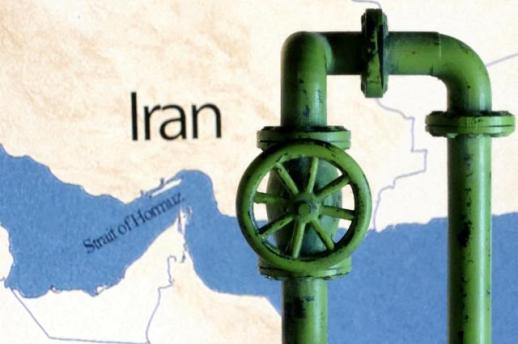 Oil Prices Plunge as U.S.-Iran Peace Talks Progress Oil prices dropped sharply following President Donald Trump's remarks that U.S.-Iran peace negotiations are nearing completion. On May 20, Brent crude futures for July delivery fell 5.63% to settle at $105.02 per barrel on the ICE Futures Exchange. Meanwhile, West Texas Intermediate (WTI) crude futures for July delivery closed down 5.66% at $98.26 per barrel on the New York Mercantile Exchange. The decline in oil prices is attributed to Trump's statement indicating that the U.S.-Iran negotiations are in the "final stages." During a press briefing, Trump confirmed that the negotiations with Iran are progressing toward a conclusion but warned of potential further military action if Iran does not agree to the terms. Iran's Foreign Ministry spokesperson, Esmail Baghaei, also acknowledged receipt of a proposal from the U.S., stating in an interview with state television, "We have received the U.S. perspective and are currently reviewing it closely." Baghaei added that the visit of Pakistan's Interior Minister to Tehran is intended to facilitate communication between the two countries. Earlier, Iran's state news agency IRNA reported that Interior Minister Mohsin Naqvi visited Iran again on May 20, following a previous visit on May 16. Baghaei outlined key prerequisites for dialogue aimed at ending the conflict, including the release of frozen overseas assets and the cessation of U.S. maritime blockades. He emphasized, "At this stage, we are focused on ending the war on all fronts, including Lebanon. Our demands are clear: the release of Iran's frozen assets, issues related to piracy, and actions targeting Iranian shipping have been clearly stated from the beginning." Furthermore, Baghaei asserted, "Iran has participated in the dialogue with complete goodwill and sincerity, and the other party must also demonstrate sincerity." He concluded, "If this process proceeds based on Iran's legitimate demands, we can say diplomacy has succeeded; however, if unjust demands continue, we will obviously not succeed."* This article has been translated by AI. 2026-05-21 06:28:03
 -
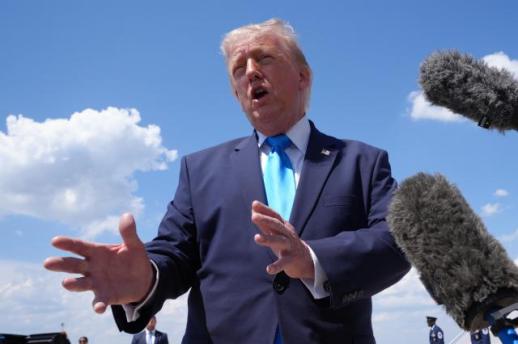 Trump Plans to Speak with Taiwan's President, Praises Xi-Putin Meeting Donald Trump, President of the United States, announced on May 20 that he plans to speak directly with Taiwan's President Tsai Ing-wen. According to Bloomberg News, Trump made the statement before boarding Air Force One at Joint Base Andrews in Maryland when asked by reporters if he would have a conversation with President Tsai. "I will talk to him. I talk to everyone," he replied, though he did not specify when the call would take place. He added, "We are managing that situation very well. I had a great meeting with President Xi," and stated, "We will resolve the Taiwan issue." However, it remains unclear whether Trump's mention of 'resolving' the issue refers to proceeding with arms sales to Taiwan or holding them off. The Trump administration has delayed a $14 billion arms package to Taiwan for several months, despite prior approval from Congress in January. Reports indicate that progress on a previously approved $11 billion arms package has also stalled. During Trump's visit to China from May 14 to 15, President Xi publicly reaffirmed that he would not tolerate U.S. intervention in Taiwan issues. It is reported that the arms sales to Taiwan were also discussed in private meetings. If Trump and President Tsai speak directly, it could provoke a strong reaction from China. Reuters noted that since the U.S. established diplomatic relations with China in 1979, no sitting U.S. president has spoken directly with a sitting Taiwanese president. Trump previously spoke with then-President Tsai Ing-wen in December 2016 while he was still president-elect. Although that conversation was informal, the Chinese government strongly protested to the U.S. Some analysts suggest that Trump's remarks may reflect dissatisfaction and pressure toward Xi. Trump has indicated that he could use U.S. arms sales to Taiwan as a bargaining chip in negotiations following the U.S.-China summit. Meanwhile, Trump commented positively on Russian President Vladimir Putin's visit to China and the China-Russia summit, stating, "President Xi told me he would do that. I think it's a good thing. I get along well with all of them." He added, "I don't know if their welcome event was as great as mine was when I visited China. I watched it, and I think we were ahead."* This article has been translated by AI. 2026-05-21 06:16:18
 -
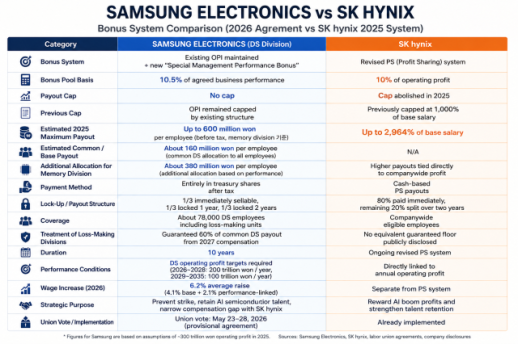 AJP Watch: Samsung closes pay gap with SK hynix in landmark semiconductor labor accord SEOUL, May 21 (AJP) -Samsung Electronics employees in its memory-chip division could receive performance bonuses of up to 600 million won ($440,000) this year under a landmark labor agreement that mirrors — and in some cases surpasses — rival SK hynix’s uncapped AI-era reward system that has transformed compensation expectations across Korea’s semiconductor industry. The provisional wage deal reached late Wednesday ties Samsung’s new special semiconductor bonus pool to 10.5 percent of agreed business performance, slightly above SK hynix’s 10 percent profit-sharing formula, as the world’s largest memory-chip maker moved to close a widening compensation gap exposed by the AI boom. The agreement, reached after marathon government-mediated negotiations, will be put to a union vote from May 22 to 27. If approved, it would settle this year’s wage dispute and cancel a planned general strike that had threatened to disrupt global AI chip supply chains. At the center of the breakthrough is a newly created “special management performance bonus” for Samsung’s Device Solutions (DS) semiconductor division. The union withdrew its steadfast demand on scrapping the existing OPI (Overall Performance Incentive) system, with management offering to introduce an additional long-term payout structure with no upper limit on bonuses. The framework bears strong resemblance to SK hynix’s revised PS (Profit Sharing) system, which scrapped the previous payout cap of 1,000 percent of base salary and allocates 10 percent of operating profit for employee rewards. Under that scheme, SK hynix employees are expected to receive bonuses equivalent to as much as 2,964 percent of monthly base salary based on 2025 performance. Samsung’s plan could generate even larger payouts if projected earnings materialize. According to the provisional agreement, the special bonus fund will be based on 10.5 percent of mutually agreed business performance metrics. If operating profit is used as the benchmark and Samsung Electronics posts around 300 trillion won in annual operating profit this year as forecast, roughly 31.5 trillion won could be set aside for DS performance compensation. Forty percent of that pool would be distributed equally across the DS division’s roughly 78,000 employees regardless of business unit performance, while the remaining 60 percent would be allocated based on divisional results. Under the formula, all DS employees — including workers in loss-making non-memory businesses — could receive around 160 million won per person from the common allocation alone. Memory division employees would receive an additional estimated 380 million won on average, while workers in common organizational units would receive about 270 million won more under the agreed distribution ratio. Combined with traditional OPI payouts, memory-chip employees earning annual salaries of around 100 million won could receive total bonuses approaching 600 million won before tax this year. Unlike traditional cash bonuses, the new special incentive will be paid entirely in Samsung treasury shares after taxes. One-third of the shares can be sold immediately, while the remaining two-thirds will be locked up for one year and two years respectively. The stock-based structure appears aimed at both strengthening long-term employee retention and aligning compensation with shareholder value as Samsung races to regain technological leadership in AI memory chips such as HBM4. The agreement also introduces a support mechanism for underperforming units. Loss-making divisions that fail to qualify for conventional OPI payments would still receive payouts equivalent to 60 percent of the common DS rate beginning with 2027 compensation. The special semiconductor incentive system will remain in place for 10 years, though payouts are contingent on ambitious profit conditions. Samsung’s DS division must achieve annual operating profit of 200 trillion won from 2026 through 2028, followed by 100 trillion won annually from 2029 through 2035. The deal also includes an average wage increase of 6.2 percent this year, composed of a 4.1 percent base pay increase and a 2.1 percent performance-linked raise. Additional agreements include expanded childbirth support payments, improved employee housing loan programs and about 6 million won worth of Samsung shares for employees in the DX division and CSS business team. The breakthrough came after days of tense negotiations involving the labor ministry and the National Labor Relations Commission, as the government sought to prevent a strike involving tens of thousands of semiconductor workers at a company whose exports account for roughly one fifth of South Korea’s outbound shipments. The dispute had increasingly reflected broader shifts underway in Korea’s semiconductor industry, where booming AI demand and soaring profits at SK hynix intensified pressure on Samsung workers demanding compensation structures closer to Silicon Valley-style performance sharing. For Samsung, the agreement represents not only an effort to avert labor disruption but also a strategic acknowledgment that the competition for semiconductor talent in the AI era is increasingly being fought through pay structures as much as through technology. 2026-05-21 06:07:14
 -
 South Korea Launches Soil-Based Carbon Capture Technology to Meet 2035 NDC Goals The South Korean government is officially launching the development of soil-based carbon capture and removal technologies to secure new carbon sinks aimed at achieving the country's 2035 Nationally Determined Contribution (NDC) for greenhouse gas reduction. On May 21, the Ministry of Climate Energy and Environment held a kickoff meeting for the "Soil-Based Environmental Technology Development Project for NDC Achievement" at the Sangyeonjae Seoul Station in Jung-gu, Seoul, announcing the start of related research. As the government expands renewable energy, electric vehicle adoption, and energy transition policies to establish a foundation for carbon neutrality, this initiative aims to broaden the existing forest-centered carbon absorption policies to include soil. According to the United Nations' Intergovernmental Panel on Climate Change (IPCC), soil is considered a larger carbon reservoir than the atmosphere and vegetation, with an estimated carbon storage capacity of about 1,700 PgC, significantly exceeding the atmosphere's 870 PgC and vegetation's 450 PgC. Consequently, soil-based carbon capture technology is gaining attention as a key technology for next-generation carbon neutrality in the international community. This project aims to secure soil carbon capture and removal technologies suitable for domestic environmental conditions and integrate them into the national greenhouse gas reduction framework. This year, research will focus on five key areas: biochar utilization technology, enhanced rock weathering technology, integrated impact assessment models for soil carbon absorption and removal, physical and chemical technologies based on organic-inorganic complexes, and artificial intelligence (AI)-based carbon absorption prediction technology. Notably, biochar technology involves the high-temperature pyrolysis of wood, agricultural residues, and organic waste to produce carbon material that is spread in the soil, allowing for long-term carbon storage. Unlike typical organic matter, biochar is less prone to decomposition, offering a stable carbon sequestration effect. Enhanced rock weathering technology involves finely grinding rocks rich in calcium and magnesium and spreading them on soil, utilizing the principle of absorbing and fixing carbon dioxide from the atmosphere in the form of carbonates. The government will also develop an integrated impact assessment model that scientifically verifies the effectiveness and environmental impact of these technologies. This model will comprehensively evaluate not only the carbon absorption effects but also the impacts on ecosystems and soil environments. From the project’s inception, it has been designated as a public utilization task, allowing institutions or businesses designated by the Ministry of Climate Energy and Environment to use the developed technologies free of charge. The ministry plans to link the developed technologies to the national greenhouse gas inventory system for practical reduction measures. Kim Ji-young, the Director of Water Use Policy at the ministry, stated, "To achieve the 2035 NDC, it is crucial to not only reduce emissions but also secure new carbon sinks. We will strengthen the foundation for achieving carbon neutrality by leveraging the high carbon storage potential of soil."* This article has been translated by AI. 2026-05-21 06:05:15
 -
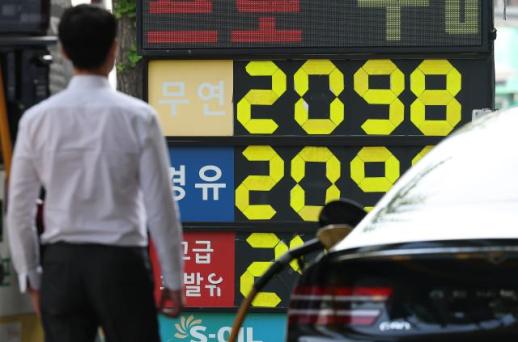 Producer Prices Surge 2.5% in April, Largest Increase in 28 Years Producer prices in South Korea surged by 2.5% in April, marking the largest increase in 28 years. The rise is attributed to a sharp increase in oil product prices due to the ongoing conflict in the Middle East, raising concerns that this will pressure consumer prices. According to preliminary statistics released by the Bank of Korea on May 21, the producer price index for April was recorded at 128.43, the highest increase since February 1998. This marks six consecutive months of rising producer prices since November of last year, with significant contributions from coal, oil products, and chemical products. By category, agricultural, forestry, and fishery products fell by 1.0% compared to the previous month, while manufactured goods rose by 4.4%. Electricity, gas, water, and waste services saw increases of 0.3% and 0.8%, respectively. While agricultural products (-4.0%) and fishery products (-3.2%) decreased, coal and oil products surged by 31.9%, and chemical products rose by 6.3%. Transportation services increased by 1.6%, and financial and insurance services rose by 3.0%. The latter saw a 26.2% increase compared to the same month last year, the highest rate since the Bank of Korea began tracking these statistics in 1995, driven by rising brokerage fees due to stock market gains. Notable price changes included a 94.8% increase in solvent prices, which skyrocketed by 258.1% year-on-year. Diesel prices rose by 20.7% compared to March, while polyethylene and polypropylene prices increased by 33.3% and 32.0%, respectively. During the same period, DRAM and computer memory prices rose by 37.8% and 10.7%, respectively, with year-on-year increases of 396.0% and 180.4%. The domestic supply price index, which includes imported goods, rose by 5.2% from the previous month. Raw material prices surged by 28.5%, while intermediate goods and final goods increased by 4.3% and 0.5%, respectively. By usage, capital goods, consumer goods, and services all saw increases of 0.5%. The total output price index, which includes domestic shipments and exports, also rose by 3.9% from March, with manufactured goods increasing by 5.8%. The Bank of Korea indicated that rising producer prices could act as an upward pressure on consumer prices. Lee Moon-hee, head of the price statistics team at the Bank of Korea, stated, "Supply disruptions and price increases for raw materials due to the ongoing Middle East conflict are likely to impact consumer prices through producer prices with a time lag." He added, "There may be differences in the extent of fluctuations between producer prices and consumer prices due to discounts at the distribution stage or government policies."* This article has been translated by AI. 2026-05-21 06:03:00
 -
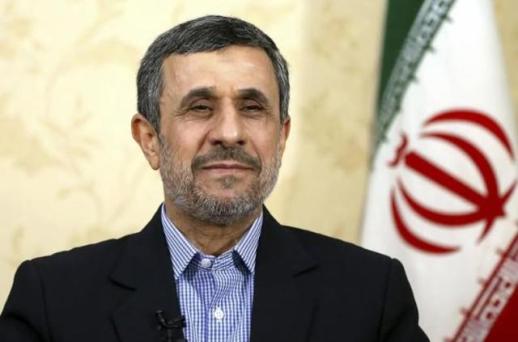 U.S. and Israel's Plan to Install Ahmadinejad as Iran's Leader Revealed According to a report by the New York Times on May 19, the United States and Israel devised a plan to remove Iran's Supreme Leader Ayatollah Ali Khamenei and install former President Mahmoud Ahmadinejad, who had been under house arrest, as a leader during the early stages of the Iran war. However, attempts to engage with Ahmadinejad, known for his hardline stance, ultimately failed. The newspaper noted that in the initial phase of the conflict, U.S. and Israeli officials considered Ahmadinejad a "pragmatic figure" who could lead Iran after the collapse of Khamenei's regime. U.S. officials described him as someone within the government who, while not a moderate, showed a willingness to cooperate with the U.S. This strategy resembled the U.S. operation earlier this year when former Venezuelan President Nicolás Maduro was extradited to New York. The approach involved replacing a dictator and allowing a moderate figure from within the regime to take charge. The Times reported that President Trump enjoyed the success of the operation to capture Maduro and seemed eager to replicate this model elsewhere. For Ahmadinejad, the prospect of U.S. and Israeli support was appealing. In recent years, he had publicly accused the Iranian Islamic regime's leadership of corruption, leading to speculation about his loyalty. He was disqualified from running for president in 2017, 2021, and 2024. Reports indicated that his disqualification in 2017 followed his criticism of Khamenei and expressions of respect for the monarchy. Recently, Ahmadinejad's activities have been restricted to his home in eastern Tehran. The Times also highlighted Ahmadinejad's visits to Guatemala in 2023 and Hungary in 2024 and 2025, noting that both countries have good relations with Israel. In 2023, he attended a water management conference in Guatemala, where he mentioned on Instagram that Iranian security authorities had delayed returning his passport. On February 28, U.S. and Israeli airstrikes commenced. Following these attacks, Khamenei and several military leaders, including Ali Larijani, the Secretary of the Supreme National Security Council, and Mohammad Pakpour, the commander of the Islamic Revolutionary Guard Corps, were killed. Khamenei's son, Mojtaba Khamenei, was injured. However, Ahmadinejad's residence sustained little damage, while Revolutionary Guard members monitoring his home were killed. Ahmadinejad and his family took refuge underground, a situation described as a "virtual escape operation" by The Atlantic. A close associate of Ahmadinejad confirmed to the Times that the operation by U.S. and Israeli forces was an attempt to free him. Three months into the conflict and amid ongoing ceasefire conditions, finding traces of Ahmadinejad has proven difficult. Reports indicate that he has made a few public speeches congratulating Mojtaba Khamenei on his rise to leadership through state media. Contrary to U.S. and Israeli expectations, the Islamic Revolutionary Guard Corps, considered the heart of the Iranian regime, has demonstrated resilience, asserting control over the Strait of Hormuz. DPA reported, citing the Iranian semi-official Tasnim news agency, that the Revolutionary Guard approved the passage of 26 vessels, including South Korean ships, through the Strait in the past 24 hours. The Times noted that while Ahmadinejad survived the airstrikes, he has become disillusioned with the regime change plan. Although the plan ultimately failed, the U.S. and Israel's consideration of the "Ahmadinejad card" is seen as an unexpected choice given his hardline actions during his presidency. He gained notoriety for controversial statements, including claims that the U.S. orchestrated the 9/11 attacks to support Israel and calls to erase Israel from the map. Western media often referred to him as "Mr. Evil." However, after Barack Obama was elected president, he sent a congratulatory message expressing a desire for "real and fundamental change." In a 2019 interview with the Times, he described President Trump as an "action-oriented businessman" and suggested that he would advocate for a long-term calculation of benefits for both the U.S. and Iran.* This article has been translated by AI. 2026-05-21 05:12:53
 -
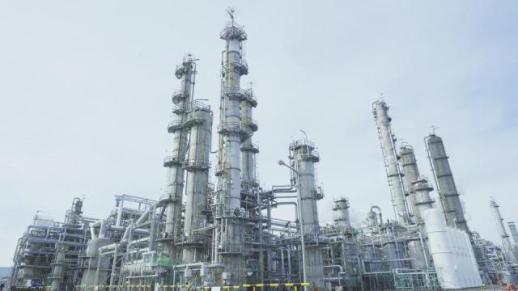 Lotte Chemical and HD Hyundai to Launch Integrated Corporation in June Lotte Chemical and HD Hyundai Chemical are set to begin preparations for the launch of their integrated corporation next month. Following an organizational restructuring, they plan to gradually merge their Daesan naphtha cracking center (NCC). According to industry sources on May 20, Lotte Chemical and HD Hyundai Chemical will officially launch the spinoff company, tentatively named Lotte Daesan Petrochemical, on June 1. Employees from Lotte Chemical's Daesan plant in Seosan, South Chungcheong Province, will initially transfer to this new entity. The integration process with HD Hyundai Chemical is expected to be completed by September 1, finalizing the transition to a new joint venture structure. This move follows a February agreement between the two companies regarding the restructuring of the Daesan Project. The Daesan Project aims to consolidate HD Hyundai Chemical, a joint venture between Hyundai Oilbank and Lotte Chemical, with Lotte Chemical's Daesan plant. The goal is to enhance the competitiveness of the struggling petrochemical business through joint operations and process efficiencies. Regarding employment, the principle of 100% retention will be upheld. Employees of Lotte Chemical who are part of the integration will maintain their existing employment relationships without layoffs, and their salaries, allowances, benefits, and promotion systems will remain unchanged. Annual leave and seniority will also be recognized. However, concerns persist among employees about future workforce management and treatment systems. The most sensitive issue is the difference in employment structures between Lotte Chemical and HD Hyundai. While Lotte Chemical employees will fully transition to the integrated corporation, personnel from Hyundai Oilbank and HD Hyundai Chemical will work in the new entity for four to five years before returning to their original companies. This structure has raised concerns about fairness, particularly since Hyundai Oilbank's wage and benefit levels are relatively higher, potentially leading to disparities even within the same operations. Additionally, the dispatch system for HD Hyundai Chemical personnel may pose labor risks. If employees maintain their formal affiliations while working in mixed operations, it could lead to allegations of illegal dispatch. An industry insider noted, "As we are still in the early stages ahead of the integrated corporation's launch, specific details regarding workforce reallocation or wage and benefits systems have not been finalized. However, given that employees from different companies are merging into one organization, some issues regarding workforce management and treatment are inevitable."* This article has been translated by AI. 2026-05-21 05:06:00
 -
 The Importance of Authenticity in Public Officials Recently, a controversial issue arose regarding remarks made by Kim Yong-beom, head of the Presidential Office's Policy Coordination Office, about a potential 'national dividend.' As discussions about surplus tax revenue emerged, his comments suggesting a possible refund to citizens stirred immediate market reactions, prompting the Presidential Office to clarify that no decisions had been made. It is true that the country's coffers are filling faster than expected due to a semiconductor boom, soaring stock prices, and recovering corporate taxes. However, increased tax revenue does not automatically translate into a 'national dividend.' Words from public officials carry significant weight; they can influence markets, shape expectations, and sometimes create confusion. For this reason, public officials must choose their words carefully. The more uncertain a policy is, the more cautious they should be, especially regarding issues that directly affect citizens' lives. Coincidentally, at a similar time, a different approach was taken by Minister Song Mi-ryeong of the Ministry of Agriculture, Food and Rural Affairs, who appeared as a guest host in a live commerce event at an online studio in Iksan, Jeollabuk-do. She participated in the broadcast to encourage consumption and support farmers struggling with oversupply and falling onion prices. Beyond simply conveying messages, she explained the benefits of onions and how to store them. Realistically, the minister's role as a host will not dramatically increase onion prices. Agricultural prices are complex issues influenced by supply, demand, and distribution structures. Addressing oversupply cannot be resolved through a few live commerce events. However, citizens do not evaluate policies solely based on efficiency. For farmers facing livelihood challenges due to price drops, the mere presence of the relevant minister in the field signals that the government is aware of their struggles. Messages such as “The government understands” and “We are not ignoring you” serve as crucial foundations for trust, as important as the policies themselves. Conversely, policies that rely on numbers and political rhetoric while being disconnected from the field can quickly become hollow. Authenticity is a subjective concept, but citizens are often sensitive to the attitudes of public officials. Much of the recent controversy surrounding policies could have been mitigated had the policymakers better understood and engaged with the realities on the ground. The same applies to real estate policy. While the government emphasizes 'protecting actual users,' what matters most to low-income, homeless citizens is whether home prices are genuinely stabilizing and if they feel the impact of increased supply. If citizens do not perceive changes in their lives despite the constant flow of statistics and plans, trust is bound to waver. The same holds true for inflation. The government has introduced various measures, including price caps, fuel tax cuts, and discount support, in response to shocks from the Middle East. However, citizens assess the effectiveness of these policies based on the prices they see at local gas stations and grocery stores, rather than the figures presented in briefings. Public officials' authenticity is not about grand slogans but about whether they understand the realities faced by citizens and genuinely empathize with their frustrations. More concerning than policy failures is the cynicism that arises from the belief that “these people do not understand our lives.” Especially now, as polarization and asset gaps widen, the attitudes of public officials are as crucial as the policies themselves. Citizens are more inclined to notice who is attempting to understand their realities rather than who is simply making the right statements. The same policy can be received very differently depending on how it is presented. Ultimately, public officials' authenticity does not stem from grand sacrifices or performances. Citizens desire a government that seeks to understand their lives more than a flawless policy. This sincerity is often more clearly demonstrated through small actions in the field than through statements in briefings or on social media. This is why those in high positions should speak less and engage more closely with the public.* This article has been translated by AI. 2026-05-21 05:03:58
 -
 Strategies for Achieving Carbon Neutrality in the Era of 100GW Renewable Energy The South Korean government's commitment to expanding renewable energy is clear. The ambitious goal of reaching 100GW by 2030 reflects a determination to accelerate the energy transition. However, the term "ambitious" implies that achieving this target will not be easy. Increasing the share of renewable energy complicates the balance of supply and demand in the power grid, particularly as it interacts with the rigid nature of nuclear power. As the process of expanding renewable energy continues, the number of electricity providers is steadily increasing, with new players entering the market. Their entry will lead to overlapping interests and roles within the existing market and system, sometimes resulting in conflicts that will heighten the demand for changes in the electricity market. It is no longer sufficient to simply increase the quantity of generation facilities; solutions are needed for how to accommodate and manage them. The bottleneck in the energy transition must be addressed through both technology and regulation. A key challenge is enhancing grid flexibility. Coincidentally, both renewable energy and nuclear power, which are carbon-free sources, have limitations in adjusting output. Ultimately, flexibility in this era must be secured from the demand side. While batteries are often mentioned as a solution, they alone are not sufficient. There are economic constraints, and to respond to long-term and large-scale variability, complementary measures are necessary. The future power system must be designed to allow demand to adjust according to grid conditions, rather than simply having supply follow demand. In this process, we also face the challenge of electrifying sectors that currently use fossil fuels as their final energy source. Notable examples include electric vehicles in the transportation sector and heat pumps in the heating sector. Electric vehicles can contribute to grid operation by adjusting charging times or distributing demand according to grid conditions. Similarly, heat pumps can become flexible demand resources that adjust their operation based on grid conditions when combined with a certain scale of thermal storage facilities. They can increase charging and heat storage during surplus electricity periods and reduce usage during shortages. This approach of absorbing excess electricity from the power sector into other sectors like transportation and heating is known as "sector coupling." The relevant technologies are already largely prepared. The issue lies in the lack of a market and regulatory framework to effectively utilize them. For distributed consumer assets to become meaningful flexible resources, there needs to be a mechanism to aggregate them and provide their value to the grid in monetary terms. However, the current regulatory framework does not adequately support this function. With new types of market participants and technologies emerging, there is an urgent need to establish governance to coordinate these changes. Equally important as technical solutions is the establishment of rules, specifically the advancement of grid technology standards. These standards must address two simultaneous challenges. One is long-term directionality: institutionally supporting a transition path where the share of renewable energy continues to grow while existing fossil fuel generation is gradually reduced. The other is short-term operational stability: managing the grid to prevent immediate issues during the transition process. Well-designed technical standards can meet both challenges simultaneously. They should not be mechanisms to maintain a generator-centric grid but rather a roadmap for a stable transition to a renewable energy-centric grid. For all these technical and regulatory improvements to function, a fundamental overhaul of governance is necessary. The flexibility created by existing methods, electrification, and sector coupling must operate together within a single system. In this process, technology-neutral judgments that do not favor specific technologies or businesses are essential. The interests of market participants can vary significantly depending on which resources are compensated and how output control and demand adjustments are managed. Fair coordination functions are also crucial. The discussions surrounding the establishment of the Electricity Regulatory Commission are significant in this context. Beyond being a simple regulatory body, it needs to act as a "referee" that ensures the efficient operation of a renewable energy-centric grid and fairly mediates conflicting interests. At the same time, it must serve as a "helmsman" guiding the entire system toward carbon neutrality. The energy transition is not merely about replacing power sources. It signifies a fundamental transformation in how electricity is produced and consumed, as well as the regulations governing it. In the face of rapid electrification, stable operation of the power grid is directly linked to national economic and industrial competitiveness. It is now essential to design a new energy system where technological and regulatory innovations are aligned.* This article has been translated by AI. 2026-05-21 05:03:00