
Journalist

Kim SeongSeo
-
 OpenAI Plans to Submit IPO Filing as Early as May 22 OpenAI is expected to submit initial paperwork for its initial public offering (IPO) to U.S. regulators as early as this week. The Wall Street Journal reported on May 20, citing multiple sources, that OpenAI has been preparing a draft of its IPO prospectus in collaboration with investment banks and plans to file it confidentially with the U.S. Securities and Exchange Commission (SEC) as soon as May 22. The company aims for a public listing by September, although sources indicated that these plans remain fluid and subject to change. OpenAI recently overcame a significant hurdle in its IPO efforts by winning a lawsuit filed by Elon Musk, CEO of Tesla. However, Musk has stated his intention to appeal the ruling. The acceleration of OpenAI's IPO preparations comes amid a competitive landscape for tech company listings. SpaceX is set to go public on the Nasdaq on June 12, and Anthropic is also targeting an IPO within the year. However, concerns have been raised about OpenAI's ability to demonstrate revenue growth sufficient to support its substantial investments in data centers. The Wall Street Journal noted that OpenAI must address worries about whether it can generate enough revenue to sustain its commitments to large-scale AI infrastructure spending. Recently, OpenAI has reportedly fallen short of some internal revenue and user targets amid increasing competition from rivals like Google and Anthropic. Notably, Anthropic has shown faster growth in recent months as adoption of its software tools has surged in corporate settings. In response, OpenAI is shifting its strategy to enhance software tools that cater to high demand from enterprise customers. The Wall Street Journal reported that OpenAI is undertaking significant strategic changes to catch up with Anthropic.* This article has been translated by AI. 2026-05-21 07:46:00
 -
 SpaceX Announces Plans for Record-Breaking IPO Targeting $2 Trillion Valuation SpaceX has officially announced plans for what could be the largest initial public offering (IPO) in history. On May 20, local time, NBC News reported that SpaceX confirmed its intention to publicly sell shares to individual investors through a securities filing submitted that day. The official name is Space Exploration Technologies Corp., and it is set to trade on NASDAQ under the ticker symbol 'SPCX.' Given SpaceX's significant competitive advantages in the rocket launch and satellite internet sectors, the IPO is expected to attract considerable investor interest. If the company achieves its target valuation of $2 trillion, it could rank among the top 10 companies globally by market capitalization. The size of the offering has not yet been disclosed. However, NBC News noted that this IPO could surpass the $29.4 billion record set by Saudi Arabia's state-owned oil company Aramco in 2020. According to the filing, SpaceX reported revenues of $18.6 billion in 2025, a 33% increase from the previous year. However, the company incurred a net loss of $4.3 billion during the three months ending March 31 of this year. Musk is expected to maintain significant control after the IPO, with SpaceX stating that he will hold 85% of the company's voting rights and continue to serve as CEO, chairman, and chief technology officer. SpaceX's core businesses include rocket launch services and the Starlink satellite internet service. The company has provided launch services to government agencies, including NASA and the U.S. Department of Defense, sending satellites, equipment, and personnel into space. However, there are concerns regarding the risks associated with the rocket business. SpaceX has invested $15 billion in developing its massive Starship rocket. Recently, a worker died after falling from scaffolding at its Texas facility, and Reuters previously reported that there have been hundreds of unreported worker injuries at SpaceX. Starlink is rapidly increasing its subscriber base. According to the filing, Starlink currently has 10.3 million subscribers, more than double the 5 million reported a year ago. However, the average revenue per user has decreased as more subscribers come from regions outside North America and from lower-cost plans. SpaceX is also involved in artificial intelligence (AI). In February, the company acquired Musk's AI startup xAI, and Musk announced earlier this month that SpaceX would manage all of its AI products without keeping xAI as a separate entity. The AI business has also been flagged as a risk factor. The filing mentions that xAI's chatbot Grok is under investigation for issues related to non-consensual sexual deepfakes. The company indicated that these investigations could lead to legal liabilities, negative public sentiment, or sanctions. SpaceX also owns the social media platform X (formerly Twitter). The company reported that as of March, it had 6.3 million active paid subscribers for consumer services, including X Premium and SuperGrok. The filing also outlines plans to develop X into an 'everything app' that integrates real-time information, communication, media, payments, banking, and commerce. This IPO is expected to serve as a litmus test for investor sentiment toward Musk. While he is also the CEO of Tesla, the company has recently faced challenges, including declining sales, rising capital costs, and a lack of new products. Musk's political actions and controversies could also influence investor sentiment. Given the unusually large size of this offering, 23 major global banks and investment firms will participate in the underwriting. Goldman Sachs will serve as the lead underwriter, followed by Morgan Stanley, which was also involved in Tesla's IPO in 2010.* This article has been translated by AI. 2026-05-21 07:34:18
 -
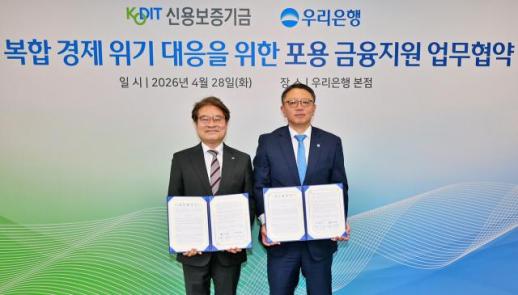 Woori Bank's CEO Jeong Jin-wan Focuses on Restoring Trust in Finance Jeong Jin-wan, CEO of Woori Bank, bases his leadership on a foundation of crisis. He took charge of an organization where trust had eroded, rather than one experiencing growth. Following incidents of improper lending and embezzlement, he faces the challenge of restoring the bank's core essence. Jeong has distilled this issue into a singular task: 'trust recovery.' Instead of opting for flashy strategies, he has chosen to return to basics.Internal controls, corporate culture, and customer focus may seem like conservative approaches, but they are, in fact, the most aggressive strategies. Trust is the strongest competitive advantage in finance. At the same time, he has re-emphasized Woori Bank's roots in corporate finance. The challenge lies in balancing these two aspects: trust requires a slower pace, while corporate finance demands speed. The essence of Jeong's leadership is to unify these conflicting directions into a single strategy. He has initiated an experiment to transform the 'collapsed bank' into a 'bank that is chosen again.' Leadership Emerging from Crisis, Centering on TrustThe starting point of Jeong Jin-wan's leadership is clear: it is not growth or innovation, but trust. Upon his appointment, he prioritized internal control reform and corporate culture restructuring as essential tasks. This was not a choice but a necessity, as Woori Bank had already suffered significant losses in market trust due to major financial incidents. Jeong approached this issue as a matter of 'people' rather than 'systems.' He believes that the failure of internal controls stems from organizational overload and culture, not from the system itself. He aimed to restructure the organization to reduce employees' workload and create time for focusing on internal controls. This approach is not merely about strengthening controls but about creating an environment where controls can function effectively. At this juncture, Jeong's leadership reveals its characteristics. Instead of tightening regulations, he creates a structure that allows regulations to operate. This is a hallmark of field leadership. Returning to Corporate Finance, Reviving Woori Bank's EssenceJeong finds Woori Bank's competitiveness in 'corporate finance.' From the outset of his tenure, he emphasized that the bank's roots lie in providing financial services to Joseon merchants and declared a commitment to strengthening corporate finance. His symbolic first step was to visit small and medium-sized enterprises and small business sites directly. This was not just a simple event but a strategic message declaring a return to the real economy as the bank's focus. However, his corporate finance strategy differs from the past. He is cautious about reckless loan expansion, setting loan targets at a 'maintenance' level to manage risks effectively. Jeong views corporate finance as a matter of 'quality' rather than 'quantity.' This represents an attempt to balance financial stability with growth. Transforming the Organization with a Field-Centric ApproachAnother notable aspect of Jeong's leadership is his approach to organizational restructuring. He has reduced headquarters operations and strengthened the independence and accountability of sales organizations. The abolition of the division head system and the expansion of group leaders' authority are prime examples. This goes beyond simplifying the organization; it also clarifies responsibility. As organizations become more complex, accountability becomes blurred, and when accountability is unclear, internal controls weaken. Jeong aimed to structurally block this issue. Additionally, the shift from relative to absolute performance evaluation is noteworthy. This measure aims to reduce excessive competition and enhance organizational stability, aligning with the structural changes to strengthen internal controls. Jeong focuses on making the organization operate 'stably' rather than merely 'efficiently.' Platform Strategy: Becoming a Bank That Attracts CustomersJeong acknowledges the limitations of traditional sales methods. He believes that we are no longer in an era where customers visit banks; instead, banks must reach out to customers. Consequently, he is strengthening the platform strategy. A prime example is the collaborative platform 'To the Moon.' This is not just a ticket booking service but a platform designed to expand customer touchpoints. It combines cultural content with finance to integrate into customers' daily lives. Jeong views expanding the customer base as a 'result' rather than a 'goal.' He aims to create a structure where customers voluntarily choose the bank, rather than merely meeting sales targets. This strategy differentiates him from traditional banks. While conventional banks set targets and strive to achieve them, Jeong designs customer experiences and waits for the outcomes. Prioritizing Stability Over Speed: A Shift to Long-Term StrategyJeong's leadership does not prioritize speed. He places greater importance on improving the organization's fundamentals over short-term results. In fact, Woori Bank once endured negative growth while focusing on enhancing internal controls and asset structure. This is a significant characteristic of financial entrepreneurship. Choosing long-term competitiveness over short-term performance is not an easy decision. Jeong aims to transform the bank into a 'sustainable organization' rather than merely a 'growing organization.' While this may appear to be a conservative strategy, it is, in the long run, the most aggressive choice. SWOT Analysis:Jeong Jin-wan's financial entrepreneurship is defined as 'trust-based field-oriented reconstruction leadership.'Strengths include expertise in corporate finance and understanding of field operations. He possesses the ability to design finance connected to the real economy based on his experience in small and medium-sized enterprise sales. Additionally, his structural leadership simplifies the organization and clarifies responsibilities. Weaknesses include limitations on growth speed. The strategy focusing on internal controls and improving fundamentals may constrain short-term performance. Furthermore, the late start in platform competitiveness compared to other financial groups is also a concern. Opportunities arise from structural changes in finance. Expanding corporate finance, platform finance, and ESG finance provide Woori Bank with opportunities for resurgence. Particularly, trust recovery can serve as a strong differentiator in the market. Threats include competition and past risks. The aftereffects of financial incidents, factional conflicts within the organization, and gaps with competing banks remain burdensome. Delays in trust recovery could also jeopardize growth strategies.* This article has been translated by AI. 2026-05-21 07:31:02
 -
 AI Insights: Companies Struggle to Implement Chatbots Effectively “Many companies expect that adopting artificial intelligence (AI) will lead to immediate operational innovation, but the reality on the ground presents entirely different challenges,” said Yang Young-mo, CEO of Redbrick, while discussing the current atmosphere surrounding corporate AI transformation (AX) projects. The surge in generative AI has led to a rapid increase in the implementation of chatbots, document summarization, and report automation systems. However, unexpected limitations are frequently emerging during actual usage. Yang noted that it is common to hear that “AI has been implemented, but employees are not using it effectively.” He explained that initial evaluations often focus on the performance and accuracy of AI models. However, in real work environments, operational factors such as integration with existing systems, data management frameworks, and permission issues become significantly more important. In practice, AI often clashes with existing workflows. One company established a generative AI-based support system, but its utilization fell short of expectations. The system failed to integrate smoothly with ERP (Enterprise Resource Planning), collaboration tools, and internal systems, leading employees to perceive it as an additional program rather than a seamless part of their workflow. Issues with document management systems are also a recurring problem. Instances arise where the latest documents are mixed with outdated materials, or where different departments have varying management standards, causing AI to generate responses based on obsolete data. Yang emphasized that “in corporate AI, what matters is not just simple accuracy, but also the operational structure that includes the data being used for responses and whether access permissions are properly reflected.” Yang identified the shift towards a ‘multi-LLM’ (Large Language Model) environment, where companies utilize multiple AI models simultaneously, as a new challenge. Marketing teams may use SaaS-based AI, development teams may opt for open-source models, and customer service teams may employ separate AI solutions, leading to a diverse range of AI applications. However, there remains a lack of systems for integrated management. He warned that “from a corporate perspective, it may become difficult to track which organization is using what data with which AI,” adding that in a multi-LLM environment, data control, security policies, and cost management must all be considered. This trend is particularly pronounced in industries like finance, manufacturing, and public sectors, where security and operational stability are critical. Recently, there has been an increase in requests for not just AI implementation, but also for data integration structures, permission management systems, and operational governance design. Yang pointed out one of the biggest misconceptions among companies is approaching AI solely as a technology project. He stated, “If AI is implemented without organizing internal data structures, workflows, and approval systems, problems will inevitably arise during the operational phase. AX is not just about adding AI functions; it is more about redesigning the entire corporate operational structure.” He concluded, “In the future, corporate AI competitiveness will likely hinge not on who introduces the most advanced models, but on how reliably and consistently AI can be operated within actual workflows.”* This article has been translated by AI. 2026-05-21 07:27:00
 -
 U.S. Stocks Rebound as Oil Prices and Treasury Yields Decline U.S. stocks rebounded on Tuesday, buoyed by easing pressures from oil prices and Treasury yields. Amid expectations of negotiations with Iran, oil prices plummeted, while the rise in interest rates moderated, reviving buying interest in technology and semiconductor stocks. On May 20, the Dow Jones Industrial Average closed up 645.47 points, or 1.31%, at 50,009.35. The S&P 500 index, which is heavily weighted toward large-cap stocks, rose 79.36 points, or 1.08%, to finish at 7,432.97. The tech-heavy Nasdaq composite surged 399.65 points, or 1.55%, closing at 26,270.359. The recent decline in U.S. Treasury yields helped restore investor sentiment. The yield on the 30-year U.S. Treasury bond, which had reached a 19-year high of 5.20% the previous day, fell by 6.6 basis points to 5.114% on Tuesday. The benchmark 10-year U.S. Treasury yield also dropped 10 basis points to 4.569%. International oil prices saw a significant decline. July futures for Brent crude fell 5.63% to $105.02 per barrel, while July futures for West Texas Intermediate (WTI) crude dropped 5.66% to $98.26. The drop in oil prices accelerated after President Donald Trump stated that negotiations with Iran had entered the "final stage." Speaking to reporters, Trump said, "We are in the final stages regarding Iran. Let’s see what happens." The Iranian government is currently reviewing a new draft proposal from the U.S. based on its own 14-point proposal, but has not yet provided an official response. In terms of individual stocks, technology and semiconductor sectors showed notable strength. Nvidia rose 1.3% amid strong earnings expectations, while AMD and Intel surged 8.1% and 7.4%, respectively. The Philadelphia Semiconductor Index jumped 4.5%. However, Nvidia's stock fell 0.14% in after-hours trading to $223.16 following its earnings report, which revealed first-quarter revenues of $81.62 billion. The company projected second-quarter revenues between $89.18 billion and $92.82 billion. Carol Schleif, chief market strategist at BMO Private Wealth, told Reuters, "Today, technology and AI themes are leading the market again. Just yesterday, concerns about interest rate hikes and potential inflation were dominant, but now there is a renewed focus on AI-related stocks."* This article has been translated by AI. 2026-05-21 07:13:11
 -
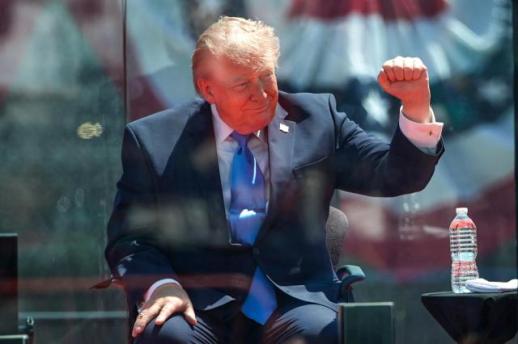 Trump: Iran Negotiations in Final Stages, Military Action Possible Donald Trump, the President of the United States, stated that negotiations with Iran have entered their final phase, warning that if an agreement is not reached, further military action could follow. On May 20, local time, Trump made these remarks to reporters as he left the White House for a visit to the Coast Guard Academy in New London, Connecticut. "We are in the final stages regarding Iran," he said, adding, "Let’s see what happens." He continued, "We will either reach an agreement or we will have to do some rather unpleasant things. But I hope that doesn’t happen." When asked if he was rushing to resolve the situation with Iran due to the upcoming midterm elections, he replied, "Everyone talks about the midterms, but I am not rushing at all." During his commencement address at the Coast Guard Academy, Trump maintained his pressure on Iran. He stated, "We will watch what happens. We have hit them very hard. We may have to hit them even harder, but maybe not." He emphasized, "We will not allow Iran to possess nuclear weapons. It’s very simple." Trump also claimed that Iran's military capabilities have been significantly weakened. He said, "Everything has disappeared. Their navy is gone. Their air force is gone. Almost everything has disappeared. The only question is whether we will go in and finish it or whether they will sign a document."* This article has been translated by AI. 2026-05-21 06:58:08
 -
 Nvidia Reports Record Revenue for 12 Consecutive Quarters, Driven by Data Center Growth Nvidia, the world's most valuable company by market capitalization, has achieved record revenue for the 12th consecutive quarter. The surge in data center sales, fueled by demand for artificial intelligence (AI) infrastructure, has led to results that exceeded market expectations. On May 20, Nvidia announced that its revenue for the first quarter of the fiscal year (February to April) reached $81.62 billion (approximately 122 trillion won). This marks a 20% increase from the previous quarter's record of $68.13 billion. Compared to the same period last year, revenue has increased by 85%, surpassing the market estimate of $78.85 billion compiled by the London Stock Exchange Group (LSEG). The growth in revenue was primarily driven by the data center segment, which reported sales of $75.2 billion, a 92% increase year-over-year. Specifically, data center computing revenue was $60.4 billion, while networking revenue accounted for $14.8 billion. Revenue from the edge computing segment, which includes PCs, gaming consoles, and autonomous vehicles, rose to $6.4 billion, a 29% increase from the same period last year. Nvidia's adjusted earnings per share (EPS) were $1.87, exceeding Wall Street's expectation of $1.76. The company announced a restructuring of its business segments starting this quarter. Instead of the previous detailed divisions, it will now focus on two main areas: data centers and edge computing. The data center segment will be further divided into hyperscale and ACIE (AI Cloud, Industry, and Enterprise) sectors. Nvidia anticipates that the growth trend will continue into the second quarter, projecting revenue to reach $91 billion. However, this forecast does not include revenue from data centers in the Chinese market. Jensen Huang, Nvidia's CEO, stated, "The construction of AI factories, the largest infrastructure expansion in human history, is accelerating remarkably. Nvidia is the only scalable platform that operates across all clouds, supports all frontier and open-source models, and enables AI production from hyperscale data centers to edge computing." Following the earnings announcement, Nvidia's stock rose 1.3% during regular trading. However, in after-hours trading, the stock fell 0.14% to $223.16 as of 5:25 PM Eastern Time.* This article has been translated by AI. 2026-05-21 06:37:05
 -
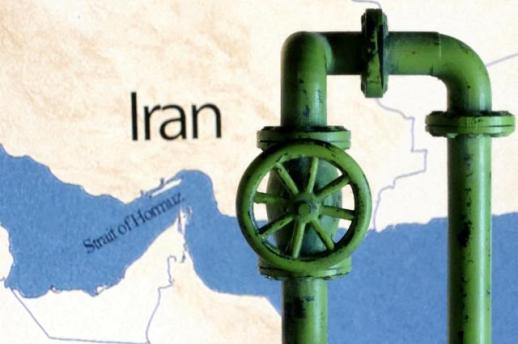 Oil Prices Plunge as U.S.-Iran Peace Talks Progress Oil prices dropped sharply following President Donald Trump's remarks that U.S.-Iran peace negotiations are nearing completion. On May 20, Brent crude futures for July delivery fell 5.63% to settle at $105.02 per barrel on the ICE Futures Exchange. Meanwhile, West Texas Intermediate (WTI) crude futures for July delivery closed down 5.66% at $98.26 per barrel on the New York Mercantile Exchange. The decline in oil prices is attributed to Trump's statement indicating that the U.S.-Iran negotiations are in the "final stages." During a press briefing, Trump confirmed that the negotiations with Iran are progressing toward a conclusion but warned of potential further military action if Iran does not agree to the terms. Iran's Foreign Ministry spokesperson, Esmail Baghaei, also acknowledged receipt of a proposal from the U.S., stating in an interview with state television, "We have received the U.S. perspective and are currently reviewing it closely." Baghaei added that the visit of Pakistan's Interior Minister to Tehran is intended to facilitate communication between the two countries. Earlier, Iran's state news agency IRNA reported that Interior Minister Mohsin Naqvi visited Iran again on May 20, following a previous visit on May 16. Baghaei outlined key prerequisites for dialogue aimed at ending the conflict, including the release of frozen overseas assets and the cessation of U.S. maritime blockades. He emphasized, "At this stage, we are focused on ending the war on all fronts, including Lebanon. Our demands are clear: the release of Iran's frozen assets, issues related to piracy, and actions targeting Iranian shipping have been clearly stated from the beginning." Furthermore, Baghaei asserted, "Iran has participated in the dialogue with complete goodwill and sincerity, and the other party must also demonstrate sincerity." He concluded, "If this process proceeds based on Iran's legitimate demands, we can say diplomacy has succeeded; however, if unjust demands continue, we will obviously not succeed."* This article has been translated by AI. 2026-05-21 06:28:03
 -
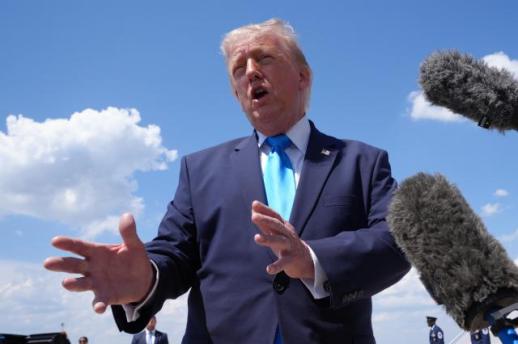 Trump Plans to Speak with Taiwan's President, Praises Xi-Putin Meeting Donald Trump, President of the United States, announced on May 20 that he plans to speak directly with Taiwan's President Tsai Ing-wen. According to Bloomberg News, Trump made the statement before boarding Air Force One at Joint Base Andrews in Maryland when asked by reporters if he would have a conversation with President Tsai. "I will talk to him. I talk to everyone," he replied, though he did not specify when the call would take place. He added, "We are managing that situation very well. I had a great meeting with President Xi," and stated, "We will resolve the Taiwan issue." However, it remains unclear whether Trump's mention of 'resolving' the issue refers to proceeding with arms sales to Taiwan or holding them off. The Trump administration has delayed a $14 billion arms package to Taiwan for several months, despite prior approval from Congress in January. Reports indicate that progress on a previously approved $11 billion arms package has also stalled. During Trump's visit to China from May 14 to 15, President Xi publicly reaffirmed that he would not tolerate U.S. intervention in Taiwan issues. It is reported that the arms sales to Taiwan were also discussed in private meetings. If Trump and President Tsai speak directly, it could provoke a strong reaction from China. Reuters noted that since the U.S. established diplomatic relations with China in 1979, no sitting U.S. president has spoken directly with a sitting Taiwanese president. Trump previously spoke with then-President Tsai Ing-wen in December 2016 while he was still president-elect. Although that conversation was informal, the Chinese government strongly protested to the U.S. Some analysts suggest that Trump's remarks may reflect dissatisfaction and pressure toward Xi. Trump has indicated that he could use U.S. arms sales to Taiwan as a bargaining chip in negotiations following the U.S.-China summit. Meanwhile, Trump commented positively on Russian President Vladimir Putin's visit to China and the China-Russia summit, stating, "President Xi told me he would do that. I think it's a good thing. I get along well with all of them." He added, "I don't know if their welcome event was as great as mine was when I visited China. I watched it, and I think we were ahead."* This article has been translated by AI. 2026-05-21 06:16:18
 -
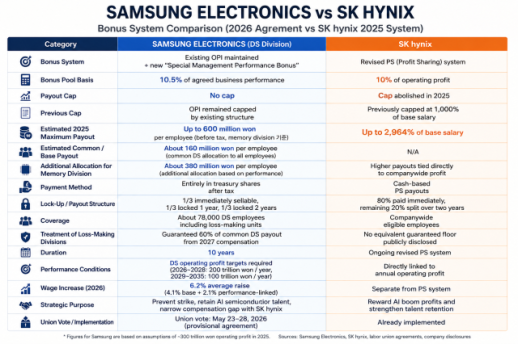 AJP Watch: Samsung closes pay gap with SK hynix in landmark semiconductor labor accord SEOUL, May 21 (AJP) -Samsung Electronics employees in its memory-chip division could receive performance bonuses of up to 600 million won ($440,000) this year under a landmark labor agreement that mirrors — and in some cases surpasses — rival SK hynix’s uncapped AI-era reward system that has transformed compensation expectations across Korea’s semiconductor industry. The provisional wage deal reached late Wednesday ties Samsung’s new special semiconductor bonus pool to 10.5 percent of agreed business performance, slightly above SK hynix’s 10 percent profit-sharing formula, as the world’s largest memory-chip maker moved to close a widening compensation gap exposed by the AI boom. The agreement, reached after marathon government-mediated negotiations, will be put to a union vote from May 22 to 27. If approved, it would settle this year’s wage dispute and cancel a planned general strike that had threatened to disrupt global AI chip supply chains. At the center of the breakthrough is a newly created “special management performance bonus” for Samsung’s Device Solutions (DS) semiconductor division. The union withdrew its steadfast demand on scrapping the existing OPI (Overall Performance Incentive) system, with management offering to introduce an additional long-term payout structure with no upper limit on bonuses. The framework bears strong resemblance to SK hynix’s revised PS (Profit Sharing) system, which scrapped the previous payout cap of 1,000 percent of base salary and allocates 10 percent of operating profit for employee rewards. Under that scheme, SK hynix employees are expected to receive bonuses equivalent to as much as 2,964 percent of monthly base salary based on 2025 performance. Samsung’s plan could generate even larger payouts if projected earnings materialize. According to the provisional agreement, the special bonus fund will be based on 10.5 percent of mutually agreed business performance metrics. If operating profit is used as the benchmark and Samsung Electronics posts around 300 trillion won in annual operating profit this year as forecast, roughly 31.5 trillion won could be set aside for DS performance compensation. Forty percent of that pool would be distributed equally across the DS division’s roughly 78,000 employees regardless of business unit performance, while the remaining 60 percent would be allocated based on divisional results. Under the formula, all DS employees — including workers in loss-making non-memory businesses — could receive around 160 million won per person from the common allocation alone. Memory division employees would receive an additional estimated 380 million won on average, while workers in common organizational units would receive about 270 million won more under the agreed distribution ratio. Combined with traditional OPI payouts, memory-chip employees earning annual salaries of around 100 million won could receive total bonuses approaching 600 million won before tax this year. Unlike traditional cash bonuses, the new special incentive will be paid entirely in Samsung treasury shares after taxes. One-third of the shares can be sold immediately, while the remaining two-thirds will be locked up for one year and two years respectively. The stock-based structure appears aimed at both strengthening long-term employee retention and aligning compensation with shareholder value as Samsung races to regain technological leadership in AI memory chips such as HBM4. The agreement also introduces a support mechanism for underperforming units. Loss-making divisions that fail to qualify for conventional OPI payments would still receive payouts equivalent to 60 percent of the common DS rate beginning with 2027 compensation. The special semiconductor incentive system will remain in place for 10 years, though payouts are contingent on ambitious profit conditions. Samsung’s DS division must achieve annual operating profit of 200 trillion won from 2026 through 2028, followed by 100 trillion won annually from 2029 through 2035. The deal also includes an average wage increase of 6.2 percent this year, composed of a 4.1 percent base pay increase and a 2.1 percent performance-linked raise. Additional agreements include expanded childbirth support payments, improved employee housing loan programs and about 6 million won worth of Samsung shares for employees in the DX division and CSS business team. The breakthrough came after days of tense negotiations involving the labor ministry and the National Labor Relations Commission, as the government sought to prevent a strike involving tens of thousands of semiconductor workers at a company whose exports account for roughly one fifth of South Korea’s outbound shipments. The dispute had increasingly reflected broader shifts underway in Korea’s semiconductor industry, where booming AI demand and soaring profits at SK hynix intensified pressure on Samsung workers demanding compensation structures closer to Silicon Valley-style performance sharing. For Samsung, the agreement represents not only an effort to avert labor disruption but also a strategic acknowledgment that the competition for semiconductor talent in the AI era is increasingly being fought through pay structures as much as through technology. 2026-05-21 06:07:14