
Journalist

Kim SeongSeo
-
 Time Reports Xi Jinping May Visit North Korea Next Week Amid Rising Japanese Militarism Chinese President Xi Jinping is expected to make a state visit to North Korea as early as next week. U.S. news magazine Time reported on May 20, citing anonymous sources, that "China and North Korea will cooperate more closely against Japan's new militarism," adding that plans for Xi's visit are underway. Time interpreted Xi's potential visit as a response to Japan's shift from its long-standing pacifist stance to a more proactive geopolitical posture. Recently, Japan has significantly strengthened its security policies, including easing restrictions on arms exports for the first time in 60 years under Prime Minister Sanae Takaichi and pushing for constitutional amendments to formally recognize the Self-Defense Forces. The country is also increasing its defense budget to record levels and expediting related legislative measures. However, there has been no official announcement regarding Xi's visit to North Korea yet. Xi previously visited Pyongyang in June 2019, becoming the first Chinese president to meet with Kim Jong-un for a summit in the North Korean capital.* This article has been translated by AI. 2026-05-20 20:36:43
 -
 South Korean Oil Tanker Passes Through Strait of Hormuz Amid Tensions One of the 26 South Korean vessels stranded in the Strait of Hormuz due to the U.S.-Iran conflict has successfully navigated through the strait for the first time. The Ministry of Foreign Affairs announced on May 20 that "one of our oil tankers has passed through the Strait of Hormuz today and is continuing its voyage," adding that approximately 10 South Korean crew members are aboard the vessel.Since the outbreak of the conflict, the South Korean government has made repeated requests for the safety and freedom of navigation for all vessels, including its own, through four phone calls between the foreign ministers of South Korea and Iran, the dispatch of special envoys over the past two weeks, and various diplomatic channels involving both countries' foreign ministries and embassies in Tehran and Seoul.A ministry official stated, "We will continue to work diligently to ensure the safety and passage of our vessels in the Strait of Hormuz."In related remarks, Minister Park Jin mentioned during a National Assembly Foreign Affairs and Unification Committee meeting that "at this moment, our oil tanker is exiting the Strait of Hormuz following negotiations with Iranian authorities."He added, "We have completed discussions with Iranian authorities, and the tanker began its voyage yesterday, navigating very cautiously with 2 million barrels of oil on board." The 2 million barrels refers to the amount of crude oil being transported by the South Korean tanker.According to Bloomberg and the ship tracking site MarineTraffic, the vessel that has exited the strait is the 'Universal Winner,' an oil tanker operated by HMM, the same company that operates the recently attacked 'Namoo.'* This article has been translated by AI. 2026-05-20 20:24:46
 -
 AI Insights: Redbrick's Yang Young-mo on the Importance of Operations in AI Implementation "The competitive standard for corporate AI is no longer which model to use, but how safely and consistently it can be operated in actual work environments," said Yang Young-mo, CEO of Redbrick. He explained that the early phase of generative AI focused on the performance of large language models (LLMs), but the emphasis has now shifted to the operational structure, which includes internal data, permissions, and security systems as key components of AI competitiveness. Yang noted, "Initially, many questions revolved around 'which model to use,' but now there are far more operational questions such as 'Can we securely connect to our company data?' and 'How can we reflect departmental permissions?' Companies are beginning to view AI not just as a productivity tool but as an integral part of their operational infrastructure." Redbrick, a startup specializing in generative AI-based content engines, offers AI solutions that support data and workflow automation for businesses and institutions through its proprietary 'Redbrick AI Engine.' The platform can generate content for games, education, and marketing with simple text inputs, and it integrates with internal documents and collaboration tools to assist with knowledge searches, document creation, and report drafting. The enterprise solution, 'Redbrick AI Enterprise,' is available in both on-premises and cloud versions, ensuring secure handling of sensitive information through end-to-end encrypted inference structures. As of 2025, the company surpassed 10 million cumulative users and was selected for the UAE's Mubadala sovereign wealth fund startup incubation program, 'HUB71.' Yang observed that corporate AI transformation (AX) projects are moving beyond simple chatbot implementations to the establishment of 'AI operational systems.' He explained that in practice, the structure of data, permission systems, and the redesign of work processes have become more critical than the performance of AI models. "In demo environments, AI appears to work well, but in actual corporate settings, documents are scattered across various systems, and both current and historical data are mixed. The complexity of the permission system means that simply attaching a model does not complete the AX process," he said. As a result, Redbrick is expanding its focus from being just an AI solutions provider to becoming a 'corporate AI infrastructure platform' company. The core strategy involves securely connecting internal company data, operating AI agents tailored to departmental needs, and creating a structure for integrated management of data access permissions, costs, and logs. Yang emphasized that the 'Front Deployment Engineer (FDE)' approach is becoming a significant trend in the global AI market. This method involves deeply engaging with clients' actual work environments to collaboratively define problems, rapidly implement solutions on the AI platform, and then enhance product features. He stated, "While past system integration projects were centered on requirements-based construction, FDE focuses on discovering problems together with clients on-site and accumulating them as repeatable platform features. Redbrick aims to be an AI engineering partner that designs AX transformations alongside our clients, not just a construction firm." Another notable change is the shift of companies toward a 'Multi-LLM' operational system, where multiple AI models are used concurrently. This shift is driven by the varying costs, speeds, and inference capabilities required for different tasks, making it challenging to handle all operations with a single model. Yang remarked, "For simple summarization or classification, lightweight models are more efficient, while high-performance models are better suited for complex analysis or decision support. Ultimately, how AI is managed on an operational structure will become more important than the models themselves." Looking ahead, Redbrick plans to focus on building an 'AI operational environment' that integrates AI infrastructure, knowledge-based AI, collaborative AI workspaces, AI workflow automation systems, and security, permission, and governance functions into a single corporate AI platform. Yang concluded, "The corporate AI market will quickly transition from the experimental stage to actual operational implementation. Redbrick aims to grow as a platform company that helps organizations operate AI safely as an integral part of their work infrastructure, beyond mere usage."* This article has been translated by AI. 2026-05-20 20:22:17
 -
 US embassy in Seoul hosts artist Park Ju-eon for Freedom 250 campaign SEOUL, May 20 (AJP) - SEOUL — The United States Embassy in Seoul hosted South Korean contemporary artist Park Ju-eon for a special exhibition and talk on Wednesday afternoon, using cultural diplomacy to mark the upcoming 250th anniversary of the country's founding. The event took place at the US Charge d'Affaires' residence near central Seoul. The gathering served as the second installment of Freedom of Expression: Freedom 250 U.S.-Korea Creative Dialogues. The yearlong campaign highlights the enduring cultural partnership between the two nations through continuous artistic exchange, with collaborative events scheduled to run throughout the year. James R. Heller, the U.S. Charge d'Affaires ad interim, framed the event as a critical opportunity to engage with art and ideas concerning freedom of expression. He noted that the program contributes to a broader vision by highlighting the enduring connections between the U.S. and South Korea. "His presence here shows the vitality of our two countries' strong cultural ties," Heller told the audience. "Art and cultural exchange are essential pillars of our lives. Cultural diplomacy enriches our societies and builds trust and opens dialogue, and it makes other types of cooperation possible." During his presentation, Park detailed his creative journey, tracing his artistic roots back to a year spent traveling across the U.S. as a 12-year-old. While he did not know he would become a painter at the time, a later visit to the Art Institute of Chicago deeply altered his trajectory. The distinctive modernist architecture and bold abstract paintings he saw there stirred his senses, cementing a goal to return to the city to learn how to paint. As a graduate of the School of the Art Institute of Chicago, Park explained how the American educational environment shaped his approach to abstract painting by providing individual freedom alongside advanced structural systems. His time at the institution pushed him to ask why he was creating the work, rather than simply deciding what to paint. "This experimental spirit where no set answers exist made me incredibly persistent," Park said. "I worked every single day to find freedom of expression while strictly controlling myself through self-imposed rules. For me, experimentation was not just a simple attempt, but the greatest force sustaining my artistic practice." The exhibition in Seoul showcased several of his large-scale works, which serve as a visual archive of his time in the U.S. and his continuous drive to break away from traditional representational imagery. Park shared practical examples of his unconventional techniques, which he developed as a student to overcome the fear of failure and experiment with pure abstraction. Driven by a need for affordable materials he could paint heavily on, he turned to unexpected sources. "I headed to the Home Depot, a large American hardware store, and started buying the cheapest material I could find there: doors measuring 32 inches by 72 inches, to use instead of canvases," Park said. "With an empty mind, I moved my brushes intuitively along the trajectory of my body, and as a result, lines resembling human forms began to build up on the surface." The Seongbuk-dong exhibition featured a variety of his technical experiments, including massive pieces tracking the physical rhythm of his artistic process and complex monotype grids. Park described his drawing process as essential database research for experimenting with the transparent layering of colors and repetitive marks. He explained that his monotype process, which involves applying paint to a plate and pressing it directly onto a surface, was designed to extract the purest form of color. "By almost entirely erasing intentional brushstrokes or the artist's artificial control from the surface, it is a process I thought of to extract the inherent character and materiality of the color in its purest form," he noted. This experimentation culminated in large-scale works like "Chicago 2125," a massive piece displayed in the residence's piano room that reflects the city's grid-like architecture, and "Chromatic Deposition Lemon," a recent work created out of frustration with the small size of standard acrylic plates. "Just as I was feeling frustrated by the scale of the small acrylic plates or gel plates I had been using, I saw a rough rubber mat blocking a street drain," Park recalled. "Curiosity struck me: 'What if I press acrylic paint using that large, rough rubber mat?' I put it to use in my work right away." The artist credited his ongoing drive to push boundaries to the foundational years he spent in the U.S. "The coexistence of rules and freedom taught to me by the country of America, along with the continuous experimental spirit, has kept me going without stopping for a single day," Park said. 2026-05-20 19:05:25
 -
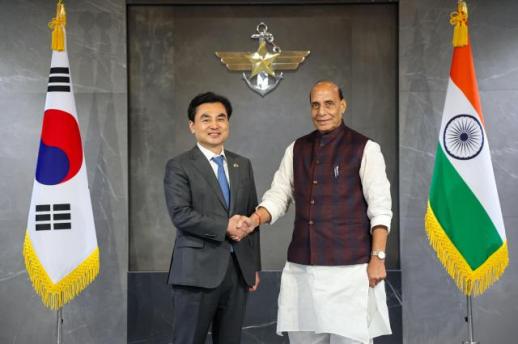 Korea, India discuss expanding arms cooperation in first defense talks in 7 years SEOUL, May 20 (AJP) - South Korean Defense Minister Ahn Gyu-back discussed ways to expand defense and defense industry cooperation with his Indian counterpart Rajnath Singh in Seoul on Wednesday, the Defense Ministry said. During the meeting at the ministry’s headquarters in Seoul, the two ministers agreed to further broaden cooperation in defense and arms industry fields, building on the “joint strategic vision” adopted at last month’s summit between the leaders of the two countries. On defense industry cooperation, the two sides positively assessed past achievements, including exports of K9 self-propelled howitzers to India, and agreed to continue expanding cooperation. The two countries also signed agreements to support more practical cooperation in areas such as cybersecurity, U.N. peacekeeping operations and exchanges between their national defense universities. Ahn explained South Korea’s consistent efforts to restore inter-Korean trust and resume dialogue with North Korea for peaceful coexistence on the Korean Peninsula, while asking for India’s continued support. The meeting was arranged after Ahn invited Singh to South Korea during the 12th ASEAN Defense Ministers’ Meeting-Plus last year. It marked the first visit by an Indian defense minister to South Korea since 2019. Separately, Lee Yong-cheol, head of the Defense Acquisition Program Administration, met Singh to discuss defense industry cooperation and held the Korea-India Defense Forum. “The K9 self-propelled howitzer is a representative success story of Korea-India defense industry cooperation,” Lee said, expressing hope that the two countries would continue expanding cooperation not only in ongoing projects but also across a broader range of weapons systems. The two sides also discussed the launch of the Korea-India Defense Innovation Platform, or KIND-X, aimed at accelerating defense cooperation in emerging technologies such as artificial intelligence and unmanned aerial vehicles. Hanwha Aerospace and Hanwha Systems each signed memorandums of understanding with Larsen & Toubro, India’s leading defense company, in the presence of Lee and Singh. 2026-05-20 18:13:02
 -
 S. Korea pushes nuclear submarine plan, but fuel supply remains key hurdle SEOUL, May 20 (AJP) - South Korea’s long-running ambition to deploy nuclear-powered submarines has gained fresh momentum as Seoul and Washington move to implement security agreements reached at their latest summit, though securing nuclear fuel remains the project’s biggest obstacle. The challenge facing the program is no longer simply whether South Korea can build or acquire nuclear-powered submarines, but how it would fuel them. According to data submitted by the Ministry of National Defense on Wednesday, the Navy recently filed a formal request with the Joint Chiefs of Staff for the acquisition of Korean nuclear-powered submarines. The request marks the first step in South Korea’s weapons acquisition process, under which the military formally outlines operational requirements, deployment concepts, the number of units needed and the projected timeline for a new weapons system. The Navy confirmed it had “made a formal request related to the construction of nuclear-powered submarines,” but declined to disclose details. The Joint Chiefs of Staff is reviewing the proposal and is expected to make a decision as early as this month through a formal meeting. Diplomatic coordination between Seoul and Washington is also accelerating. A senior U.S. delegation led by the under secretary of state for political affairs is expected to visit South Korea within weeks as the allies activate a bilateral working group formed after last year’s summit agreements. The nuclear-powered submarine project has long been a strategic objective for South Korea’s military, dating back to the administration of former President Kim Young-sam. The initiative has repeatedly advanced and stalled under successive governments. During a summit held on the sidelines of the Asia-Pacific Economic Cooperation summit last October, U.S. President Donald Trump and President Lee Jae Myung reportedly reached broad agreements on trade and security cooperation, including deeper discussions on strategic naval capabilities. Military authorities have reportedly considered acquiring at least four nuclear-powered submarines with a displacement of 5,000 tons or more after the mid-2030s, though the size and number of vessels may have changed during internal reviews. The central issue, however, remains nuclear fuel. During a visit to Seoul in April, Rafael Grossi said South Korea would require a separate safeguards arrangement with the International Atomic Energy Agency if it proceeds with nuclear-powered submarines. Grossi noted that nuclear material used in such vessels is “not continuously accessible to inspectors” because of the operational nature of submarine reactors. Because nuclear-powered submarines rely on onboard reactors, securing enriched uranium or other nuclear fuel is essential. If South Korea seeks to produce such fuel domestically or obtain related materials or technology from the United States, separate bilateral negotiations and institutional arrangements would likely be required. Reuters reported last December that South Korea’s push for nuclear-powered submarines could mark the end of “decades of U.S. resistance,” while also warning that the move could trigger an underwater arms race in Asia. The U.S. think tank Pacific Forum has also noted that the South Korea-U.S. nuclear cooperation agreement is focused primarily on civilian nuclear energy. Any transfer of naval nuclear fuel or related technologies could require revisions to the agreement, potentially sparking political debate in Washington. Suh Kune-yull, a professor of nuclear engineering at Seoul National University, said nuclear-powered submarines do not necessarily require highly enriched uranium. “When we talk about enrichment, people usually think of highly enriched uranium with more than 20 percent uranium-235, but nuclear-powered submarines do not necessarily have to use that level of fuel,” Suh said. “It is technically possible to use low-enriched uranium of around 5 percent, similar to the fuel used in nuclear power plants, and France and China are known to operate nuclear-powered submarines based on low-enriched uranium,” he added. The government is pushing to unveil a basic development plan for Korean nuclear-powered submarines by the end of this month. The blueprint is expected to outline Seoul’s principles on acquiring such vessels, construction plans and its stance on nuclear nonproliferation. But whether the initiative evolves beyond a political declaration into a practical roadmap may ultimately depend on how clearly Seoul addresses the question of nuclear fuel supply. 2026-05-20 17:44:42
 -
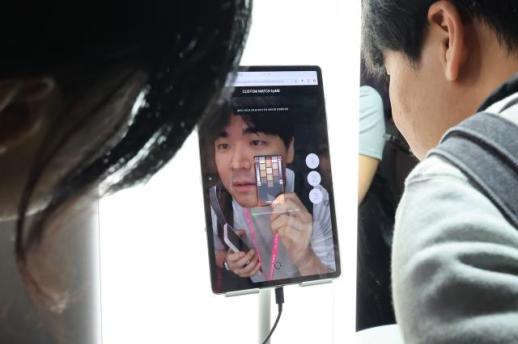 AWS' annual tech expo in Seoul showcases agentic AI, robotics innovations SEOUL, May 20 (AJP) - The annual tech expo hosted by Amazon Web Services (AWS) kicked off at COEX in southern Seoul on Wednesday, offering a space to experience the latest agentic artificial intelligence (AI) and physical AI technologies. The two-day AWS Summit Seoul brought together companies from various industries including beauty, media, manufacturing, security and robotics, showcasing their AI solutions, drawing more than 50,000 pre-registrations and about 6,000 on-site attendees. Among the highlights are diverse attractions and hands-on experiences including autonomous delivery robots that transport goods on demand, quadruped robots, gripper robots that autonomously recognize and sort types of waste, and AI-powered skin diagnostics. 2026-05-20 17:40:04
 -
 S. Korea tanker exits Strait of Hormuz after talks with Iran amid regional conflict SEOUL, May 20 (AJP) - The first South Korean-operated oil tanker stranded inside the Strait of Hormuz since the outbreak of war between the United States and Iran in late February safely exited the strategic waterway Wednesday following negotiations between Seoul and Tehran, the foreign ministry said. The vessel, operated by HMM, was passing through the Strait of Hormuz on Wednesday afternoon under coordination with Iranian authorities, according to the ministry. Foreign Minister Cho Hyun also confirmed the passage during a parliamentary session earlier in the day. “At this very moment, our tanker is leaving the Strait of Hormuz through consultations with the Iranian side,” Cho told the National Assembly’s Foreign Affairs and Unification Committee. Cho said the ship began sailing Tuesday after discussions with Iranian authorities and was proceeding “very cautiously” through the route. He also referred to “2 million barrels,” apparently indicating the volume of crude oil loaded on the tanker. Ship-tracking data from MarineTraffic and reports from Bloomberg identified the vessel as the Universal Winner, an HMM-operated crude oil tanker owned by the same company as the Namoo, which was recently struck in the region. The tanker, which had remained in waters near Qatar, began moving on June 19 along a route designated by Iranian authorities. The foreign ministry said neither the South Korean government nor the shipping company had paid tolls or compensation to Iran in exchange for the vessel’s passage. Seoul also maintained that Iran’s decision to allow the tanker through the strait was unrelated to the recent attack on the Namoo. The government said the transit became possible after Seoul repeatedly requested safe passage for South Korean-linked vessels while maintaining diplomatic coordination with Tehran through four phone conversations between the two countries’ foreign ministers and the dispatch of a special envoy. Iran informed the South Korean Embassy in Tehran late Monday that passage through the strait would be permitted, the ministry said. The notification came a day after Cho held talks with Iranian Foreign Minister Seyed Abbas Araghchi and requested clarification regarding the attack on the Namoo. The South Korean government is continuing negotiations with Tehran to secure the passage of 25 remaining South Korean-linked vessels still inside the Strait of Hormuz. Officials are reportedly prioritizing ships carrying large numbers of South Korean crew members or cargo considered strategically important to South Korea. Iran has requested that vessels use routes designated by Iranian authorities, though some shipping companies remain concerned over potential security risks and possible U.S. sanctions. The United States Department of the Treasury previously issued an advisory warning that shipping firms and vessels engaging in transactions with Iran related to safe passage through the strait could face sanctions. South Korea’s foreign ministry, however, said it believes the U.S. advisory does not apply to government-level negotiations and does not expect the tanker that exited the strait to become subject to sanctions. 2026-05-20 17:35:40
 -
 Seoul and Tokyo equities fall, Asian currencies and debt tumble on inflation fears SEOUL, May 20 (AJP) - Seoul and Tokyo bourses extended losses in a broad Asian retreat as investors moved past AI euphoria toward a reality check on the economic toll of prolonged Gulf conflicts and renewed inflation fears. The benchmark KOSPI fell 0.86 percent to close at 7,208.95 after swinging between an intraday high of 7,324.52 and a low of 7,053.84. Foreign investors sold a net 2.9293 trillion won ($1.94 billion) worth of shares, while retail and institutional investors bought 1.7106 trillion won and 1.1053 trillion won, respectively. Large-cap technology shares showed mixed performances. Shares of Samsung Electronics edged up 0.18 percent to 276,000 won even after government-mediated wage talks with its labor union collapsed ahead of a planned general strike Thursday. The Central Labor Relations Commission officially declared its second mediation attempt unsuccessful Wednesday morning after the two sides failed to narrow differences over compensation for workers in loss-making semiconductor units, including System LSI and foundry operations. The union confirmed it would proceed with the strike as planned. President Lee Jae Myung appeared to indirectly criticize the union during a Cabinet meeting Wednesday, saying labor rights were not granted “to enforce the interests of a few through collective force.” The government has previously signaled it could invoke emergency arbitration powers should the strike materially disrupt the national economy. SK hynix closed flat at 1,745,000 won. Shipbuilding shares outperformed the broader market, buoyed by expectations that rising data center-related electricity demand would boost orders for power engines and related infrastructure. HD Hyundai Heavy Industries surged 6.35 percent to 636,000 won. Elsewhere on the KOSPI, losses were widespread. Mirae Asset Securities fell 6.63 percent to 62,000 won, while LG Electronics dropped 5.58 percent to 181,000 won. POSCO Holdings declined 5.33 percent to 417,000 won, while Korea Electric Power slid 5.49 percent to 37,000 won. Doosan Enerbility lost 4.43 percent to 101,300 won, while Doosan Robotics fell 4.6 percent to 95,500 won after a second large block sale of PRS-linked shares worth about 537.6 billion won. Naver retreated 3.33 percent to 191,500 won. The tech-heavy KOSDAQ dropped 2.61 percent to close at 1,056.07 after moving between an intraday high of 1,081.04 and a low of 1,038.23. Foreign investors bought a net 194.2 billion won worth of KOSDAQ shares, while retail and institutional investors sold 57.7 billion won and 130.7 billion won, respectively. High-valuation growth shares came under renewed pressure as rising global bond yields reduced investor appetite for risk assets. AI robotics, secondary-battery and biotech shares led the decline, with robotics-related names extending recent losses amid broader weakness in AI-linked sectors. Among KOSDAQ heavyweights, Alteogen fell 1.91 percent to 359,500 won, while Ecopro dropped 2.38 percent to 118,700 won. Ecopro BM slipped 3.12 percent to 176,700 won, while HLB declined 3.84 percent to 47,600 won. Samchundang Pharm plunged 5.06 percent to 347,000 won, while ABL Bio and Kolon TissueGene each lost 5.1 percent. The Korean won strengthened slightly, with the dollar trading at 1,506.30 won, down 0.1 percent from the previous session. Asian markets also closed broadly lower. Japan’s Nikkei 225 fell 1.23 percent to 59,804.41, while China’s Shanghai Composite slipped 0.18 percent to 4,162.18. The selloff was driven by a sharp rise in long-term U.S. Treasury yields, with the 30-year yield briefly topping 5.18 percent, its highest level since 2007. The Japanese government bonds hit levels not seen in nearly three decades. 2026-05-20 17:29:42
 -
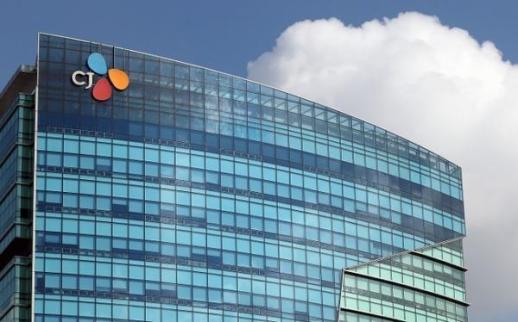 CJ Group seeks police probe over leak of female employees' personal data SEOUL, May 20 (AJP) - CJ Group filed a complaint with the Seoul Metropolitan Police Agency over the leak of personal information belonging to about 330 female employees via a Telegram channel, in the latest in a string of data security breaches rattling corporate Korea. The disclosed material the group revealed on Wednesday included mobile phone numbers, internal extensions, job titles and profile photographs, all of which matched current and former staff records, the company said. The Telegram channel, opened in 2023 and followed by about 2,800 users, surfaced over the weekend and prompted an internal probe pointing to a likely insider leak rather than an external hack, given that some of the exposed fields could only be retrieved through CJ's intranet. "We will cooperate fully with the police investigation," a CJ Group spokesperson said, adding that affected employees had been notified individually and that the company was taking steps to prevent secondary harm. The breach does not meet the threshold for mandatory reporting to the Personal Information Protection Commission, the company said, as it involves fewer than 1,000 people and does not include resident registration numbers or other sensitive identifiers. Even so, the incident has drawn fresh scrutiny because the leaked photographs and contact details target female staff exclusively, raising the prospect of stalking, harassment and other downstream abuse. The CJ leak lands amid a punishing run of cyber and data incidents at South Korean conglomerates. Shinsegae Group's IT affiliate disclosed in late December that malware had compromised the records of about 80,000 employees, including staff numbers and, for some, names, departments and IP addresses, through the group's intranet. Days later, Korean Air said about 30,000 employee records, including names and bank account numbers, were exposed when Korean Air C&D Services, a catering supplier spun off from the airline in 2020, was breached by an external hacker group. Mobile carriers SK Telecom and KT also came under government investigation last year, with the SK Telecom breach exposing internal data tied to roughly 27 million users. 2026-05-20 17:19:55