
Journalist

Kim SeongSeo
-
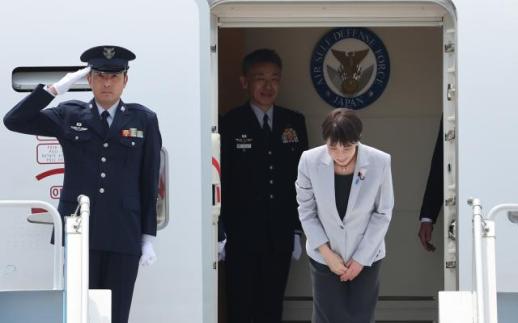 Japanese Prime Minister Takaichi Arrives in Daegu for Korea-Japan Summit Takaichi Sanae, the Prime Minister of Japan, arrived at Daegu International Airport on May 19 for a Korea-Japan summit with President Lee Jae-myung. The meeting is set to take place in Andong, the hometown of President Lee.Takaichi landed at Daegu Airport around 11:53 a.m. on a private jet. Upon exiting the aircraft at 12:09 p.m., she bowed in greeting and waved with a smile. She then shook hands with Kim Jin-ah, the Second Vice Minister of Foreign Affairs, among others.Walking along a red carpet lined with a military honor guard, Takaichi proceeded to her awaiting official vehicle.Her visit marks a two-day, one-night trip, serving as a 'hometown return visit' in response to President Lee's trip to Nara Prefecture, Takaichi's hometown, in January.President Lee is expected to personally greet Takaichi in front of a hotel in Andong, where the summit is scheduled. During President Lee's visit to Japan, Takaichi had also welcomed him outside his accommodation.The Blue House has arranged a reception equivalent to that of a state visit, with a traditional honor guard of 43 members and a military band of 29 members set to escort Takaichi's vehicle to the hotel.Takaichi is scheduled to depart for Japan via Daegu Airport on the morning of May 20 after concluding her two-day visit.* This article has been translated by AI. 2026-05-19 14:31:49
 -
 Think Big, Start Small, Scale Fast: Strategies for AI Adoption As 2025 passed, the questions surrounding AI for South Korean companies fundamentally changed. The focus shifted from "Should we adopt AI?" to "How can we operate it efficiently?" According to the McKinsey Global AI Survey (2025), 88% of companies worldwide are utilizing AI in at least one business function. However, behind these impressive figures lies a harsh reality. Only one-third of companies have scaled AI across their entire organization, while the remaining two-thirds remain stuck in the experimental or pilot phase. Gartner has warned that by the end of 2025, 30% of generative AI projects will be abandoned after the proof of concept (PoC) stage, with actual abandonment rates exceeding this prediction. This phenomenon is referred to as "AI pilot fatigue." The essence of the question has now changed. It is no longer about whether to adopt AI, but rather about how to operate it efficiently to enhance productivity and reduce costs. Many companies fail to implement AI or stop at the PoC stage not due to technological issues, but because of a lack of strategy and execution methodology. Through my experience with various companies' AI transitions, I have identified a clear principle: Think big, start small, and scale fast. The first step in AI transformation should begin not with technology, but with business. The question should be, "Where can we apply AI to create the most value for our business?" rather than "Which AI model should we use?" This involves identifying business outcome-driven areas and conducting feasibility analyses. Companies should first pinpoint AI applications linked to clear performance indicators such as revenue growth, cost reduction, risk mitigation, and enhanced customer experience. Decision-making should start from a return on investment (ROI) perspective, rather than technical curiosity or trends. Thinking big is not merely optimism. It involves strategic thinking about how AI will reshape our business model and operations in three to five years, and then working backward to determine what actions to take now. In a rapidly changing environment, making large upfront investments and following lengthy development cycles is the most dangerous approach in the AI era. Define minimum viable products or minimally operable agents for individual tasks and validate them in real work environments within short cycles. A minimally operable agent is not just a simple demo; it is a functioning AI agent that operates in real work settings and delivers measurable results. Lessons learned from small failures become assets for future expansions. Once performance is proven in individual tasks, the key is to rapidly disseminate these successes throughout the organization. However, many companies fail at this stage by attempting to simply copy and paste successful PoCs. Rapid scaling means building an AI platform that considers common environments, internal work processes, and the organization and its employees simultaneously. According to S&P Global Market Intelligence (2025), the percentage of companies that abandoned AI initiatives surged from 17% in 2024 to 42% by mid-2025. Those companies did not just lose their investments; the real loss was the time gap that occurred while competitors improved productivity through AI. Companies that successfully enter the operational phase of AI will widen their gap in productivity and cost structure compared to competitors. While rivals are stuck in repeating PoCs, those already on the operational track are preparing for the next phase. The conclusion is clear. Think big to envision the overall business outcomes first. Start small to validate minimally operable agents. Then, embed rapid scaling across the organization, focusing on platforms, processes, and employees. The foundation of this journey lies in process definition and AI-ready data, and its execution should be accelerated through strategic collaboration with AI specialists. AI transformation is not a technological issue but a matter of strategy and execution. The clock is ticking even now. Time is money.* This article has been translated by AI. 2026-05-19 14:30:39
 -
 US-China Summit Signals Start of AI and Semiconductor Rivalry The US-China summit held in Beijing in May 2026 appeared calm on the surface. President Donald Trump and Chinese President Xi Jinping projected an image focused on management rather than confrontation. Immediately after the meeting, both nations issued a generic statement expressing their commitment to continue dialogue, which provided some relief to the markets.However, the essence of this summit was far from a mere diplomatic event. It marked the official beginning of a new era of hegemonic competition over artificial intelligence (AI), semiconductors, energy, manufacturing, supply chains, data, and platforms. Just as the United States and the Soviet Union faced off with nuclear weapons during the Cold War, the 21st century has seen the US and China begin to clash over AI and semiconductors.One of the most symbolic moments of the summit was when President Trump unexpectedly invited Jensen Huang, CEO of Nvidia, to board Air Force One on his way to China. This was not just a trivial incident; it symbolized that the US prioritized AI and semiconductors in this meeting. While prominent figures from the US tech industry, such as Elon Musk and Tim Cook, were already part of the economic delegation, the urgent inclusion of Nvidia's CEO highlighted that AI semiconductors have become a national strategy.In reality, the core of the AI hegemonic competition hinges on who can secure more AI chips, build larger AI data centers (AIDCs), and provide more extensive data training and inference services. AI is no longer just a software industry; it has evolved into a massive industrial revolution platform encompassing power, semiconductors, cooling systems, networks, cloud computing, and manufacturing automation.During the summit, President Xi remarked that “the world has reached a new crossroads,” referencing the so-called 'Thucydides Trap.' This was not merely a historical reference but a strategic warning to the US. China suggested that if the US continues to exert military, economic, and technological pressure, both nations could ultimately be drawn into a vortex of significant conflict.At the heart of this is what China refers to as the '3T': Taiwan, Trade, and Technology.First, regarding Taiwan, China reaffirmed its stance of not backing down. The message was clear: if the US deepens its involvement in Taiwan or attempts military intervention, it could serve as a direct trigger for US-China conflict.Second is trade. Since the first Trump administration, the US has pressured China through tariffs and sanctions. However, China is no longer just the 'world's factory.' In sectors such as electric vehicles, batteries, solar energy, drones, telecommunications equipment, and certain AI fields, it has begun to establish world-class competitiveness. The more the US tries to push China out of the market, the more American companies risk losing access to the Chinese market.Third is technology, which is the core of this summit. The US has attempted to slow China's AI development through export restrictions on semiconductor equipment and AI chips. However, China is pursuing self-sufficiency much faster than expected.A prime example is Huawei. Despite strong sanctions aimed at dismantling the company, Huawei has become a symbol of China's technological self-reliance. Currently, Huawei is focusing on building a Chinese-style AI infrastructure with its Ascend chips and CloudMatrix system.While there remains a significant gap in individual chip performance compared to Nvidia's H200 or the next-generation Blackwell system, particularly in memory bandwidth, power efficiency, and software ecosystems, China has chosen a different path. Even if it lags in individual chip competition, it aims to maximize overall system performance by clustering hundreds or thousands of chips together.China's strategy can be summed up as “quantity over quality.” Even if power efficiency is somewhat lower and more space is required, it is pushing forward with massive capital and state support. Importantly, China is not solely targeting conversational AI like ChatGPT.China aims to integrate AI across its entire manufacturing sector, a concept referred to as manufacturing AX (AI Transformation). This includes connecting AI to automotive factories, robotics, logistics, ports, power grids, smart cities, and the defense industry. This is not merely industrial innovation; it represents the construction of a new industrial civilization.Another concerning aspect is cost. Chinese AI models have begun to establish a much lower cost structure than their American counterparts. By combining power, land, data, labor, and state support, China is rapidly reducing the costs of AI token generation. This ultimately means that numerous Chinese startups and manufacturers can adopt AI much more quickly.Conversely, the US remains the world's leading AI nation. Top AI companies, including Nvidia, OpenAI, Google, Microsoft, Amazon, and Meta, are concentrated in the US. The country maintains a dominant advantage in advanced semiconductor design, AI models, cloud computing, operating systems, and global platforms.However, the US faces a dilemma: losing access to the Chinese market. For companies like Nvidia, China represents a market that is hard to forgo. As the US government tightens export regulations, China accelerates its push for self-sufficiency, creating a situation where American companies may find it increasingly difficult to re-enter the Chinese market over time.This scenario is what Jensen Huang fears most. While American GPUs are currently the best in the world, if China builds its own ecosystem, American products could lose their foothold in the Chinese market in a few years. In other words, US regulations could paradoxically promote China's self-reliance.Amid these developments, the world is increasingly moving toward technological decoupling. In the past, during the era of globalization, US technology, Korean memory, Taiwanese foundries, and Chinese assembly factories were interconnected in a single supply chain. However, the likelihood of a split into US and Chinese blocs is growing.Interestingly, ancient classics have long warned of the dangers of excessive power clashes. The Dao De Jing states, “What is too strong does not last long,” and Sun Tzu's Art of War advises, “The best victory is the one that is achieved without fighting.” Today’s US-China technological hegemony competition is likely to culminate in the question of how to create a coexistence order rather than a complete victory for either side.The challenge lies with South Korea. South Korea is a world leader in memory semiconductors, with Samsung Electronics and SK Hynix effectively dominating the HBM market, which is crucial in the AI era. However, unlike the US, South Korea has not mastered platforms and AI models, nor does it possess the vast domestic market and state-led industrial policies like China.Recently, slogans like “AI G3” and “AI Big 3” have emerged in South Korea. However, realistically speaking, becoming the 'third AI hegemon' after the US and China is quite challenging. The US has the world’s best platforms and capital, while China has a massive domestic market and a state mobilization system. South Korea does not have the scale to compete head-on with either country.So, what should South Korea do?First, South Korea must become a key player in AI infrastructure. The country’s real strengths lie in memory and manufacturing. In the AI era, a memory-centric structure may become more important than simple GPUs. Particularly in the inference AI era, power efficiency and resolving memory bottlenecks will be crucial. South Korea should lead the development of next-generation memory and packaging, as well as low-power AI semiconductor structures beyond HBM.Second, it should adopt manufacturing AX as a national strategy. South Korea has a world-class manufacturing base in automobiles, shipbuilding, steel, semiconductors, batteries, and biotechnology. The ability to integrate AI with manufacturing may even give South Korea an advantage over the US. Rather than becoming an “AI platform nation,” South Korea should aim to be an “AI manufacturing innovation nation.”Third, South Korea must maintain a strategic balance between the US and China. The South Korean economy is linked to both US technology and the Chinese market. Choosing one side could destabilize the entire industrial base. Therefore, South Korea needs a complex strategy that cooperates with the US on technological security while also maintaining connections with China in terms of market and industry.Fourth, the direction of a South Korean sovereign AI should be realistically redefined. Competing with the US and China in the race for super-large general models is unlikely to be feasible. Instead, it is far more important to create world-class competitiveness in vertical AI optimized for specific industries such as manufacturing, healthcare, finance, defense, robotics, and logistics.The Beijing summit between the US and China may have seemed quiet on the surface, but beneath it, a massive new Cold War surrounding AI and semiconductors has already begun. The US seeks to contain China, while China aims for self-reliance. In this context, South Korea is entering a period of its most challenging strategic choices in history.The Thucydides Trap is no longer about warships and missiles; it is now about GPUs, HBM, data centers, power grids, AI models, and manufacturing AX. The next decade is likely to be a full-scale battle over who defines the standards of future industrial civilization.Will South Korea remain a mere supplier of components in this turbulent environment, or will it leap forward as a key nation in the manufacturing revolution of the AI era? The time for choice has begun.* This article has been translated by AI. 2026-05-19 14:24:52
 -
 Standard Chartered to Cut Over 7,000 Jobs with AI and Automation Standard Chartered (SC) plans to reduce its back-office and support staff by more than 7,000 by 2030 through the implementation of artificial intelligence (AI) and automation. This restructuring aims to improve cost efficiency and profitability. On May 18, local time, SC announced its strategy to investors, stating it will cut more than 15% of its corporate function workforce by 2030. The 15% reduction pertains specifically to corporate functions, including human resources, risk management, compliance, and operations support, rather than the entire employee base. According to Reuters, the reduction in corporate functions will affect more than 7,000 of the bank's approximately 80,000 employees. The Financial Times reported the figure could be around 7,800. The cuts will be driven by the adoption of AI and automation, with SC aiming to reduce repetitive tasks and enhance productivity. CEO Bill Winters stated, "We will also provide retraining for some employees." This workforce adjustment aligns with SC's goal of improving profitability. The bank aims to increase its return on tangible equity (ROTE) to over 15% by 2028 and plans to raise it to approximately 18% by 2030. SC will focus on enhancing profitability in its wealth management and corporate and investment banking sectors. The bank has set a target to increase revenue per employee by about 20% by 2028, reallocating resources to more profitable areas as it reduces back-office functions.* This article has been translated by AI. 2026-05-19 14:22:00
 -
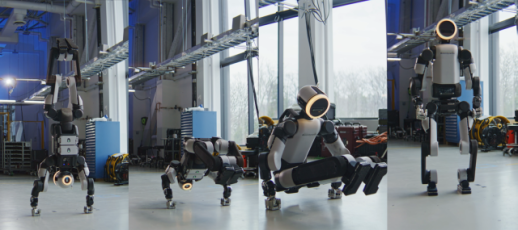 Hyundai and Kia to Deploy 25,000 Atlas Robots in Factories Hyundai Motor Group's robotics subsidiary, Boston Dynamics, is advancing its production plans for the humanoid robot Atlas.On May 18, the group held an investor relations meeting in the United States focused on its robotics strategy, where it announced plans for the mass production of Atlas.The key objective is to introduce over 25,000 Atlas robots into Hyundai and Kia production facilities. The group aims to establish an annual production system for 30,000 robots by 2028, with 83% of these allocated to Hyundai and Kia.In the initial phase of Atlas production, the costs are expected to be high, so the strategy is to leverage Hyundai and Kia's purchasing power to achieve economies of scale.Recently, Kia President Song Ho-sung stated at another investor meeting, "In the first one to two years, we will deploy a large number of robots in U.S. factories to accumulate data and ensure safety. Once the effectiveness of Atlas in specific processes is proven, we can easily expand to other factories due to the similar layouts of global automotive plants."The key component, the actuator, will be produced locally in the U.S. at a rate of 350,000 units per year. A production facility for humanoid actuators, with an annual capacity exceeding 350,000 units, will be established and operational by 2028.Actuators serve as the driving mechanism for robot joints and account for 60% of the total manufacturing cost of the humanoid. Hyundai Mobis is expected to manage the operation of the production facility for Atlas actuators.* This article has been translated by AI. 2026-05-19 14:18:32
 -
 Coupang CLS to Allow 18,000 Delivery Workers Time Off for Local Elections Coupang's delivery subsidiary, Coupang Logistics Service (CLS), will implement time off for over 18,000 delivery workers nationwide to participate in the upcoming local elections.On May 19, CLS announced that it will adjust time off for delivery workers to allow them to vote during the early voting days on May 29-30 and the main election day on June 3.Since April 15, 50 days before the local elections, CLS has been encouraging delivery companies across the country to adjust their schedules to ensure workers can exercise their voting rights. The company has sent out official requests to delivery partners to facilitate time off for workers, and many locations are adjusting their delivery schedules to allow workers to take at least one day off during the three-day voting period.According to CLS, more than 6,000 workers have already requested time off for each of the three voting days. In total, over 18,000 delivery workers are expected to take time off during the election period, with some opting for more than two days off depending on their schedules. CLS plans to send additional requests to delivery partners to encourage even more workers to participate in the voting process before the elections.A CLS official stated, "We have implemented a backup driver system to provide customers with seven-day delivery service while allowing delivery workers to work less than five days a week. During the local elections, we are also encouraging time off to ensure that delivery workers can participate in voting."Last year, on June 3, the day of the presidential election, CLS suspended its weekly rocket delivery service to ensure that delivery workers could exercise their voting rights. This marked the first time since the service's launch in 2014 that rocket deliveries were halted.* This article has been translated by AI. 2026-05-19 14:15:31
 -
 Minister Kim Jong-kwan Expresses Urgency Against Samsung Electronics Strike Kim Jong-kwan, the Minister of Trade, Industry and Energy, stated on May 19 that he feels a "desperate need" to prevent the planned strike at Samsung Electronics. He acknowledged that while everyone understands the workers' demands, the potential impact of the strike is a concern for the entire nation. During a meeting of the National Assembly's Trade, Industry, Energy, Small and Medium Enterprises Committee, Minister Kim expressed caution about the situation, saying, "If we cannot even address the potential negative effects of a strike, what can our society achieve in the future?" He emphasized the urgency and concern surrounding the issue. Regarding a recent court's temporary injunction decision, he remarked, "It seems inappropriate to discuss what is right or wrong at this moment." He also mentioned that he is in close discussions with the Minister of Employment and Labor on various matters related to the emergency mediation authority. On the same day, the labor and management sides of Samsung Electronics were engaged in a second round of post-adjustment discussions at the Central Labor Relations Commission. Park Soo-geun, the chair of the Commission, indicated that a proposal for mediation is expected, stating, "It should come out, and while it’s not ready yet, there is a possibility this evening." He noted that there has been some narrowing of differences between the two sides and that negotiations on distribution rates by sector are ongoing. The Commission plans to listen to both sides and find common ground for a mediation proposal. However, if the discussions extend for too long, they may continue into May 20. The first round of post-adjustment discussions, held on May 11-12, concluded in the early hours of May 13. The government has indicated that it may invoke emergency mediation authority if the Samsung Electronics strike materializes. The union has announced that the strike is set to begin on May 21.* This article has been translated by AI. 2026-05-19 14:09:19
 -
 Google and Blackstone Launch AI Cloud Company to Compete with Nvidia Google and Blackstone are establishing a new artificial intelligence (AI) cloud company. Google plans to leverage its proprietary AI chip, the Tensor Processing Unit (TPU), to challenge Nvidia's dominance in the AI infrastructure market. According to the Wall Street Journal on May 18, the two companies have agreed to create the AI cloud firm in the United States, although the name has not yet been disclosed. Blackstone will invest $5 billion in equity for this venture. The new company will provide cloud computing services based on Google's TPU. Benjamin Trainer Sloss, a long-time Google executive, will serve as the CEO of the new company. Google and Blackstone announced plans for the company to operate with a computing capacity of 500 megawatts (MW) by 2027, which is comparable to the power demand of a medium-sized city. The Wall Street Journal reported that Blackstone is expected to support investments totaling around $25 billion, including debt financing. This joint venture is seen as Google's most significant attempt to monetize its AI chips in the external market. Industry observers have been watching closely to see whether Google would use its TPU primarily for internal services or expand into the external cloud market. Recently, Google secured a major contract to provide approximately 1 million TPUs to Anthropic and has also entered into agreements with Meta Platforms. Competitors include Nvidia and CoreWeave. Currently, major AI companies rely on Nvidia chip-based cloud infrastructure to train and run advanced AI models. CoreWeave has rapidly grown by capitalizing on AI computing demand with Nvidia chips. Google's strategy aims to reduce its dependence on Nvidia by creating alternatives with its own chips. Last month, Google unveiled a new processor for AI inference, which is the computation involved in executing already trained AI models in real-world applications. As businesses increasingly adopt AI, the demand for inference is rising. Blackstone is accelerating its investments in AI infrastructure. The firm has pursued acquisitions of data center operators QTS Realty Trust and AirTrunk, and has invested in CoreWeave, Anthropic, and OpenAI. Stephen Schwarzman, Chairman and CEO of Blackstone, recently stated that the company holds over $150 billion in data center assets, including facilities under construction.* This article has been translated by AI. 2026-05-19 14:06:37
 -
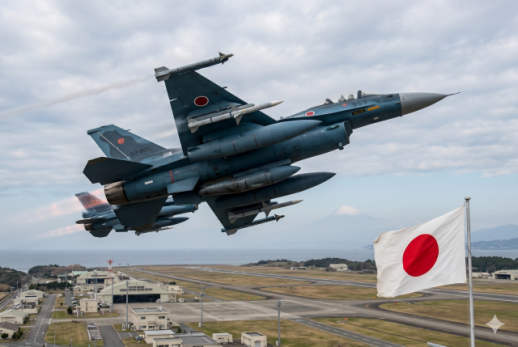 ASIA DEEP INSIGHT: Pacific forgets ghosts as Japan embraces arms trade By welcoming Japanese military exports, Manila helps Tokyo dismantle an eighty-year pacifist legacy in the name of regional deterrence. When Philippine President Ferdinand Marcos Jr. recently addressed the press to welcome Japan’s decision to loosen its post-war ban on lethal weapon exports, his phrasing was carefully calibrated for the current geopolitical moment. Japan and the Philippines, he noted, have faced "the same difficulties." He was referring, of course, to the encroaching shadow of Chinese maritime militias in the South China Sea. It is a unifying, urgent threat. But to accept his premise requires an extraordinary act of historical amnesia, effectively erasing the memory of a time when the greatest existential threat to Manila was the Imperial Japanese Army. Marcos is not acting irrationally. The daily, suffocating squeeze from Chinese coast guard vessels around contested shoals requires immediate, hard assets. Radar systems, patrol vessels, and coastal defense missiles are the currency of survival in the South China Sea today. Marcos is desperate for a patron capable of providing that maritime deterrence, and he is entirely willing to grant Tokyo moral amnesty to secure it. Washington is cheering from the sidelines, eager to outsource the heavy lifting of Pacific security to capable deputies. But look past the diplomatic handshakes and the shared anxieties over Beijing, and a profound institutional shift comes into focus. Japan is not merely adjusting its export controls to help a beleaguered neighbor. It is executing a structural dismantling of the pacifist identity that anchored East Asian geopolitics for eight decades, transforming itself from a restrained economic heavyweight into an active merchant of lethal force. The true driver of this pivot is less about democratic solidarity and more about industrial survival. For years, Japan’s defense contractors have been quietly starving. Constrained by a constitution that strictly limited the domestic military to self-defense, conglomerates like Mitsubishi Heavy Industries and Kawasaki Heavy Industries were trapped in a catastrophic business model. Building bespoke, high-tech weaponry for a single, non-combatant buyer is financially ruinous. A shrinking, aging population translates to a dwindling tax base and flat procurement budgets. Major corporations were threatening to abandon the defense sector entirely. By opening the export spigot to overseas buyers, the Japanese cabinet is executing a massive corporate bailout. Exporting lethal hardware lowers per-unit costs, scales production, and artificially sustains a manufacturing base that Tokyo believes it desperately needs. Yet, in doing so, Japan has crossed a psychological Rubicon. It has linked the financial health of its defense-industrial complex to the proliferation of global friction. Once a nation’s shipyards and aerospace factories require foreign conflicts to balance their ledgers, the state’s diplomatic posture inevitably hardens. Viewed from across the water in Seoul, this awakening provokes a quiet, historical unease. South Korea has spent the last decade building its own formidable defense export machine, moving tanks and self-propelled artillery across the globe to secure diplomatic leverage and economic growth. Now, Japan steps into the same arena, wielding immense technological supremacy, deep pockets, and an aggressive new mandate. When Japan begins mass-producing lethal weaponry for foreign battlefields, it signals to the rest of the peninsula—and to Beijing—that the era of restrained diplomacy is functionally dead. East Asia is actively replacing the fragile promise of economic integration with a cold, unforgiving race for hard military deterrence. The domestic blowback within Japan reveals a profound national cognitive dissonance. When the cabinet pushed the export revision through, it bypassed parliamentary pre-approval, sparking protests outside the Diet building. Polling consistently indicates that nearly 60 percent of the Japanese public opposes the export of lethal weapons. The citizenry recognizes what the state refuses to admit outright: becoming merchants of death strips Japan of the unique moral authority it wielded as a nation that knew the apocalyptic horrors of war and consciously chose a different path. This is what modern militarism looks like. It does not announce itself with imperial ambitions or territorial conquests. It creeps in through the quiet normalization of the military-industrial complex. The current, palpable panic regarding China provides the perfect, unassailable excuse for Tokyo to shed its historical guilt and dismantle the structural brakes that kept its defense contractors in check. The administration in Tokyo insists it is merely building a network of allied partners to prevent the outbreak of conflict, relying on the familiar, sterile belief that flooding a theater with more weapons will somehow manufacture peace. But deterrence is a fragile psychology. Manila is cheering for the very machine that once brought the Pacific to ruin, simply because this time, the weapons are pointed in the other direction. Tokyo has traded the quiet dignity of its pacifist shield for the raw, lucrative leverage of the sword, leaving a heavily armed region to wonder who will eventually bleed from its edge. 2026-05-19 14:04:54
 -
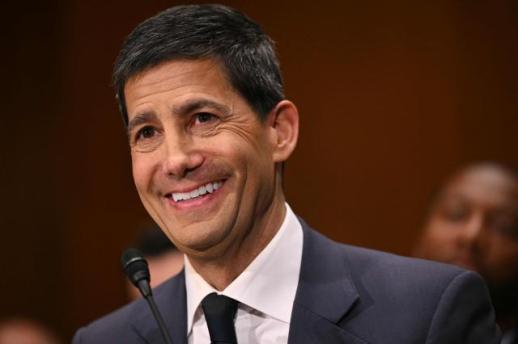 Kevin Warsh to be Sworn in as Next Fed Chair on May 22 Amid Inflation Concerns Kevin Warsh will be sworn in as the next chair of the U.S. Federal Reserve this week, beginning a four-year term. Reuters reported on May 18, citing White House officials, that Warsh is scheduled to take the oath of office on May 22, presided over by President Donald Trump. Warsh's confirmation passed the Senate on May 13 with a vote of 53 in favor and 45 against. He will chair his first Federal Open Market Committee (FOMC) meeting on June 16-17. A lawyer and financial expert, Warsh previously served as a Fed governor during the global financial crisis. He takes on the role amid inflation significantly exceeding the Fed's target of 2%. According to Reuters, while some Fed officials viewed tariff impacts as a one-time price increase, concerns about inflation have intensified due to energy price shocks stemming from the Iran conflict affecting a broad range of goods and services. Austan Goolsbee, president of the Chicago Federal Reserve Bank, stated in an interview with Fox Business, "We are facing an inflation problem," noting that the rising service prices may not solely be attributed to oil prices or tariffs. He added, "There are many issues to watch, and we need guidance from the chair." Markets are increasingly anticipating that the current benchmark interest rate of 3.50-3.75% will remain unchanged at the June FOMC meeting. However, with inflation indicators coming in higher than expected, there are speculations that the Fed may raise rates as early as December. Meanwhile, Jerome Powell, who led the Fed for eight years, completed his term on May 15. He served as interim chair until Warsh's official swearing-in and is expected to remain on the Fed board.* This article has been translated by AI. 2026-05-19 13:59:17