
Journalist

Kim SeongSeo
-
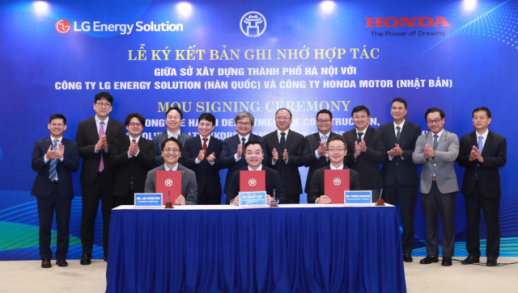 LG Energy Solution Partners with Honda and Hanoi to Expand Electric Motorcycle Market LG Energy Solution announced on May 19 that it has signed a memorandum of understanding (MOU) with Honda and the city of Hanoi to collaborate on the establishment of public battery swapping stations for electric motorcycles. The partnership will focus on several key areas: building battery swapping stations in central Hanoi, developing battery standardization and safety management systems, and jointly creating business models for electric motorcycle platforms. Starting in the third quarter of this year, LG Energy Solution, Honda, and Hanoi plan to set up approximately 50 battery swapping stations in major areas of the city and introduce a fleet of 500 electric motorcycles to launch a pilot project. The project will utilize LG Energy Solution's 2170 cylindrical batteries. Honda will be responsible for the battery packs, swapping equipment, and electric motorcycles, while the city of Hanoi will provide regulatory support and local operational collaboration. Hanoi, known as the "Motorbike Capital," has a population of about 8.5 million, with registered motorcycles exceeding 6 million, making two-wheelers an essential part of daily life. Deputy Mayor Truong Viet Trung expressed hope that the collaboration with LG Energy Solution and Honda will lead to a convenient battery swapping infrastructure for the citizens of Hanoi. A representative from LG Energy Solution stated, "Vietnam is a key country for the transition to electric motorcycles in Southeast Asia. We will continue to contribute to the development of eco-friendly transportation infrastructure in Vietnam based on our differentiated technology in the battery sector." 2026-05-19 13:09:52
 -
 South Korea Allocates $10 Million to Support Jobs Amid Middle East Conflict The South Korean government is stepping up job support in regions expected to be affected by the ongoing conflict in the Middle East. On May 19, the Ministry of Employment and Labor announced plans to expand the Regional Industry Customized Job Project, also known as the “Buttress Project,” targeting eight cities and provinces where industries are concentrated and likely to suffer from the conflict's impact. Concerns have arisen over rising oil prices and a slowdown in domestic demand due to the conflict. The Korea Development Institute (KDI) noted in its May economic trends report released on the 12th that while the effects of the conflict were not immediately visible in March's economic indicators, ongoing disruptions in oil transportation are increasing production costs and posing downside risks to the economy. Additionally, the National Data Agency's employment trends for April revealed that the number of employed persons increased by only 74,000, marking the smallest gain in 16 months. In response, the ministry has bolstered its employment crisis response by adding 12 billion won to the previously allocated 45 billion won budget for this year. The ministry reviewed project proposals submitted by nine cities and provinces and selected eight regions in urgent need of support, distributing a total of 13 billion won. The allocations include 2 billion won each for Daegu (textiles), Daejeon (logistics and transportation), Chungbuk (plastics and cosmetics), and Gyeongnam (equipment and metals). Busan (ports and transportation) and Jeju (tourism transportation) will receive 1.5 billion won each, while Gyeonggi (petrochemicals, plastics, and textiles) and Jeonbuk (chemicals and rubber) will each receive 1 billion won. Each local government will implement job support packages tailored to the characteristics of their regional industries. For example, support will be provided for the stabilization of living and housing for workers in freight transportation and tourism, along with retention bonuses for long-term employees. Additionally, living support funds will be offered to employees of companies maintaining employment, as well as reemployment support funds for those transitioning to new jobs. The ministry plans to allocate the budget to local governments in May to ensure swift implementation of the projects on the ground. Minister of Employment and Labor Kim Young-hoon stated, "Through this supplementary budget, we hope that local industries and workers facing difficulties due to the Middle East conflict can quickly overcome the employment crisis. We will carefully listen to the voices from the field and work to create a job environment that aligns with local economic conditions."* This article has been translated by AI. 2026-05-19 13:07:51
 -
 Household Debt Reaches Record High of 1,993 Trillion Won Amid Rising Non-Bank Loans Household debt in South Korea has reached a new all-time high, despite stringent government lending regulations. The increase in non-bank mortgage loans and a significant rise in investment borrowing, driven by a booming stock market, have contributed to this trend. According to the Bank of Korea's preliminary statistics on household credit for the first quarter of 2026, the total household credit balance stood at 1,993.1 trillion won at the end of March. This marks an increase of 14 trillion won compared to the end of the previous quarter, setting a record since the data was first published in the fourth quarter of 2002. While household credit decreased by 32 trillion won in the first quarter of 2024 due to monetary tightening, it rebounded to show growth for eight consecutive quarters starting from the following quarter. However, the increase in the latest quarter was smaller than the previous quarter's rise of 14.3 trillion won. Household credit encompasses loans taken by households from banks, insurance companies, lending firms, and public financial institutions, along with credit card spending (sales credit). Excluding sales credit, the household loan balance at the end of the first quarter was recorded at 1,865.8 trillion won, an increase of 12.9 trillion won from the previous quarter. By loan type, the mortgage loan balance reached 1,178.6 trillion won, reflecting an increase of 8.1 trillion won in the first quarter, marking two consecutive quarters of growth. This increase was influenced by a reduced decline in loans from public financial institutions and other financial intermediaries. The balance of other loans, including credit loans and credit extensions from securities firms, amounted to 687.2 trillion won, up by 4.8 trillion won from the previous quarter. The growth was primarily driven by an increase in credit extensions from securities firms. Lee Hye-young, head of the Bank of Korea's Financial Statistics Team, noted, "Credit extensions from securities firms increased by 7.3 trillion won in the first quarter, significantly up from the previous quarter's increase of 3.3 trillion won. This marks the third-largest increase on record." In terms of lending sources, the balance of household loans from deposit banks was 1,009.6 trillion won, a decrease of 2 billion won. While mortgage loans increased by 3 billion won, other loans fell by 6 billion won. The increase in mortgage loans was significantly lower than the previous quarter's rise of 48 billion won. The balance of household loans from non-bank deposit-taking institutions, including mutual finance, savings banks, and credit cooperatives, was 325 trillion won, reflecting an increase of 82 billion won, largely due to a surge of 106 billion won in mortgage loans. Other loans decreased by 25 billion won. Lee added, "The increase in deposit banks has slowed significantly, while the rise in non-bank institutions reflects pre-regulatory demand for loans." Regarding the ratio of household debt to GDP, Lee stated, "Household credit increased by 3.5% annually, while the preliminary real GDP growth rate was 3.6% compared to the same period last year. Based on this, the household debt ratio is expected to decrease further in the first quarter. It appears that household credit is gradually stabilizing, and if growth rates remain high, we anticipate a further decline." Looking ahead, Lee remarked, "Household credit tends to increase as the economy grows. While we do not expect a significant surge in the future, we need to monitor the recent uptick in housing transactions closely."* This article has been translated by AI. 2026-05-19 13:04:49
 -
 Korea's Fair Trade Commission Targets 'False Discounts' by Major Online Retailers South Korea's Fair Trade Commission (FTC) has urged major online shopping platforms to clearly differentiate between regular prices, sale prices, and maximum discounts that apply under specific conditions to eliminate so-called "false discounts."On May 19, the FTC announced its findings after investigating 1,335 products from four major online retailers—Coupang, Naver, Gmarket, and 11st—during the recent Lunar New Year holiday. The investigation revealed instances where retailers inflated prices to exaggerate discount rates or continued to sell products at the same price after limited-time promotions ended.Analysis of 800 gift sets offered during the Lunar New Year sales showed that 12.8% (102 items) had their prices raised during the discount period, misleading consumers about the actual savings. This practice constitutes unfair representation and advertising.Additionally, an examination of 535 items that were part of limited-time discounts in January found that 20.2% (108 items) either maintained the same price or decreased in price after the promotional period ended. The FTC considers these actions a violation of its "Online Dark Pattern Self-Regulation Guidelines."While the retailers set their own prices, the FTC emphasized that platforms also have a responsibility to prevent legal violations.To combat the inflation of discount rates through arbitrary price adjustments, the FTC recommended that retailers provide detailed explanations on product pages. It also suggested including a warning that false or exaggerated representations could lead to legal liability, along with documentation supporting the listed prices.Furthermore, the FTC advised that discount rates should be based on a general sale price applicable to all consumers, while conditions for conditional discounts should be clearly stated nearby. This aims to clarify the minimum and maximum discount rates available to consumers.An FTC official stated, "As major platforms take the lead in improving their systems, retailers must remain vigilant and accurately represent regular prices and discount rates based on objective evidence. Consumers are encouraged to use price comparison sites to check average selling prices and price trends before making purchases."* This article has been translated by AI. 2026-05-19 13:03:00
 -
 Caution Advised for Duplicate Enrollment in Health Insurance Plans The Financial Supervisory Service (FSS) issued a warning on May 19 regarding the risks associated with duplicate enrollment in group and individual health insurance plans, as well as travel health insurance. This advisory comes in response to a surge in consumer complaints about paying double premiums or misunderstanding coverage details. Consumers enrolled in workplace group health insurance can stop paying premiums for their existing individual health insurance plans. If they are enrolled in both individual and group health insurance, they can apply to their individual insurance provider to halt payments for overlapping coverage, but this is only possible after one year of enrollment in the individual plan. If a consumer's group health insurance ends due to retirement or other reasons, they must resume their individual health insurance within one month. Applications made within this timeframe will not require additional health assessments, regardless of current health status or claims history. However, if more than a month passes after the group insurance ends, resuming the individual plan may not be possible. For those who have switched from older health insurance plans to newer ones, there is a limited period during which they can revert to their previous contracts. If no claims have been made within six months of the switch, they can return to the original plan. If a claim has occurred, they can still revert within three months of the switch date. However, this option is available only once per policyholder, and a settlement of premium differences is required upon withdrawal. When enrolling in overseas travel health insurance, consumers should also exercise caution. If they already have domestic health insurance, they cannot receive duplicate compensation for domestic medical expenses, even if they enroll in travel insurance that covers these costs. Compensation will be proportionate to the actual medical expenses incurred, making it essential to verify the necessity of duplicate coverage.* This article has been translated by AI. 2026-05-19 13:01:16
 -
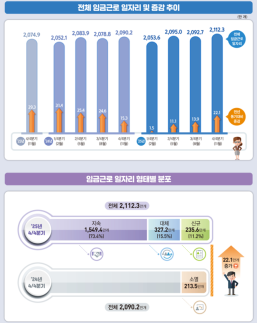 Wage Jobs Increased by 220,000, but Youth and Manufacturing Struggles Persist Wage jobs increased by over 220,000 in the fourth quarter of last year, continuing a recovery trend. However, challenges remain for youth employment and sectors like manufacturing and construction, highlighting disparities in the job market. According to the National Data Agency's report on "Wage Job Trends for Q4 2025," the total number of wage jobs reached 21,123,000 as of November last year, an increase of 221,000 compared to the same period the previous year. The growth in wage jobs saw a significant drop from 153,000 in Q4 2024 to just 15,000 in Q1 2025, marking the lowest level on record. However, there was a gradual recovery with increases of 111,000 in Q2, 139,000 in Q3, and 221,000 in Q4. Among all jobs, "sustained jobs," where the same workers remained employed, accounted for 15,494,000, or 73.4% of the total. "Replacement jobs," where workers changed due to retirement or job changes, numbered 3,272,000 (15.5%), while "new jobs" created through business formation or expansion totaled 2,356,000 (11.2%). Conversely, 2,135,000 jobs were lost due to business closures or downsizing. The employment trends varied by age group. Jobs for those under 20 decreased by 111,000, marking a 13-quarter decline since Q4 2022. Jobs for those in their 40s also fell by 37,000. In contrast, the number of jobs for those aged 60 and over increased by 246,000, while jobs for those in their 30s and 50s rose by 99,000 and 24,000, respectively. The employment struggles among youth were particularly pronounced in manufacturing and construction. For those under 20, significant job losses were seen in manufacturing (-31,000), construction (-17,000), and information and communication (-16,000). Meanwhile, the 60 and older age group saw job gains in health and social welfare (88,000), manufacturing (27,000), and business and rental services (26,000). Sector-wise, the service industry continued to show growth. The health and social welfare sector recorded the largest increase, adding 126,000 jobs compared to the previous year, driven by gains in social welfare services (81,000) and health services (45,000). The accommodation and food service sector also grew by 40,000 jobs, supported by increases in restaurant and bar services (37,000) and accommodation services (2,000). The professional, scientific, and technical services sector added 33,000 jobs, primarily in professional services (21,000) and architectural and engineering services (6,000). However, the construction sector continued to struggle, losing 88,000 jobs, while manufacturing saw a decline of 14,000 jobs. Manufacturing remains the largest sector by job share at 20.4%, followed by health and social welfare (13.1%), retail (10.3%), construction (8.5%), and business and rental services (7.0%).* This article has been translated by AI. 2026-05-19 12:59:09
 -
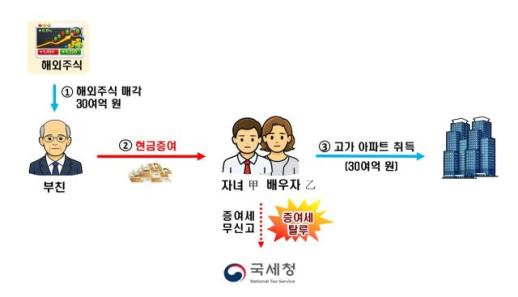 127 Individuals Under Investigation for Real Estate Tax Evasion in South Korea The National Tax Service (NTS) has launched an investigation into 127 individuals suspected of real estate tax evasion, including those who purchased high-priced apartments with cash to circumvent loan regulations or utilized parental funds in what is referred to as "parental advantage" transactions. The scope of the investigation has expanded beyond the Gangnam area to include regions in Gyeonggi Province that have recently experienced significant price increases, aiming to curb disruptions in the real estate market. On May 19, the NTS announced that it has identified a total of 127 individuals as targets for investigation, including cash-rich buyers outside loan regulations, multiple homeowners seeking capital gains, and purchasers of ultra-high-priced apartments. The categories of those under investigation include: cash-rich individuals unaffected by loan regulations, excessive private debt holders, multiple homeowners aiming for capital gains, and buyers of properties valued at over 3 billion won (approximately $2.3 million). The total value of the properties acquired by the individuals under investigation is estimated at around 360 billion won (approximately $270 million), with the estimated tax evasion amount reaching about 170 billion won (approximately $128 million). The NTS noted that as loan regulations have tightened recently, there has been an increase in cases where individuals purchase high-priced apartments using funds from parents or relatives instead of bank loans. One case under investigation involves a child who purchased an apartment in a desirable school district for over 3 billion won entirely in cash, using funds from a father who sold overseas stocks. The NTS is examining the potential for disguised gifts in such transactions. Instances of "disguised borrowing" using promissory notes are also under scrutiny. One case involved a young professional in their early 30s who borrowed over 1 billion won from their father to buy an apartment in a new city in Gangnam, with a promissory note stipulating repayment of the principal and interest upon the father's death. The NTS suspects this may be an attempt to disguise a gift as a loan. The NTS is also intensifying its scrutiny of multiple homeowners. It plans to investigate not only the sources of funds used for acquiring additional high-priced apartments but also the overall flow of funds among family members and the process of wealth accumulation. Transactions in non-Gangnam areas, such as Seongbuk-gu and Gangseo-gu, as well as Gyeonggi Province's Gwangmyeong and Guri, which have recently seen notable price increases, will also be closely monitored. The NTS is analyzing suspected tax evasion based on funding plans shared in real-time by the Ministry of Land, Infrastructure and Transport. Particularly, properties valued at over 3 billion won will undergo comprehensive verification. Following an initial investigation in October of last year, the NTS is continuing its tax audits, focusing on the sources of acquisition funds and the overall process of wealth formation. The NTS will also examine the potential misuse of business loans. After a self-correction period in the first half of the year, the NTS plans to conduct a thorough verification of cases involving the use of business loans to acquire high-priced apartments starting in the second half of the year, expanding the scope of investigation to include potential tax evasion across entire businesses. An NTS official stated, "Tax evasion in real estate transactions undermines tax justice, distorts market order, and creates social deprivation. We will respond strongly until the perception that tax evasion will inevitably be detected becomes established."* This article has been translated by AI. 2026-05-19 12:55:43
 -
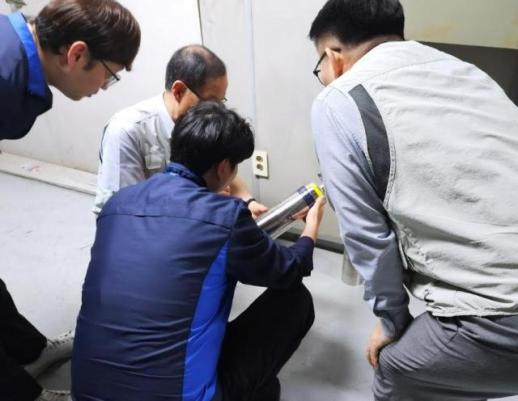 Buhyung Group Conducts Safety Inspections at 17 Sites Nationwide Buhyung Group has initiated comprehensive safety inspections across its operations to prepare for natural disasters during the summer and to prevent serious accidents. The company announced on May 19 that from May 14 to May 21, it will assess compliance with safety and health obligations at 17 sites nationwide. This initiative aims to proactively prevent safety incidents related to summer heat and heavy rainfall. The inspections will cover Buhyung Group's buildings and leisure facilities across the country. The inspections will focus on the effectiveness of safety and health management systems at each site and the implementation of practical accident prevention measures. Key inspection items include: safety and health goal setting, processes for gathering feedback from on-site workers, emergency response systems in case of accidents, risk assessments and improvements based on identified issues, and the status of fire safety equipment installation and management. Compliance with fire prevention safety regulations and the status of guidance inspections by external organizations will also be reviewed. Following its achievement of zero serious industrial accidents last year, Buhyung Group has set a management policy for this year emphasizing compliance with laws and regulations to establish a culture of safety. The company operates a dedicated safety management department and conducts regular safety training for all employees to maintain its accident prevention system. Buhyung stated, "We are taking measures to eliminate risks associated with climate change during the summer and prevent serious accidents," adding, "We prioritize safety and will maintain an environment where both visitors and workers can feel secure." Additionally, Buhyung Group has been continuously enhancing its safety and health management system since obtaining the 'KOSHA 18001' certification from the Korea Occupational Safety and Health Agency in 2019, and is now operating under the revised 'KOSHA-MS' standard. A Buhyung Group official stated, "We plan to continue regular safety training and ongoing safety education for our employees this year."* This article has been translated by AI. 2026-05-19 12:52:36
 -
 Huons Merges with Huons Lab to Enhance Bio R&D and Seek Price Benefits Huons is significantly enhancing its research and development capabilities in biopharmaceuticals by merging with its subsidiary, Huons Lab. This strategic move is seen as a way to secure benefits from government pricing incentives for innovative pharmaceutical companies. Market analysts suggest that this merger may also lay the groundwork for future succession planning.On May 18, Huons held a board meeting where it approved the merger agreement to absorb Huons Lab, which operates under Huons Global. The surviving entity will be Huons, while Huons Lab will be dissolved, with a share exchange ratio set at 1:0.4256893.The merger process is expected to be finalized at a special shareholders' meeting in July, with the official merger date scheduled for August 18. Prior to this transaction, Huons Group established a special committee, including external experts, to verify the legitimacy, fairness of conditions, and appropriateness of the procedures in accordance with Ministry of Justice guidelines.Huons plans to integrate Huons Lab's biopharmaceutical candidates into its existing synthetic drug pipeline to secure high-value growth drivers.Huons Lab possesses differentiated technologies, such as a formulation change platform utilizing human-derived hyaluronidase, which will enable the company to secure stable funding for the necessary technology transfer stages through the merger.Additionally, Huons aims to strengthen its R&D capabilities and obtain certification as an innovative pharmaceutical company. This certification is expected to enhance its competitiveness in light of the government's proposed reforms to drug pricing systems.According to the Ministry of Health and Welfare's 'Improvement Plan for National Health Insurance Drug Pricing System,' innovative and quasi-innovative pharmaceutical companies, which have a high proportion of R&D investment, will receive a maximum price of 49% for new drugs, compared to the original price of 45% for generic drugs, for up to four years. For newly listed generic drugs, innovative pharmaceutical companies will receive a price of 60%, while quasi-innovative companies will receive 50% for the same duration.Song Soo-young, CEO of Huons, stated, "We have laid the foundation to leap forward as a global company by integrating our capabilities from pharmaceutical and biopharmaceutical R&D to sales. We will strengthen our fundamentals to maximize shareholder value."Some analysts view this merger as a strategic move to complete the merger before a significant technology export, as the company's valuation is currently low. Huons Lab, which has a platform technology called 'High Diffuse' that converts intravenous (IV) formulations to subcutaneous (SC) injections, is reportedly in discussions with a global pharmaceutical company regarding contracts related to antibody-drug conjugates (ADC) SC conversion.This is also linked to future succession planning, as the company aims to complete asset restructuring and governance organization within the group to alleviate potential gift and inheritance tax burdens.* This article has been translated by AI. 2026-05-19 12:51:00
 -
 Kim Yong-nam Apologizes for Assault and Verbal Abuse Controversy Kim Yong-nam, the Democratic Party candidate for the Pyeongtaek re-election, issued an apology on May 19 in response to allegations of assault against his aides. He expressed deep regret, stating, "I sincerely reflect on my past immaturity and mistakes." He emphasized that the situation was entirely his fault and pledged to approach the citizens of Pyeongtaek with humility as he continues his campaign. In a statement, Kim said, "Regardless of the circumstances, I bow my head in sincere apology. I feel a heavy sense of regret and responsibility for the deep wounds caused by my harsh words and actions." He explained that the incident stemmed from the pressure he felt during his first term as a lawmaker to achieve results, admitting, "My inability to control my emotions and my outburst of anger were entirely my immaturity and mistake." Kim acknowledged that he failed to consider the feelings of his dedicated colleagues who worked tirelessly alongside him, vowing to reflect on himself strictly and to listen to the citizens of Pyeongtaek with the utmost humility. The candidate's campaign team also released a statement denying the allegations, asserting that no one in the camp has experienced or witnessed the violence or abusive language described in the reports. They stated, "As the election approaches in two weeks, the attacks will become sharper, but our staff and volunteers will remain steadfast. There is no top-down management style in our campaign that supports one politician over another." Earlier that day, a media outlet reported on the allegations of assault and verbal abuse against Kim during his first term as a lawmaker. An aide claimed that Kim kicked him in the shin with his shoe and subjected him to various verbal abuses, leading to the controversy.* This article has been translated by AI. 2026-05-19 12:43:48