

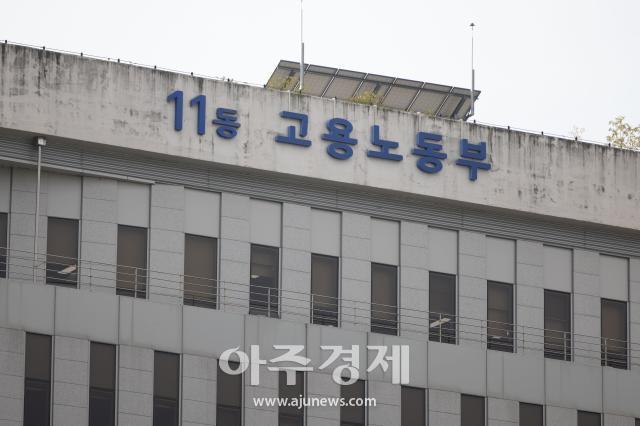
On May 19, the Ministry of Employment and Labor announced plans to expand the Regional Industry Customized Job Project, also known as the “Buttress Project,” targeting eight cities and provinces where industries are concentrated and likely to suffer from the conflict's impact.
Concerns have arisen over rising oil prices and a slowdown in domestic demand due to the conflict. The Korea Development Institute (KDI) noted in its May economic trends report released on the 12th that while the effects of the conflict were not immediately visible in March's economic indicators, ongoing disruptions in oil transportation are increasing production costs and posing downside risks to the economy. Additionally, the National Data Agency's employment trends for April revealed that the number of employed persons increased by only 74,000, marking the smallest gain in 16 months.
In response, the ministry has bolstered its employment crisis response by adding 12 billion won to the previously allocated 45 billion won budget for this year. The ministry reviewed project proposals submitted by nine cities and provinces and selected eight regions in urgent need of support, distributing a total of 13 billion won.
The allocations include 2 billion won each for Daegu (textiles), Daejeon (logistics and transportation), Chungbuk (plastics and cosmetics), and Gyeongnam (equipment and metals). Busan (ports and transportation) and Jeju (tourism transportation) will receive 1.5 billion won each, while Gyeonggi (petrochemicals, plastics, and textiles) and Jeonbuk (chemicals and rubber) will each receive 1 billion won.
Each local government will implement job support packages tailored to the characteristics of their regional industries. For example, support will be provided for the stabilization of living and housing for workers in freight transportation and tourism, along with retention bonuses for long-term employees. Additionally, living support funds will be offered to employees of companies maintaining employment, as well as reemployment support funds for those transitioning to new jobs.
The ministry plans to allocate the budget to local governments in May to ensure swift implementation of the projects on the ground.
Minister of Employment and Labor Kim Young-hoon stated, "Through this supplementary budget, we hope that local industries and workers facing difficulties due to the Middle East conflict can quickly overcome the employment crisis. We will carefully listen to the voices from the field and work to create a job environment that aligns with local economic conditions."
* This article has been translated by AI.
Copyright ⓒ Aju Press All rights reserved.