
Journalist

Kim SeongSeo
-
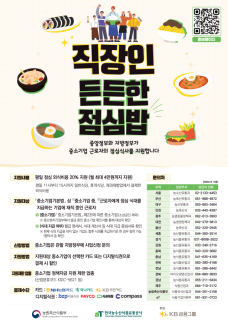 Government to Support Lunch Costs for Small Business Workers The Ministry of Agriculture, Food and Rural Affairs announced on May 19 that it will launch the "Substantial Lunch Program for Workers" starting on the 21st to alleviate the lunch cost burden for employees of small businesses and stimulate sluggish dining consumption.This initiative aims to ease the burden of "lunchflation" on small business employees by providing partial support for lunch expenses through collaboration between the government, local governments, and sponsorship from KB Financial Group. Discounts will be offered via point rewards from card companies or digital meal vouchers.The program will target 50,000 workers employed at small businesses as defined by the Small and Medium Enterprises Basic Act, provided that their companies currently subsidize lunch expenses. However, companies participating in the "1,000 Won Breakfast for Industrial Complex Workers" program will be excluded from this support.Eligible workers can receive a 20% discount on their lunch expenses, up to a maximum of 40,000 won per month, when dining out between 11 a.m. and 3 p.m. on weekdays. Discounts will not apply to meals purchased at company cafeterias, convenience stores, or through delivery apps.Jung Kyung-seok, Director of Food Industry Policy at the Ministry of Agriculture, Food and Rural Affairs, stated, "We hope the Substantial Lunch Program for Workers will reduce the financial burden on small business employees while also boosting sales for local dining establishments. We will strengthen communication with private companies and local governments to continue expanding this initiative."* This article has been translated by AI. 2026-05-19 12:15:24
 -
 Agriculture Minister Song Mi-ryeong to Host Live Commerce Event Amid Onion Price Drop As onion prices plummet due to oversupply, Minister of Agriculture, Food and Rural Affairs Song Mi-ryeong will take to live commerce to sell fresh onions. The Ministry announced that Minister Song will participate as a "guest host" in a live commerce broadcast scheduled for 1 p.m. at the Iksan Agricultural Cooperative online studio in North Jeolla Province. The event aims to encourage onion consumption, during which Minister Song will explain the benefits and storage methods of onions. The live commerce event will be streamed for 60 minutes on Naver Shopping Live and the NH Imarket channel. The first 1,000 customers to make a purchase will receive onion pickling sauce, while 100 customers who verify their purchases will receive melons as gifts. The minister's involvement in the event is a response to a significant drop in onion prices compared to last year. According to the Korea Agro-Fisheries & Food Trade Corporation's Agricultural and Fisheries Product Distribution Information System (KAMIS), the consumer price of onions is currently 2,477 won per kilogram, a 23.2% decrease from the same period last year. The Ministry aims to stimulate market demand and stabilize the depressed onion prices through this promotional event. Minister Song stated, "I hope our farmers' delicious and nutritious produce, which they have cultivated with care, will be purchased generously. I also ask for warm support for our farmers."* This article has been translated by AI. 2026-05-19 12:15:00
 -
 Apple Announces Schedule for WWDC, Expected to Feature AI Announcements Apple has unveiled the schedule for its annual Worldwide Developers Conference (WWDC), which is expected to be Tim Cook's last as CEO. On June 8, Apple announced that WWDC 2026 will take place from June 8 to June 12. WWDC is Apple's yearly developer event, typically showcasing the next generation of operating systems and software updates. Given Apple's recent announcement that it will adopt Google's generative AI model, Gemini, for the next version of Siri, this year's event is likely to emphasize AI-related announcements. Historically, Apple has unveiled new iPhone products in September, suggesting that this WWDC will focus more on software and AI functionality updates rather than hardware. Last year's WWDC featured a major update with the introduction of 'Liquid Glass,' a design overhaul inspired by glass textures. The keynote address will be held on June 8 at 10 a.m. Pacific Time (2 a.m. Korea Time on June 9) and will be streamed live on Apple's official website, the Apple TV app, and the Apple YouTube channel. On the same day at 1 p.m., the 'Platform State of the Union' event will also take place. This year's conference will include video sessions, guides, group labs, and the Apple Design Awards. The group labs will feature live online presentations and Q&A sessions led by Apple engineers and designers. WWDC 2026 is expected to be the last developer conference attended by Cook as CEO. In April, Apple announced that John Ternus, the senior vice president of hardware engineering, will take over leadership in September. Cook became CEO in 2011, succeeding Apple co-founder Steve Jobs. Under his leadership, Apple has experienced unprecedented growth, driven by the expansion of the iPhone and services. However, the company has faced criticism for lagging behind competitors in the AI sector. Although Apple introduced 'Apple Intelligence' at WWDC 2024, the rollout of related features has not met investor and consumer expectations. In contrast, Samsung and Google have rapidly integrated generative AI into smartphones, search engines, productivity tools, and mobile operating systems over the past two years, leading the AI device market.* This article has been translated by AI. 2026-05-19 12:12:46
 -
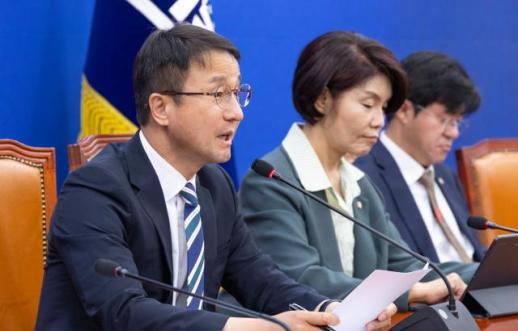 Ruling Party Criticizes Oh Se-hoon Over GTX-A Steel Shortage and Han River Bus Issues The Democratic Party criticized Oh Se-hoon, the People Power Party candidate, on May 19, over allegations of missing steel reinforcements in the GTX-A project and issues related to the Han River bus service. They stated, "He is unfit to take responsibility for Seoul. He should resign and take accountability," and emphasized, "We cannot entrust citizen safety to someone who shifts blame." During a National Assembly meeting, Han Byeong-do, the party's floor leader, highlighted three major administrative failures that threaten citizens: the 20 billion won spent on the audit of the Han River bus service, the 150 billion won wasted, and the 2,570 missing steel reinforcements in the construction project. Han added, "It seems Oh prioritizes showcasing his achievements over the lives and safety of citizens. Similar to the free school meal incident, why not step down and take responsibility now? Oh, who hides failures and neglects safety, is not qualified to lead Seoul." Han Jeong-ae, the party's policy chair, pointed out, "Oh claims the construction company is at fault, but the bidding documents from the Seoul city government list him as the responsible party. This is no different from the Han River bus incident, where he shifted blame to human error after safety accidents occurred." She stressed, "This is shameless evasion of responsibility. We cannot entrust the safety of citizens to someone who prioritizes their own security and shifts blame." Cheon Jun-ho, the party's deputy floor leader, also criticized Oh, stating, "He is characterized by a lack of concern for safety and blatant arrogance. He must take responsibility and apologize first. The most important value a mayor should uphold is the safety of citizens."* This article has been translated by AI. 2026-05-19 12:10:35
 -
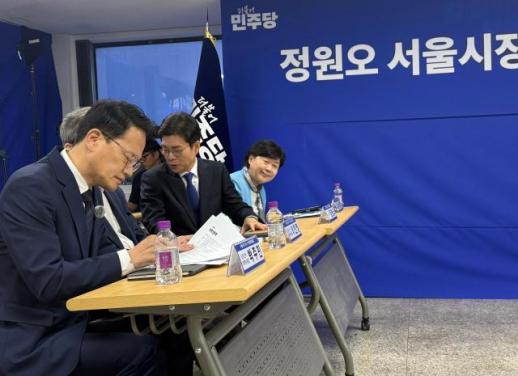 Jung Won-oh Criticizes Oh Se-hoon for Safety Negligence as Democratic Party Launches Campaign Jung Won-oh, the Democratic Party's candidate for Seoul mayor, held his final public meeting before the official campaign kickoff. The meeting, held on the morning of May 19 in Jung-gu, Seoul, featured key figures including Seo Young-kyo, Park Joo-min, Jeon Hyun-hee, and Lee In-young, who launched a coordinated attack on Oh Se-hoon, the candidate from the People Power Party. During the meeting, Jung stated, "This election must serve as a judgment on Mayor Oh's incompetence and irresponsible administration," emphasizing that "citizen safety is the most important factor that cannot be compromised." He criticized the city administration for its "safety negligence," pointing to a series of incidents including the Yongsan and Itaewon disasters, flooding in Gangnam, basement accidents, sinkholes, and bus incidents along the Han River. "These are not isolated incidents; if they keep happening, it indicates a structural problem," he said. Jung highlighted that in the past five years, Seongdong-gu has experienced zero sinkholes, flooding, or major safety accidents, asserting, "I, Jung Won-oh, will prove my commitment to creating a safe Seoul through action, not just words." Seo Young-kyo raised concerns about the company awarded the Audit Garden contract, linking it to the Unification Church. She stated, "The company 'Ilshin Stone' was awarded the contract to install stone columns, and its founder is related to Moon Sun-myung, the late leader of the Unification Church," questioning the relationship between Oh and Ilshin Stone. She also noted that despite two bids—one from company A for 2.9 billion won and Ilshin Stone for 3.9 billion won—Ilshin Stone was ultimately selected as the contractor. Park Joo-min criticized the Audit Garden, calling it a symbol of Oh's disregard for citizens. He pointed out that Oh was not included in the guest list for the Audit Garden completion ceremony and that his impromptu speech turned the taxpayer-funded event into a campaign rally. Jeon Hyun-hee intensified the criticism regarding the missing rebar in the GTX-A line construction, calling it "incredibly shameless for a mayor." She warned that such safety oversights could lead to major disasters threatening citizens' lives and safety, adding, "Instead of apologizing, Oh has shifted responsibility to the construction company and the railway authority." Jeon further questioned why the city did not respond swiftly if it was aware of the missing rebar, urging Oh to stop making excuses and to take responsibility for the management failures, delayed responses, and allegations of cover-ups that jeopardize citizen safety.* This article has been translated by AI. 2026-05-19 12:07:36
 -
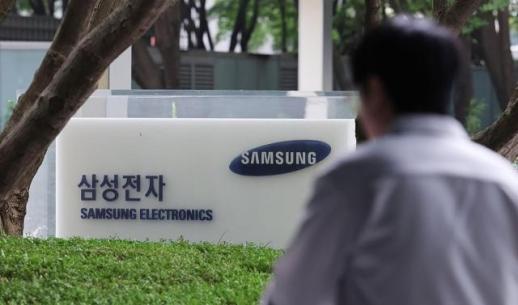 Samsung Electronics Employees' Average Salary Reaches Record 12 Million Won in Q1 Samsung Electronics employees earned an average salary of approximately 36 million won in the first quarter, translating to about 12 million won per month. This figure marks a 25% increase compared to the same period last year, reaching an all-time high. According to an analysis by the Korea CXO Research Institute on Samsung's first-quarter report, total employee compensation is estimated to be between 4.2584 trillion and 4.7907 trillion won. The ratio of salary to total employee compensation has remained consistent, ranging from 76% to 85.5%. This estimate is based on the total salary expenses of 5.0632 trillion won for the first quarter. The average number of employees enrolled in the National Pension Service during the first quarter was 125,580, leading to an estimated average salary of between 33.91 million and 38.15 million won. Monthly salaries are estimated to be between 11.3 million and 12.7 million won. In comparison, the average salary for Samsung employees in the first quarter of last year was between 27.07 million and 30.46 million won, indicating an increase of over 25% year-on-year. This growth rate is more than double the 11.6% increase from 2023 to 2024. In addition to the average salary, the total salary expenses also reached a record high. Last year's first-quarter salary expenses were 4.4547 trillion won, while this year they surpassed 5 trillion won for the first time, totaling 5.6032 trillion won. The Korea CXO Research Institute noted, "The improvement in operating profit in the first quarter has contributed to the highest salary levels for employees. If performance bonuses are included, annual compensation could increase significantly."* This article has been translated by AI. 2026-05-19 12:04:31
 -
 Hancom Offers Up to 50 Million Won for Employees Innovating with AI Hancom has announced a special reward of up to 50 million won for employees who achieve significant work innovations using artificial intelligence (AI). This initiative goes beyond merely distributing generative AI tools; it aims to accelerate the company's overall AI transformation (AX) by providing performance bonuses and additional recognition for employees who successfully integrate AI into their work processes. In an interview with Aju Economy at Hancom's headquarters in Seongnam, CISO Park Sang-hyung stated, "AX is not just about introducing AI tools; it represents a fundamental change in how organizations operate in the AI era. The key is to redefine how much work we delegate to AI and what roles and responsibilities we retain for ourselves." Hancom is currently implementing a growth structure for AX that includes three stages: AI Crew, AX Challenger, and AX Champion. The first stage, AI Crew, allows anyone to freely share their AI experiences. The second stage, AX Challenger, involves executing actual work innovation projects. The final stage, AX Champion, is awarded to employees who demonstrate outstanding AX results. Hancom provides AX Champions with a special bonus of 50 million won and additional recognition in performance evaluations. This approach is considered unusual in the industry as it integrates AI usage experience into the organizational culture and evaluation system rather than treating it as a mere internal event. Park, who joined Hancom in 2013 as an infrastructure architect and later became a cloud architect, took on the role of CISO this year. Previously focused on designing the scalability and connectivity of infrastructure, he now also designs security and control structures suitable for the AI era. He explained, "While the core challenge used to be how to connect systems and make processes flexible, the focus has now shifted to how to securely control those connections. In the AX environment, the priority is not to restrict AI adoption but to create a structure that allows for its safe utilization." At the end of last year, Hancom declared a company-wide AX initiative, signaling a shift from its traditional image as an office software provider to a specialized AX company. This direction aims to redesign the entire organizational workflow and role structure around AI. Park identified the main difference between digital transformation (DX) and AX as the "delegation of roles." He stated, "DX was about digitizing tasks previously handled manually to reduce errors and increase speed, while AX involves negotiating how much authority and responsibility can be safely transferred to AI within that DX environment." He added, "We are currently in a transitional phase. There is still no complete societal consensus on how much decision-making and execution authority we can grant to AI. Ultimately, identifying the points where human intervention is essential is a key challenge for companies." Within Hancom, AI is evolving from a simple assistive tool to a fundamental change in work processes. Initially, all employees were provided with the same AI chatbot environment, but now each department is developing AI agent structures tailored to their specific work characteristics. The implementation process has not been easy. Park noted, "When we began reviewing tools, various departments were already actively using over 100 different AI tools. We believed that enforcing uniform control could lead to backlash from employees and issues with unauthorized external AI services." As a result, Hancom opted for a hybrid strategy centered on actual business needs rather than a top-down approach. This involved first surveying employee demands and then concurrently evaluating functionality, security, cost, and corporate stability. He remarked, "The entire process from survey to actual implementation took only a month, as we recognized the importance of speed in the AI domain and made quick decisions." "Finance Team Also Reviews Code"—AI Innovation Spreads Beyond Development Roles Departments have adopted different approaches. The finance department focused on designing verification structures to reduce errors, prioritizing data accuracy to prevent AI from generating arbitrary outputs. In contrast, the content team approached the task by pre-designing prompts and execution structures to quickly produce desired outcomes. Notably, changes in non-development roles have been significant. Park stated, "Tasks that previously required requests to the IT department are now being implemented directly by operational staff using AI agents. Currently, even employees in the HR and finance teams are considering which APIs to connect and how to structure workflows while reviewing code screens." During Hancom's internal AX presentation event, known as AX Day, a case was shared where an HR team employee implemented an automated seating arrangement system using generative AI. This employee, lacking prior development experience, learned the necessary skills through extensive interaction with AI and completed the implementation without assistance from a separate development team. Hancom is also systematically documenting employees' AX experiences through the "AX Practice Process," which has now accumulated over 750 cases. This documentation goes beyond simply stating, "AI was used"; it details how employees analyzed their work, what data they utilized, and the trials and errors they encountered throughout the process. For instance, the documentation includes how a task that previously took 10 hours was reduced to under one hour after the introduction of an AI agent, along with potential future automation expansions. Park emphasized, "We are not just improving productivity; we are accumulating the experience of utilizing AI as a colleague as an organizational asset. When employees in one team begin to achieve results with AX, it naturally influences other teams. Ultimately, AX is a cultural issue." He concluded, "What matters is not which AI tools we use, but how we redefine work in the AI era. Hancom is experimenting and validating AX internally to create a new organizational culture for the AI age."* This article has been translated by AI. 2026-05-19 11:56:58
 -
 14th Season 'I Am Solo' Star Sunja Marries Actor Choi Joo-won Sunja, a participant from the 14th season of the dating reality show 'I Am Solo', has recently married actor Choi Joo-won. According to entertainment industry sources on May 19, Sunja tied the knot with Choi Joo-won on May 16 at Samcheonggak in Seoul. Prior to the ceremony, Sunja announced her marriage on social media on May 9. On the eve of her wedding, she expressed her affection for her fiancé, stating, "I met a partner who makes me even more wonderful." Choi Joo-won is known for his role as Joo-won, a classmate of the character Sun-oh played by Song Kang in the 2019 Netflix drama 'Love Alarm'. He also appeared as the rising star Hwani in the pre-produced drama 'Absolute Boyfriend' around the same time. Recently, he starred in the film '1 Win'. Sunja publicly supported Choi's film on social media during its release last year, showcasing her affection for him. Sunja gained recognition through her appearance on the 14th season of 'I Am Solo', which featured a special theme of 'Gold Miss & Mister'. At the time of filming, she was 40 years old and introduced herself as the CEO of a biotech cosmetics company, drawing attention for operating her business in Cheongdam-dong. During the show, Sunja revealed that she was a serious injury survivor from a major car accident in Cheongdam Intersection. She shared that she wished to have a partner to rely on during her recovery, which became a compelling part of her story and captured the audience's interest.* This article has been translated by AI. 2026-05-19 11:52:31
 -
 LG Innotek Shares Rise Over 6% Amid Optimism for Substrate Business LG Innotek is experiencing a strong performance in early trading, driven by expectations for growth in its substrate business. According to the Korea Exchange, as of 10:16 a.m. on May 19, LG Innotek shares rose by 51,000 won (6.71%) to 811,000 won. The stock opened at 770,000 won and briefly reached 829,000 won during the session. Market analysts attribute this surge to the substrate business emerging as a new growth driver following the existing optical business, prompting several brokerages to raise their target prices. KB Securities noted in a report that "multiple big tech clients are proposing binding long-term supply contracts for the substrate business, including large upfront payments and penalty clauses similar to those in memory semiconductor agreements, along with support for facility investments." As a result, they raised their target price for LG Innotek by 26% to 1.2 million won. Meritz Securities also increased its target price by 19.1% to 810,000 won, reflecting upward revisions in performance estimates for the package solution division from this year to next year and adjusting the target price-to-book ratio from 2.3 times to 2.6 times. NH Investment & Securities stated that "the deepening substrate shortage is spreading benefits across the industry, leading us to remove the previous 30% multiple discount applied to the package solution division. We expect the benefits from camera specification upgrades for major clients to be greater than previously anticipated, prompting us to revise our performance estimates upward." They raised their target price from 700,000 won to 1 million won while maintaining a 'buy' recommendation.* This article has been translated by AI. 2026-05-19 11:51:00
 -
 TMC Secures $8.3 Million Contract for Fiber Optic Cables with U.S. Data Center TMC shares surged after the company announced a significant contract with a U.S. data center and artificial intelligence (AI) infrastructure firm for fiber optic cables. The news has positively influenced investor sentiment. According to the Korea Exchange, as of 10:14 a.m. on May 19, TMC's stock rose by 6,900 won (29.81%) to 30,050 won compared to the previous trading day. TMC confirmed that it has signed a supply contract worth 11 billion won (approximately $8.3 million) for fiber optic cables intended for data centers. The company stated, "This contract represents the largest single fiber optic cable supply agreement secured in the North American data center market." The supplied product is a single-mode MPO-8 backbone cable designed to enable long-distance, high-speed connections of 400G and above in AI and hyperscale data centers. It serves as a critical infrastructure material for ultra-fast data transmission between servers and switches within data centers, essential for next-generation AI training and inference traffic processing. A TMC representative noted, "The total supply volume amounts to 25,000 kilometers of fiber optic cable," adding that the client is a U.S. data center and AI infrastructure specialist, with the end user confirmed to be a global cloud and data center company.* This article has been translated by AI. 2026-05-19 11:48:22