

Journalist

Ko Yu-hwan
-
 KFTC Approves Conditional Acquisition of Sanofi's Cancer Drug by Boryung The Korea Fair Trade Commission (KFTC) has halted Boryung's acquisition of Sanofi's cancer drug Taxotere, citing significant concerns over reduced market competition. On June 4, the KFTC announced that it had reviewed Boryung's plan to acquire the marketing rights for Taxotere, an original cancer drug containing docetaxel, from Sanofi. The commission determined that the merger would substantially limit competition and ordered Boryung to divest the Taxotere business to a third party. Docetaxel is widely used for breast cancer treatment, with market shares in South Korea showing Sanofi at 64.7%, Boryung at 13.8%, and Dong-A ST at 6.9%. Boryung had signed a contract last October to acquire all necessary rights for Taxotere's domestic and international sales from Sanofi and subsequently reported the merger to the KFTC. The KFTC expressed concerns that the merger would lead to monopolistic practices. With Boryung holding a 13.8% market share as the second-largest player and Sanofi holding 64.7% as the market leader, the combined entity would control 78.5% of the market, creating an overwhelming dominant position. There were also worries that the merger could lead to a decline in product quality or reduce competitive incentives. Boryung has been the only company in South Korea to develop and supply an alcohol-free docetaxel product, competing on quality with the leading product. However, concerns arose that acquiring the leading product could diminish Boryung's motivation to maintain quality competition. As a result, the KFTC conditionally approved the merger, mandating Boryung to sell the Taxotere business. Specifically, Boryung must divest its Taxotere-related assets to a third-party pharmaceutical company within six months to ensure a sufficient number of effective competitors in the market. Additionally, to prevent any weakening of Taxotere's competitive capabilities, Boryung is prohibited from ceasing production and supply of Taxotere or encouraging a shift to Taxotere sales until the divestiture is complete. After the sale, Boryung will be required to supply finished Taxotere products and provide technical support to the acquiring company for a specified period upon request. A KFTC official stated, "This merger will help secure a stable supply of essential medicines for treating breast cancer and other conditions by enabling the domestic manufacturing and sale of the original docetaxel cancer drug. We will closely monitor anti-competitive mergers to actively prevent monopolistic practices and consumer harm."* This article has been translated by AI. 2026-06-04 12:03:00
 -
 Government to Revamp Integrated Pension Portal for Easier Retirement Asset Management The government is set to revamp the Integrated Pension Portal to enhance the convenience of managing citizens' retirement assets. Plans are in place to strengthen the comparison and search functions for pension products and to reorganize the content and menu structure based on user feedback, with a new service expected to launch by the end of the year. On June 4, the Ministry of Employment and Labor, along with the Financial Services Commission and the Financial Supervisory Service, announced the plan to improve the Integrated Pension Portal, aiming to make it easier for citizens to compare and analyze pension products and retirement asset information. The Integrated Pension Portal serves as a support platform that consolidates information on various pension schemes, including the National Pension, retirement pensions, and pension savings. User numbers have increased from 1.75 million in 2023 to 1.79 million in 2024, and further to 2.61 million, establishing it as a key tool for managing retirement assets. However, the government has determined that the current portal primarily provides information from the perspective of pension providers, indicating a need for improvements from the user’s viewpoint. To address this, the government plans to gather user complaints and suggestions to thoroughly review the content structure and menu system, as well as to enhance the comparison and search functions for pension products. The government will identify areas for improvement through a five-step process that includes ongoing collection of user feedback, in-depth interviews, new surveys, analysis of past survey results, and benchmarking against successful platforms. In particular, in-depth interviews will be conducted with financial consumer reporters, university student reporters, and representatives from pension-related associations and financial companies. An online satisfaction survey is also scheduled for June and July. The government aims to finalize improvement tasks by September, followed by system development, with the revamped Integrated Pension Portal service expected to be unveiled in December. A Ministry of Employment and Labor official stated, "We will actively reflect user opinions to improve the Integrated Pension Portal, enabling citizens to manage their retirement assets more easily and conveniently."* This article has been translated by AI. 2026-06-04 12:03:00
 -
 Korea's Fair Trade Commission Fines Woojin Electric 126 Million Won for Violations A manufacturer that requested technical data from its subcontractor without providing written documentation and failing to establish a non-disclosure agreement has faced sanctions from the Fair Trade Commission (FTC). On June 4, the FTC announced it has imposed a fine of 126 million won ($106,000) on Woojin Electric, a manufacturer of railway vehicles and electric buses, for violating subcontracting regulations. The company requested and received 11 technical documents, including component manuals and specifications for batteries, via email without providing the required written documentation or signing a non-disclosure agreement. The requested documents contained critical information about the components and technical specifications. According to the FTC, Woojin Electric's failure to provide written documentation when requesting these materials was a violation of the law. Furthermore, it was found that no non-disclosure agreements were signed for three of the documents. As a result, the FTC decided to impose a fine along with a prohibition order based on Article 12-3, Paragraphs 2 and 3 of the Subcontracting Act. An FTC official stated, "We will intensively monitor procedural violations to prevent the potential misuse of technology. We also plan to improve the fine system, including raising the maximum fines and rationalizing the criteria for imposing fines to deter violations of subcontracting laws, such as technology misappropriation."* This article has been translated by AI. 2026-06-04 12:03:00
 -
 Despite High Survival Rates, South Korea Lacks Leading University Startups A recent assessment reveals that while South Korea's university startups have seen quantitative growth, they have failed to generate stable profits and produce globally leading companies. The Bank of Korea has suggested the need to establish a "growth ladder" throughout the startup process to ensure that excellent university technologies contribute to economic growth. In a report titled "Establishing a Growth Ladder for the Qualitative Transformation of University Startups: Diagnosis of Stage-Specific Constraints and Policy Tasks," released on June 4, the Bank of Korea outlined these findings. According to the report, the domestic university startup ecosystem has steadily expanded. The number of university startups increased from 987 in 2011 to 2,887 in 2024, nearly tripling. The five-year survival rate for university startups stands at 74%, significantly higher than the general startup survival rate of 33.8% and the OECD average of 45.4%. However, despite this quantitative growth, qualitative outcomes remain disappointing. None of the top 30 companies by market capitalization in South Korea originated from university startups. In contrast, five of the top 10 companies in the U.S., including Google, Apple, Microsoft, Broadcom, and Meta, have roots in university innovation. University startups are considered a crucial pathway for converting high-risk, high-value technologies and skilled talent into economic value, and they are seen as a major alternative for enhancing long-term growth rates. Nevertheless, the level of technology commercialization at South Korean universities lags behind that of major countries. The technology transfer rate at South Korean universities is approximately 26%, significantly lower than the U.S. rate of 40.9% and the U.K. rate of 61.0%. Although eight South Korean universities rank among the top 50 globally in terms of international patent applications, this technological competitiveness has not translated into successful commercialization. The profitability of startup companies is also weak. University startups have faced rising costs that outpace revenue growth during their expansion phases, leading to a decline in operating profit margins to -3.3% by the fifth year. Additionally, their research and development (R&D) spending is only half that of the average for high-tech venture firms, indicating limitations in accumulating innovative capabilities. The Bank of Korea analyzed that university startups are encountering what it calls "two valleys of death"—financial difficulties during both the initial startup phase and the business expansion phase. In the startup phase, entrepreneurial achievements are not adequately reflected in faculty evaluations, and there is a lack of safety nets to support recovery after failures. During the commercialization phase, a shortage of specialized personnel and practical infrastructure has hindered the connection of technology to the market. Furthermore, during the scale-up phase, securing follow-up investments has been challenging, and in the follow-up investment and exit phase, the market for mergers and acquisitions (M&A) is limited, resulting in an inadequate investment cycle. To address these issues, the Bank of Korea proposed three main policy pillars: reforming university governance, expanding the role of public sector demand, and encouraging private investment. It suggested establishing a separate evaluation system that reflects technology transfer and startup achievements in faculty performance assessments to enhance entrepreneurial incentives. Additionally, it emphasized the need to implement a "Try-Buy" system, where public institutions present technology projects, and startups can secure initial sales by delivering prototypes that meet performance criteria. Moreover, the report recommends expanding new funding mechanisms such as intellectual property (IP) collateral exceptions and revenue-based financing (RBF), as well as gradually relaxing regulations on corporate venture capital (CVC) to stimulate private investment. It also proposed the introduction of a dedicated trading market for university innovation startups within unlisted stock distribution platforms to broaden investment recovery pathways.* This article has been translated by AI. 2026-06-04 12:03:00
 -
 TSMC Chairman Confident in AI Demand Driving Growth, Forecasts Over 30% Revenue Increase World's largest semiconductor foundry, TSMC, expressed confidence in future growth driven by increasing demand for artificial intelligence (AI). According to the Taiwan Economic Daily, TSMC Chairman and CEO Weijia Zhang thanked shareholders for their unwavering support during the company's annual shareholders meeting on June 4. He highlighted the recent rise in stock prices, plans for increased dividends, and growth projections due to AI demand. Zhang noted that TSMC's stock price surged from NT$950 (approximately $31) at last year's shareholders meeting to NT$2,425 (about $80) the day before the meeting, stating, "The stock performance over the past year has been remarkable, increasing by more than 1.5 times." He shared that the dividend for this year is expected to be at least NT$24, representing an increase of over 30% from the previous year. He expressed confidence that TSMC's performance will continue to surpass industry standards. Additionally, he projected that TSMC's revenue for 2025 would reach NT$3.8 trillion, a 31.8% increase from the previous year, and that the company would maintain over 30% revenue growth this year in dollar terms. Zhang emphasized that AI demand is a key driver of long-term growth in the semiconductor industry. He stated, "We are entering a world empowered by artificial intelligence," predicting that AI will be applied not only in data centers but also in personal computers, smartphones, automobiles, and Internet of Things (IoT) devices. He added that TSMC's leading technology and exceptional manufacturing capabilities will continue to grow in value as a result. He explained that the current trend in AI development is shifting from generative AI to agentic AI. In response to increasing AI demand, he anticipates continued large-scale capital investments for the foreseeable future. When asked during the Q&A session about when TSMC's capital expenditures might peak and when they could be reduced, he candidly replied, "Honestly, I don't know." He also stated, "I do not see any indicators suggesting that we need to reduce capital expenditures at this time." However, based on forecasts from clients and their customers, he expressed optimism, saying, "The next few years will be good for everyone," indicating that TSMC's growth trajectory will continue. Zhang projected that TSMC's capital expenditures for this year would range from $52 billion to $56 billion, underscoring the company's strong confidence in future growth. He stated, "We are continuously expanding our production capacity to support our customers' growth," while also ensuring that shareholders receive stable and sustainable investment returns. He concluded by expressing deep confidence in TSMC's growth over the coming years and reaffirmed the company's commitment to sustainable responsibility and sound corporate governance.* This article has been translated by AI. 2026-06-04 11:39:00
 -
 Shinhan Bank CEO Visits Aircraft Maintenance Company to Discuss Financial Support Shinhan Bank CEO Jeong Sang-hyeok visited the aircraft maintenance, repair, and overhaul (MRO) industry to discuss financial support strategies. With the recovery of the aviation sector and increasing demand, there is a growing need for facility investments and operational funding, prompting plans for tailored financial assistance.On June 4, Shinhan Bank announced that Jeong visited the aircraft maintenance company Sharpt Technics K, located in Incheon, on June 2. This visit is part of his efforts to enhance productive finance, following two previous site visits earlier this year.Sharpt Technics K is a subsidiary of Sharpe Aviation K, responsible for aircraft maintenance and related facility operations.During his visit, Jeong toured the first and second maintenance hangars, observing ground operations and MRO activities. He then held a meeting to discuss key issues facing the company, including facility operations, workforce recruitment, and investment plans.Shinhan Bank plans to review customized financial solutions to support Sharpe Aviation K's facility investments, operational funding, and global competitiveness.Jeong stated, "It was a meaningful opportunity to witness firsthand the dynamic environment playing a crucial role in South Korea's aviation industry. We will continue to strengthen productive financial support to ensure that funds are readily available for industries with growth potential."* This article has been translated by AI. 2026-06-04 11:36:00
 -
 Labor Minister Kim Young-hoon Calls for Improvement of 'Free Labor' Practices Labor Minister Kim Young-hoon announced on June 4 that the government will work to eradicate practices of 'free labor' that exploit the comprehensive wage system.During a meeting with employees at the Gasan Digital Complex in Geumcheon-gu, Seoul, Kim stated, "It is a clear violation of the law to deny fair compensation based solely on the existence of a comprehensive wage contract, regardless of actual working hours."He emphasized, "The labor environment that induces free labor by taking advantage of young people's enthusiasm under the pretext of past practices must be improved. We must establish the most basic principle of being compensated for the work done."The meeting was organized to gather feedback on issues faced by workers following the implementation of the 'Guidelines for Preventing Abuse of Comprehensive Wage Systems' in April.In addition to concerns about the comprehensive wage system, employees raised issues related to the use of annual paid leave and after-hours work communications, highlighting their right to disconnect.Kim urged, "If employees feel pressured to take annual leave or are anxious about work communications after hours, then even the best policies are meaningless. I encourage you to actively share your voices from the field."The Ministry of Labor plans to incorporate the feedback gathered during the meeting into future labor inspections and policy development.To specifically address the eradication of comprehensive wage abuse, the ministry will actively promote an anonymous reporting center using mobile promotional buses and anonymous employee communities. It will also implement strict inspections of businesses where reports have been received.Additionally, the ministry plans to support the swift processing of amendments to the Labor Standards Act currently pending in the National Assembly.Furthermore, the ministry will strengthen the establishment of labor time recording and management systems in workplaces, taking strict action and providing guidance on any violations identified during the ongoing planned inspections of basic labor order that began in February.* This article has been translated by AI. 2026-06-04 11:33:00
 -
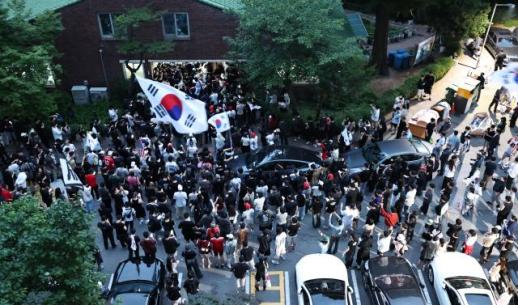 Ballot paper shortage disrupts local elections as ballot box remains unretrieved SEOUL, June 4 (AJP) - A rare logistics failure disrupted this year's local elections in Seoul, where ballot papers ran out at 14 polling stations, delaying voting and angering voters. At one station, a ballot box remained unretrieved as of Thursday morning, fueling further criticism of the already embattled National Election Commission (NEC) over its handling of the vote. The NEC is the independent agency responsible for overseeing the country's elections. The disruption began around 4:40 p.m. the previous day, when ballot papers ran out at several polling stations in southern Seoul, leading to long queues as voters waited for additional ballot papers to arrive. Election officials issued waiting numbers to those who arrived before the 6 p.m. closing time, allowing them to vote even after polls had officially closed. As of Thursday morning, a ballot box at a polling station in Jamsil, in Seoul's Songpa district, had yet to be retrieved, as protesting voters claimed their voting rights had been infringed, according to the NEC. Voting was extended until 10 p.m. there after a shortage of ballot papers disrupted the normal process. However, even after voting ended, the ballot box could not be immediately transferred for counting, as some residents and protesters objected to its removal amid anger over the shortage. Election officials did not immediately proceed with the transfer, and the box remained unretrieved as of Thursday morning. The NEC blamed stronger-than-expected turnout, saying more voters than projected showed up at certain polling stations, exhausting the supply of ballot papers. It said it supplied additional ballot papers to affected stations once the shortage was identified and allowed those already in line to vote after the official closing time. But the surge was widely anticipated, as Wednesday's elections had already seen early voting turnout of 61 percent, up 10.1 percentage points from 50.9 percent in the 2022 local elections, the second-highest level ever recorded in a South Korean local election. The all-time high remains the 68.4 percent recorded in the first local elections in 1995. Local elections are held separately from general elections, which historically draw higher turnout; the 2024 general elections, for comparison, recorded 67 percent. The NEC issued a public apology, admitting that ballot paper shortages caused "great confusion and concern," and said it felt responsible for undermining public trust in fair election management. However, the apology left key questions unanswered, including how many voters were directly affected, whether anyone left without casting a ballot, and why the initial allocation of ballot papers fell short. The incident came after a similar problem during early voting for the 2024 general elections, when some polling stations ran short of printer ink for ballot papers following stronger-than-expected turnout. An unusually long proportional representation ballot, which listed dozens of parties, also pushed ink use beyond available supplies. South Korea is not the first country to face such problems. In Germany, the 2021 federal election in Berlin was later partially rerun after widespread election-day disruptions including ballot shortages, incorrect ballots and long delays. The Federal Constitutional Court ordered a repeat vote in 455 of Berlin's 2,256 electoral districts. Similar irregularities also led to a full rerun of the Berlin state election in 2023, in which CDU candidate Kai Wegner replaced SPD incumbent Franziska Giffey as governing mayor. The NEC said it would hold a comprehensive briefing once counting is completed, covering the cause of the shortage, the handling of the ballot box and any follow-up measures. Meanwhile, incumbent Oh Se-hoon of the main opposition People Power Party (PPP) was re-elected Seoul mayor, defeating strong contender Chung Won-o from the ruling Democratic Party (DP) by approximately 30,000 votes, a margin of less than one percentage point, to secure a fifth term despite unprecedented disruptions in parts of the city. 2026-06-04 11:27:32
 -
 Emerging Contenders for the Presidency After Local Elections With the results of the June 3 local elections and by-elections confirmed on June 4, potential presidential candidates are emerging. From the ruling party, Jung Cheong-rae, leader of the Democratic Party, and Choo Mi-ae, the newly elected governor of Gyeonggi Province, are being mentioned as contenders. From the opposition, Oh Se-hoon, the newly elected mayor of Seoul, and Han Dong-hoon, the newly elected representative for Busan's Buk-gu, are also in the mix. Jung demonstrated his leadership by guiding the Democratic Party to victory in the elections. Although the party lost the highly contested Seoul race, it secured 12 out of 16 metropolitan council seats and maintained nine seats in the by-elections. Notably, Jung successfully defended Jeonbuk, a region previously considered a stronghold for the party. The Jeonbuk elections were marred by allegations of bribery against independent candidate Kim Kwan-young and controversies surrounding the election expenses of winner Lee Won-taek. Additionally, lawmaker Ahn Ho-young's hunger strike demanding a re-investigation into Lee's candidacy led to his hospitalization. This situation sparked debates within the party regarding the expulsion of candidate Kim and the fairness of Lee's completion of the primary. Amidst a divided public sentiment in Jeonbuk, Jung frequently visited the area during his campaign to gauge voter opinions. Choo made history by becoming the first female head of a metropolitan government. With her previous roles as chair of the Legal Affairs Committee, Democratic Party leader, and Minister of Justice, she has now added gubernatorial experience to her resume. If Choo can lead Gyeonggi Province effectively, it could significantly alter the landscape of presidential candidates. Oh achieved a dramatic victory over Democratic candidate Jung Won-oh just 13 hours after the polls closed. His win not only marks him as the first five-term mayor of Seoul but also reinforces the pride of the conservative camp. As the only People Power Party mayor in the metropolitan area, Oh is expected to play a critical role in checking the administration of President Lee Jae-myung. During the campaign, Oh criticized Jung, claiming he would become a puppet for President Lee at the National Assembly, urging voters to choose him for effective oversight. If he raises his voice as an opposition figure in the National Assembly, his presence will likely become more pronounced. The overlap of Oh's term as mayor with President Lee's term is also seen as a potential advantage. Han has seized an opportunity for a reshaping of the conservative landscape. Political insiders suggest that if he successfully returns to the People Power Party, he could be a contender for the party leadership. Should support for current leader Jang Dong-hyuk wane, Han, who has had conflicts with him, may emerge as a viable alternative.* This article has been translated by AI. 2026-06-04 11:27:00
 -
 Oh Se-hoon Wins Seoul Mayoral Race After Dramatic Comeback In the June 3 local elections, Oh Se-hoon of the People Power Party defeated Jung Won-o of the Democratic Party in a dramatic turnaround, securing his fifth term as Seoul mayor. After trailing in the early vote counts, Oh achieved a comeback just 13 hours after the polls closed, gradually widening his lead to confirm his victory. According to the National Election Commission, Oh successfully retained the mayoral position by defeating Jung, who was referred to as the "choice of President Lee Jae-myung." Jung initially appeared to have the upper hand. Exit polls released at 6 p.m. on election day indicated that Jung was leading by 5.4 percentage points, causing a festive atmosphere in his campaign office. In the early counting, Jung maintained a lead, although the gap narrowed at times, he consistently held the advantage. The mood in Oh's campaign office was somber following the exit poll results, and concerns grew when reports of ballot shortages emerged from polling stations in areas where the People Power Party is strong, such as Songpa, Gangnam, and Gwangjin districts. The party requested a halt to the counting process, but their request was denied by the election commission. The dramatic comeback began early on June 4. At around 7:16 a.m., with 93.9% of the votes counted, Oh surpassed Jung for the first time, securing 2,391,512 votes (48.67%) compared to Jung's 2,388,836 votes (48.61%). This turnaround occurred just 13 hours after the counting began. Cheers and applause erupted in Oh's campaign office as supporters celebrated the unexpected lead. Campaign officials and supporters who had briefly left returned to join the festivities. Meanwhile, Jung's campaign office fell silent, with sighs and expressions of despair as the gap widened to around 10,000 votes just 20 minutes after losing the lead. Once he took the lead, Oh maintained his momentum. Jung declared his defeat before the counting was completed, stating, "I will humbly accept the choice of the citizens. I was lacking," and extended his congratulations to Oh. Oh's victory marks a historic achievement as he becomes the first mayor in South Korea to serve five terms. He was previously elected mayor in 2006 and 2010 but stepped down in 2011 due to the fallout from a failed referendum on free school meals. He later won the by-election in 2021 and the local elections in 2022, setting the record for four terms as Seoul mayor. After his victory was confirmed, Oh expressed gratitude to the citizens, stating, "This election is a victory for common sense. The citizens have firmly established the fundamental principles of democracy, which are checks and balances." He added, "Now it is time to get back to work and address the issues that burden the lives of citizens one by one." Following his remarks, Oh returned to Seoul City Hall to resume his duties as mayor, 38 days after his role was suspended upon registering as a candidate for the local elections on April 27. 2026-06-04 11:24:00