

Journalist

Kwon,sung jin
-
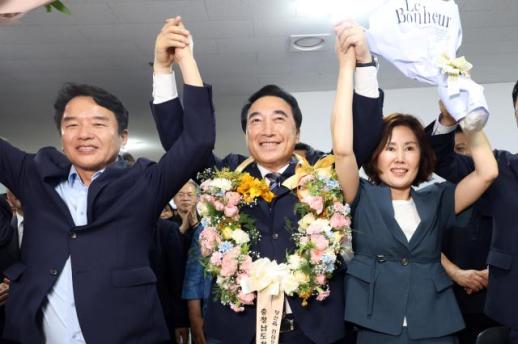 Park Soo-hyun: Chungnam Must Become South Korea's AI Manufacturing Capital "Governor, Chungnam is the heart of South Korea's manufacturing industry. However, in the age of AI, the winners will not be the regions with the most factories, but those that innovate the fastest. Will you keep Chungnam as a manufacturing city, or will you make it the capital of South Korea's AI manufacturing revolution?" Chungnam has always been a hidden champion in South Korea's industrial history. Key industries such as semiconductors in Cheonan, automobiles and displays in Asan, steel in Dangjin, and petrochemicals in Seosan have supported the country's export and manufacturing competitiveness. However, as AI changes the rules of industry, past success formulas can no longer guarantee the future. Park Soo-hyun, the newly elected governor of Chungnam, has made 'AI Capital Chungnam' his top pledge, declaring a 'Chungnam AI Transformation' that encompasses manufacturing, administration, agriculture, care, education, and healthcare. He also presented a broader vision of completing the administrative integration of Chungnam and Daejeon. Chungnam now stands at a critical crossroads. Will it remain a success story of the industrial era, or will it redesign the future of South Korean industry through the AI manufacturing revolution? Manufacturing Powerhouse Chungnam Faces a Future Without AI Transition Chungnam's strength lies in its manufacturing sector. The region hosts South Korea's leading industries, including semiconductors, displays, automobiles, steel, petrochemicals, and batteries. During the industrial era, Chungnam's power was its production capacity; competitiveness was determined by how much could be produced and how quickly. However, the AI era is redefining manufacturing itself. Now, competitiveness stems not from the size of factories but from the scale of data. It arises from algorithms that enhance productivity rather than sheer output, and from the ability to utilize AI rather than just machinery. In the past, labor determined productivity; in the future, AI will take that role. The era of predicting machine failures before they occur, analyzing supply chain risks in advance, and optimizing production processes autonomously has already begun. Park Soo-hyun's emphasis on 'AI Capital Chungnam' reflects this reality. He defines AI not as a tool for specific industries but as a new public infrastructure that will transform all sectors of life, including manufacturing, agriculture, healthcare, education, and administration. It is crucial to note the current situation in Chungnam. The region is not merely experiencing growth; it is in the midst of a significant industrial transformation. The steel and petrochemical industries face global oversupply and pressure for carbon neutrality. The battery industry is also confronting new challenges from slowing global market growth and competition from Chinese firms. The automotive sector is undergoing massive changes with the convergence of electric vehicles, hybrids, and autonomous driving technologies. Ultimately, Chungnam's future depends not on how many new factories are built but on how quickly existing industries can integrate AI. AI is not just an option for Chungnam; it is a matter of survival. Bay Valley Must Evolve into an AI Mega-ClusterA key aspect of Park Soo-hyun's administration is Bay Valley. However, it is important to clarify that Bay Valley is not a project originally proposed by Park. It is a super-regional economic project that former Governor Kim Tae-heum promoted as a core initiative of the 8th elected Chungnam administration. The plan envisions a large industrial belt connecting Cheonan, Asan, Dangjin, Seosan, and Yesan with Pyeongtaek, Hwaseong, Anseong, Ansan, and Siheung in Gyeonggi Province. The challenge for Park's administration is not to create new projects but to upgrade the existing Bay Valley for the AI era. The reason is clear. Bay Valley is already a core pillar of South Korea's manufacturing sector, with concentrations of semiconductors, displays, automobiles, batteries, steel, and energy. The issue is that these industries still remain in their respective domains.In the AI era, the winners will be the regions that connect industries, not the individual industries themselves. Semiconductors are no longer just about the semiconductor industry. They are connected to automobiles and AI. Batteries connect the automotive and energy sectors. Displays are becoming essential components for AI devices and future mobility. Chungnam already possesses all these elements. Cheonan and Asan have semiconductors and displays. Asan has the automotive industry. Dangjin and Seosan have steel and energy industries. The challenge lies in the connections. For Bay Valley to have true significance, it must evolve from an industrial belt into an AI mega-cluster. Semiconductor companies must connect with automotive firms, battery companies with AI firms, and universities, research institutes, startups, and large corporations must form a cohesive ecosystem. The vision of AI Capital Chungnam articulated by Park Soo-hyun must start from this connectivity. Bay Valley should become a platform for industrial innovation, not just an expansion of industrial complexes. Chungnam-Daejeon Integration: A Survival Strategy for the AI Era Another key pledge from Park Soo-hyun is the administrative integration of Chungnam and Daejeon. Many view this integration as a simple administrative reorganization. However, Park sees it as having much greater significance. He views the integration of Chungnam and Daejeon as central to South Korea's balanced development strategy and has reiterated his commitment to pursuing this integration since his election. In the AI era, the unit of competition is no longer individual cities but vast economic regions. The United States has Silicon Valley, China has the Shenzhen-Guangdong economic region, and Japan has the Tokyo megacity.Chungnam, on its own, has limitations. However, when connected with Daejeon, the narrative changes. Chungnam is strong in manufacturing, while Daejeon excels in research and development. Chungnam has industrial sites, while Daejeon has research personnel. Chungnam has production capacity, while Daejeon has technology. The combination of these strengths could create South Korea's largest AI manufacturing innovation belt. The true significance of Park Soo-hyun's vision for AI Capital Chungnam lies here. It is not merely about attracting a few AI companies; it is about transforming the entire region into an AI-based economic zone. It aims to create a new growth axis where manufacturing, research and development, energy, mobility, universities, and industries are interconnected. Ultimately, the success of Park Soo-hyun's administration will not be measured by the number of pledges made. What matters is not how many factories were attracted, but how many factories have transitioned to AI. It is not about how much budget was secured, but how many future jobs were created. It is not about how many buildings were constructed, but how strong an innovation ecosystem was established. In the AI era, Chungnam's competitors are not Chungbuk or Sejong. They are the manufacturing innovation regions of the United States, Shenzhen in China, and industrial clusters in Germany. If Chungnam succeeds in the AI manufacturing revolution, South Korea's manufacturing sector could leap forward once again. :SWOT Analysis: Strength: Chungnam has the largest manufacturing belt in South Korea, encompassing semiconductors, displays, automobiles, steel, petrochemicals, and batteries. Governor Park Soo-hyun has proposed 'AI Capital Chungnam' as his top pledge and is pursuing an AI transformation strategy that applies AI across industries and administration, agriculture, and welfare. He also has a vision for the super-regional growth of Chungnam-Daejeon administrative integration. Weakness: The AI industry base and venture ecosystem are relatively weaker compared to the capital region. The high proportion of traditional manufacturing industries like steel and petrochemicals may face shocks during the industrial transition. Opportunity: The AI manufacturing revolution presents new opportunities for Chungnam. If Bay Valley and the Chungnam-Daejeon integration materialize, the largest AI industrial zone in the country could be formed, combining research and development with manufacturing. Threat: Challenges such as slowing growth in the battery industry, competition from Chinese manufacturing, restructuring in the steel and petrochemical industries, and population decline pose real threats to Chungnam. Failure to transition to AI could weaken existing manufacturing competitiveness.* This article has been translated by AI. 2026-06-08 11:18:00
 -
 Korea's Drug Agency Discusses Clinical Trial Approval Reforms with Industry The Korea Food and Drug Administration (KFDA) is set to collaborate with the pharmaceutical industry to revise the clinical trial approval and review system. Recently, South Korea's pharmaceutical and biotech sector has been recognized as the 'second innovation engine' in Asia, following China. However, a decline in clinical trials and a slowdown in new drug approvals have been identified as weaknesses, prompting the government to accelerate discussions on regulatory improvements.On June 5, the KFDA held a meeting titled 'Regulatory Innovation for Clinical Trial Approval' to address industry concerns and discuss necessary reforms. This meeting aimed to establish a foundation for rapid clinical approvals in response to the changing global clinical trial landscape and to enhance the competitiveness of the approval and review process.The KFDA plans to review the policy recommendations and discussions from the meeting to incorporate them into future regulatory improvements and policy operations.Shin Jun-soo, Director of the KFDA's Drug Safety Bureau, stated, "We will continuously listen to voices from the field and rationally improve regulations to ensure a balance between securing clinical trial safety and accelerating development, while maintaining communication with the industry."The KFDA has been discussing improvements to the clinical trial system since last year, resulting in the creation of a supplementary casebook for clinical trial plan approvals and criteria for selecting participants in early-stage cancer clinical trials.Meanwhile, ING Research, the economic and financial market analysis arm of the global financial group ING, recently published a report titled 'Korea: The Second Innovation Engine in Asia,' in which it described South Korea as "one of the most trusted countries for biopharmaceutical innovation in Asia."However, ING Research pointed out that for the growth of South Korea's biopharmaceutical industry to continue, improvements in clinical trials and the regulatory environment are essential. According to the report, the number of ongoing domestic clinical trials decreased from 2,307 in 2024 to 2,175 last year. The number of new drug approvals also fell by 38% from 23 in 2024 compared to the previous year.ING Research emphasized that reforms in drug pricing systems, expedited approval processes, clear patent protections, and improvements in insurance coverage will determine whether Korea can advance as a global leader in innovative drug development.* This article has been translated by AI. 2026-06-08 11:15:00
 -
 Lee vows to nurture super-gap growth engines beyond semiconductors SEOUL, June 08 (AJP) - South Korean President Lee Jae Myung marked his first year in office on Monday by unveiling plans to aggressively expand the country's economic focus, pledging to discover and nurture global super-gap growth engines beyond the semiconductor sector. Lee assumed the presidency on June 4 last year, following a snap election triggered by the December 2024 impeachment of his predecessor, Yoon Suk Yeol, who had briefly declared emergency martial law. Lee framed his first year in office as a period of overcoming the resulting crisis of democracy and stabilizing the nation, setting the stage for a new era of proactive national growth. Speaking during a press conference at the state guest house at the presidential Blue House, Lee declared 2026 as the year South Korea begins its bold dream of becoming an irreplaceable nation. He presented four primary national objectives aimed at transforming the country into an industrial powerhouse where all citizens share the economic benefits. "I will continuously discover and nurture 'global super-gap growth engines' that will serve as South Korea's next-generation cash cows in industrial sectors other than semiconductors," Lee said. To execute this vision, the president promised to unveil a large-scale investment project soon, designed to fundamentally shift the national economic strategy. He emphasized that the financial rewards of this expansion must not remain trapped within specific corporations or regions, but must instead flow to small and medium-sized venture companies and spread evenly across the country. "I will carefully monitor the highly supported National Growth Fund so that it can fulfill its role for the growth of everyone, and I will also prepare measures to utilize the excess tax revenue generated by semiconductors in the most effective way," Lee said. On the security front, Lee committed to elevating South Korea's standing as a global diplomatic and military power under the principle that peace directly supports economic livelihoods. The government has recently accelerated efforts to build an independent defense framework in response to shifting global alliances and regional security demands. "I will do my best to ensure that the precious diplomatic and security achievements made over the past year, such as the revision of the South Korea-US nuclear energy agreement, the introduction of nuclear-powered submarines, and the push for an early recovery of wartime operational control, bear concrete fruit," Lee said. Domestically, the president promised to aggressively dismantle privileges and correct market irregularities to build a society where rules are respected. He vowed to strictly punish crimes that harm the economic well-being of the public. "I will thoroughly crack down on civil crimes that disrupt market order, such as stock manipulation and real estate offenses, and I will unwaveringly implement structural reform tasks to dismantle privileges," Lee said. "I will run with all my might, as if every single day given to me is my last day in office, so that this government will be more anticipated for the next four years than it was over the past year," Lee said. 2026-06-08 11:13:21
 -
 Paradise City to Host World-Class Bartending Competition Finals Top bartenders from across South Korea will compete for a coveted championship ticket at Paradise City in Incheon, Yeongjongdo.Paradise City announced on June 8 that it will host the finals of the international bartending competition, "World Class Korea 2026," in collaboration with beverage company Diageo. The event will take place on June 13 at the live music lounge bar "Rubik."Now in its 17th year, World Class is the largest bartending competition globally, featuring around 10,000 bartenders from over 60 countries who advance through national qualifiers to compete for the title of the world's best.Rubik is a cultural space where guests can enjoy live performances by domestic and international artists alongside cocktails crafted by professional mixologists. Last November, the venue hosted a guest bartending event featuring Park Hee-man, the winner of "World Class Korea 2025," which drew significant attention. The event combined unique cocktails with jazz performances from 7 PM to 11 PM, receiving enthusiastic responses from attendees.Notably, the finals will feature legendary mixologist Ago Perrone, who elevated the bar at London's five-star hotel "The Connaught" to international acclaim. He will serve as a judge and perform a bartending demonstration for the first time in South Korea. Contestants in the top 10 will present cocktails using martinis and tequila "Don Julio" as a tribute to Perrone. The top five will then face a pairing challenge, creating cocktails that complement dishes prepared by Chef Kim Ho-yoon, known for his appearance on the entertainment show "Black and White Chef Season 2," to determine the ultimate winner.Following the competition, a special guest bartending event will take place featuring Ago Perrone, Kim Do-hyung from "Zest," and Park Hee-man from "Ace for Club." Chef Kim Ho-yoon's signature dish, "Herb Shrimp Porridge," will also be served.Paradise City continues to enhance the global competitiveness of South Korea's bar culture. On June 12, the day before the finals, a "Six Hands Gala Dinner at Sarase" will be held at the on-site fine dining restaurant, featuring Chef Kang Min-goo from the only Michelin 3-star restaurant in Korea, "Mingles," Chef Shin Chang-ho from New York's Michelin 2-star "Joo Ok," and bartender Lim Byeong-jin, who represents Korean bar culture.Paradise City recognizes cocktails as a vital component of fine dining and aims to promote bar culture through immersive dining experiences that integrate plating and bar pairing. A representative from Paradise City stated, "We will strive to contribute to the growth and recognition of South Korea's bar culture centered around the live music bar Rubik, and we will continue to enhance our culinary content to provide customers with new cultural inspiration and experiences within the hotel."* This article has been translated by AI. 2026-06-08 11:09:00
 -
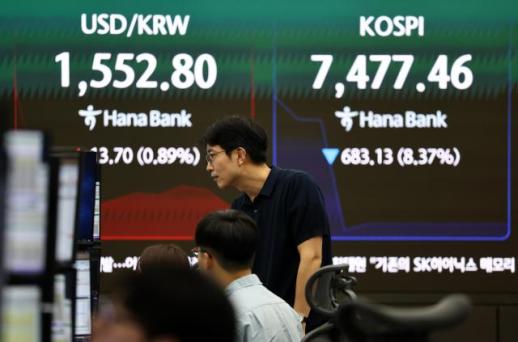 Won hits 17-yr low at open, bonds extend losses SEOUL, June 8 (AJP) - The South Korean won fell to its weakest level at the start of trading on Monday, hitting a 17-year low as the currency was battered by expectations of a hawkish Fed and speculative offshore bets amid the prolonged conflict in the Middle East. The domestic debt market also suffered a severe rout, spreading intense volatility across broader financial markets. The won opened at 1,555.2 won per dollar, tumbling 16.1 won from the previous session. This marks the lowest level for the local currency since March 6, 2009, when it began trading at 1,597 won during the global financial crisis. Severe weakness had already materialized in the offshore non-deliverable forward (NDF) market, where the rate broke through 1,560 won over the weekend. Meanwhile, retail exchange rates at several physical booths fell below 1,600 won. Market sentiment crumbled after stronger-than-expected U.S. non-farm payrolls fueled expectations that the Federal Reserve, led by Chair Kevin Warsh, would pivot back to raising interest rates. Following the data, the Nasdaq plunged over 4 percent and the Philadelphia Semiconductor Index crashed more than 10 percent, while the U.S. Dollar Index surged past the 100 level. These dual pressures are being directly reflected in South Korea's equity and foreign exchange markets. The benchmark KOSPI triggered a circuit breaker after plunging 8.37 percent to open at 7,477.46, while foreign investors offloaded over 900 billion won (US$578.7 million) during the morning session, further compounding downward pressure on the won. As the currency rattled, heads of the nation's four financial watchdogs convened an emergency meeting on Sunday to issue high-intensity warnings against speculative one-way bets. Despite repeated hawkish signaling from Bank of Korea governor Shin Hyun-song hinting at rate hikes, exchange rate anxieties have shown no signs of calming. While financial authorities refrained from announcing explicit direct interventions, market participants suspect that dollar-selling measures, including currency swaps with the National Pension Service, are actively underway. After opening around 1,550, the won pared some early losses to trade near the upper 1,550s by mid-morning. "While direct smoothing operations cannot be officially confirmed, we are observing tangible movements to cushion the currency's floor," an FX trader said on the condition of anonymity. The debt market also faced severe disruption, with sovereign yields spiking to multi-year highs. As of early morning, the benchmark three-year government bond yield crossed 3.9 percent and the 10-year yield topped 4.3 percent, marking their highest levels since November 2023. Downward pressure intensified as a domestic interest rate hike is increasingly viewed by the market as a foregone conclusion. Sentiment was further dampened as major global sovereign debt yields spiked in tandem, with the 30-year U.S. Treasury yield breaking above the 5 percent threshold. South Korea's phased inclusion into the World Government Bond Index (WGBI) since April was intended to drive foreign capital inflows, but external shocks have completely muted its impact. A near-record net purchase of 10-year bonds by foreign investors on June 2 proved short-lived, as it was driven primarily by temporary 30-year bond auction rollovers. 2026-06-08 11:06:46
 -
 President Lee Addresses Inflation Amid Middle East Conflict President Lee Jae-myung addressed the inflation crisis resulting from the ongoing conflict in the Middle East during a press conference on June 8. He stated, "The issue is inflation," and emphasized his commitment to mobilizing the government's resources to minimize price increases. During the press conference held at the Blue House, Lee remarked, "The Middle East conflict does not seem likely to end easily in the near future." He noted that despite the current situation, oil supply has stabilized significantly, with over 87% of supply being managed through diversified import sources and stabilization measures. He acknowledged that there is still a shortfall of about 10%, but expressed confidence that it could be sufficiently managed through export controls. Lee also highlighted the government's strategies to combat high inflation, including implementing price controls, utilizing strategic oil reserves, and providing cost support for diversified import sources. He stated, "We are working to minimize inflationary pressures." Looking ahead, Lee asserted that by normalizing market order and managing unnecessary price surges, the worst-case scenarios could be avoided. He concluded that the overall inflation rate is being managed relatively stably compared to other countries.* This article has been translated by AI. 2026-06-08 11:03:00
 -
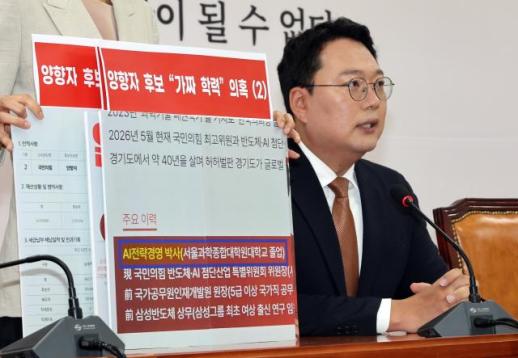 Cheon Ha-ram Proposes Re-elections for Polling Stations with Voting Disruptions Cheon Ha-ram, the floor leader of the Reform Party, has proposed conducting re-elections at polling stations where voting was halted due to a shortage of ballots during the June 3 local elections. During a Supreme Council meeting held on the morning of June 8, Cheon stated, "The essence of this situation is the infringement of citizens' voting rights, and the only fundamental solution to rectify this violation is through re-elections." He emphasized, "I advocate for a 'selective re-election' limited to areas where it is clear that there was a significant infringement on voting rights, specifically at polling stations where voting was interrupted due to a lack of ballots. Major parties, including the Reform Party, should file election complaints, and the Election Commission should promptly declare parts of the election invalid at these polling stations and conduct re-elections." Cheon noted, "Currently, the leader of the ruling People Power Party, Jang Dong-hyuk, has called for a full re-election, and there are also calls for re-elections from some members of the Democratic Party. This is not a matter of left or right; it is about protecting the fundamentals of democracy and citizens' voting rights." He added, "Among those who had to leave without voting due to the lack of ballots, there were citizens intending to vote for both the Democratic Party and the Reform Party. It is difficult to estimate how many citizens were unable to vote or chose to forgo voting due to the ballot shortage." Cheon remarked, "In a K-Democracy like South Korea, it is absurd to say that there is no value in considering re-elections when citizens are unable to vote due to a lack of ballots. Even if there is some confusion, rectifying the infringement of citizens' voting rights is the most important task in a democratic nation. We must protect citizens' voting rights and democracy in South Korea through selective re-elections."* This article has been translated by AI. 2026-06-08 11:00:00
 -
 Art Market Faces Structural Changes Amid High-Profile Auction Sales Is the Boom an Illusion? Recent reports of record-breaking auction sales in New York and London have created an illusion of a booming art market, with auction houses and art publications buzzing with excitement. Christie's and Sotheby's have garnered media attention by showcasing masterpieces that have generated billions in sales. However, a closer examination reveals that this surge is not indicative of a full market recovery but rather a localized rebound focused on ultra-high-value blue-chip artworks. Works by artists like Jackson Pollock have surpassed $180 million, while pieces by 20th-century masters such as Constantin Brâncuși and Mark Rothko continue to set new records. The names of Picasso, Mondrian, and Basquiat remain the most reliable guarantees in the auction world. This phenomenon is driven by a generational shift, as younger leaders from wealthy families take over, leading to the sale of collections from older collectors, resulting in record-breaking auction prices. This trend reflects a typical pattern where funds gravitate toward established names and iconic works amid economic uncertainty. The U.S. market has capitalized on this trend, growing by over 25%, while China has seen a decline due to a real estate slump. The disparity among auction houses is also evident, with major players like Christie's and Sotheby's significantly increasing their revenues, while Phillips has reported a downturn, highlighting a growing polarization between top-tier and smaller auction houses. The question remains about sustainability. After the baby boomer generation fades, will the next generation embrace works by Warhol or Rothko with the same passion? It is uncertain whether the rising prices of blue-chip artworks will hold post-generational transition. In response, some galleries are exploring new auction platforms to navigate this challenge, opting for 'technological innovation in sales methods' to avoid the structural crisis of overexpansion leading to bankruptcy. The art market, currently in a deep slump, has seen wealthy collectors close their wallets, resulting in tedious negotiations over prices in private sales between galleries and collectors, diminishing the urgency to purchase artworks. Even exceptional pieces are increasingly left unattended as galleries take control of timelines to guide the market, which may be a necessary self-rescue strategy. Self-Rescue Experiments in the Art Market Recently, seasoned art dealers and market experts Dominique Lévy, Brett Gorvy, and Amalia Dayan have observed a growing share of one-on-one transactions at Christie's and Sotheby's. In 2025, private sales slightly decreased year-over-year, yet Christie's accounted for about 24% of total sales at $1.5 billion, while Sotheby's recorded approximately 17% at $1.2 billion. Phillips, however, saw a remarkable 66% increase in private sales, reaching around $200 million, underscoring the critical role of private sales in sustaining auction revenues. The trio, collaborating under the name Lévy Gorvy Dayan, launched a customized live auction platform called 'LGD Hammer' to enhance transparency in private transactions. This new platform directly addresses the issue of prolonged negotiations in artwork sales. By ingeniously combining traditional auctions and private sales, it allows for the auction of a single masterpiece or core collection on a designated day, facilitating live bidding via phone and online for top collectors worldwide. This approach maximizes focus and urgency, contrasting with the bulk offerings of major auction houses. The auctioned artworks are first reserved at galleries for in-depth viewing, allowing ample time for research and appreciation before final pricing is determined through competitive bidding. This model not only facilitates sales but also provides a museum-quality experience and market tension. The distinctiveness of LGD Hammer stems from the founders' extensive auction experience. Having worked for decades at global auction houses like Christie's, they understand the essence of auctions better than anyone, internalizing the systems of major auction houses within galleries to combine the intimacy of private sales with the competitiveness of auctions. This is not merely a formal variation but a strategic attempt to address structural issues in the market. Ultimately, LGD Hammer represents an experiment to reinvigorate the art market, ensuring that artworks are no longer neglected and that collectors face pressure to make timely decisions. Whether this platform can break through the current market stagnation remains uncertain, but at the very least, it has reintroduced the essential elements of 'scarcity and competition' to art transactions. What is needed now is precisely this sense of urgency. LGD Hammer is a challenge to rekindle that spark. The first auction featured Willem de Kooning's Milkmaid, which sold within the estimated range of $10 million, validating the effectiveness of this new hybrid platform. However, the mid-range market and emerging artists continue to struggle. Just a few years ago, the works of young artists, once driving speculative enthusiasm, have largely disappeared from auction houses. In major auctions at Sotheby's and Christie's, artists under 40 are few and far between, with Phillips featuring only one or two pieces. The energy that once characterized young artists, referred to as 'red chips,' has dissipated. Consequently, the rise in average auction prices is solely attributed to high-value works, while the pieces by young artists have vanished from auction houses. The primary market, represented by galleries, faces increasing operational costs due to high rents and excessive fees for art fairs, leading to a loss of trust in the market. Many collectors hesitate to purchase artworks from galleries when pieces offered for tens of thousands of dollars sell for thousands at auction, highlighting the bubble in the primary market. However, some galleries that present high-quality new works at reasonable prices still see demand and sell out, indicating that the market is not entirely devoid of potential. Recently, prominent galleries such as Blum Gallery, Venus Over Manhattan, and Clearing have faced liquidity crises due to soaring rental costs and exorbitant fees for international art fair booths, often relying on bank loans or external funding, which have led to closures. Thus, while auction results may appear robust, they do not signify a comprehensive recovery of the art market. Instead, the market reveals a stark imbalance between the dazzling resurgence of blue chips and the stagnation of red chips. True recovery will only be possible when the flow of funds extends beyond ultra-high-value works to include emerging artists and mid-range priced pieces. The current activity is merely an illusion of prosperity, and a balanced ecosystem is crucial for a healthy future in the art market. The present art market is undergoing painful restructuring as it treats art more as an 'investment asset' than pure appreciation, leading to the deflation of an overheated bubble. In fact, the recent closures of major galleries illustrate the structural limitations that often lead to sudden bankruptcies after a gradual decline. This current crisis results from galleries and auction houses approaching artworks solely as 'financial investment assets,' pushing their business models to their limits. Major Auctions in May 2026 The unprecedented anomalies in the art market, characterized by unpredictable structural changes and a generational shift among collectors, are also evident in the Korean art market, particularly in the auction sector. The May auctions at Seoul Auction and K Auction lacked significant works that could drive the market. While international auction houses have drawn major collectors' works to boost sales, Korea's leading auction houses currently lack the capacity to do so. Nonetheless, the results from May auctions indicate a gradual movement in the Korean art market, albeit with cautious optimism. The market's response reflects selective reactions based on the types of artworks, price ranges, and artist recognition rather than a full recovery. K Auction saw 60 out of 77 lots sold, totaling approximately 7.2321 billion won, with a sell-through rate of 77.9%. The highest price at K Auction was Yayoi Kusama's Infinity Net (POWTY), 2014, which was estimated at 2.1 to 3.5 billion won but sold for the lower estimate of 2.1 billion won without significant competition. Seoul Auction recorded a sell-through rate of 69.8%, with total sales of about 5.66 billion won. Lee Ufan's Dialogue, 2018, estimated at 700 million to 1.2 billion won, started at 640 million won and sold for 1.04 billion won without much competition. The auction results indicate that the blue-chip market remains central to the art scene. While works by established artists like Yayoi Kusama and Lee Ufan traded steadily, aggressive price increases were limited, suggesting that bidders are responding conservatively. This indicates that the market is operating around realistic pricing. In contrast, there were inexplicable strong competitions for relatively lower-priced works by young artists. Although these pieces have yet to be validated in the market, bidders exhibited a rather aggressive stance, indicating a need for further examination. The works of Munassi (Kim Dae-hyun, 1980) attracted multiple bids in the mid-range, while Lee Mok-ha (1996) entered the high-price bracket in a short time, reflecting market expectations. However, such results do not necessarily indicate a healthy market. It is essential to scrutinize the structure of price formation and the conditions supporting those prices. Seoul Auction's anticipated work, the colored manuscript of the Daedongyeojido, was unsold. This outcome highlights that the conditions for successful transactions are stringent, despite the significant academic value of cultural heritage works. It served as a reminder of the challenges in the high-end art market. Ultimately, the key takeaway from this auction is not whether prices are rising but the credibility of those prices. A good market is one that can explain why high prices are achievable, rather than merely generating them. For the Korean art market to grow sustainably, it must go beyond viewing auction results as mere indicators of success and instead closely analyze and articulate the processes of price formation and the structures supporting those prices. Therefore, we should view the May auction not merely as a sign of vitality but as an opportunity to assess the market's credibility. Balancing the stability of blue chips with the growth potential of young artists while ensuring the structural reliability of price formation is essential for the future of the Korean art market. From Survival to Solidarity: Restructuring the Art Market The era of large galleries in the West is waning, and the same is true for several major galleries in Korea. The previous strategy of international mega-galleries focusing on hardware expansion by increasing locations has proven unsustainable. With the global economic downturn, high exchange rates, and a speculative market centered on ultra-high-value works cooling off, galleries are seeking new paths through mergers and collaborations to reduce fixed costs and diversify risks. The era of individual survival is giving way to one of solidarity. Voluntary mergers and the emergence of mega platforms are notable trends. Smaller galleries, feeling the limitations of independent operations, are being absorbed into larger gallery networks, while capital-rich mega-galleries are acquiring promising mid-sized galleries to expand their artist portfolios. This is not merely a survival strategy but a reflection of structural changes in the market. Additionally, the approach to international expansion is changing. Instead of costly standalone locations, 'hybrid spaces' are emerging, where local galleries share costs and risks by operating joint spaces. The establishment of a joint location in Hannam-dong, Seoul, by Berlin's Meyer Riegger and Paris's Jocelyn Wolff exemplifies a new approach to the Asian market. At art fairs, 'booth sharing' has become commonplace, with galleries collaborating to share costs and cross-promote artists. This restructuring period has left deep scars on the Korean art market. The inflated transaction record of 1 trillion won in 2022, aimed at quantitative expansion, has proven to be a mirage, as the market that once thrived is now facing a painful period of deflation and consolidation due to the global recession and high exchange rates. With estimates suggesting that over 100 small galleries have closed in the past four years, the current crisis is not merely a retreat but a process of improving the market's structure. The decline in speculative purchases of ultra-high-value works and the increasing attention on mid-range pieces priced between 100 million and 500 million won, as well as conceptually rich works, further support this shift. As Western mega-galleries withdraw from Frieze Seoul, Asian galleries are stepping in, transforming Seoul from a 'sales hub for Western art' to an 'Asian hub platform.' This shift is crucial, and those responsible for strategizing and responding to these changes in Korea must not remain passive, merely waiting for opportunities. The Ministry of Culture, Sports and Tourism's approach to the art market, treating it from a cultural industry perspective rather than establishing comprehensive plans for visual arts promotion, is problematic. Furthermore, policies proposed by civil servants with limited understanding of the art market, often based on a two- to three-year rotation, are unlikely to yield effective results beyond mere financial distributions. The execution of these policies by the Arts Management Support Center, staffed by individuals lacking experience in the art market, further highlights the absence of appropriate policies for the Korean art market. In reality, Korean collectors are moving away from 'blind investments' toward practical collecting, seeking works by Korean artists with historical depth. Ultimately, the current crisis is not merely a downturn but a turning point toward a new order. The era of individual survival has ended. Through solidarity and collaboration, the market will revive. The Korean art market must undergo painful restructuring to move toward a stronger and more sustainable future.* This article has been translated by AI. 2026-06-08 10:57:00
 -
 Goldman Sachs Predicts No U.S. Rate Cuts This Year, Delays First Cut to June 2027 Goldman Sachs has withdrawn its forecast for a U.S. interest rate cut this year. The firm believes that the strength of the U.S. labor market has diminished the Federal Reserve's justification for lowering rates. On June 7, Bloomberg reported that David Mericle, Goldman Sachs' chief U.S. economist, revised the timeline for potential rate cuts in a report released on June 5. The firm has pushed back its expectations for two rate cuts, originally anticipated in December 2026 and March 2027, to June and December 2027, respectively. The revision is primarily based on May's employment data, which showed a stronger-than-expected labor market, leading analysts to conclude that the Fed is less likely to expedite monetary easing. Goldman Sachs has also lowered its unemployment rate forecast from 4.6% to 4.4%. However, Goldman Sachs does not view the possibility of rate hikes as a primary scenario. Mericle stated that the likelihood of inflation becoming self-sustaining is low. While the probability of a rate hike has increased from 10% to 20%, it is still considered a low-probability scenario. Goldman Sachs' baseline forecast now includes two rate cuts of 0.25 percentage points in 2027, with the likelihood of this scenario decreasing from 40% to 30%. This indicates a delay in rate cuts, while the possibility of rate hikes has slightly increased. Investment in artificial intelligence (AI) has also been identified as a variable. If demand for AI-related investments remains strong, it could support economic activity and funding needs, reinforcing the case for prolonged high interest rates. The market views robust employment and increased AI investment as factors that simultaneously lower expectations for Fed rate cuts.* This article has been translated by AI. 2026-06-08 10:48:00
 -
 Korean Ministry of Science Reveals Applications of Domestic AI Foundation Models The Ministry of Science and ICT has unveiled applications of its proprietary AI foundation model, known as 독파모, across various industries. From national heritage administration to financial services, automotive AI, and domestic AI semiconductors, the model is driving innovation and expanding the K-AI ecosystem. On June 8, the ministry presented examples of the K-AI ecosystem, focusing on companies participating in the 독파모 initiative. The Korea Heritage Promotion Agency plans to enhance administrative efficiency and improve public services by integrating the 독파모 AI model into its operations. The model will also be applied to the existing national heritage image generation service, HAI (Heritage AI), enabling citizens to engage with national heritage in more creative and accessible ways. LG AI Research and FuriosaAI are collaborating on a full-stack initiative that combines domestic AI models with AI semiconductors. The LG AI Research's generative AI model, EXAONE, will run on FuriosaAI's second-generation neural processing unit, RNGD. The two companies aim to leverage the synergy between domestic AI models and semiconductors to expand their presence in the global AI ecosystem. In partnership with 42dot, a self-driving software company under SK Telecom, the development of a large-scale language model (LLM) for vehicles is underway. The goal is to create a voice AI agent optimized for automotive environments by integrating SK Telecom's AI model with 42dot's vehicle software technology. The collaboration will focus on enhancing natural language interactions within vehicles by building specialized voice datasets. NC AI is working with Shinhan Bank to implement AI-based digital twin technology in financial settings. By creating a virtual environment that mirrors actual bank branches, they will analyze customer flow and operational processes, allowing for pre-simulation of counter layouts and kiosk operations. This initiative aims to improve operational efficiency and customer convenience while supporting innovation in financial services. Meanwhile, the Ministry of Science and ICT plans to conduct a second-phase evaluation of the 독파모 initiative in August. Participants in this evaluation will include LG AI Research, SK Telecom, Upstage, and Motif Technologies, with an expected emphasis on global benchmark performance and technological uniqueness.* This article has been translated by AI. 2026-06-08 10:45:00