

Journalist

Kwon,sung jin
-
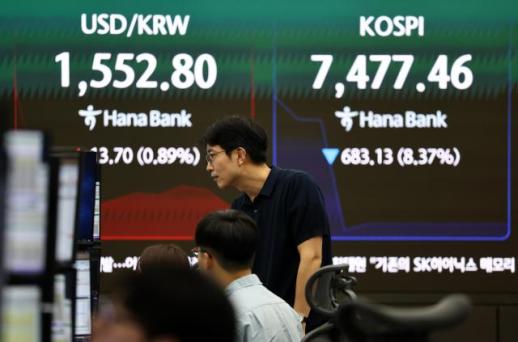 Won hits 17-yr low at open, bonds extend losses SEOUL, June 8 (AJP) - The South Korean won fell to its weakest level at the start of trading on Monday, hitting a 17-year low as the currency was battered by expectations of a hawkish Fed and speculative offshore bets amid the prolonged conflict in the Middle East. The domestic debt market also suffered a severe rout, spreading intense volatility across broader financial markets. The won opened at 1,555.2 won per dollar, tumbling 16.1 won from the previous session. This marks the lowest level for the local currency since March 6, 2009, when it began trading at 1,597 won during the global financial crisis. Severe weakness had already materialized in the offshore non-deliverable forward (NDF) market, where the rate broke through 1,560 won over the weekend. Meanwhile, retail exchange rates at several physical booths fell below 1,600 won. Market sentiment crumbled after stronger-than-expected U.S. non-farm payrolls fueled expectations that the Federal Reserve, led by Chair Kevin Warsh, would pivot back to raising interest rates. Following the data, the Nasdaq plunged over 4 percent and the Philadelphia Semiconductor Index crashed more than 10 percent, while the U.S. Dollar Index surged past the 100 level. These dual pressures are being directly reflected in South Korea's equity and foreign exchange markets. The benchmark KOSPI triggered a circuit breaker after plunging 8.37 percent to open at 7,477.46, while foreign investors offloaded over 900 billion won (US$578.7 million) during the morning session, further compounding downward pressure on the won. As the currency rattled, heads of the nation's four financial watchdogs convened an emergency meeting on Sunday to issue high-intensity warnings against speculative one-way bets. Despite repeated hawkish signaling from Bank of Korea governor Shin Hyun-song hinting at rate hikes, exchange rate anxieties have shown no signs of calming. While financial authorities refrained from announcing explicit direct interventions, market participants suspect that dollar-selling measures, including currency swaps with the National Pension Service, are actively underway. After opening around 1,550, the won pared some early losses to trade near the upper 1,550s by mid-morning. "While direct smoothing operations cannot be officially confirmed, we are observing tangible movements to cushion the currency's floor," an FX trader said on the condition of anonymity. The debt market also faced severe disruption, with sovereign yields spiking to multi-year highs. As of early morning, the benchmark three-year government bond yield crossed 3.9 percent and the 10-year yield topped 4.3 percent, marking their highest levels since November 2023. Downward pressure intensified as a domestic interest rate hike is increasingly viewed by the market as a foregone conclusion. Sentiment was further dampened as major global sovereign debt yields spiked in tandem, with the 30-year U.S. Treasury yield breaking above the 5 percent threshold. South Korea's phased inclusion into the World Government Bond Index (WGBI) since April was intended to drive foreign capital inflows, but external shocks have completely muted its impact. A near-record net purchase of 10-year bonds by foreign investors on June 2 proved short-lived, as it was driven primarily by temporary 30-year bond auction rollovers. 2026-06-08 11:06:46
 -
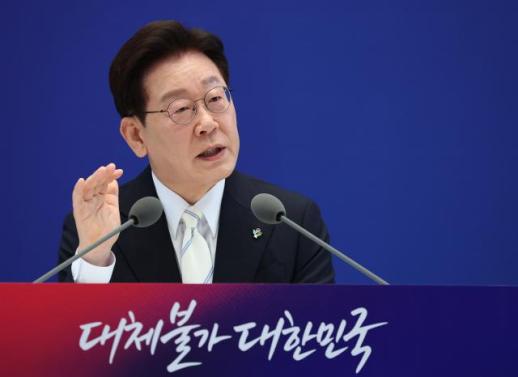 President Lee Addresses Inflation Amid Middle East Conflict President Lee Jae-myung addressed the inflation crisis resulting from the ongoing conflict in the Middle East during a press conference on June 8. He stated, "The issue is inflation," and emphasized his commitment to mobilizing the government's resources to minimize price increases. During the press conference held at the Blue House, Lee remarked, "The Middle East conflict does not seem likely to end easily in the near future." He noted that despite the current situation, oil supply has stabilized significantly, with over 87% of supply being managed through diversified import sources and stabilization measures. He acknowledged that there is still a shortfall of about 10%, but expressed confidence that it could be sufficiently managed through export controls. Lee also highlighted the government's strategies to combat high inflation, including implementing price controls, utilizing strategic oil reserves, and providing cost support for diversified import sources. He stated, "We are working to minimize inflationary pressures." Looking ahead, Lee asserted that by normalizing market order and managing unnecessary price surges, the worst-case scenarios could be avoided. He concluded that the overall inflation rate is being managed relatively stably compared to other countries.* This article has been translated by AI. 2026-06-08 11:03:00
 -
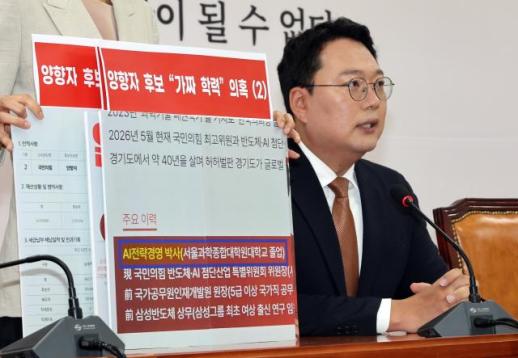 Cheon Ha-ram Proposes Re-elections for Polling Stations with Voting Disruptions Cheon Ha-ram, the floor leader of the Reform Party, has proposed conducting re-elections at polling stations where voting was halted due to a shortage of ballots during the June 3 local elections. During a Supreme Council meeting held on the morning of June 8, Cheon stated, "The essence of this situation is the infringement of citizens' voting rights, and the only fundamental solution to rectify this violation is through re-elections." He emphasized, "I advocate for a 'selective re-election' limited to areas where it is clear that there was a significant infringement on voting rights, specifically at polling stations where voting was interrupted due to a lack of ballots. Major parties, including the Reform Party, should file election complaints, and the Election Commission should promptly declare parts of the election invalid at these polling stations and conduct re-elections." Cheon noted, "Currently, the leader of the ruling People Power Party, Jang Dong-hyuk, has called for a full re-election, and there are also calls for re-elections from some members of the Democratic Party. This is not a matter of left or right; it is about protecting the fundamentals of democracy and citizens' voting rights." He added, "Among those who had to leave without voting due to the lack of ballots, there were citizens intending to vote for both the Democratic Party and the Reform Party. It is difficult to estimate how many citizens were unable to vote or chose to forgo voting due to the ballot shortage." Cheon remarked, "In a K-Democracy like South Korea, it is absurd to say that there is no value in considering re-elections when citizens are unable to vote due to a lack of ballots. Even if there is some confusion, rectifying the infringement of citizens' voting rights is the most important task in a democratic nation. We must protect citizens' voting rights and democracy in South Korea through selective re-elections."* This article has been translated by AI. 2026-06-08 11:00:00
 -
 Art Market Faces Structural Changes Amid High-Profile Auction Sales Is the Boom an Illusion? Recent reports of record-breaking auction sales in New York and London have created an illusion of a booming art market, with auction houses and art publications buzzing with excitement. Christie's and Sotheby's have garnered media attention by showcasing masterpieces that have generated billions in sales. However, a closer examination reveals that this surge is not indicative of a full market recovery but rather a localized rebound focused on ultra-high-value blue-chip artworks. Works by artists like Jackson Pollock have surpassed $180 million, while pieces by 20th-century masters such as Constantin Brâncuși and Mark Rothko continue to set new records. The names of Picasso, Mondrian, and Basquiat remain the most reliable guarantees in the auction world. This phenomenon is driven by a generational shift, as younger leaders from wealthy families take over, leading to the sale of collections from older collectors, resulting in record-breaking auction prices. This trend reflects a typical pattern where funds gravitate toward established names and iconic works amid economic uncertainty. The U.S. market has capitalized on this trend, growing by over 25%, while China has seen a decline due to a real estate slump. The disparity among auction houses is also evident, with major players like Christie's and Sotheby's significantly increasing their revenues, while Phillips has reported a downturn, highlighting a growing polarization between top-tier and smaller auction houses. The question remains about sustainability. After the baby boomer generation fades, will the next generation embrace works by Warhol or Rothko with the same passion? It is uncertain whether the rising prices of blue-chip artworks will hold post-generational transition. In response, some galleries are exploring new auction platforms to navigate this challenge, opting for 'technological innovation in sales methods' to avoid the structural crisis of overexpansion leading to bankruptcy. The art market, currently in a deep slump, has seen wealthy collectors close their wallets, resulting in tedious negotiations over prices in private sales between galleries and collectors, diminishing the urgency to purchase artworks. Even exceptional pieces are increasingly left unattended as galleries take control of timelines to guide the market, which may be a necessary self-rescue strategy. Self-Rescue Experiments in the Art Market Recently, seasoned art dealers and market experts Dominique Lévy, Brett Gorvy, and Amalia Dayan have observed a growing share of one-on-one transactions at Christie's and Sotheby's. In 2025, private sales slightly decreased year-over-year, yet Christie's accounted for about 24% of total sales at $1.5 billion, while Sotheby's recorded approximately 17% at $1.2 billion. Phillips, however, saw a remarkable 66% increase in private sales, reaching around $200 million, underscoring the critical role of private sales in sustaining auction revenues. The trio, collaborating under the name Lévy Gorvy Dayan, launched a customized live auction platform called 'LGD Hammer' to enhance transparency in private transactions. This new platform directly addresses the issue of prolonged negotiations in artwork sales. By ingeniously combining traditional auctions and private sales, it allows for the auction of a single masterpiece or core collection on a designated day, facilitating live bidding via phone and online for top collectors worldwide. This approach maximizes focus and urgency, contrasting with the bulk offerings of major auction houses. The auctioned artworks are first reserved at galleries for in-depth viewing, allowing ample time for research and appreciation before final pricing is determined through competitive bidding. This model not only facilitates sales but also provides a museum-quality experience and market tension. The distinctiveness of LGD Hammer stems from the founders' extensive auction experience. Having worked for decades at global auction houses like Christie's, they understand the essence of auctions better than anyone, internalizing the systems of major auction houses within galleries to combine the intimacy of private sales with the competitiveness of auctions. This is not merely a formal variation but a strategic attempt to address structural issues in the market. Ultimately, LGD Hammer represents an experiment to reinvigorate the art market, ensuring that artworks are no longer neglected and that collectors face pressure to make timely decisions. Whether this platform can break through the current market stagnation remains uncertain, but at the very least, it has reintroduced the essential elements of 'scarcity and competition' to art transactions. What is needed now is precisely this sense of urgency. LGD Hammer is a challenge to rekindle that spark. The first auction featured Willem de Kooning's Milkmaid, which sold within the estimated range of $10 million, validating the effectiveness of this new hybrid platform. However, the mid-range market and emerging artists continue to struggle. Just a few years ago, the works of young artists, once driving speculative enthusiasm, have largely disappeared from auction houses. In major auctions at Sotheby's and Christie's, artists under 40 are few and far between, with Phillips featuring only one or two pieces. The energy that once characterized young artists, referred to as 'red chips,' has dissipated. Consequently, the rise in average auction prices is solely attributed to high-value works, while the pieces by young artists have vanished from auction houses. The primary market, represented by galleries, faces increasing operational costs due to high rents and excessive fees for art fairs, leading to a loss of trust in the market. Many collectors hesitate to purchase artworks from galleries when pieces offered for tens of thousands of dollars sell for thousands at auction, highlighting the bubble in the primary market. However, some galleries that present high-quality new works at reasonable prices still see demand and sell out, indicating that the market is not entirely devoid of potential. Recently, prominent galleries such as Blum Gallery, Venus Over Manhattan, and Clearing have faced liquidity crises due to soaring rental costs and exorbitant fees for international art fair booths, often relying on bank loans or external funding, which have led to closures. Thus, while auction results may appear robust, they do not signify a comprehensive recovery of the art market. Instead, the market reveals a stark imbalance between the dazzling resurgence of blue chips and the stagnation of red chips. True recovery will only be possible when the flow of funds extends beyond ultra-high-value works to include emerging artists and mid-range priced pieces. The current activity is merely an illusion of prosperity, and a balanced ecosystem is crucial for a healthy future in the art market. The present art market is undergoing painful restructuring as it treats art more as an 'investment asset' than pure appreciation, leading to the deflation of an overheated bubble. In fact, the recent closures of major galleries illustrate the structural limitations that often lead to sudden bankruptcies after a gradual decline. This current crisis results from galleries and auction houses approaching artworks solely as 'financial investment assets,' pushing their business models to their limits. Major Auctions in May 2026 The unprecedented anomalies in the art market, characterized by unpredictable structural changes and a generational shift among collectors, are also evident in the Korean art market, particularly in the auction sector. The May auctions at Seoul Auction and K Auction lacked significant works that could drive the market. While international auction houses have drawn major collectors' works to boost sales, Korea's leading auction houses currently lack the capacity to do so. Nonetheless, the results from May auctions indicate a gradual movement in the Korean art market, albeit with cautious optimism. The market's response reflects selective reactions based on the types of artworks, price ranges, and artist recognition rather than a full recovery. K Auction saw 60 out of 77 lots sold, totaling approximately 7.2321 billion won, with a sell-through rate of 77.9%. The highest price at K Auction was Yayoi Kusama's Infinity Net (POWTY), 2014, which was estimated at 2.1 to 3.5 billion won but sold for the lower estimate of 2.1 billion won without significant competition. Seoul Auction recorded a sell-through rate of 69.8%, with total sales of about 5.66 billion won. Lee Ufan's Dialogue, 2018, estimated at 700 million to 1.2 billion won, started at 640 million won and sold for 1.04 billion won without much competition. The auction results indicate that the blue-chip market remains central to the art scene. While works by established artists like Yayoi Kusama and Lee Ufan traded steadily, aggressive price increases were limited, suggesting that bidders are responding conservatively. This indicates that the market is operating around realistic pricing. In contrast, there were inexplicable strong competitions for relatively lower-priced works by young artists. Although these pieces have yet to be validated in the market, bidders exhibited a rather aggressive stance, indicating a need for further examination. The works of Munassi (Kim Dae-hyun, 1980) attracted multiple bids in the mid-range, while Lee Mok-ha (1996) entered the high-price bracket in a short time, reflecting market expectations. However, such results do not necessarily indicate a healthy market. It is essential to scrutinize the structure of price formation and the conditions supporting those prices. Seoul Auction's anticipated work, the colored manuscript of the Daedongyeojido, was unsold. This outcome highlights that the conditions for successful transactions are stringent, despite the significant academic value of cultural heritage works. It served as a reminder of the challenges in the high-end art market. Ultimately, the key takeaway from this auction is not whether prices are rising but the credibility of those prices. A good market is one that can explain why high prices are achievable, rather than merely generating them. For the Korean art market to grow sustainably, it must go beyond viewing auction results as mere indicators of success and instead closely analyze and articulate the processes of price formation and the structures supporting those prices. Therefore, we should view the May auction not merely as a sign of vitality but as an opportunity to assess the market's credibility. Balancing the stability of blue chips with the growth potential of young artists while ensuring the structural reliability of price formation is essential for the future of the Korean art market. From Survival to Solidarity: Restructuring the Art Market The era of large galleries in the West is waning, and the same is true for several major galleries in Korea. The previous strategy of international mega-galleries focusing on hardware expansion by increasing locations has proven unsustainable. With the global economic downturn, high exchange rates, and a speculative market centered on ultra-high-value works cooling off, galleries are seeking new paths through mergers and collaborations to reduce fixed costs and diversify risks. The era of individual survival is giving way to one of solidarity. Voluntary mergers and the emergence of mega platforms are notable trends. Smaller galleries, feeling the limitations of independent operations, are being absorbed into larger gallery networks, while capital-rich mega-galleries are acquiring promising mid-sized galleries to expand their artist portfolios. This is not merely a survival strategy but a reflection of structural changes in the market. Additionally, the approach to international expansion is changing. Instead of costly standalone locations, 'hybrid spaces' are emerging, where local galleries share costs and risks by operating joint spaces. The establishment of a joint location in Hannam-dong, Seoul, by Berlin's Meyer Riegger and Paris's Jocelyn Wolff exemplifies a new approach to the Asian market. At art fairs, 'booth sharing' has become commonplace, with galleries collaborating to share costs and cross-promote artists. This restructuring period has left deep scars on the Korean art market. The inflated transaction record of 1 trillion won in 2022, aimed at quantitative expansion, has proven to be a mirage, as the market that once thrived is now facing a painful period of deflation and consolidation due to the global recession and high exchange rates. With estimates suggesting that over 100 small galleries have closed in the past four years, the current crisis is not merely a retreat but a process of improving the market's structure. The decline in speculative purchases of ultra-high-value works and the increasing attention on mid-range pieces priced between 100 million and 500 million won, as well as conceptually rich works, further support this shift. As Western mega-galleries withdraw from Frieze Seoul, Asian galleries are stepping in, transforming Seoul from a 'sales hub for Western art' to an 'Asian hub platform.' This shift is crucial, and those responsible for strategizing and responding to these changes in Korea must not remain passive, merely waiting for opportunities. The Ministry of Culture, Sports and Tourism's approach to the art market, treating it from a cultural industry perspective rather than establishing comprehensive plans for visual arts promotion, is problematic. Furthermore, policies proposed by civil servants with limited understanding of the art market, often based on a two- to three-year rotation, are unlikely to yield effective results beyond mere financial distributions. The execution of these policies by the Arts Management Support Center, staffed by individuals lacking experience in the art market, further highlights the absence of appropriate policies for the Korean art market. In reality, Korean collectors are moving away from 'blind investments' toward practical collecting, seeking works by Korean artists with historical depth. Ultimately, the current crisis is not merely a downturn but a turning point toward a new order. The era of individual survival has ended. Through solidarity and collaboration, the market will revive. The Korean art market must undergo painful restructuring to move toward a stronger and more sustainable future.* This article has been translated by AI. 2026-06-08 10:57:00
 -
 Goldman Sachs Predicts No U.S. Rate Cuts This Year, Delays First Cut to June 2027 Goldman Sachs has withdrawn its forecast for a U.S. interest rate cut this year. The firm believes that the strength of the U.S. labor market has diminished the Federal Reserve's justification for lowering rates. On June 7, Bloomberg reported that David Mericle, Goldman Sachs' chief U.S. economist, revised the timeline for potential rate cuts in a report released on June 5. The firm has pushed back its expectations for two rate cuts, originally anticipated in December 2026 and March 2027, to June and December 2027, respectively. The revision is primarily based on May's employment data, which showed a stronger-than-expected labor market, leading analysts to conclude that the Fed is less likely to expedite monetary easing. Goldman Sachs has also lowered its unemployment rate forecast from 4.6% to 4.4%. However, Goldman Sachs does not view the possibility of rate hikes as a primary scenario. Mericle stated that the likelihood of inflation becoming self-sustaining is low. While the probability of a rate hike has increased from 10% to 20%, it is still considered a low-probability scenario. Goldman Sachs' baseline forecast now includes two rate cuts of 0.25 percentage points in 2027, with the likelihood of this scenario decreasing from 40% to 30%. This indicates a delay in rate cuts, while the possibility of rate hikes has slightly increased. Investment in artificial intelligence (AI) has also been identified as a variable. If demand for AI-related investments remains strong, it could support economic activity and funding needs, reinforcing the case for prolonged high interest rates. The market views robust employment and increased AI investment as factors that simultaneously lower expectations for Fed rate cuts.* This article has been translated by AI. 2026-06-08 10:48:00
 -
 Korean Ministry of Science Reveals Applications of Domestic AI Foundation Models The Ministry of Science and ICT has unveiled applications of its proprietary AI foundation model, known as 독파모, across various industries. From national heritage administration to financial services, automotive AI, and domestic AI semiconductors, the model is driving innovation and expanding the K-AI ecosystem. On June 8, the ministry presented examples of the K-AI ecosystem, focusing on companies participating in the 독파모 initiative. The Korea Heritage Promotion Agency plans to enhance administrative efficiency and improve public services by integrating the 독파모 AI model into its operations. The model will also be applied to the existing national heritage image generation service, HAI (Heritage AI), enabling citizens to engage with national heritage in more creative and accessible ways. LG AI Research and FuriosaAI are collaborating on a full-stack initiative that combines domestic AI models with AI semiconductors. The LG AI Research's generative AI model, EXAONE, will run on FuriosaAI's second-generation neural processing unit, RNGD. The two companies aim to leverage the synergy between domestic AI models and semiconductors to expand their presence in the global AI ecosystem. In partnership with 42dot, a self-driving software company under SK Telecom, the development of a large-scale language model (LLM) for vehicles is underway. The goal is to create a voice AI agent optimized for automotive environments by integrating SK Telecom's AI model with 42dot's vehicle software technology. The collaboration will focus on enhancing natural language interactions within vehicles by building specialized voice datasets. NC AI is working with Shinhan Bank to implement AI-based digital twin technology in financial settings. By creating a virtual environment that mirrors actual bank branches, they will analyze customer flow and operational processes, allowing for pre-simulation of counter layouts and kiosk operations. This initiative aims to improve operational efficiency and customer convenience while supporting innovation in financial services. Meanwhile, the Ministry of Science and ICT plans to conduct a second-phase evaluation of the 독파모 initiative in August. Participants in this evaluation will include LG AI Research, SK Telecom, Upstage, and Motif Technologies, with an expected emphasis on global benchmark performance and technological uniqueness.* This article has been translated by AI. 2026-06-08 10:45:00
 -
 Xi Jinping Visits North Korea, Highlighting China-North Korea Alliance On June 8, the People's Daily, the official newspaper of the Chinese Communist Party, emphasized the importance of the China-North Korea alliance as President Xi Jinping prepares for his first state visit to North Korea in seven years. Xi is visiting at the invitation of North Korean leader Kim Jong Un for a two-day trip. The front page of the People's Daily featured an article titled "Opening a New Chapter in China-North Korea Friendship." The article stated, "China and North Korea are good neighbors and friends, sharing a common destiny and supporting each other as good comrades," adding that this historic visit will outline a new blueprint for the development of relations between the two parties and countries. The newspaper noted that the two leaders have met six times since 2018, deepening their friendship. It emphasized that the strategic leadership of both leaders is the greatest political strength and a strong guarantee for the development of China-North Korea relations. This year marks the 65th anniversary of the China-North Korea Mutual Assistance Treaty, highlighting that the relationship stands at a new historical starting point. The People's Daily stated that the two countries have forged a bond through shared struggles and continue to maintain their traditional friendship based on mutual trust. The article stressed that solidifying the China-North Korea friendship is a firm and unwavering strategic choice for both nations. It quoted Xi Jinping as saying that regardless of how the international situation changes, maintaining, strengthening, and developing relations with North Korea is the unwavering policy of the Chinese Party and government. Kim Jong Un's statement that this friendship will remain unchanged no matter how the world evolves was also included. In a column on page three titled "Promoting Greater Development of China-North Korea Relations in Line with the Trends of the Times," the People's Daily reiterated the commitment to enhancing strategic communication and deepening friendly cooperation between the two nations. It noted that Xi's visit will imbue the traditional friendship with new significance in this era. The column also referenced the 65th anniversary of the Mutual Assistance Treaty, describing it as a political and legal foundation that solidifies the combat bond forged by the two peoples as blood allies and supports ongoing cooperation. Furthermore, China pledged to continue supporting North Korea in pursuing a development path suited to its circumstances and achieving new successes in socialist construction. The People's Daily's emphasis on the China-North Korea friendship comes amid recent close ties between North Korea and Russia, signaling a reaffirmation of its traditional ally and an intention to strengthen strategic cooperation. The People's Daily also shared a 15-second video on the social media platform Weibo, showing preparations in Pyongyang ahead of Xi's visit. The video featured large portraits of Xi, the Chinese national flag, and the North Korean flag displayed together, along with slogans such as "China-North Korea Friendship" and "Long Live the Indestructible Unity of China and North Korea." Xi is expected to arrive at Pyongyang Sunan International Airport on a private jet on the morning of June 8. During his two-day visit, the two leaders are scheduled to hold talks, enjoy a banquet, and visit the China-North Korea Friendship Tower, showcasing their traditional friendship and strategic cooperation. This visit marks Xi's first trip to North Korea since June 2019. 2026-06-08 10:45:00
 -
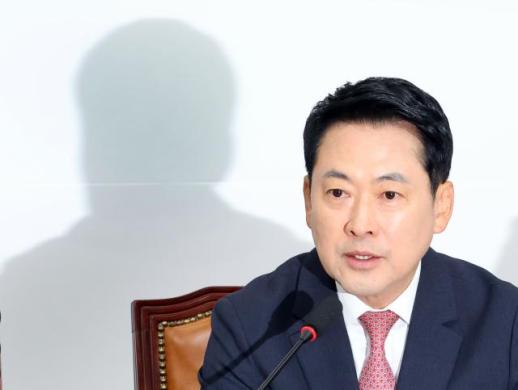 Jang Dong-hyuk: National Assembly Investigation and Special Prosecutor Should Be Led by People Power Party Jang Dong-hyuk, leader of the People Power Party, asserted on June 8 that the party should lead the national investigation and special prosecutor's probe regarding the recent ballot shortage crisis. During a Supreme Council meeting at the National Assembly, Jang stated, "From the chairmanship of the national investigation committee to the selection of witnesses, it must be led by the People Power Party to produce results that the public can accept." He criticized President Lee Jae-myung's directive to establish a joint investigation team of police and prosecutors, calling it a ploy to undermine the national investigation and evade a special prosecutor. Jang argued that once the investigation begins, witnesses and informants summoned by the national investigation committee may avoid answering questions related to ongoing investigations. "The moment the joint investigation is mentioned, it is as if the president's investigative guidelines have been issued," he said, emphasizing the need for a special prosecutor recommended by the People Power Party to conduct the investigation. He added, "The special prosecutor takes precedence over the national investigation, and the by-elections come before the special prosecutor." In related developments, the People Power Party prepared a request for a national investigation to be submitted to the National Assembly later that morning and plans to propose a special prosecutor bill. The Democratic Party of Korea also intends to submit its own request for a national investigation on the same day, indicating that both parties will present their respective demands. During the meeting, discussions also addressed economic issues, including the exchange rate and inflation. Jang highlighted that the won-dollar exchange rate exceeded 1,560 won during trading and that the consumer price index rose by 3.1% last month, the highest increase in 26 months. He criticized, "With the elections approaching and money being distributed, if the oil price subsidies run out, it is hard to imagine how much prices will rise further." He added, "Despite this comprehensive economic crisis, the president clings to leftist economic policies and is instead initiating a basic economic plan reminiscent of Lee Jae-myung. The urgent task is not a basic economy but to lower prices, stabilize the exchange rate, and create jobs for young people." Additionally, Jang called for the immediate dismissal of Fair Trade Commission Chairman Joo Byeong-ki for violating the political neutrality obligation of public officials. Joo had previously posted on Facebook about the results of the Seoul mayoral election, stating, "It is bitter that the exercise of citizens' rights aligns with the order of money," and questioned whether it was blind faith that would not mind inciting a rebellion, before deleting the post amid controversy.* This article has been translated by AI. 2026-06-08 10:42:00
 -
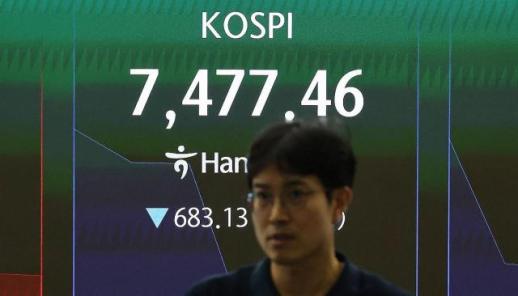 Asian Markets Plunge Amid Tech Sell-Off and Economic Concerns Asian stock markets experienced significant declines on June 8, driven by a sell-off in artificial intelligence (AI) and semiconductor stocks, concerns over U.S. interest rate hikes, escalating tensions in the Middle East, and the upcoming SpaceX initial public offering (IPO). According to Reuters and the Nihon Keizai Shimbun (Nikkei), major Asian markets showed substantial losses from the start of trading. As of 10:28 a.m., the KOSPI index had fallen by more than 8%, triggering the first stage of a circuit breaker at 9:03 a.m. Reuters reported that the KOSPI was down approximately 17% from its record high set the previous week. Samsung Electronics saw a decline of about 9%, while SK Hynix dropped nearly 6%, leading the downturn among semiconductor and AI-related stocks that had previously driven market gains. Earlier, the Korea Exchange activated a sell-side circuit breaker for the KOSPI at around 9:34 a.m. This measure is triggered when the KOSPI 200 futures price falls by more than 5% compared to the previous trading day for one minute, halting program sell orders for five minutes. At the time of the circuit breaker activation, KOSPI 200 futures were down 6.26% at 1216.85. The sharp decline was directly influenced by a significant drop in AI and semiconductor stocks on U.S. markets over the weekend. The tech-heavy Nasdaq index fell by 4.2%, while the Philadelphia Semiconductor Index (SOX) plummeted by 10%. Additionally, strong U.S. employment data raised concerns about potential interest rate hikes by the Federal Reserve, compounded by ongoing uncertainties surrounding the U.S.-Iran ceasefire. Furthermore, the anticipated SpaceX IPO this week is seen as an additional burden on the market. SpaceX is expected to finalize its offering price and begin trading this week, with the possibility of subsequent large-scale IPOs from companies like Anthropic and OpenAI, raising concerns that significant capital raises could absorb liquidity from other assets. Japan's stock market also faced steep declines, with the Nikkei 225 index dropping 4.4% from the start of trading. AI and semiconductor stocks, which had previously driven market gains, were particularly affected, with sell orders concentrated on companies like Advantest, Tokyo Electron, and SoftBank Group. Taiwan's TAIEX index fell by 5%, while Chinese and Hong Kong markets also experienced declines of 1% to 2%. Bob Savidge, head of macro strategy at BNY, told Reuters, "The narrative that 'AI drives everything' has been shaken. The key question remains whether this correction is a healthy pause after a nine-week stock rally or if it marks a peak."* This article has been translated by AI. 2026-06-08 10:39:00
 -
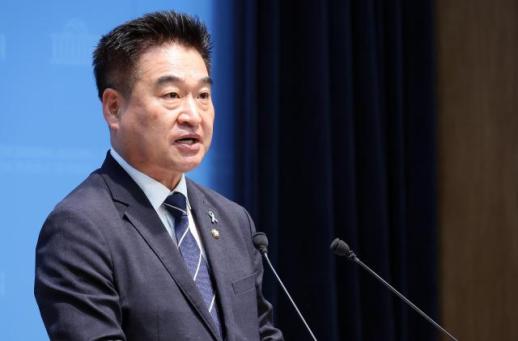 Choi Hyuk-jin Announces Return to Democratic Party, Vows to Counter Opposition to Lee Government Independent lawmaker Choi Hyuk-jin announced his return to the Democratic Party on June 8, stating, "If there are forces trying to undermine the Lee Jae-myung government, I will respond strongly." He emphasized his commitment to support the government's agenda against opposition figures, including Seoul Mayor Oh Se-hoon and lawmakers Lee Jin-sook and Kim Tae-kyu, as well as newly elected lawmaker Han Dong-hoon. During a press conference at the National Assembly, Choi said, "Throughout the local elections on June 3, I traveled across the country to support Democratic candidates. The supporters I met urged me to return to the party and fight together." He added, "As someone who originally belonged to the Democratic Party, it is only natural for me to return." Choi specifically stated that after rejoining the party, he would lead the fight against Oh and other lawmakers if they obstruct the government's reform initiatives. He declared, "Today's announcement of my return is a declaration of war against those who seek to destabilize this government. Anyone who hinders the government's reforms will face strong opposition from me. I will not allow those who threaten the government, which is dedicated to serving the people day and night, to go unchallenged." Choi also stressed the importance of the Democratic Party's responsibility for the success of the government at this critical time. He called for unity under the new leadership, stating, "I will not shy away from responsibility within the party. I will contribute to the success of this government through policy and legislation." Furthermore, Choi claimed that his decision to return was made after sufficient consultation with the party leadership. He noted, "I conveyed my intentions to the party leadership and to Secretary General Cho Seung-rae and the floor leader's office. There were no opposing opinions. I believe the leadership will decide on the specific timing after thorough consideration."* This article has been translated by AI. 2026-06-08 10:39:00